
Stopped· since Dec 12, 2025
- 201
- days it ran
- 0
- relaunches
Ad copy
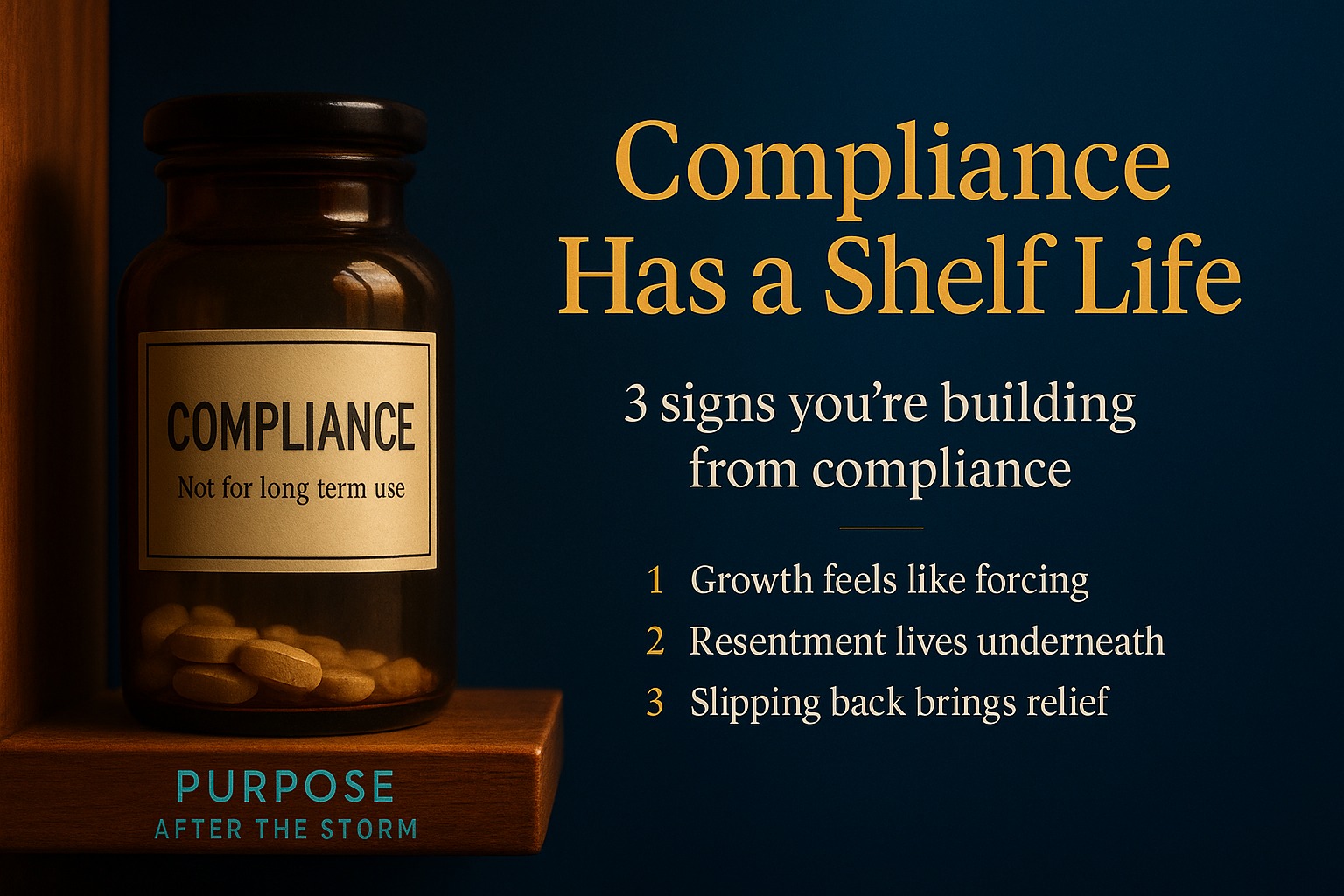
This Time, You're Choosing From Alignment. Not Obligation. The new pattern won't stick if it's built on "I should." It only sticks when it's built on "I want." This is post 3 in the Becoming Someone New arc, the eighth and final arc of my Purpose After the Storm framework. In Post 1, we talked about transformation being a daily practice, not a glow up. In Post 2, we explored the mechanism. What you repeat, you become. Hebb's Law. The filter. The compounding. But here's what most people miss: It's not just WHAT you practice. It's WHERE you're practicing FROM. You can do all the right things and still not transform. You can practice new behaviors, build new habits, show up differently. And still feel like the same person underneath. Still feel like the old patterns are waiting to reclaim you the moment you stop forcing. Because you've been practicing from obligation. And obligation doesn't build identity. It builds compliance. And compliance always has a shelf life. This post is about the difference between should and want. Between performing change and embodying it. Between forcing the new pattern and actually becoming it. I did all the right things for a long time. And none of them stuck. I rested. Because I burned out. Because my body forced me to stop. Because continuing wasn't physically possible anymore. I said no. Because I was empty. Because I had nothing left to give. Because yes would have broken me. I received. Compliments. Payment. Help. Because I was told I should. Because valuing yourself is what healthy people do. Because I was checking a box. From the outside, it looked like growth. New behaviors. Better patterns. Progress. But my body registered something was off. There was a tightness underneath all of it. A forcing. The behaviors were right but the energy was wrong. I was practicing from obligation. From should. From the performance of health rather than the expression of it. And the old patterns kept creeping back. Because obligation doesn't rewire identity. It just creates compliance. And compliance has a shelf life. The shift happened when I started doing the same things from a different place. I rested not because I was forced but because rest is part of who I'm becoming. Not a punishment for overdoing it. A practice I chose before I needed it. I said no not because I had nothing left but because I had something I was protecting. Energy I wanted to spend elsewhere. A direction I was walking that this didn't serve. I received not because I should but because I wanted to. The compliment landed and I let it in. The payment came and I didn't flinch. The help arrived and I didn't deflect. Not because I was practicing receiving. Because receiving is part of me now. Same behaviors. Different source. And everything changed. The body relaxed. The forcing stopped. The tightness dissolved. Because I wasn't performing health anymore. I was expressing it. If you've been doing the right things and wondering why they're not sticking, this might be why. Maybe you've been doing the work. Reading the books. Applying the tools. Practicing the new patterns. And something still feels off. There's a heaviness to it. A forcing. The new behaviors feel like taxes you're paying, not choices you're making. The rest feels like something you're earning instead of something you want. The boundaries feel like walls you're maintaining instead of space you actually desire. Maybe you've noticed that the "growth" exhausts you. That the new patterns require constant vigilance. That the moment you stop trying, the old you comes flooding back like it was waiting at the door. Maybe you've wondered if you're even capable of real change. If some people just naturally become different and you're stuck performing it forever. You're not broken. You're just building from the wrong foundation. Should energy can start the process. Sometimes you have to rest because you're forced to. Sometimes you have to say no because you're empty. Sometimes you have to receive because someone insists. But pressure can't finish it. The behaviors might be right. But if the source is wrong, the identity won't form. You'll be performing the new pattern instead of becoming it. The difference between obligation and alignment isn't visible from the outside. But your nervous system knows. Your brain knows. And your results know. Here's why this matters neurologically. Your brain doesn't just track what you do. It tracks why you're doing it. When you act from obligation, your brain registers threat. Should. Have to. Must. These words activate the stress response. Cortisol rises. The amygdala engages. Your nervous system braces. Even if the behavior is healthy, the internal experience is one of pressure. Resistance. Forcing. Your brain codes this as something being imposed on you. Something you have to defend against or endure. When you act from alignment, your brain registers choice. Want. Choose. Desire. These words activate the reward system. Dopamine flows. The prefrontal cortex engages. Your nervous system opens. The internal experience is one of agency. Willingness. Expression. Your brain codes this as something emerging from you. Something you're authoring, not complying with. This is Self Determination Theory in neuroscience terms. Intrinsic motivation, doing something because you genuinely want to, produces deeper learning, longer lasting change, and actual identity integration. Extrinsic motivation, doing something because you should or have to, produces compliance that disappears when the pressure does. From a CBT perspective, "should" is actually a recognized cognitive distortion. Should statements create pressure, guilt, and resistance. When you practice from should, you're reinforcing the underlying belief that you're not enough as you are. That you need to force yourself to be acceptable. Every should driven behavior builds evidence for that belief. When you practice from want, you're building evidence for a different belief. That you're someone who naturally chooses rest. Naturally holds boundaries. Naturally receives. The behavior becomes proof of identity, not compensation for inadequacy. From an NLP perspective, the state you're in when you practice determines what gets anchored. When you act from obligation, you're anchoring the new behavior to a negative state. Pressure. Contraction. Effort. The behavior becomes linked to that internal experience. When you act from alignment, you're anchoring the new behavior to a positive state. Desire. Choice. Agency. The behavior becomes linked to expansion instead of contraction. This is why two people can practice the same behavior and get completely different results. One anchors rest to guilt. The other anchors rest to self respect. Same behavior. Different anchor. Different identity. The same behavior practiced from obligation and practiced from alignment literally wires differently in your brain. Pressure creates what researchers call "introjected regulation." You've taken the external should and internalized it, but it still feels like pressure. Still feels like forcing. The behavior happens, but the resistance remains underneath. Alignment creates what researchers call "integrated regulation." The behavior isn't just something you do. It's something you are. There's no resistance because there's no forcing. The action flows from identity, not obligation. This is why the old patterns kept creeping back when I was practicing from should. My brain never integrated the new behaviors as "me." They were tasks I was performing. Roles I was playing. The moment I got tired of performing, the authentic me came back. And the authentic me was still the old patterns. The shift happened when wanting replaced shoulding. When the new behaviors stopped being obligations and started being expressions. When my brain finally coded them as "this is who I am" instead of "this is what I'm supposed to do." Your body knows the difference too. Obligation feels like tightness, bracing, effort. Alignment feels like openness, flow, ease. Not because aligned choices are always easy. But because they're not fighting against something. They're moving toward something. Here's how to know which one you're operating from. Sign 1: The behavior feels like a tax you're paying. You rest, but it feels like lost productivity. You say no, but it feels like a sacrifice. You receive, but it feels like a test you're passing. There's no satisfaction in it. Just relief when it's done. Just the box being checked. Just the obligation being met. Your shoulders stay tight. Your breath stays shallow. Even while doing the "right" thing, your body is bracing. Because it knows you're not choosing this. You're enduring it. Sign 2: You resent the thing you chose. The boundary you set starts to feel like a cage. The rest you took starts to feel like weakness. The no you said starts to feel like something you lost. There's an internal argument happening. Part of you performed the healthy choice. Another part of you is angry about it. The resentment is the signal. You feel it in your jaw. In your chest. A clenching that shouldn't be there if this was truly what you wanted. You pressured yourself into it with should. When you choose from alignment, there's no resentment. There might be grief. There might be discomfort. But not resentment. Resentment means obligation was driving. Sign 3: Slipping back feels like relief instead of failure. When the old pattern returns, you don't feel guilt. You feel finally. The people pleasing comes back and something relaxes. The overworking returns and something feels right. The deflecting resumes and you feel like yourself again. This is the clearest sign. If the old pattern feels like home and the new pattern feels like performance, you've been building from obligation. The real you was waiting underneath the whole time. These tools help you shift from obligation to alignment. Tool 1: The Source Check Before you act on a new behavior, pause and ask: Am I doing this because I should or because I want to? Not to judge yourself. Not to force a different answer. Just to notice. Should feels like pressure from outside, even if it's coming from inside your own head. Want feels like movement toward something you actually desire. Sometimes the answer is should. That's information. It doesn't mean don't do it. It means notice that you're building from obligation right now. And notice whether that's shifting over time. The awareness alone starts the shift. You can't move from should to want until you see which one you're in. Tool 2: The Even If Test Ask yourself: Would I still do this even if no one knew? Even if there was no external reward? Even if I didn't have to? Would I rest even if no one praised me for taking care of myself? Would I say no even if no one validated my boundaries? Would I receive even if no one told me I should? If yes, you're in alignment. The behavior is coming from you, not from what you think you're supposed to do. If no, you're in obligation. The behavior is a performance for an audience, even if that audience is just the voice in your head that says should. This test reveals the source. And revealing the source is the first step to changing it. Tool 3: The Body Scan Before Action Before you do the new behavior, check your body. Is there tightness? Resistance? Bracing? The sense of forcing yourself? Or is there openness? Willingness? Ease? The sense of moving toward something? Your body knows before your mind admits it. The body doesn't lie about should versus want. If you feel forcing, pause. Ask yourself: What would it feel like to actually want this? Not to perform it. To want it. Sometimes just asking the question shifts something. Sometimes it reveals that you don't want it yet and you're building from obligation. Both are useful. Both are information. The goal isn't to never act from obligation. Sometimes that's where you start. The goal is to notice the difference and let the want catch up over time. These tools reveal the source. But sustaining the shift requires something deeper. Here's what I believe: God doesn't want your compliance. God wants your heart. Obligation is a form of self abandonment dressed as discipline. You override what you actually want. You force yourself into the shape you think you should be. You perform the version of growth that looks right from the outside. But that's not transformation. That's control. And control always eventually breaks. Alignment is different. Alignment says: I want this. Not because I should. Because it's who I'm becoming. Because something in me is actually reaching for it. The Creator designed you for desire. Not just discipline. You were made to want good things, not just force yourself toward them. You were made to be drawn, not just driven. Grace doesn't meet you in the performance. Grace meets you in the wanting. In the moment when the should falls away and something truer emerges. When you stop forcing and start flowing. When the new pattern isn't something you're doing but someone you're being. You're allowed to want rest. You're allowed to want boundaries. You're allowed to want to receive. Not because you should. Because they're part of the life you're building. The shift from obligation to alignment isn't about trying harder. It's about wanting differently. And wanting is something you can't force. But you can create the conditions for it. You can notice when should is driving. You can ask what want would feel like. You can let desire emerge instead of manufacturing compliance. That's where real transformation lives. Not in the performance. In the wanting. The new pattern won't stick if it's built on should. Forcing creates compliance. Compliance has a shelf life. The moment you stop forcing, the old pattern returns. But when the source shifts from should to want, everything changes. The same behaviors, practiced from alignment instead of obligation, actually rewire identity. They stop being performances and start being expressions. They stop being tasks and start being you. This is what most transformation advice misses. It tells you what to do. It doesn't address where you're doing it from. And the where determines whether it lasts. You've been doing the work. Now check the source. Are you practicing because you should? Or because you want to? Are you performing health? Or expressing it? Are you forcing the new pattern? Or becoming it? The behaviors might look the same from the outside. But your body knows. Your brain knows. And your results will show the difference. This time, choose from alignment. Not obligation. That's how the new pattern finally sticks. Tomorrow, we talk about what has to go. Becoming someone new means letting go of the old map. The strategies that got you here won't get you where you're going. And releasing them is its own kind of grief. This is post 3 of 7 in the Becoming Someone New arc, the final arc of my Purpose After the Storm framework. These posts are micro concepts, designed to start the process. The deeper work goes further. Save this. Share it with someone who's been doing all the right things and wondering why they're not sticking. And drop a comment: Where have you been practicing from obligation instead of alignment? Rest. Boundaries. Receiving. Showing up. Name it. That's where the shift begins.
Like this ad? Make it yours.
Crush rebuilds this exact creative around your product — your brand, your colors, your offer — in about a minute.