
Stopped· since Dec 12, 2025
- 214
- days it ran
- 0
- relaunches
Ad copy
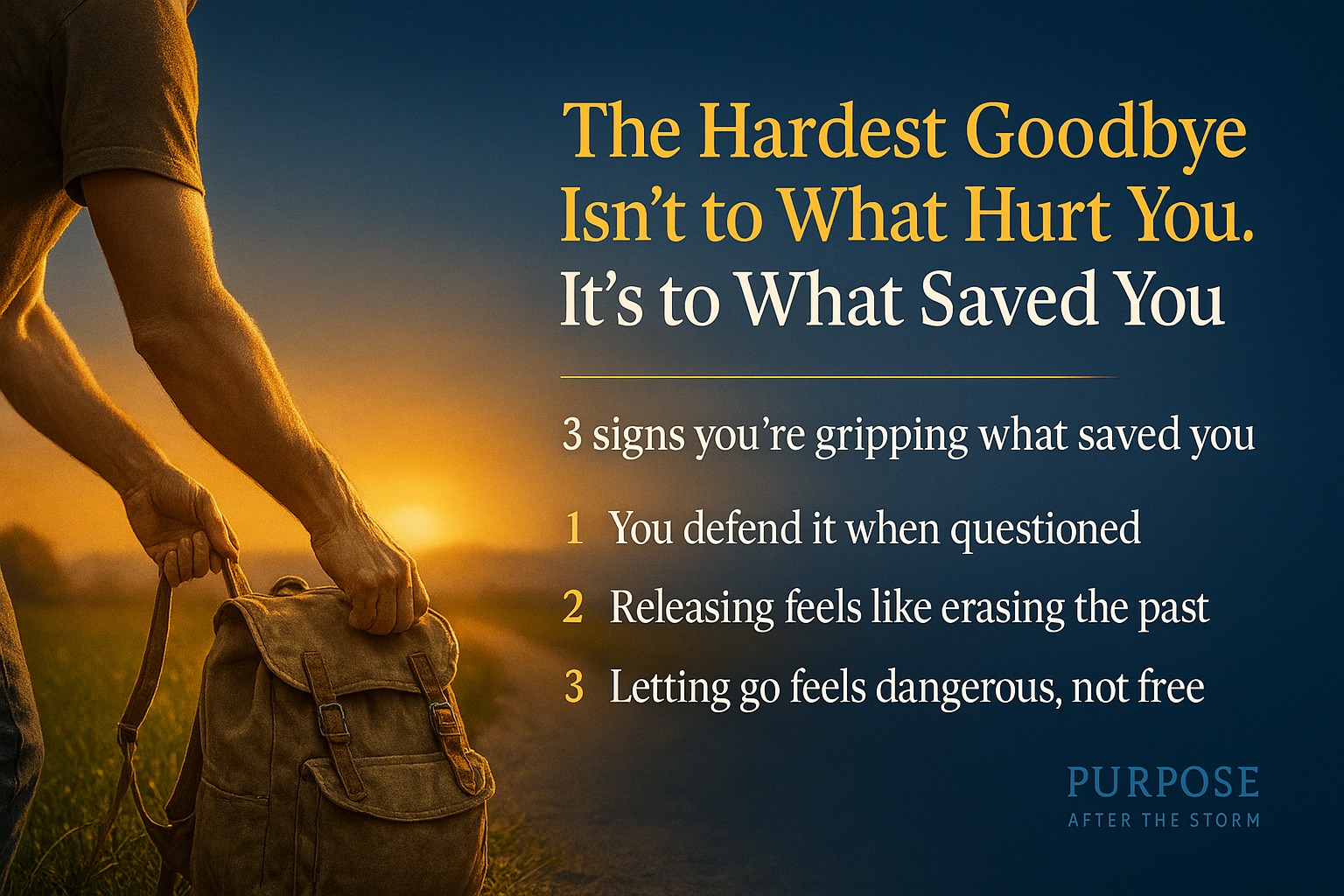
Becoming Someone New Means Letting Go of the Old Map The hardest goodbye isn't to what hurt you. It's to what saved you. This is post 4 in the Becoming Someone New arc, the eighth and final arc of my Purpose After the Storm framework. Posts 1 through 3 covered the practice, the mechanism, and the source. What you repeat. How it compounds. Where you're building from. But there's something we haven't addressed yet. Something that might be the hardest part of all. You can practice the new patterns. You can build from alignment. You can understand the mechanism. But if you're still gripping the strategies that got you here, the new identity has nowhere to land. This post is about releasing. Not releasing what failed you. Releasing what saved you. And the grief that comes with putting down something that once kept you alive. I didn't just have patterns. I had survival strategies. And they worked. The hypervigilance kept me safe. In a home where the energy could shift without warning, scanning every room for threat meant I was never caught off guard. That vigilance got me through. The fixing made me valuable. In a system where love felt conditional, being the one who stepped in, who solved, who carried, that made me necessary. That fixing kept me connected. The performing kept me close. In relationships where I wasn't sure the real me was enough, showing up as whoever they needed meant I didn't get left. That performance kept me from being alone. These weren't flaws. They were brilliant adaptations. A nervous system learning to survive. A child figuring out how to stay safe, loved, connected. And now I'm supposed to put them down. That's where the grief lives. Not in recognizing that the strategies don't serve me anymore. The grief is in releasing something that once saved me. Something that worked when I didn't have better options. Putting down the hypervigilance feels like abandoning the kid who needed it. Putting down the fixing feels like becoming worthless. Putting down the performing feels like risking being left. This isn't releasing a habit. It's saying goodbye to the version of me who survived with these tools. That version deserves honor, not shame. And releasing his strategies feels like betrayal. But here's what I've learned: Honoring the map doesn't mean following it forever. I can thank the strategy and still let it go. I can grieve the version of me that needed it and still become someone new. The grief is real. And it's necessary. Because you can't carry the emergency tools into the new life. They're too heavy. And they don't fit where you're going. If you're feeling the pull to hold onto what once saved you, you're not weak. You're human. And the goodbye is supposed to hurt. Maybe you've done the work. You can name your patterns. You understand where they came from. You see how they run. And you're still holding them. Not because you're stupid. Not because you haven't tried. But because those patterns saved you. And your system doesn't release what saved it easily. Maybe your strategy was people pleasing. Saying yes when you meant no. Never rocking the boat because disagreement felt like abandonment. That agreeableness kept you close. It worked. Maybe your strategy was staying small. Not having needs. Not taking up space. You learned your presence was too much, your needs a burden. So you made yourself invisible. And invisibility kept you safe. Maybe your strategy was never asking for help. Radical self reliance. Depending on someone gave them power to hurt you. So you carry everything alone. That independence protected you. These strategies worked. The question is whether they're still working. Whether what saved you in the storm is now blocking you in the clearing. The old strategies got you here. They won't get you where you're going. And your body already knows it's time to put them down. That tension you feel? That's the knowing. Here's why releasing is so hard, even when you want to. Your brain is wired to hold onto what worked. Survival strategies are encoded as essential. Non negotiable. The neural pathways get priority access and don't update just because the environment changed. The amygdala doesn't care that the storm is over. It remembers what kept you safe. Anything that looks like releasing that protection triggers alarm. Your brain reads "put down the hypervigilance" as "become vulnerable to what almost destroyed you." This is why logic doesn't work. You can KNOW the strategy doesn't serve you. But knowing doesn't override survival wiring. The body keeps it running because once, running it meant staying alive. From a CBT perspective, the strategies are held by core beliefs confirmed repeatedly. "If I don't fix, I'm not valuable" was proven true in your environment. The belief won't update until new experiences create new evidence. And new experiences feel dangerous when the old belief says they might cost you everything. From an NLP perspective, the strategies are anchored to safety. Fixing isn't just a behavior. It's linked to security, belonging, worth. When you try to release it, you trigger the opposite anchor. Danger. Loss. Abandonment. From an IFS perspective, these strategies aren't flaws. They're protective parts. Parts of you that formed during the storm to keep you safe. They've been doing their job faithfully, often for decades, because no one ever told them the storm was over. They don't need to be conquered. They need to be thanked. And they need to hear from the adult you that it's safe to stand down. From a somatic perspective, these patterns live in your tissue. Hypervigilance is in your shoulders, your jaw, your shallow breath. Fixing is in the way you lean forward. Performing is in the mask your face holds. The body doesn't trust that the storm is over. It needs proof. Experiences where you didn't scan and nothing bad happened. Where you didn't fix and were still valued. Where you showed up real and weren't left. This is why releasing feels like grief, not freedom. You're asking your survival system to trust something it has no evidence for yet. You're asking the version of you that survived to believe it's safe to release the tools. That's not intellectual. That's tender. That requires patience. That requires respecting the resistance as protection, not weakness. Here's how to know if you're still holding the old map. Sign 1: You defend the strategy when someone questions it. Someone suggests you don't have to carry everything. Something in you tightens. You explain why you do. You justify it. You make a case for why this is just who you are. The defense is the tell. If it were truly a free choice, questioning it wouldn't feel like an attack. The defensiveness means the strategy is fused to identity. It's not something you do. It's something you are. Notice the heat that rises when someone suggests you could let it go. That heat is the grip. Sign 2: Part of you believes releasing it means the survival was for nothing. If you let go of the hypervigilance, what were all those years of scanning for? If you release the fixing, what was the point of all that sacrifice? If you stop performing, did the mask even matter? There's a sinking feeling when you consider that all the effort, all the years might not have been necessary. Or worse, that you could have stopped sooner. This is the sunk cost of identity. The strategy cost you something. And releasing it feels like admitting the cost was too high. Like erasing the past. But here's the truth: Honoring what saved you doesn't require continuing it. The survival mattered. AND it's okay to put it down now. Both things are true. Sign 3: Imagining life without the strategy feels dangerous, not free. When you picture saying no without guilt, you don't feel relief. You feel the relationship ending. When you picture taking up space, you don't feel peaceful. You feel exposed. Too much. When you picture asking for help, you don't feel supported. You feel weak. Dependent. At risk. Your chest tightens. Your breath shortens. The body responds to the imagined release as if it's an actual threat. This is the clearest sign. If releasing felt like freedom, you would have released already. It doesn't feel like freedom. It feels like danger. That's how you know the strategy is still fused to survival. These tools help you release with honor instead of force. Tool 1: The Honoring Practice Before you can release the strategy, you have to change how you relate to it. Most people approach their survival patterns with shame. "What's wrong with me? Why can't I stop this?" That shame is another form of attack. And your system doesn't release what it's defending. The shift is from enemy to ally. From "this is what's wrong with me" to "this is what saved me." Say it out loud if you need to: "This pattern kept me safe. It got me through. It did its job when I didn't have better options. I'm not ashamed of it." You're not talking to the part yet. You're changing YOUR stance. You're laying down the weapon you've been using against yourself. Shame tightens the grip. Honor loosens it. You can't release what you're still attacking. Tool 2: The Younger Self Converstion Once you've shifted your stance, you can communicate directly with the part that's running the strategy. That part isn't the adult you. It's a younger version. The one who learned that scanning meant safety. That fixing meant love. That shrinking meant survival. That part is still working because no one ever told them the storm was over. Find a quiet moment. Close your eyes. Picture the version of you that first started running this strategy. Not as a concept. As a child. As real as you can see them. Then tell them: "It worked. What you did kept us alive. I'm not angry at you for it. I'm grateful. But I've got it from here. You can rest now." This is IFS work. You're speaking from the adult Self to the protective part. You're not abandoning them. You're relieving them from duty. The job is done. The storm is over. Let the goodbye be tender. That part has been working for decades. They deserve to hear that it's finally okay to stop. Tool 3: The Hands Full, Hands Open Practice This is a body practice. Not a thinking exercise. When the old strategy is gripping, when you feel the pull to scan or fix or perform or shrink, do this: Make two fists. Squeeze them tight. Feel the tension. Feel the holding. This is what you've been doing. Gripping the strategy. Clenching the old map. Now slowly open your hands. One finger at a time. Feel the release. Feel the space that opens. Let your palms face up. Soft. Open. Receiving instead of gripping. Notice the difference in your body. The shoulders. The jaw. The breath. Clenched hands create a clenched system. Open hands create an open system. You can do this anywhere. In the car. Before a hard conversation. When the old pattern pulls. The body learns through practice, not insight. Grip. Then release. That's the whole practice. These tools help the release. But the grief still needs space. Here's what I believe: Grief is part of becoming. You're not just building a new identity. You're mourning an old one. The one who survived. The one who figured out how to stay safe, stay loved, stay alive using the only tools available. That version of you deserves a funeral, not a dismissal. Tears, not just tactics. God doesn't ask you to pretend the survival didn't matter. Grace doesn't require you to shame what saved you. You can hold gratitude for what was and still choose something new. The grief is sacred. The acknowledgment that survival cost something. That you became someone you wouldn't have chosen to make it through. And now you're choosing again. Freely. With options your younger self didn't have. Let the goodbye be real. Let the tears come if they come. Let the release be tender, not violent. You're not killing the old you. You're releasing them from duty. Thanking them for their service. And taking it from here. You're allowed to grieve what saved you. And you're allowed to let it go anyway. The hardest goodbye isn't to what hurt you. It's to what saved you. The strategies that got you here were brilliant. They kept you alive when you didn't have better options. Acknowledging that isn't weakness. It's truth. But the map that got you through the storm won't help you build in the clearing. The emergency tools don't fit the new life. And holding onto them keeps your hands too full to receive what's coming. The grief is real. The release is necessary. And both can be true at the same time. You can thank the strategy and lay it down. You can honor the version of you that needed it and still become someone new. You can grieve and grow in the same breath. The old map worked. And it's time to draw a new one. Tomorrow, we talk about what sustains the new identity when motivation fades. Because becoming someone new isn't about staying fired up. It's about being rooted. And roots hold when feelings don't. This is post 4 of 7 in the Becoming Someone New arc, the final arc of my Purpose After the Storm framework. These posts are micro concepts, designed to start the process. The deeper work goes further. Save this. Share it with someone who's still holding onto what once saved them. And drop a comment: What's one strategy that got you through that you're still carrying? Fixing. Scanning. Performing. People pleasing. Staying small. Self reliance. Name it. That's where the honoring begins.
Like this ad? Make it yours.
Crush rebuilds this exact creative around your product — your brand, your colors, your offer — in about a minute.