
Inactive· since May 27, 2026
- 33
- days it ran
- 1
- relaunches
Ad copy
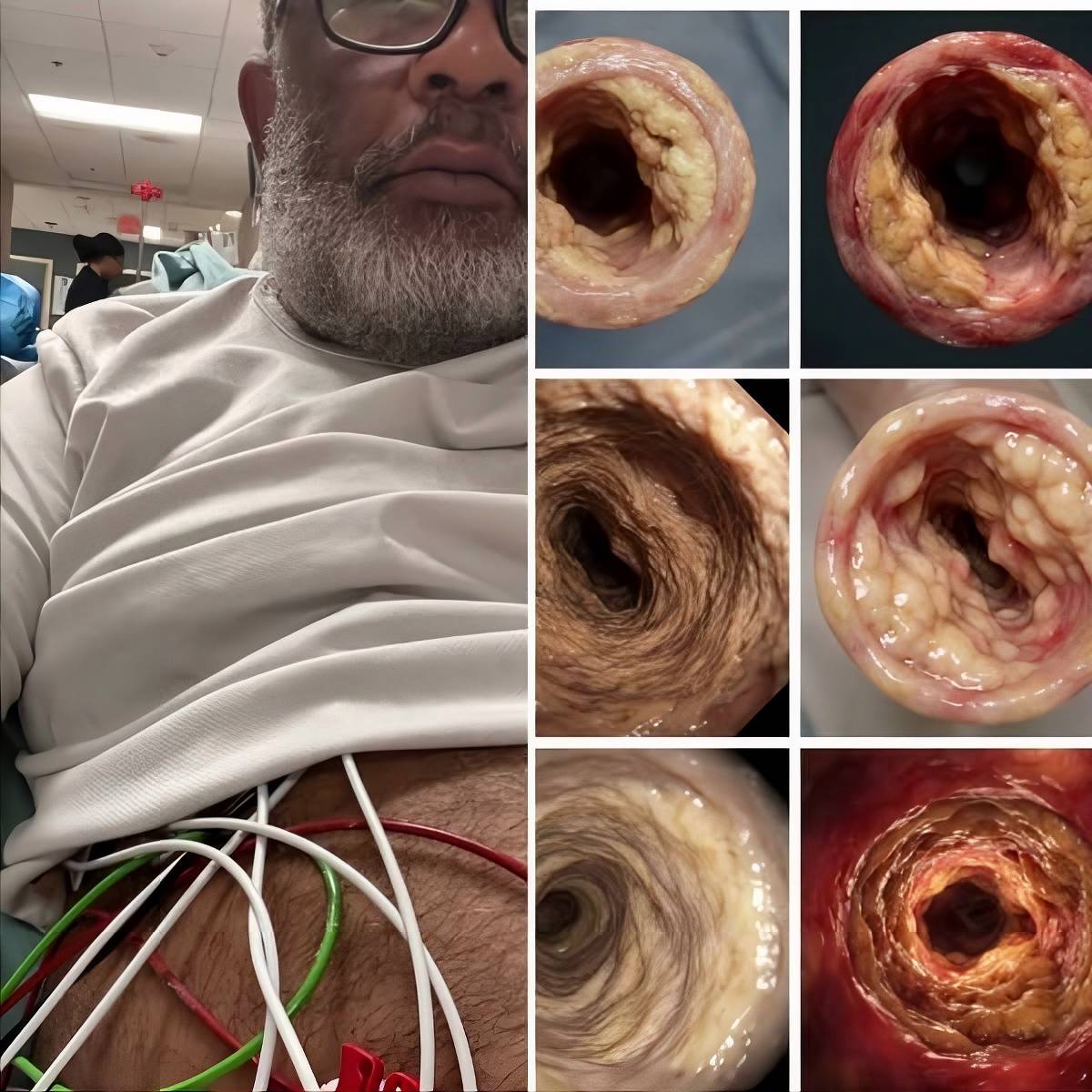
My husband has been quietly moving the family photo on the refrigerator for almost a year and I didn't notice until last month. There are two photos held up by the same magnet from a barbecue place in Macon. The one in front is from 2019. He's standing at our nephew's high school graduation in a navy blue button down, tan from a summer of yard work, smiling that real smile of his where his eyes crinkle up at the corners. The one behind it is from 2024. Last Christmas. He's sitting on our couch holding our newest grandbaby. His face is puffier. His skin has this grey, almost waxy look to it. His smile is the polite one, the one he uses for our pastor's wife. I never thought twice about which photo was in front. Until I came home one Tuesday in February to put away groceries and I saw the 2019 photo sitting on the counter, face down, like he'd been holding it. And the 2024 photo was tucked behind a Christmas card from our insurance agent, half hidden. He walked into the kitchen behind me, saw the photo on the counter, and slid it back onto the fridge in front of the newer one. Casual. Like he was just straightening up. He didn't know I'd seen. My name is Patricia. Most people call me Pat. I'm 56 years old and I've been married to my husband Glenn for 32 years this September. We live in a brick house on a quiet street in Florence, South Carolina, with a magnolia tree in the front yard that Glenn planted the year our oldest was born. Glenn just turned 61. He worked for the city for 28 years, in the water department, before he took early retirement two years ago when his hip started giving him trouble. Now he putters. He fixes things for our neighbors. He watches our grandkids on Thursdays. He is the most steady, unbothered man I have ever known. Glenn doesn't complain. Glenn doesn't make a fuss. When his daddy passed in 2017, he cried one time, in the truck, on the way home from the funeral home, and never spoke about it again. So when I saw him hiding a photograph of himself, I knew something was wrong. Because Glenn doesn't have vanity. Glenn has never once in 32 years asked me how an outfit looked. Glenn cuts his own hair with clippers in the bathroom and considers that sufficient. For Glenn to be ashamed of how he looked in a photo, something had cracked open in him that he wasn't telling me about. I didn't say anything that night. I made pork chops and rice and we watched Jeopardy and he fell asleep in the recliner at 8:45 like he does most nights. But I sat on the couch and I looked at him. And I started doing the math. He'd been more tired lately. Not exhausted. Just slower. Going to bed earlier. Coming up the porch steps with a little pause at the top that he hadn't had before. He'd stopped going to the gym at the Y back in October. He said his knee was bothering him. I'd believed him because Glenn doesn't lie. He'd been wearing his blue sweatshirt almost every day. The big loose one. Even on days when it wasn't that cold. I went back through my phone and I scrolled through every photo of him I had from the last two years. And I saw it. It wasn't sudden. That's what I want you to understand. It was so slow that I'd been right next to him for the whole thing and I'd missed it. His face had been changing. Slowly. Month by month. A little fuller in the jaw. A little duller around the eyes. The healthy color he used to have, the kind of color you get from being outside all the time, had faded into something more grey. I had been looking at him every single day and I had not seen what he could see in a photograph. I didn't sleep that night. The next morning I told him I'd made him an appointment with Dr. Aaron Whitfield, who has been our family doctor since the kids were little. Glenn looked up from his oatmeal and said, "What's the appointment for, Patty?" And I said, "Because I love you and I need you to humor me." He held my eyes for a long second. Then he said, "Alright." That was it. That's a 32 year marriage in one sentence. Dr. Whitfield ran a full panel. Blood work, the whole thing. We had to wait a week for the results. That was the longest week of my recent life. When Dr. Whitfield called us back into his office, he had his reading glasses on his nose and a printout in his hand, and he looked at both of us and said, "Glenn, your cholesterol numbers are not good." He went through it. Total cholesterol. The bad kind, the LDL. The good kind, the HDL, which was lower than it should have been. The triglycerides, which were higher than they should have been. He said the words "significantly elevated" three times. He said Glenn's numbers had probably been drifting like this for years, but it had accelerated since he retired and stopped moving as much. He said cholesterol is the kind of thing that doesn't usually announce itself. It just sits in your blood, year after year, and quietly does things to your circulation that you don't feel until something serious happens. He said Glenn was lucky we'd caught it before something serious happened. He wrote a prescription for a statin. Glenn looked at the prescription pad. He looked at me. He looked at Dr. Whitfield. He said, "Doc, my brother Earl has been on those statins for 11 years. He says his legs feel like cement most days. I don't want that." Dr. Whitfield, to his credit, said, "I hear you. Take the prescription home. Sit with it. Read about it. Come back in 3 months and we'll talk." We drove home in silence. When we pulled into our driveway, Glenn turned the truck off but didn't get out. He just sat there with both hands on the wheel. He said, "Patty, I don't want to be old yet." I reached over and I held his hand and I didn't say anything because there was nothing to say. That night, after he went to bed, I sat at the kitchen table with my laptop and I started reading. I read for 4 hours. I read about cholesterol. About what it actually is. About why it matters. About what statins do and what some of the side effects are and why Earl, Glenn's brother, might feel the way he feels. I read about how the body manages cholesterol naturally. About the liver. About something called bile acid sequestration, which sounds complicated but isn't. I read about how cholesterol isn't just a number, it's part of a much bigger story about how the whole circulatory system is working. About inflammation in the blood vessels. About oxidative stress. About the slow drift of a body's internal balance over the decades of a man's life. I read about diet. About fiber. About exercise. And then, somewhere around 11 at night, on a website I'd never been to before, I came across a paragraph about a fruit I'd never heard of. Amla. Indian gooseberry. A small green sour berry that grows on a tree in northern India and has been used in traditional medicine over there for thousands of years. I almost closed the tab. I'm not the kind of woman who goes looking for ancient miracle berries on the internet. I make casseroles. I'm in the choir. I'm a practical person. But I kept reading. Because the language on this website wasn't woo woo. It was citing actual research papers. It was talking about specific things in specific bodies. What it said was this. Amla is one of the most concentrated natural sources of vitamin C on earth. But it's not just the vitamin C. It's the polyphenols, the tannins, a whole family of plant compounds that work together as some of the most studied natural antioxidants there are. And what the research has been looking at, for years now, is the relationship between amla and the markers your doctor measures when he draws your blood. Specifically, amla has been studied for its association with healthy lipid profiles. Cholesterol. Triglycerides. The whole picture. The way it works, as best I understood it sitting there in my pajamas at 11:30 at night, has to do with how the liver processes fats and how the blood vessels handle the inflammation and oxidative wear that comes from decades of being alive. When the liver is supported in doing what it's already trying to do, it can clear cholesterol more efficiently. When the blood vessels aren't constantly fighting low-grade oxidative stress, the cholesterol that is moving through them is less likely to do damage. It's not a magic fix. The research isn't framed that way and the people writing about it aren't promising anything dramatic. It's framed as supporting what your body is already trying to do. Helping the natural systems do their jobs. The way a tune up helps a car run better. The car was already running. It just runs better when the engine is breathing right. I read about this for another 2 hours. And the more I read, the more it made sense to me. Because here's the thing nobody had really explained to Glenn or me, in 32 years of doctor's visits. Cholesterol numbers aren't really about cholesterol the way we tend to think about it. We think of cholesterol as this bad thing floating around in our blood that the statin pushes down. Like emptying a bucket. But cholesterol is actually a substance your body makes on purpose, every single day, because it needs it for hundreds of things. The number on the lab printout isn't about how much cholesterol exists. It's about whether the system that manages it is in balance. When the system drifts out of balance, the number goes up. The statin pushes the number down by interfering with the manufacturing. But it doesn't fix the underlying drift. What amla seemed to be associated with, in the research, was supporting the underlying balance. Helping the liver and the blood vessels and the antioxidant systems all stay in tune with each other. That made sense to me in a way that the statin conversation hadn't. I found a brand called Alevia. What I liked about them, sitting at my kitchen table at almost 2 in the morning, was that they didn't oversell. The bottle was just amla. Concentrated organic amla. No proprietary blend. No 14 other ingredients. Made in the United States, third party tested. The website didn't promise anything. It talked about supporting cardiovascular wellness. Supporting healthy circulation. Working with the body's natural antioxidant defenses. It was the first thing I'd read in a week that didn't talk down to me. I ordered two bottles. I told Glenn about it the next morning, over coffee, because I am not the kind of wife who sneaks things into her husband's vitamin organizer. I said, "Glenn, I read about this for half the night and I want to try it. Dr. Whitfield said we have 3 months before we have to make the statin decision. I want to use those 3 months. Will you take it with me?" He looked at his coffee. He said, "Patty, if you spent half the night reading about it, that's good enough for me. I'll take it." That's a 32 year marriage in another sentence. The bottles came on a Friday. We started Saturday morning. One capsule each, with breakfast. We made some other changes too, because I wasn't going to put it all on a berry. We started walking after dinner. Just to the end of the street and back at first, because Glenn's hip. Then a little farther. We swapped out the white bread for the seedy kind. I stopped frying things in butter and started using olive oil. But the amla was the thing I was watching. Week 1, nothing. Of course nothing. Bodies don't change in a week. Week 2, nothing I could point to. Week 3, Glenn said his energy felt a little different in the afternoons. He said he wasn't crashing at 2 the way he had been. He said it casually, the way he says everything. Week 4, he came in from working in the front yard, sweat on his forehead, and he said, "Patty, I worked out there for an hour and a half and I'm not wiped out." Week 5, the blue sweatshirt was in the laundry basket and didn't come back out for a couple of days. He'd been wearing his old polos again. Week 6, my sister Jeanine came to visit from Charlotte and she hadn't seen Glenn since Thanksgiving. She hugged him hello and then she pulled back and she said, "Glenn, you look different. Did you lose weight?" He hadn't really lost weight. Maybe a few pounds. But Jeanine wasn't seeing weight. She was seeing the same thing I'd seen on the refrigerator photos. The grey was lifting. The waxy quality of his skin was going back to something more like the man I'd married. Week 8, he walked all the way down to the corner store and back without his cane. Week 10, we went to Dr. Whitfield for the 3 month follow up. He drew blood. We waited a week for the results. When the call came, I was sitting in the kitchen with the speakerphone on. Dr. Whitfield said, "Glenn, I don't know what you've been doing, but your numbers have moved in the right direction. Significantly. Your LDL is down. Your HDL is up. Your triglycerides came down quite a bit." He said, "I want to see you in another 3 months. Keep doing what you're doing." Glenn didn't say anything for a long time. He just sat at the table. Then he said, "Doc, can I hold off on the statin?" And Dr. Whitfield said, "Glenn, at these numbers, with this trajectory, I'm comfortable holding off. We'll keep watching it." When we hung up, Glenn looked at me across the table. His eyes crinkled at the corners. Not the polite smile. The real one. The 2019 smile. I cried into my coffee mug. I'm writing this because last week I noticed something. The photos on the refrigerator have been swapped. The 2024 one is in front now. He must have done it sometime in the last couple of weeks. Except, looking at it again with fresh eyes, the man in that Christmas 2024 photo doesn't look like the same man anymore. The puffy face isn't the face Glenn has now. The grey skin isn't his skin now. The polite smile isn't his smile now. He's not hiding the photo behind a Christmas card. He's letting it sit there in front because he's proud of how far he's come from it. That's the thing about this season of life that nobody warns you about. You don't fall apart all at once. You drift. Quietly. Year after year. And the people who love you are right next to you the whole time and they don't see it because they're looking at you with eyes that haven't refreshed since you were 45. But you see it. In photos. In mirrors. In the way your reflection catches you off guard in a store window. And you start hiding. Moving the photo. Putting on the loose sweatshirt. Skipping the family gathering because you don't want to be the version of yourself you've become. If that sounds like you, or like someone you love, I want you to know that what helped Glenn wasn't a miracle. It wasn't a quick fix. It wasn't a prescription. It was a small green berry from northern India that has been used by ordinary people for thousands of years, plus walks after dinner and seedy bread and a wife who wouldn't let it go. Alevia Amla is what we take. One capsule a day. With breakfast. We've been on it almost 9 months now. If you want to try it, they offer a 90 day money back guarantee. You don't pay if it doesn't work for you. They make it easy. I called them once with a question about my auto delivery and a real human being answered the phone in under a minute, which is more than I can say for our cable company. The link is below. Glenn doesn't move the photos anymore. That's the part I keep coming back to. The man I married has been hiding for a year, and now he's not hiding. P.S. I want to say something to the wives. We are usually the ones who notice. We are usually the ones reading at the kitchen table at 11 at night. We are usually the ones who do the worrying out loud so our husbands don't have to. If you are doing this right now, you are not crazy and you are not nagging. You are the early warning system in a body's life. Trust what you see. Order the bottle. P.P.S. The 90 day guarantee means you have plenty of time to actually see whether it does anything. It took 4 to 6 weeks before I could point to real changes in Glenn. Don't judge it on week 1. Give it the time the bottle is designed to be given. P.P.P.S. Glenn wanted me to mention that he is not, in fact, vain. He says he was not hiding photos, he was "organizing" them. I will let him have that one. 👉 https://alevia.com/amla/33
Like this ad? Make it yours.
Crush rebuilds this exact creative around your product — your brand, your colors, your offer — in about a minute.