
Inactive· since May 28, 2026
- 7
- days it ran
- 2
- relaunches
Ad copy
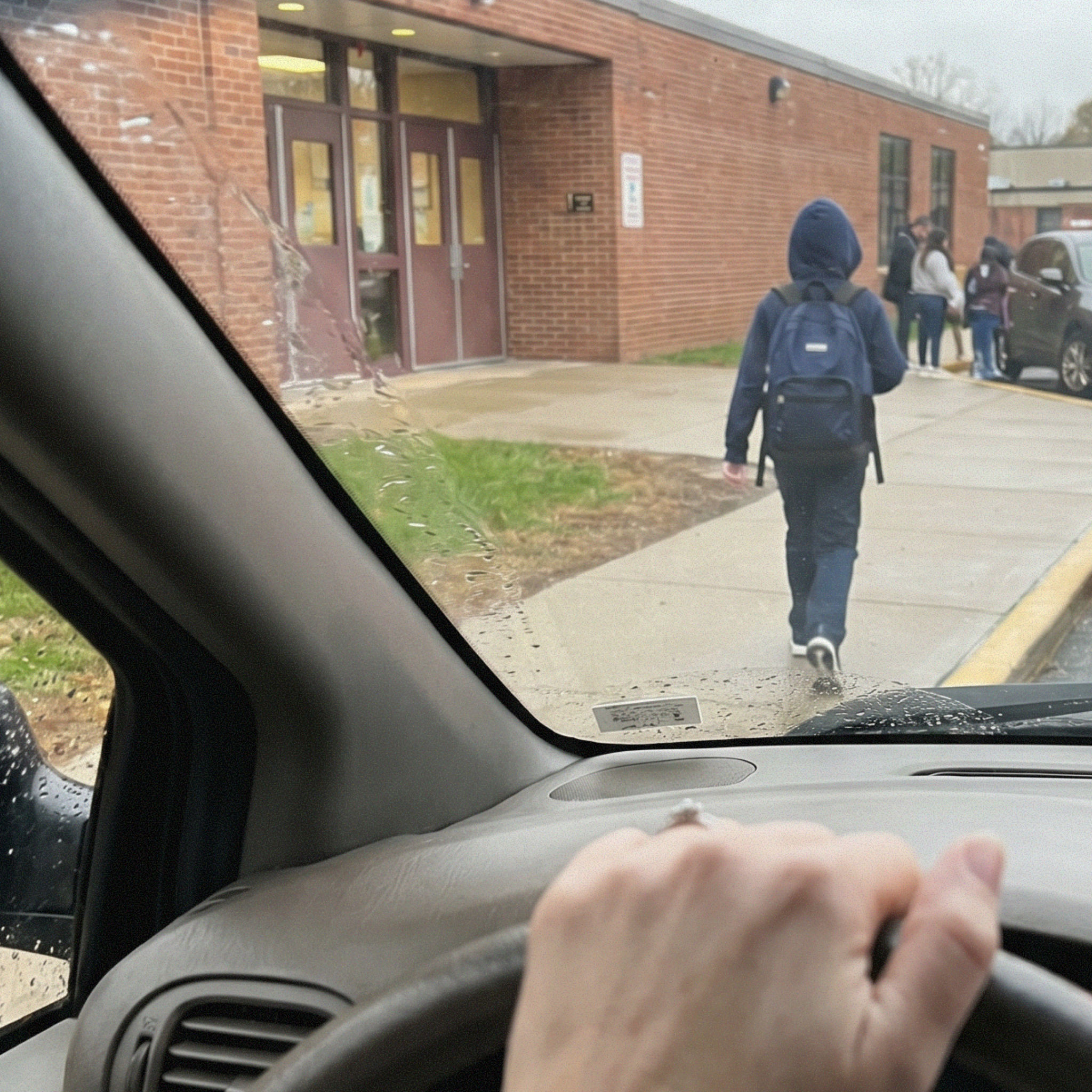
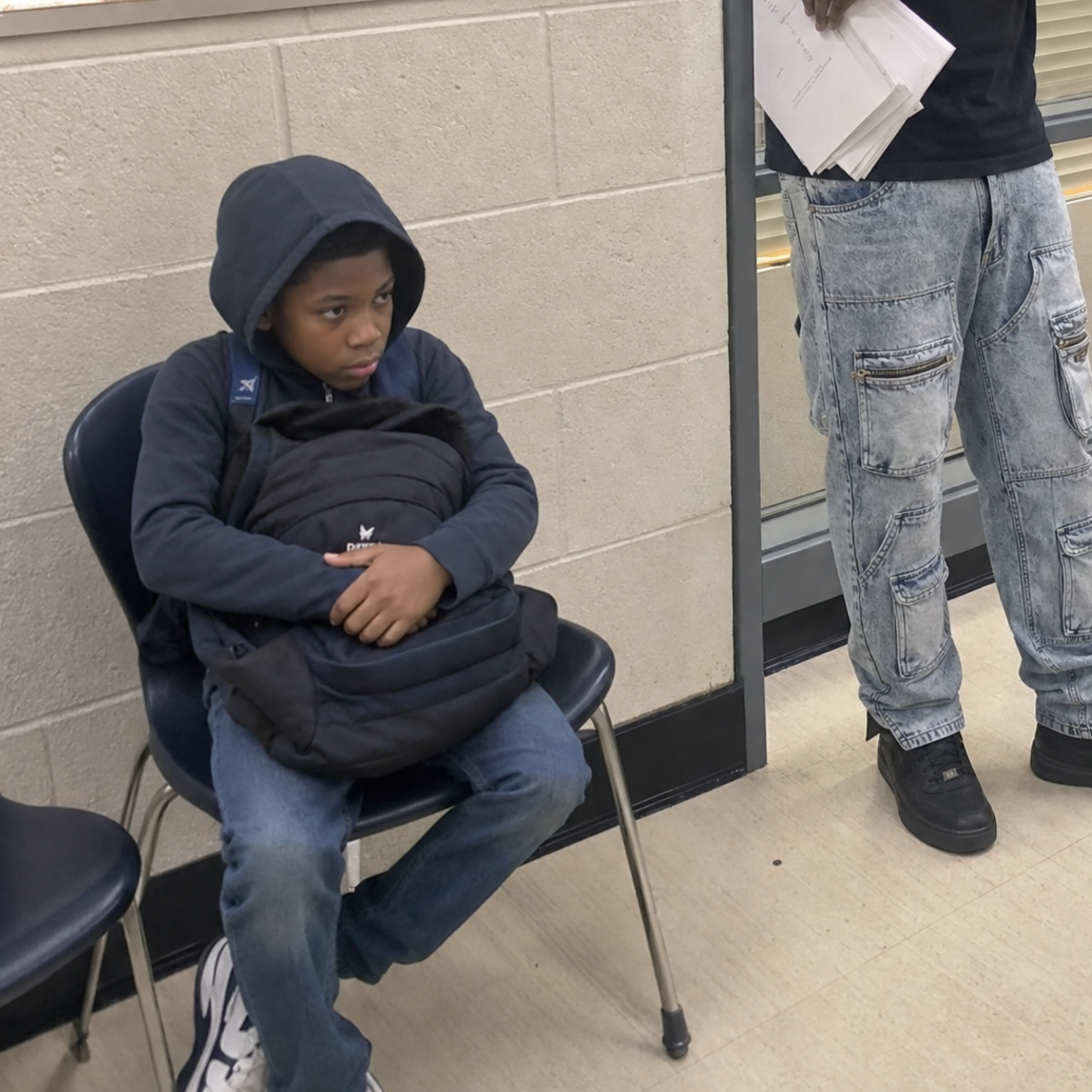
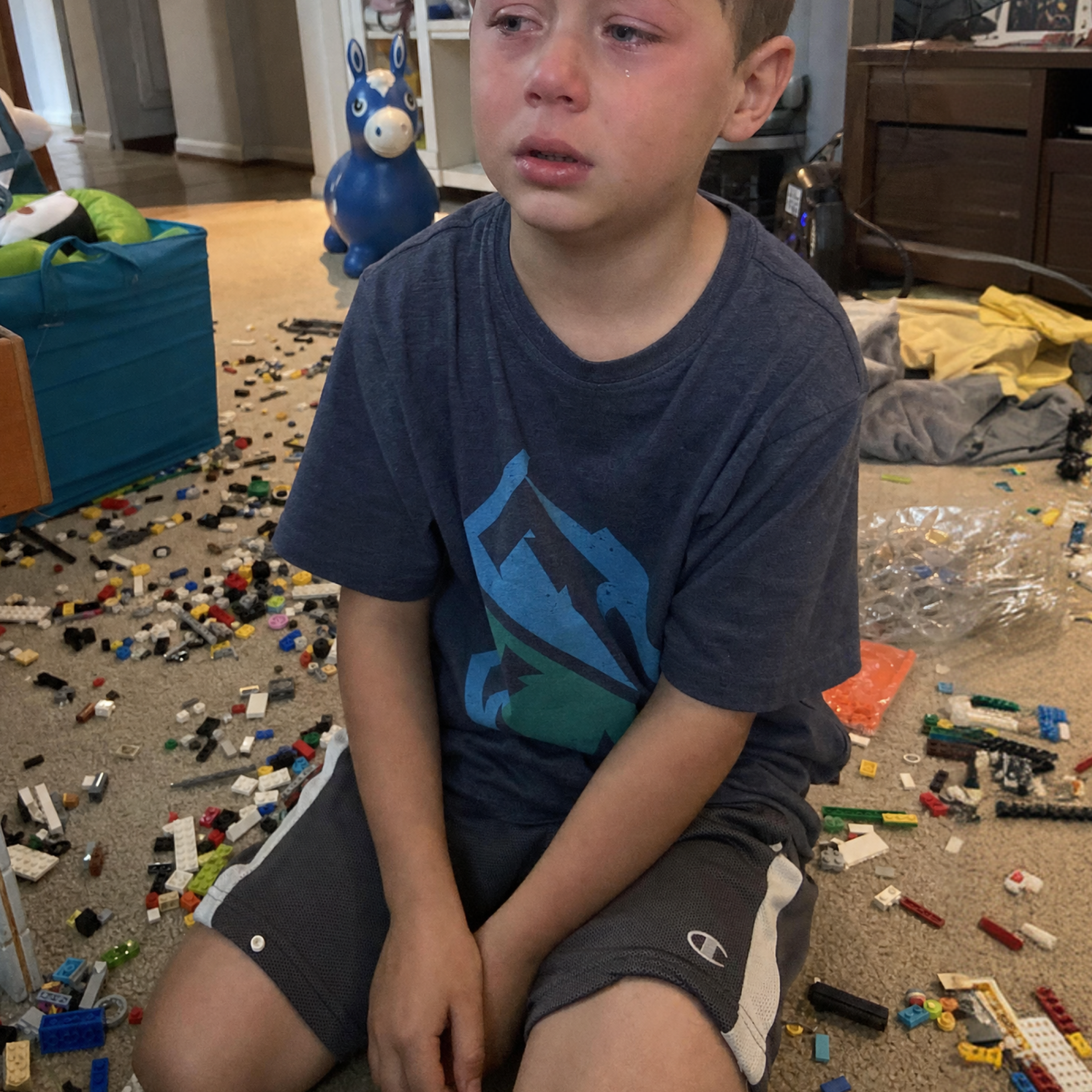
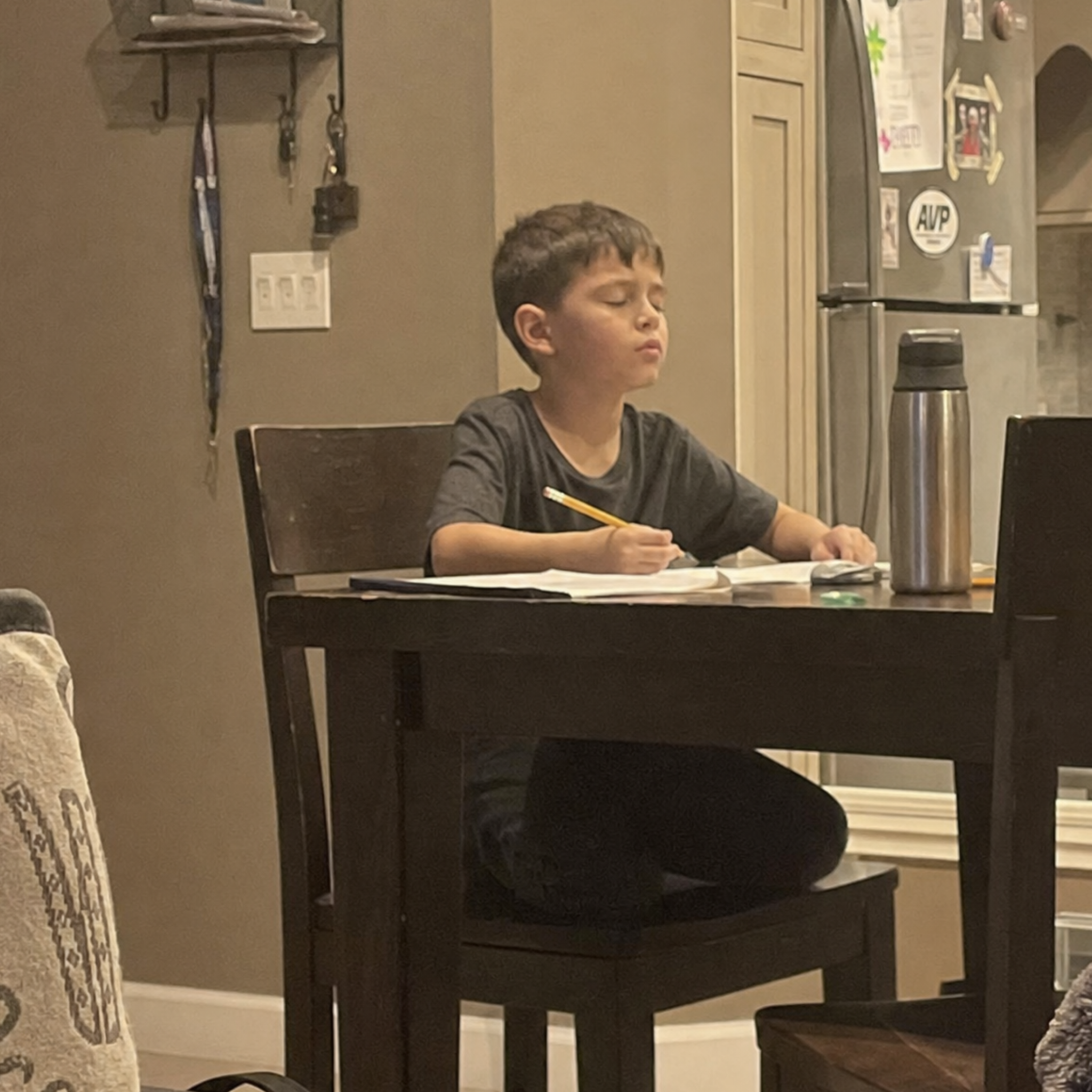
I lied to my husband for the first time in 25 years of marriage. I told him I was 40 minutes late because of traffic. But the truth was I couldn't get out of the school parking lot because I couldn't stop crying long enough to drive. The principal had just told me that if my 9-year-old has one more "incident" — they're calling Child Protective Services to do a wellness check on our home. Forty-five minutes before that, I'd been sitting in the front office wearing a blazer I only wear when I need to look like a woman who has things under control. There were three of them on the other side of the table. The principal in the middle. My son's teacher to her left. A woman I'd never met before to her right, with a lanyard that said "School Psychologist." Three chairs. One folder. The folder was thick. Manila. The kind you get when something has been accumulating for a long time. The principal opened it and started reading from the first page. Calmly. The way you'd read a recipe. September 14th — threw a chair across the classroom because another student "got the answer he was going to say." October 2nd — called the math teacher "intellectually lazy" and refused to apologize for an hour. October 19th — bit his own arm hard enough to leave a mark when he was asked to redo a worksheet he'd already finished correctly. November 6th — locked himself in a bathroom stall for 42 minutes and made another child cry through the door. November 21st. December 4th. December 11th. December 18th. She kept reading. I kept nodding. My hands were folded in my lap the way you fold them in church. Then she got to last Tuesday. My son had refused to participate in a science lesson about the planets. Said he already knew it. Said the teacher was "factually incorrect" about something to do with Pluto. When the teacher asked him to please sit down, he picked up a Trapper Keeper and threw it. It hit another student in the face. There was a small cut. The other parents had been notified. The principal closed the folder. She folded her hands like I was folding mine. She said: "We're at a place where I have to be very honest with you. If there is one more incident — and I do mean one — we will be required to make a report to Child Protective Services. They will come to your home. They will interview you. They may interview your son separately." I heard the school psychologist start saying something. Something soft. About how this wasn't a punishment. About how it was just a "safety protocol." I don't remember the rest. I remember standing up. I remember thanking them. I remember the principal saying "we'll be in touch" in a voice that sounded like a doctor saying "I'll let you get dressed." I remember walking down the hallway past the same bulletin board where my son's name is laminated in three different places — Honor Roll, Reading Champion, "Student Spotlight" from October — and feeling like the hallway was tilting. I made it to my car. I put my purse on the passenger seat. I put the keys in the ignition. Then I put both hands on the steering wheel and the sound came out of me before I knew it was coming. It wasn't crying. It was something underneath crying. It was the sound a person makes when she finally understands what kind of mother she is going to have to admit, to her husband, she has become. The kind whose child the system is preparing to take a closer look at. My phone buzzed once. My husband. "Hey babe, leftovers or pizza tonight?" I stared at the screen until it went black. I picked it up. I typed traffic. I hit send. Then I sat there for another twenty-three minutes — I counted — and watched the parking lot empty around me, one minivan at a time, until I was the only car left and the lot lights flickered on overhead. When I finally got home, my son was at the kitchen table with my husband, eating a quesadilla, explaining the difference between a brown dwarf and a white dwarf in the kind of vocabulary you'd expect from a master's student. My husband looked up at me and smiled. "He's been at it for twenty minutes," he said. "I can't keep up." My son turned to look at me. His eyes are huge. The lashes go forever. He'd had a juice box and there was a faint pink stain at the corner of his mouth. "Mom," he said, "did you know that if you fell into Jupiter, you would never actually hit the bottom?" He waited for me to say something amazing back. The way I always do. I said "wow." Then I excused myself, walked into the laundry room, sat down on the floor between the dryer and the wall, and put my face into a clean towel so nobody would hear me. On the towel I could still smell the dryer sheet. Lavender. The one I always buy. The one that's supposed to make a house smell like home. That was the day I stopped pretending we hadn't tried everything. Because we had. We'd done the gifted child therapist. Two hundred dollars a session. A woman with a sand tray and a wall of degrees who diagnosed my son with "Big Feelings" and gave him a laminated feelings wheel. My 9-year-old — who already used the word "ambivalent" correctly in a sentence — memorized the wheel in 11 minutes and started weaponizing it. "I'm experiencing rage." "I'm experiencing despair." "I'm experiencing existential frustration." He could narrate the storm. He could not stop it. Mid-meltdown, he would literally announce his emotional state with the precision of a courtroom witness while throwing his backpack at the wall. Six months in. Five thousand dollars. And my son was no calmer than the day we started — he was just better at describing his own disasters. Then came the "behavior plan." The sticker chart. The reward system. The consequence ladder. He read the consequence ladder, did a verbal analysis of which violations were "worth the trade-off," and informed me that the sticker chart was "designed for a younger child" and he would not be participating. He was eight. Then it was the parenting books. The ones with one-word titles that promise to fix everything. I bought four. I read all of them. I bought highlighters. Then the meditation apps. The ones with the cartoon characters that breathe in and out. Then the pediatrician, who suggested we "consider an evaluation for ADHD" — even though every teacher he's ever had has said he can focus for six straight hours on something that interests him. Then the supplements. The Omega-3s. The magnesium. The blueberries-every-morning phase. Then the "maybe he needs more structure" phase. Then the "maybe he needs less structure" phase. Then the "maybe we need to take screens away" phase. Then the "maybe screens are the only thing keeping him regulated" phase. Five years of trying. Five years of every expert, every book, every parenting trend. And here's what nobody — not one therapist, not one pediatrician, not one teacher, not one $200 sand-tray session — had ever even mentioned to me… That something might be happening inside my brilliant son's brain that wasn't a "behavior" at all. That what looked like defiance might actually be a mismatch. That a kid who can argue like a 14-year-old lawyer and melt down like a 4-year-old toddler might not be doing it on purpose. That my son might be carrying around two completely different ages inside the same body. And every single "expert" we'd handed him to had been treating him like a regular kid who was just choosing to be difficult. That was the part that broke me sitting on the laundry room floor that night. Not the principal. Not the folder. Not the CPS threat. It was realizing that for five straight years, every grown-up in my son's life had been trying to fix a behavior problem. And I was starting to think it wasn't a behavior problem at all. It was almost 1am by the time I made it back to the couch. My husband was asleep. My son was asleep. The dishwasher was running on the wrong cycle and I didn't have it in me to fix it. I opened my laptop. I typed a phrase into Google I'd never typed before in five years of trying. Not "gifted child meltdowns." Not "ADHD behavior plan." Not "how to discipline a smart kid." I typed: "smart kid acts like a toddler emotionally." The third result down was a research summary from the National Institute of Mental Health. I clicked it. I read it twice. And I sat up. The article said my son wasn't being bad. My son was going through something called Asynchronous Development. Asynchronous. Out of sync. Specifically — the different parts of his brain are growing at completely different speeds. Researchers used MRI scans to track 307 kids over years of brain development. What they found rewrote everything I thought I knew about my son. In a typical kid, the brain develops more or less evenly. The thinking part, the feeling part, the impulse-control part — they all grow on roughly the same timeline. In a gifted kid, that's not what happens. The cortex — the thinking part of the brain — develops on a fundamentally different schedule. It grows faster. It grows longer. It doesn't reach its peak until age 11 or 12, instead of 7 or 8 like everyone else. Which means a gifted 9-year-old like mine can have the intellectual reasoning power of a 14-year-old. But here's the part that broke me… The emotional regulation center of the brain — the limbic system, the part that puts the brakes on a meltdown — doesn't get the same upgrade. It develops on the totally normal, age-appropriate timeline. So my 9-year-old has the thinking brain of a 14-year-old. Wired to the emotional brain of a 9-year-old. Sometimes younger. Researchers call this the 5-Year Asynchrony Gap. Five years. Five years between what my son can think and what my son can feel. Five years between the kid who can explain why Jupiter has no surface and the kid who throws a Trapper Keeper at another child's face because someone told him he was wrong about Pluto. They are not the same age inside that one little body. They have never been. It is not a behavior problem. It is not a discipline problem. It is not a "he just needs more consequences" problem. It is a biological mismatch. His thinking brain is generating problems at one age level. His feeling brain is trying to handle them at a much younger one. I sat on the couch staring at my laptop screen with my hand over my mouth. Because suddenly every single thing made sense. Why the feelings wheel didn't work. The wheel was meant for his mental age. The meltdowns were happening at his emotional age. He could describe the storm like a 14-year-old. He could not stop it at 9. Why the consequences didn't work. Consequences require you to weigh a future outcome against a present feeling. That is an emotional regulation task — and his emotional regulation is 9. Sometimes younger. Why "reasoning with him" never worked mid-meltdown. I was talking to the 14-year-old brain. The 9-year-old brain was the one running the body. Why the school sees one kid and we see another. School activates the 14-year-old. Home — where the rules are looser and the emotional safety is higher — is where the 9-year-old comes out and falls apart. Why every behavior plan, every reward chart, every "calm down corner" failed. Every single one of them was designed for a regular kid whose brain is developing at one speed. My son is not a regular kid. He is two ages in one body. A 14-year-old mind, wired to a 9-year-old's emotional regulation system, in a constant biological mismatch he did not ask for and cannot fix on his own. The meltdowns aren't him being bad. The meltdowns are what overflow looks like when a brain is generating problems five years faster than the emotions know how to handle them. I sat there in the blue light of the laptop and I started crying again. Not the parking lot crying. A different kind. The kind that comes when you've been carrying the wrong weight for five years and someone finally tells you which weight you were supposed to be carrying. My son is not bad. My son is not broken. My son is not a "behavioral concern." My son has a developing brain that is years ahead in one place and exactly on schedule in another — and nobody in his life had ever even tried to help the slower part catch up. At the bottom of that same research summary was a link to a program called Legends. Five minutes a day. Done on my phone. Sitting next to my son on the couch. That's the whole thing. Not a therapist's office. Not a waitlist. Not another $200 hour where my son outsmarts the curriculum in seven minutes flat. Five minutes. With me. The same five minutes I used to spend scrolling parenting accounts on Instagram while he played alone with his rock collection on the floor. Now we do it together. Every night after dinner. Before he goes off on a deep dive about black holes and forgets to brush his teeth. And here's what I didn't see coming… That five minutes has become the calmest, closest part of my entire day with him. He picks the story. I sit next to him. He laughs at something. He tells me something I didn't know about how he sees himself. Five minutes. Then it's done. The part that finally made me trust it — the part that made me click "buy" at 1:14am with mascara still on my cheeks — was that Legends is built on research from Harvard, Yale, and Duke. Not a parenting trend. Not a podcast. Not whoever is currently going viral on TikTok telling moms to do the opposite of whatever they did last year. Actual scientists who study how kids' brains develop. Actually built into a daily 5-minute training that a 9-year-old can do. Designed specifically for the gap nobody else was treating. And for the first time in five years… I am not outsourcing my son anymore. Not to the school. Not to the therapist. Not to the next book or app or expert with a waitlist. I am the one sitting next to him on the couch every night. I am the one training the part of his brain that's been falling behind for five straight years while every adult around him kept demanding it act its age. Unlike everything else we've tried, this is actually something that works. I'm starting to really see a difference. Here's what actually happened. Week 1: He learned a tool called "Catch & Replace" — catching his inner critic in the act and swapping the words for something true. The first time he used it, he was working on a model rocket and a fin snapped off. He looked at it. Then looked at me and whispered, "Catch it. I'm not stupid, I just need glue." Then he asked for glue. Week 3: Tuesday night homework. He missed a step on a math problem. The old version of him would have torn the paper in half. Instead he stopped, did Box Breathing on his own — in for four, hold for four, out for four, hold for four — and went back to the problem. He didn't need me. He didn't even know I was watching from the hallway. Week 6: A Thursday afternoon. The teacher called. I felt my stomach drop before I answered. But it wasn't an incident. She was calling because that morning, another student had told my son he was wrong about a fact during a class discussion. She said she watched him pause. Take a breath. Say his mistake ritual under his breath — "shake it off" with a little shoulder shimmy he made up himself. And then he said, "Okay, let me think about that." The teacher's exact words on the phone: "I don't know what you're doing at home, but I have never seen him do that before." I had to sit down on the kitchen floor to finish the call. The same son. The same school. The same brain that has been five years out of sync for his entire life. A completely different child. For about a week I kept waiting for it to fall apart. Was it a fluke? A honeymoon phase? Was I just so desperate to see progress that I was inventing it? So I did what I always do at 11pm when I can't sleep. I went looking. I read every Legends review I could find. Hundreds of them. Other parents. Other kids. Other versions of the kid I'd been waking up next to for nine years. And what I found cracked something open in me. A dad named Brandon, whose son told him he was scared he didn't fit in at school… "There was this kind of switch that flipped. He's running around with his buddies giving fist bumps saying 'Dad, I had a great day.' He's starting to really see that what he's thinking in his mind is just in his mind." A mom named Lisa, six months in with her 9-year-old… "It has truly improved my son's ability to handle stressful situations. His confidence has greatly improved. These are life lessons that my son will take with him." A mom named Cathleen, posting after her son's very first session… "My son actually cried at the end of it and told me how happy he was that I bought this for him. He said he really talks to himself in a negative way and wants to stop." A mom named Alisa, whose neurodiverse 10-year-old "felt like the world was ganging up on him"… "I truly think the app is lending him skills that he didn't have in his arsenal before." A mom named Shannon, who'd already tried therapy and meds… "This app has been, hands down, one of the best things to happen to my kid. He BEGS for it every single night. It's really made a difference in the way he sees himself." Thousands of parents. All of them saying the same thing in different words — that the meltdowns, the outbursts, the "behavior incidents," the "I hate myself" whispered into pillows at night — none of it stopped because of luck. None of it stopped because the kid finally "matured." It stopped because somebody finally taught their child the one skill nobody else was bothering to train. And I wasn't crazy. I wasn't seeing what I wanted to see. I was just the latest mom watching it actually work. So here's where I leave you, mama. Because I know you. I know how you found this. You were sitting in your car after pickup. Or hiding in your laundry room. Or scrolling on the couch after another "incident report" email from the school, with the dishwasher running on the wrong cycle and your phone screen lighting up your face at 11:47pm. You've been nodding the whole way down. And now you have two paths in front of you. Path one — you close this tab. You go back to the sand tray and the feelings wheel and the consequence ladder. The reward charts. The pediatrician who suggests another evaluation. The "have you tried being firmer?" advice from your mother-in-law. You already know where that road goes. You've been on it for years. The folder gets thicker. The phone calls from school get more frequent. The gap between who your kid IS and who the world says he is keeps getting wider. And the version of your son you can SEE in there — the one who explains Jupiter, the one with the rock collection, the one who looks at you with those long lashes and asks you something brilliant at the dinner table — that version slowly gets buried under the version everyone keeps writing reports about. Or… Path two — you give him five minutes a day. Five minutes is less than one meltdown. Less than one car ride home from a parent-teacher conference you don't want to take. Less than the time you spent crying on the laundry room floor last Tuesday. Five minutes. On the couch. Together. And here's why I can tell you this with my whole chest… Legends comes with a full money-back guarantee. Try it with your kid. Do a few weeks of the workouts together. Watch what happens. If you don't see a shift — in the meltdowns, in the outbursts, in the way he responds when something doesn't go the way his brilliant mind insisted it should — you get every dollar back. No questions. No hoops. No call you have to dread making. You are not risking a single thing. Your son has everything to gain. P.S. — That manila folder is still on a shelf in my closet. I haven't thrown it out. I don't think I ever will. Not because I want to remember it. Because I want to remember what it felt like to be the mom who didn't know there was another way. The mom who thought her son was a behavior problem. The mom who didn't know her brilliant kid had a brain at war with itself — and that nobody, not one single adult in five years, had ever tried to help the slower part catch up. If you're sitting where I was sitting — in your parked car, in your laundry room, on your kitchen floor at midnight with a folder of incident reports and a child upstairs you don't know how to help — please hear me on this one thing. Your son is not bad. He is not broken. He is not a "behavioral concern." He has a brain that is two ages at once, and nobody has ever taught the younger part how to catch up. You are the one who can change that. Five minutes a day. That's the whole thing. That's all it takes to start teaching the kid the world keeps writing reports about that he is, in fact, exactly who his mother always knew he was.
Like this ad? Make it yours.
Crush rebuilds this exact creative around your product — your brand, your colors, your offer — in about a minute.