
Active· since Jun 25, 2026
- 84
- days running
- 0
- relaunches
Ad copy
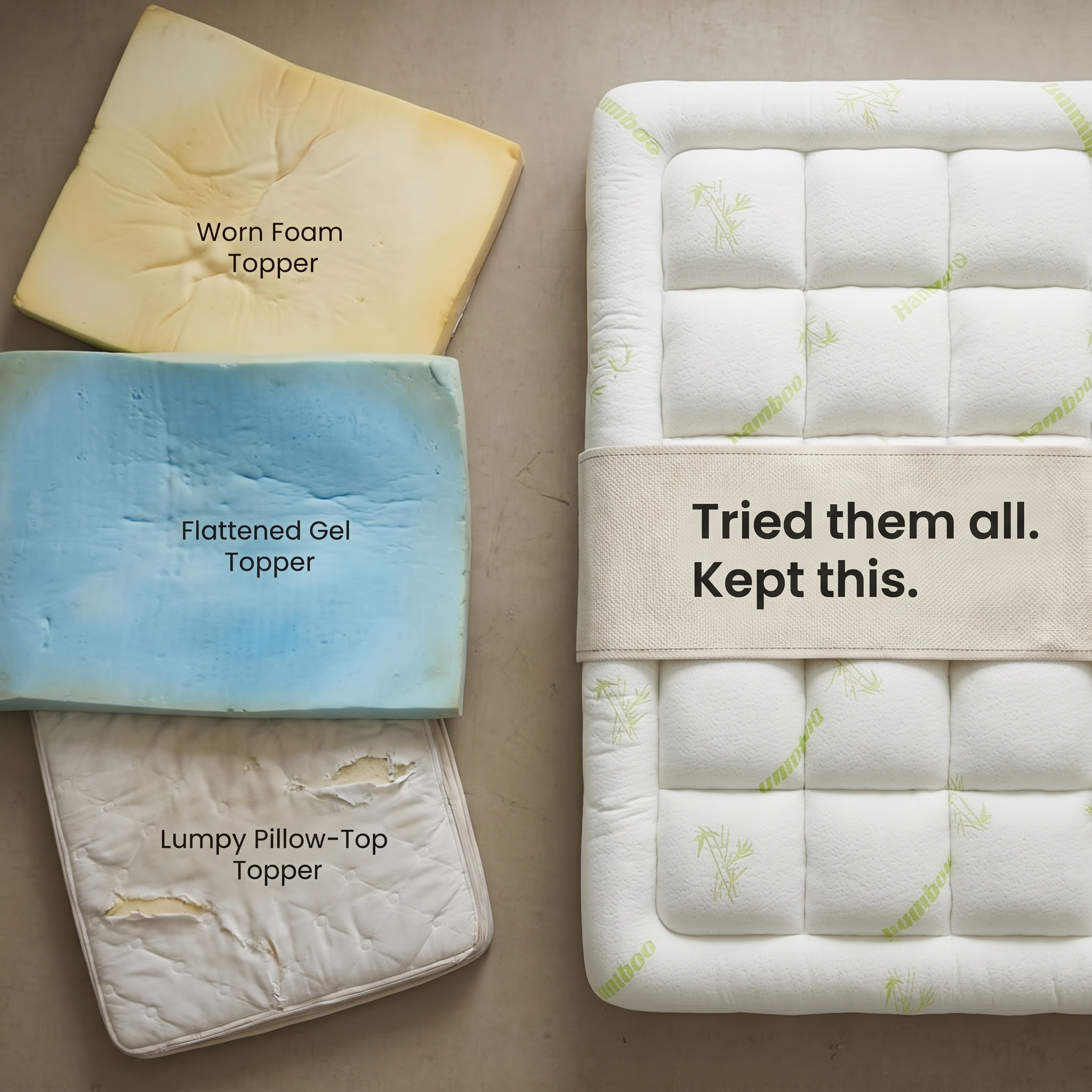
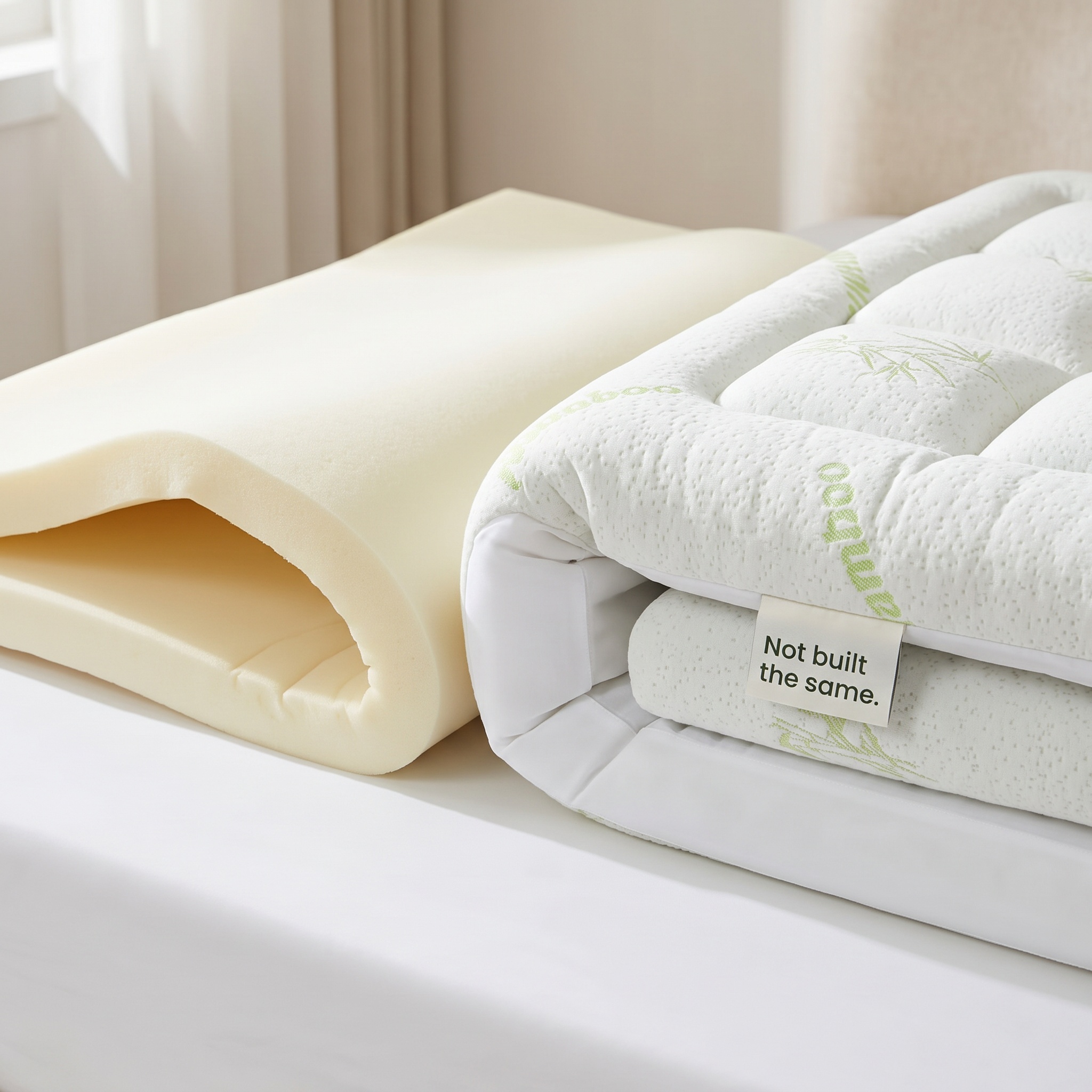
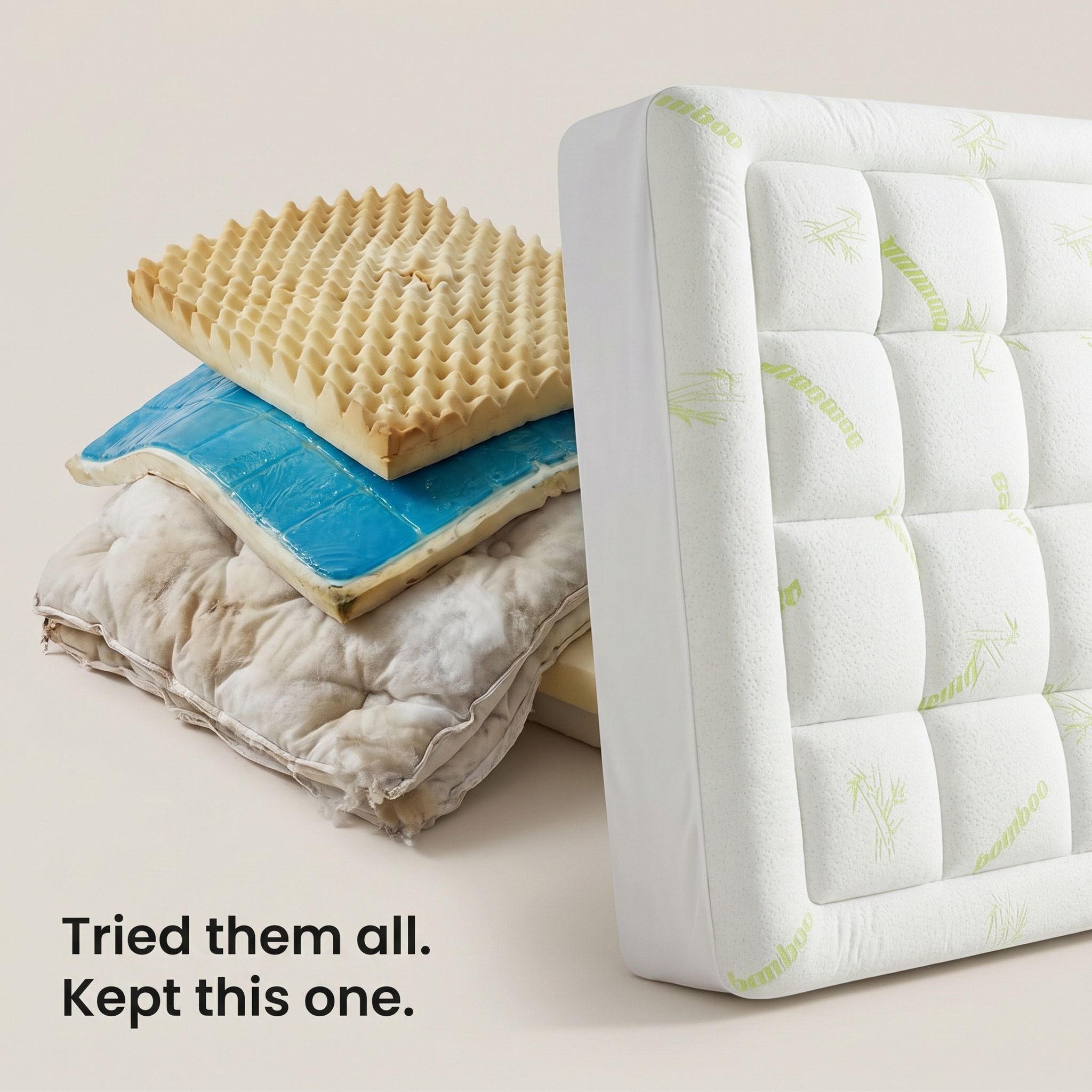
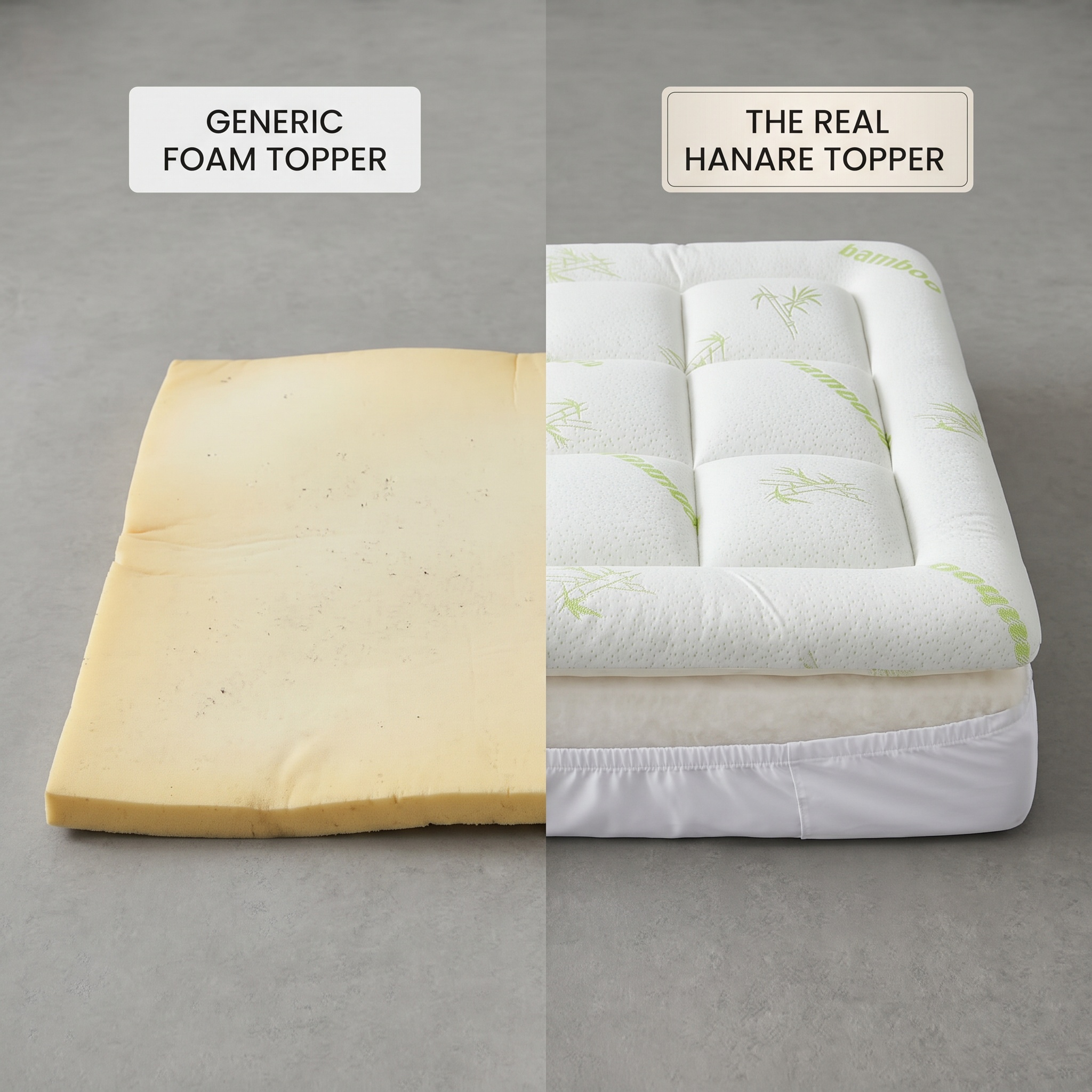
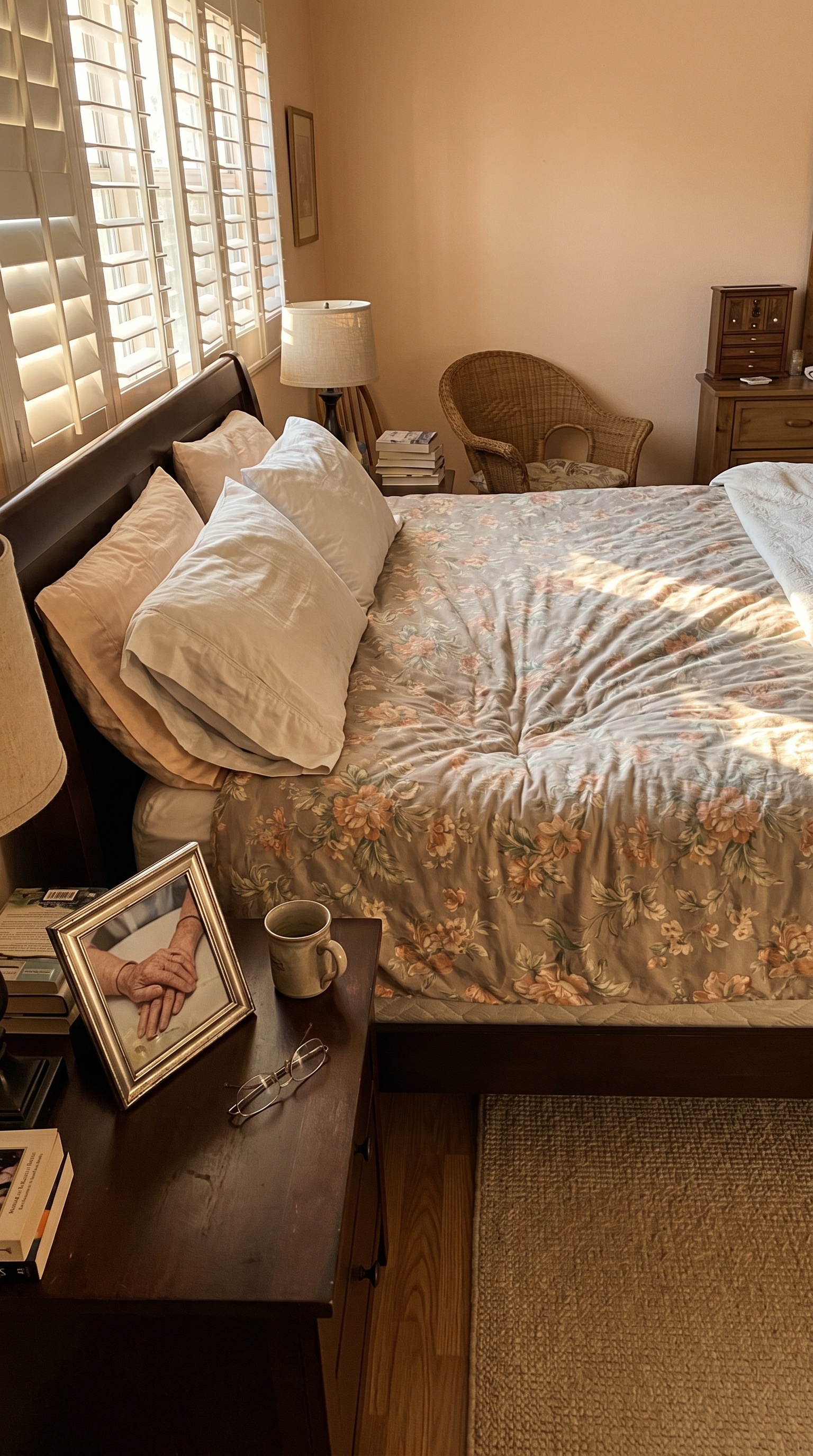
I went to Home Depot eleven months after my husband died because I'd decided to throw out our mattress. It wasn't broken. The mattress was 14 months old. We'd bought it together at Macy's two weeks before Frank's last surgery. Twenty-eight hundred dollars on a king pillowtop with a 10-year warranty. Frank had picked it. He'd lain down on three different beds in the showroom and rolled onto his side on this one and said "Lillian, this is the one." Like he was buying a car. He was happy. He was 73 years old and he could still get excited about a mattress. He died on March 9th of last year. The mattress was still under warranty. For ten months I tried to keep sleeping in our bed. The first three months I didn't sleep at all really — I'd lie down at 11 and at 4 in the morning I'd still be staring at the ceiling. The next three months I slept maybe four hours a night, broken up, waking every time the heat kicked on or the refrigerator clicked. By month seven I was sleeping in the recliner downstairs because the bed felt too big and too heavy and his side was indented exactly where his hip used to be and I could feel that depression every time I rolled over. My daughter Carla came to visit at Christmas and saw the recliner with the blanket on it and she didn't say anything but I could see her looking. The next morning over coffee she said "Mom, you can't keep doing this. Get rid of the bed. Buy a new one. Frank would want you to sleep." She's right. He would. Frank would have hauled it to the dump himself if he'd seen what I was doing. So in March, on the eleventh anniversary of nothing — just a Tuesday, just an ordinary Tuesday — I drove to the Home Depot in Brentwood looking for the customer service desk because I'd called the day before and they'd told me they had a "junk haul" service that picked up old mattresses. I didn't want to deal with a mattress store. I didn't want to lie down on more beds. I just wanted Frank's mattress out of the house and a fresh one delivered and I'd figure out the rest later. I got lost looking for the customer service desk. Home Depot is a confusing store when you don't know where you're going. I ended up in the lumber aisle with a cart that I didn't need a cart for, just because I'd grabbed one out of habit, and I was standing there reading the signs above the bays trying to figure out where I'd gone wrong when somebody said my name. "Lillian?" I turned around and it was Bert Halloran. Bert and Frank had been friends for forty years. They'd worked together at the gas company, retired the same year, fished together every September up at Norris Lake. Bert had been a pallbearer at Frank's funeral. He'd stood in our kitchen the day after with a casserole dish his daughter had made and held my shoulders and cried, which was something I'd never seen Bert do in twenty years of barbecues. After the funeral he'd called once — about three weeks after — and I hadn't picked up because I hadn't been able to talk to anyone yet, and I'd never called him back, and I'd felt guilty about it for ten months. I hadn't seen him since the funeral. "Bert. Oh, my goodness." He hugged me right there in the lumber aisle. He was buying boards — eight-foot pine, I noticed, the cheap kind, six of them in his cart. He had a list in his shirt pocket on a yellow legal pad in his handwriting which was the same handwriting Frank used to make fun of because he said it looked like a doctor's prescription. "What are you doing here?" he said. I told him. I told him about the mattress. About the recliner. About sleeping in the chair for four months because I couldn't bear lying in the bed anymore. About driving to Home Depot to find a hauler so I could get rid of it before I changed my mind. He listened without interrupting. He's that kind of man. He always was. Frank used to say "Bert listens like he's getting paid for it." Bert just stood there in his work coat with his hands in his pockets and let me tell him the whole stupid embarrassing thing. When I finished he said: "Lillian, can I tell you something Doris's daughter told me when Doris died?" Doris was Bert's wife. She'd died six years ago. Pancreatic cancer. Fast. I'd brought him a chicken pot pie and a card and I'd hugged him at the visitation and told him I was sorry, the way you do when there's nothing useful to say. "Yeah." "When Doris died I tried to throw out everything. Her clothes. Her perfume. The dishes she'd picked out. Her side of the closet. I had it all in garbage bags inside of a week. And my daughter Megan came over and saw the bags and she sat me down at the kitchen table and she said: 'Daddy. Don't throw out anything you'll regret. You're not getting rid of grief by getting rid of things. You're just going to have grief AND no things.' And I sat in the kitchen and I cried for about an hour and then I unpacked all the garbage bags." He looked at me. "That mattress is fourteen months old. It was Frank's last good purchase. He was happy buying it. Don't throw out a twenty-eight hundred dollar mattress because you're grieving. You'll regret throwing money at grief. Believe me. I know." I started crying right there in the Home Depot lumber aisle. A man pushed past us with a cart full of plywood. Bert handed me a handkerchief — an actual handkerchief, white cotton, ironed, the kind men our age still carry — and I cried into it for about a minute while he stood there with his hands in his pockets like a man who's done this before and knows that the only thing to do is wait it out. When I could talk again I said "Bert, what am I supposed to do? I can't sleep on it. I haven't slept in our bed in four months. The depression is shaped like him. I can FEEL it under me." He nodded. Like he'd thought about this question. "Doris had a hospice bed for the last six weeks. After she died I had it removed and I went back to our regular bed and I had the same problem you've got. I could feel her. The pillow smelled like her shampoo. The mattress was sloped on her side. I lasted a week and then I went down to the basement and slept on the couch for three months. I would have thrown out the bed too if Megan hadn't told me what she told me." "What did you do?" "My next-door neighbor Ellen. You met her once at the Christmas party. Her husband Gerald died about a year before Doris. Gerald had the same kind of cancer. Ellen knew what I was going through. She came over one Saturday and said 'Bert, I'm going to tell you what my sister told me. You don't need a new bed. You need to reset the bed you have.'" "Reset?" "There's a thing you put on top of a mattress. A topper. Three inches thick. Goes on top of the existing bed. Doesn't replace anything. But it covers up the old surface — the part that's shaped like the person — and gives you a brand new sleeping surface on top of the same bed." "I know what a topper is, Bert. I have three of them in the basement. None of them worked." "Yeah, I had a memory foam one too. Sank right down through it. This is different. Ellen ordered me one and brought it over and put it on the bed herself while I was at the senior center. I came home and the bed looked exactly the same and I almost didn't realize anything had changed. Got in that night. The depression on her side was gone. The slope was gone. The smell was still in the pillow but I could wash that. The bed FELT different. Like a different bed. Like a hotel bed in a way. I slept eight hours that night. First time in three months." "Bert. I'm not buying another topper. I have three of them stacked in the basement. They all went flat in a month." "This is a different one. I don't know all the technical stuff. Ellen's daughter is a nurse, she did the research. It's the same thing they put on those Japanese hospital beds. Three inches. Bamboo cover. It costs about a hundred and fifty bucks. They have a 100-night return policy. If it doesn't work, send it back, you get every penny back. I've slept on mine for almost three years now. Megan came over for Christmas and slept in the spare bed and the next morning she said 'Dad your guest bed is harder than your bed.' That's because mine has the topper. The mattress underneath is a 22-year-old Sealy. I don't think I'm going to replace it." I stood there in the lumber aisle with Bert's handkerchief balled up in my fist. "Bert. The mattress I want to throw out is fourteen months old." "I know. That's why I'm telling you. Don't throw out a fourteen-month-old mattress when the problem is the surface and the memory. Get the topper. Try it for a hundred nights. If it doesn't work, send it back, then you can throw out the bed. But don't throw it out today." I told him I'd think about it. I wiped my face. We talked for another minute about his daughter, his grandkids, the new puppy he and Doris had bought right before her diagnosis that he'd kept and which was now nine years old and slept on Doris's side of the bed every night and that was actually one of the reasons he'd gotten the topper because the dog had worn an additional groove in the mattress next to Doris's groove and the bed was, in his words, "a topographical map of grief." He gave me his number — Frank had had his number in the desk drawer but I'd thrown out the desk drawer in one of my earlier rounds of throwing-out — and he made me promise to call him for dinner sometime when his daughter was visiting, "because Megan keeps asking about you." I drove home with my cart-less self and didn't call the customer service desk. I sat in my driveway for a while looking at the house. Then I went inside and I made a cup of coffee and I sat at the kitchen table and I opened my laptop and I typed in what Bert had said. Bamboo topper. Japanese hospital. Three inches. The first article that came up wasn't a sales page. It was a write-up about a research study published in The Lancet in 2003 — a real medical journal, the kind doctors actually read. A team of researchers in Spain had taken 313 patients with chronic low back pain and randomly assigned them to either a firm mattress or a medium-firm mattress. Ninety days later they measured pain scores. The medium-firm group had less pain in bed, less pain getting up, less daytime disability. The kicker was buried at the bottom: BOTH groups did better than what most patients had been sleeping on before — soft, conforming, sink-in mattresses. The kind 90% of America sleeps on. Memory foam. Pillowtops. The luxury hybrids you see at the warehouse stores. That includes the bed Frank picked. Macy's. Twenty-eight hundred dollars. Soft-conforming pillowtop. The kind the study said was the worst. I sat at the kitchen table and I felt something I hadn't felt in eleven months. Not exactly anger. Sharper. Like I'd been told something I should have been told years ago. I kept reading. The article explained why memory foam and sink-in pillowtops cause back pain even when they feel "comfortable." Your spine has natural curves. Your lower back curves inward — that's called your lumbar lordosis. When you lie down, your spine wants to maintain those curves. A medium-firm surface supports under the curve. A sink-in surface fills in around the curve and flattens it. After eight hours of being held flat, your discs don't decompress the way they're supposed to. They stay compressed. Year after year. That's why my hips ached every morning for six years before Frank died. I'd thought it was age. He'd told me it was age. I went to my doctor about it three times and he said "Lillian, you're 65. Then 66. Then 67. Some of this is just normal." I bought a foam wedge under my hip. I bought a memory foam pillow. I tried sleeping on my back. None of it helped because the bed underneath me was the problem and nobody, in three doctor visits and two chiropractor visits and a $400 PT session, had told me to consider the bed. The article also talked about temperature. There's a study from Japanese researchers — Okamoto-Mizuno and team — that showed your body needs to drop one degree Fahrenheit at the skin surface to enter and maintain deep sleep. Polyester mattress covers, which is what 95% of American mattresses have, trap heat. They don't let your skin drop the one degree. You micro-arouse all night and don't remember. Your discs don't rehydrate because deep sleep is when they rehydrate. The Lancet study had been published in 2003. Twenty-three years ago. There was no follow-up. No big trial. The article explained why: you can't patent a firmness gradient. You can't patent natural bamboo viscose. The mattress industry generates over thirty billion dollars a year and it all runs on memory foam patents. Nobody has financial incentive to confirm research that proves their product is wrong. By 9 PM I had read three articles, two clinical study summaries, and a review of a topper called Hanare that came up as one of the few products on the market that met the spec — three inches thick, soft bamboo-blend cover, engineered medium-firm support layer. Not memory foam. Designed around the Japanese shikibuton tradition. The "shikibuton" is a layered cotton-and-wool futon Japanese people have slept on for four hundred years. Their lifetime back surgery rate is one-fifth of America's. Their senior population is walking. Ours is sitting. I almost called Bert at 9:30 PM to tell him I was ordering it. I didn't, because I knew he went to bed at 9. I ordered the topper at 9:47 PM. King size. The price was $139. I almost couldn't believe it. I'd been about to spend $2,800 on a new mattress that morning. The topper was less than a tenth of that. They had a 100-night return policy. They said it would arrive in 4 to 6 days. It arrived three days later in a box smaller than I expected. I unrolled it on the bed in the afternoon. It expanded over about ten minutes. It was 3 inches thick — not the thin floppy thing my old toppers had been. It was firm. Not hard, but firm. Like the foam in good furniture. The cover was bamboo viscose, smooth and cool to the touch — different from any sheet I'd ever felt, not slippery like satin, not rough like cotton, just cool and slightly textured. I made the bed back. I put the same sheets on. The duvet. The pillows. From the doorway it looked exactly like our bed. The bed I'd been about to throw out. I lay down on it before bedtime, just to test. And what I felt, lying there in the daylight at 4 in the afternoon with my shoes on, was that the depression on Frank's side was gone. The slope where his hip had compressed for fourteen months was gone. The mattress underneath was the same, but the surface I was lying on was new. I cried for about ten minutes. Then I got up and made dinner. That first night I went to bed at 10 like I used to before Frank died. I lay down on my side. I waited for the slope and the slip-toward-his-side that I'd been bracing against for ten months. There was no slope. The bed was flat. My hip felt supported, not crushed. My lower back felt held, not falling. I read for twenty minutes. I turned out the light. I slept. I woke up at 6:45 AM. I'd slept eight hours and forty minutes for the first time in eleven months. The first night. Day five I got out of bed without sitting on the edge first to gather myself. I just stood up. I walked to the bathroom. My lower back didn't lock the way it had every morning since Frank's funeral. I'd been blaming grief for that lock. It hadn't been grief. It had been a $2,800 mattress my husband picked because he liked how it felt in the showroom for the four minutes he lay on it. Week two my hip stopped aching at all. I hadn't realized how much it was aching until it stopped. Week three I called Bert. I told him I'd done it. He laughed and said "I told you so" the way men like Bert say "I told you so" — gently, with affection. He said his neighbor Ellen had had the same conversation with him three years ago and now I'd had it with him and there was probably another widow somewhere who needed it told to her too and I should go find her. I said I would. Week four I went to the widows' coffee group at First Methodist. I'd been avoiding it for ten months. It was held in the church's fellowship hall on Tuesday mornings. Eight women. I sat down with my coffee and I listened. Two of the women had thrown out their husband's mattresses within six months of becoming widows. Two more were considering it. One of them had bought a new bed for $3,400 from Mattress Firm and said it was "okay" but she "still wakes up at 3 AM." When she said that, three other women nodded. I told the group about the topper. I told them about Bert. I told them not to throw out their mattresses if they didn't have to. I told them about the Lancet study. I told them about Hanare. I felt like I was passing forward what Bert had passed to me. Two of the women ordered the topper that week. One of them, Marion, called me three days after it arrived and said "Lillian. I slept eight hours. I haven't slept eight hours since 2019." That was three months ago. Marion still calls me. Bert and I have had dinner with Megan once. The bed is still the bed Frank picked. The mattress is still the same Macy's pillowtop with the warranty card I had in the kitchen drawer ready to call about hauling. The topper sits on top, and underneath it the bed is the same bed it always was. Frank would be glad. Frank would have called Bert and gone fishing about this. He would have said "I told you, Lillian, I picked a good mattress." And he would have been mostly right. The mattress wasn't the whole problem. The surface was the problem. The shape of him in it was the problem. And I'd been about to throw out twenty-eight hundred dollars of his last good purchase because nobody had told me there was a $139 way to fix the surface without throwing out the bed. I'm telling you because Marion told me to. And Bert told me to. And Ellen told Bert. And there's a chain of widows passing this forward and I want to put you in it. If your husband died and you can't sleep in the bed because you can feel him in it — don't throw the bed out. The depression in the mattress is real. The grief is real. But the surface can be reset for $139. The bed underneath can stay. He picked it. It was his last good purchase. Don't punish yourself for the next ten years for the mattress he was happy buying for the two of you. If you're considering buying a new bed because the one you have is "shot" or "too soft" or "killing your back" — read the Lancet study before you swipe the card. There's a 90% chance the problem isn't your mattress. It's the surface, and the surface is fixable for less than ten percent of what a new mattress costs. If you've been blaming aging for your lower back, your hip, your morning stiffness — listen to me. I'm 71. I have arthritis in my left knee and bone spurs in my right foot and bursitis in both shoulders. I'm not 22. But I sleep better now than I did at 45. Aging isn't doing all of what people are blaming it for. The surface you spend a third of your life on does more damage than aging. Hanare. Three inches. Bamboo cover. Sits on top of any bed. 100-night return. The whole thing costs less than the senior center charges me to refinish a chair. Most of you reading this have a closet full of toppers that didn't work. This one is different — different mechanism, different density, different cover. If you've been burned, the 100-night return is your protection. They take it back. No questions, no restocking fee. I almost sent mine back too because I'd been burned five times before. I didn't because by night five I knew. Frank's bed is still his bed. It's also my bed now. The topper made room. [https://www.tryhanare.com/hanaretopper](https://www.tryhanare.com/hanaretopper) P.S. — If you're a widow reading this, I want you to know something. The bed isn't what's keeping him with you. He's with you in the photos and the kitchen and the way you still set two coffee cups out before you remember and the way you turn to tell him something and he's not there. The bed isn't sacred. The mattress isn't sacred. You're allowed to change the surface. You're allowed to sleep. He would want you to sleep. Mine would have been mad at me for sleeping in a recliner for four months. He'd have driven me to Home Depot himself. The fact that Bert was there instead is one of those small mercies the world gives you when you need one. I think Frank sent him. I don't know if I believe in that kind of thing but on bad days I let myself. P.P.S. — A practical thing about the topper. It comes in a smaller box than you expect. It's heavier than it looks. Don't try to put it on the bed by yourself if you have any back issues. I made that mistake. Call your son or your neighbor or the kid down the street. It takes two people about ten minutes. The topper expands on the bed over about 15 minutes after you unroll it. Make the bed up the same way you always have. Sheets, blanket, comforter. Nothing changes about your bedding. The topper is invisible from above once you have the sheet on. If you have a partner who's still alive and you're reading this for them, don't tell them you put it on. Just put it on. Let them notice. Bert's wife — Doris, before she got sick — that's how she did it. She put a topper on Bert one night without telling him. He noticed at 5 AM the next morning and he said "Doris, what did you do?" and she said "I fixed our bed." Forty years married and that was one of the days he remembers most clearly. P.P.P.S. — The 100-night return is real. I checked. It's not 30 days, not 60 days. 100 nights. They don't make you ship it back in the original box (good thing — I threw mine out the day it arrived). They send a return label, you put it in a garbage bag, they pick it up, they refund you. No restocking fee. If you've been burned by every mattress company and topper company in the last five years (I have), this matters. The fact that they offer this means they're not afraid of returns. The fact that other companies don't tells you what they think of their product. P.P.P.P.S. — If you're not a widow and you bought a mattress in the last few years that's already showing a depression on one side, you're in the same situation I was in. That's not a defect — that's normal for memory foam and pillowtops. Both of you can sleep on a normal mattress that's been "ruined" by a year of normal use, with a topper that's three inches thick and resets the surface. You're not going to throw out a $2,200 bed because of a 2-inch sag. The topper is the fix for the sag. P.P.P.P.P.S. — Hanare is a small company. They sell out. I've been recommending it to the widows at coffee group, my sister-in-law, my hairdresser. Two of them had to wait a week and a half for restock. If your bed is currently destroying your back and the topper is in stock, order it tonight. Every night you sleep on the wrong surface is a night your back doesn't recover. I waited four months in the recliner. Marion waited five years on a bed she hated. Don't wait. Bert told me not to wait. I'm telling you not to wait. https://www.tryhanare.com/hanaretopper
Don't Throw Away A $2,800 Mattress Because You're Grieving. A Widow Saved Mine.
Sleep cooler and wake up refreshed. The BambooBreeze Mattress Topper adds cloud-like cushion with breathable bamboo fabric. Shop now for $149.
LEARN MORELike this ad? Make it yours.
Crush rebuilds this exact creative around your product — your brand, your colors, your offer — in about a minute.