
Inactive· since Jun 22, 2026
- 21
- days it ran
- 3
- relaunches
Ad copy
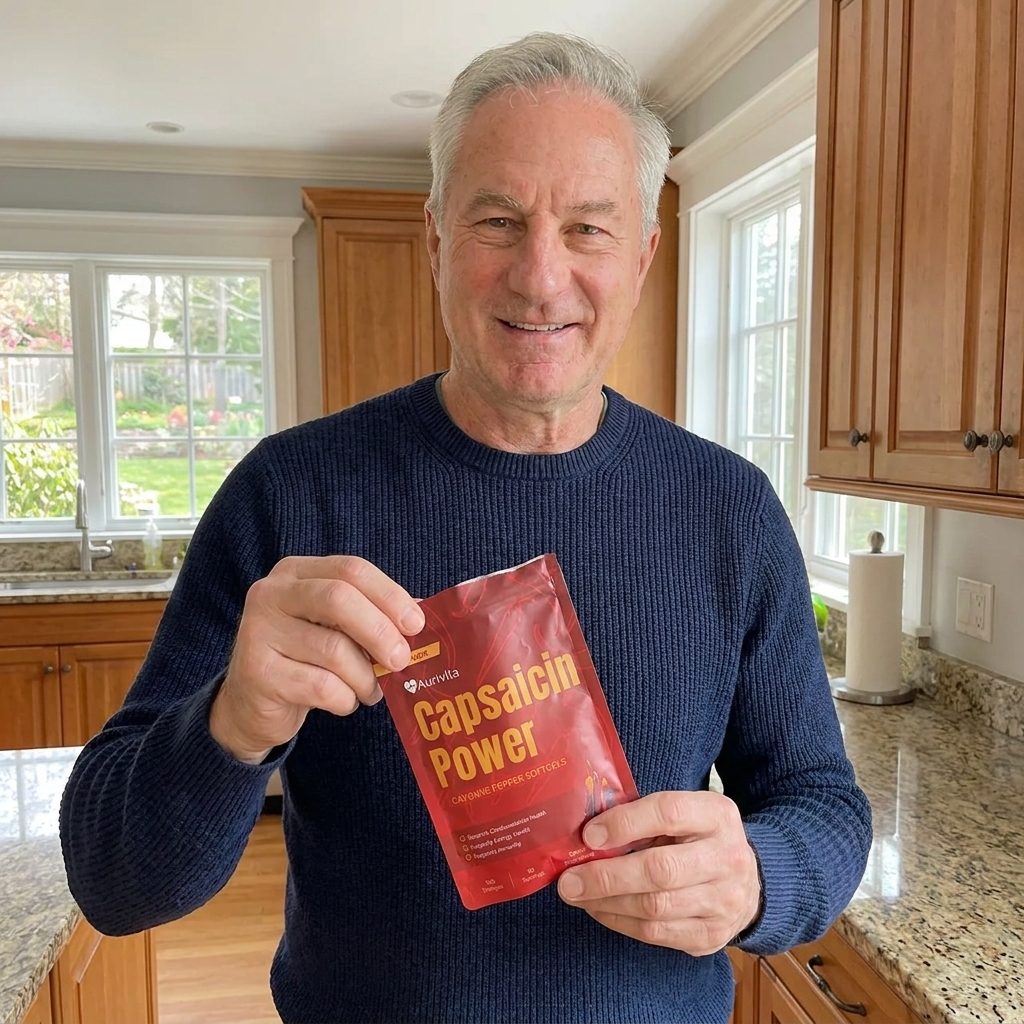
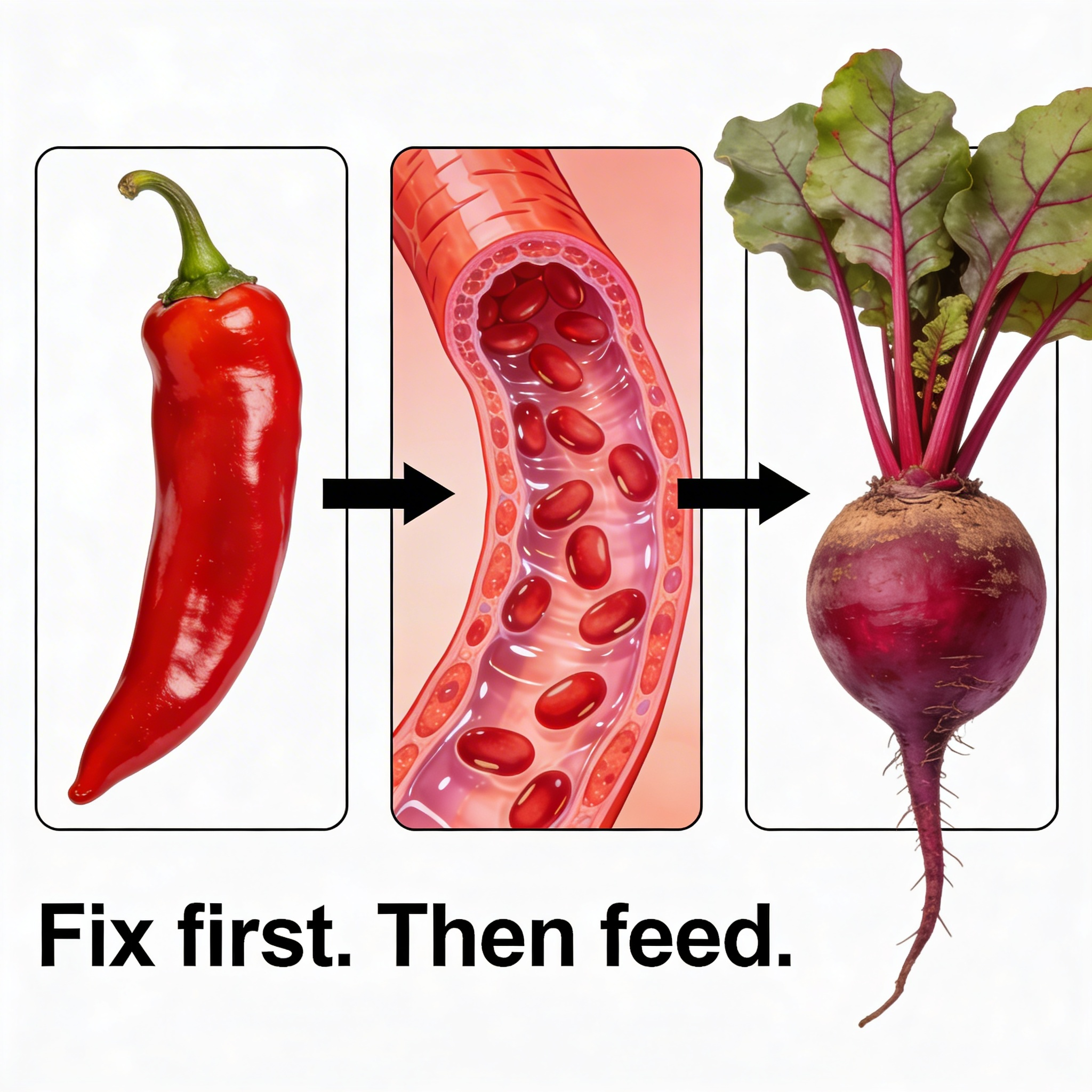
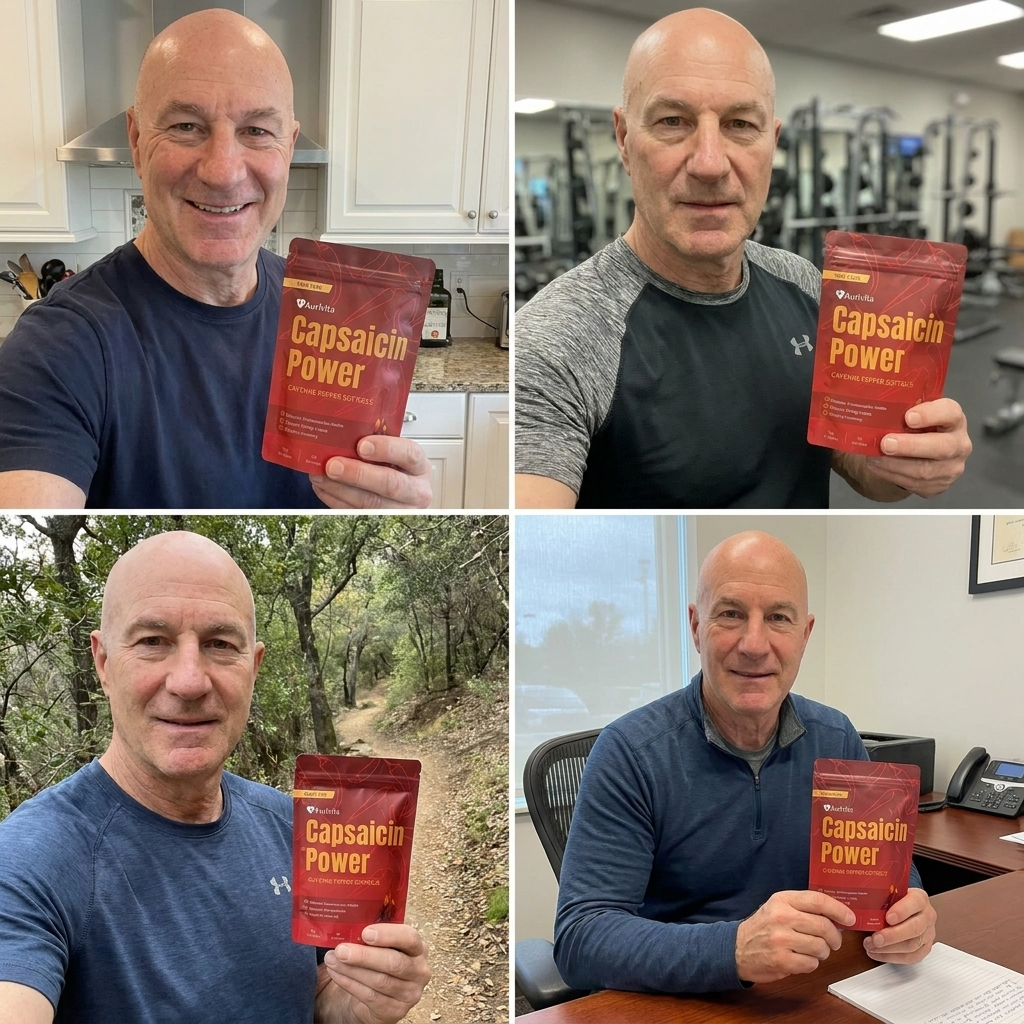
I spent 90 days investigating Aurivita Capsaicin Softgels to see if they actually work. Here's what I found. Before I get into what happened, I need to be straight about who this review is for, because not everyone reading this is going to get value out of it. If you've never heard of Aurivita, if you don't know what TRPV1 activation is, if you haven't already spent some time researching cayenne supplements or capsaicin for circulation and erectile function — this review isn't really written for you. You'd be better served starting with the basics first. This is for the guy who's already done the research. You've read about the cayenne pepper mechanism. You've seen the ads. You've probably been on the Aurivita website at least once already, maybe sat on the checkout page and closed the tab. You're skeptical because you've tried supplements before and most of them did nothing. You want to know whether this one specifically — Aurivita Capsaicin Power — actually delivers, or whether it's the same marketing dressed up in a nicer bag. That's exactly where I was four months ago. And that's why I bothered to write this down. My name is Rob Moore. I'm 58. Commercial real estate. Married 31 years. Three adult kids. Two grandkids on the way. I'm writing this because the supplement industry is full of garbage and I think honest first-person reviews matter, especially when someone in your situation is sitting on a checkout page trying to decide whether to spend the money. Let me give you the context for why I went looking in the first place, because if it doesn't match yours, this review probably won't be useful to you either. My erectile dysfunction started somewhere around my 53rd birthday. Not all at once. Slowly, the way these things actually happen. The morning erections went first. Then performance got unreliable. Then it got planned-around. Then it became something I avoided situations for. My wife stopped initiating somewhere in year two of this, not because she was upset, but because she had figured out that initiating put pressure on me that made everything worse. At my annual physical that same year, my blood pressure came back at 148 over 92. My LDL was 142 — not catastrophic, but my doctor said the words "borderline" and "let's keep an eye on this" and I knew where that conversation was heading. He put me on lisinopril for the blood pressure. He told me to "watch the cholesterol." He gave me a sildenafil prescription for the ED and sent me home. For about two years, all of that worked roughly the way it was supposed to. The lisinopril kept my blood pressure in a normal range. The sildenafil worked when I needed it to, mostly. The LDL crept up another twenty points but my doctor was still in the "monitor it" phase rather than the "start a statin" phase. Then somewhere in year three, the sildenafil started working less reliably. I went from 50mg to 100mg. The headaches got worse. The flushing was something I had to plan around — couldn't take it at dinner because the heat in my face would draw comments at the table. The blurred vision came and went. The morning erections never came back, no matter what dose I took, because the pill only worked in the four to six hours after I swallowed it. My LDL was now at 174. My doctor brought up statins for the first time. That was the state I was in when I started looking for alternatives. Not because I'm anti-medication — I'm not. The lisinopril worked. But because the sildenafil was working less and less, and because everything in my body was quietly trending in the wrong direction, and because the next conversation with my doctor was clearly going to involve adding more prescriptions to a stack that wasn't actually fixing anything underneath. I read for about two months before I bought anything. What kept coming up in the actual research, not the marketing, was the same mechanism. Endothelial dysfunction. The lining of your blood vessels stops producing nitric oxide properly. That single problem causes ED, raises blood pressure, contributes to LDL accumulation, and slowly damages every artery in your body. Sildenafil forces nitric oxide signaling artificially for a few hours and wears off. Lisinopril relaxes the muscle wall of the vessels without doing anything to repair the lining. Neither prescription addresses what's actually broken. The thing that did, based on the research, was TRPV1 activation. Capsaicin from cayenne pepper switches on a receptor in the endothelium that triggers sustained, continuous nitric oxide release. Not forced. Not for four hours. Natural and ongoing. The studies described it improving endothelial function, lowering blood pressure, reducing LDL, and restoring erectile function — not as separate effects, but as the predictable downstream consequences of healing the same underlying system. I'm not a doctor. I'm a real estate guy. But the mechanism made sense to me in a way the prescription stack didn't. The prescriptions were treating three symptoms separately. The research was describing one cause, three downstream improvements. So I went looking for a cayenne supplement. Here's where the trouble started, because most of what's on the market is garbage. I bought three different brands from three different supplement stores before I figured this out. The first one was just cayenne powder in a capsule. Gave me heartburn for a week and did absolutely nothing. I now know why — the capsaicin gets destroyed in stomach acid before it ever reaches the bloodstream unless it's pre-dissolved in oil. Powder capsules are basically useless. The second was labeled "high potency" and had about 0.5mg of capsaicin per serving when I actually read the supplement facts panel. Not even a fraction of the therapeutic dose. Marketing trick. The third was suspended in soybean oil. I later figured out that soybean oil is one of the inflammatory seed oils that actively contributes to the arterial inflammation I was trying to reduce. The cheap brands cut corners on the carrier because consumers don't read that part of the label. That product was technically delivering capsaicin but it was undoing its own work in the process. I almost gave up on the whole category. Then I came across Aurivita Capsaicin Power, and what made me try it wasn't the marketing — it was the spec sheet. If you've researched this product, you already know what's on it. 3mg of pharmaceutical-grade capsaicin per softgel, which is the dose used in the published research. Cold-pressed avocado oil as the carrier, not the cheap seed oils. BioPerine added to slow the liver from clearing the active compound. Vitamin K2 to direct calcium toward the bones during vascular repair instead of letting it deposit in the arteries. Beetroot extract for additional nitric oxide support. Hawthorn for cardiac support. Korean ginseng. Vitamin D3 and E. Every detail matched the research I'd been reading. The dose was right. The carrier was right. The supporting compounds made sense. The price — $54 for 30 servings — was less than what I was spending on sildenafil alone. I bought one bag. Three softgels with dinner. I started on a Wednesday in early August. Here's what happened, week by week, and I'm going to be honest about the parts that weren't dramatic because I think honest reviews need to include those. Week one, nothing. I felt no different. I want to say that clearly. If you're someone who needs to feel something in the first three days to keep going, you're going to have a hard time with this product because nothing happens in the first week. I went to bed seven nights in a row wondering if I'd wasted another $54 on supplement marketing. Day ten was when I noticed the first thing, and it wasn't what I'd expected. I checked my blood pressure that morning — I have a cuff at home, I'd been taking it weekly since the lisinopril started — and it came back at 132 over 84. That was the lowest reading I'd had since the medication started. I assumed it was a fluke. I retook it three times that day. Same range each time. Week two, the morning erection came back. I'm going to write this part honestly because the men who need to read this need to know what it actually looks like. I woke up around 6:20 with a full erection. Not partial. Not "you could probably make this work with some effort." Full. The kind I used to wake up with in my forties. I lay there in the dark for ten minutes testing it the way you test a leg you weren't sure was working. It stayed. When my wife woke up, I didn't say anything. I just rolled toward her. She figured out the rest. Afterwards she looked at me and asked what was different. I told her about the Aurivita. She looked at the bag on my dresser. She asked how long I'd been taking it. Week four, my blood pressure was averaging 124 over 78. I called my doctor's office and asked if I should lower the lisinopril dose. He had me come in. He looked at the readings, took it himself, looked at the bag I'd brought, and said: "Rob, whatever you're doing, let's keep doing it." We dropped the lisinopril to half the original dose under his supervision. Two weeks later my BP was still 126 over 78 on the lower dose. Week eight, I went in for my routine bloodwork. My LDL had dropped from 174 to 138. My HDL was up. My triglycerides were down. My doctor looked at the panel, looked at me, looked back at the panel, and said: "What did you change? Because this is the kind of improvement I usually see when someone goes on a statin, except you're not on a statin." By that point I had been off sildenafil completely for three weeks. Sex was happening on its own, without a pill, without an hour of waiting, without the headache afterward, without the flushed face at dinner. Morning erections every day. Spontaneous responses during the day in a way I hadn't experienced since my late forties. I want to be clear about what didn't change, because supplement reviews tend to overclaim and I'm trying not to. I'm still on a low dose of lisinopril. I'd want to stay on it through another quarter of monitoring before I'd consider coming off it entirely, and I'd only do that with my doctor's supervision. I still wear reading glasses. I still have a few pounds I'd like to lose. The supplement didn't turn back time. What it did was return the specific functions that the prescriptions had been masking, by addressing whatever was wrong with my circulation underneath. I came off sildenafil completely. That happened naturally — I just stopped needing it. I tapered the lisinopril under my doctor's supervision. I want to mention that explicitly because I'm not telling you to stop your prescriptions on your own. Talk to your doctor. Don't make medication changes without supervision. I bought a second bag at the end of the first 60 days. I'm now two months into the second bag, which puts me at about four months total. The results have held. My morning erections are still consistent. My blood pressure is still in the 120s over 70s on the lower lisinopril dose. My LDL was 134 at my last check, three weeks ago. No side effects. None. No headaches, no flushing, no heartburn, no vision issues, no anything. A few things I want to say to the man who is sitting on the Aurivita checkout page right now, deciding whether to click. You've already done the research. You wouldn't be on that page if you hadn't. You've read about TRPV1 activation, you understand why the carrier oil matters, you've probably seen the doctor letters and the studies. What's stopping you from clicking isn't lack of information — it's the memory of every other supplement that promised something and delivered nothing. I had that memory too. Three failed cayenne brands in a row. The accumulated cynicism of a guy in his late fifties who's tired of being sold to. What got me past it was the 120-day money-back guarantee. Four months. The same window the research uses for measurable improvement. Empty bags. Full refund. The only way I lost on that bet was if the product worked, in which case I would have happily kept the bag and bought another. The downside was capped at zero. The upside was getting my sex life, my blood pressure, and my cholesterol back to where they'd been a decade earlier. If you've done the research and you're sitting on the page, you already know whether the mechanism makes sense to you. The question isn't whether the science is real — the science is real and you've already read it. The question is whether the product is formulated well enough to actually deliver the mechanism. That's what I tested for ninety days, and that's what this review is reporting back to you. The product is formulated well enough. The mechanism delivers. The improvements show up roughly on the timeline the research predicts. The side effects didn't exist. The price is less than I was spending on the prescription it replaced. The guarantee makes it impossible to lose money on the test. I spent 90 days investigating Aurivita Capsaicin Softgels to see if they actually work. They work. If you've already done the homework and you're just looking for someone in your situation to tell you whether to pull the trigger, that's my answer. Pull the trigger. Take it for the full ninety days the research describes. Pay attention to your own body, your own home BP cuff if you have one, your own next bloodwork. The numbers will tell you whether it's working, the same way mine did. If it doesn't work, send the bag back and get your refund. You've lost a few months and zero dollars. If it does work, you'll write your own version of this review in four months and someone else who's been on the same checkout page you're on right now will read it and finally click. https://aurivita.co/products/cayenne-pepper-softgels Rob Moore. 58. Husband. Real estate. Honest reviewer of one product that worked on circulation, blood pressure, cholesterol, and the part of my life I'd quietly written off.
My Review of Aurivita: Cayenne Pepper For ED?
Support strong circulation today with our powerful cayenne pepper formula. 180 softgels and 60 servings per bag.
LEARN MORELike this ad? Make it yours.
Crush rebuilds this exact creative around your product — your brand, your colors, your offer — in about a minute.