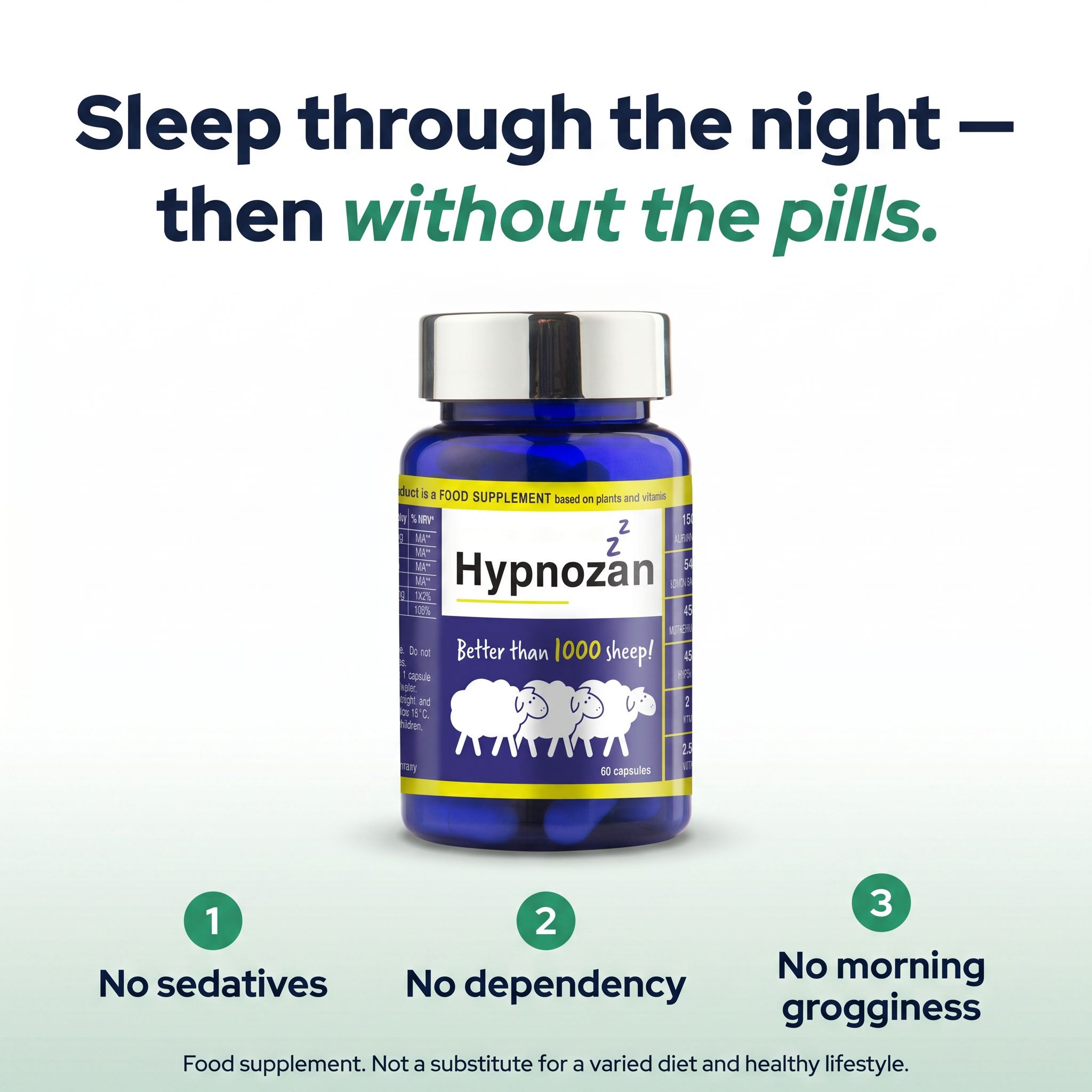
Hypnozan
Hypnozan Facebook ad: “Support Your Sleep Naturally”

Ran for 13 days, from July 2 to July 15, 2026, the last day Crush saw it.
Run by Hypnozan on Facebook. Crush is not the advertiser and does not verify its claims. See this ad in Meta's Ad Library(opens in a new tab)
Want an ad like this for your product?
Crush makes new ad images for your product from this ad: your logo, your product photo, your offer.
Trials from $19.95 USD, then $79.95 USD a month. Cancel anytime.
About this ad
- Meta Ad Library ID
- 1493540058747836
- Platforms
- Facebook, Instagram, Audience Network, Messenger and Threads
- Relaunches
- 1
Ad text
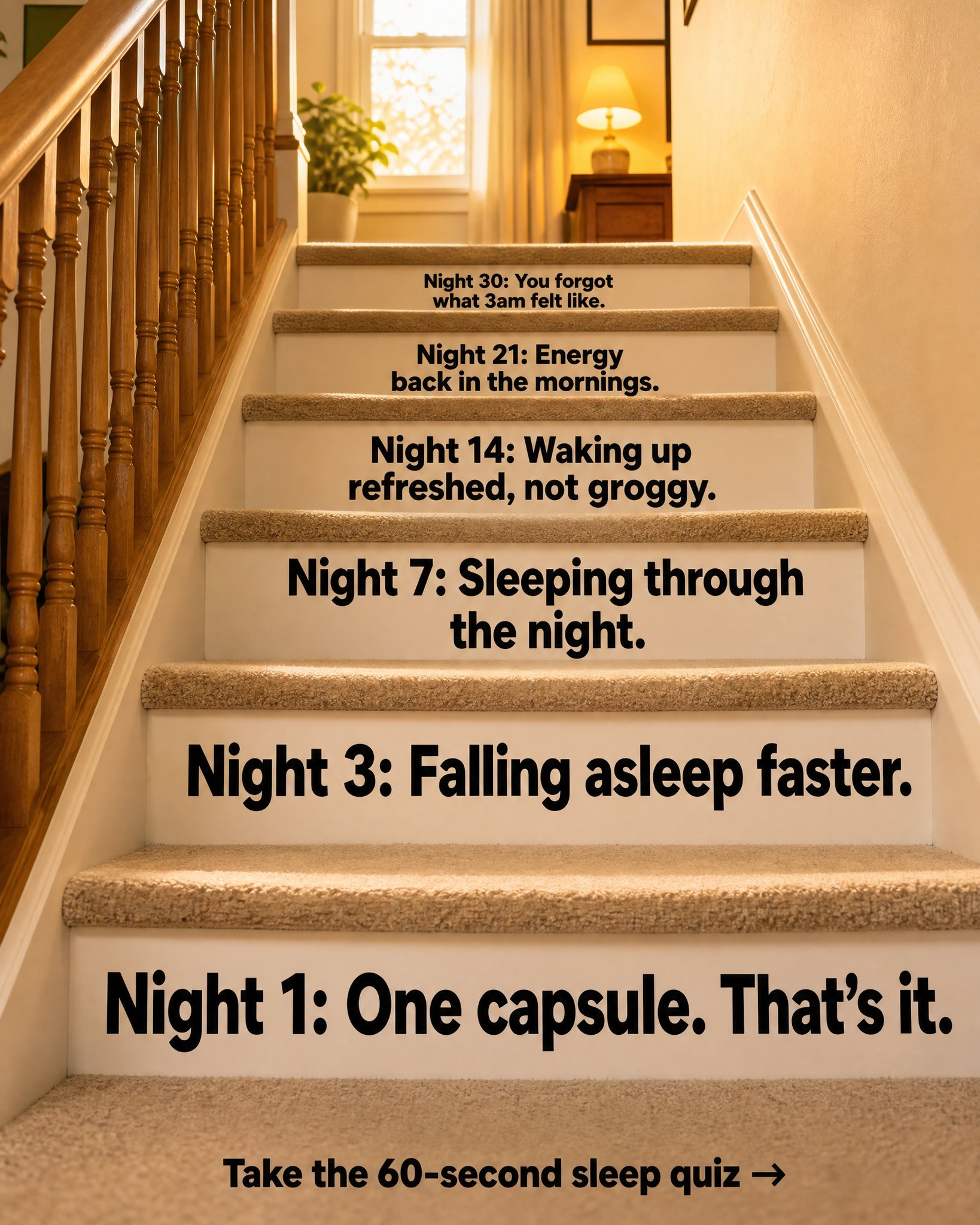
I'm so fking tired of moms on reddit saying magnesium, melatonin, and a better bedtime routine will fix the exhausted-mum sleep problem. They won't. I've tried all of them. So has every woman in my mothers' wellness group. So has my colleague who's a GP. So has the sleep therapist at our local clinic who, by the way, still lies awake most nights herself. Let me tell you what two years of "sleep hygiene protocols" actually got me. Magnesium glycinate every night. Tried three different brands. The first one made no difference. The second one made me feel slightly calmer for about a week. Then my body adjusted and I was right back to staring at the ceiling at eleven PM while my brain ran tomorrow's to-do list on loop. Melatonin at 0.5mg. Then 1mg when the 0.5 stopped working. Then 3mg when someone in a Facebook group said you needed more than the standard dose. Helped me feel drowsy for maybe twenty minutes. Did nothing for the snapping-awake-at-2am part. Nothing for the brain that refused to stop. The Calm app — used it faithfully for six weeks. Sleep meditations, wind-down music, breathing exercises. The breathing helped slightly in the moment. The moment I put the phone down my brain picked back up exactly where it left off. Sleep restriction therapy. Six weeks of going to bed later and later to build up "sleep pressure." I was genuinely zombified by week three. Cried in the car park at Tesco because they'd moved the pasta aisle. My sleep onset improved by about twelve minutes. The 2am waking stayed exactly where it was. A weighted blanket that cost more than a week of groceries. Lavender pillow spray, a white noise machine, blackout curtains so thick the bedroom felt like a sensory deprivation tank. Cutting caffeine in the afternoon. Then after ten AM. Then cutting it entirely for a month to see if that was the problem. A course of CBT-I from a private therapist at £90 a session. Add it all up. I sat down one evening and actually did the maths. Two years of protocols and products and appointments. Over £800 spent. And I was still lying awake for an hour every night. Still snapping fully awake at 3am. Still getting up at six feeling like I hadn't been to bed at all. You know what everything I tried had in common. It helped a little. For a few weeks. And then my body settled right back where it was. And I was lying in the dark at 2am with two sleeping children down the hall, brain running the list, doing the maths on how many hours I had left if I fell asleep right now. Wondering if I was going to spend the next five years of motherhood this depleted before they were finally old enough that it got easier. That was me fourteen months ago. I'd done everything right. Everything they told me to do. Everything the forums said. Everything the GP suggested. And I was still not sleeping. Not properly. Not in a way that restored anything. Not in a way that meant I arrived at breakfast feeling like a person rather than a function. I sat at the kitchen table one morning after the kids had left for school and I didn't cry from sadness. I cried from rage. The quiet, exhausted kind of rage you feel when you've been doing everything correctly for two years and the problem hasn't moved and you're starting to wonder if the entire sleep supplement industry is just a slightly prettier version of being told to try harder. Different products. Same result. Same ceiling at 2am. I'm writing this from the other side of that morning. I slept seven hours last night. Straight through. No 2am waking. No lying there doing the maths. No hour of lying awake after the kids went down. I've been sleeping like this for eleven weeks. No prescription. No escalating dose of anything. No special programme. What changed wasn't trying harder. It wasn't a different magnesium form or a stronger synthetic melatonin or a better sleep app. It was an entirely different understanding of what was actually causing the sleep problem. And why everything I'd tried had never been able to fix it. Something nobody had explained to me in two years of appointments and protocol cycles. I'm going to tell you exactly how I found it. Because if you're somewhere on the same wheel I was on, you need to hear this before you spend another three months and another hundred pounds on the next thing that promises to fix your sleep. Back to that morning at the kitchen table. I'm not a doctor. I'm a mum of two — seven and four — who used to sleep fine and then one day stopped sleeping fine and couldn't get back. But I'm also someone who, when I've exhausted every practical option, starts reading. And that morning I did something I hadn't done in two years of standard supplement cycles and GP appointments. I stopped looking at standard sleep products and started looking at what was actually happening in my nervous system. Not what the basic vitamin labels said. Not what the sleep forums recommended. The actual physiological mechanism of why a body that is exhausted won't sleep. I spent four hours reading that morning. Stress physiology research. Autonomic nervous system studies. The kind of literature that the GP doesn't have time to translate into a ten-minute appointment. And I found something that none of my two years of products had ever touched. Here's what nobody told me. My sleep problem was not a sleep problem. I know how that sounds. I wasn't sleeping. How was it not a sleep problem? Because the sleep is the output. The output was broken. But the mechanism producing the broken output — the actual engine running the problem — was upstream of sleep entirely. Nothing to do with my bedroom environment. Nothing to do with my plain magnesium dose or my screen time. It had to do with a hormone my body had been overproducing for two years. And a nervous system that could no longer activate the "brake" properly as a result. Most people have never heard what I'm about to explain. Not because the research doesn't exist — it does, it's well documented, it's reproducible in trials. But because standard single-ingredient supplements don't address it. Let me explain it. Because once I understood it, everything that hadn't worked suddenly made sense. Your body runs on two nervous system modes. Fight or flight — the sympathetic side. And rest and digest — the parasympathetic side. They cannot run simultaneously. This is the architecture. When fight or flight is active, rest and digest is completely suppressed. When rest and digest is active, fight or flight retreats. They are mutually exclusive states. Your body is always in one or the other. Rest and digest is the mode your body requires to fall asleep and stay asleep. It drops your heart rate. Reduces your core temperature. Quiets the mental processing. And sends a signal to your brain — not a thought you can choose, a physiological signal below conscious control — that it is safe to lose consciousness. When fight or flight is running, that signal does not arrive. The room can be dark and cool and quiet. Your sleep hygiene can be perfect. You can have followed every instruction correctly. If fight or flight is active, your brain does not receive the stand-down signal. You lie there exhausted and awake and you do not understand why those two things can coexist. Now here is the part that nobody explains to mothers of young children. In a mother of young children, fight or flight doesn't only activate in a crisis. It runs low and continuous. All day. Every day. Because the vigilance that makes you a good mother runs on the same system. The part of you that always has one ear on where the children are. The part that keeps the mental list — what's tomorrow, who needs what, what did I forget, did I sign that form, is that cough getting worse. The part that hears a sound before anyone else in the house. The part that is always half-monitoring, even when you appear to be sitting down. That is fight or flight. Running continuously. From the moment they wake up to the moment it's supposed to stop. Which is when you lie down and need to sleep. Except it doesn't stop. By bedtime, fight or flight has been running for fifteen, sixteen hours straight. The house is finally quiet. The children are finally down. There is genuinely nothing left to monitor. But your nervous system has not received that information. It is still on. Still scanning. Still running the list. Still producing the hormone that keeps it in that state. That hormone is cortisol. Cortisol is what fight or flight runs on. In its normal pattern, cortisol peaks in the early morning and drops steadily through the day, reaching its lowest point in the evening. Low evening cortisol is what allows the nervous system to shift out of fight or flight into rest and digest. Low cortisol is what allows sleep. In a mother of young children running continuous low-level fight or flight all day — cortisol doesn't follow that pattern. It stays elevated. Not dramatically. Not at crisis levels. Just persistently above where it should be in the evening. Elevated enough that the nervous system cannot fully shift into rest and digest. Elevated enough that when you lie down your brain is still receiving the signal: not yet. Not safe yet. Stay on. And here's what chronically elevated cortisol does beyond just making it hard to fall asleep. It fragments sleep. The cortisol curve that should rise gently from a low overnight baseline rises too early and too steeply — from a baseline that never dropped properly — and pulls you fully awake at 2am or 3am before your body is done sleeping. That is your middle-of-the-night waking. Not anxiety. Not a noise. Cortisol rising in a nervous system whose baseline was already too high. It produces afternoon brain fog. The flatness, the reaching for words, the being half-present in conversations you're in the middle of. Not tiredness exactly. The measurable inflammatory load produced by a stress hormone running above where it should be. It means you wake up already depleted. Something running overnight consuming resources instead of restoring them. And — this is the part that broke open everything for me — chronically elevated cortisol burns out your neurochemical brake. The brake is supposed to activate properly, sending one signal to everything it is connected to: Safe. Stand down. The day is over. Cortisol drops. Heart rate falls. Core temperature decreases. The mental processing running the list quiets — not because you've decided to stop thinking, but because the physiological state driving it has changed at the source. Fight or flight has received a direct countermand. The brake has been pressed. This is how sleep onset is supposed to happen. The parasympathetic system takes over. Fight or flight retreats. The brain — receiving the chemical signal that it is safe to be unconscious — allows sleep. Here is what sustained cortisol elevation does to that system. It degrades it. Your natural reserves get burned out. The brake pedal gets weaker exactly when the engine is running hardest. And a weakened brake pedal on an engine that has been running at full load for sixteen hours is exactly what you're working with every time you lie down at night and the sleep won't come. Now I need to explain why everything I tried helped a little and fixed nothing. Because once you see it you cannot unsee it. The plain magnesium supports GABA — the calming neurotransmitter. It's real. It takes the edge off. But on its own, it does not lower the cortisol that is keeping fight or flight running. It softens the experience of a nervous system that is still stuck in the wrong mode. The melatonin signals the circadian rhythm — it tells your brain what time of night it is. It does not lower cortisol. It adjusts the clock on an engine that is still running in the wrong gear. The breathing exercises help slightly more than everything else — and if you've noticed this, you now know why. Slow diaphragmatic breathing is a mild manual stimulation of the brake. You are tapping the brake through the breath. This is why it helps. This is also why it doesn't fix it. Because mild, inconsistent breathing cannot override a chemical cortisol load that has been building since six in the morning. You are tapping a weakened brake on an engine still running at full load. The Calm app, the weighted blanket, the blackout curtains, the white noise machine, the CBT-I — every single one of these is working on the output. They are attempting to produce better sleep in a nervous system that is still biochemically running fight or flight. They are bailing water from a boat with the hole still open. None of them comprehensively lower the cortisol running fight or flight. None of them rebuild the neurochemical brake directly. None of them send the stand-down signal the nervous system is waiting for. I'd spent two years and £800 working downstream of the mechanism while the mechanism ran underneath everything completely untouched. This is why I was declining on the protocol. The protocol was addressing the output. The upstream problem continued unchecked. Here's what I found that morning. And why it was the only thing that actually reached the mechanism. You can't just take a generic vitamin and hope the engine turns off. You have to address the neurochemical loop directly. Not through breath — which is mild and inconsistent. Not through single-ingredient supplements — which don't reach the whole system. Through a precise, targeted complex designed specifically to override the cortisol load and force the parasympathetic system to fire. This mechanism has been mapped out in clinical settings for decades. When you combine the right adaptogens to clear the cortisol, with the exact right synergists to rebuild the nervous system's brake, the parasympathetic system activates. Fight or flight retreats. The stand-down signal that the brain needs to allow sleep actually arrives — not worked around, not softened, actually delivered. What changed recently is that this specific complex became available in one place. It's called Hypnozan. Hypnozan is a clinical-grade neuro-complex. It's not just "another magnesium pill." You take the capsules, and it delivers a precise, calibrated dose of the exact compounds needed to directly lower cortisol and activate your body's natural sleep-switch. The same multi-pathway mechanism used to repair broken sleep cycles — now in a simple habit, on your nightstand, before bed. Not a single vitamin. Not a sleep hygiene protocol. Not another tool working around the cortisol. The mechanism directly. The chemical signal your nervous system has been waiting for all day and not receiving through any amount of generic melatonin or sleep restriction therapy. Most women notice something within the first few nights. Not unnatural sedation — it doesn't knock you out like a sleeping pill. A quieting. The low-level activation hum that has been running since morning measurably less loud. Shoulders that were braced releasing without deciding to release. Jaw unclenching. Chest slightly less tight. That is the parasympathetic system activating. That is rest and digest coming online. That is what the stand-down signal feels like when it actually arrives. I sat in my kitchen that morning and read this and I thought about two years of lying awake at eleven PM waiting for a signal that was never going to arrive through any basic supplement I'd been taking. I ordered it that afternoon. Here's what the timeline actually looked like so you don't quit before it works. Week one and two. The first night I took it I fell asleep before my husband. I had not done that in two years — I was always still awake when he came to bed. By day four the snap-to-alert at every sound in the house was quieter. I'd surface at a creak or a car outside and go back under — something I'd stopped being able to do entirely. By day eight the brain fog I'd been pushing through every afternoon was lighter. I noticed because I got to the end of a task at three PM without losing the thread and reaching for coffee. I noted it without trusting it yet. Week three. The 2am waking started reducing. Not gone — but shorter. Where I'd been lying awake for an hour or more after waking, I was back under in twenty minutes. Then fifteen. The low-level chest anxiety in the evenings — the hum of being-on that isn't fear of anything specific, just activation that won't quit — was quieter. I noticed this before I'd consciously registered the sleep improvement. Like a fan that had been running in the background had been turned down. This is the week where everything else I'd tried had stopped working. Where the single-supplement effects had always plateaued and my body had settled right back where it was. It didn't happen. Because for the first time the mechanism was being addressed rather than managed around. The neurochemical brake was rebuilding after twenty-one consecutive nights of targeted support. The brake pedal had more weight behind it. Week four. My best sleep of the process. Three nights where I went down at ten and didn't surface until six. Not because something knocked me out. Because my nervous system stood down the way it was supposed to. The way it used to before two years of fight-or-flight mothering had worn the brake pedal down to almost nothing. Weeks five through eleven. A nervous system genuinely less reactive. Not because the children are less demanding — they are exactly as demanding as they have always been. Because the brake pedal has been repaired and is stronger. The cortisol that was running fight or flight continuously has less dominance over a parasympathetic system receiving a direct daily signal to fire back. The afternoon fog lifted. The mornings stopped beginning already behind. The energy that had disappeared — not overnight, not all at once, but gradually and measurably — began to come back. I dropped all the other single items from my supplement stack in week six. Not because I decided to. Because I tested it and found that what they were managing was no longer running the way it had been. I want to say something to you directly. If you've done the maths on what you've spent on products that didn't move the problem — or if you can't bear to do the maths — I need you to hear this. You are not failing at this. You were given the wrong tools. Every generic pill, every protocol, every sleep hygiene intervention you've tried was working downstream of the actual mechanism. Managing the experience of a nervous system running fight or flight while the fight or flight ran underneath completely unaddressed. The plain magnesium helped a little. The melatonin helped a little. The breathing helped a little. None of them were ever designed to tackle the whole neurochemical loop directly. None of them were ever going to clear the cortisol that was running fight or flight at eleven PM. None of them were ever going to deliver the full stand-down signal the nervous system was waiting for. You weren't doing it wrong. The tools were wrong. Chronically elevated cortisol and a burned-out neurochemical brake is the mechanism. A comprehensive, targeted complex is what reaches it. That is what Hypnozan does. On your nightstand. Before bed. Nobody refunds you for the generic magnesium in three different forms. Nobody refunds you for the CBT-I. Nobody refunds you for the weighted blanket or the Calm app subscription or the sleep restriction protocol you completed properly at the cost of functioning like a human being for six weeks. But you can finally stop throwing money at downstream fixes. Because this is the one that actually reaches the mechanism. Every night you wait is another night the cortisol runs unchecked and your nervous system stays locked where it is. 👉 https://hypnozan.co.uk/products/hypnozan P.S. The plain magnesium was aimed at your muscles. The basic melatonin was aimed at your clock. The breathing was tapping the brake very gently. None of them were aimed at the deep-seated cortisol keeping fight or flight running. You were solving for the output for two years while the mechanism ran underneath untouched. That is not a failure of effort or compliance. It's a failure of information. You had the wrong target. Now you have the right one. P.P.S. Take it every night. Not when you remember. Every night. The nervous system repairs and builds resilience through consistent chemical support. The women who take it three times in four weeks and see nothing are only getting three days out of a twenty-eight-day repair cycle. The brake pedal gets stronger by being consistently supported. Every night. Give it four weeks of every night before you draw any conclusions. P.P.P.S. Keep it by your bed. The women who stick to the protocol see results the fastest. That is not a coincidence. That is the mechanism working exactly as it was designed to. P.P.P.P.S. Your GP told you it was normal for mothers of young children. They were watching the sleep. The sleep is the output. The cortisol keeping fight or flight running, the neurochemical burnout too degraded to override it — that is the mechanism. It is not in any standard maternal sleep protocol because standard medicine doesn't use complex adaptogenic science for sleep. So it was never offered. You found it. That is enough. Use it every night for four weeks. 👉 https://hypnozan.co.uk/products/hypnozan
Where the ad sends people
hypnozan.co.uk
Support Your Sleep Naturally
★ 4.8/5 on Trustpilot. UK's premium natural sleep supplement from UK-based brand. Drug-free, no melatonin. From £0.27/night. 30-day money-back guarantee.
See details: hypnozan.co.uk(opens in a new tab)