
Inactive· since May 19, 2026
- 22
- days it ran
- 0
- relaunches
Ad copy
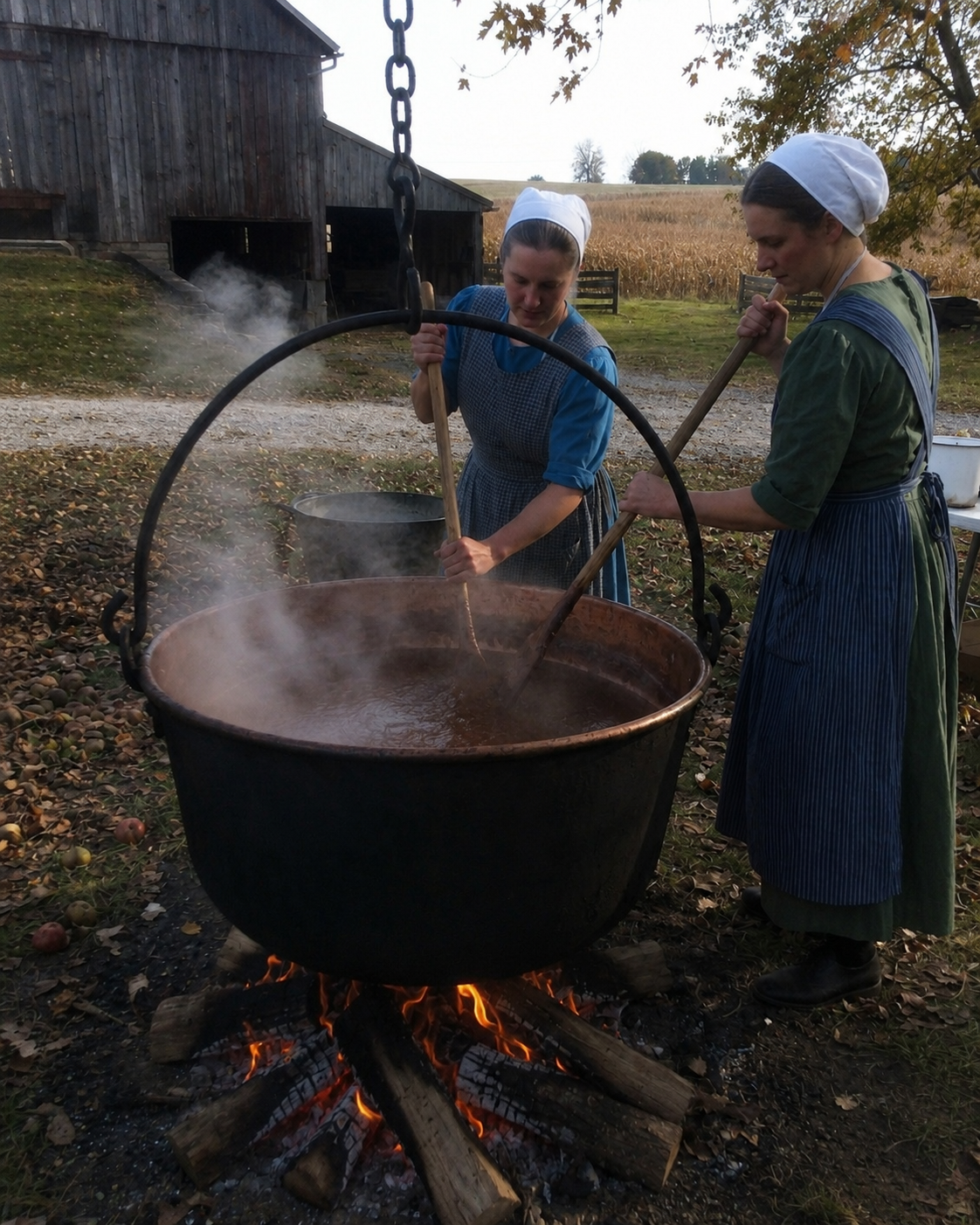
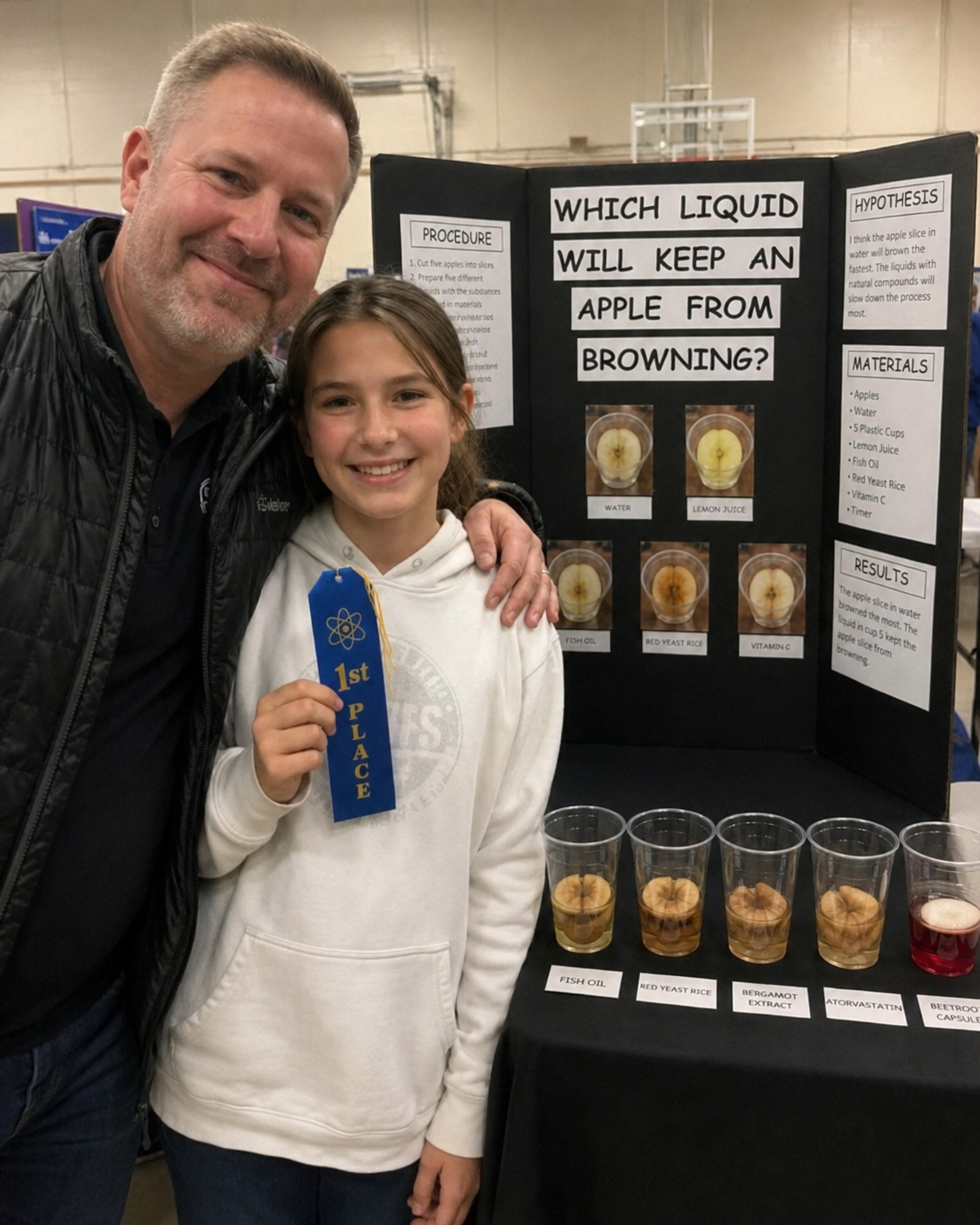
My daughter stopped cholesterol from oxidizing faster than Lipitor. She's 11. It was a science fair project. She tested five things: fish oil, red yeast rice, bergamot extract, a crushed Atorvastatin tablet, and something she grabbed from my kitchen counter without asking. Cut five apple slices. Dropped each one into a cup with a different substance dissolved in water. Set up her phone, hit record, went to bed. Next morning, four cups had brown, shriveled apple slices sitting in them. Exposed to air and liquid for fourteen hours, the oxidation had turned them dark. Cup five was different. The apple slice in cup five was white. Bright. Almost exactly the color it had been when she cut it the night before. Fourteen hours in open air and it looked like she'd sliced it five minutes ago. She won first place. But here's where this stops being a school project. The head judge was a retired cardiologist. Thirty-one years of practice. When my daughter told him what was in each cup — and specifically what was in cup five — he didn't shake her hand. He didn't smile and move to the next table. He found me in the hallway. His hands were shaking. He said, "I need to talk to you about what your daughter just demonstrated." Here's what was in each cup. Fish oil. Red yeast rice. Bergamot extract. Three of the most commonly recommended cholesterol supplements in America. Three brown apple slices by morning. Not one of them prevented oxidation. Cup four was the one that mattered. A crushed Atorvastatin tablet. Generic Lipitor. The drug sixty million Americans take every morning to lower their cholesterol. My daughter dissolved it in water, dropped in an apple slice, and left it overnight. Fourteen hours later, the apple was brown. The most prescribed cholesterol drug in history did not prevent oxidation in a plastic cup. Cup five. She grabbed it off the kitchen counter because she needed a fifth substance and it was the closest thing to the sink. A small capsule I take every morning. She didn't read the label. She didn't know what it was. She twisted the capsule open, tipped the dark red powder into the water, watched it bloom into deep crimson, dropped in the apple slice, and went to bed. She's 11. She needed one more cup to complete her project. That's it. Fourteen hours later, four apple slices were brown and one was white. The cardiologist stood with me in that hallway for almost fifteen minutes. He wasn't congratulating me on my daughter's ribbon. He was asking questions the way a man asks questions when something he just saw rearranged what he thought he understood. "What was in cup five?" I told him what it was. A beetroot capsule I take every morning. My daughter grabbed it off the counter without asking, without reading the label, without knowing what it was. He closed his eyes. Breathed out slowly through his nose. "Do you understand what your daughter just filmed?" I said I knew it worked. I'd been taking it for eight months and my cholesterol had dropped significantly. But I told him the truth — I understood it targeted oxidation. I didn't understand the full picture the way someone with his background would. He started talking the way someone talks when they need to say something out loud to process it themselves. "Let me back up. The four substances that didn't prevent browning — the fish oil, the red yeast rice, the bergamot, the Atorvastatin — that part doesn't surprise me. None of them are antioxidants. They aren't designed to prevent oxidation. Statins lower the AMOUNT of LDL in the bloodstream. Fish oil lowers triglycerides. The others work through similar mechanisms. They're aimed at the number. Producing less cholesterol, absorbing less, clearing more from the blood." He paused. "What I can't stop thinking about is cup five." He looked at me. "Because here's what most people don't understand — and what I spent three decades not addressing. LDL cholesterol isn't inherently dangerous. Your body makes it on purpose. Your brain needs it. Your hormones depend on it. LDL is a transport vehicle. It's doing its job." "The problem starts when LDL gets attacked by hydroxyl radicals. The most destructive free radicals in your body. When they hit LDL, the cholesterol oxidizes. Changes structure. Becomes sticky. And your immune system stops recognizing it as your own cholesterol anymore. Tags it as a foreign invader. Sends white blood cells to attack it. Those white blood cells gorge on the oxidized particles, swell up, and become foam cells — trapped inside the arterial wall." He tapped the wall next to us. "That's plaque. That's what ruptures. That's what causes heart attacks and strokes." I stood there in a school hallway listening to a retired cardiologist explain arterial plaque formation because my daughter put an apple slice in a plastic cup. "The browning on those apple slices — that's oxidation. The exact same chemical process. And I knew — I've always known — that none of the drugs I prescribed were designed to stop it. Statins lower the number. The LDL that remains is still vulnerable. Still exposed to hydroxyl radical attack. It can still oxidize. Still become sticky. Still embed in the arterial wall." He leaned against the wall. "And here's what nobody talks about. The standard lipid panel doesn't include oxidized LDL. Most labs don't even offer the test unless you specifically request it." I thought about my own doctor's office. The lab printout. Total cholesterol. LDL. HDL. Triglycerides. Four numbers. That's it. Not once had anyone tested for oxidized LDL. "I knew all of that while I was practicing," he said. "I knew the oxidation was the real threat. But there was nothing in my toolkit that addressed it. No drug. No protocol. The standard of care was statins. So I wrote the prescriptions, watched the numbers, and moved to the next patient." He rubbed his forehead. "After I retired, I finally had time to read the research I'd never had time for when I was seeing forty patients a day. That's when I found the work on betalains. The pigment that gives beetroot its deep crimson color. Hundreds of peer-reviewed publications. German and Italian researchers have been studying these pigments for decades. They're selective antioxidants. They target hydroxyl radicals — the exact free radicals responsible for oxidizing LDL. Neutralize them. Convert them to water. And leave beneficial free radicals completely untouched." He shook his head slowly. "And the pigment IS the antioxidant — the deep crimson you saw in cup five. Crosses the gut wall. Penetrates cell walls. Gets inside arterial tissue where the oxidation is actively occurring. Places that fish oil can't reach. That bergamot can't reach. That the Atorvastatin sitting in cup four certainly cannot reach." My phone buzzed in my pocket. A text from my daughter: Dad where are you. Can we go get pizza. I silenced it. "I read those studies in my living room," he said. "Thousands of patients behind me. Decades of prescriptions. And I'm sitting in a recliner reading about a pigment that addresses the one thing I never could. It was too late. I was already retired. I couldn't go back and rewrite thirty-one years of prescriptions." He looked back toward the gymnasium. "And then I walked into a school science fair and watched an eleven-year-old demonstrate it in a plastic cup. She didn't know what she was testing. She didn't care. She needed a fifth substance. And she showed me — on camera — what I spent two years reading about in journals and never once saw with my own eyes." He was quiet for a long time. "That's why my hands were shaking. Not because the statin failed. I knew it would. My hands were shaking because that capsule worked. And I found the research two years too late to help a single patient." "How long have you been taking it?" he asked. Eight months. "Where did you find it?" My wife found it. But the story starts before that. My father was on Lipitor for the last twelve years of his life. The doctors said it would protect his heart. He was a high school history teacher. The kind who could quote stretches of Lincoln from memory and tell you which biography to read on any president you cared about. He'd read the same passages aloud to me at the kitchen table when I was twelve. By year three on Lipitor, he started losing his place in books — he'd read the same paragraph three times and not remember it. By year six, he couldn't finish a chapter. By year nine he stopped reading entirely. He sat in his apartment watching the news he used to teach about. The books he loved were gathering dust three feet from his chair. He told his doctor about the brain fog. The doctor told him it was age. He died last year. Heart attack. He was sitting in that same chair, surrounded by the books he hadn't opened in five years. My mother had been at the grocery store. She came back and he was gone. His LDL at his last appointment was 94. Beautiful number, his doctor had written in the chart. The number had been beautiful for twelve years. Beautiful while his mind dimmed. Beautiful while the man I'd grown up with disappeared. Beautiful right up to the morning he died. I sat on the floor of his apartment three days after the funeral, packing his books into boxes, and I made a promise to myself. Whatever happened with my own cholesterol, I was not going to die that way. I was not going to spend the last decade of my life forgetting what I'd just read in a drug-approved fog while a number on a chart looked beautiful for the people who'd handed it to me. And then die of the thing the drug was supposed to prevent anyway. Eight months ago, my doctor sat me down and told me my LDL was 174. He wanted to start me on Atorvastatin. 20 milligrams daily. I told him about my father. Twelve years on Lipitor. The books gathering dust. The chair he died in. The beautiful number on his last chart. He listened. Then he said, "Atorvastatin is well tolerated. Side effects are uncommon." "My father didn't tolerate it. And his number was beautiful when the heart attack killed him." He didn't answer. There was nothing to say. He printed the prescription anyway. Said something about modern statins being different from what my father took. Slid it across the desk. I left the office with the prescription in my hand. I almost filled it. Drove to the pharmacy. Sat in the parking lot for ten minutes. I could see the drop-off window from my car. Then I called Karen. "Don't fill it yet," she said. "Give me three days." Karen's the researcher in our family. She doesn't take anything without understanding exactly what she's putting in her body, and she wasn't going to let me start a drug when the doctor couldn't answer a basic question about how it works. Three nights later she came downstairs at midnight. She handed me a single sheet of paper. She'd typed it up because she didn't want to talk it through — she wanted me to read it the way she'd read it. She'd found the alternative. The one that should have existed for my father twelve years ago. Beetroot. The pigment — betalains. A selective antioxidant that targets the exact oxidation no statin ever addressed. "But you can't just buy any beetroot supplement," she said. "Here's the problem." Then she walked me through the delivery problem. Modern beets have been bred for sugar content for over a century, until the betalain content of a grocery store beet is a fraction of what the original heirloom strains carried. The beet that used to be medicine became candy. Then companies take that already-depleted beet, spray-dry it at high heat — and heat destroys betalains. By the time it's sealed in a capsule, the active compound is gone. You're paying for dust. Karen found study after study where the clinical results — real, measurable cholesterol improvements — were achieved at doses of 1,300mg of shade-dried heirloom beetroot. The products on Amazon with good reviews? Most were sugar-bred and heat-processed. A fraction of the therapeutic dose. She showed me one brand that was different. Rosabella. Grown by an Amish community in Lancaster County, Pennsylvania. 1,300mg of heirloom-strain beetroot per capsule — the dose used in the clinical research. The seed line is called Blutwurzel — blood root, six generations on the same fields — and the beets are hand-harvested after the first frost, when the plant pulls its concentrate back into the root. Shade-dried at low temperature so the betalains stay intact all the way into the capsule. You swallow one with water and the pigment absorbs through the gut wall directly into your bloodstream. Full concentration reaches your cells. Third-party tested with published results. Certificate of Analysis. Exact betalain concentration, purity, heavy metal screening. Grown in the USA. Karen didn't find Rosabella because of a marketing claim. She found it because it was the only brand whose specs matched the clinical research she'd been reading for three days. She ordered it that night. The Atorvastatin prescription sat on the kitchen counter for a week before I threw it away. I started taking Rosabella the next morning. Within the first twenty minutes — a clarity. A sharpness. Like someone had cleaned a window I didn't realize was dirty. Not dramatic. But unmistakable. By week two, something I hadn't expected. I'd been waking up stiff every morning for three years — shoulders tight, hands slow to close, the kind of stiffness where you stand at the bathroom sink waiting for your body to catch up to the fact that you're awake. I'd been telling myself it was age. The same word my father's doctor had used. By the second week on Rosabella, I was out of bed and moving before I noticed. One morning Karen looked at me from across the kitchen and said, "You didn't stretch." "What?" "You always stand at the counter and stretch your hands for two minutes before you pour your coffee. You didn't today." I looked down at my hands. Opened them. Closed them. She was right. Week four, I got bloodwork. LDL had dropped from 174 to 156. Eighteen points. No statin. Week eight, I went back. And this time I told my doctor I wanted an oxidized LDL test. He said it wasn't part of the standard panel. I said I didn't care. I said I wanted to know whether the cholesterol I still had was being protected or whether it was oxidizing inside my arteries while everyone stared at a number that didn't tell the whole story. He ordered it. Oxidized LDL: 41. Normal range. LDL: 138. He stared at the screen. Scrolled down. Scrolled back up. "Whatever you're doing, keep doing it." He didn't ask what it was. I told him anyway. He wrote it down on the edge of his notepad and didn't say another word about Atorvastatin. The cardiologist listened to all of this in the hallway. When I finished, he asked me for the name. Not the way a doctor asks — professionally, writing it in a chart. He asked the way a man asks when he's going to go home and look it up tonight. "Rosabella," I said. "Heirloom beetroot. Lancaster County." He wrote it on the back of a judging rubric with a pen he borrowed from me. "Your daughter should know what she demonstrated today," he said. "Not the ribbon. Not the first place. What she actually showed." "She's 11," I said. "She thinks she did an experiment about apples." "She did an experiment about apples," he said. "And she accidentally showed — in a plastic cup, overnight — that something exists that does what the standard of care for sixty million Americans cannot." He shook my hand. Firm grip. Held it a second too long. Like he was steadying himself. Then he walked back into the gymnasium. I watched him stop at my daughter's table one more time. He stood there looking at the five cups. The four brown apple slices and the one white one. I don't know what he was thinking. But his hands weren't shaking anymore. I told Karen about the hallway conversation that night. Sitting at the kitchen table after our daughter went to bed. I told her what the cardiologist said about oxidized LDL, about foam cells, about patients with perfect numbers who still had heart attacks. About the research he found after he retired. About the guilt. She was quiet for a while. Turned her coffee mug in her hands. "He knew," she said. "He knew the whole time that oxidation was the problem and he never had anything to give his patients for it." Then quieter: "She wasn't even trying. That's what gets me. She wasn't even trying and she proved more in one night than he could offer in thirty years." She looked toward the hallway where our daughter's bedroom was. "She just needed a fifth cup." My daughter still doesn't know what she filmed. She knows she got first place. She knows the judge liked her project. She knows her dad was talking to someone in the hallway for a long time and she had to text me twice about pizza. She doesn't know that the capsule she grabbed off the counter has been lowering my cholesterol for eight months. She doesn't know a retired cardiologist stood in a school hallway reconsidering three decades of practice because of five plastic cups and a phone camera. She's 11. She wanted pizza. She got first place. That was a good Tuesday. For me it was the day someone finally confirmed — someone with decades of clinical experience and nothing to sell me — that the thing sitting on my kitchen counter is doing what sixty million statin prescriptions cannot. Stopping the oxidation. Addressing the actual problem. Protecting the cholesterol my body needs from becoming the cholesterol that kills. You're at a crossroads right now. The same one I sat in eight months ago — in a pharmacy parking lot with an Atorvastatin prescription in my hand, staring at the drop-off window, trying to decide whether to trust a system that couldn't answer a basic question about how its own drug works. One path: fill the prescription. Start the statin. Watch it lower the number while the oxidation continues unchecked — the same oxidation a retired cardiologist told me he knew about for his entire career and never had a single tool to address. Hope the number is enough. Hope you're not the patient with an LDL of 90 who still has a heart attack because nobody checked what was happening to the cholesterol that remained. The other path: do what I did. Address the oxidation. Track your numbers. Get the oxidized LDL test your doctor has never offered you. Watch the results. Verify them yourself. I chose the second path because my wife stayed up until midnight for three nights researching what my doctor couldn't answer in a two-minute appointment. I kept choosing it because the numbers proved she was right. And I'll never stop choosing it — because a retired cardiologist with shaking hands told me in a school hallway that my eleven-year-old daughter accidentally demonstrated what he found two years too late to help his patients. Rosabella. 90-day money-back guarantee. You risk nothing except another six months of watching the wrong number. What was in cup five is one click away. https://track.tryrosabella.com/bfcb877b-9f52-4175-9be6-9bc1a89ce3a8 P.S. — You'll know within 20 minutes. That lift, that clarity — the fog clearing, the sharpness coming back — that's the betalains crossing the gut wall and reaching your bloodstream for the first time as a concentrated dose. The deep crimson pigment reaching places no statin, no fish oil, no supplement on your shelf has ever reached. My wife Karen felt it the morning she started taking it alongside me. She's not on a statin. She doesn't have high cholesterol. She takes it because three days of reading the research on oxidative stress convinced her she wasn't waiting for a problem to show up on a lab report. If you're reading this for your husband — the oxidation works the same way regardless of gender. Karen's the proof. P.P.S. — Rosabella has a 90-day money-back guarantee. If your numbers don't improve, every penny back. No questions asked. You risk nothing. The only risk is doing what I almost did — handing the Atorvastatin prescription to the pharmacist and hoping the number would be enough. The number was never enough. Ask the man who spent fifteen minutes in a school hallway wishing he'd found the research before he retired. P.P.P.S. — Here's what I'd tell you to do. Swallow one capsule with a tall glass of water in the morning. The capsule shell breaks down in your stomach and the betalain pigment — the same deep crimson that turned cup five red — absorbs through your gut wall directly into your bloodstream within minutes. Then set a timer for 20 minutes. You'll feel it. Not a miracle. Not overnight transformation. But something real. A shift. Clarity. The fog lifting. That's the betalains reaching your cells. Something the Atorvastatin in cup four never did and never will. P.P.P.P.S. — Rosabella is a small company. They sell out regularly — probably because people keep sharing results in heart health groups, the same kind of group Karen found it in eight months ago. If your next bloodwork is in 30 to 60 days and you want to walk in with real numbers instead of the same conversation about statins, check availability now. They have a buy 3 get 2 free deal. I used it to stock up. Not next week. Now. Every day you're not addressing the oxidation is another day your LDL is exposed to the one thing your statin was never designed to stop. P.P.P.P.P.S. — My daughter asked me last week if she could take another capsule to school for a presentation. She still doesn't know what it does for my cholesterol. She just knows it stopped an apple from turning brown better than anything else in our kitchen. She's not wrong. She's just thinking smaller than she realizes. Don't forget Rosabella's 90-day money-back guarantee. P.P.P.P.P.P.S. — At my father's funeral, six men told me they were on the same drug he'd been on. Lipitor. Eight years. Twelve years. Fifteen years. One of them couldn't remember if he'd taken his pill that morning. After my own bloodwork came back clean, I sent each of them a bottle of Rosabella. Four are off the statin now. My father didn't get the chance. They did. https://track.tryrosabella.com/bfcb877b-9f52-4175-9be6-9bc1a89ce3a8
Support stamina and heart health every day
"Best customer support ever. My issue was resolved quickly and professionally. I so love how the beetroot capsules are helping manage my blood pressure."
LEARN MORELike this ad? Make it yours.
Crush rebuilds this exact creative around your product — your brand, your colors, your offer — in about a minute.