Susan L Johnson
Susan L Johnson Facebook ad: “Feel Like Yourself Again”
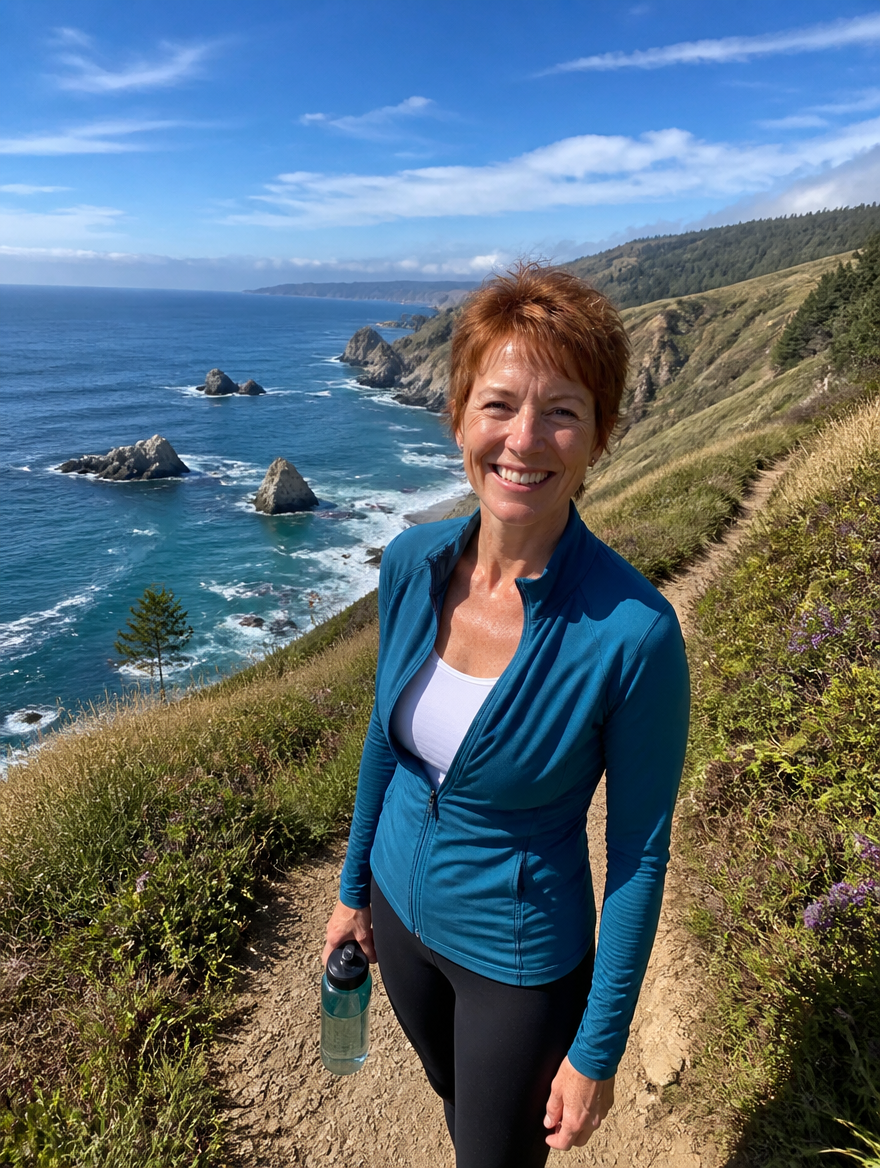
Ran for 72 days, from June 10 to August 21, 2026, the last day Crush saw it.
Run by Susan L Johnson on Facebook. Crush is not the advertiser and does not verify its claims. See this ad in Meta's Ad Library(opens in a new tab)
Want an ad like this for your product?
Crush makes new ad images for your product from this ad: your logo, your product photo, your offer.
Trials from $19.95 USD, then $79.95 USD a month. Cancel anytime.
About this ad
- Meta Ad Library ID
- 1504678097966690
- Platforms
- Facebook, Instagram and Messenger
- Relaunches
- 1
Ad text
I'm so f****ing sick of people posting here saying B12, magnesium, and alpha lipoic acid help with neuropathy. They don't. Not really. I've tried all of them. So has everyone in my Facebook group. So has my sister. So has the guy at the supplement store who, by the way, is still on Gabapentin. Let me tell you what two years of "natural neuropathy protocols" actually got me. B12 sublingual every morning. $24 a bottle. Six bottles. Six months. The tingling backed off for about three weeks. Then crept right back in. Alpha Lipoic Acid mixed into my routine. $39 a tub. Tasted like nothing and did about as much. The forum guys swore by it. Maybe it works if you're catching it in month one. I'm 57 and my feet were burning at night when I started and still burning at night when I stopped. Magnesium glycinate at $28 a bottle. Then magnesium threonate when the glycinate didn't do anything. Then the expensive German one a guy on Reddit recommended for $46. Same result. My doctor said "well it's good for sleep" like that was supposed to be a consolation while my legs were still screaming at 2 a.m. Benfotiamine at $35. Acetyl-L-Carnitine at $32. Nerve Renew at $69 a bottle for the full 90 days they said you needed. Nervive when someone told me it worked for "everything peripheral," another $40. Then the topicals. Capsaicin cream that lit my feet on fire for twenty minutes and did nothing else. Mira lotion at $47 a bottle. A grounding mat for $89. A TENS unit I bought after a webinar. Add it all up. I sat down one night and actually did the math. Two years of natural protocols. Over $1,400 in supplements and devices. And my feet were still burning at 2 a.m., on a good night. You know what they all have in common. They all kind of work. A little. For a few weeks. And then your body settles right back where it was, and you're sitting on the edge of the bed at 6am with the sheets thrown off because the cotton against your shins feels like sandpaper, and you're wondering if you're going to spend the rest of your life on this hamster wheel before you finally give in and take the Gabapentin your doctor has been waving in your face for three years. That was me in February. I'd cleaned up my diet. I was walking 40 minutes a day on the treadmill, holding the rail. I'd cut sugar to almost nothing. Burning feet. Numb toes. Tingling that traveled up to my knees on bad days. That was my reality that morning. After everything. I sat at the table and I almost cried. Not from sadness. From rage. The kind of rage where you start to wonder if the whole "natural supplement" world is just a slightly cleaner version of the pharmaceutical world. Different bottles. Same scam. I'm writing this from the other side of that morning. I slept eight hours straight last night. No 2 a.m. burn. I felt the cool tile under my feet when I got out of bed, and I felt it correctly. It's been like that for eleven weeks. No medication. No prescription pad. No daily dread when I take my socks off. What changed wasn't another supplement off the shelf. It wasn't a different brand of B12 or a stronger ALA or a fancier magnesium. It was an entirely different theory of what was actually wrong with me. Something none of those bottles had ever touched. Something my regular doctor had never mentioned in three years of appointments. I'm going to tell you exactly how I found it. Because if you're somewhere on the same wheel I was on, you need to hear this before you spend another six months and another four hundred dollars on the next supplement that promises to be the one. Back to that morning at the kitchen table. That night I couldn't sleep. I was scrolling our local community page on my phone in the dark. The one where neighbors post about lost dogs and which plumbers not to call. A woman a few streets over had posted a long question. She'd been on Gabapentin for four years. The brain fog had gotten so bad she couldn't remember her grandkids' birthdays anymore. She was asking if anyone in the area knew a doctor who would actually listen instead of writing another prescription. Forty-two comments. Most of them useless. But one comment near the top had thirty-eight replies under it. A guy I didn't know recommended a holistic doctor on the other side of the city. Said he'd gone in there with neuropathy in both feet and one hand, on Gabapentin and ALA, frustrated and out of options. Said the doctor had spent ninety minutes with him on the first visit and walked him out with a different understanding of what was actually wrong. Reply after reply under that comment. People I didn't know, but people from my own zip code, saying the same thing. He took his time. He explained things nobody else had explained. He didn't rush. I screenshotted the doctor's name and put my phone down. Forty-five minutes across the city in traffic. Out of network. Three hundred dollars for the first visit, no insurance. I almost didn't go. Three hundred dollars on top of the $1,400 I'd already burned felt like another donation to the natural health industrial complex. But I kept thinking about that comment thread. Thirty-eight replies. From my own town. People who weren't trying to sell me anything. So two weeks later I drove across the city on a Tuesday morning and sat in a quiet office with bookshelves and no fluorescent lights, and a doctor with grey hair and reading glasses pulled my chart up on his laptop while I listed every supplement I'd tried. He let me finish. Then he closed the laptop. "You're treating the wrong thing," he said. I waited. "Your nerves aren't just wires. They're living tissue. The cells inside them are the most energy-hungry cells in your entire body. A single nerve in your leg can stretch over three feet long. Keeping that much living tissue alive takes more cellular energy than almost anything else you have. B12, alpha lipoic acid, magnesium, none of them are doing anything to give those cells back the energy they need to function. And until you fix the energy, your nerves are going to keep doing exactly what they're doing." He pulled out a notepad and drew a long thin cell stretching from a spinal cord at the top of the page all the way down to a foot at the bottom. Inside it he drew a little oval and tapped it with the end of his pen. "This. The mitochondria. This is your cellular energy generation system. Every cell in your body has them. They're the power plant. And the cells in your nerves need an enormous number of them firing at full strength, because the cell itself is so massive." He kept going. "When your mitochondria are working, the cells in your nerves do exactly what they're designed to do. They maintain the protective myelin sheath. They transmit signals between your brain and your feet. They repair damage as it happens. That's why when you were younger you could feel sand between your toes without thinking about it. The power was flowing." "But your mitochondria are exposed to everything in modern life. Every processed meal. Every sugar spike. Every stress hormone. Every year of inflammation. It piles oxidative stress onto your mitochondria, day after day, year after year. The power plant that was once running at full strength gets deregulated and shuts down. Like the inside of an old factory that's been corroding for decades." "Once your mitochondria shut down, cellular energy stops flowing. And here's the part that matters. Because the cells in your nerves are the most energy-hungry cells you have, they're the first to starve. Other cells can get by on reduced energy. Your nerves can't. The myelin sheath thins. Signals get garbled. Repair stops happening. Tingling. Then burning. Then numbness. Then it spreads." "That's neuropathy. Not a mystery. Not damage you have to learn to live with. A cellular energy crisis happening inside the longest cells in your body, getting worse every year." I sat there for a long second. He let me sit with it. Then he counted on his fingers. "Now look at what you've been taking. B12 helps with nerve signaling. It's a building block. But if there's no cellular energy in the nerve to use it, the building block just sits there. You're delivering lumber to a construction site with no power." "Alpha lipoic acid is an antioxidant. Mops up some damage. Doesn't restart the mitochondria." "Magnesium supports transmission. Doesn't reach the energy." "Benfotiamine, B6, B1. All building blocks. None of them touch the power plant." "Topical creams work on the surface of the skin. The problem is happening three feet deep, inside a cell that runs all the way up your leg. Cream can't reach a cellular energy crisis." "Grounding mats. TENS units. Surface signals. They can't reach the cell." He set the pen down. "Every supplement and device you've tried has either delivered building blocks or worked on the surface. Nothing has restarted the power plant. That's why nothing has worked. You've been delivering supplies to a site with no electricity. The lumber arrived. There was nothing there to use it." $1,400 over two years. Lumber to a dead site. I asked him what does turn the power back on. He nodded like he'd been waiting for the question. He told me about a seed that healers in the Himalayas have used for over three thousand years. Black seed. Nigella sativa. They called it the remedy for everything except death. It was the thing they reached for when somebody's body was breaking down from the inside. I had never heard of it in this context. Not once. Not on any nerve supplement comparison list. Not in any of the "best supplements for neuropathy" articles I'd read for two years. Not from my regular doctor, who has a neurology fellowship and a wall of diplomas, and not from anyone in my Facebook group. Three thousand years of use and it had never made it across my radar. "Black seed oil activates a switch inside your cells called AMPK," he said. "AMPK is your body's master switch for mitochondria. When you flip AMPK on, your mitochondria reactivate. They start producing cellular energy again the way they did when you were younger. The power plant comes back online." "Here's what happens next." "Cellular energy starts flowing back into your nerves. And because the cells in your nerves are the most energy-hungry cells you have, they're actually among the first to respond when the power comes back. They start doing what they've been trying to do all along. Repair the damaged tissue. Rebuild the myelin sheath. Restart the signal between your brain and your feet." "The B12 you've been taking? It can finally get used. The alpha lipoic acid? Same. The building blocks weren't useless. They were waiting on the power. Once AMPK reactivates the mitochondria, the entire system starts working again." He looked at me over his glasses. "You didn't need more building blocks. You needed to turn the power plant back on." That was the moment two years of frustration finally made sense. "And black seed oil does one more thing that matters here. The same oxidative stress that shut down your mitochondria in the first place, the seed oils, the sugar spikes, the years of inflammation, it's still happening every day. Black seed oil has some of the highest antioxidant activity of any compound ever studied - more powerful than turmeric, ginger, and blueberries combined. And it isn't close. It neutralizes the oxidative stress that's been attacking your mitochondria. So you're not just turning the power plant back on. You're protecting it so it stays on." He pulled up a clinical study on his laptop and turned the screen toward me. Researchers had tested standardized black seed oil activating AMPK consistently in human trials. Reactivating mitochondrial function. Reducing the oxidative stress markers that drive the damage. And it was working at the actual cellular root of the problem. Not numbing pain signals like Gabapentin. Not delivering building blocks like a B-complex. Reactivating the system that produces every other repair downstream. Multi-pathway. From one whole food oil used by healers for three thousand years. "Why didn't my regular doctor know this," I asked him. He shrugged. "Most of this research is in metabolic and cellular biology journals she isn't going to read. Black seed oil and AMPK aren't part of the standard neuropathy protocol yet. It probably will be in ten years. For now, you just have to know about it." Then he leaned back and said the part I want you to read twice. "Before you go on Amazon and buy the first black seed oil you see, you need to hear this. Not all black seed oil is the same. The active compound responsible for activating AMPK is called thymoquinone. Most black seed oil on the market contains 0.5% to 1% thymoquinone. The research requires 5%. That's ten times more than what most brands contain, and most brands deliberately hide the percentage on the label because disclosing it would expose how laughably low it is." He paused. "On top of that, standalone black seed oil is extremely prone to oxidation after extraction - similar to fish oil going rancid. And oxidized black seed oil doesn't just lose potency. It actually causes more inflammation in an already inflamed system. Most brands ignore this entirely. They use cheap oil at 0.5% thymoquinone, bottle it up, and ship it out. Most of those customers are likely taking rancid oil that is doing more harm than good." "The difference between a random bottle of black seed oil and a properly standardized extract is like the difference between chewing on willow bark and taking an aspirin. One is the plant. The other is the precise, concentrated compound that actually produces results. If you buy the wrong one, you'll think black seed oil doesn't work, and you'll be right back on the carousel." He told me what to look for. Standardized to 5% thymoquinone, verified by third-party testing. Cold pressed. Formulated with MCT oil to prevent oxidation and keep the oil stable and potent from pressing to delivery. A brand that actually discloses the thymoquinone percentage on the label rather than hiding it. He told me he takes it himself every morning. Said he doesn't recommend a specific brand to patients because he's not in the supplement business. But if I matched everything he just listed, I'd find one. He also told me what to expect from the timeline, because most people quit too early. Nerve tissue, he said, is the slowest healing tissue in the human body. It grows back at about one millimeter a day. The black seed oil needs time to saturate the system. Missing doses resets the saturation clock. He told me to think of it as a biological reality, not a marketing line. He said the first two weeks the antioxidants start neutralizing the oxidative stress that's been attacking your mitochondria. You won't see your symptoms move yet, but the assault is slowing. Some people notice their afternoon energy clearing or their head feeling less foggy. That's the antioxidant protection building. Weeks three and four, AMPK starts reactivating the mitochondria. Cellular energy starts flowing back into the most energy-hungry cells in your body. That's when most people notice the nighttime burn easing. The 2 a.m. wakeups get less intense. The electricity going down their legs gets quieter. Weeks five through eight, the cells in your nerves get back to doing what they were always supposed to do. Repair tissue. Rebuild myelin. Restart signal transmission. The tingling fades. The numb spots start picking up sensation again. Balance starts coming back. The fear of falling starts to lift. Weeks nine through twelve and beyond, the system stays online. The mitochondria keep producing energy. The antioxidants keep protecting them. Your body holds the function it was designed to have. The way it did when you were younger. He said the people who fail with black seed oil are the ones who either buy the wrong product or quit at week two because the burning didn't disappear in seven days. The biology takes time. Twelve weeks minimum to see what it can really do. I drove home with two pages of his handwritten notes in my jacket pocket. That night I sat at my kitchen table with my laptop and started looking. Most of what came up on Amazon failed the criteria immediately. No thymoquinone percentage listed. No third-party testing. No mention of oxidation protection. Long fillers list. Made in places I couldn't pronounce. I looked at probably forty brands over two nights. The one that hit every single thing on his list was a small company called Fable. Standardized to 5% thymoquinone - disclosed right on the label and validated by third-party testing. Cold pressed. Formulated with MCT oil to protect against oxidation and keep the black seed oil stable, fresh, and potent from the moment it's pressed to the moment it reaches you. Two softgels a day. Every box checked. I ordered a bottle that night. Two softgels every morning with water. Week one and two, exactly like he said. Burning still there at night. But by day ten my afternoon energy was different. The brain fog I'd been pushing through after lunch lifted. I didn't think much of it. Week three I noticed the burning was different going into sleep. Quieter. Less aggressive. I was waking up at 4 instead of 2. Week four my husband said I was moving differently across the kitchen. The tingling was undeniably less. Weeks five through eight my symptoms kept moving. By the end of week six I stepped into the shower and felt the temperature change when the hot water hit my feet. Felt it. Not perfectly, but something was there that hadn't been there in years. By the end of week eight I was sleeping eight hours straight. The cycle he described, the one that had been grinding on me for years, had finally broken. I went back to my regular doctor at the three month mark. The one with the neurology fellowship. She did the monofilament test, twice. Looked at her notes. Looked at me. Asked what I was doing differently. I told her. She wrote it down. No prescription that visit. None. That was eleven weeks ago. I slept eight hours last night. My husband and I went grocery shopping on Saturday and I didn't think about my feet the whole time. Here's what I want to say to you, because I'm guessing you're somewhere on the same wheel I was on. Maybe you've also added up what you've spent on supplements that didn't move your symptoms. Maybe you're afraid to do that math. If you've been cycling through B12, alpha lipoic acid, magnesium, nerve formulas, creams, grounding mats, you are not crazy and you are not failing at this. You were given the wrong tools. Every one of those products works on something downstream of the actual problem. They were designed by people who didn't know about AMPK, or who knew and didn't have a single ingredient that activated it. Black seed oil activates it. Directly. That's the difference. But only the right black seed oil. Standardized to 5% thymoquinone, verified by third-party testing. Cold pressed. Formulated with MCT oil to prevent oxidation. A brand that discloses the percentage instead of hiding it. If a brand fails any one of those, you'll think black seed oil doesn't work and you'll be right back where you started. Fable is the brand I found that hit every one. Two softgels with water every morning. I've been taking it ever since. You don't need to scroll a community page at midnight or drive across the city and pay three hundred dollars and spend two nights comparing forty brands to find this out. I already did all of that for you. Fable has a 90 day money back guarantee. Take it for three months. That's the timeline. The first two weeks the antioxidants start protecting your mitochondria. Weeks three and four AMPK reactivates the power plant. Weeks five through eight the cells start repairing and you feel the burning ease and the sensation come back. Weeks nine through twelve your body holds the new function on its own. If your symptoms don't improve in that window, full refund. No questions. The fact that a small supplement company will offer that and the pharmaceutical industry won't tells you something. I really hope this helps someone. I've linked an article below that explains things in more depth.
Where the ad sends people
nervehealthscience.co
Feel Like Yourself Again
"This actually helped, thank you so much" - Marie K.
Learn more: myfable.co(opens in a new tab)