Wellness Tips
 Facebook ad: “Rockefeller’s buried mineral for women is finally exposed”
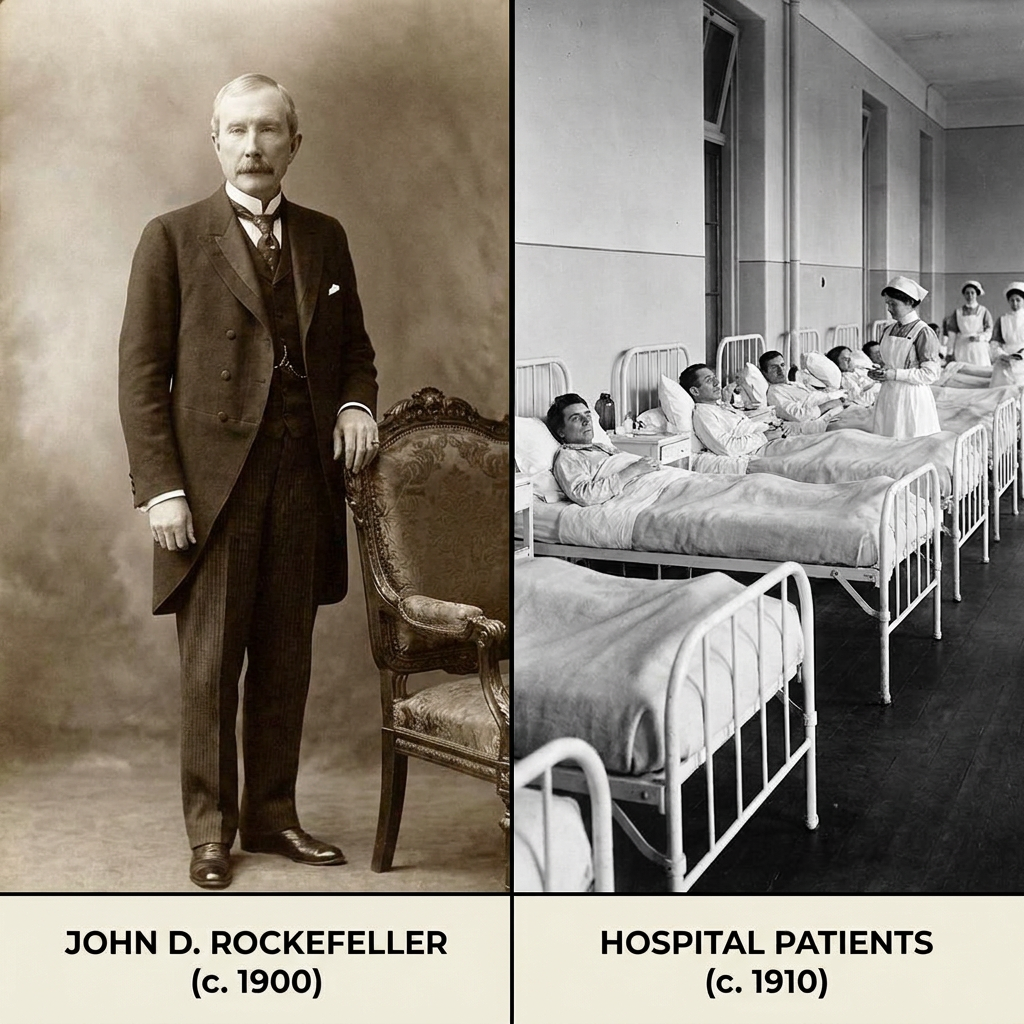
Ran for 5 days, from October 25 to October 30, 2026, the last day Crush saw it.
Run by Wellness Tips on Facebook. Crush is not the advertiser and does not verify its claims. See this ad in Meta's Ad Library(opens in a new tab)
Make your own version of this ad
Crush makes it, launches it in your own Meta ad account, scales the winners and pauses the losers.
About this ad
- Meta Ad Library ID
- 1505739481383846
- Platforms
- Facebook, Instagram, Audience Network and Threads
- Relaunches
- 0
Ad text
In 1910 John D. Rockefeller buried the one mineral that would have kept American women healthy for the next hundred years. This is not a conspiracy theory. This is public record. Before 1910 every family doctor in America knew about this mineral. A woman who couldn't sleep was given this mineral. A woman with anxiety was given this mineral. A woman with swelling, inflammation, heart flutters, muscle cramps, a belly that grew without eating more, a face that puffed up overnight, brain fog so thick she forgot her own address. This one mineral. Every time. It wasn't alternative medicine. It was just medicine. It had worked for hundreds of years. Then John D. Rockefeller decided there was no money in something that actually works. At the turn of the century, Rockefeller controlled Standard Oil. He was the richest man on the face of the earth. His refineries produced chemical byproducts that his chemists discovered could be turned into patented drugs and sold to sick people at massive, guaranteed markups. There was only one problem standing in Rockefeller's way. America already had a medical system. And that medical system didn't use petrochemical drugs. In 1910, American medicine was based on what the earth provided. Doctors used clinical herbs. They used natural tinctures. They used diet, pure water, rest, and above all, essential elemental minerals. If a woman came into a clinic exhausted, with her nerves frayed, her sleep ruined, and her heart racing in the dark, the doctor knew her nervous system was stuck on high alert. He gave her this mineral. And that was Rockefeller's nightmare. Because natural minerals cannot be patented. Because you cannot patent it, you cannot mark it up ten thousand percent. So Rockefeller made a calculated decision that would change the course of human health forever. In 1908, he partnered with Andrew Carnegie. Through the Carnegie Foundation for the Advancement of Teaching, they hired an ambitious man named Abraham Flexner. Flexner was not a medical doctor. He was not a scientist. He was not a researcher. He was a former Louisville high school teacher and administrator who was paid to travel across the United States and Canada to inspect every single medical school in operation. His mission was simple, but his marching orders were ruthless. Flexner visited 155 medical institutions. And in 1910, he published Bulletin Number Four. History remembers it as the Flexner Report. It was presented to Congress and the public as a crusade to "modernize" and "standardize" American medical training. In reality, it was a financial coup. The Flexner Report declared that any medical school that did not center its entire curriculum around synthetic laboratory drugs was "unscientific." Any school that taught clinical nutrition was labeled backward. Any school that taught mineral therapy, natural pharmacology, herbal medicine, or homeopathy was classified as fraudulent. The consequences were immediate and catastrophic. Rockefeller and Carnegie poured hundreds of millions of dollars of tax-exempt foundation money exclusively into the medical schools that agreed to teach pharmaceutical medicine. They funded new laboratory buildings. They paid the salaries of professors who taught patented drug formulas. They placed their own foundation trustees on the boards of the elite medical schools that agreed to rebuild their curriculum around pharmaceutical medicine. And the schools that refused to bow to the petrochemical drug model? The Flexner Report crushed them. Over half of the medical schools in America were forced to shut their doors within a few short years. Every single homeopathic college was systematically starved of funding and closed. The eclectic medical colleges that specialized in plant and mineral therapies were driven into bankruptcy. Medical licensing boards were taken over by officials aligned with the newly empowered American Medical Association, which had received massive cash infusions from Rockefeller's foundations. State laws were rewritten so that only graduates of Rockefeller-approved, drug-centered medical colleges could receive a medical license to practice. By 1920, the takeover was complete. In less than a single decade, an entire tradition of natural mineral medicine that had kept women healthy, calm, and vital for generations was wiped off the board. Every doctor trained after 1910 was trained inside a system built from the ground up to do one thing: Diagnose a set of symptoms. And match those symptoms to a patented pharmaceutical pill. Nutrition was stripped out of medical education entirely. To this day, the average medical student in the United States receives less than nineteen hours of total nutrition education across four years of intensive study. And almost none of that training focuses on what chronic stress hormones do to a woman's body. Doctors weren't evil. Your doctor isn't evil. She is a dedicated professional who went to school for a decade because she wanted to save lives. But the textbook she studied was written by a curriculum committee funded by the pharmaceutical trusts. And she was taught nothing about the one single, foundational mineral that Rockefeller buried in 1910. The mineral that prevents all of those breakdowns from happening in the first place. And as if burying the knowledge wasn't enough, the medical system never taught her what was really driving it all. Chronically high cortisol. The body's emergency alarm, stuck on. When cortisol stays high, the nervous system gets stuck in a permanent state of emergency. And sleep disappears into the ceiling at two in the morning. The system isn't broken. It was designed this way on purpose. Built to keep you buying synthetic symptom management year after year, decade after decade. While the true root cause remains completely hidden. Nothing is wrong with you. Something was stolen from you. The same something that was stolen from me. But three months ago, I didn't know a single word of this history. Three months ago, I was just a fifty-two-year-old woman whose body was falling apart, crying in bathroom stalls, convinced that my life was over and that it was all my own fault. Let me tell you who I was before my body betrayed me. My name is Sarah. I'm fifty-two years old. I live just outside of Columbus, Ohio, in a two-story colonial house with yellow shutters that my husband Paul and I bought twenty-four years ago when our oldest daughter was just learning to walk. Paul works in commercial construction estimating. He has calloused hands, quiet eyes, and the kind of patient, steady patience that can anchor an entire family through anything. For thirty years, we had a good rhythm. I worked part-time as an administrative coordinator for an architectural design firm downtown. I managed the household books. All through my thirties and forties, my weight stayed locked at 132 pounds. My waist was twenty-eight inches. I could pull a pair of Levi's jeans out of my closet from ten years earlier, zip them up without thinking twice, and walk out the front door. I had energy that lasted all day long. I could work six hours at the office, run errands at three different stores, come home, cook a full dinner from scratch, help the kids with homework, fold two loads of laundry, and still sit on the back porch with Paul at nine at night talking and laughing about our day. I was capable. I was strong. I felt completely in control of my own skin. The change didn't happen overnight. It didn't hit like a car accident. It crept into my life like a slow, quiet leak in the foundation of an old house. It started right around my forty-ninth birthday. The very first thing that went was my sleep. All my life, I had been the kind of sleeper who touched the pillow and was gone in two minutes flat. Paul used to joke that I could sleep through an earthquake. Then, without any warning, a invisible alarm went off inside my skull in the middle of the night. Not at six in the morning when the sun was coming up. In the dead of the night, while the entire world was pitch black and silent. My eyes would snap wide open. My heart would be thumping hard against my ribs, loud enough that I could hear it pulsing in my left ear against the pillow. A wave of strange, cold heat would wash through my chest and up into my neck. My brain would immediately kick into gear, spinning through useless, frantic loops of worry that made no sense at all. Did I lock the side door to the garage? I would turn over quietly so I wouldn't disturb Paul. I would stare up at the white plaster ceiling. My body would feel completely exhausted, heavy like lead, but my nervous system was buzzing like an electric wire carrying ten thousand volts. By four-thirty in the morning, I would give up. And then, about six months after the broken sleep started, the second betrayal arrived. The belly. I remember the exact Tuesday morning it hit me. I had just stepped out of the shower and wrapped a white towel around my hair. I reached for my favorite pair of charcoal trousers that I wore to the office every week. I stepped into the legs, pulled them up past my hips, and went to button the waist. They wouldn't close. I stood there in my bedroom, half-dressed, staring down at my middle in complete disbelief. A thick, dense band of fat had wrapped itself around my lower stomach and waistline. It wasn't soft, squishy fat that moves when you press it. It was hard, stubborn, and heavy. Like someone had poured concrete under the skin of my belly while I was sleeping. Over the next three years, my waist expanded from twenty-eight inches to thirty-seven inches. Nine full inches around my middle. I hadn't changed a single thing about the way I ate. In fact, the more my belly grew, the less I ate. And my belly didn't care. It didn't shrink by a millimeter. Every single week, it seemed to push outward just a little bit further. My face went puffy. My cheeks lost their shape and filled with fluid. A heavy double chin appeared under my jawline, making me look twenty pounds heavier than I was, even in photographs where you could only see my face. My hips widened two full sizes. The underside of my upper arms went loose, crepey, and soft, hanging down whenever I lifted my hand to brush my hair. And the bloating was humiliating. I would wake up in the morning with a stomach that was relatively flat, but the moment I put anything into my mouth, the expansion started. Then came the Sunday that broke my spirit. Our church was having a fellowship lunch in the community hall after the morning service. I was standing near the tea station, holding a paper cup of unsweetened iced tea, talking to two women from our neighborhood committee. A woman named Brenda, whom I'd known casually for six or seven years, walked up to us with a warm smile on her face. She looked down at my stomach, her eyes widened with genuine delight, and she placed her warm hand directly on my swollen belly. "Oh Sarah!" she gasped, loud enough for four other people nearby to turn around and look. "I had no idea! When are you due? This is such a wonderful blessing!" The air left my body all at once. The silence around our table felt like an eternity. I was fifty-two years old. My youngest child had graduated from college two years earlier. I stood there in my dark blue cardigan, frozen in place, feeling the blood drain completely out of my face. The two women next to me looked down at their shoes in absolute horror. Brenda saw the expression in my eyes and immediately realized what she had done. Her hand dropped off my stomach as if she had touched a hot stove burner. Her face turned bright red. "Oh... oh God, Sarah, I am so sorry," she stammered, backing away toward the kitchen door. "I thought... I just meant... I'm so sorry." I forced the corners of my mouth to curl upward into what must have looked like a hideous, frozen grimace. "It's completely fine, Brenda," I whispered through teeth that were clenched so tight my jaw clicked. "Don't worry about it at all." I set my paper cup on the folding table. I walked out of the fellowship hall with my chin up. I walked past the front entrance, through the double doors, and straight into the private handicap bathroom down the hallway. I locked the heavy door behind me. I gripped the cold porcelain edges of the sink with both hands. And I stood there in the harsh fluorescent light, staring at the swollen, ruined woman in the mirror, sobbing so hard that my chest felt like it was going to crack in half. Right behind the belly came the brain fog. I had always been known for having an immaculate memory. It started with losing common words in the middle of ordinary sentences. I would be explaining a filing system to a junior associate, and right in the middle of a thought, the noun I needed would vanish into thin air. I would stand there with my mouth slightly open, snapping my fingers like an idiot, searching for a basic word like "stapler" or "manila folder." I started walking into rooms in my own house, stopping dead in the doorway, and staring blankly at the furniture because I had no earthly idea why I had walked in there. Then came the afternoon phone call that frightened me to my core. My oldest daughter, Lauren, called me from Charlotte, where she lives with her husband and their two-year-old daughter, Lily. Lauren was telling me about a promotion that had opened up at her husband's engineering company. I stood next to the kitchen counter with a dish towel in my hand. I wanted to say something encouraging. I wanted to say, "He deserves it so much, honey, he's such a dedicated provider." Instead, my mind went completely blank. A wave of cold panic rushed behind my eyes. I could see his face in my mind. I could picture him standing by the grill on the Fourth of July in his faded ballcap, flipping burgers, laughing with Paul. I had known this young man for seven years. He had sat at my Thanksgiving table every single November. And for twenty terrifying seconds, I could not remember his name. Not his first name. Not his last name. My own daughter was waiting on the other end of the line, and her mother could not pull the name of her husband out of the fog. "Mom? Are you there?" Lauren asked, her voice dropping into sudden concern. "Did the call drop?" "No, honey, I'm here," I choked out, my throat closing up tight. "I just... I dropped a spoon on the floor. That's wonderful news, sweetie. Just wonderful." I hung up the phone with shaking hands. I leaned against the refrigerator and closed my eyes. I honestly thought I was developing early-onset dementia. I thought my brain was rotting from the inside out, and that within five years my daughters would be looking at assisted living memory care facilities for me. By two in the afternoon every single workday, my brain was completely fried. It felt like someone had poured wet sand behind my forehead. I would collapse onto our living room sofa in my work clothes, pull an old fleece throw blanket up to my neck, and pass out into a heavy, comatose daze with the television murmuring in the background. Every single night, the exact same scene played out. I would be sprawled on the couch, my mouth half-open, breathing heavily, with my tortoiseshell reading glasses still perched crooked on the bridge of my nose. Paul would bend down gently. He wouldn't shake me or complain. He would slide his warm, calloused thumb and index finger along the sides of my temples, lift my glasses off my face with heartbreaking tenderness, and fold them closed on the end table. Then he would tuck the fleece blanket around my shoulders, kiss the top of my head, and whisper: "Goodnight, Sarah." Every night. He had to become my caretaker. And then, just when I thought my body couldn't torture me any further, the leg cramps arrived. They didn't happen during the day while I was moving around. They waited until the dead of the night. I would be lying in bed, tangled in the sheets, when suddenly the calf muscle in my right leg would contract with the force of a vice grip. I would roll out of bed onto my hands and knees so I wouldn't scream out loud and wake Paul up. So there I would stand, in the dark, at three in the morning, shivering in my nightgown, holding onto the marble bathroom counter with both white-knuckled hands. Tears would stream down my cheeks from the pure agony of the muscle spasms, waiting ten, fifteen, twenty minutes for the knots to loosen so I could take a single step without my legs collapsing beneath me. And right alongside the cramps was the anxiety. I had never been an anxious person in my entire life. I was the steady one. I was the rock that everyone leaned on during family emergencies, funerals, and hospital visits. Then, out of nowhere, a physical sensation of dread moved into my chest and took up permanent residence. It wasn't an emotional feeling. It was a physical tightness. It felt as though an iron fist was wrapped around my ribcage, squeezing tighter and tighter with every breath I took. My chest felt compressed. My heart would flutter and skip beats while I was just sitting at my desk reading a memo, sending a jolt of pure adrenaline through my veins that made the hair on the back of my neck stand up. I became terrified of driving on the highway. I had driven on Interstate 270 around Columbus for thirty years without a single second thought. Suddenly, the moment I merged onto the highway and the speed limit hit sixty-five miles per hour, my chest would lock up. My breath would catch in my throat. My hands would begin to shake so violently on the steering wheel that I could barely keep the car in the center of the lane. I would have to turn the blinker on, pull onto the shoulder, put the car in park, and sit there with the hazard lights flashing, gripping the wheel, trying to convince my heart that I wasn't having a massive coronary event. Eventually, I stopped driving on the highway altogether. I lied because I was too ashamed to tell my husband that his once-strong wife was terrified of driving sixty miles an hour down a paved road. And finally, my joints betrayed me. My fingers became stiff and swollen every morning. My knuckles looked red and thick. By the afternoon, the dull ache in my wrists and thumbs was so intense that I could no longer twist the metal lid off a jar of mayonnaise or a bottle of marinara sauce. I would stand in the kitchen, squeezing the lid with a rubber grip until my knuckles turned white, fighting with a glass jar until tears of frustration filled my eyes. Every evening, Paul would quietly walk into the kitchen, take the jar from my hands without saying a single word, twist the lid off with one effortless turn of his wrist, hand it back to me, and give me a gentle pat on the shoulder. But I saw the shadow in his eyes. It was worry. Not the kind of worry about a sticky jar of pasta sauce. It was the deep, terrifying worry of a man watching the vibrant, energetic woman he had loved since college slowly wither away into an invalid right before his eyes. Three years. Three solid years of every single symptom piling on top of the one before it. Fifty-two years old, and in my bones, in my spirit, and in my body, I felt like I was eighty. When you can no longer live inside your own skin, you do what every sensible American woman does. You make an appointment with your doctor. My physician was a woman named Dr. Henderson. She was fifty-eight years old, practical, kind, and had been our family internist for twelve years. I trusted her. I scheduled a forty-five-minute consultation, took a half-day off from the office, and sat on the exam table wrapped in that crinkly paper gown. When she walked in with her clipboard, I didn't hold anything back. I laid out the entire catalog of my misery. I sat there on the edge of the table, wiping mascara from my eyes with a rough paper tissue, waiting for her to give me the diagnosis. Dr. Henderson listened attentively. She nodded with genuine sympathy. Then she put her stethoscope down and said: "Sarah, let's run a comprehensive workup. We'll look at everything." And she did. The phlebotomist drew six separate glass vials of dark red blood from my left arm. Ten days later, I drove back to the clinic for the results. I walked into the consultation room with my heart hammering against my ribs, convinced that the lab work was going to show an autoimmune crisis, a severe thyroid failure, or something even worse. Dr. Henderson sat down in her swivel chair, looked at the multi-page printout, and smiled at me warmly. "Well, Sarah, I have great news," she said, tapping the papers against the desk. "Your lab work is completely pristine." I blinked at her. "What do you mean?" I asked. "I mean every single marker is squarely within the normal reference range," she explained. "Your thyroid is functioning beautifully. Your liver and kidneys are in great shape. Your blood sugar is ideal. Your inflammatory markers are low. You're completely healthy." I sat frozen in my chair. I didn't feel relief. I felt absolute despair. Because when you feel like you are dying from the inside out, hearing that your blood tests are "normal" is the loneliest sentence in the English language. It means the medical system has no box to put you in. It means your agony doesn't exist on paper. "Dr. Henderson," I pleaded, my voice trembling, "if my bloodwork is pristine, why am I waking up in the middle of the night drenched in sweat with my heart racing? Why can't I button my pants? Why can't I remember simple words?" She gave me a gentle, maternal sigh. "Sarah, you're fifty-two," she said softly. "You are in the middle of perimenopause. When estrogen begins to fluctuate, the nervous system gets sensitive. The sleep gets lighter. The metabolism naturally slows down. The body redistributes fat to the midsection. It's just a normal part of aging for a woman." Then she offered the standard protocol she had been taught to deliver: "Try taking some melatonin thirty minutes before bed. Practice good sleep hygiene. Keep your bedroom cold and dark. Cut down on stress. Maybe try a little restorative yoga." She simply didn't have an answer. So I walked out of that medical clinic with "perfect" lab results, clutching a pamphlet on sleep hygiene, and carrying a body that was breaking down from a cortisol problem that no standard blood test in America is designed to catch. And here is the dirty medical secret about that blood test that nobody tells women: Standard bloodwork takes a single snapshot of your hormones on a single morning. But cortisol does not behave like a snapshot. It rises and falls in waves, and in a woman over forty it can stay stuck on high through the evening and the long dark hours when no blood draw ever looks. A woman can have her nervous system on fire, her muscles seizing, and her brain drowning in fog, and still receive a lab report that looks absolutely flawless. Your doctor looks at that one "normal" number and tells you that you are fine. She doesn't know she is looking at an optical illusion. Because the Rockefeller-funded medical curriculum never taught her to look at cortisol as the root of it all. So I went home and tried everything the wellness world had to offer. I bought the melatonin. I took it every single night for three months. They did nothing. I scheduled an appointment with a functional medicine naturopath across town. The initial consultation was four hundred dollars out of pocket because insurance wouldn't touch it. I reduced stress. And after all of it? Still wide awake in the middle of the night. Still the nine-inch belly that wouldn't budge. Still the thick, humiliating brain fog. Still the leg cramps on cold tile at three in the morning. I added up the receipts from the doctors, the naturopath, the specialty teas, the adaptogens, the CBD, and the supplements over an eighteen-month period. Two thousand two hundred dollars. Nearly twenty-two hundred dollars spent on things that did not move the needle by a single millimeter. I was completely defeated. I made peace with my own slow decay. I looked at myself in the mirror and thought: This is just what fifty-two looks like. This is what happens to women. Your youth is over, your body has quit on you, and the rest of your life is just going to be an endless slow decline of exhaustion, elastic-waist pants, and smiling through the pain. I gave up. That was where I was two months ago. Living in that gray, hopeless zone where you stop expecting anything to get better. It was a Tuesday night in the middle of October. Once again, right in the dead of the night, my eyes snapped open like window shades. Finally, out of sheer restlessness and boredom, I reached for my phone on the nightstand. Every third post on my screen was a sponsored advertisement promising an instant, effortless miracle. "Melt your menopause belly in twenty-one days with this morning tea." "Fall asleep like a teenager with this one herbal patch." "Turn off middle-age weight gain with this exotic Himalayan root." Every single ad was polished, bright, and aggressively marketed. And I fell for it. Over the course of three weeks, I clicked on several of them. I bought a bottle of "cortisol defense" capsules from a brand I had never heard of for fifty-nine dollars. I took them faithfully for four weeks. Nothing changed. I bought an expensive organic adaptogen powder from an Instagram campaign for seventy-four dollars that claimed to reset female hormones. It tasted like dried lawn clippings and dirt. It did absolutely nothing except give me mild indigestion. Another hundred and thirty-three dollars thrown straight down the drain. I felt like an idiot. I felt used, foolish, and disgusted with myself for believing that a digital marketing company cared about my health. I swore to myself right then and there that I was done. No more supplements. No more sponsored posts. No more throwing our hard-earned retirement savings at empty corporate promises. And then, at two-fifteen on a Tuesday morning, I stumbled across something that didn't look like an advertisement at all. It wasn't an ad. There was no glossy graphic. There was no countdown timer. There was no buy-now button flashing at the bottom of the screen. It was an independent, long-form investigative article written by a health researcher. She wasn't a corporate spokesperson. She wasn't an influencer. She was an investigative health researcher who had spent months investigating how this one mineral actually works inside the female body. I almost swiped right past it. I was so cynical, so guarded, and so exhausted from being lied to that my thumb was already moving to close the browser. But the opening paragraph caught me by the throat and held me in place. The researcher wasn't trying to sell anything. She was furious. She wrote with a raw, blistering honesty that immediately set her apart from every corporate health ad on the internet. She had spent years watching her own mother and aunts suffer from the exact same constellation of hormonal decay, insomnia, and metabolic breakdown that was destroying my life. She laid out the entire historical investigation. She cited the 1910 Flexner Report documents. She explained how Rockefeller had systematically dismantled natural mineral medicine to establish a chemical pharmaceutical empire. She explained how chronic cortisol drives inflammation, belly fat, and broken sleep in women over forty. She explained the fatal flaw in standard bloodwork that keeps millions of women convinced their suffering is all in their heads. And then she explained the biological mechanism that made every single piece of my suffering fall into place like tumbler pins in a lock. I read through the entire article four times in the dark. My heart was beating fast, not with anxiety, but with the sudden, shocking realization that everything I had been experiencing for three years was not my fault. I wasn't lazy. I wasn't losing my mind. I wasn't being punished by God for turning fifty. My body was screaming for a single, foundational element that had been deliberately engineered out of my food and my medical care. At the bottom of the researcher's report, she mentioned the specific small company that had finally formulated this mineral in the exact clinical way required to reach the human nervous system. I clicked through to their page. I didn't look at the product photos first. I clicked directly on the customer feedback and community comments. And what I read in that comment section stopped me dead in my tracks. There were hundreds of comments. Real, verified women with real profile pictures, writing long, unedited paragraphs about their lives. They weren't using slick marketing buzzwords. They were describing the exact nightmare I had been living for three agonizing years. One woman, a fifty-four-year-old teacher named Diane, wrote: "I haven't slept through the night in four years. Not one single night. I started taking these three weeks ago. Last night, I slept seven hours straight without waking up once. When my alarm went off this morning, I just laid there in the sheets crying because I had forgotten what morning feels like when your body actually rested. My daughter came over for breakfast and stopped in the kitchen doorway. She said, 'Mom, your eyes look different.' She meant alive. They looked alive for the first time in years." A woman named Karen, fifty-eight, wrote: "The violent leg cramps used to wake me up every single night like clockwork. I would be standing on the cold bathroom tile at three in the morning sobbing in pain. By week two, the cramps were gone. GONE. I cried the first morning I woke up and stepped onto the floor without a single muscle knot. My husband looked at me from the pillows and said, 'You didn't get out of bed last night.' I whispered, 'I know.' He said, 'Karen, that's the first time you slept through the night in two years.' We just held each other." Another woman, forty-nine-year-old Maria, shared: "My chest anxiety was so intense that I had completely stopped driving on the interstate. The tightness in my ribs never left me. By week four, the tightness began to loosen. By week six, I drove to my daughter's house two hours away on the highway without having to pull over onto the shoulder a single time. When I pulled into her driveway, I called my husband and said, 'Paul, I made it the entire way without stopping.' He was completely silent on the line for several seconds. Then his voice broke and he whispered, 'Welcome back, honey.'" And a sixty-three-year-old grandmother named Evelyn wrote: "My seven-year-old granddaughter looked up at me last weekend and said, 'Grandma, you're fun again.' I asked her what she meant by that. She said, 'You used to just sit on the couch with a blanket when we came over. Now you play with us in the yard.' I had to walk into the guest bathroom and cry into a hand towel for ten minutes. Then I went right back outside and pushed her on the swing for an hour." I sat upright in my bed at two-thirty in the morning, the glow of the phone screen illuminating tears running down my cheeks and soaking into the collar of my nightgown. These were not paid actors. These were not twenty-year-old models selling detox teas. These were women who had been trapped in the exact same medical prison as me. And this one single, restored mineral had given them back the lives that the system had stolen from them. Right there, in the quiet glow of my phone screen at two-forty in the morning, a health researcher's report gave me the answer that my doctor, my naturopath, and my blood tests had missed. The mineral John D. Rockefeller buried in 1910 is magnesium. The most critical, foundational, life-sustaining element in the entire human body. Magnesium is responsible for governing over four hundred distinct enzymatic and biochemical processes in human biology. And in the female body over forty, magnesium is the mineral that balances cortisol. But to understand what that means, you have to understand what high cortisol is doing to you. Cortisol is the human emergency survival hormone. Under normal conditions, cortisol is designed to spike for twenty minutes to help you run away from a predator or slam on the brakes to avoid an oncoming car, and then quickly settle back down. But when you enter perimenopause, your natural ovarian production of estrogen begins its decline, and your body loses one of the steadiest influences keeping that stress response in check. Add years of pressure, caregiving, deadlines, and broken sleep, and the emergency alarm stops shutting off. Cortisol stays locked on high, twenty-four hours a day, seven days a week, three hundred and sixty-five days a year. Your nervous system is trapped in a permanent five-alarm fire. That high cortisol, not your age, not your willpower, and not your discipline, is the reason your body is breaking down. And chronic, unmanaged cortisol wreaks absolute havoc on a woman's body: First, high cortisol drives inflammation. In short bursts, cortisol helps keep inflammation in check. But when it is pumped out around the clock, your tissues stop listening to it, and inflammatory cytokines spread unchecked through your body. It forces your kidneys to retain sodium and water, too. That is the puffy face in the mirror, the swollen fingers, the bloated stomach by noon, the aching joints on the staircase, and the muscle cramps that wake you in the night. Second, high cortisol forces your body into aggressive fat-storage mode. Because your brain believes you are enduring an endless famine or winter crisis, it signals your liver and adipose tissue to hoard every spare calorie as emergency visceral fat. And where does cortisol deposit that fat? Directly around your internal organs in your lower abdomen, your waistline, and your back. That is why you can eat twelve hundred calories of steamed vegetables and chicken breast and your belly continues to expand. Third, high cortisol breaks down lean muscle tissue and collagen to convert it into emergency blood sugar. Fourth, chronic cortisol actively chokes off the remaining estrogen and progesterone your body is trying to produce. Your body manufactures estrogen, progesterone, and cortisol from the exact same raw hormonal building block—a master compound called pregnenolone. When your body is in permanent emergency mode, it diverts all of that raw material away from estrogen and progesterone and pours everything into survival cortisol. Biologists call this "the pregnenolone steal." Your female hormones plummet off a cliff, your hot flashes explode, your brain fog thickens, your mood swings between tears and rage, and your sleep disintegrates. And because you cannot sleep, your cortisol climbs even higher the following morning. It is a vicious hormonal trap. Estrogen drops → the stress response stays on → cortisol stays high → inflammation spreads → remaining estrogen is choked off → sleep breaks → cortisol climbs even higher. You can take all the melatonin on earth, but melatonin cannot overcome an emergency cortisol flood. You can drink all the chamomile tea in the world, but herbs cannot balance cortisol when the alarm itself is stuck on high. The only way to break the cycle, turn off the emergency alarm, and allow the body to heal is to balance cortisol at its source, inside the brain. And that is where magnesium comes in. Magnesium is the molecular key that balances cortisol and brings the nervous system back to safety. Magnesium signals the brain to turn off the emergency alarm. And that was where the researcher's investigation answered the last question: how to get magnesium to the place where cortisol is controlled. She explained that the only magnesium form that crosses the blood-brain barrier and balances cortisol is Magnesium Bisglycinate. In this precise molecular structure, a single elemental magnesium atom is chemically chelated—tightly bound—to two separate molecules of an amino acid called glycine. When the magnesium is bound between two glycine molecules, your digestive tract recognizes it as nourishing protein food. It is gentle on the stomach and glides straight through the gut wall. Your body absorbs it quickly, using the same transport channels it uses for protein. And because glycine naturally crosses the highly selective blood-brain barrier, it carries that elemental magnesium directly into the central nervous system. The moment Magnesium Bisglycinate enters those neural pathways, the biochemical reset begins. It binds to GABA receptors, calming neural firing. It signals the adrenal glands that the crisis is over. It balances cortisol. And the moment cortisol balances, the body finally exits survival mode. The internal thermostat turns down. The fire alarm stops ringing. The brain allows you to sink into deep, uninterrupted sleep. At the bottom of her report, the researcher named the one small American company that had formulated pure, therapeutic-grade Magnesium Bisglycinate into convenient, sugar-free chewable gummies. The formula was third-party lab tested for purity. It was completely sugar-free, naturally flavored with real fruit, and shipped in a bag containing a full month's supply. Two delicious gummies taken about forty minutes before bed. I sat there in the dark with my thumb hovering over the order screen. I was burned. But this wasn't an ad. This was a documented, peer-reviewed biochemical reality that explained every single symptom I had lived through since turning forty-nine. I typed in my shipping address. I entered my credit card. I ordered a single bag right from my phone at three in the morning. I told myself this was the final test. If this didn't work, I was done forever. I laid my phone face down on the nightstand, closed my eyes, and waited for the bag to arrive. Inside was the bag. I pulled open the seal. That evening, around nine-fifteen, after Paul had settled into his recliner to watch an evening baseball game, I took two gummies from the bag. I chewed them slowly. They tasted pleasant, tart and slightly sweet from real fruit extract, without that cloying, chemical aftertaste of artificial sweeteners. I rinsed my mouth with a sip of water, brushed my teeth, and went upstairs to bed. About twenty-five minutes in, something very quiet and very unfamiliar shifted in my chest. A warm, heavy sensation of relaxation began spreading through my upper back and neck. I didn't toss and turn for three hours. I fell asleep. I did wake up around three in the morning, but it wasn't the violent, heart-pounding panic attack of the past three years. I rolled over, adjusted my pillow, and drifted right back to sleep until the alarm went off at six-fifteen. By day four of Week 1, the real miracle happened. I went to bed at ten o'clock. I closed my eyes. And the next thing I knew, pale morning sunlight was filtering through the white blinds of our bedroom window. Six hours straight. Six uninterrupted, peaceful, deep hours of restorative sleep. I had not slept six hours without waking up since I was forty-eight years old. I lay there in the warm sheets with my eyes open, looking up at the plaster ceiling. The ceiling literally looked different to me. I didn't feel rested. I felt recovered. Then came Week 2. And in Week 2, the violent leg cramps vanished. By Tuesday of the second week, I woke up, stretched my toes outward beneath the blankets, and paused. Nothing seized. I swung my legs over the side of the mattress and placed both feet firmly onto the floor. Paul walked in from the garage in his work boots, holding his mug. He stopped in the middle of the kitchen linoleum, leaned his head to the side, and watched me reach up into the top cabinet for the coffee beans. "Sarah," he said quietly. "Good morning, honey," I said, turning around with the glass container. "You're walking different," he said. I paused. "What do you mean?" "You're walking upright," he said, his eyes scanning my legs and posture. "You haven't limped across this kitchen in three days. You aren't holding onto the counter." He was right. I was walking like a fifty-two-year-old woman whose legs didn't betray her every night. And that same week, the digestive bloating began to back down. My stomach had not expanded. The rock-hard, pregnant swelling that had made me look six months pregnant every single afternoon was soft and calm. For the first time in three years, my stomach at eight at night looked the exact same as it had at eight in the morning. Week 3 was the week the iron fist around my ribcage finally opened. The chronic anxiety that had lived inside my sternum wasn't just managed. It was actively dissolving. The heavy, suffocating pressure on my chest was releasing one finger at a time. On a rainy Wednesday afternoon, I needed to pick up fresh produce for dinner. Normally, I would take the back country roads, stopping at twelve traffic lights and adding thirty minutes to the trip just to avoid the high-speed traffic on Interstate 270. I came to the fork in the road where the highway on-ramp began. Without even thinking about it, my hand flipped the turn signal downward. I steered the car up the curved ramp and merged smoothly into sixty-five-mile-an-hour highway traffic. I drove five miles down the interstate, exited onto the bypass, and pulled into the grocery store parking lot. I put the car in park and sat there in the driver's seat with the engine idling. My hands were warm. My heart was beating at a gentle, steady seventy beats a minute. I realized I had just driven on the highway for fifteen minutes without a single moment of panic. I rested my forehead against the steering wheel and laughed out loud through tears of pure relief. And the physical changes were beginning to show. When I washed my face in the morning, my cheeks weren't puffy and doughy anymore. My brain was waking up. The thick, milky fog that had made me feel like I was developing dementia was burning away like morning mist over a lake. I could think clearly at two in the afternoon. I could read complex design contracts at the architecture firm without losing my place. When Lauren called on a Friday afternoon to ask about their travel plans for Thanksgiving, she mentioned her husband's promotion again. "Mark worked so hard for that senior title, Lauren," I said immediately, without a second's hesitation. "Tell him Paul and I are so proud of him." I said his name instantly. Mark. But I stood there clutching the phone, knowing that my mind had been handed back to me. By Weeks 4 through 6, the changes moved from the inside out. My face changed dramatically. One morning during the fifth week, Paul was pouring his second cup of black coffee at the counter. "What?" I asked, laughing self-consciously and touching my cheek with the back of my hand. "Do I have egg on my nose?" "Your face looks different, Sarah," he said, setting the coffee pot down on the heating element. "Different how?" He stepped across the kitchen, put both hands gently on my shoulders, and looked down into my eyes with that deep, quiet focus I hadn't seen in years. "Younger," he whispered. "You look like you did when the girls were still in high school." The belly was softening and releasing every single day. On a Saturday morning in Week 6, I pulled a pair of dark denim jeans from the back of my closet that I hadn't been able to wear since the previous autumn. I stood there in front of the full-length bedroom mirror, staring at myself with my mouth open. They fit. That afternoon, I walked down our paved driveway to check the mail. Our next-door neighbor, Evelyn, was out in her yard clipping dead hydrangeas. She looked up, saw me walking toward the street, and lowered her garden shears. She tilted her head to the side, studying me intently as I approached the mailbox. "Sarah?" she called out. "Are you doing something different with your hair or your makeup? You look unbelievable." "I think I'm just finally sleeping, Evelyn," I smiled back, pulling the envelopes from the box. "No," she said firmly, walking over to the white picket fence that separated our properties. "It is way more than that. Your whole posture is different. You have light in your face again. Tell me what you're doing." I told her about the bag. She wrote the name of the formula on the back of a seed packet right there in her garden. The following Sunday, my younger sister Karen called from Chicago. Karen and I have spoken on the phone every single Sunday afternoon for twenty-five years. She asked how my week was, and as I started telling her about our raised garden beds in the yard, she suddenly interrupted me. "Sarah, wait," she said, her voice dropping into total serious focus. "Your voice sounds completely different." "What does that mean, Karen?" I asked. "You sound awake," she said, almost in awe. "You sound alert and sharp. For the last two years, every time we talked, you sounded like you were speaking from the bottom of an empty well. Like you were carrying fifty pounds on your chest just to get a sentence out. You sound like yourself again." By Weeks 7 and 8, the momentum was unstoppable. I pulled out my favorite tailored Levi's jeans from two full years ago—the ones I had almost thrown into a donation bin because looking at them made me cry. The woman looking back at me was someone I hadn't seen since I was forty-eight years old. The anxiety was gone. Completely, entirely gone. The iron fist around my ribcage had opened all the way, leaving my chest wide, calm, and peaceful. On a warm Friday morning in Week 8, I decided to drive to my mother's home in Dayton—an hour and a half away on the highway. I drove the entire ninety miles with one hand resting casually on the wheel, singing along to songs from college, without feeling a single flutter in my chest. When I pulled into my mother's gravel driveway, she opened the front screen door and stepped onto the porch. She stopped dead on the top wooden step. She adjusted her bifocal glasses, staring at me as I walked up the walkway with my purse over my shoulder. "Sarah?" she gasped, her hands coming up to her cheeks. "What happened to you?" "What do you mean, Mom?" "You look like you did ten years ago," she said, her voice trembling with emotion. "Where did your belly go? Where did that tired look in your eyes go? You look like my daughter again." My joint stiffness had completely melted away. The inflammation that had made my hands ache every afternoon was gone. That evening, I made a jar of homemade pasta sauce for dinner. I picked up a brand-new, sealed glass jar of kalamata olives from the pantry. Without asking Paul for help, without using a rubber gripper, I twisted the metal lid with my bare hands. Pop. The vacuum seal broke effortlessly. Paul was walking in from the garage, saw me set the open jar on the marble counter, and just smiled that quiet, knowing smile from across the kitchen. And then on a Wednesday night in Week 9, something happened in our home that hadn't happened in over a year. Paul walked in through the side door after a long day on a dusty construction site. He stopped in the doorway. "You're cooking," he said, his voice quiet. "Yeah," I smiled, turning the chicken with a pair of tongs. "On a Wednesday night," he said. "Yeah." "With music on." "Yeah." He didn't say another word. He set his cooler down on the floor, walked over to the dining room table, and began setting out the silverware and cloth napkins without being asked. After dinner, we didn't crash onto the couch. We walked out onto the back porch. And we talked. Really talked. We talked about our marriage. We talked about taking that driving trip out to the coast of Maine that we had talked about for fifteen years and had put off because my health had been so precarious. Paul reached his hand across the wooden armrest and took my fingers in his. I didn't pull away because my joints were sore. I squeezed his warm, calloused hand tightly. By Weeks 9 through 12, everything went into overdrive. I was sitting in bed reading an actual hardcover novel at ten-forty-five on a Thursday night when Paul walked in from brushing his teeth. He stopped at the foot of the bed and looked at me. "You're still up," he said, shaking his head with a grin. "I am," I smiled, looking over the top of my reading glasses. "And you have your glasses on," he said softly. "I do." "Because you're actually using them." "I am." He didn't have to carry me to bed. He didn't have to gently slip my glasses off my sleeping face while I lay comatose on the sofa before the dishes were even washed. The following weekend, our daughter Lauren drove up from Charlotte with our two-year-old granddaughter, Lily. Without thinking, without hesitating, without bracing my lower back or worrying that my arms would fail me, I bent my knees, scooped Lily up off the hardwood floor, and lifted her high into the air above my head. Lily pulled back, looked straight into my face, and patted my cheek with her small, sticky hand. "Grandma, you're strong again!" she beamed. Later that afternoon, while Lily was taking a nap in the guest bedroom, Lauren walked into the kitchen where I was peeling apples for a pie. She leaned against the island counter and stared at me. "Mom, what in the world is going on with you?" she asked, her voice hushed and serious. "What do you mean, honey?" "You look completely different," she said. "You sound completely different. You just carried Lily around the backyard for forty minutes like it was nothing. You're laughing. You're cooking. You aren't lying on the sofa with a blanket over your face at three in the afternoon. What changed?" I sat down with my daughter at the kitchen table. I told her the entire story. I told her about the 1910 Flexner Report. I told her about John D. Rockefeller and the mineral he buried. I told her about the high cortisol that standard blood tests can't see. And I told her about the bag of Magnesium Bisglycinate gummies sitting in my pantry. Lauren stared at the bag on the counter. "Two gummies before bed?" she asked, her eyebrows raised. "Two gummies before bed," I told her. Before Lauren left our house on Sunday afternoon, she had already ordered a bag from her smartphone right from my kitchen table. By Weeks 13 through 15, the restoration was complete. My belly was completely flat. My face was slim, contoured, and defined. I was sleeping eight deep, uninterrupted hours every single night, waking up at six in the morning refreshed, energized, and ready to meet the day. My upper arms were firm. My waist was defined. On a Saturday night in late November, Paul and I were getting ready to attend our firm's annual dinner at an upscale steakhouse downtown. I went into the master bedroom closet. Inside was a fitted, emerald green cocktail dress made of structured silk with a zipper running down the spine. It was the dress I had worn to my niece's wedding in Savannah when I was forty-eight years old. The dress I thought I would never wear again in my lifetime. I pulled the fabric up over my hips, slipped my arms through the shoulder straps, and reached behind my back. The zipper slid up with one smooth, effortless pull. The silk fabric settled perfectly against my waistline, skimming over my flat stomach and hips with tailored perfection. I put on my pearl earrings, slipped on a pair of two-inch heels, and walked down the stairs into the foyer. Paul was standing by the front hall coat rack, adjusting his tie in the mirror. He heard my heels clicking on the hardwood steps. He turned around. He stopped moving. He shook his head slowly, exhaled a breath he seemed to have been holding for three years, and whispered: "There she is." Those three words broke something open inside my heart. Not "You look pretty." Not "Nice dress." "There she is." Because for three long years, the woman he had loved since they were twenty-two years old had vanished behind a cloud of exhaustion, pain, bloating, and despair. And now, standing on the bottom step of our staircase, his wife was finally back. Three years of suffering. Three years of 2AM panic, thick brain fog, screaming muscle spasms, highway terror, an expanding waistline, and an exhausted body collapsing on the couch by seven while my husband watched me slip away. Over. Completely and utterly over. The final totals of my transformation: Thirty-one pounds of stubborn visceral fat and inflammatory fluid released from my body. Eight full inches off my waistline. Sleeping eight unbroken hours every single night. Zero leg cramps. Zero anxiety. Zero brain fog. Zero joint pain. Zero midnight ceiling marathons. Zero passing out on the couch at seven in the evening. Wearing the emerald dress from forty-eight. I feel like I did twenty years ago. Because the one single, foundational element that my cells needed was the exact element that the modern medical system was designed to ensure I would never receive. Last month, I went back to Dr. Henderson for my annual physical. She walked into the examination room, closed the door behind her, and looked up from her computer tablet. She stopped in her tracks. She adjusted her eyeglasses on her nose, looking at my face, looking at my posture, looking at the vitals chart the triage nurse had just entered. My resting blood pressure was 114 over 72. My resting pulse was 62 beats per minute. My weight was down thirty-one pounds. She sat down on her rolling stool, took off her glasses, and placed both hands on her knees. "Sarah," she said, shaking her head in genuine amazement, "whatever it is you are doing, keep doing it. You look like an entirely different human being." I looked across the exam room at her. I wanted so badly to tell her about John D. Rockefeller. I wanted to tell her about the 1910 Flexner Report that had gutted natural mineral medicine from her medical school's curriculum before she was even born. I wanted to tell her about the blood test flaw that takes one morning snapshot while cortisol runs high around the clock. I wanted to tell her about the miracle of Magnesium Bisglycinate crossing the blood-brain barrier and balancing cortisol at its root. So I just smiled warmly. "I've been taking care of my foundation, Dr. Henderson," I told her. She smiled back, patted my arm, and said, "Well, it's working." I drove home that afternoon along the interstate with the sun shining bright and the radio playing. And as I drove, I thought about Rockefeller. I thought about the mineral that was systematically scrubbed from medical textbooks so petrochemical corporations could make trillions of dollars selling synthetic drugs to sick people. I thought about the millions of American women right now, in this very moment, lying wide awake in the dark at two in the morning. It makes me furious. Because nothing is wrong with those women. Nothing was wrong with me. Something was running too high. Cortisol, the body's emergency hormone, stuck on, with nothing in the medical system pointing at it. The system isn't broken. It was designed this way on purpose. Built from the ground up to keep you exhausted, keep you confused, keep you buying synthetic symptom management, and never let you discover the real root cause of your breakdown. But the truth cannot stay buried forever. There is an article the modern medical system does not want you to read. The exact same investigative report that I stumbled across in the middle of the night on a Tuesday that completely saved my life. The woman who wrote it, a health researcher, spent months investigating how magnesium balances cortisol in the female body. She did the heavy lifting, the clinical research, and the historical digging so you do not have to. She identified the one clinical delivery mechanism that actually crosses the blood-brain barrier to balance cortisol where it lives: pure Magnesium Bisglycinate. And she located the small, dedicated American company that formulates it into delicious, sugar-free chewable gummies shipped directly in a bag. The researcher put every single piece of evidence into an independent, five-minute investigative report that any woman can read from her phone. That five-minute report is the single reason I am sleeping through every night without waking up once. It is the reason my husband Paul stopped at the bottom of our staircase, looked at me in my emerald green dress from forty-eight, and whispered: "There she is." It is the reason I feel like myself again. It takes five minutes. Read the report before you spend another dollar, another month, or another year watching your body fall apart from high cortisol you didn't create. Read it before you let another well-meaning doctor tell you that your misery is just a "normal part of getting older." Read it. Not because I am telling you to. Because John D. Rockefeller spent over a hundred years making sure you never would. 👇 Here's the article.
Where the ad sends people
spnutrition-us.com
Rockefeller’s buried mineral for women is finally exposed
Read more
Learn more: spnutrition-us.com(opens in a new tab)