Rachel Monroe
Rachel Monroe Facebook ad: “Read This If You Have Kids At Home”
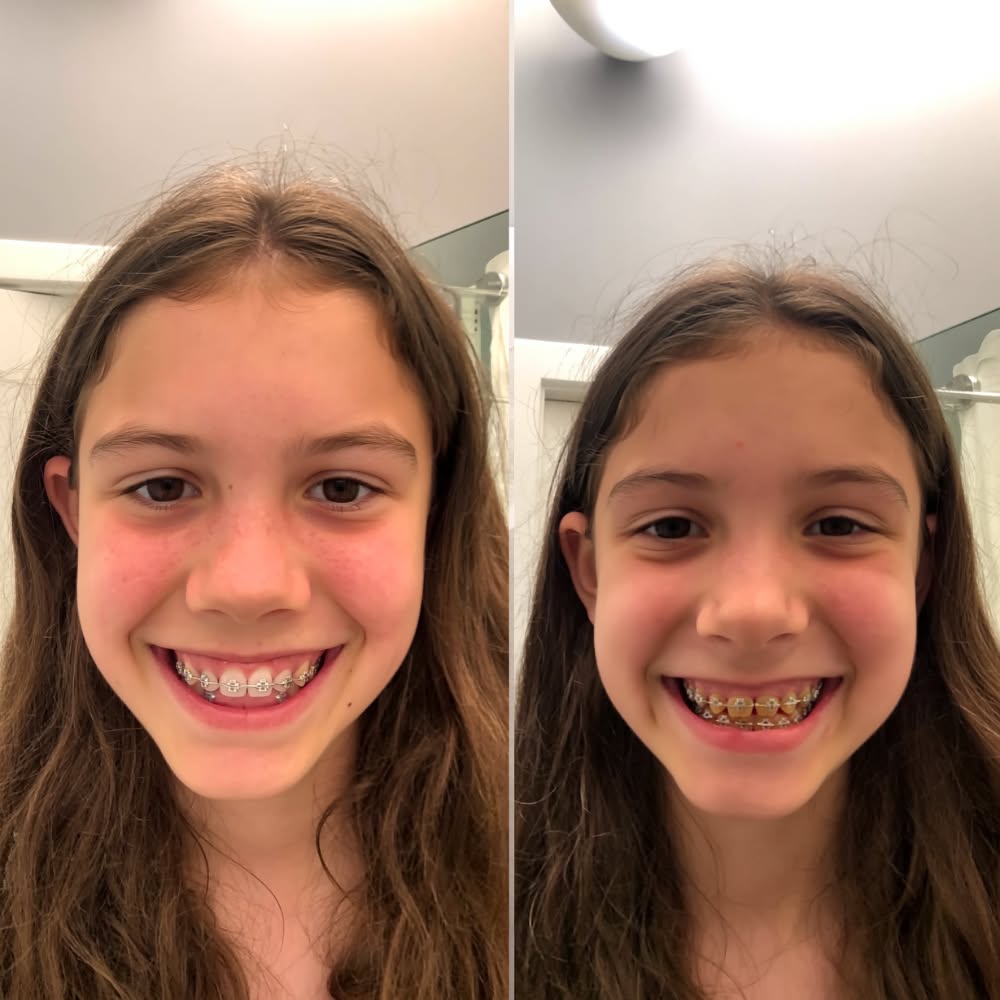
Ran for 8 days, from April 7 to April 15, 2026, the last day Crush saw it.
Run by Rachel Monroe on Facebook. Crush is not the advertiser and does not verify its claims. See this ad in Meta's Ad Library(opens in a new tab)
Want an ad like this for your product?
Crush makes new ad images for your product from this ad: your logo, your product photo, your offer.
Trials from $19.95 USD, then $79.95 USD a month. Cancel anytime.
About this ad
- Meta Ad Library ID
- 1506257341161346
- Platforms
- Facebook, Instagram, Audience Network, Messenger and Threads
- Relaunches
- 0
- Niche
- Parenting & Kids
Ad text
I haven't brushed my daughter's teeth in three months and the dentist said they've never looked better. The hygienist thought I was lying until she saw Mia's mouth for herself. "Look at this," she said. Dr. Patel leaned in, examined, then looked at me with genuine confusion. "What changed?" Here's what you need to understand: I run a property development company. I optimize everything. Our office runs on systems. Contractors report through automated dashboards. I've eliminated waste everywhere. But every night at 8 PM, I was still standing in the bathroom watching my eight-year-old Mia brush her teeth for what was supposed to be two minutes but was really forty-five seconds of halfhearted scrubbing. Every six months, same result. Plaque buildup. Inflamed gums. The lecture about technique. Fifteen minutes a day on tooth brushing. That's 91 hours per year. But here's what really bothered me: it wasn't the time. It was the inefficiency. We have robotic vacuum cleaners. Self-cleaning ovens. Dishwashers that sense dirt and adjust automatically. But we're still manually scrubbing 20 tiny surfaces with a vibrating stick from 1987? I started researching it one evening. Not casually. Methodically. The same way I research investments. Electric toothbrushes for children: 2.3 million results. All the same concept. Even the "AI-powered" ones just tracked time. That's not innovation. Then I found something different. U-shaped sonic cleaners. The entire mouth at once. Thirty seconds total. My first reaction: This is either revolutionary or complete rubbish. I dug into the research. Most were rubbish. Cheap silicone made for £2, sold for £18 on Amazon. But then I found something in a Swiss dental research paper. The Swiss have been using U-shaped sonic technology in clinics for over a decade. High-frequency vibrations create microscopic bubbles that remove debris. Professional versions cost £28,000. They work exceptionally well. Consumer versions failed because manufacturers cut corners to hit £15 price points. Motors that barely vibrated. Soft silicone that couldn't remove anything. But what if someone built one properly? At 2:23 AM, I found it. A British company in Cambridge. Founded by an engineer whose daughter had severe dental anxiety. Four years developing a U-shaped cleaner that met clinical standards. 48,000 sonic vibrations per minute—identical to what hygienists use. Medical-grade nylon bristles. Waterproof to hospital standards. It was called the DentaSmile One. £39. I ordered two. They arrived in three days. Packaging looked like medical equipment. That evening, I handed it to Mia. "Use this instead." She looked at it. "That's weird." "Put it in and press the button. Thirty seconds." She did. It hummed. Thirty seconds later, stopped. "That's it?" "That's it." She rinsed. Water was cloudy. Ran her tongue over her teeth. "They feel really smooth." No arguing. No counting. No reminding her about back molars. Done. The next morning, she grabbed it herself. Didn't ask. Didn't need reminding. But I needed proof this wasn't just faster—it was actually working. I ordered professional disclosure tablets. They stain plaque bright purple. After Mia used the DentaSmile One, I had her chew one. Nothing. No purple anywhere. For comparison, I had her skip brushing one night. Next morning, tablet before anything else. Purple everywhere. Between every tooth. Along gumline. One night of buildup. Thirty seconds with DentaSmile. All gone. I documented it with photos. Still have them. Three months later, Mia's checkup. Hygienist finished in six minutes. Usually takes twenty-five. Dr. Patel examined her. Pulled up her chart. That's when she asked what changed. I explained the DentaSmile One. She photographed it. Said she was researching it for her own children. Then: "Most parents think they're doing adequate brushing. They're not. Children physically cannot execute proper technique consistently. This actually solves that." I calculated it afterwards. £39 with two-year warranty = £0.05 per day. We spend £0.72 per day on coffee. Saves fifteen minutes daily. 91 hours per year. At my consulting rate, that's £13,650 in recovered time. The company won't sell on Amazon. Won't do wholesale through Boots or Superdrug. They'd rather make 12,000 units properly than 120,000 poorly. When I researched why cheap versions fail: to hit £15 retail, you need a motor costing under £1.20. Those produce maybe 9,000 movements per minute. DentaSmile One uses a £7 motor. 48,000 movements per minute. That's the difference between wiping and pressure washing. Cheap versions use silicone because it's soft. But silicone can't remove calcified plaque. DentaSmile One uses medical-grade nylon at 45-degree angles. What dental professionals use. I've mentioned this to seven parents. Five bought them. All five: their dentists noticed. One father was skeptical. "If it's this effective, why isn't everyone using it?" I explained: launched sixteen months ago, no advertising, word-of-mouth only. Growing deliberately. He ordered one. Four weeks later: "Dentist asked what we'd changed." Here's what nobody explains: you're supposed to fight certain battles. Homework. Screen time. Vegetables. But tooth brushing? That shouldn't require combat. We've automated nearly everything. The only reason we were still manually brushing was tradition. Not effectiveness. Evening routine used to take 40 minutes. Fifteen minutes supervising teeth. Another twenty-five calming Mia down after frustration. Now 12 minutes total. Thirty seconds for teeth. The rest is reading and conversation. That's 28 minutes recovered every evening. 170 hours annually. Not spent on email. Spent with my daughter. Actually parenting instead of micromanaging hygiene. Last month, my brother visited. Watched Mia brush in thirty seconds and head cheerfully to bed. "That seems too simple." I used to think the same. That easy must be wrong. I don't believe that anymore. Good parenting means finding what produces optimal outcomes with minimal conflict. Mia's dental health is measurably better. Her relationship with bedtime is better. And I'm more effective because I'm not exhausted every evening. If you're still spending fifteen minutes daily supervising toothbrushing... If dental checkups still reveal plaque despite your efforts... You're not failing. You're using an outdated method. There's a better approach. Thirty seconds. Clinically proven. The company is DentaSmile. The device is the DentaSmile One. Small British company. Won't compromise quality to scale faster. £39. Less than a family dinner. But it recovers 170 hours annually. And performs better than the method that consumed all that time. If you want to see what finally worked, click below. This might be the year you stop supervising and start enjoying evenings.
Where the ad sends people
dentasmile.co.uk
Read This If You Have Kids At Home 👆
DentaSmile
Learn more: dentasmile.co.uk(opens in a new tab)