How Things Break
How Things Break Facebook ad: “I Fix Washers. Mine Was Making Us Sick.”
Ran for 3 days, from May 29 to June 1, 2026, the last day Crush saw it.
Run by How Things Break on Facebook. Crush is not the advertiser and does not verify its claims. See this ad in Meta's Ad Library(opens in a new tab)
Make your own version of this ad
Crush makes it, launches it in your own Meta ad account, scales the winners and pauses the losers.
About this ad
- Meta Ad Library ID
- 1515613606959413
- Platforms
- Facebook, Instagram and Messenger
- Relaunches
- 7
- Niche
- Pets
Ad text
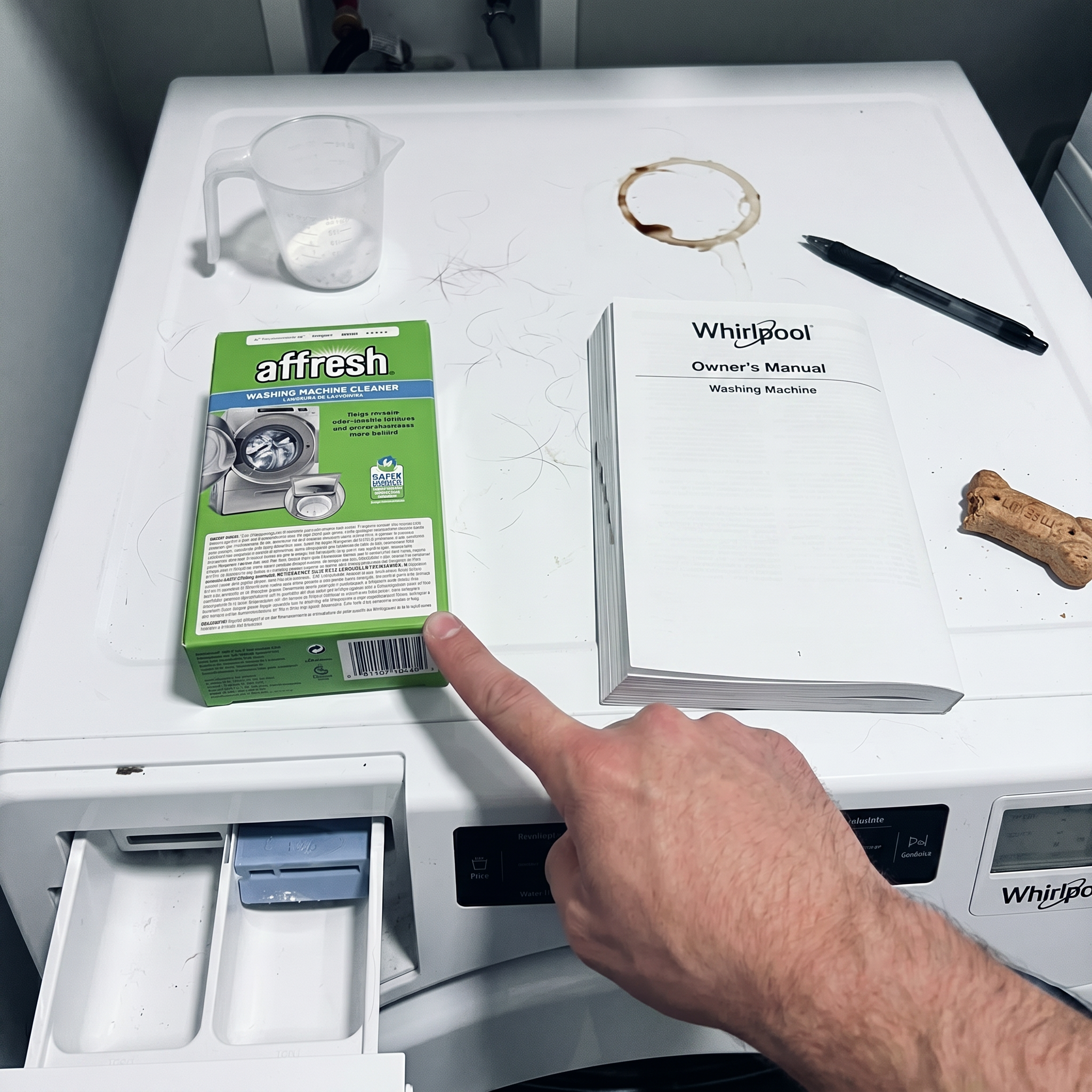
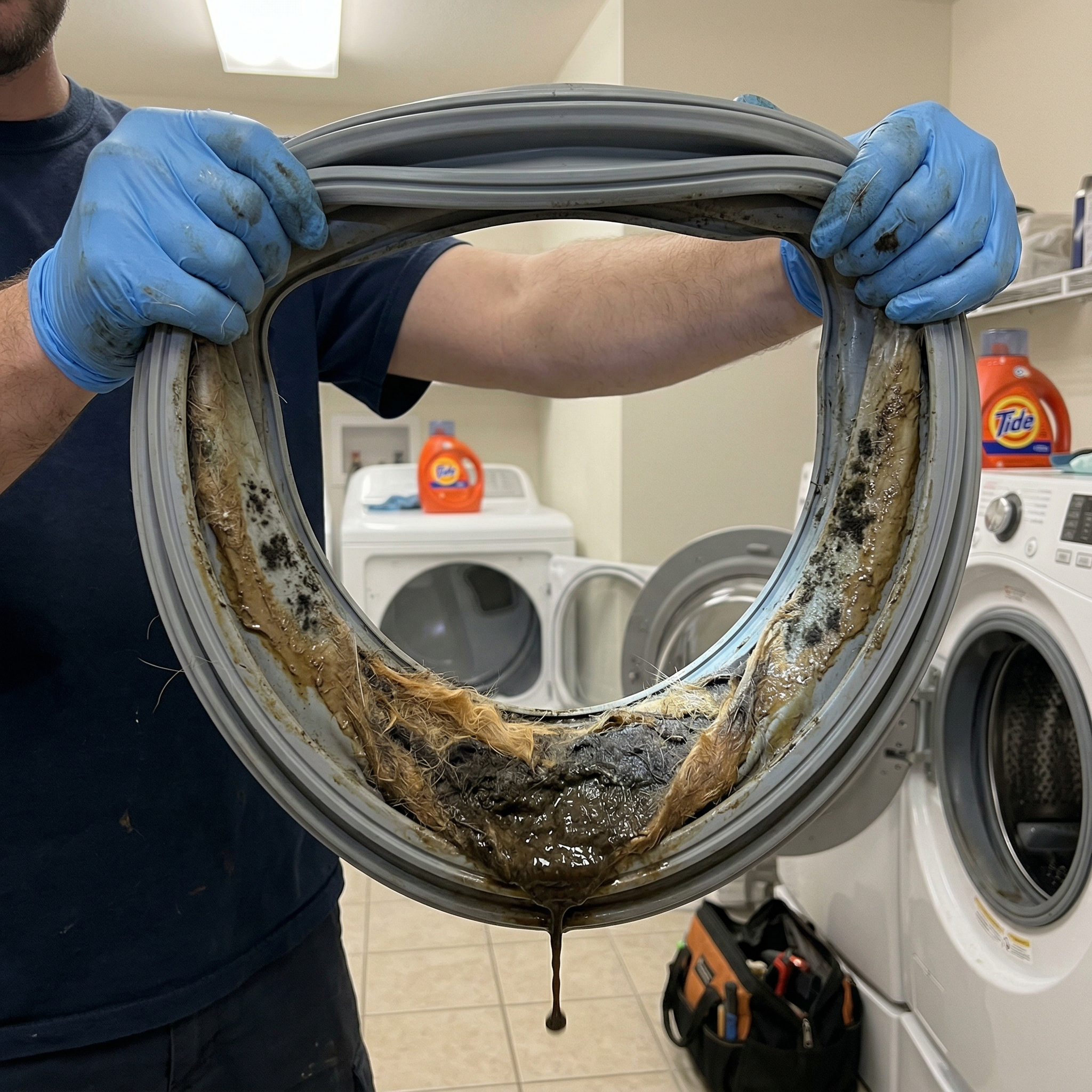
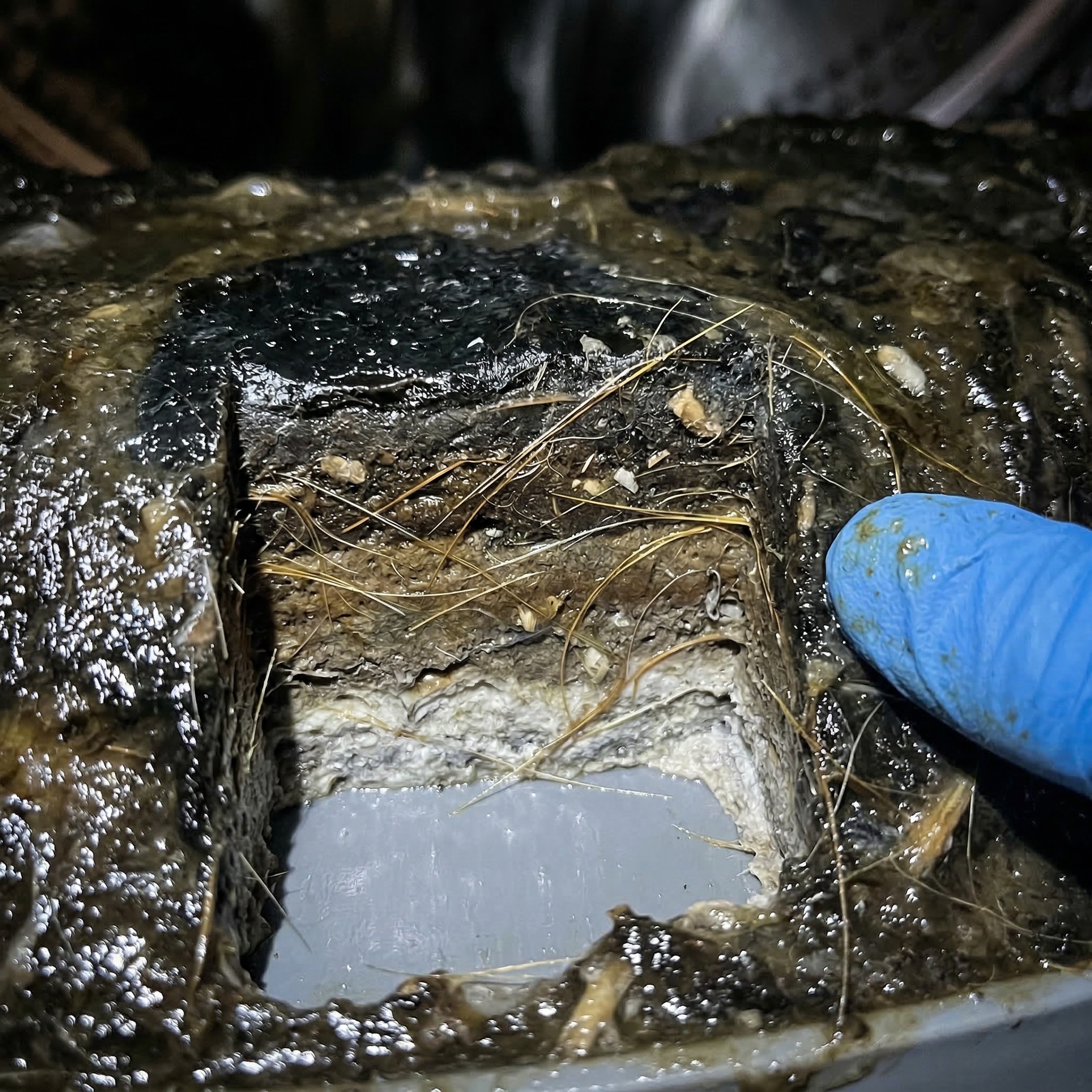
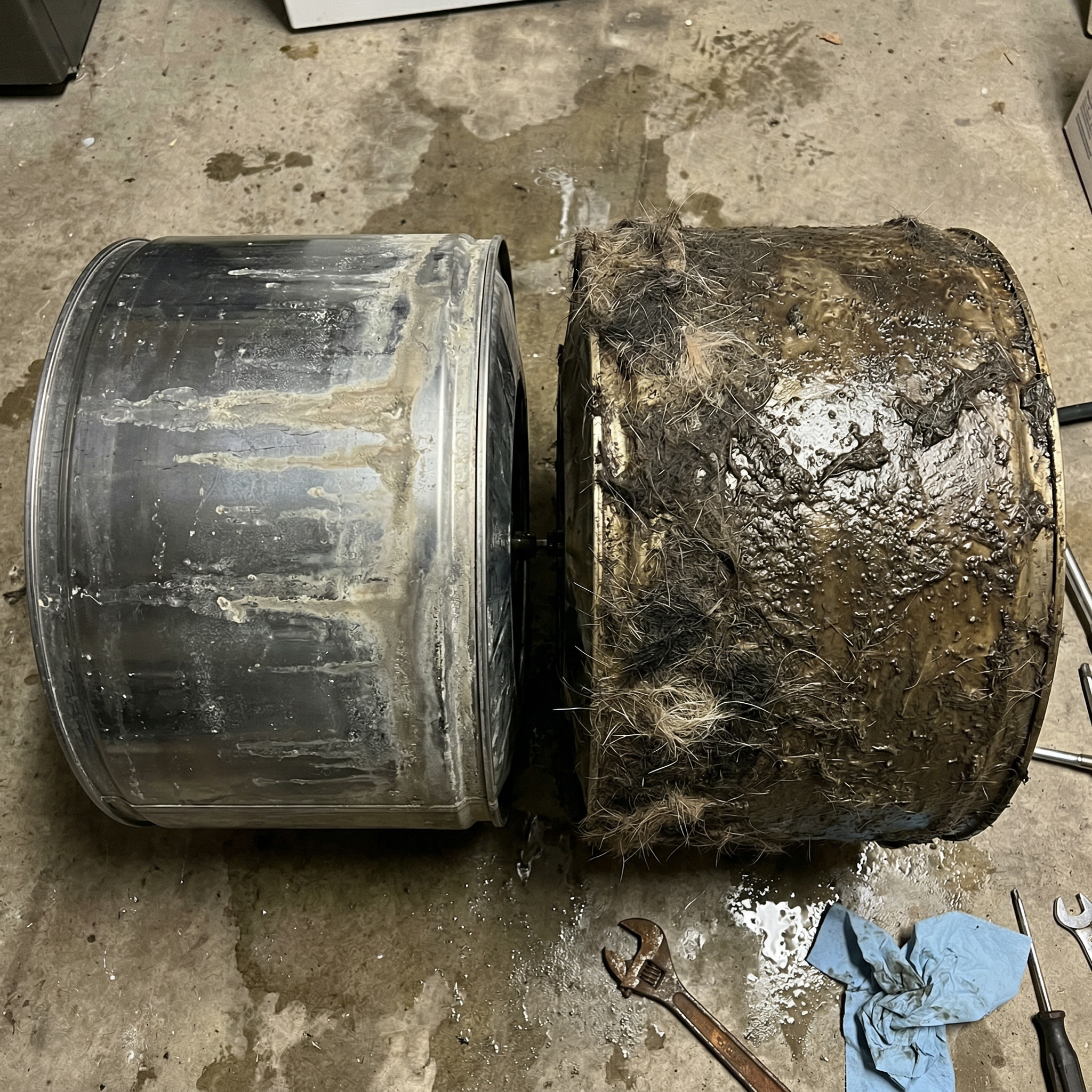
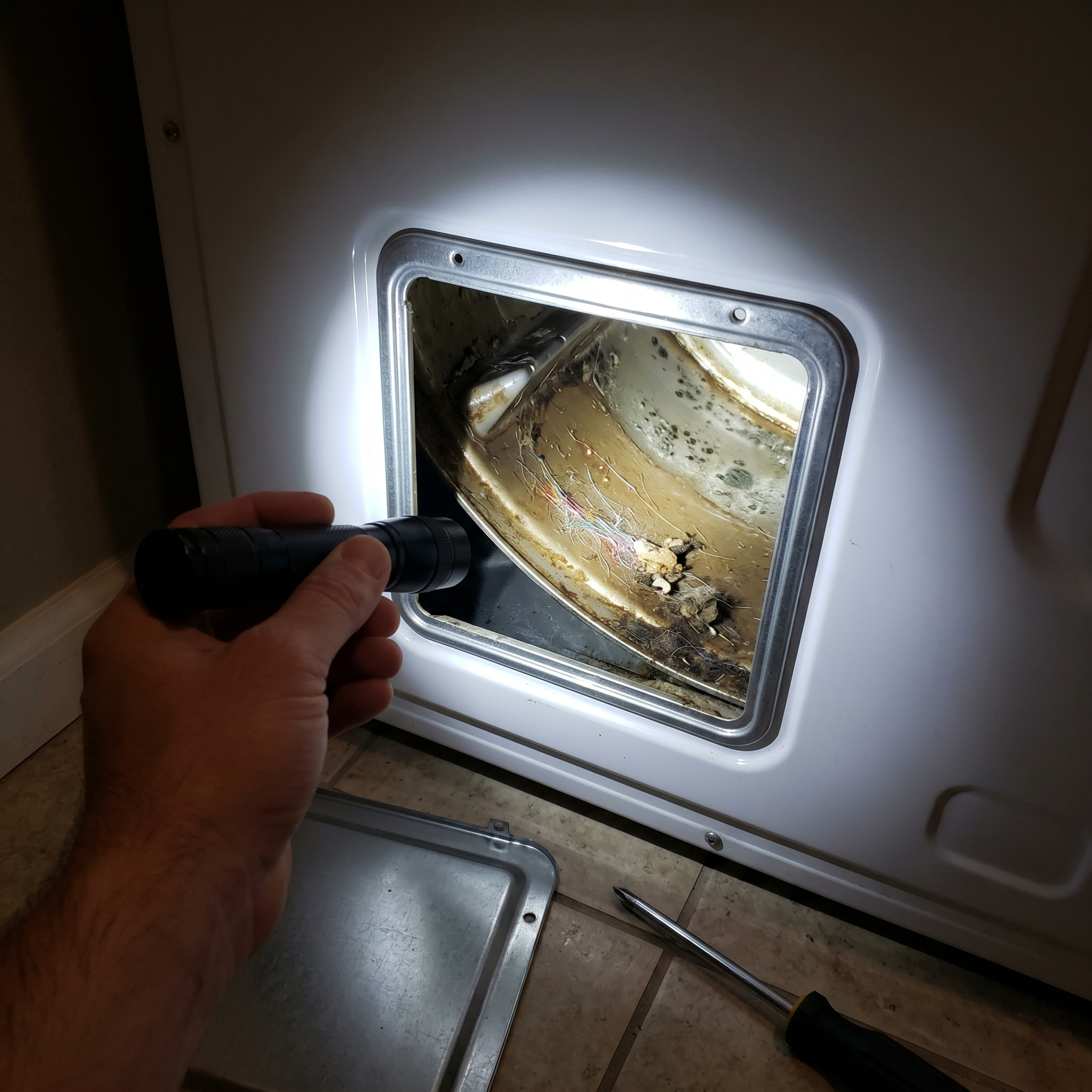
My wife has had mild asthma for most of her adult life. My daughter has eczema on her arms and behind her knees. And for the past year and a half, both of them were getting worse, and I couldn't figure out why - until I looked inside our own washing machine. I'm going to tell you something I probably should have figured out sooner, and the fact that I didn't still bothers me. I've been repairing washing machines in the Phoenix area for 22 years. Residential, mostly. Some light commercial. I know these machines inside and out - literally, because I take them apart almost every day. I have a 7-year-old Australian Shepherd named Roxy. If you've ever met an Aussie, you know about the coat. Double-layered, dense, sheds constantly, and in the Arizona heat, she blows her undercoat twice a year in these massive tufts that end up on every surface in the house. We vacuum twice a day during those months, and it still looks like we live in a snow globe made of fur. All of Roxy's bedding goes through our washer. Her blankets, her crate pad cover, the towels we use after she gets bathed, and the throw on the couch where she naps. Plus our own clothes, our sheets, our towels, our daughter's school uniforms - all through the same Maytag front-loader we bought about five years ago. I ran the self-clean cycle regularly. I wiped the gasket. I left the door open between loads. I used the right detergent in the right amount. I did everything I tell my customers to do, because it would be pretty hypocritical not to. And for a long time, I thought that was enough. About a year and a half ago, my wife's asthma started getting worse. Not dramatically - she wasn't in the emergency room or anything - but she was using her rescue inhaler more often, especially at night. She'd wake up at 2 or 3 in the morning with that tight feeling in her chest and need a couple of puffs to get back to sleep. Around the same time, my daughter's eczema flared up. She'd had it since she was little - dry, itchy patches on her inner arms and behind her knees - but it had been manageable for years. Suddenly, it was angrier. Redder. She was scratching in her sleep and waking up with marks on her arms. My wife went to the allergist. The allergist did a full panel and said her triggers were dust mites, mold spores, and pet dander - which we already knew. He adjusted her medication and told her to make sure the house was as clean as possible, which she took personally because our house is clean. My daughter saw her dermatologist. Same conversation. Avoid irritants, moisturize, and keep fabrics soft and clean. We were already doing all of that. I didn't understand what had changed. Then one afternoon, I was on a service call at a customer's house - a woman with three cats and a front-loader that smelled so bad she'd stopped using it for anything except cat bedding. I pulled the machine out, opened the back panel, and looked at the tub. The biofilm inside that machine was thick enough that I could see it caked on the back of the outer tub. Black in some places, dark brown in others. Strings of old cat hair embedded in it like rebar in concrete. And while I was crouched there looking at it, I had this thought that stopped me cold. When was the last time I actually looked inside my own machine? The part between the inner drum and the outer housing. The part I'd never opened on my own machine because I'd always assumed my maintenance routine was keeping it clean. I went home that night and pulled the small access panel on the back of my Maytag. And I pointed my flashlight in there. It wasn't as bad as the cat lady's machine. But it was there. A thin, consistent film of brownish residue coating the back of the outer tub and the underside of the spider arm. I could see fibers in it - dog hair, lint, small clumps of what was clearly decomposing organic material that had been sitting there in warm, damp conditions for months. Maybe years. And I realized something that made my stomach drop. Every cycle, water flows through that space. It touches those surfaces, picks up whatever is growing on them, and it deposits it onto the laundry. My wife's sheets. My daughter's pajamas. The towels we dry our faces with. The pillowcases we sleep on. All of it was running through bacterial biofilm twice a week. Now, I need to explain what biofilm actually is, because it matters for what I'm about to tell you. Biofilm isn't just "some bacteria on a surface." It's a structured colony of microorganisms that secrete a protective matrix - a sticky, glue-like shield made of proteins, lipids, and sugars - that anchors them to the surface and protects them from being washed away. Inside that biofilm, researchers have identified bacteria like Pseudomonas, Moraxella osloensis, E. coli, and mold species like Aspergillus and Penicillium. Moraxella osloensis is the one that makes your laundry smell musty - it produces a specific chemical compound that our noses perceive as that "wet rag" or "sour towel" smell. But the mold species - Aspergillus, Penicillium, Cladosporium - those are the ones that made me worry about my family. Because those mold species produce spores. And those spores aerosolize. Every time you open the washer door, every time the drum spins and pushes air through the gasket, every time you pull clothes out of the machine, spores from the biofilm become airborne. And mold spores are a documented trigger for asthma flares and eczema irritation. My wife was breathing them in every time she did laundry. My daughter was wearing clothes that had been washed in a machine colonized by the exact organisms her dermatologist told us to avoid. I'd been maintaining that machine exactly the way the manual said to. And the manual's maintenance protocol wasn't enough for a pet household with an Australian Shepherd running through seven loads a week. Here's why. Everything I was doing - the self-clean cycle, the Affresh tablets, the gasket wipes - was designed to clean the surfaces I could see. The drum. The front of the gasket. Maybe a partial rinse through the drain hose. But the buildup was in the sealed space between the drum and the outer housing, behind the gasket boot, in the drain pump sump, in the dispenser cavity. Places the self-clean cycle sends hot water through, but can't actually clean, because the buildup is biological and water alone - even hot water - cannot break down a biological film. And Affresh can't break it down either. I know that's a strong statement from someone who's recommended Affresh to customers for the better part of two decades. But it's true. Affresh is sodium percarbonate and a surfactant. It can dissolve mineral scale and soap residue. But the buildup in a pet household is protein and fat - keratin from hair, sebum from skin oil, dander, saliva residue, all of it woven into a bacterial matrix. Oxygen bleach cannot break down protein. A surfactant cannot dissolve fat at the molecular level. (what is the dicovery as to how he found out that enzymes are the only thign that work? We need a ntural docvoery. This can be tied up to this: Another tech had posted about a product made by a company called Uproot Clean - the pet hair brush company - that had developed a washing machine cleaner tablet with a full enzyme stack. Here we can add how the same tech who poasted about that, was talking about enzymes) Without enzymes, those products leave the biological scaffold completely intact. I started looking for something with enzymes. I looked at every washer cleaner at Home Depot, Walmart, Target, and Amazon. None of the major brands - not Affresh, not Tide, not OxiClean, not Glisten - include enzymes in their washer cleaner products. Not one. Then I found an online forum where appliance techs share information. Another tech had posted about a product made by a company called Uproot Clean - the pet hair brush company - that had developed a washing machine cleaner tablet with a full enzyme stack. Protease, lipase, amylase, and an alkali protease. 4 enzymes formulated to break down the exact biological residue that pet households deposit. He'd tested it in a customer's machine - a dog parent with a heavily colonized LG front-loader - and said the results were unlike anything he'd seen from a consumer-grade tablet. I ordered a box. The first tablet went into my Maytag on a Saturday morning. Empty drum. Hottest cycle. Tub clean setting. When the cycle finished, I pulled the drain pump filter. There was a gray, stringy mass of degraded residue caught in the screen. It smelled terrible - like concentrated mildew - which told me it had been building up for a long time. Some of the fibers were clearly old dog hair that had been partially broken down by the enzymes - soft and falling apart instead of clumped together the way trapped hair usually looks. I ran a second tablet the next weekend. Less residue. The gasket, when I pulled it back, looked cleaner than it had in two years. I ran a third tablet the following weekend. The drain filter was almost clean. When I pulled back the gasket boot and shined my flashlight on the surface behind it, the film was gone. Not thinned. Gone. I want to tell you what happened over the next month, because this is the part that matters more to me than any clean gasket. It was a gradual thing, over about three weeks. B ut by the end of that month, she told me she'd slept through the night without it for nine straight days. She couldn't remember the last time that had happened. My daughter's eczema calmed down. The angry red patches on her inner arms faded to their usual light pink. She stopped scratching in her sleep. Her dermatologist noticed at her next appointment and asked what had changed. My wife told her we'd started using a different washing machine cleaner. The dermatologist paused and said, "That's actually more common than you'd think. The machine is a reservoir." A reservoir. That's the word she used. And she was right. That's exactly what it is. A warm, wet, dark reservoir of the exact organisms that trigger respiratory and skin symptoms in sensitive people, re-depositing onto the fabrics your family wraps around their bodies every single day. The product is called Uproot Washing Machine Cleaner. You use it every two weeks in an empty drum on your hottest cycle. It's the only washing machine cleaner I've found on the consumer market that contains enzymes - the only ingredient category capable of breaking down the biological residue that pet households create. It's septic safe. It's compatible with every washer type - front-load, top-load, HE, and standard. It won't damage your gasket the way vinegar and chlorine bleach can over time. And they have a 60-day money-back guarantee, so if it doesn't work for you, you get your money back. I mention that because I know what it's like to spend money on a washer cleaner and feel like you wasted it. I've heard that from customers for 22 years. I'm not going to tell you to take your time with this. I'm not going to say "whenever you're ready." Because if you have pets in the house and anyone in your family deals with allergies, asthma, eczema, or sensitive skin, your washing machine is running every load through the same biological buildup that produces the spores and bacteria that trigger those symptoms. Every week you wait is another week of re-depositing that material onto your family's clothes, sheets, towels, and pillowcases. I waited almost two years because I assumed my maintenance routine was handling it. It wasn't. And my wife and daughter were the ones paying for my assumption. Don't make my mistake. Here is the link https://uprootclean.com/products/uproot-washing-machine-cleaner-pro P.S. I know this is a lot. If you take one thing from what I've written, let it be this: oxygen bleach (the active ingredient in Affresh, Tide WMC, OxiClean, and Glisten) cannot break down protein or fat. Enzymes can. Pet-household buildup is protein and fat. That's the entire gap, and it's the entire reason nothing you've tried has worked permanently. Uproot is the first product that closes it. P.P.S. My daughter asked me last month why her pajamas "smell like pajamas again." I didn't know what to say except that I fixed the washing machine. She said, "Finally." She's 14. She'd noticed. She just hadn't said anything. Your family might be noticing too.
Where the ad sends people
uprootclean.com
I Fix Washers. Mine Was Making Us Sick.
Uproot Washing Machine Cleaner Pro
Shop now: uprootclean.com(opens in a new tab)