Margaret Holloway
Margaret Holloway Facebook ad: “Real Reason For Age Spots”
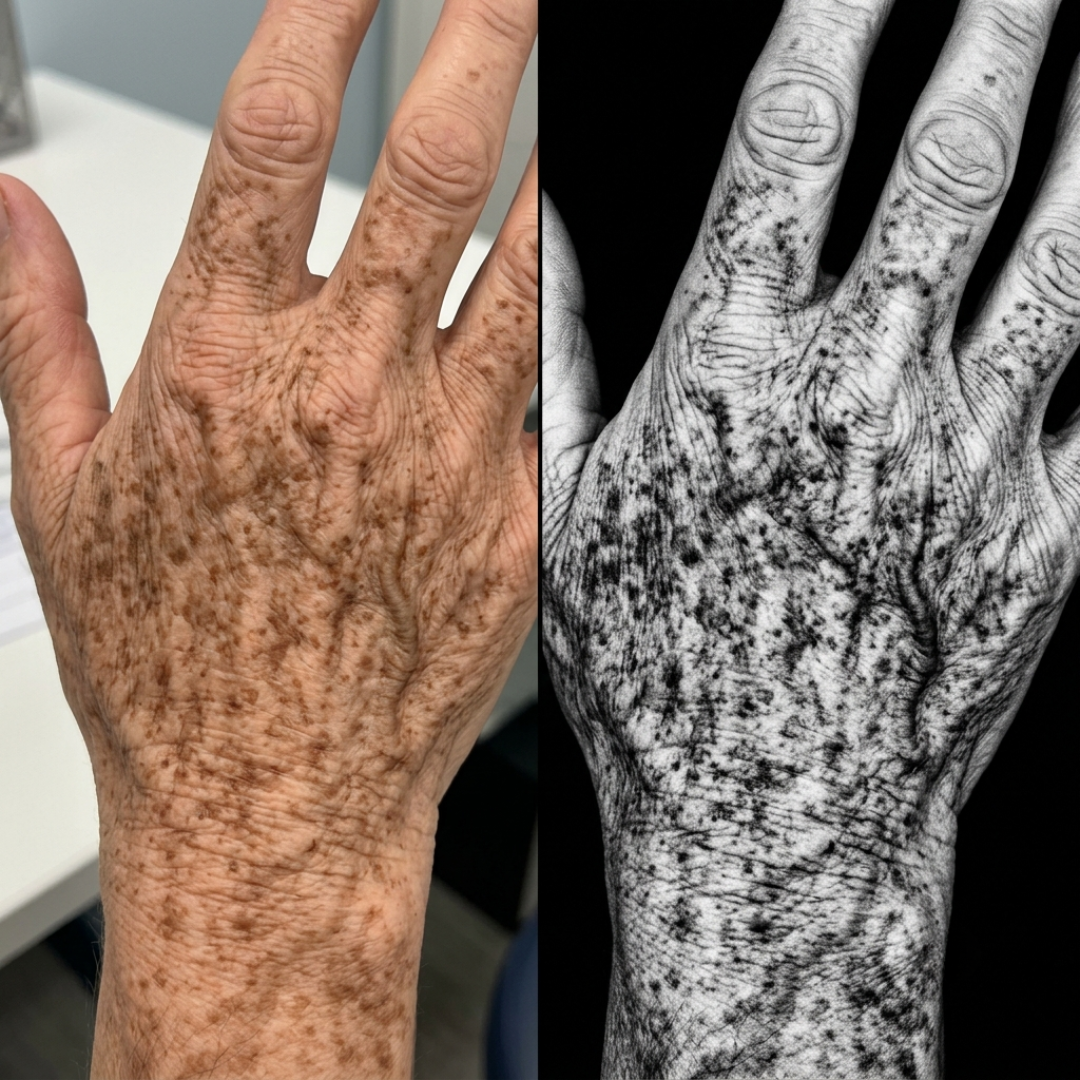
Ran for 17 days, from July 2 to July 19, 2026, the last day Crush saw it.
Run by Margaret Holloway on Facebook. Crush is not the advertiser and does not verify its claims. See this ad in Meta's Ad Library(opens in a new tab)
Want an ad like this for your product?
Crush makes new ad images for your product from this ad: your logo, your product photo, your offer.
Trials from $19.95 USD, then $79.95 USD a month. Cancel anytime.
About this ad
- Meta Ad Library ID
- 1523766962522955
- Platforms
- Facebook, Instagram, Audience Network, Messenger and Threads
- Relaunches
- 0
Ad text
I worked with sun-damaged skin in Europe for 18 years. When I moved to America, I couldn’t believe what women were being told to rub on their hands. I don’t mean that as an insult. Most of the skincare professionals I met were kind. Smart. Well-trained. Doing exactly what they were taught to do. But in my first few months here, I saw the same pattern over and over. Women in their late 60s and early 70s coming in with dark spots across their hands, forearms, chest and shoulders. Brown patches. Speckled pigmentation. Uneven skin tone. Dry, thin-looking skin that made every mark look worse. And almost every one of them had the same story. “I’ve been using a dark spot cream for years.” “I tried Vitamin C.” “I tried retinol.” “I use SPF now.” “My dermatologist said it’s just sun damage.” “The woman at the skincare counter said to give it more time.” Give it more time. That phrase bothered me. Because by the time a woman is hiding her hands in photos, she has already given it time. Usually years. I remember one woman very clearly. She was 69. She sat across from me with her hands folded tightly in her lap. That is the first thing I noticed. Not the spots. The hiding. Women with visible sun damage always have little ways of hiding. Hands under the table. Sleeves pulled down. Chest covered even in warm weather. Bracelets removed. Rings stopped. Photos cropped. She told me she had spent three years trying to fade the spots on her hands. She had a drawer full of creams. Vitamin C serum. Retinol hand cream. Brightening lotion. Dark spot corrector. Niacinamide cream. SPF hand lotion. One expensive jar she bought from a department store because the woman behind the counter promised it was “what mature skin needs.” Every product gave her the same result. Soft skin. Same spots. That sentence is important. Because it explains why so many women stay trapped. The cream does something. It makes the skin feel softer. It makes the surface feel moisturized. It gives the fingers a smoother feeling for a few hours. So she thinks it is working. She keeps going. Then the tube is empty. And the same brown spots are still there. The same speckled chest. The same uneven forearms. The same hands she still hides in photos. She starts blaming herself. Maybe she waited too long. Maybe she should have used sunscreen earlier. Maybe she is too old. Maybe she needs laser. Maybe this is just what happens after 65. That is where the mistake begins. Because most women are never told what visible sun damage actually represents. They are told what to buy. They are not told what stage they are in. Visible sun damage has stages. The first stage is easy to ignore. One little brown spot near the thumb. A few freckles across the chest. A small patch on the forearm that only shows in summer. At this stage, almost any cream can feel helpful. Moisturizer makes the skin look smoother. SPF makes you feel protected. A brightening cream gives you hope. This is the stage most dark spot creams were made for. Early spots. Mild discoloration. Surface dryness. Small imperfections. But most women do not panic at stage one. They wait. Because life is busy. Because the spots do not hurt. Because you do not think about your hands until your hands start making you feel old. Then stage two begins. The spots are no longer isolated. The chest starts looking speckled in sunlight. The hands look different in the car than they do indoors. The forearms look blotchy. The skin starts looking uneven instead of just “freckled.” This is when women buy stronger products. Vitamin C. Retinol. Niacinamide. Clinical brightening creams. Dark spot correctors. And again, many of those products make the skin feel better. But the visible pigmentation often stays. This is where women get confused. Because if a cream makes the skin soft, smooth and moisturized, it feels like progress. But softness is not the same as visible improvement. Then stage three begins. Stage three is the hiding stage. This is the stage I saw constantly. A woman stops wearing her bracelet because it draws attention to the back of her hand. She stops wearing short sleeves because her arms look spotted in sunlight. She chooses higher necklines because her chest looks uneven. She keeps her hands under the table at restaurants. She stops raising her hand in photos. She crops pictures before saving them. She looks at her hands before she looks at her face. This is the stage where ordinary cream starts to feel insulting. Because by stage three, the issue is no longer just dry skin. It is years of sun history showing through on the areas that carried it the longest. Hands. Arms. Chest. Shoulders. The areas your face routine forgot. The areas that took decades of driving, gardening, beach days, vacations, patio lunches, windows, and “just a few minutes outside.” And then there is stage four. The surrender stage. This is when women start saying things like: “I guess I just have to accept it.” Or: “Maybe laser is the only option.” Or: “It’s too late for me.” This is what I kept seeing in America. Women treating stage-three and stage-four sun damage with stage-one creams. That is the part I could not stop thinking about. Because the problem was not that these women were lazy. They were not lazy. They were consistent. Some had applied creams every night for years. Some had spent hundreds or even thousands of dollars. Some had stopped wearing the clothes they loved. Some had completely changed how they posed in family photos. Their compliance was not the problem. The formula type was. Most ordinary dark spot creams are water-based. They are designed to feel nice. They absorb quickly. They moisturize the surface. They make the skin feel soft. That is not useless. But it is not the same as being designed for years of visible sun damage on the body. Your hands are not your face. Your chest is not your face. Your forearms are not your face. These areas have different history. Different exposure. Different dryness. Different texture. Different damage pattern. And when the visible signs of sun exposure have been building for decades, a fast-absorbing water-based cream can leave a woman with the same frustrating result: Soft skin. Same spots. In Europe, we talked about this differently. We did not just ask, “Which cream are you using?” We asked: “What kind of formula are you using?” That question matters. Because the women I saw were not just choosing the wrong brand. They were often choosing the wrong type of product for the stage they were in. A cream that disappears in thirty seconds might make sense for early dryness. But for sun-exposed areas that look dark, dull, speckled and uneven after years of exposure, I wanted women to understand why oil-based, oil-soluble care may make more sense. That is why the Dermiqua article caught my attention. It did not start by pretending women needed another jar. It explained why so many jars had failed them. It explained why ordinary dark spot creams can make the skin feel soft while the same brown spots remain. It explained why visible sun damage on the hands, arms, chest and shoulders often needs a different approach than a quick-absorbing cream. And it explained why Dermiqua was made as a Sun Damage Repair Body Oil instead of another lotion. That distinction is important. A body oil is not just a cream with a prettier name. Dermiqua was designed around oil-soluble ingredients for sun-exposed skin. Oil-soluble Vitamin C. Bakuchiol. Sea buckthorn. Camellia oil. 16 botanicals. Not a random hand cream. Not a watery body lotion. Not another brightening jar that makes the surface feel nice for an hour. A concentrated oil-based formula for the places women actually hide. Hands. Arms. Chest. Shoulders. This is why I tell women to read the explanation before buying one more dark spot cream. Because once you understand the difference, the last few years may finally make sense. Why your hands felt smoother but still looked spotted. Why your chest felt moisturized but still looked uneven. Why your forearms looked darker every summer even though you were using lotion. Why every new tube gave you hope for two weeks and disappointment by the end of the month. The issue was not that your skin was hopeless. The issue may be that you were using a stage-one surface routine on stage-three sun damage. That is a very different problem. And it requires a very different way of thinking. I want to be clear. I am not saying every dark spot disappears overnight. That is not real. Skin that has carried sun for decades does not change in one night. But I have seen what happens when women stop treating old sun exposure like simple dryness. I have seen women stop hiding their hands. I have seen the dry, papery look soften. I have seen the skin around the spots look more nourished. I have seen the harsh contrast look calmer. I have seen women put bracelets back on because their hands no longer feel like the first thing everyone notices. That matters. Because this is not just about skin. It is about the way a woman moves through her life. Whether she pulls her sleeves down in every photo. Whether she avoids summer tops. Whether she keeps her hands folded under the table. Whether she looks at a picture with her granddaughter and sees the memory first, instead of the spots. That is the part most skincare ads miss. They talk about “brightening.” They do not talk about hiding. But hiding is the stage where women finally start searching for something different. If that is where you are, I want you to read the article. Not the product page. The explanation page. The one that explains why ordinary dark spot creams often fail women with years of visible sun damage. The one that explains why hands, arms, chest and shoulders need a different approach. The one that explains why oil-soluble ingredients matter. The one that explains why Dermiqua was created as a Sun Damage Repair Body Oil instead of another water-based cream. Because once you understand what ordinary creams miss, you stop repeating the same routine. You stop blaming your skin. You stop thinking you waited too long. You stop believing laser is the only thing left. And you start asking the question nobody asked you before: “What kind of formula am I actually putting on my skin?” If your dark spots are still small, read it now. If your hands already look older than you feel, read it now. If your arms get darker every summer, read it now. If your chest has uneven patches you keep trying to cover, read it now. If your bathroom cabinet is full of creams that made your skin soft but never made you stop hiding, read it now. You have probably spent years doing what you were told. Now it is time to understand what you were never told. Almost forgot the link. Here it is: https://dermiqua.com/pages/age-spots/ P.S. If a cream makes your skin soft but your spots still make you hide, that is not the progress you were looking for. Read the Dermiqua article before buying another jar. P.P.S. Your skin is not failing you. The routine treating surface softness as the solution may be what failed you.
Where the ad sends people
dermiqua.com
Real Reason For Age Spots ☝️
Dermiqua
Learn more: dermiqua.com(opens in a new tab)