The Sleep Specialist
The Sleep Specialist Facebook ad: “This Is the First Device That Targets the Real Problem”
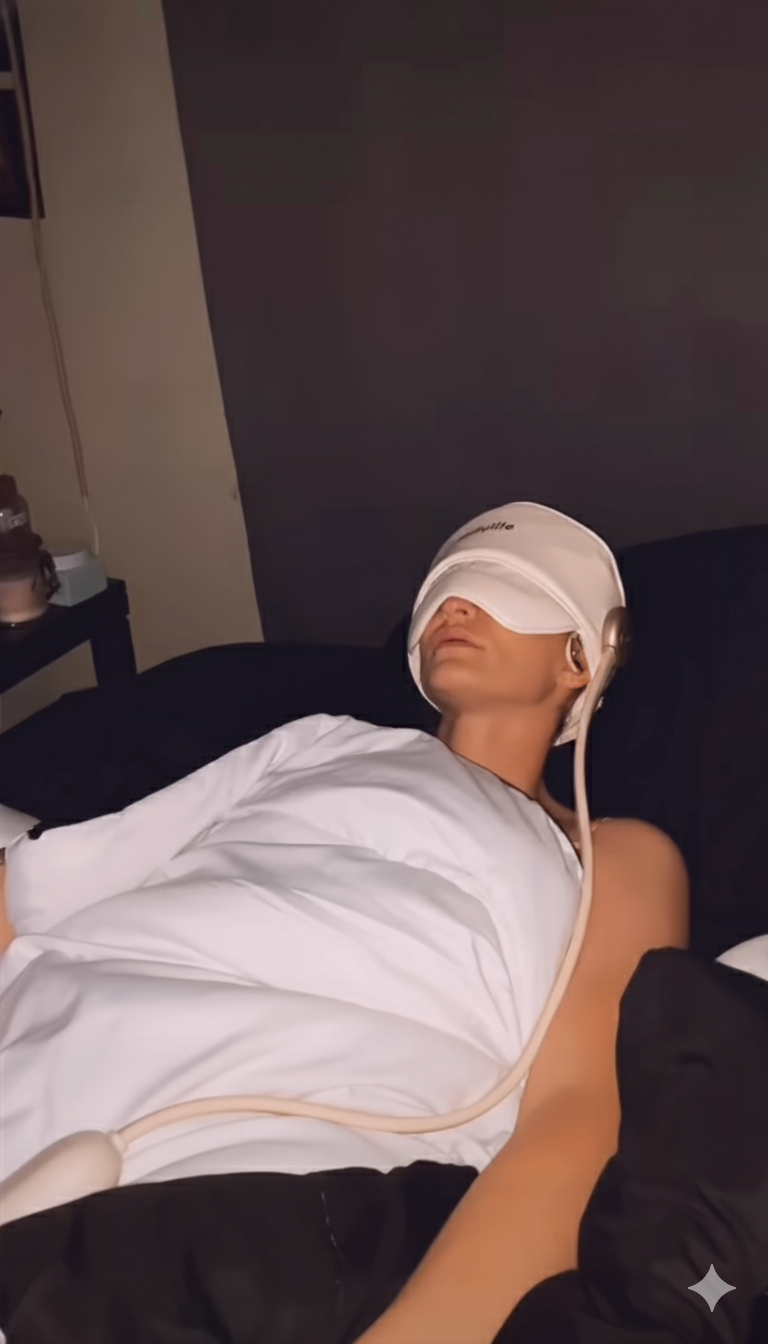
Ran for 124 days, from November 20, 2025 to March 24, 2026, the last day Crush saw it.
Run by The Sleep Specialist on Facebook. Crush is not the advertiser and does not verify its claims. See this ad in Meta's Ad Library(opens in a new tab)
Want an ad like this for your product?
Crush makes new ad images for your product from this ad: your logo, your product photo, your offer.
Trials from $19.95 USD, then $79.95 USD a month. Cancel anytime.
About this ad
- Meta Ad Library ID
- 1534082351233273
- Platforms
- Facebook, Instagram, Audience Network, Messenger and Threads
- Relaunches
- 2
Ad text
I'm a sleep specialist. And I have to tell my patients something they don't want to hear. If you've tried everything and you're still not sleeping, your problem isn't sleep. It's your nervous system. I see this every day in my practice. Someone comes in after months or years of insomnia. They've tried the medications. The supplements. The sleep hygiene rules. They've spent thousands of dollars. And nothing has worked for more than a few weeks. They're desperate. Exhausted. And they're hoping I have some answer they haven't heard yet. Here's what I tell them: Your problem isn't that you don't know how to sleep. Your problem is that your nervous system won't let you. And until you address that, nothing else is going to work long-term. Here's what I mean. When patients come to me with chronic insomnia—insomnia that's lasted more than six months despite trying multiple treatments—I can usually tell within the first five minutes what the actual problem is. It's not in their sleep habits. It's not in their bedroom environment. It's not even in their brain chemistry. It's in their autonomic nervous system. I see the signs immediately. They sit in my office with shallow breathing. Tense shoulders. Hypervigilance—constantly scanning, unable to fully settle. Even in a quiet, safe environment, their body is in alert mode. Their nervous system is stuck in fight-or-flight. And that's why nothing they've tried has worked. Not the sleep medication. Not the supplements. Not the perfect sleep hygiene. Because you can't sleep when your nervous system thinks you're in danger. Let me explain how this works. Your autonomic nervous system has two modes: Sympathetic mode (fight-or-flight) and parasympathetic mode (rest-and-digest). In a healthy, regulated nervous system, you shift between these modes throughout the day. Sympathetic mode when you need to be alert—working, driving, handling stress. Parasympathetic mode when it's time to rest—eating, relaxing, sleeping. But when you're chronically stressed—from work, relationships, health issues, hormonal changes, financial pressure, or just years of accumulated stress—your nervous system gets stuck. It stays in sympathetic mode. Your body remains in a constant state of alert. Cortisol stays elevated. Heart rate stays higher than it should. Muscles stay tense. And your brain refuses to power down. Because as far as your autonomic nervous system is concerned, you're in danger. And you don't sleep when you're in danger. Your body doesn't know the difference between running from an actual threat and lying in bed worrying about tomorrow's meeting. Both activate the same physiological stress response. Both keep you locked in sympathetic mode. Both prevent the shift to parasympathetic mode where sleep actually happens. This is why sleep medication stops working after a few weeks. It's trying to chemically override your alert system. Ambien enhances GABA to force drowsiness. Trazodone increases serotonin to make you sleepy. But they're not fixing the stuck nervous system. They're just temporarily suppressing the alert signals. Your body adapts. Builds tolerance. You need higher doses to override the same system. Eventually you hit maximum dose and you can't override it anymore. But the underlying problem—the stuck nervous system—is still there. This is why supplements don't work long-term either. Melatonin might make you drowsy for a week or two. But it can't shift a nervous system that's locked in fight-or-flight mode. Your body adapts and you're back to square one. This is why meditation apps only help temporarily. They can calm your mind for five or ten minutes. But they can't reset a physiologically stuck nervous system. The second you stop the guided meditation and try to fall asleep, your nervous system reverts to alert mode. This is why perfect sleep hygiene isn't enough. Cool room, dark room, no screens, consistent bedtime—all of these things are helpful. But only if your nervous system is capable of shifting into sleep mode. If it's stuck in fight-or-flight, the environment doesn't matter. You could have the perfect setup and your body will still refuse to power down. I explain all of this to my patients. And then they ask the question I've heard hundreds of times: "So what do I do?" For years, the only effective treatment for severe autonomic nervous system dysfunction was clinical intervention. Therapy like CBT for anxiety. Medication for the underlying stress. Sometimes clinical vagus nerve stimulation in severe cases. The vagus nerve is the main communication pathway between your brain and your body. It's the master switch that controls whether you're in sympathetic or parasympathetic mode. When it's functioning properly, it can shift you from alert to rest. But when you've been chronically stressed, that nerve gets weak and underactive. Your body loses the ability to shift modes. Clinical VNS—where electrodes are applied or a device is surgically implanted—has been shown to help. But it's expensive, requires medical supervision, and isn't accessible for most people. That's why I started looking for alternatives. Something my patients could use at home. Something that actually targets the nervous system instead of just masking symptoms. About a year ago, I came across research on non-invasive vagus nerve stimulation through thermal and pressure stimulation. Studies showed that applying heat and gentle pressure at specific facial points—where the vagus nerve is most accessible—can activate the parasympathetic nervous system. It's the same principle as clinical VNS, but through a completely different mechanism. I found a device called the DreamWeaver Pro that's designed specifically for this. It's a heated sleep mask with built-in massage that targets the areas around your eyes and temples. These areas have dense concentrations of vagus nerve pathways. When you apply heat, it increases blood flow and activates parasympathetic response. When you add gentle, rhythmic pressure through massage, it sends signals down the vagus nerve telling your body it's safe to shift out of alert mode. It's not trying to force sleep with chemicals. It's not trying to block out light or sound. It's giving your nervous system the physical stimulation it needs to reset. I started recommending it to patients who showed clear signs of autonomic nervous system dysfunction. The ones who'd tried everything else with no lasting results. The results have been remarkable. One patient—I'll call him David—had been struggling for two years. He'd tried Ambien, which worked for three weeks and then stopped. He'd tried trazodone, same thing. He'd spent hundreds on supplements. He'd perfected his sleep hygiene. Nothing worked for more than a few days. When he came to my office, I could see it immediately. Shallow breathing, tense posture, that constant vigilance. His nervous system was stuck. I explained what was happening and suggested the DreamWeaver Pro. He was skeptical—he'd tried so many things at that point. But he ordered it. Three weeks later at his follow-up, he looked different. Relaxed shoulders. Deeper breathing. Actually rested. "I'm sleeping through the night," he said. "I don't understand how this worked when nothing else did." I explained it to him: Everything else he tried was addressing symptoms or trying to force sleep. The DreamWeaver Pro addressed the actual mechanism—his stuck nervous system. It gave his vagus nerve the physical stimulation it needed to activate. And once his autonomic nervous system could shift properly, his body remembered how to sleep. I've now recommended it to over a hundred patients. Not everyone—I still use standard treatments for patients with situational insomnia or sleep apnea. But for patients with clear signs of nervous system dysfunction, the success rate has been significantly higher than anything else I've used. Because it's targeting the right system. Here's what I want you to understand: If you've been struggling with insomnia for more than six months. If you've tried medication, supplements, and sleep hygiene with no lasting results. If you're exhausted, desperate, and running out of options. Your problem probably isn't sleep. It's your nervous system. And there are nine specific signs that tell me someone's insomnia is caused by autonomic nervous system dysfunction. Nine patterns I see over and over in my practice. Nine signs that standard sleep treatments won't work because they're addressing the wrong system. Most doctors don't look for these signs. They focus on sleep symptoms—how long it takes to fall asleep, how often you wake up, how many hours you're getting. But those are just symptoms. The real question is: Why is your nervous system preventing sleep in the first place? If you've been struggling despite trying everything, I want you to look at these nine signs. Because if three or more sound familiar, your insomnia is almost certainly caused by nervous system dysfunction. And until you address that—not with medication or supplements, but with actual nervous system regulation—nothing else is going to give you lasting results. Here are the 9 signs I look for when evaluating patients with chronic insomnia. [Read the 9 Signs Your Insomnia Is a Nervous System Problem (From a Sleep Specialist)]>https://info.nubilee.co/nine-reasons-dwp
Where the ad sends people
anubbilee.co
This Is the First Device That Targets the Real Problem
I still can't believe this happened to me.
Learn more: info.nubilee.co(opens in a new tab)