The Sleep Specialist
The Sleep Specialist Facebook ad: “This Is the First Device That Targets the Real Problem”
Ran for 124 days, from November 20, 2025 to March 24, 2026, the last day Crush saw it.
Run by The Sleep Specialist on Facebook. Crush is not the advertiser and does not verify its claims. See this ad in Meta's Ad Library(opens in a new tab)
Want an ad like this for your product?
Crush makes new ad images for your product from this ad: your logo, your product photo, your offer.
Trials from $19.95 USD, then $79.95 USD a month. Cancel anytime.
About this ad
- Meta Ad Library ID
- 2160970687764382
- Platforms
- Facebook, Instagram, Audience Network, Messenger and Threads
- Relaunches
- 0
Ad text
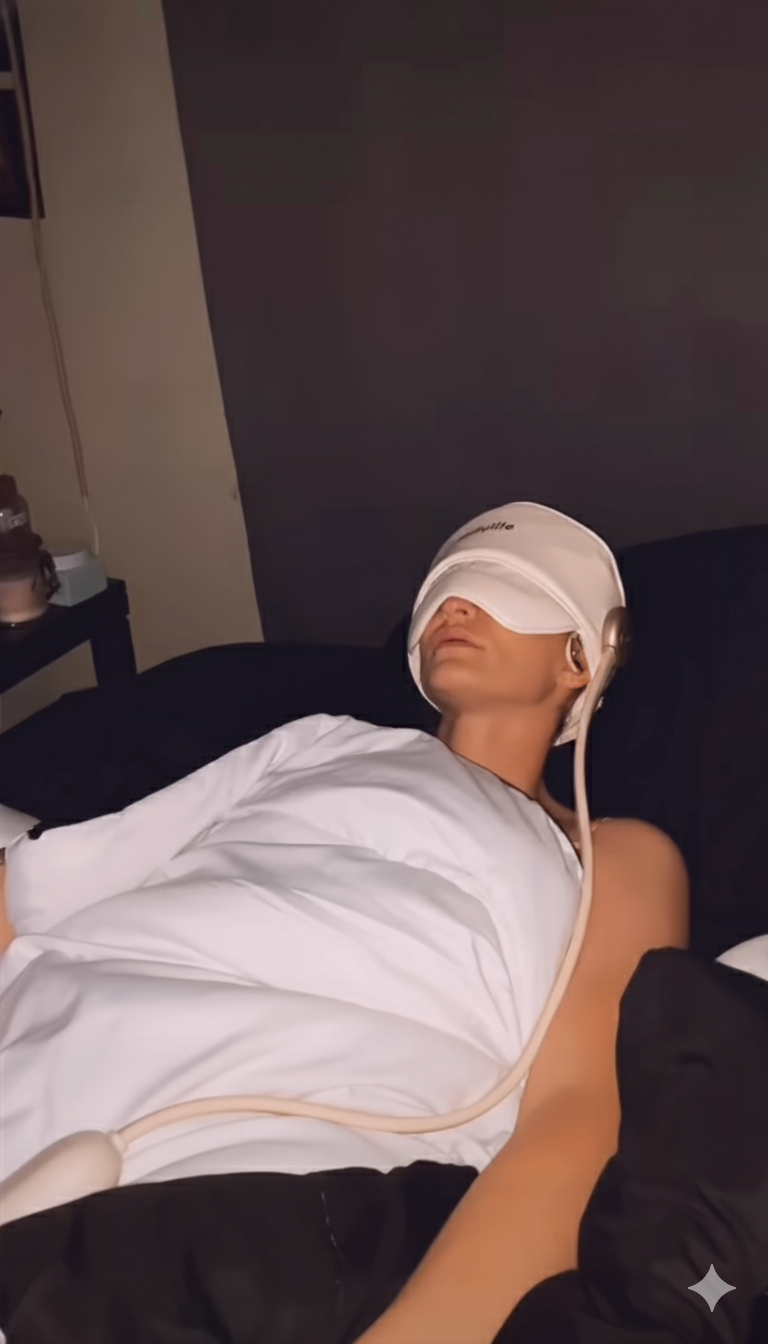
I run a sleep clinic. We measure everything. Brain waves. Breathing patterns. Heart rate. Oxygen levels. Movement. But we miss the one thing that actually determines whether you'll sleep or not. Your nervous system state. I've seen patients with perfect sleep study results who still can't sleep. Their breathing is fine. No apnea. No restless leg syndrome. No physical abnormalities. But they still wake up at 3 AM every night with a racing mind. Because standard sleep studies don't measure whether your autonomic nervous system is stuck in fight-or-flight mode. We can see that you're not sleeping. But we can't see why. That's the gap in sleep medicine. And it's the reason most treatments fail. Here's what I've learned about filling that gap. When someone comes to my sleep clinic with chronic insomnia, we run a comprehensive sleep study. We attach electrodes to monitor brain waves. Sensors to track breathing and oxygen levels. Belts to measure chest and abdominal movement. We record everything that happens during the night. And when the study is complete, we analyze hours of data looking for the cause of their insomnia. Sleep apnea—pauses in breathing. Restless leg syndrome—involuntary leg movements. Periodic limb movement disorder—repeated muscle twitches. Circadian rhythm disorders—misaligned sleep-wake cycle. We're very good at identifying these conditions. But here's what we don't measure: Whether the patient's autonomic nervous system is in sympathetic mode (alert) or parasympathetic mode (rest) when they're trying to fall asleep. Whether their vagus nerve is functioning properly. Whether their cortisol levels are elevated at night. Whether their heart rate variability indicates chronic stress. Whether their body is physiologically capable of shifting into sleep mode. And that's the information that would actually explain why they can't sleep. I've had patients come back after their sleep study, desperate for answers. "What did you find? What's wrong with me?" And I have to tell them: "Your sleep study was normal. No apnea. No movement disorders. Everything looks fine physiologically." They look at me with this mix of relief and frustration. Relief that nothing is "wrong." Frustration because they still can't sleep and now they don't know why. "So what do I do?" they ask. And for years, I didn't have a good answer. If the sleep study is normal, we move to behavioral interventions. Sleep hygiene education. Cognitive behavioral therapy for insomnia. Sometimes medication if they're desperate enough. But these treatments have mixed results. Some patients improve. Many don't. And I started noticing a pattern in the ones who don't improve. They all show the same signs in my office—even though those signs don't appear in their sleep study data. Shallow breathing. Tense shoulders and jaw. Hypervigilance—constantly scanning the room, unable to fully settle. Rapid speech. Fidgeting. These are all signs of an overactive sympathetic nervous system. Their body is stuck in fight-or-flight mode. And no sleep study in the world measures that. A few years ago, I started digging deeper into the research on autonomic nervous system dysfunction and sleep. What I found changed how I approach chronic insomnia. Your autonomic nervous system controls everything your body does automatically. Breathing, heart rate, digestion, body temperature. And sleep. It has two modes: Sympathetic (fight-or-flight) for alertness and action. Parasympathetic (rest-and-digest) for recovery and sleep. In a healthy system, you shift between these modes throughout the day. Alert when you need to be. Relaxed when it's time to rest. But when you're chronically stressed—from work, relationships, health issues, hormonal changes, financial pressure, trauma, or just years of accumulated stress—your nervous system gets stuck. It stays in sympathetic mode. Always alert. Always scanning for threats. Always ready to respond to danger. Even when there is no danger. Even when you're lying in bed in a dark, quiet room, trying to sleep. Your nervous system won't let you power down because it thinks you're unsafe. And here's the critical thing: You can have perfect breathing during a sleep study. Normal oxygen levels. No movement disorders. And still have a nervous system that's stuck in fight-or-flight mode. The sleep study can't see it. But it's the reason you can't sleep. This is why sleep medications stop working after a few weeks. They're trying to chemically override your alert system. But they're not fixing the stuck nervous system. Your body adapts, builds tolerance, and you're back where you started. This is why supplements don't work long-term. Melatonin can't shift a nervous system that's locked in sympathetic mode. This is why perfect sleep hygiene isn't enough. A cool, dark, quiet room is ideal—but only if your nervous system is capable of entering sleep mode. If it's stuck in alert mode, the environment doesn't matter. This is the gap in sleep medicine. We're very good at identifying and treating sleep disorders. But we're not measuring or addressing autonomic nervous system dysfunction. And that's the root cause for a large percentage of chronic insomnia cases. Once I understood this, I started looking for ways to address it. Traditional approaches focus on calming techniques—meditation, breathing exercises, progressive muscle relaxation. These can help. But for patients whose nervous system is severely stuck, mental techniques aren't enough. You can't think your way out of a physiological problem. I found research on vagus nerve stimulation—a treatment that's been used clinically for anxiety, PTSD, and depression. The vagus nerve is the main pathway between your brain and your body. It's the master switch that controls whether you're in sympathetic or parasympathetic mode. When it's functioning properly, it can shift you from alert to rest. But when you've been chronically stressed for months or years, that nerve gets weak and underactive. Your body loses the ability to shift modes on its own. Clinical vagus nerve stimulation—using implanted devices or electrode therapy—has shown remarkable results. But it's expensive, requires medical supervision, and isn't practical for most patients. Then I came across research on non-invasive VNS through thermal and pressure stimulation. Studies showed that applying heat and gentle pressure at specific points where the vagus nerve is accessible—particularly around the face and neck—can activate parasympathetic response. It's the same principle as clinical VNS, but through a physical mechanism that patients can use at home. I found a device called the DreamWeaver Pro that's designed specifically for this. It's a heated sleep mask with built-in massage that targets the areas where vagus nerve pathways are concentrated. When you apply heat to these areas, it increases blood flow and signals the parasympathetic nervous system. When you add gentle, rhythmic pressure through massage, it activates the vagus nerve. Together, they create a physical intervention that tells your body it's safe to shift out of alert mode. I started recommending it to patients who showed clear signs of autonomic nervous system dysfunction but had normal sleep studies. The ones who'd tried everything else with no lasting improvement. The results have been significant. One patient—I'll call her Michelle—had been dealing with insomnia for four years. Multiple sleep studies, all normal. She'd tried Ambien, trazodone, every supplement imaginable. Perfect sleep hygiene. Nothing worked for more than a week or two. When she sat in my office, I could see the signs immediately. Shallow breathing, tense posture, that constant scanning vigilance. Her nervous system was stuck in sympathetic mode. But her sleep study would never show that. I explained what was happening and suggested the DreamWeaver Pro. She was frustrated—she'd tried so many devices at that point. But she ordered it. Four weeks later at her follow-up, she looked completely different. Relaxed. Breathing deeper. Actually rested. "I'm sleeping through the night for the first time in four years," she said. "My sleep study was normal. How did this work when nothing else did?" I explained: The sleep study measured sleep disorders. It couldn't measure nervous system dysfunction. Everything else she tried was addressing sleep symptoms. The DreamWeaver Pro addressed the actual problem—her stuck nervous system. It gave her vagus nerve the physical stimulation needed to activate. And once her autonomic nervous system could shift properly, her body could sleep. I've now recommended it to over a hundred patients with similar presentations. Chronic insomnia despite normal sleep studies. Clear signs of nervous system dysfunction. Failed standard treatments. The success rate has been significantly higher than anything else I've used for this patient population. Because it's addressing the gap that sleep studies miss. Here's what I want you to understand: If you've had a sleep study that came back normal. If you've tried medication, supplements, and behavioral interventions with no lasting results. If you're still exhausted and desperate for answers. The problem probably isn't showing up in your sleep study. It's your autonomic nervous system. And there are nine specific signs that tell me someone's insomnia is caused by nervous system dysfunction rather than a sleep disorder. Nine patterns I see in my office that never show up in sleep study data. Nine signs that standard sleep treatments won't work because they're measuring and treating the wrong system. If you've been struggling despite trying everything, look at these nine signs. Because if three or more sound familiar, your insomnia is almost certainly caused by autonomic nervous system dysfunction. And until you address that—not with sleep medication or behavioral therapy, but with actual nervous system regulation—nothing else is going to give you lasting results. Here are the 9 signs I see in my office that sleep studies miss. [Read the 9 Signs Sleep Studies Miss (That Explain Why You Can't Sleep)]>https://info.nubilee.co/nine-reasons-dwp
Where the ad sends people
anubbilee.co
This Is the First Device That Targets the Real Problem
I still can't believe this happened to me.
Learn more: info.nubilee.co(opens in a new tab)