
Active· since Jun 15, 2026
- 43
- days running
- 2
- relaunches
- 5,480
- EU reach
Ad copy
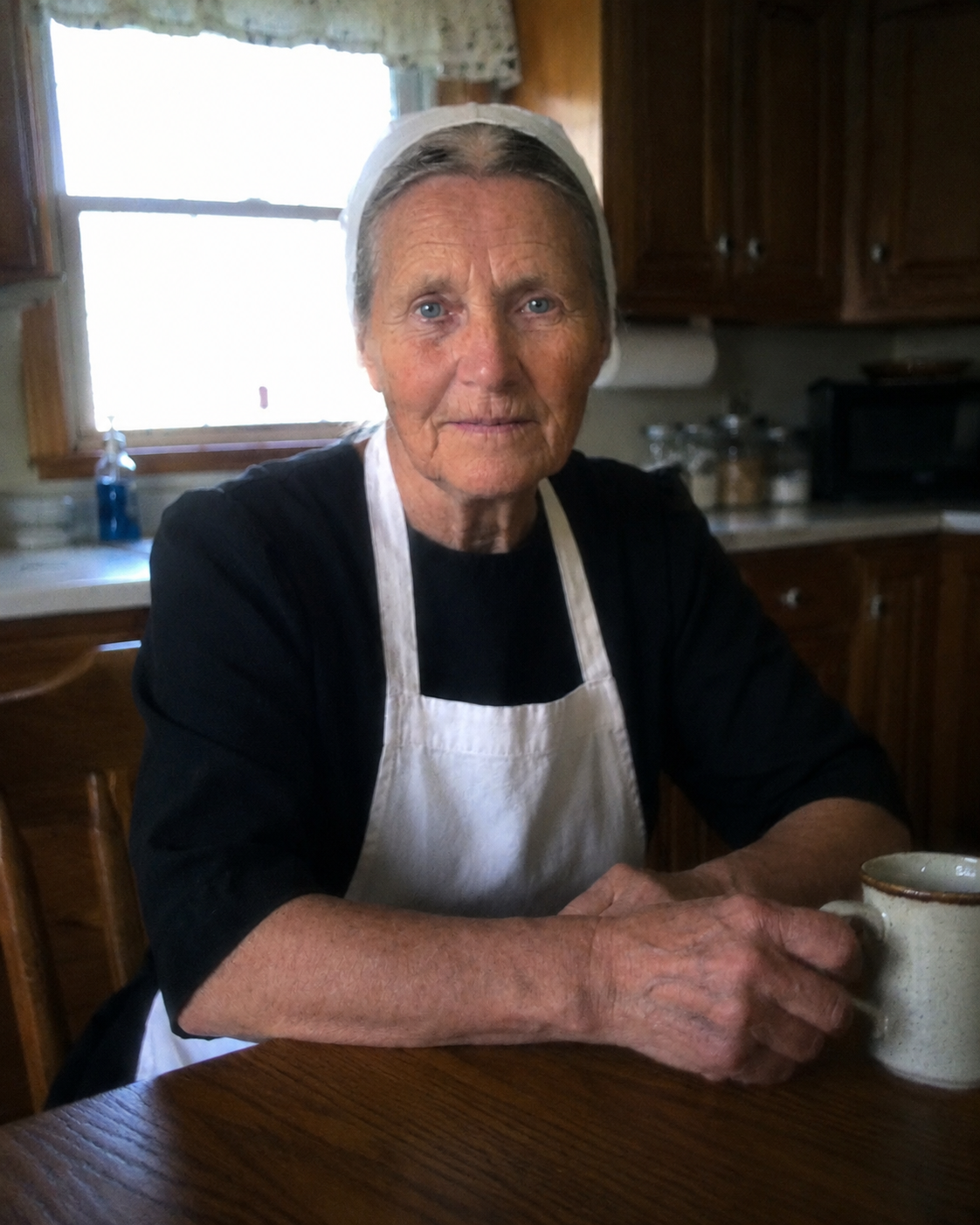
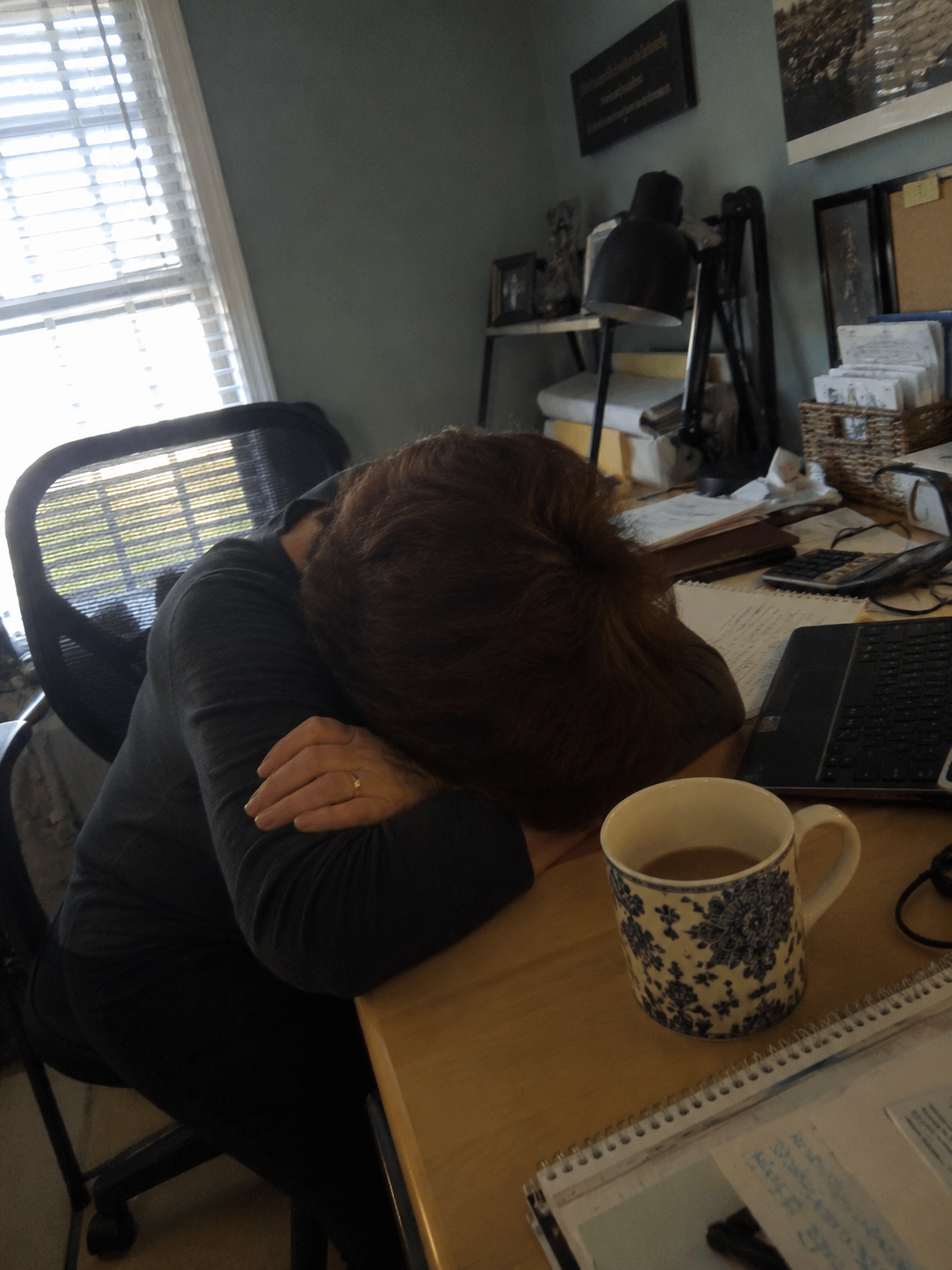
I Was Doing Everything Right and Still Felt Off. An 82-Year-Old Amish Man at My Son's Wedding Said One Sentence That Made Me Cry the Whole Drive Home. I am writing this for the woman who is up at six. Who drinks her lemon water. Who eats her oatmeal with berries. Who takes her multivitamin and her fish oil and her vitamin D and her magnesium. Who walks her five miles. Who goes to her yoga class. Who lies down at the end of the day feeling like a stranger in her own body. I am writing this for the woman whose annual bloodwork comes back fine. I am writing this for the woman whose doctor says, "Looks great, see you next year." I am writing this for the woman who sits in her car after that appointment, in the parking lot, and thinks: then why do I feel like this. I am writing this because I was that woman for ten years. And then my son got married last October. And an eighty-two-year-old man at that wedding said one sentence at the toast that I have not been able to stop thinking about since. I am fifty-eight years old. I do everything you are supposed to do. I wake at six. I drink lemon water. I eat a Mediterranean breakfast that would make a wellness magazine proud. I take a multivitamin. Fish oil. Magnesium. Vitamin D. B-complex. I do hot yoga twice a week. I walk five miles a day. I sleep eight hours. I do not smoke. I drink wine maybe twice a month. I see my primary care doctor every year. I see my dentist every six months. I see my eye doctor. I see my dermatologist. I have my mammogram. I have my colonoscopy. I have my bone density scan. I have done every single thing the women's health magazines have been telling me to do since I was in my thirties. For about the last ten years, I have not felt right. I cannot tell you exactly what it is. That is part of what makes it so frustrating to talk about. I am not in pain. I am not sick. I am not depressed in any clinical way. I am — dimmer. The texture of my days is muted. I look at photographs of myself from twelve years ago and I look the same, but I do not feel the same. The 3pm crash is the most specific part of it. Around two thirty, I start to fade. By three, I am holding my coffee mug with both hands and reading the same sentence in my email four times. By three thirty, I am putting my head down on my desk for a few minutes because there is nothing left. I go to bed at ten. I sleep eight hours. I wake at six. I do it again. I have told my doctor about the 3pm crash three years in a row. She has run every test. The thyroid panel. The complete blood count. The metabolic panel. The hormone panel. She has been kind. She has listened. She has said, every time: "Everything looks great. There is nothing wrong. Maybe try cutting back on caffeine." I do not drink caffeine after noon. I sit in the parking lot after every one of those appointments and I think: what am I supposed to do with this. My son David is twenty-nine. He met Sarah three years ago through a friend of a friend at a community garden cooperative in Pennsylvania. Sarah grew up in a small Plain farming community in Lancaster County. Not strictly Amish in every respect — her family belongs to a more conservative Mennonite congregation that uses some electricity and drives cars sparingly — but Plain enough that the world Sarah grew up in is very different from the world David grew up in. David is a software engineer who lives in a high-rise in Brooklyn. When he called to tell me they were engaged, I had to sit down on the kitchen floor for a few minutes. Not because I had any objection. Just because the picture I had been holding in my head of who my son would marry was so utterly different from who he had chosen, and the rearranging of that picture took a minute. I came around quickly. Sarah is — well. You will meet her in a moment. They were married last October. The wedding was at her family's farm. I had never been to a wedding on a working farm before. I had not really known what to expect. I want to tell you about that day because that day is when I started to understand what had been wrong with me for ten years. The wedding was in a barn that Sarah's grandfather and his three brothers had built in 1962. It was a still-working barn. They had cleared it out for the day and set up long pine tables. The food had been cooked by twenty women in the kitchen of the main house since five in the morning. There was no DJ. There was no champagne tower. There was no photographer who made you do twenty-seven poses with your in-laws. There was a fiddle player. There were children running through the rows of tables. There was bread that had been kneaded that morning. There was butter that had come out of a cow standing in the field outside the open barn door. I sat next to my husband at one of the long tables and I watched Sarah's family. I want to tell you what I noticed. Because it is what I have not been able to stop noticing since. Sarah's mother is fifty-six years old. Two years younger than I am. She has six children. She had spent the morning making bread. She had walked over a mile from the main house to the barn that morning carrying a basket of pies. She was now standing across the room laughing with her sisters, holding a baby on her hip, with the kind of color in her cheeks I had not seen on my own face in a decade. Sarah's father is sixty-one. Three years younger than my husband. He had been up since four-thirty milking. He had shaken every guest's hand at the door. He had carried two long pine benches into the barn that morning by himself. He was now sitting at the head of the table eating his dinner with the calm steady appetite of a man whose body was working exactly the way he expected it to work. Sarah's grandfather is eighty-two. His name is Abraham. He had carved the bowl in the center of the table. He had built the chair Sarah was sitting in. He had built the chair I was sitting in. He was now standing up to give the toast. Abraham is a small man. White beard. Soft eyes. Hands like worn leather. He stood up at the head of the table and he raised his glass — water, no wine — and he spoke for about four minutes. He thanked David's family for coming. He welcomed me by name. He welcomed my husband by name. He had remembered every name we had been introduced with that morning. Every single one. He talked about Sarah as a little girl. He told two stories about her that made the whole barn laugh. He told David that a husband's job is to listen first and answer second. He said that if David could remember that one thing he would have a good marriage even on the days he could not remember anything else. Then he stopped. He set his glass down on the table. He looked around the room. He said: "I want to say one thing to our new family that I would not say if my granddaughter had not given me permission this morning to say it. I asked her at breakfast if I could. She said yes." He looked at me. Right at me. He said: "Most of what the world eats now is the color of paper." I felt my husband's hand tighten on my knee under the table. Abraham kept going. "The body knows the difference between something that was alive in the morning and something that was killed and powdered and shelved and shipped and sat under a fluorescent light for a year before it reached the plate." "The body knows. It doesn't say anything. It just slowly stops doing some of the things it used to do for you. Because you stopped doing some of the things it was waiting for." He looked at his own wife at the other end of the table. He smiled at her. He said: "We've found in our community that bodies don't ask for much. But the small things they ask for, they ask for every day." "You can do a thousand things that look right and still leave out the one thing the body was actually waiting for. Most people spend their lives doing the thousand things and never find the one." He raised his glass again. "To David and Sarah. To the body's small daily needs. To the next two families learning from each other." He sat down. The fiddle player started. People drank. Conversation slowly resumed. I sat there with my own glass of water in my hand and I could not move. Abraham had not been talking about me. He had been giving a wedding toast. He had been welcoming his granddaughter into a new chapter of her life. He had not been talking about me. But every word he had said had landed on me as if he had been talking only to me. The 3pm crash. The watching-my-life-through-glass feeling. The bloodwork that came back perfect. The doctor who said "everything looks great, see you next year." The texture of every day for ten years. I had been doing the thousand things. I had been missing the one. I did not know yet what the one was. But I knew, sitting at that table in October listening to an eighty-two-year-old man who had built every piece of furniture in the room he was standing in, that there was one. That my body had been waiting for it. And that I had been too busy doing the thousand other right things to hear what it was asking for. After dinner, when people had started to wander, I found Abraham standing by the open barn door watching a horse in the field. I came up next to him. I did not know what to say. I felt like I was twelve years old. I said: "Sir. Your toast. Could I ask you a question about it?" He smiled at me without looking away from the horse. He said: "Of course." I said: "What did you mean — the one thing the body is waiting for. Is there an actual thing? Or were you speaking metaphorically?" He laughed. A small, kind laugh. He said: "I was speaking generally, mostly. Bodies are different. What one body waits for is not what another body waits for. But I will tell you what we have noticed in our community." He told me, then, about how Plain families have eaten for generations. The eggs that morning. The milk that afternoon. The vegetables pulled from the garden the same day they ended up on the plate. The deep colors of food that was still alive when it was cooked. He told me a real thing — that food loses what it carries quickly once it has been processed and shipped and sat. That what looks like a vegetable on the grocery store shelf is often a different thing biologically than what came out of the field a week before. He looked at me, finally. He said: "Beets are one of the foods my wife says she would not live without. She has eaten them three times a week since she was a girl. So has her mother, and her mother before her. There is something in the deep red pigment of a beet that her body has been counting on for eighty years. When she has gone a stretch without them, I see it in her. She is dimmer." I asked him if his wife ate them fresh or in some other form. He said: "Both. We grow them. We eat them in the summer fresh. In the winter, my sister-in-law buys a beetroot supplement from a small company. She has been on it for three years." "She says it is the closest thing to fresh beetroot she has been able to find in a capsule. Because the company cold-presses them at low temperatures and keeps the deep red color intact in the capsule." "She let me see one once. The capsules were a deep, dark crimson. That color is the pigment. That color is what the body has been waiting for, in our experience." I asked him the name. He said: "Rosabella. I believe." I wrote it down on a napkin. I put the napkin in my purse. I cried the whole drive home. I am going to skip the part of this story where I sat at my kitchen table the next morning and read about beetroot for three hours. Here is the short version of what I learned. Beetroot is one of the more researched ingredients in the cardiovascular wellness category. It has been studied for decades. Its active compound — the betalains, the deep crimson pigment in the root — supports the body's natural antioxidant balance, supports healthy circulation, and supports the body's natural cellular energy. What I learned about Rosabella specifically is exactly what Abraham had described. They cold-press their beetroot at low temperatures, which preserves the betalains. The capsules in the photos were a deep, dark crimson. That color is the betalains. That color is what tells you the active compound made it through the processing intact. It supports the body's natural antioxidant defenses. It supports healthy circulation. It supports the body's natural cellular energy. None of those are replacements for any of the thousand other things I had been doing. They were support for a layer my body had been quietly waiting for, that no multivitamin and no protein shake and no hot yoga class had been giving it. I called my primary care doctor the next morning. I told the nurse I was thinking about adding a beetroot supplement called Rosabella, and I wanted to make sure my doctor was comfortable with it before I started. The nurse called back that afternoon. She said: "Dr. Lin says it is a sensible thing to add. There is good research on antioxidant support for cardiovascular wellness. Add it to what you are already doing. Don't change anything else. We will check in at your next visit." I ordered my first bottle that night. I started taking it the following Monday. Two capsules with a glass of water in the morning. I did not change anything else. I want to tell you what I noticed over the next eight weeks. Not because I want to make any claim. But because it is the part you would want to know. The first thing was the afternoon. The 3pm crash had been a feature of my life for ten years. It had been so reliable that I had organized my entire workday around it. I scheduled my hardest calls for the morning. I scheduled nothing important between two and four. Around week two, I noticed I had read all the way through a long email at three twenty without reading any sentence twice. I sat at my desk for a moment and registered what had just happened. Around week three, I made it through a 4pm work meeting without checking the clock once. Around week four, I came home from the gym at 6pm and decided to make a real dinner instead of reheating leftovers. I had not made a real dinner on a weeknight after the gym in years. Around week five, I noticed I was looking forward to things again. I cannot describe this one any more carefully than that. There had been a flatness to the front of my brain when I thought about future plans for ten years. The flatness was lifting. Around week six, my husband and I took a long walk after dinner on a Saturday. Two hours. We had not done that in years. I had not had the energy. We walked. We talked. We stopped at a little place near the park and got ice cream like we used to do when we were dating. On the walk back home, he reached for my hand. He said: "You seem like you." I said: "I feel like me." He said: "Yeah. I noticed." Around week seven, I called my mother on a Sunday afternoon at four o'clock and we talked for an hour and I did not have to lie down afterward. For ten years, every phone call with my mother had cost me an hour of horizontal recovery time. I had not realized until that Sunday how much that one fact had shaped my life. I had my annual physical last month. Dr. Lin went through the bloodwork. Took my blood pressure. Listened to my heart. She sat down across from me with her tablet and said: "Everything looks great." I laughed. She looked up. I said: "It always looks great, Dr. Lin. That has not been the issue." She smiled. She set the tablet down. She said: "Tell me how you are actually feeling." I told her about the afternoon. I told her about the long walk with my husband. I told her about the Sunday phone call with my mother. She listened to the whole thing. She said: "I'm glad to hear it. Keep up with everything you're doing." She did not bring up anything else. Neither did I. I am writing this in October. One year after Sarah and David's wedding. We drove out to the farm last weekend for a visit. Sarah is pregnant. Due in March. Abraham was sitting on the porch in a chair he had built. He stood up when our car pulled in. He walked over to greet us. I hugged him. He hugged me back. He said: "You look like a different woman than the one who sat at the wedding." I said: "Abraham. I am." He patted my shoulder. He said: "Good." That was the whole conversation. I sat on his porch that afternoon and watched his wife pick something out of her garden and I thought about the napkin I had put in my purse the year before. I thought about how much of my life had changed because of four minutes of a wedding toast and a five-minute conversation by a barn door. I thought about how easy it would have been to not approach him afterward. To assume he had been speaking generally. To go home and not write down the name. I thought about all the years I had been doing a thousand right things and missing the one. I want to be careful here. I am not a doctor. I am not in healthcare. I am one fifty-eight-year-old woman who sat at her son's wedding in October and met an eighty-two-year-old man who said something at the toast that changed how I looked at the previous ten years of my life. I do not know for certain that the Rosabella was responsible for what changed. I know what I was doing before. I know what I added. I know what has happened in the year since. I know the timing. I also know I am fifty-eight, and there will come a day when no supplement will hold back the slow turning of the years. I am not pretending otherwise. What I am telling you is what I tried. What I noticed. What my doctor said about it. That is all. If you are a woman — or a man — who has been doing everything right for years and still feeling off, here is what I would say. Talk to your doctor. Tell them you are thinking about adding it. Get their blessing. Then add it to what is already working. Do not subtract anything. Do not change anything else. Give it a few weeks before you decide anything. Bodies are different. Some people notice something shift in the first week or two. Others take longer. That is the whole story. P.S. I went back to the farm two months after the wedding with a thank-you note for Abraham. He read it standing at his workbench in the barn. He folded it. He put it in his shirt pocket. He said: "You did not need me. You needed permission to listen to what your body has been telling you for ten years." He kept building the chair he was working on. I drove home thinking about that. I am still thinking about it. P.P.S. Here is what I would tell you to do if you are thinking about trying it. Check with your doctor or pharmacist first. That is the most important step. Then take two capsules with a glass of water in the morning. Do not change anything else. Just add this. Give it a few weeks before you decide anything. Some people notice something within the first week or two — a little more energy through the afternoon, a little more clarity, a little more of themselves in the small moments. Others take longer. Be patient with your body. P.P.P.S. Rosabella has a 90-day money-back guarantee. If you are not satisfied for any reason, every penny back. No questions asked. That is a sensible policy for a supplement. It gives you time to actually see whether it helps. P.P.P.P.S. Rosabella is a small operation. They harvest and bottle on their own schedule. I keep an extra bottle in the house just in case. My husband started taking it last spring. He called his doctor first. His doctor said the same thing my doctor had said. Sensible thing to add. He had not said much about it. Last week, while we were carrying Sarah's old dresser down from our attic to drive out to the farm for the nursery, he said: "I can lift things again." He did not elaborate. He did not need to. We drove out to the farm with the dresser. Sarah was waiting on the porch. Abraham came out of the barn. He helped us carry the dresser into the room they had set up. The four of us — Abraham, my husband, David, me — stood in the doorway of what is going to be my first grandchild's room. Abraham looked at me. He smiled. He did not say anything. He did not need to. https://track.tryrosabella.com/14309c20-4d60-44e3-9565-5ba6bb358986 Individual experiences vary. These statements have not been evaluated by the FDA. This product is not intended to diagnose, treat, cure, or prevent any disease.
Support stamina and heart health every day
LEARN MORELike this ad? Make it yours.
Crush rebuilds this exact creative around your product — your brand, your colors, your offer — in about a minute.