Mary Ann Thompson
Mary Ann Thompson Facebook ad: “Rebuild Enamel with One Chew”
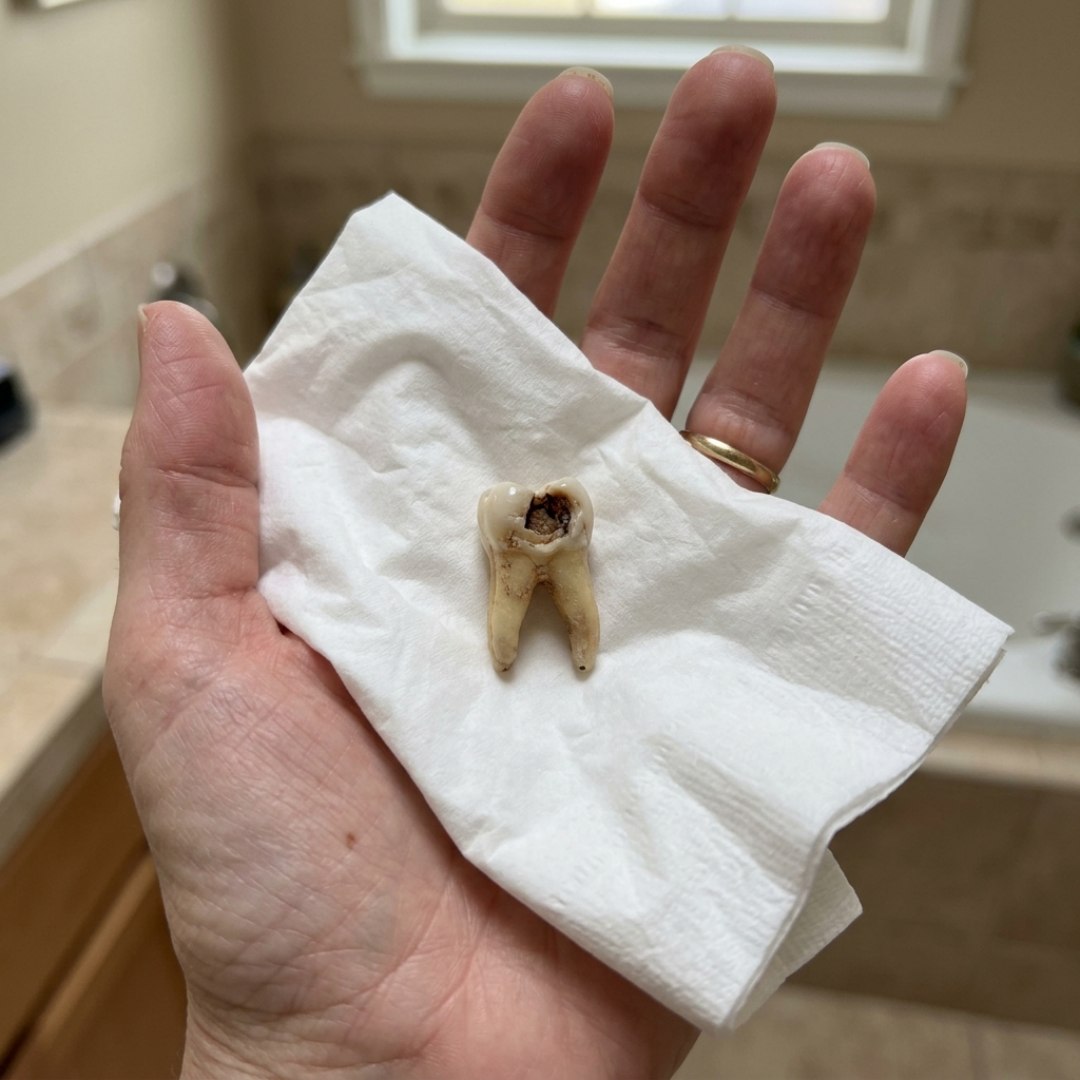
Ran for 15 days, from June 29 to July 14, 2026, the last day Crush saw it.
Run by Mary Ann Thompson on Facebook. Crush is not the advertiser and does not verify its claims. See this ad in Meta's Ad Library(opens in a new tab)
Want an ad like this for your product?
Crush makes new ad images for your product from this ad: your logo, your product photo, your offer.
Trials from $19.95 USD, then $79.95 USD a month. Cancel anytime.
About this ad
- Meta Ad Library ID
- 1536705191164228
- Platforms
- Facebook, Instagram, Audience Network, Messenger and Threads
- Relaunches
- 0
- Niche
- Skincare & Beauty
Ad text
I saw 4 dentists about my teeth falling apart. Not one of them asked the question that would've saved me 3 years of suffering.... I sat in my dentist's office, gripping my purse so tightly my knuckles turned white. This was my fourth dentist in 18 months. The first one said "You have sensitive teeth. Use Sensodyne." The second told me "It's normal wear and tear. You're in your sixties." The third said, "Some people are just cavity-prone. It's genetic." The fourth said, "We can crown the worst ones. It'll run about $8,000." I was 63. Meanwhile, my husband went to his annual checkup and walked out in twelve minutes. No cavities. No sensitivity. No yellowing. No lecture. Just a "see you next year." One visit. No problems. No shame. But me? I was left to silently endure: ✘ Sensitivity so bad that every sip of coffee was a coin flip between fine and excruciating ✘ Yellowing that no amount of whitening could fix — and I'd tried everything ✘ A new cavity every single year despite brushing twice a day and flossing every night ✘ A molar that cracked on a piece of bread — bread — six weeks ago The hygienist called my name. I exhaled and stood slowly. "Want me to come in with you?" my husband offered. I shook my head. "I need to handle this alone." As I walked down the hallway, one thought pulsed in my mind — please let this dentist actually tell me why this is happening. Dr. Sarah Brennan was different. She didn't interrupt. She didn't glance at the clock. She listened as I walked her through three years of dental disasters. The sensitivity that came out of nowhere around 58. The yellowing that whitening made worse. Two root canals. Four cavities. A cracked molar. An enamel chip from biting into an almond. And the latest — a front tooth so translucent at the edges I could almost see through it. When I told her I'd stopped smiling in photos — that I'd skipped my granddaughter Sophie's birthday party because I couldn't face the pictures — she didn't say "That's just aging." Instead, she leaned forward and asked something no dentist had ever asked. "Has anyone ever talked to you about the mineral your enamel is actually made of?" I blinked. "The mineral?" "Your enamel. The hard white shell protecting every tooth in your mouth. Has any dentist ever told you what it's made of? Why you're losing it? Or what happens when it's gone?" "No. They talk about brushing. Flossing. Fluoride. They've never mentioned a mineral." She sat back. "That's your problem. And I'm stunned nobody has explained this to you in three years." She pulled up an image on her screen — a cross-section of a healthy tooth next to a damaged one. "Your enamel is 97% one mineral," she said. "It's called hydroxyapatite. When that mineral is dense and intact, your teeth are hard, white, sealed. Bacteria can't get in. The nerve is protected. Stains slide off the surface. Nothing breaks." She pointed to the damaged tooth. "But after 50 — from thirty years of acid exposure, from medications that dry out your mouth, from menopause, from grinding in your sleep — that mineral starts depleting faster than your body can replace it. And when it depletes, everything breaks down. Not slowly. Not one thing at a time. Everything." "Everything?" "Everything. The sensitivity you started feeling at 58? That's the mineral barrier over the nerve thinning out. Every temperature change fires the nerve directly — because the shield is disappearing." "The yellowing that whitening couldn't fix? That's two things happening at once. The enamel is thinning — so the yellow layer underneath starts showing through. And the enamel is becoming porous — microscopic holes that trap stains inside the tooth where no toothbrush can reach." "The cavities every year despite perfect brushing? That's bacteria penetrating through porous enamel. Brushing cleans the surface. But when the mineral structure has holes in it, bacteria get through from the inside. Your toothbrush can't reach what's happening underneath." "And the molar that cracked on bread? Healthy enamel is the hardest substance in the human body. But when it loses its mineral, it doesn't soften — it becomes brittle. Like ceramic. The structure was compromised for years before it broke. The bread didn't crack your tooth. The mineral loss did." I felt my stomach drop. "You're telling me all of this — the sensitivity, the yellowing, the cavities, the cracking — is the same thing?" "It's the same thing. One mineral. Depleting from five different forces. Causing every symptom you've been chasing separately for three years." I sat there. Completely still. Three years. Four dentists. Thousands of dollars in fillings and crowns and sensitivity toothpaste and whitening strips. And not one of them told me my teeth were losing the mineral they're made of. Not one of them explained that everything I was experiencing traced back to one cause. Not one of them asked the question that would have changed everything three years ago. "So the Sensodyne —" "Sensodyne numbs the nerve so you stop feeling the pain. That's it. It doesn't rebuild a single molecule of the mineral you're losing. It turns off the alarm. The fire keeps burning." "And the whitening?" "Whitening uses hydrogen peroxide. Hydrogen peroxide chemically strips hydroxyapatite from the enamel surface. Every whitening session removes more of the mineral you're already losing. It makes teeth whiter for a few weeks — then the porous surface traps stains deeper than before. The yellowing comes back worse. She was making it worse every time." "What about the fluoride treatments? My dentist does them every six months." "Fluoride hardens the surface with a different mineral — fluorapatite. It's a temporary coat of paint on the outside. It can't rebuild the hydroxyapatite structure that's been lost inside. Painting the fence doesn't fix a rotting post." Then she said something that made me go cold. "The mineral your enamel is made of — hydroxyapatite — has been used in Japan for over forty years. Pediatric dentists use it on children's teeth as standard care. The Japanese government recognized it as an anti-cavity agent in 1993. It was originally developed by NASA in the 1970s — for astronauts who were losing tooth and bone density in zero gravity." "Forty years?" "Forty years of published research. Clinical trials on thousands of patients. Peer-reviewed journals. And it's not part of standard American dental training. Your dentist has been filling cavities and recommending Sensodyne because that's what the system teaches. Fill it. Crown it. Numb it. There's a billing code for a $3,000 crown. There is no billing code for replacing the mineral that would have prevented the crown." I drove home in silence. At 11:40 PM I was still sitting at the kitchen table with my laptop open. My husband had gone to bed two hours ago. I couldn't stop. I Googled "hydroxyapatite enamel repair." Then "hydroxyapatite cavity prevention." Then "NASA hydroxyapatite patent." I found the NASA Spinoff article. Bernard Rubin. The Electronics Research Center in Cambridge, Massachusetts. The patent filed in the early 1970s. Sangi Co. in Japan licensing the technology in 1974. The first toothpaste launched in 1980. Everything Dr. Brennan told me — confirmed. On NASA's own website. I found clinical studies from Tokyo Medical and Dental University — testing over a thousand children — showing nano-hydroxyapatite fills porosity in weakened enamel. Rebuilds density. Reduces cavities. Restores the hard, smooth surface that keeps teeth strong and white without bleaching. Forty years of research. Thousands of patients. And my dentist had been filling cavities and prescribing Sensodyne for three years without ever mentioning it. I kept going. And then everything connected. The sensitivity — the mineral barrier thinning over the nerve. The yellowing — porous enamel trapping stains inside. The cavities — bacteria penetrating weakened structure. The cracking — brittle enamel that lost its mineral density years before it broke. The gums pulling back slightly — bacteria breaching through the weakened enamel at the gumline. Not five separate problems. Five symptoms of one thing. Mineral loss. And nothing I'd used in three years — not the Sensodyne, not the whitening, not the fluoride treatments, not the enamel repair toothpaste — had replaced a single molecule of the mineral I was losing. They numbed. They bleached. They painted. They scrubbed. None of them replaced. At 1:15 AM I found something in a health group. Women in their fifties and sixties describing the exact same progression — teeth falling apart despite doing everything right, dentists offering nothing but more fillings and crowns. One woman posted about a chewable tablet formulated by a retired dentist — 26 years of practice in Denver — and her research team. Three ingredients that worked together as a system. One that rebuilds the mineral enamel is made of — fills the pores, restores density, seals the surface. One that creates the right pH for the mineral to absorb and starves the bacteria that produce the acids breaking it down. And one that restores healthy saliva production — the body's natural mineral delivery system — so what's been rebuilt stays rebuilt. Not a toothpaste that rinses away in thirty seconds. A chewable that coats every surface and keeps the mineral film in contact for hours. Like the difference between putting on sunscreen and jumping in the shower versus putting on sunscreen and letting it absorb. I ordered it before I closed my laptop. My husband found me still at the table. "Another product?" he asked gently. "This one doesn't numb the nerve or paint the surface. It replaces the mineral my teeth are actually made of." He looked at me for a long moment. "I just want you to stop wincing every time you drink your coffee." That's when I realized — he'd been watching me suffer for three years. Watching me flinch at every cold drink. Watching me cover my mouth in every photo. Watching me lose myself. And he didn't know how to help. Week 1 — Nothing dramatic. Berry flavor. Easy to remember — one chew before bed. Teeth felt noticeably smoother the next morning. Week 2 — First real change. I took a sip of iced water without thinking. No pain. I sat there for a second — confused. Took another sip. Still nothing. The sensitivity that had made every cold drink a negotiation for three years was fading. Week 4 — My teeth looked different. Not whitened — not that fake bleached look. Brighter. More opaque. Less translucent at the edges. My daughter noticed before I did. "Mom, did you do something to your teeth?" Week 8 — I ate ice cream. Right out of the container. Didn't think about it until I was three bites in. I almost cried. At three months, I went back to my regular dentist — the one who'd been filling cavities and scheduling crowns for three years. He ran the exam. Paused. Looked at his notes. Looked back at my teeth. "No new cavities," he said slowly. "And the enamel density on several teeth looks... improved. That's unusual." "What changed?" I told him about the mineral loss. The five forces. The forty years of Japanese research. The hydroxyapatite. He looked at my chart. Looked back at my teeth. "I'm not familiar with that approach," he said. "But I can't argue with the exam. Keep doing whatever you're doing." I sat in my car in the parking lot for ten minutes. I didn't cry. I just sat there. I'm not angry at my dentist. He wasn't hiding anything. He just didn't know. The research exists — published in peer-reviewed journals, recognized by an entire country's government, originally developed by NASA. He was trained in a system that fills cavities and crowns broken teeth. That's what he learned. That's what the system teaches. And he followed it. But nobody taught him about the mineral. Nobody taught him that sensitivity, yellowing, cavities, and cracking are symptoms of one thing. Nobody taught him that replacing what his patients were losing could change the trajectory before the crown, before the implant, before the $30,000 in dental work. He wasn't negligent. He wasn't careless. He just didn't know. If your dentist is filling cavities and recommending Sensodyne without ever explaining why your teeth are failing — if the only next step is another crown, another filling, another product that numbs but never rebuilds — you need to know something. The research exists. Published studies. Over forty years of clinical data. NASA's own documentation. A mineral recognized by Japan's government since 1993. Used on children's teeth across an entire country as standard care. And a retired dentist in Denver — 26 years of practice — built a chewable tablet around it because the system she worked in for decades would never offer it. 👉 This is the article that explained everything: dentaltruthjournal.com/pages/teeth — Mary Ann Thompson P.S. My husband started using them three weeks after I did. He didn't have any symptoms — he just saw what they did for me and figured prevention was cheaper than repair. Smart man. Considering the average woman over 50 spends $30,000 on dental work over twenty years — and this costs $25 a month — I'd say he did the math right. P.P.S. I don't work for any supplement company. I'm not paid to write this. I'm a 63-year-old woman from the Jersey Shore who spent three years watching her teeth fall apart while doing everything she was told. If you know someone whose teeth are getting worse despite perfect brushing — someone who's wincing at cold drinks, who stopped smiling in photos, who just got quoted $3,000 for a crown — please share this with them. Your mom. Your sister. Your friend who covers her mouth when she laughs. You probably already know who.
Where the ad sends people
smileguard.store
👆 Rebuild Enamel with One Chew
"This actually worked, thank you so much." - Emily T.
Learn more: smileguard.store(opens in a new tab)