Mary Ann Thompson
Mary Ann Thompson Facebook ad: “She did everything right. This still happened.”
Ran for 7 days, from July 7 to July 14, 2026, the last day Crush saw it.
Run by Mary Ann Thompson on Facebook. Crush is not the advertiser and does not verify its claims. See this ad in Meta's Ad Library(opens in a new tab)
Want an ad like this for your product?
Crush makes new ad images for your product from this ad: your logo, your product photo, your offer.
Trials from $19.95 USD, then $79.95 USD a month. Cancel anytime.
About this ad
- Meta Ad Library ID
- 816592054754061
- Platforms
- Facebook, Instagram, Audience Network, Messenger and Threads
- Relaunches
- 0
- Niche
- Skincare & Beauty
Ad text
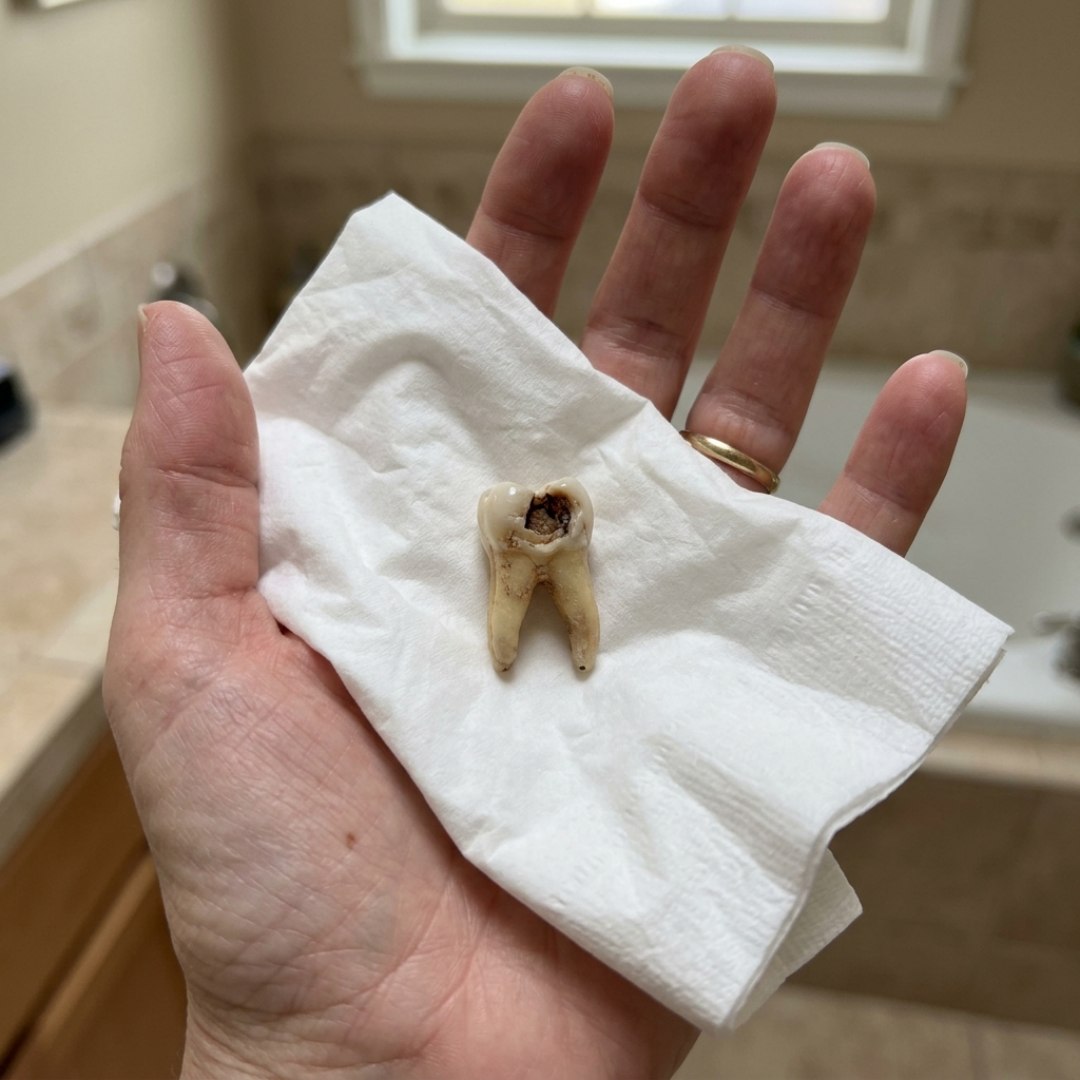
My sister was diagnosed with periodontal disease in June 2022. She flossed every day of her life. After the diagnosis, she cut out sugar. Went on the Mediterranean diet. Used the water flosser twice a day. Got a deep cleaning. She lost all her lower teeth on October 19th, 2024 at 4:17 PM. She was 58 years old. She started the water flosser on June 9th. Did the Mediterranean diet for two years and three months. Flossed twice a day. Walked our golden retriever three miles every single morning before work, rain or shine. She did everything the periodontist told her. The surgery quotes came to $71,000. The implants were going to be $11,400. Her old smile is still in the photo on the mantel. I can't look at it. If I look at it, that smile is really gone. I need to tell you what happened to Donna. Because every week I see posts on Facebook from women like me — "my gums bleed every morning, the dentist said floss more, any tips?" — and it makes me physically sick. If you're a woman over 45 who got the gum disease diagnosis, or your sister or mother got it, please read this whole thing. I know it's long. I know you're scrolling. I know you have things to do. Sixteen months ago I would have given anything — everything — for someone to tell me what I'm about to tell you. Donna went in for her dental checkup on June 9th, 2022. She felt fine. Better than fine. She'd just turned 56. She was still coaching her niece's softball team. She thought her teeth were healthy and honestly so did I — she'd never smoked, never skipped a cleaning, her mom was 87 and still had most of her own teeth. Three days later her dentist called her back in. Pocket depths of 6mm. Bleeding on probing at almost every site. The X-rays came back with moderate bone loss. The periodontist confirmed it two weeks later. Chronic periodontitis. Stage 3 already. "There's no pill for this. We treat it with deep cleaning. Scaling and root planing, get those pockets down, brush and floss every day. We'll re-probe in six months." Donna hung up the phone and sat at the kitchen table for forty minutes without saying anything. Then she stood up, opened the bathroom cabinet, and started filling a trash bag. I watched her throw out the old soft toothbrush. The whitening strips. The cinnamon mouthwash. Two bags of the hard candies she loved. The entire bottom shelf of the pantry — the gummies, the toffee, the caramel chews she loved. "That's it," she said. "I'm done." And she was. For 28 months, she didn't break the routine once. No sugar. No skipped flossing. No missed cleaning. Not on her 35th anniversary in Charleston where they brought out a complimentary slice of pecan pie and she asked them to take it back. Not at her own 58th birthday dinner where I made her grilled salmon and a salad and she smiled and said it was the best birthday meal she'd ever had. She lost her friend Maureen, who told her "you're no fun anymore" and stopped inviting her. She lost a piece of herself she'd been carrying for 35 years. And she did it anyway. Because the dentist said to. She did six cleanings that year. She flossed and used the Waterpik twice a day, summer and winter, didn't matter. She bought a $200 electric toothbrush — Donna, with a fancy Sonicare, I still can't picture it. She used the chlorhexidine rinse her periodontist "wasn't against." She rinsed with warm salt water every morning. She did exactly what they told her to do. She did everything right. The follow-up probing came back on December 6th, 2022. Pockets: 6mm. Bleeding: still at nearly every site. Six months of doing everything right and the numbers had barely moved. The dentist said, "The gums heal slowly. Give it more time. We'll re-probe in six months. Keep doing what you're doing." So she did. June 2023 probing: 7mm. Bleeding worse. December 2023 probing: 8mm. More recession. The X-ray in January 2024 showed Stage 4. She had progressed. Donna came home that night and sat at the kitchen table. The same table she'd sat at after the first phone call. Then she said: "Mary Ann, I gave up everything. Everything I loved to eat. I floss twice a day. For 19 months. And it's getting worse." I told her to give it more time. I told her the periodontist said it could take two years. I told her to trust the process. She nodded. Five days later — five days — she woke up at 2 AM with a throbbing in her lower jaw that doubled her over. I drove her to the emergency dentist. By the time they saw her at 4:30 AM, the gums on her bottom front teeth had pulled back so far the roots were exposed. Not "a little." Exposed. Like long yellow stems. Like someone had peeled the gumline down. The on-call dentist — a young woman, couldn't have been 35 — looked at Donna's X-ray and her face did this thing. "Ms. Thompson, your pockets are 9mm. There's almost no bone left around these lower teeth. They're loose. We're referring you for surgery." "But I've been flossing for over two years," Donna said. The dentist just looked at her. "I know, Ms. Thompson. I'm so sorry." Donna spent the next 6 weeks chasing referrals. The surgeons talked about a graft. Then they talked about her not being a good candidate because of how fast the bone was going. Then they stopped talking about saving the teeth altogether. By week 5, her whole lower gumline was swollen and pulling away from every tooth. They told her the bottom row would have to come out. October 19th — the day of the surgery — I was in the waiting room down the hall. They'd asked me to step out. At 4:17 PM, a young assistant I'd never seen walked into the waiting room. I knew. "Ms. Thompson. I'm so sorry. We couldn't save them. We had to take all the lower teeth." I drove her home at 6:30 PM. The Sonicare was still on the counter. Her walking shoes by the back door. The chlorhexidine on the windowsill above the sink, right next to the special paste. The photo of her old smile was on the mantel where it sat. Where it sits today. She sat in her recliner. She didn't speak for seven hours. The house was so quiet I could hear Riley breathing on the rug. 36 years of sisters. And the loudest thing in her house was a sleeping dog. After the surgery, I tried to go back to normal. I couldn't. Because every time I opened Facebook I saw women my age posting things like, "my gums bleed every brushing, dentist said borderline gum disease, anyone tried a Waterpik?" And I knew — I KNEW — some of them were doing exactly what Donna did. And ending up where she is. So I started researching. Not because I wanted to. Because I had to. Because if Donna gave up two years and four months of everything she loved for nothing — if I can't save even one other family from what happened to mine — then I can't live with that. I read for weeks. PubMed papers I had to read three times to understand. Periodontal forums where people described Donna's exact trajectory. Studies out of Japan and Germany. And one thing kept coming up — over and over — that no periodontist ever told us. The reason Donna's numbers didn't come down is that brushing and flossing only clean the surface. They don't replace what the enamel has already lost. Specifically — the mineral. Your enamel is a barrier. It's the shield that keeps bacteria out of your teeth, out of your roots, and out of your gums. When it's solid and mineralized, bacteria sit on the surface. They get brushed away. Your gums stay healthy. But your enamel is 97% one mineral — hydroxyapatite. And after 50, your body loses this mineral faster than it can replace it. Acids from coffee, wine, and citrus dissolve it daily — damage that compounds over decades. Menopause causes mineral loss 2 to 3 times faster than normal — your doctor screens your bones for this, nobody screens your teeth. Over 500 common medications cause dry mouth, shutting down your body's only natural mineral delivery system. Grinding wears it down every night while you sleep. Whitening treatments strip this exact mineral every session. When that mineral depletes, the enamel at the gumline becomes porous. Thin. Weak. And here's what no one told us. When enamel weakens at the gumline, bacteria don't just sit on the surface anymore. They penetrate through. They sink through the porous enamel. They colonize below the gumline — in the space between the tooth and the gum tissue. Once they're below the gumline, they produce acids and toxins directly against the tissue. The gums become inflamed. They bleed. They swell. And then they do the only thing they can — they pull back. That's what recession is. It's not your gums getting old. It's not weak tissue. It's bacteria breaching through a mineral barrier that stopped doing its job — and attacking the tissue from underneath. Read that again. Donna's gums weren't lost because she ate the wrong food. They were lost because the mineral barrier at her gumline had been dissolving for years — and once that barrier was porous, bacteria got through. Twenty-eight months of the Mediterranean diet didn't rebuild a single molecule of the mineral she was losing. She gave up everything she loved to eat to scrub a surface while bacteria sat protected underneath a barrier that was dissolving from the inside. I sat with that for three days. I'd thrown out Donna's chlorhexidine the week after the surgery. But I bought a new water flosser for myself. Because I'm 57. Because my last cleaning came back with "mildly elevated" bleeding too. Because I was terrified. I used it for a month. My dentist — a different one than Donna's, a woman I've trusted for years — was quiet for a long time when I told her. "Mary Ann, a water flosser pushes water through the pockets. It doesn't replace the mineral your enamel is losing at the gumline. The barrier is porous. Bacteria are getting through from underneath. You can flush the surface all day — it doesn't seal what's already broken." Then she said something I'll never forget. "If Donna had been replacing the mineral her enamel was losing — if that barrier had stayed sealed — bacteria never would have gotten through. Her story would have been very different." I stopped breathing for a second. "Why didn't her dentist tell her that?" She was quiet for a long time. "Because we don't prescribe supplements. And the thing that actually works isn't a prescription." I went to CVS the next day. I stood in that aisle for forty-five minutes. Mouthwash. Whitening rinse. Gum-care toothpaste. A collagen powder in a pink tub — the one I kept seeing advertised on Facebook. Sensodyne, $7.99. I bought the collagen powder. Took it for six weeks. Got re-probed. Nothing. Collagen feeds the tissue. That part is real — gums are made of collagen. But when the enamel at the gumline is porous — when bacteria are already breaching through from underneath — no amount of collagen will make the tissue hold on. You're feeding a house while the foundation crumbles. The foundation is not made of collagen. It's made of hydroxyapatite. A mineral. And collagen doesn't replace a mineral. I had been treating the wrong thing entirely. About two weeks later I was up at 1 AM on the periodontitis subreddit — the same one I'd been reading since Donna's surgery — and a woman in Ohio posted something that stopped me cold. She said her sister had been diagnosed with gum disease at 54. Stage 3. She did the cleanings. Her pockets deepened anyway — sound familiar? — and then her daughter found a chewable tablet that delivers the actual mineral teeth are made of — hydroxyapatite — directly to the enamel surface. Formulated by a retired dentist and her research team in Denver. The mineral that NASA uses to protect astronauts' teeth in space. The same mineral Japanese dentists have used as standard care for over 40 years. Her sister's recession stopped. Her pockets went from 8mm to 3mm in twelve weeks. I read that post four times. There are three things a serious gum support has to do at the same time, or it's a waste of your money. It has to rebuild the mineral barrier bacteria are breaching through. That's hydroxyapatite — the exact mineral your enamel is made of. It fills the pores in damaged enamel at the gumline. Seals the barrier. Closes the pathway bacteria use to reach your gums. NASA uses it. Japan has for 40 years. Your American dentist never mentioned it because there's no billing code for prevention. It has to starve the bacteria that are causing the damage. That's xylitol. Acid-producing bacteria absorb it, can't process it, and die. Less bacteria means less acid attacking the barrier you're rebuilding. It has to restore your mouth's natural defense system. That's a three-strain oral probiotic blend that restores healthy saliva production — your body's natural mineral delivery system — and rebalances the oral environment so protective bacteria keep the harmful ones in check. One rebuilds the barrier. One starves the bacteria. One protects everything that's been rebuilt. All three at the same time. In a chewable form that stays in contact with your teeth for hours — not a paste you spit out in 30 seconds. That's when I found SmileGuard. Oral Defense Chews. Formulated by Dr. Ophelia Blue, DDS — 26 years of clinical practice in Denver before she retired in 2014. All three ingredients. You chew it for 30 seconds as it dissolves, coating every tooth surface including the gumline. The mineral particles fill the pores from the inside out. The film stays in contact for hours. Made in the USA in an FDA-registered facility. Over 3,000 verified reviews. 90-day money-back guarantee. I almost didn't order it. After the CVS aisle. After the collagen powder. After Donna. After everything. But my friend Frances was sitting on 8mm pockets and a "borderline gum disease" diagnosis her dentist said to "watch." I had my own bleeding creeping in the wrong direction. I ordered it. Frances first. Pockets at 8mm. Diagnosed with periodontitis eighteen months ago, doing the cleanings, watching the numbers climb anyway. I sent her a bottle and a note that said, "If you don't chew this every night I will never speak to you again, Frances, I mean it." She chewed one tablet every night after brushing. She went back to her periodontist last month for her re-probe. Pockets: 3mm. Down from 8mm. In ten weeks. She called me crying. My 61-year-old friend. Crying on the phone like a kid. She said, "Mary Ann, I think Donna lost her teeth because nobody told her about this." I had to hang up. My niece in Atlanta. 39, two little girls, early gum disease on her last X-ray. Started taking it eight weeks ago. The bleeding she'd had every morning for two years — gone. Her gums stopped aching for the first time since the diagnosis. I'm not a dentist. I'm not a scientist. I'm not selling anything and I don't get one penny from any of this. I'm a 57-year-old woman sitting in my sister's recliner at 2 in the morning because I can't sleep and I can't stop thinking about Frances and the women on the periodontitis subreddit posting "my gums won't stop bleeding, what else can we try." Donna gave up everything she loved to eat for 28 months and it didn't save her teeth because nobody told her what was actually broken. I wish someone had told us before June 9th, 2022. Before the diagnosis. Before the trash bag of candy in the pantry. Before the 28 months of plain grilled salmon. Before October 19th at 4:17 PM. I can't go back. Donna's teeth can't come back. Her old smile is still in the photo on the mantel and it's going to stay there. But you can still go forward. Your sister can. Your friend can. You can. Not scrubbing. Rebuilding. That's the line that finally made it click for me. 👉 dentaltruthjournal.com/pages/gums Donna used to say, "You can't change what already happened. But you can change what happens next." You can change what happens next. — Mary Ann Thompson, Long Island, NY P.S. Her old smile is still in that photo on the mantel. I still can't look at it. Every morning I walk past it and for one second I forget. For one second I think she's about to call and ask me where Riley's leash is. She's not. $71,000 in surgery quotes. $11,400 for implants. 28 months of her giving up every food she loved for nothing. And a chewable tablet that costs less than the bag of organic spinach she was eating every day — a tablet her own dentist told me could have changed everything if we'd known. My husband started chewing SmileGuard the same week without saying a word. His dentist told him his enamel density improved at his next cleaning. $25 a month. Please. Don't end up here. Don't let someone you love end up here. P.P.S. I don't work for SmileGuard. I don't get a penny from this. I'm writing this at 2:38 AM because I can't sleep and Donna's pink sink is still in my mind and Frances is 61 and the women on that subreddit are still posting at 2 AM and I'm terrified every time my phone rings. Share this with anyone you love who has gum disease. Even "mild." Even "borderline." Even if they're flossing perfectly. Especially then. Please. 👉 dentaltruthjournal.com/pages/gums
Where the ad sends people
smileguard.store
She did everything right. This still happened.
"I'm shocked. I never knew about any of this." - Geraldine D.
Learn more: smileguard.store(opens in a new tab)