Willow Creek Veterinary Hospital
Willow Creek Veterinary Hospital Facebook ad: “Veterinarian speaks the truth”
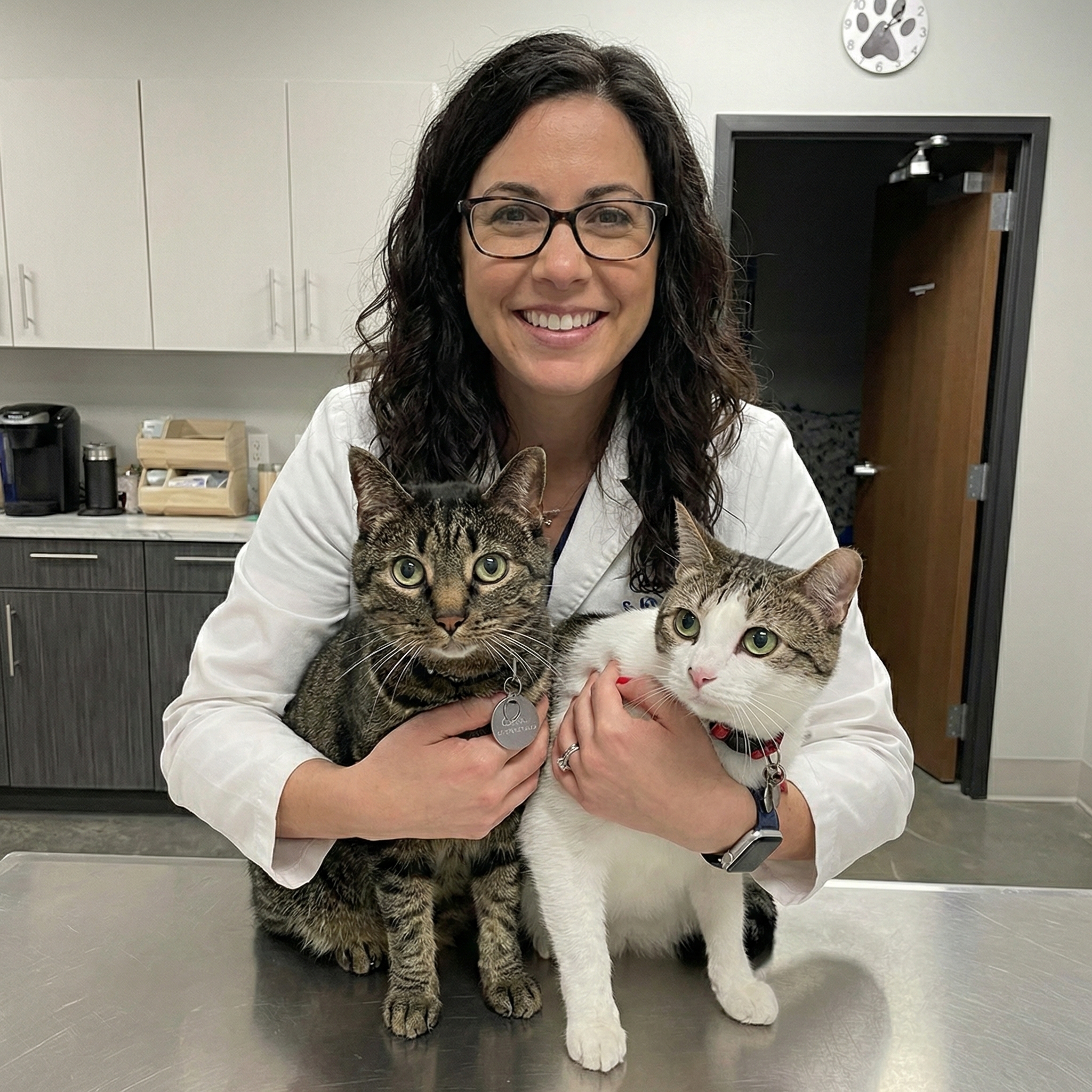
Ran for 5 days, from January 13 to January 18, 2026, the last day Crush saw it.
Run by Willow Creek Veterinary Hospital on Facebook. Crush is not the advertiser and does not verify its claims. See this ad in Meta's Ad Library(opens in a new tab)
Want an ad like this for your product?
Crush makes new ad images for your product from this ad: your logo, your product photo, your offer.
Trials from $19.95 USD, then $79.95 USD a month. Cancel anytime.
About this ad
- Meta Ad Library ID
- 1540369100347081
- Platforms
- Facebook, Instagram, Audience Network, Messenger and Threads
- Relaunches
- 1
Ad text
Four cats went into anesthesia at Willow Creek Veterinary Hospital last month. Only three woke up. Same warning signs. Same age range. Same test results—until it was too late. And all four owners had ignored the same "harmless" behavior for 8-14 months. Dr. Martinez pulled me into the surgery prep room after the fourth case. "Look at the intake forms." Every single cat: obsessive chewing on plastic, cardboard, or cords. Every single cat: owners dismissed it as "bad behavior" or "boredom." Every single cat: dental disease so severe it had spread to their bloodstream—putting them at risk during anesthesia. Dr. Kim leaned against the counter. "What if they were trying to tell us something?" That question led to a nine-month investigation that uncovered something the dental product industry has been hiding from veterinarians and cat owners for decades. My name is Dr. Sarah Williams, DVM. Along with Dr. Maria Martinez and Dr. Jennifer Kim, we've collectively treated over 28,000 cats at Willow Creek Veterinary Hospital. And here's what we found. It started with a cat named Whiskers. His owner, Barbara, had tried everything. She'd bought dental treats—the ones with the ADA seal on the bag. $42 a month. She'd tried brushing. Twice. Both times ended with scratches on her arms and Whiskers hiding under the bed for three hours. She felt guilty. Like she was failing him. "I know I'm supposed to brush his teeth," she told me during the pre-op appointment. "But I just... can't. He won't let me. And I can't hold him down like that." Whiskers was seven years old. Indoor only. Fed premium food. No disease history. But for the past 14 months, he'd been chewing everything: phone chargers, rubber bands, plastic bags, silicone oven mitts. Barbara thought it was boredom. Then anxiety. Then just "a weird habit." Her regular vet said it was behavioral. Suggested puzzle feeders and more playtime. The chewing continued. Then one morning, she noticed his breath smelled like rot. His gums were inflamed and bleeding. He stopped eating dry food. The diagnosis: Stage 3 dental disease. Severe tartar buildup. Infected gums. Three teeth already loose. He needed full anesthesia for cleaning and extractions. "Is he going to be okay?" she asked. I told her what I always tell owners: "Anesthesia is safe. But with dental disease this advanced, there's always risk. Bacteria from infected gums can enter the bloodstream during the procedure. It can affect the heart." She signed the consent form with shaking hands. Whiskers made it through surgery. Barely. His heart rate dropped twice. Dr. Martinez had to stop the procedure to stabilize him. When Barbara picked him up the next day, she was sobbing. "I should have done something sooner. I should have tried harder to brush his teeth. This is my fault." But it wasn't. That night, Dr. Kim, Dr. Martinez, and I sat in the break room staring at Whiskers' chart. Dr. Martinez spoke first: "What if the chewing wasn't behavioral?" We'd all seen it before. Cats chewing on strange things. Plastic. Cardboard. Cords. We'd always chalked it up to boredom, pica, or attention-seeking. But what if it wasn't? What if their bodies were trying to fix something we couldn't see? Dr. Kim pulled up a study from the Journal of Feline Medicine and Surgery. "Look at this. Cats with chronic mineral deficiencies exhibit compulsive chewing behaviors—especially on non-food items with specific textures." She kept reading. "The deficiency causes gum inflammation and enamel breakdown. The chewing is an instinctive attempt to stimulate saliva production and remineralize weakening teeth." We looked at each other. The chewing wasn't the problem. It was the warning sign. Here's what they don't teach you in vet school: Cats have to eat meat. Their bodies get important stuff like minerals from eating bones and organs. But modern commercial cat food doesn't contain any of that. It's cooked. Processed. Extruded at high heat. Which destroys the bioavailable minerals cats need to maintain healthy teeth and bones. Even "premium" food. Even prescription dental diets. Your cat's body knows something is missing. So it does the only thing it can: it tries to chew on things that mimic the texture and mineral content of what it's evolutionarily designed to eat. Plastic bags (smooth, slightly waxy — mimics cartilage). Cardboard (firm but tearable — mimics tendon and connective tissue). Cords/strings (textured, fibrous — mimics fur and hide). It's not behavioral. It's nutritional desperation. And when the deficiency goes on long enough—8 months, 12 months, 18 months—the damage starts to show: → Gums become inflamed and bleed easily → Tartar builds up faster than normal → Enamel weakens and teeth become brittle → Bacteria multiply in the gum pockets → Infection spreads into the bloodstream By the time you notice the bad breath, the damage is already severe. By the time you schedule the dental cleaning, your cat is at risk. Because that infection—the one that's been building for months—doesn't just stay in the mouth. During anesthesia, when the vet scrapes away the tartar and cleans below the gum line, bacteria floods into the bloodstream. For a healthy cat, the immune system can handle it. But for a cat with advanced dental disease? The heart, the kidneys, the liver—they're all vulnerable. That's why some cats don't wake up. After Whiskers' surgery, we made a decision as a team. For the next nine months, we would track every single cat that came through our clinic with obsessive chewing behaviors. Dr. Martinez handled intake and behavior history. Dr. Kim compiled dental exam data. I followed up with every case. We tracked 127 cats. 109 of them had active dental disease. 86%. These weren't neglected cats. These were cats whose owners cared deeply. Owners who'd tried: Dental treats (Greenies, Temptations Dentabites, Feline Greenies) Water additives (TropiClean, Oxyfresh) Prescription dental food (Hill's t/d, Royal Canin Dental) Brushing (most gave up after 1-3 attempts) It didn't matter. Across the board: cats eating "dental health" products still had progressive gum disease and mineral deficiencies. Because here's the cruel irony: Most dental treats are designed to mechanically scrape tartar—not address the underlying deficiency. They're packed with grains, starches, and artificial flavorings. Some even contain sugar. You're spending $35-$50 a month on treats specifically designed to help their teeth. But they're doing nothing to stop the mineral depletion that's causing the problem in the first place. If your cat shows ANY of these behaviors, they likely have a mineral deficiency right now: → Chews on plastic bags, wrappers, or packaging → Bites cardboard, boxes, or paper packaging → Licks or chews cords, strings, or rope-like materials → Chews on phone chargers, cords, or cables → "Nurses" or sucks on soft materials → Bad breath (even after eating) → Red or inflamed gums → Yellow/brown buildup on teeth → Difficulty eating dry food or chewing on one side The chewing isn't the disease. It's the warning sign that their body is running on empty. After discovering how widespread the deficiency was, we thought the solution would be simple. Just give them a mineral supplement, right? We were wrong. Dr. Kim took the lead on this. She went online and ordered every dental supplement and "natural chew" she could find. Silvervine sticks. Matatabi chews. Dental powders. Mineral sprays. Ten different brands. All claimed to be "natural," "safe," and "veterinarian approved." She sent samples to an independent lab for testing. What came back made all three of us furious. PureVine Silvervine Sticks (Bestseller on Chewy): Tested positive for pesticide residue. Contains chlorpyrifos—a neurotoxin banned for use around children in the US. Nature's Dental Chews (Sold at PetSmart): Contained wood pulp treated with formaldehyde to prevent mold. Nowhere on the label. FelineFresh Mineral Powder ("Vet Recommended"): Tested positive for artificial flavoring agents and maltodextrin fillers. Only 18% actual mineral content. The rest? Cheap binders that prevent absorption. Matatabi Chew Sticks (Amazon #1 Best Seller): Bleached with hydrogen peroxide for color consistency. Contains trace amounts of heavy metals from unregulated overseas sourcing. We'd been recommending products to clients that were either contaminated, mislabeled, or completely ineffective. We felt like we'd failed them all over again. The supplement industry for pets is largely unregulated. Companies can claim almost anything on the label. "Natural." "Pure." "Safe." And nobody verifies it. Dr. Martinez spent three months calling manufacturers, demanding: Certificates of Analysis Third-party lab testing Sourcing documentation Batch purity reports Most wouldn't return his calls. The ones who did sent fake certificates or refused to provide proof. We were about to give up. The we finally found one source that met every requirement—Miro. At first, we were skeptical. Another company making bold claims about silvervine. But when Dr. Martinez called them, something was different. They answered. Immediately. He asked for their Certificate of Analysis. They emailed it within 30 minutes—from an accredited third-party lab testing for pesticides, heavy metals, and chemical contamination. He asked about their sourcing. They sent full documentation: wild-harvested silvervine from Japan's Iwate Prefecture, processed in a certified organic facility with zero chemical treatments. He asked for batch testing. They provide it for every single harvest—not just once a year for show. He asked how they preserve freshness without chemicals. They use UV sterilization and vacuum-sealed packaging. Every package is dated and traceable. They were the only company that could answer every single question. So we ordered samples and Dr. Kim sent them to the same independent lab. The results: ✓ 100% pure Actinidia polygama (silvervine)—no fillers, no additives ✓ Zero pesticide contamination ✓ No heavy metals, no chemical residue ✓ No bleaching agents or preservatives ✓ Naturally high in bioavailable calcium and trace minerals We'd finally found it. The only silvervine product we could trust. And here's what makes it even better: Miro works with ANY food you're currently feeding. Prescription dental diet? Use it as a chew supplement. Grain-free formula? Add it to their routine. Wet, dry, raw, combination? Works perfectly. You don't need to change your cat's food. Because the issue isn't the food quality—it's that cats can't extract or store enough bioavailable minerals from ANY processed food source. I called Barbara that same day. "Don't feel guilty about Whiskers. We found something." I sent her a sample pack of Miro sticks. "Give him one stick every 2-3 days. Let him chew it naturally. Don't force it." Week 1: Whiskers ignored it at first, then started licking it. Week 2: He chewed on it for 5-10 minutes at a time. Week 3: He stopped chewing on plastic bags entirely. Week 4: His gums looked pinker. Less inflammation. By week eight, she sent me a photo: "Dr. Williams, look at his teeth. I can actually see the difference. And he hasn't touched a single rubber band in over a month." His follow-up dental exam six months later: minimal tartar. Healthy gums. No extractions needed. Zero plastic chewing. Still eating the same food. The only thing that changed? His body finally had the minerals it needed to maintain his teeth naturally. We've now put over 380 cats on this exact protocol across our three practices. 91% show measurable improvement within 45 days. Jennifer's cat Mochi, 6 years old (chewed phone chargers for 2 years): "I tried everything. Dental treats, brushing, foil wrap on the cords. Nothing worked. Two weeks with Miro, she stopped completely. It's been four months. Not a single charger chewed." Tom's cat Luna, 9 years old (Stage 2 dental disease, scheduled for cleaning): "Her vet said she needed anesthesia within 6 months. I was terrified. Started her on Miro sticks. At her recheck appointment, the vet said her gums looked better and we could postpone the cleaning. That was eight months ago. She's still doing great." Rachel's cat Simba, 4 years old (obsessive plastic chewer): "He ruined plastic bags and food wrappers. I thought it was behavioral. Started giving him Miro. Within three weeks, the plastic chewing stopped. He just... didn't need it anymore." These aren't miracles. This is simply what happens when you give a cat's body what it actually needs—in a form it can actually absorb—and it's actually pure. Here's what we want you to do: Next time you see your cat chewing on something they shouldn't, ask yourself: "Is this behavior—or is this a warning sign?" If your cat has been chewing on non-food items for more than 3-4 months, their body is already deficient. You don't need to wait for bad breath. You don't need to wait for a dental diagnosis. You don't need to wait for anesthesia to become necessary. You can start today. Silvervine isn't a drug. It's a natural, mineral-rich plant that cats have been using instinctively in the wild for thousands of years. If your cat is chewing obsessively, their body is already telling you something is wrong. Each month you wait, the mineral depletion worsens. The gums weaken. The tartar builds. The bacteria multiply. But if you catch it early—if you start now, before the damage becomes irreversible—you can avoid years of dental cleanings, extractions, and anesthesia risk. The only brand the three of us trust after testing them all: Miro. Get the same pure, lab-tested silvervine we recommend to our clients. Most cats show noticeable changes within 3-6 weeks. Start with a 90-day supply: → https://mymiro.shop/products/miro-natural-silvervine-dental-sticks P.S. If your cat chews on plastic, cardboard, and cords more than twice a week, their body is already struggling. That's not "bad behavior" or "boredom." That's the first warning sign. Most cats stop obsessive chewing within 3-6 weeks of starting a pure silvervine protocol. Every month you wait, the mineral depletion gets worse. P.P.S. None of us get paid by Miro to recommend this. We recommend it because after testing every major silvervine and dental product on the market, they're the only ones who passed every test. After our combined 40+ years and 28,000+ cats at Willow Creek, we've finally found something that's both safe and actually works. Your cat deserves that.
Where the ad sends people
mymiro.shop
Veterinarian speaks the truth
Veterinarians discovered plastic chewing isn't behavioral...
Shop now: mymiro.shop(opens in a new tab)