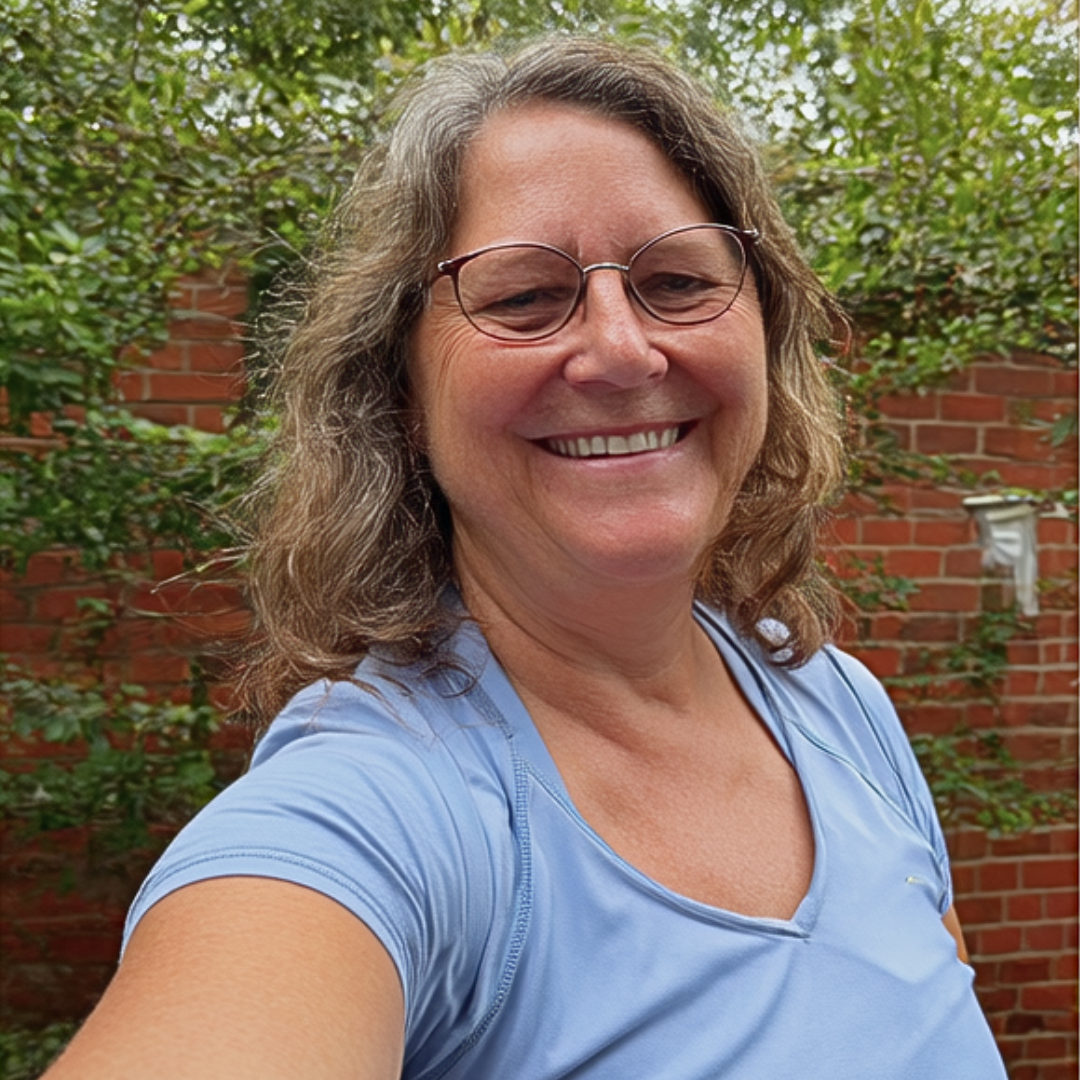
Diana Moore
Diana Moore Facebook ad: “Read this if you've been taking AREDS for years and your…”

Ran for 1 day, from January 17 to January 18, 2026, the last day Crush saw it.
Run by Diana Moore on Facebook. Crush is not the advertiser and does not verify its claims. See this ad in Meta's Ad Library(opens in a new tab)
Want an ad like this for your product?
Crush makes new ad images for your product from this ad: your logo, your product photo, your offer.
Trials from $19.95 USD, then $79.95 USD a month. Cancel anytime.
About this ad
- Meta Ad Library ID
- 1544528203497304
- Platforms
- Facebook, Instagram, Audience Network, Messenger and Threads
- Relaunches
- 0
Ad text
My daughter called a "family check-in." What she really meant was, they'd decided I couldn't see well enough to live alone anymore. I'm Diana. I'm 72 years old. And last Wednesday, my children came to my house to tell me that despite what I wanted, it was time to sell. "Mom, this isn't easy for any of us," Patricia said. She'd brought my son Mark with her. They sat across from me like I was being interviewed. "What isn't easy?" "Having this conversation. About the house. About your eyes." "My eyes? I'm fine." "Mom, you're not fine," Mark said. "We've all noticed." "Noticed what?" "That you can't see anymore. You haven't driven at night in over a year. You couldn't read the menu at Patricia's birthday dinner. Last week you didn't recognize me from across the parking lot until I was ten feet away." "The lighting was bad—" "It's not the lighting, Mom. It's your eyes. When's the last time you actually read a book? When's the last time you drove after sunset?" I didn't have an answer. "The house is worth $340,000," Patricia said, sliding a piece of paper across the table. "We've done some research. If we sold now, that money could cover a really nice assisted living place for years. Somewhere you'd be looked after." "Looked after." "Taken care of, Mom. Properly. Somewhere you don't have to drive. Somewhere you don't have to read your own medication labels." "And what happens to the leftover money?" Patricia blinked. "What do you mean?" "The money left over after you've 'set me up.' Where does that go?" Silence. "That's not what this is about," Mark said. "Isn't it?" "We're trying to protect you." "Protect me. Or protect the asset?" Patricia's face went red. "Mom, that's not fair." "You show up with spreadsheets and property values. You've already researched what I'm worth. And I'm supposed to believe this is about my wellbeing?" "It is about your wellbeing—" "Then why didn't you ask what I wanted? Why didn't you ask how you could help me stay here?" "Because staying here isn't realistic anymore," Mark said. "You can barely see, Mom. What happens when you fall because you didn't see the step? What happens when you take the wrong medication because you couldn't read the bottle?" "I manage fine." "For now. But Dr. Hendricks said the cataracts are getting worse. And you're already showing early signs of macular degeneration. Where does this end?" Macular degeneration. The word hung in the air. "This is my house," I said. "Your father and I raised you here. We paid it off in 1986. And you want me to sign it away because I couldn't read a menu." "It's not just that," Patricia said quietly. "It's your eyes, Mom. They're failing. We can all see it. Even if you can't." Mark wouldn't meet my eyes. They left an hour later. I sat in my living room. The one with the piano nobody plays anymore. The photos on the mantle, faces I could barely make out anymore without walking right up to them. And I cried. --- Because here's what I couldn't tell them. They weren't making it up. My eyes were failing. I'd hold the newspaper at arm's length and still couldn't make out the words. Medicine bottles were impossible… I'd given up and started using a magnifying glass. Driving at night was completely out of the question. Headlights bled into each other like smeared paint across the windshield. Faces were getting harder to recognize. I'd smile at strangers thinking they were neighbors. Wave at people I'd never met. The TV had become a blur unless I sat three feet from the screen. I'd stopped reading books entirely. Stopped doing crossword puzzles. Stopped writing letters to my grandchildren because I couldn't see my own handwriting. Dr. Hendricks had confirmed the cataracts were progressing. And mentioned something about "early macular changes" that made my stomach drop. My eyes. The eyes that had read to my children every night, that had watched my husband walk down the aisle, that had seen my grandchildren take their first steps… were dying. And everyone could see it. Which meant they had their excuse. I wasn't crying because they were wrong. I was crying because they were right. And if I couldn't prove my eyes could still work, I'd lose everything I'd spent forty years paying for. The next morning, I knocked on Vivian's door. I just needed some company after all that had happened. Vivian had been sharp as a tack ever since she moved in next door, must be fifteen years ago now. At 75, she still read without glasses. Still drove everywhere—day and night. Still threaded a needle without squinting. Made sense, I suppose, she'd spent thirty years as a holistic physician before retiring. I told her everything, from the beginning. The "family check-in." The spreadsheet. The way they looked at me like I was already blind. Half expecting her to pat my hand and tell me it would all work out. But what she said next hit me like a freight train. "Diana… they're not trying to help you. They're building a case." "A case for what?" "Incompetence. They're using your eyes against you. So they can take control. Of your decisions. Of your house. Of everything." "But can I stop it?" "How?" I said. "I can barely read my own mail anymore. I can't drive at night. I didn't recognize my own son from twenty feet away. Patricia's right, my eyes are failing. Which means they have every reason to push me out and divide everything up." I started crying then. Right there in Vivian's kitchen. Because I finally understood what was really happening. "They're not scared I'll go blind," I said through tears. "They're scared I'll drain everything on specialists and surgeries before there's anything left to inherit. Patricia already calculated how many years my house would fund. She had it all mapped out." Vivian's expression changed. Hardened. Like she'd heard this story too many times before. "Do you have any idea how often I saw this in my practice?" she said. "Thirty years of patients. And the same pattern, over and over." "What pattern?" "Children who never call suddenly show up with spreadsheets. Children who couldn't be bothered for years are now deeply concerned about 'planning.' The moment a parent's vision starts to go, they swoop in." "But my vision is going," I said. "That's the problem. I can't argue with them because everything they're saying is true. I can't see like I used to. I can't read. I can't drive at night. I'm losing my independence one blurry day at a time." "That's not inevitable, Diana." Vivian leaned forward. "And it's not just aging either." "Then what is it?" "Cellular damage. Specifically to your retinal cells. And that damage can be slowed—sometimes even reversed." I must have looked confused. Vivian smiled. Over the years I'd heard plenty of her "science talks". At neighborhood cookouts, over coffee on her porch, whenever someone mentioned an ache or a pill they were taking. She couldn't help herself. Thirty years of practice meant thirty years of watching people suffer from things they didn't have to suffer from. And she loved nothing more than explaining why. "What's happening to your eyes," she said, "isn't just aging. It's oxidative stress." "Oxidative stress? In my eyes?" "Your eyes are the most vulnerable organs in your body," Vivian said. "Think about it. They're exposed to light all day long. Sunlight. Screens. Fluorescent LED bulbs. Every single ray creates oxidative damage." "Your retina - the part that actually lets you see, burns through more oxygen than almost any other tissue in your body. And every time it uses that oxygen, it creates byproducts. Reactive oxygen species." "Think of them like termites. Chewing through your retinal cells. Your macula. Your lens. Day after day. Year after year." "That sounds terrible." "It would be, except your eyes were designed to handle it. They produce antioxidants that neutralize these termites before they cause permanent damage. The system worked perfectly for thousands of years." "So what went wrong?" "Modern life happened." She leaned forward. "Our grandmothers weren't staring at screens twelve hours a day. They weren't under fluorescent lights. They weren't surrounded by blue light from phones and tablets. And their food was packed with protective nutrients." "But today? The attack on our eyes is constant. Screens. Pollution. UV exposure. LED lights. And our diets are stripped of the antioxidants we need to fight back." "So our eyes are taking more damage than ever…" "And they have fewer defenses than ever. That's why cataracts, and glaucoma cases in seniors are exploding. That's why macular degeneration is an epidemic. It's not aging, it's your eyes being destroyed from the inside faster than they can repair themselves." I sat there, stunned. "So I'm just supposed to accept it? Accept going blind? Accept that they're right about me?" "No," she said. "That's my whole point. The damage can be stopped. Your eyes can be protected. Even at your age." I must have looked skeptical because she leaned forward. "Diana, have you ever wondered why some people keep perfect vision into their 90s while others need cataract surgery at 60?" I hadn't, but now I was curious. "Take the coastal villages in Amami, Japan," she continued. "They have some of the lowest rates of cataracts and macular degeneration in the world. People in their 80s still spotting fish from hundreds of yards away. Still threading fishing line. Still reading without glasses." Vivian leaned forward. "Researchers got curious and tested their eyes. You know what they found? Almost no oxidative damage to their retinas. Their eyes were protected like they belonged to people decades younger." "How is that possible?" I asked. "That's what the researchers wanted to know. So they studied everything. Diet, lifestyle, environment. Turns out, their traditional diet was saturated with one specific protective compound. They consumed it daily for generations. Not occasionally. Daily. Like medicine." She got up and put the kettle on, speaking over her shoulder. "Particularly—a bright red antioxidant from the ocean called astaxanthin," she said. "It's what makes salmon pink. It's the reason fish can swim thousands of miles upstream through brutal saltwater tides without their eyes breaking down. A red pigment that makes salmon pink? I'll admit, I was skeptical to say the least. "It's not like other eye vitamin the doctor will give you," Vivian continued. "AREDS, lutein, zeaxanthin—they can't get where the real damage is happening. They float around but never actually cross into your retinal tissue." "Astaxanthin is different." "It's 6,000 times more powerful than Vitamin C. 550 times stronger than Vitamin E. But here's what matters for your eyes - it's the only antioxidant that can cross the blood-retinal barrier." "The blood-retinal barrier?" "It's like a security gate around your eyes. Keeps most things out, including most antioxidants. But astaxanthin passes right through. It embeds directly into your retinal cells. Your macula. Your lens. Right where the damage is happening." "The Amami villagers weren't just getting traces of it. Their whole diet was saturated with it. They were consuming therapeutic doses without even knowing." "Because they lived right on the coast," she said, "they had access to the purest source possible. The microalgae that produces astaxanthin grew naturally in their waters. The fish ate the algae. The villagers ate the fish. Generation after generation. It built up in their eyes over a lifetime." "I've read dozens of studies on this over the years," she said, pouring the tea. "They all point to the same thing." She handed me a cup and sat back down. "There was one study in particular that stuck with me. They took people with eye fatigue, blurry vision, early cataracts, and beginning macular changes… and gave them 12 milligrams of natural astaxanthin daily for eight weeks. Not the weak 4 to 6mg doses you see on Amazon. The real clinical dose." "And?" I leaned forward. "Their visual acuity improved. The cloudiness in their lenses started to clear. Their ability to focus sharpened. Some could read fine print again for the first time in years." "But most importantly, the oxidative damage to their retinas actually slowed down. In some cases, stopped entirely." "They measured it directly. At the cellular level." I felt something I hadn't felt in months. Hope. "The problem," Vivian said, "is that most astaxanthin available to us here in America is garbage." My heart sank. Of course. "It's nothing like the pure, therapeutic levels those Japanese villagers were absorbing naturally from their coastal waters," she continued. "What you see on Amazon, in drugstores, even in health food shops—95% of it is synthetic. Made from petrochemicals in industrial labs. Your body barely absorbs it." "And the stuff that is natural? It's weak. You'd be lucky to get 4 milligrams. Maybe 6. Nowhere near the 12 milligram therapeutic dose that actually showed real results for protecting vision." "So even if you're taking astaxanthin, chances are it's doing nothing for your eyes." "Just my luck," I thought. The things that actually work are always out of reach. Then she handed me a packet. "But," she said, getting up and walking to her kitchen cabinet, "I found a company that figured out how to make it affordable. Founded by someone who watched her own mother lose her vision." She handed me a small bag. "12 milligrams of pure Hawaiian-grown astaxanthin. The real thing—not synthetic. Cultivated in volcanic mineral water under natural sunlight. Same potency as what the researchers used." "I've been taking it for four years. At my age, I should be squinting at everything. Instead, I read without glasses and drive at night without a problem." "What brand is this?" I asked. "ClarityMD. Small US company. The founder started it after watching her own mother's vision deteriorate, and discovering this could have helped." She turned the bag over. "See—it's in an oil-based softgel. That's important. Astaxanthin is fat-soluble. Those cheap powder capsules and gummies you see everywhere? They never make it to your eyes. This actually crosses into your retinal tissue." "Third-party tested. Made in the USA. And they keep the price reasonable because they believe everyone deserves to protect their vision—not just wealthy people or those lucky enough to live on a Japanese coastline." She pressed the bag into my hands. "Take this. I have more. Start today." I stared at the bag. Part of me thought it was too simple. Too easy. There had to be a catch. But another part of me—the part that had survived losing my husband, raised three kids, built a life through sheer stubbornness—that part knew I had nothing to lose. Because the alternative was watching my children sell off everything I'd worked for while I went blind in some facility. So right there, at 11:15 AM in Vivian's kitchen, I made my decision. If my eyes were under attack, I'd defend them. I wasn't going down without a fight. I took my first softgel with a glass of water. I didn't expect miracles. --- Day one: Nothing. Vision still blurry. Same as always. Day three: Woke up and the morning haze seemed lighter. Didn't think much of it. Day five: Read the headline on the morning paper without picking it up first. Small thing. But I noticed. Day seven: Watched TV from the couch—not three feet away. Could actually make out faces. Day ten: The moment I knew something real was happening. I was reading a prescription bottle. The tiny print. Without the magnifying glass. Without holding it at arm's length. Just... read it. I stood there staring at the label, tears running down my face. My eyes were coming back. Week two: Read an entire magazine article. First time in over a year. Didn't have to stop. Didn't have to squint. Just read. Week three: The moment everything changed. I drove to the pharmacy at 6 PM. Sun was setting. Headlights starting to come on. And I could see. The road. The lines. The signs. Other cars. Everything sharp. Everything clear. I pulled into my driveway and sobbed. Not from fear. From relief. Week four: Patricia stopped by unannounced. Probably checking on me. Gathering more evidence for her case. Found me in the living room. Reading. An actual book. No magnifying glass. No giant-print edition. A regular paperback. "Mom? You're reading?" "It's the new James Patterson." She stared at me. "Without your magnifier?" "Don't need it anymore." She left twenty minutes later. Confused. The story she'd been telling herself about me wasn't matching what she was seeing. Week six: Drove to book club. At night. First time in over a year. Headlights didn't bother me. Could see the road perfectly. Stayed until 8:30 PM. Drove home in the dark. Margaret grabbed my arm in the parking lot. "Diana, you drove here? At night?" "I can see again, Margaret." She hugged me and didn't let go. Week eight: Follow-up with Dr. Hendricks. I didn't tell Patricia or Mark about it. Didn't want them there with their concerned faces and loaded questions. He did the full exam. The pressure test. The retinal scan. The visual acuity chart. Then he sat back and stared at his notes. "Diana, I'm comparing these to your results from six months ago. This is... unusual." "Unusual how?" "Your visual acuity has improved. Significantly. The early macular changes I noted before—they've stabilized. And the cataract progression has slowed considerably." He looked at me over his glasses. "What changed?" "I started protecting my eyes," I said. "Well, whatever you're doing, don't stop. I rarely see improvement at this stage. I usually just see decline." I asked for printed copies of everything. --- Week ten: I called Patricia. "I'd like you and Mark to come over Saturday. 2 PM." "Is everything okay?" "Everything's fine. I just want to talk." Saturday came. They arrived together. Both looking nervous. I'd made coffee. Baked banana bread that morning. From scratch. Reading the recipe card without any help. They sat down at the kitchen table. "Before either of you says anything," I said, "I want you to look at this." I handed them my eye exam results. The comparison. Dr. Hendricks' notes. Mark read in silence. Then looked up. "These are from last week?" "Yes." "But this is... Mom, your vision improved. It says your visual acuity improved." "I know." Patricia was reading over his shoulder. "The macular changes stabilized? The cataracts slowed down?" "I know." "That's not... that doesn't usually happen," Mark said. "I know." "What happened?" "I decided I wasn't ready to go blind." I walked to the bookshelf. Pulled out a paperback at random. Read the first paragraph out loud. No squinting. No hesitation. Then I grabbed my car keys. "It's 2 PM. Still light out. But I drove to church yesterday evening. After sunset. First time in over a year." I looked at both of them. "I'm 72 years old. I can read again. I can drive again. I can see my grandchildren's faces from across the room. I can take care of myself and this house." "And I'm not selling." Patricia started crying. "Mom, I'm sorry. We thought—" "You thought I was going blind. I understand. I thought so too." I sat back down. "But I'm not. My eyes are getting better, not worse. And this house stays mine until I decide otherwise." Mark stood up and hugged me. Right there in the kitchen. "I'm sorry," he said. "I really am." "I know. Just help me stay here. Don't help yourselves to my house." --- Eight months later. I still live in my home. The one I paid off in 1986. The one that's mine. I drive everywhere. Day and night. Read for hours every afternoon. Do crossword puzzles again. Write letters to my grandchildren in my own handwriting. Last month, Mark called asking if I could watch his kids for the weekend so he and his wife could take a trip. "Of course," I said. Because that's what changed. I'm not the mother they worry about anymore. I'm the mother who sees everything. --- I still take one softgel every morning. Same time. Same ritual. My vision insurance. Vivian checks in every week or so to see how I'm doing. "You saved my eyes," I told her last month. "No," she said. "You saved them. I just showed you how." What Vivian explained in her kitchen that morning changed everything. Understanding that vision loss isn't inevitable with age. It's cellular damage. Learning why some cultures keep their eyesight so much longer than we do. Finding out that real, clinical-strength astaxanthin could actually cross into my eyes and protect them from the inside. I think of that softgel as my independence insurance. Because here's what I know now: You don't have to accept losing your vision as inevitable. Your eyes want to work. They just need the right protection. --- If your children are scheduling "check-ins" because of your eyes… If they're researching your home's value while pretending to worry about your vision… If you're terrified of the words "cataracts" or "macular degeneration"… If your blurry vision has been giving them ammunition, and you're scared they'll use it to take everything… Maybe the answer isn't acceptance. Maybe it's protection. The same protection that kept me in my home. That kept the car keys in my hand. That kept the books in my lap and the newspaper in my mornings. You already know what helped me. I'll leave it at that. Because you're still the one who gets to choose. That's the whole point, isn't it? Making your own decisions. Seeing your own future. Living your own life. Not because someone decided you still could. But because you never stopped. https://claritymd.co/products/claritymd-astx-vision
Where the ad sends people
claritymd.co
Read this if you've been taking AREDS for years and your vision is still getting worse.
400,000+ Sold
Learn more: claritymd.co(opens in a new tab)