
Active· since Jul 2, 2026
- 71
- days running
- 0
- relaunches
Ad copy
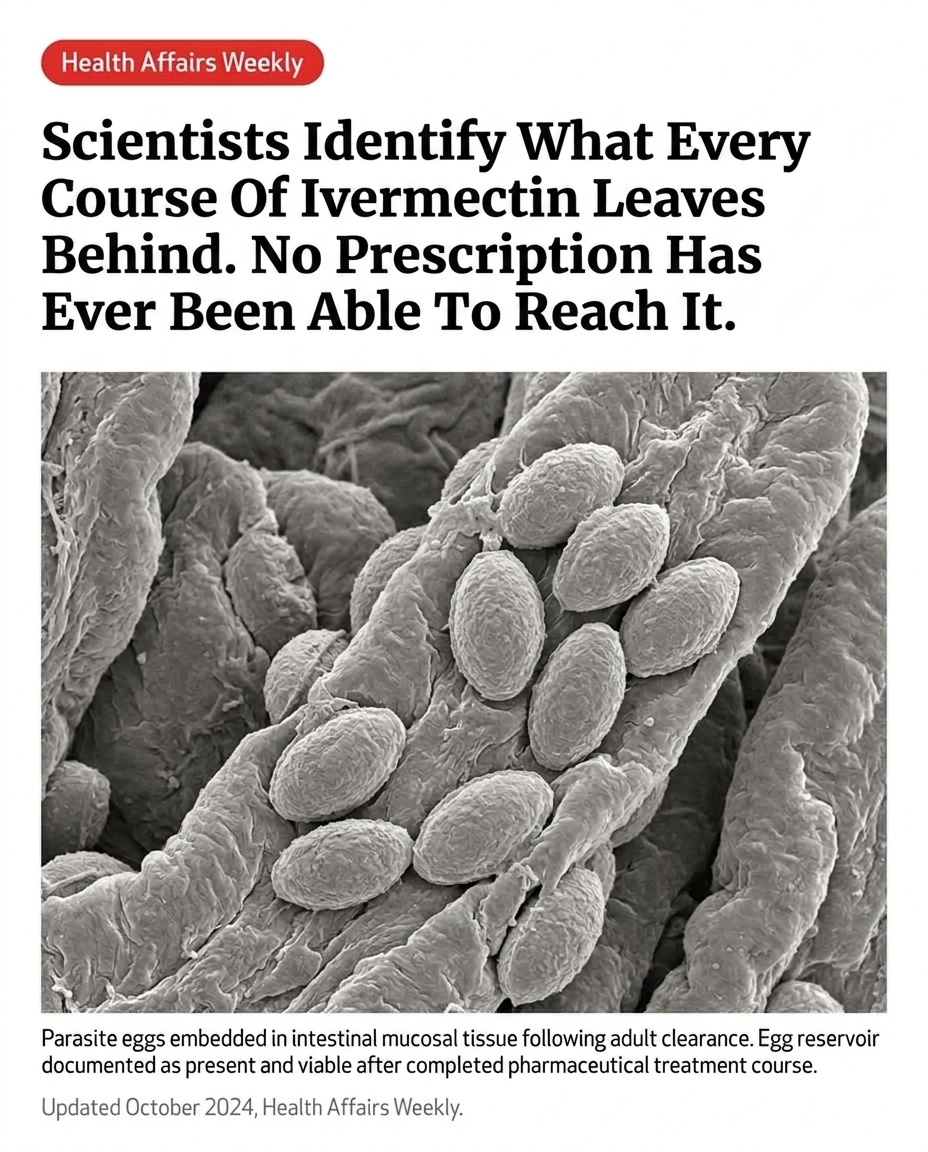
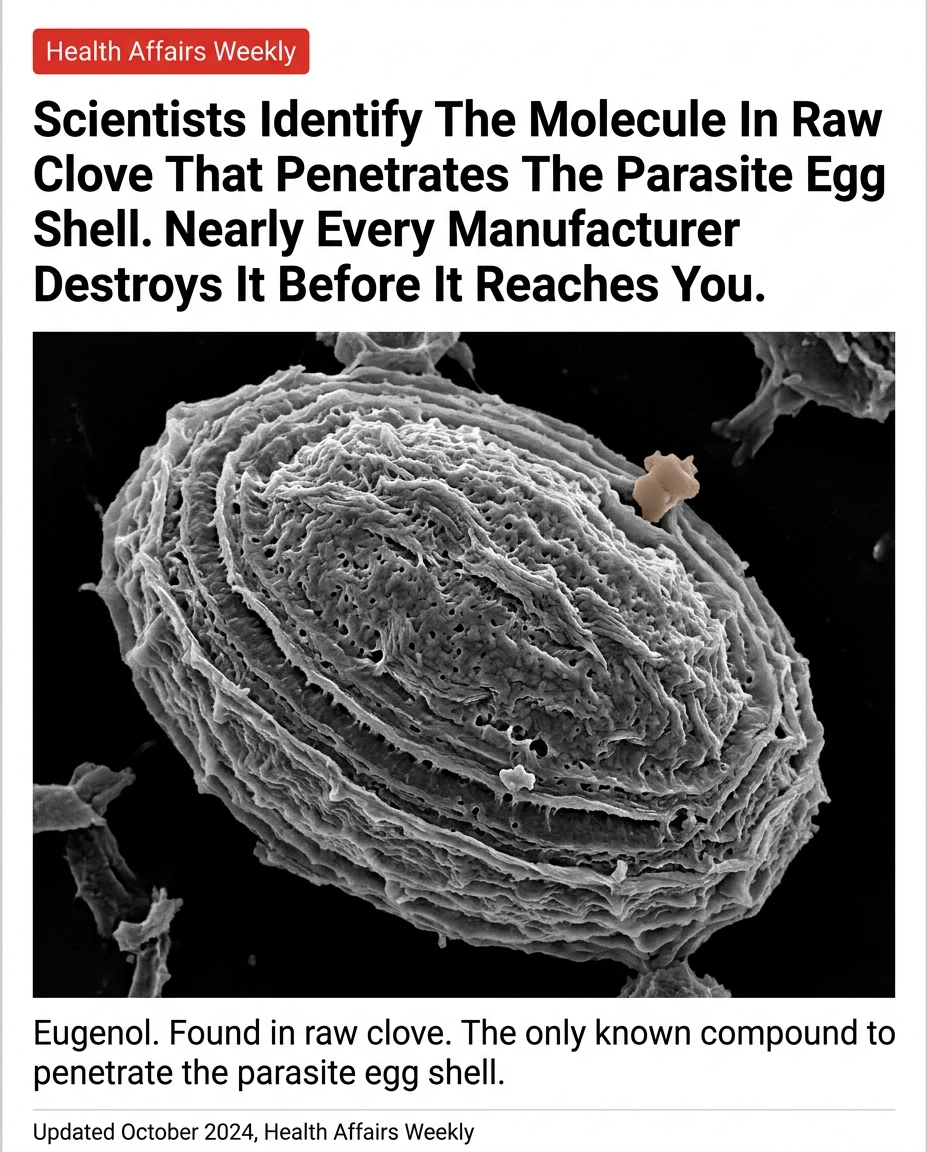
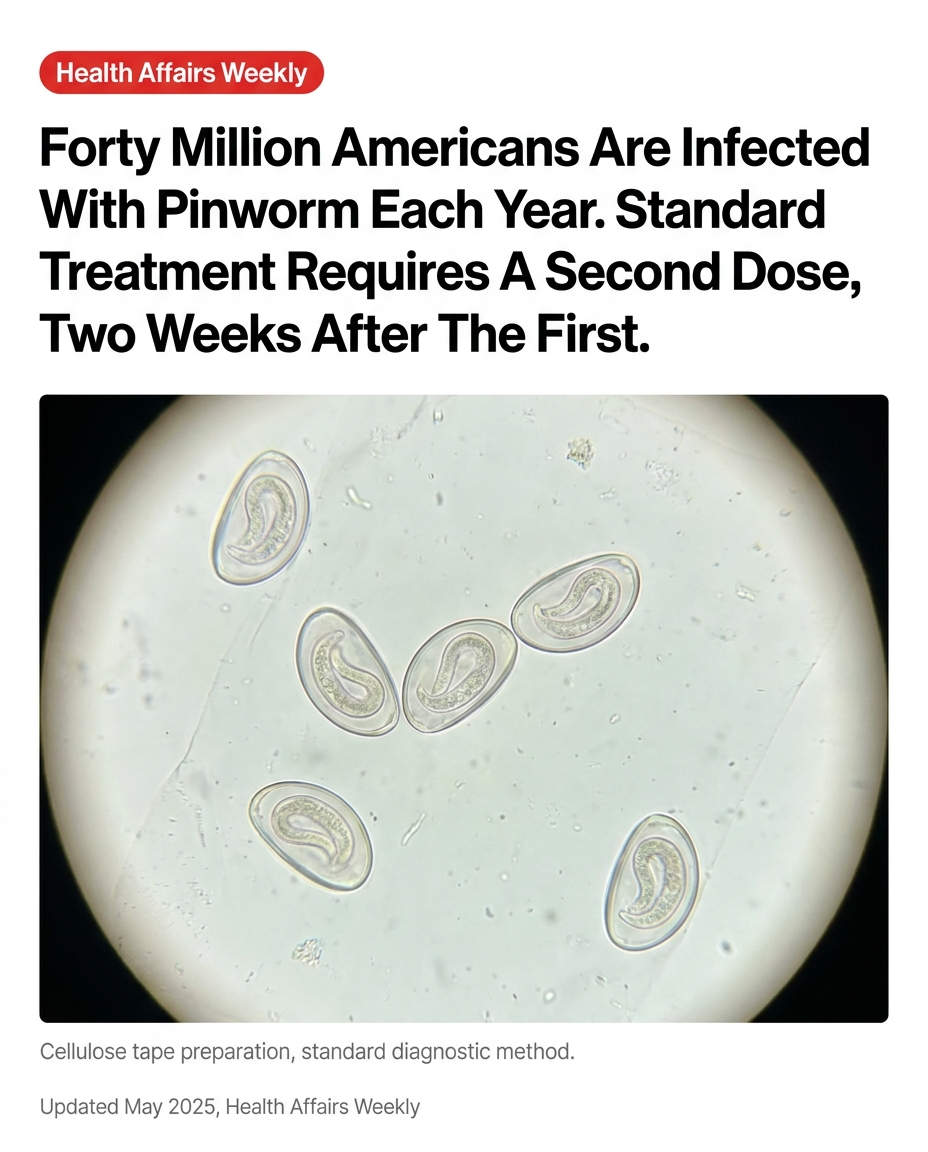
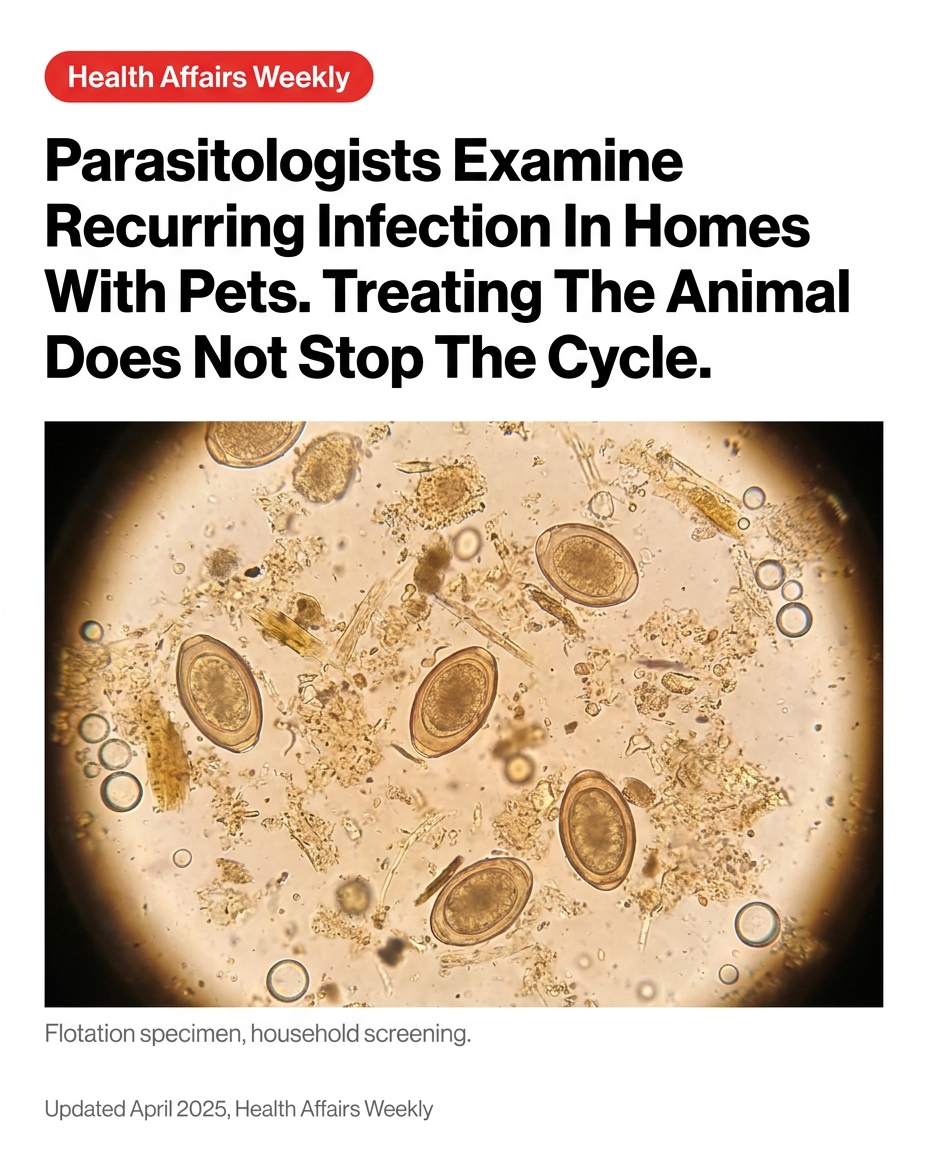
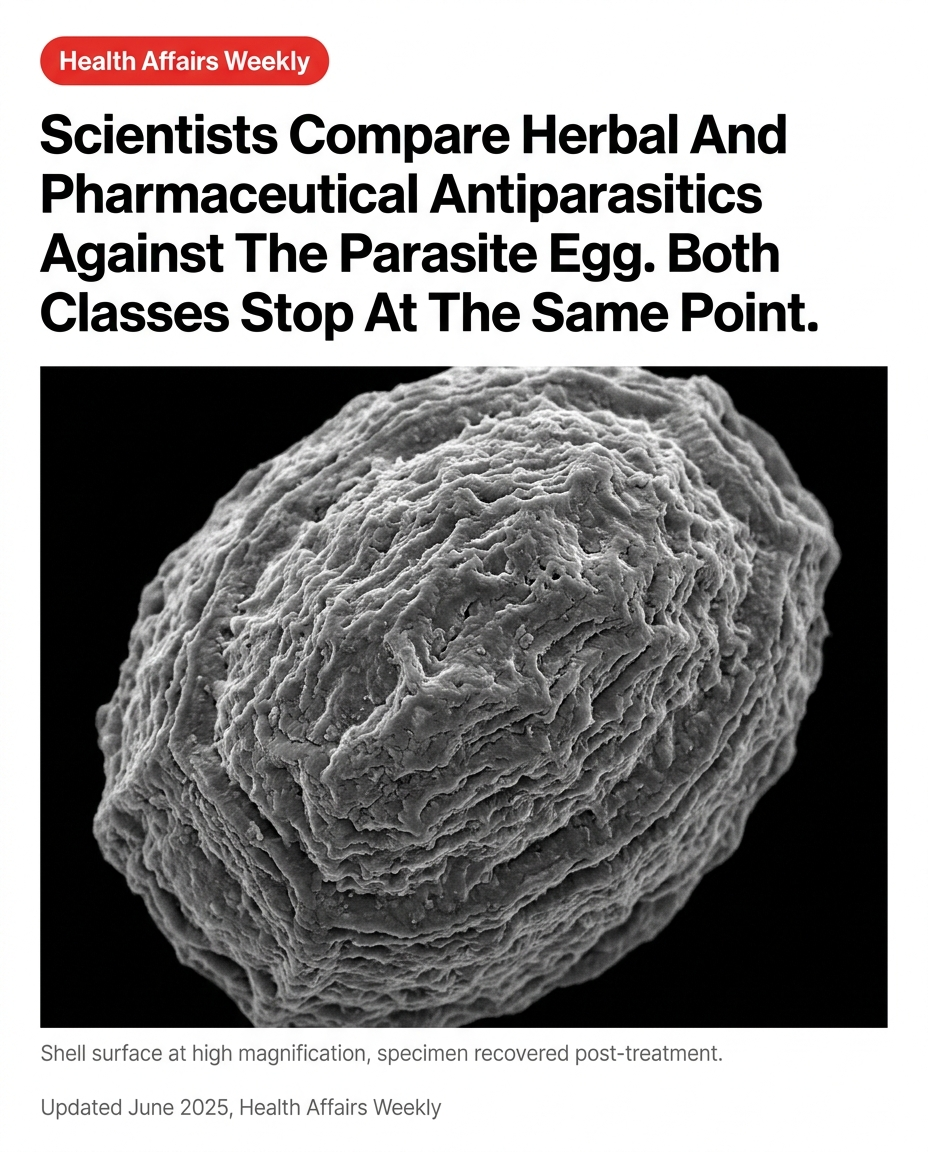
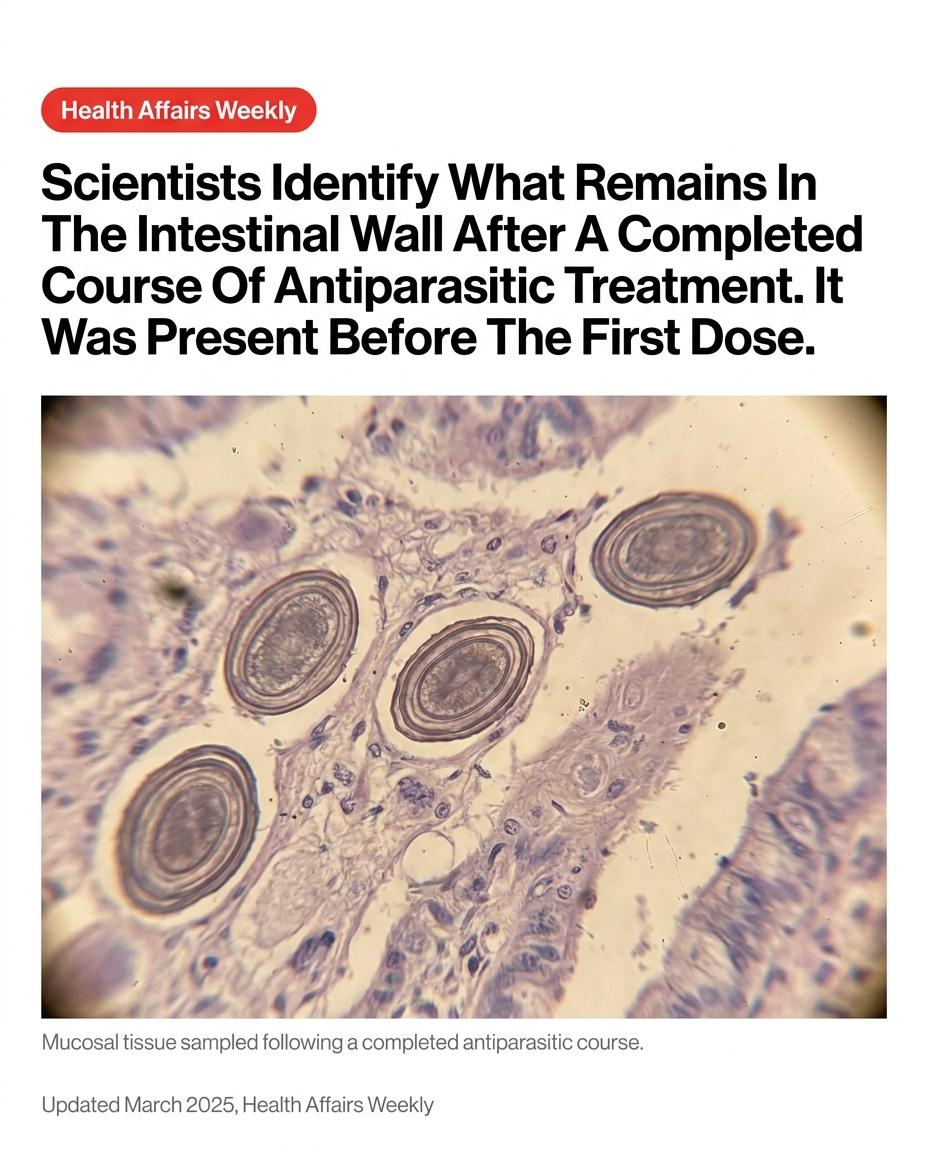
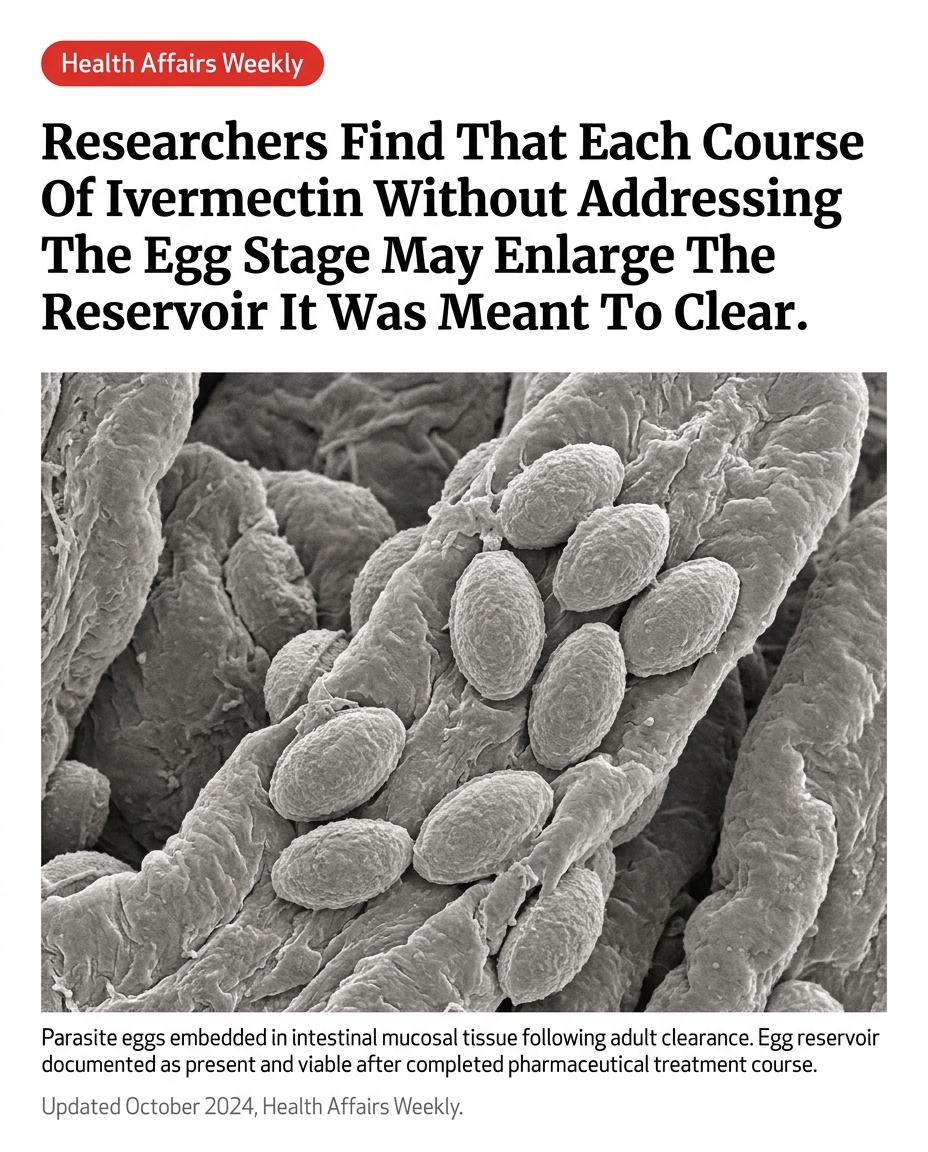
These are the eggs your last course of Ivermectin left behind. They were there before your first prescription. They were there when you finished it. And they have been running on their own biological schedule ever since, completely undisturbed by every course of treatment you have completed. When adult parasites sense they are dying in response to medication they release a surge of eggs as a survival mechanism built into these organisms over hundreds of thousands of years of evolution. The dying adults deposit eggs at a higher rate than under normal conditions. Those eggs anchor into your intestinal wall and join the reservoir that was already embedded there before treatment began. Search "helminth egg surge treatment response" to verify what that sentence describes clinically. The medication clears the adults. The adults deposit a final surge of eggs before they die. The egg reservoir in your intestinal wall after the course ends is potentially larger than it was when the course began. Two to four weeks later the eggs begin hatching. The larvae mature into adults by week three to five. The new adults begin reproducing and depositing a fresh generation of eggs. Six weeks after finishing the prescription a complete new generation has run its full developmental cycle and the reservoir has been added to again. Each round of adult-only treatment that does not address the eggs potentially adds to the burden that drives the next recurrence. The cycle does not stay flat between treatment courses. It builds. Intestinal parasites exist in three life stages simultaneously. Adult worms, the reproducing stage Ivermectin targets. Larvae, immature parasites developing after eggs hatch. And eggs, embedded directly into the mucosal lining of your intestinal wall, protected by a shell that no pharmaceutical antiparasitic has ever been able to penetrate. The outer shell of a parasite egg is constructed from multiple protective layers. An outer chitinous layer that resists mechanical damage. An inner lipid layer that resists water soluble chemicals. A protein matrix that blocks enzyme penetration. Ivermectin is a water soluble compound. The lipid layer stops it completely. This is not a flaw in the prescription. It is a biochemical reality that existed before your first course was written and will exist for every future course you fill if the egg stage is never addressed alongside the adults. The clinical system you have been working within does not have a standard framework for this. The egg burden accumulating in your intestinal wall with each completed course was never part of the conversation you were offered. But the biology does not pause because the conversation has not caught up with it. About two years ago a colleague of mine who researches herbal extraction methods told me about a compound found in raw clove called Eugenol. What separates Eugenol from every antiparasitic compound encountered in clinical research is its chemistry. It is small enough at the molecular level, and lipid soluble enough, to penetrate the outer lipid layer of the parasite egg shell. Not kill the adults beside it. Get inside the egg before the developmental program ever triggers hatching. The problem is that almost no one is delivering it correctly. Eugenol is destroyed by heat, even modest heat. Nearly every supplement manufacturer uses heat during extraction because it reduces cost and increases volume. For Eugenol this is complete destruction. By the time a clove containing product reaches the shelf the Eugenol is gone. What you are buying is inert plant material that cannot do what the label implies. The only method that preserves Eugenol is cold pressing. No heat, no solvents, just slow mechanical pressure that keeps the active compounds intact from extraction to bottle. Almost no manufacturer invests in it because the equipment is expensive and production volume is limited. My colleague had found one that does it correctly. The product is called ParaCycle. A liquid tincture taken under the tongue so the Eugenol absorbs directly into the bloodstream and reaches the intestinal wall through circulation rather than passing through the digestive tract. Every batch third party laboratory verified. No fillers. What changed when the egg stage was finally addressed alongside the adults was consistently different from what pharmaceutical treatment alone had produced. The six week return did not happen. The reservoir that had been building through previous courses finally had something that could reach it. Every completed course of Ivermectin that did not address the egg stage was not a failed attempt at the same solution. It was a solution that was only ever half complete. The reservoir that has been building with each round is still there. Still producing the next generation. And every day it goes unaddressed it continues adding to itself on a schedule that has nothing to do with anything you have done or not done. ParaCycle offers a 60 day guarantee, empty bottle included. If the results are not there, send it back. Small batches. Cold pressing does not scale the way heat extraction does, which means inventory runs out regularly. Check availability below. And this time, address what has been building since the first prescription ended.
Researchers Find That Each Course Of Ivermectin Without Addressing The Egg Stage Adds To The Reservoir It Was Meant To Clear.
Most parasite cleanses kill the adults. The eggs survive, hatch at day 21, and the cycle resets. ParaCycle addresses both stages cold-pressed Eugenol reaches the eggs, the integrated binder captures what the die-off releases. Two drops daily. One product. Complete protocol.
SHOP NOWLike this ad? Make it yours.
Crush rebuilds this exact creative around your product — your brand, your colors, your offer — in about a minute.