Veda Lockwood
 Facebook ad: “Every woman on Trazodone needs to read this”
Ran for 24 days, from August 10 to September 3, 2026, the last day Crush saw it.
Run by Veda Lockwood on Facebook. Crush is not the advertiser and does not verify its claims. See this ad in Meta's Ad Library(opens in a new tab)
Make your own version of this ad
Crush makes it, launches it in your own Meta ad account, scales the winners and pauses the losers.
About this ad
- Meta Ad Library ID
- 1548929532771039
- Platforms
- Facebook, Instagram, Audience Network, Messenger and Threads
- Relaunches
- 0
Ad text
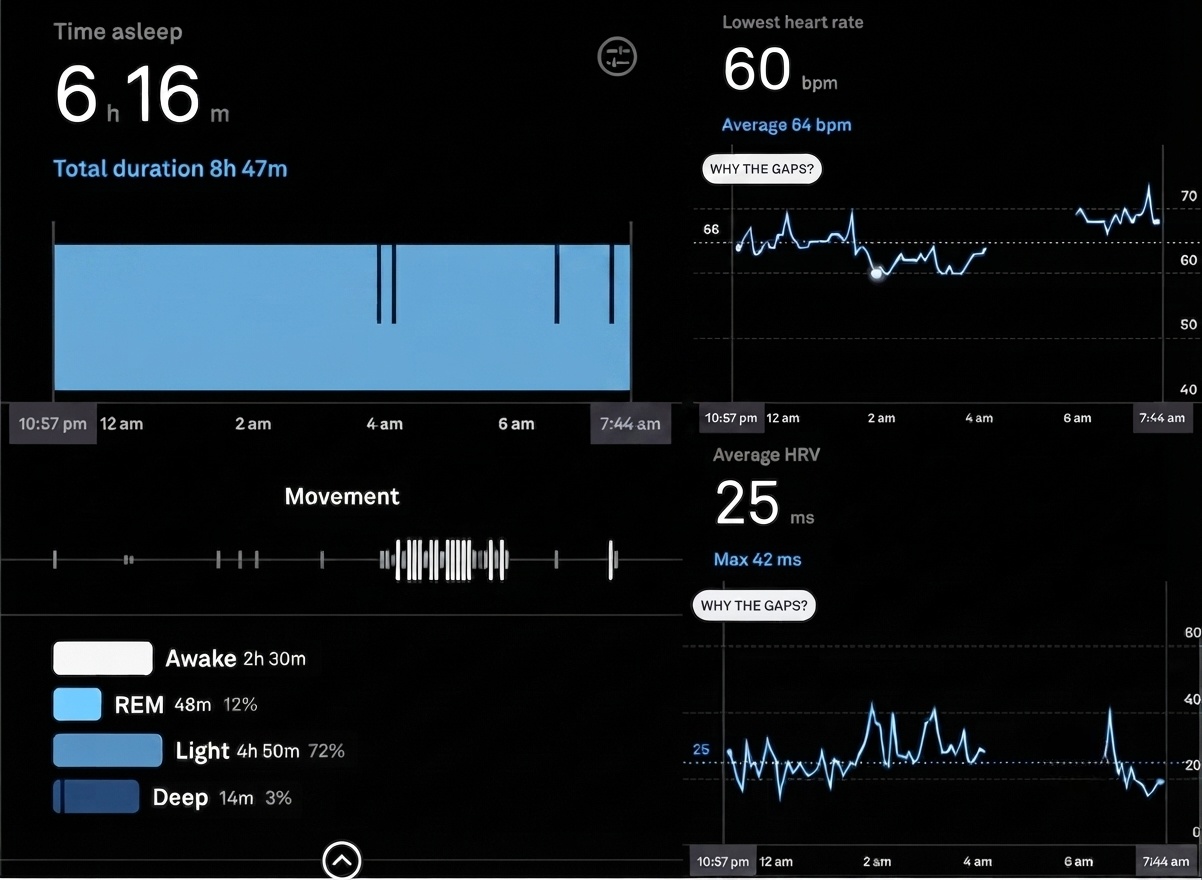
They sold us Trazodone as the 'safe' sleeping pill. No addiction, take it for life. But I watched women on it climb from 50 milligrams to 300, still wake at 3 AM, and start forgetting their grandkids' names by 60. The 'safe' pill is quietly erasing them. I know why — I'm a sleep specialist, and I've watched it for twelve years. First thing you learn in my field: caffeine is the enemy of sleep. Coffee after noon keeps you up. Naps wreck the night. Second thing you learn — and this one they teach you louder — is that Trazodone is the "safe" sleeping pill. Not a controlled substance. Not habit-forming the way Ambien is. Prescribe it for life at 50 or 100 milligrams. Nothing to worry about. I believed both of those things for a decade of practice. Then I went to Greece. And what I saw there did not match anything I'd been taught. Let me back up. I run a sleep clinic in the Northeast. Women come to me when their own doctors have run out of answers. Almost every one of them is on Trazodone. Some have been for ten years. Some for twenty. Their sleep studies look fine on paper. But they still wake at 3 AM. And lately they are losing words. By the time a patient reaches my office, I already know what her chart is going to say. Because it always says the same thing. Patient presents with trouble falling asleep. An hour, two hours, staring at the ceiling before her mind finally shuts off. Doctor's notes: stress. Recommend better sleep hygiene. Patient returns. Exhaustion that sleep doesn't fix. Foggy by mid-afternoon, losing her train of thought. Doctor's notes: run down. Prescribe Trazodone 50 milligrams off-label. "Safer than Ambien. Not addictive. Take it every night." Patient returns. She's sleeping through the night now, mostly. But her mornings are a wall of fog until 10 AM. Dry mouth so bad she keeps water on the nightstand. That 2 PM crash where the pill hasn't fully cleared her system. Sometimes she stands up and the room tilts. Doctor's notes: normal side effects. Give it time. Patient returns. Six months in. Now waking at 3 AM again, unable to fall back asleep. Reaching for words that aren't there. Doctor's notes: sleep deprivation. Sleep study normal. Increase Trazodone to 100 milligrams. Patient returns. A year later. Waking at 3 AM again. Doctor's notes: increase to 150. Then 200. Then, quietly, 300. Add a low-dose SSRI on top for anxiety. Patient returns. Brain fog through the whole day now, not just morning. Reading the same page three times. Short with everyone. She once tried to skip the Trazodone for one night — didn't sleep a wink, worse than before she ever started — and never dared try again. Doctor's notes: rebound insomnia is expected, stay on the medication. Patient returns. Telling the same story twice in one conversation. Nodding off on the couch by eight, then wide awake at three. Doctor's notes: consider a memory screen. Five visits. 12 years. The Trazodone dose has gone from 50 to 300. Coming off it feels impossible — one skipped night is worse than her worst pre-Trazodone night. She is quietly losing herself, and the pill she was told was "safe" has trapped her on it. Then someone finally sends her to me. I pull her chart. I look at her sleep study. And in less than thirty minutes I find what explains every single one of those visits. It is not her sleep hygiene. It is her body's own melatonin. The hormone Trazodone was never designed to restore — because Trazodone was never designed as a sleep drug at all. It's an antidepressant that happens to make you drowsy. It knocks you out through histamine and serotonin blockade. It doesn't touch the melatonin system that carries you into the deep phase. And once your body's melatonin production has collapsed — which it has, quietly, every year since your forties — no dose of Trazodone will ever restart it. So when I got invited to a sleep-medicine conference in Athens last spring, I added two extra weeks to the trip. Because something had been bothering me for a long time. Greece drinks coffee like water. Boiled Greek coffee in the morning. Another after lunch. Another in the afternoon sun. And on the island of Ikaria, the old women drink strong coffee all day long and then lie down for a nap every single afternoon. In my field those are the two cardinal sins. But the women of Ikaria live into their late nineties with their minds fully intact. They stay sharp, clear, themselves, decades past the age when American women start forgetting names. Not one of them is on Trazodone. Not one of them is on anything. Based on my training, those women should be the foggiest, most cognitively wrecked population in the developed world. All that coffee. All those naps. No prescription. They should have more of what is erasing my Trazodone patients. Not almost none. I needed to understand why. After the conference I took the ferry out to Ikaria. Arranged a homestay through a local research program. The woman I stayed with was named Eleni. Ninety-six years old. Lives alone. Tends her garden every morning. Walks down to the village. Cooks all her own meals. I'm sitting at her table on the third morning, watching her spoon coffee into a little brass pot, and my sleep-specialist brain is going crazy. I'm thinking about every patient I've ever put on Trazodone. Every woman I've watched climb from 50 to 300 milligrams over ten years. Every one who tried to skip a night and had the worst night of her life and never tried again. This woman has done the exact opposite for seventy-five years. By everything I know, she should not be able to sleep at all. And her mind should be long gone. But she is 96. Sharp. Clear eyes. She remembers the name of every plant in her garden and every neighbor who ever lived on her road. She has more clarity than most of my 55-year-old patients back home. I had to ask. "Eleni, doesn't the coffee keep you awake?" She stops. Looks at me. Starts laughing. "Everyone worries about something. American women worry about coffee. We worry about something different." She wipes her hands and tells me to sit down. "You came here because something is telling you. You take a small pill every night — the doctors told you it was safe, not like the strong ones. You sleep, yes, but you wake up dry in the mouth. Foggy until the sun is high. You wake at three and stare. And when you tried once to stop, one night without the pill, it was so bad you never tried again. Yes?" I nodded. Every word was mine. She leaned across the table and looked me in the eye. "You are not crazy. You are not getting old before your time. Your body is telling you the truth. The doctors have not been listening." She tapped the side of her head. "And I will tell you something the doctors will not. Your mind is going to go. Maybe in ten years. Maybe in five. The road is already in front of you. I have watched many women walk it." She set her hands flat on the table. "I had a sister. Sofia. Three years older than me. We grew up in this house. She moved to Athens at twenty-six. She kept the coffee. But the thing we take before bed, she threw away. She said it was peasant superstition. She let the modern doctors give her their modern pill instead. A small one at first. Then bigger. Then bigger. She said it was harmless because the box said it was not addictive. But when she tried to stop, she could not sleep at all. So she went back on. And she stayed on. Until the day she could not remember my name on the phone." She looked at me. "You are walking her road. Unless you turn now, you will end the same way." She stood, walked to a small cabinet, and took down a dark glass jar with a little wooden spoon resting beside it. Inside was a deep, almost black concentrate. Bitter. Earthy. "Your Trazodone does not give you sleep," she said. "It knocks you down. There is a difference." She sat back down. "Your body used to make its own sleep. Enough to put you down before eleven and hold you there till morning. But somewhere in your forties that begins to fail. The part of the brain that makes it makes a little less every year. By the time most women are in their fifties they are running on a fraction of what they had at thirty. That is not a weakness. That is just the years." She tapped the table once. "And this you should know. That sleep-maker does not only make you sleepy. It carries you down into the deepest part of the night, and that deep part is the only time your brain washes itself. Every day your brain makes waste, the way your body does. There is a tide up there that rinses it out overnight. Like washing the dishes before bed instead of letting them pile up in the sink. But that tide only runs in the deep sleep. Miss the deep sleep, and the waste just sits there. Night after night. Year after year. It hardens. It builds. And that pile is the thing they finally put a name to. They call it dementia." I stared at her. "Now hear me. Your Trazodone was not built for sleep. It was built for sadness. Someone noticed it made you drowsy and started giving it to women like you at bedtime. It sits on top of your head like a heavy blanket. You go under. On the chart it looks like you slept. But the sleep-maker your body used to make on its own — it never came back. The deep tide never came in. So every night on that pill your brain looks asleep while the waste keeps piling up underneath. The pill hides how bad it is getting. And the worse it gets, the more they raise the dose. Fifty. Then one hundred. Then two hundred. My sister was on three hundred at the end." She shook her head slowly. "And this is the trap they will not tell you about. Once your body has forgotten how to make its own sleep, and you have been taking the pill for years — you cannot just stop. The night you try, no sleep comes at all. It is worse than before you ever started. So you crawl back to the pill in the morning and swear you will never try again. That is not you being weak. That is what happens when the body forgets." She looked me dead in the eye. "And the little sleep pills from the chemist, the ones with melatonin in a bottle, they are not the answer either. Give it from outside and your body stops making its own. It makes even less. And still you never reach the depth where the brain cleans itself. The pile keeps growing." My eyes started to burn. "That is why the women who cannot sleep are the women who lose their minds. It is not bad luck. It is the same emptiness. It shows up in your sleep tonight. It shows up in your memory ten years from now." She tapped the jar. "This wakes your body's own sleep-maker again. Not from outside. Your own. The way it made it when you were young. It works alongside your Trazodone, not against it — no fight with your doctor, no dangerous night without the pill. You keep taking what you take. But you finally give your body back the one thing the pill never gave it. And once the deep sleep is coming again, the dose can go down slowly, with your doctor, when you are ready. My mother taught me. Her mother taught her. For more than a thousand years the women of this island have made the same medicine. Every woman in this village who lives past ninety with her mind takes it. Every one. In America, even the doctors do not know it. Here, every grandmother does." I sat there staring at her. I have a medical degree. Twelve years of practice. Hundreds of sleep studies. And this 96-year-old woman had just described, in plain language, what I had spent 12 years confirming in journals. Trazodone is an antidepressant. It sedates through histamine-1 and serotonin-2A blockade. It does not restart endogenous melatonin, and it is melatonin that carries you into the slow-wave phase where the brain's glymphatic system runs its rinse cycle — the one that flushes metabolic waste, including the amyloid that builds toward dementia. Endogenous melatonin collapses with age. Trazodone was never designed to fix that. It was never designed as a sleep drug at all. Eleni had skipped the journals and gone straight to the answer. I spent the rest of that week talking to every old woman in the village. Eleni's 92-year-old neighbor takes the medicine every night. Has since she was a girl. Her cousin, also in her nineties, sharp as a blade, same practice, same dark jar handed down from her grandmother. These women have done everything my field forbids, coffee all day, a nap every afternoon, no prescription of any kind, and they have clearer minds at 95 than my Trazodone patients have at 60. A month later back in my clinic I pulled Eleni's MRI and her late sister Sofia's up on my lightbox side by side. The difference was not subtle. It was two different diseases in two women born three years apart. And Sofia had been on Trazodone for eighteen years. Then I thought about my own patients. Five visits. Doses tripling. Dry mouth. Morning fog. The one night they tried to skip and never dared again. Losing words. Being told it was stress. Being told it was age. While the melatonin their body needed to reach the deep sleep quietly disappeared for thirty years, and no sleep doctor in America ever once thought to protect it. The contrast made me sick. When I got back to the States, everything Eleni taught me lined up with the research. The dark concentrate she used was tart cherry. Cold-pressed. One of the few foods on earth that feeds the body's own production of the sleep hormone. And the deep sleep that hormone unlocks. But what stopped me was that Ikaria was not alone. Persian physicians prescribed sour cherry for a restless mind a thousand years ago. Eastern European grandmothers pressed the cherries and took a spoonful of the dark juice before bed for generations. Anatolian villages crushed the fresh fruit and drank it down at night. Different cultures. Different continents. No contact with each other. Same cherry. Same hour of the night. That is not coincidence. In medicine, when independent traditions arrive at the same answer without ever meeting, we take it very seriously. Meanwhile Eleni drinks her coffee at 96 with a mind like glass. And women just like my Trazodone patients are losing their memories at 68. I started taking it every night when I got home. I stayed on my own Trazodone — I wasn't going to try one of those brutal skip-nights again, and I wasn't asking any patient to. This wasn't about ripping the pill away. It was about giving the body back the one thing the pill never gave it, so that eventually the pill could come down slowly, on my terms. Week one. Slept through the night twice. The other nights I woke once and fell back asleep within the hour. For the first time in years I wasn't watching the clock at 3 AM. Week two. I pulled up my sleep tracker. 5.9 hours average. Up from 4.4. The morning dry mouth was still there — the Trazodone was still doing that part — but the fog was already lifting sooner. Week three. This is the week that matters. Every supplement I have ever tried quits on me at week three. The bad nights come roaring back, often worse. Nothing came back. The sleep held. And somewhere around day 19, a word I'd been struggling to recall on the phone with my sister just arrived. On its own. I hadn't realized how long I'd been losing them until they started coming back. Week four. Sleep average 6.5. Head clear. Not coffee-clear. Actually clear. The morning fog I'd spent two years blaming on the Trazodone had lifted. My resting heart rate came back down into the sixties. A colleague stopped me in the hallway and said, "Did you change something? You look sharper." Month two. Sleeping seven hours most nights. Under my doctor's supervision I brought my Trazodone from 100 milligrams down to 50 — slowly, half a pill at a time over three weeks. The sleep held. For the first time in a decade, coming down did not mean crashing. Blood pressure down twenty points. Mind sharp through a full clinic day. I was 46 and thinking more clearly than I had at forty. Not because I found some new breakthrough. Because I finally listened to a 96-year-old woman who understood the sleeping brain better than my entire field has been willing to admit. Before you try sourcing it yourself, don't bother. I tried. Six weeks of tart cherry juice from the grocery store before my trip. Bulk cherry capsules from the pharmacy. Nothing. It turns out what's on the grocery shelf is worthless. The juice is pasteurized at high heat so it survives shipping and a six-month shelf life, and the heat destroys the very compounds that matter. The capsules are heat-dried powder ground with filler. Most don't even list the active content, because if they did, you'd see how little is there. Your body never gets what it needs to restart its own sleep. Your nights stay broken. And the pile keeps building. The brand I use now is a small company called Elivora. Cold-extracted tart cherry concentrate, not heat-dried powder. 3,600 milligrams of anthocyanin-standardized extract per serving, standardized to 25%. A real, therapeutic dose, not the token amount in a drugstore capsule. Third-party tested in the USA. No fillers. Two capsules an hour before bed. Alongside your Trazodone. Never instead of it. Not until your doctor tells you the dose can safely come down. It is the modern version of what Eleni's family has made by hand for generations. Try Elivora for 30 days. Track your nights, your phone already does it. Notice how clear your head feels by week three. Notice whether that 3 AM waking is fading. Tell your doctor what you're doing and ask about your sleep and your memory at your next visit. If your nights haven't changed, if the fog hasn't lifted, if you're still waking at 3 AM, full refund. No questions asked. If your Trazodone dose has crept from 50 to 100 to 200 and the wakings came back anyway. If your mornings are a wall of fog until 10 AM. If your mouth is bone-dry every day. If you tried once to skip a night and it was so bad you never tried again. If you've started losing words mid-sentence. If you walk into a room and forget why you went in. If you've started to wonder, quietly, whether you're becoming your mother. Hear me. You are not crazy. You are not getting old before your time. The 3 AM wakings are real. The fog is real. The words slipping out from under you are real. Your Trazodone has been delivering something that looks like sleep, and the deep sleep where your brain cleans itself has not been happening, and your mind has been paying for it every single night for years. A 96-year-old woman in Ikaria showed me what actually works. Restart your body's own melatonin so it can reach the deep phase again. One spoonful a night. Now two capsules. Alongside the pill, not against it. Then, when the deep sleep is coming again — and only then — your doctor can help you bring the dose down. You are at a crossroads. One path. Keep taking the Trazodone as-prescribed. Keep waking at 3 AM and calling it managed. Add the SSRI when your doctor runs out of ideas. Go from 100 to 150 to 200 when this one stops working. Never dare skip a night. Add the memory drug when you start forgetting names. Spend the next twenty years managing a sleep log while the deep sleep your brain needs never comes. End up in a chair by a window, not knowing your own name. Another path. Try what I tried. Give your body back the deep sleep it has been missing. Let your brain finally run the rinse it was built to run every night. And later — when your own sleep-maker is finally awake again — bring the dose down with your doctor, slowly, on your terms. Not the pill's. I chose the second path. It gave me my nights back. And it may have saved my mind. Every night you sleep without this is another night the tide never comes in. Another night the waste keeps piling up. Another night closer to the chair by the window. Eleni is 96, drinking her coffee, napping every afternoon, sharp as the day she was born. She is never going to forget her own name. Because she figured out what every grandmother in her village has known for a thousand years. You can start tonight. If you click and it's out of stock, hold on and try again in a few days. It's worth it. — Veda Lockwood https://elivorahealth.com/pages/7-reasons-tart-cherry-insomnia P.S. — I slept through the night twice in my first week. My average went from 4.4 hours to 6.5 by week four. The fog lifted by week three. I stopped losing words mid-sentence for the first time in years. Under my doctor's supervision I brought my own Trazodone dose from 100mg down to 50 — slowly, half a pill at a time over three weeks — and the sleep held anyway. Blood pressure down twenty points. Your timeline will be different. But you won't know until you try. P.P.S. — My patient Maggie started Elivora four weeks after I did. She's 58, on 200mg of Trazodone for sixteen years, was about to add an SSRI and get her first memory screen. She had tried once, years ago, to come off and had one of the worst nights of her life — so she never dared again. Last visit she was sleeping almost seven hours, her doctor had approved a slow taper from 200 back to 100 over six weeks, and she told me the crossword had started coming easy again. She refused the memory screen. She said, "I'm not going to disappear the way my aunt did." Neither am I. Neither should you. https://elivorahealth.com/pages/7-reasons-tart-cherry-insomnia
Where the ad sends people
elivorahealth.com
Every woman on Trazodone needs to read this 👆
Sleeping pills log the hours. They skip the deep phase.That deep phase is the only time your brain rinses out the waste that builds up during the day. Skip it long enough and things start to slip.
Learn more: elivorahealth.com(opens in a new tab)