Dr. James Anderson - Oncologist
Dr. James Anderson - Oncologist Facebook ad: “Watched My Wife Choke Down Curcumin Capsules”
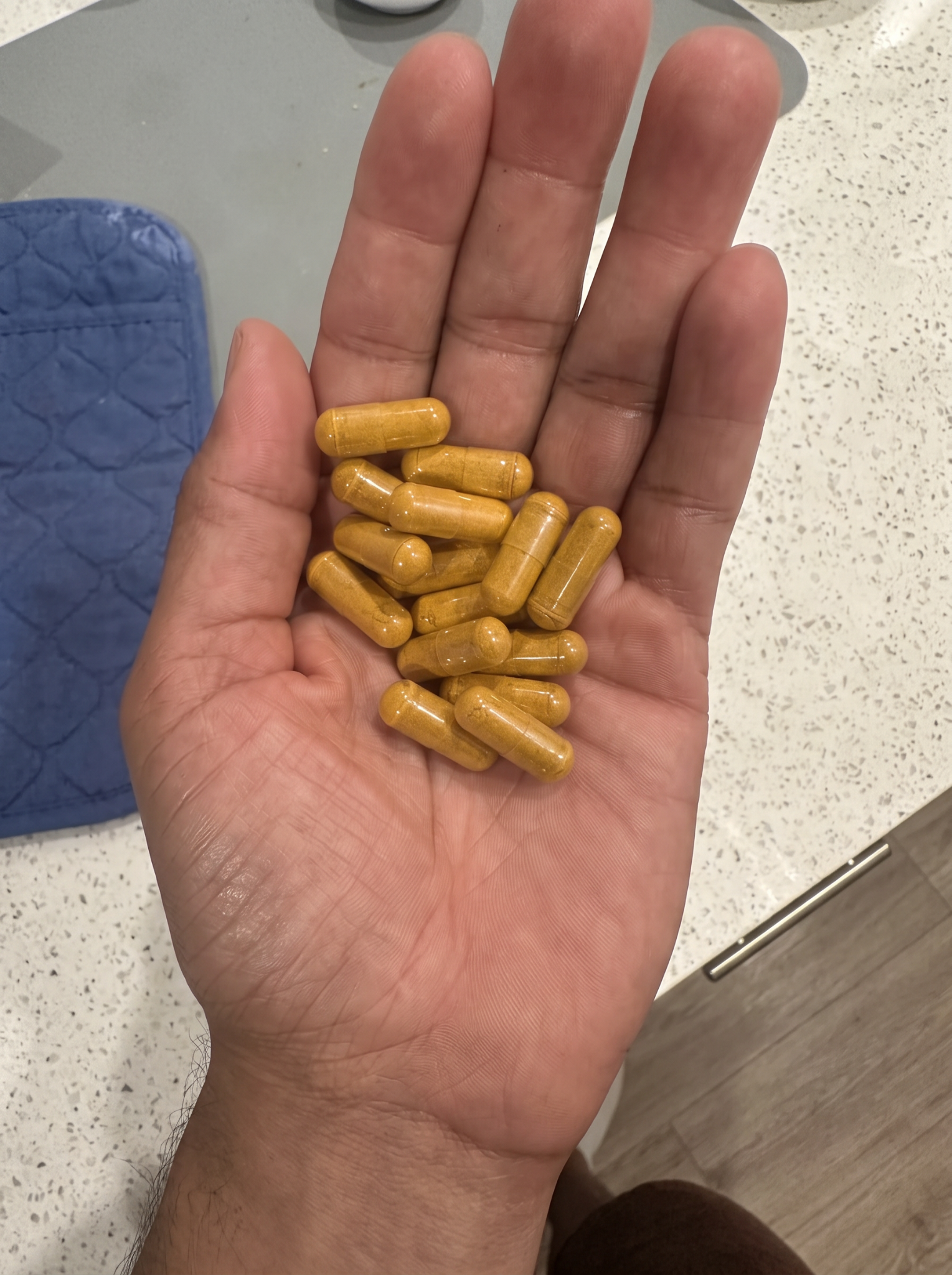
Ran for 47 days, from July 23 to September 8, 2026, the last day Crush saw it.
Run by Dr. James Anderson - Oncologist on Facebook. Crush is not the advertiser and does not verify its claims. See this ad in Meta's Ad Library(opens in a new tab)
Want an ad like this for your product?
Crush makes new ad images for your product from this ad: your logo, your product photo, your offer.
Trials from $19.95 USD, then $79.95 USD a month. Cancel anytime.
About this ad
- Meta Ad Library ID
- 1550166140239470
- Platforms
- Relaunches
- 1
- Niche
- Food & Beverage
Ad text
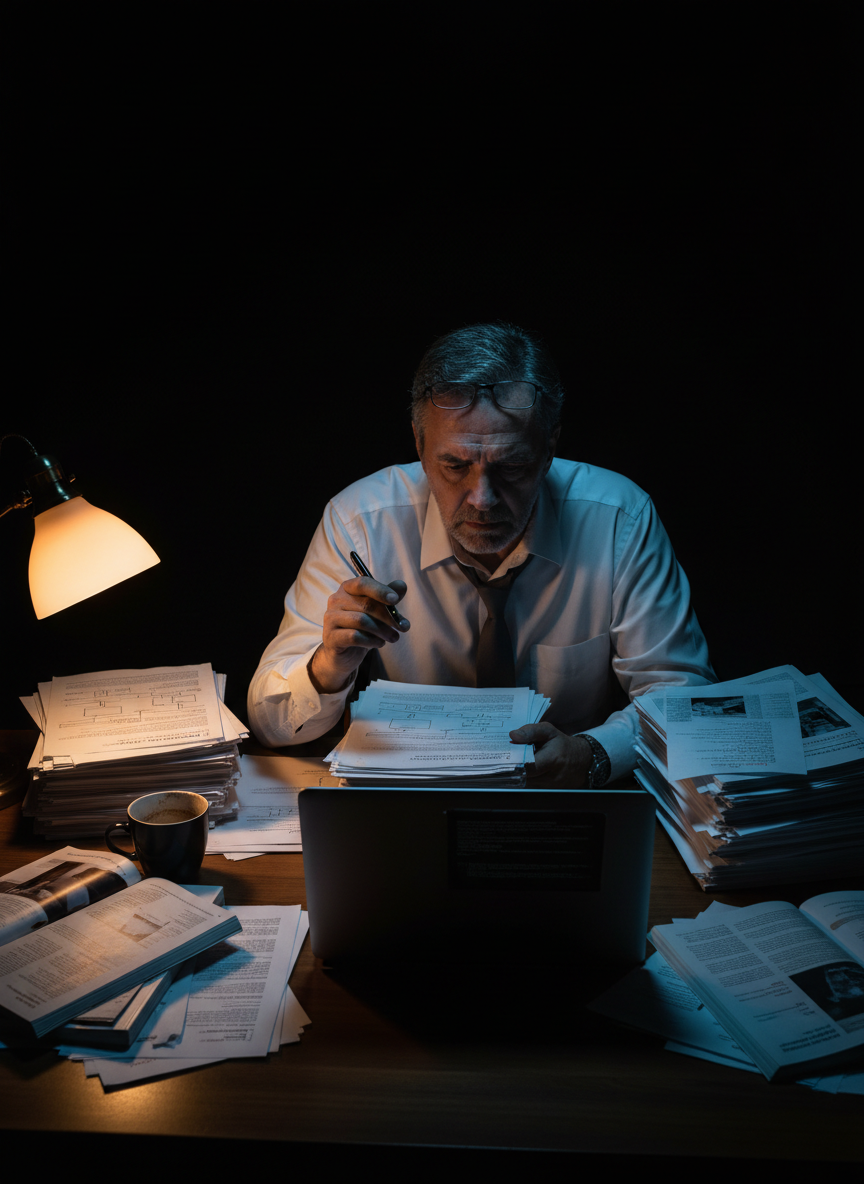
For 15 years I told my cancer patients to take curcumin. Then the woman I loved—my patient, on her fourth remission—refused to take another pill. Her mouth was full of chemo sores. The black pepper burn was destroying what was left of her stomach. And her blood work wasn't budging. That's when I realized I'd been lying to hundreds of patients without knowing it. My name is Dr. James Anderson. I spent 15 years as a medical oncologist at a large cancer institute. Retired 18 months ago. I have two beliefs that used to fight each other. First—nobody should fight cancer without chemo or radiation. Those are the treatments that actually kill tumors. I'll say that again for anyone who thinks I'm anti-medicine. Chemo works. Radiation works. Second—Big Pharma is a money-hungry animal that will let people die if it protects their profits. Both of those things are true at the same time. Here's the problem with chemo. The tumor shrinks. But the treatment also drops your white blood cell count from 7,000 to 1,500. Your platelets crash. Your immune system stops functioning. Your body becomes a sitting duck for infections that finish the job the cancer started. That's why chemo patients don't usually die from the cancer. They die from what the treatment did to their blood. For years I looked for something that could hold up the immune system during treatment. Something natural. Something that would keep the white blood cell count from tanking while the chemo did its job. I thought I found it in curcumin. Every oncology conference for the last decade has mentioned turmeric. The NF-κB pathway. The molecular off-switch for inflammation. The antioxidant activity. I read every paper. Then I started recommending it to my patients. I told them to look for BioSchwartz. Nature's Nutrition. Anything with 1,500mg turmeric extract, 95% curcuminoids, and BioPerine. That was the gold standard. The black pepper extract was supposed to give 2,000% better absorption than plain turmeric. That's what I believed. That's what I told them. I was wrong. Not about turmeric itself. Turmeric does what the studies say it does. It calms inflammation. It's real medicine. The problem was what I was asking my patients to swallow. Let me tell you what actually happened when I put 40 chemo patients on 1,500mg BioPerine curcumin capsules. First—the pills were the size of horse tranquilizers. Bright orange torpedoes. My patients were already dealing with mucositis. Open sores running from their mouths down through their stomachs. Their salivary glands were destroyed. Their swallowing reflex was compromised. I was asking them to swallow three of those pills a day. By week two, most of them were opening the capsules and mixing the powder into applesauce or yogurt just to get it down. Some couldn't do it at all. They'd choke. Gag. Throw up their morning meds along with breakfast. But the physical torture wasn't even the worst part. The worst part was the BioPerine. Nobody warned my patients that black pepper extract works by chemically irritating the gut lining. That's the mechanism. That's how it forces the curcumin into the bloodstream. It burns your intestines until your body absorbs the compound in self-defense. For a healthy person, that irritation is uncomfortable but manageable. For a chemo patient with an already-inflamed digestive tract full of open sores— It's like pouring battery acid on a burn. I had patients calling my office at midnight crying from the heartburn. Patients begging me to let them stop. Patients who would rather deal with cancer symptoms than take one more dose of that "healing" supplement. And after three months on the protocol, I ran their labs. There was some movement in the inflammation markers. Modest. Nothing close to what the packaging promised. Nothing worth the pain I was putting them through. But the numbers that actually mattered during chemo—their white blood cell counts and their platelet levels—hadn't moved at all. The exact numbers that decide whether a chemo patient survives their next infection. They had endured all of that pain for a supplement that was helping their inflammation a little while their immune system continued to collapse. I'd been sending my patients through hell for a compound their liver was flushing out of their bloodstream in under two hours. That's when Susan came into my life. Susan White. 49 years old. Fourth remission of stage 3 breast cancer. The cancer had come back for the fourth time. Her body was tired. Her family was tired. She was starting chemo again knowing what it would do to her. I'd been her oncologist through her second and third recurrences. This time was different. This time we had a connection. This time I couldn't be objective anymore. I was in love with her. And I knew she was in love with me. Neither of us said it. Neither of us could. I put her on the standard BioSchwartz curcumin protocol before chemo started. Same dose. Same brand. Same absorption promise. Three weeks in, I watched her push the bottle across the kitchen table at her follow-up visit. She was crying. She said she couldn't take one more pill. Not one more. Her mouth had sores from the corner of her lip down to her chest. She hadn't eaten solid food in five days. The smell of anything cooking made her retch uncontrollably. Water tasted disgusting. Everything tasted like metal. And every time she managed to force down that curcumin capsule—the "healing" supplement I'd promised her— She spent the next four hours doubled over her sink in agony. She looked at me across the table and said the sentence that broke me. "James. If this is what it takes to survive, I don't want to survive." I remember sitting in my car in the hospital parking lot that night. Not moving. Just staring at the steering wheel. Realizing that everything I'd been recommending to hundreds of patients for years had been putting them through what she was going through. I had blood on my hands. And I had no idea what to do. The next morning, I called an old colleague at the CDC. A guy I trained with in residency who had left oncology for public health research. I asked him if he had ever seen anything—anything—that supported white blood cell counts during chemo without needing to be swallowed as a horse pill. He was quiet for a long time. Then he said, "Have you ever read the NIH report from 2020 out of the Caribbean?" I hadn't. He sent me the file that night. The study was buried on page 47 of a 200-page document nobody had read. Population of 347 people in a Caribbean village. During the worst of COVID they had zero deaths. Not just zero COVID deaths. Zero cancer deaths going back a decade. Zero heart disease deaths. The NIH sent a team. They tested the villagers' blood. What they found should have been on the front page of every newspaper in the world. Acetogenin levels ten times higher than the average American. White blood cell counts that would embarrass a twenty-year-old athlete. The villagers had been drinking fermented soursop leaf water for generations. Passed down from their grandparents. Not soursop fruit. The leaves. And not fermented for 30 days like every commercial supplement in America. Fermented for a full year. Then the FDA cut the funding. The paper never made it to publication. The findings never reached a single American oncologist that I knew of. But my colleague had one more thing to tell me. He said, "James. There's a small company that figured out how to do the same fermentation process. And they figured out something else. They figured out how to bind the acetogenins into a pectin matrix so patients don't have to swallow anything." That was the first time in 15 years someone gave me hope that I could actually help Susan. The company was called SimplySours. I spent two weeks interrogating them like I was reviewing a clinical trial. I wanted to know everything. Where do the leaves come from? Heritage trees on volcanic Caribbean soil. Some of the trees are over a hundred years old. Selected based on alkaloid content testing. How long is the fermentation? A full 365 days. Not 30. Not 90. A full year. And they only produce one batch per year. In 2026 you're buying the 2025 fermented batch. What's the acetogenin concentration? 2%. Commercial soursop supplements from Amazon range from 0.3% to 0.6%. Four times more powerful than anything else on the market. But here's what made me pay attention. They weren't selling capsules. They weren't selling tinctures. They weren't selling a bitter liquid drop. They were selling gummies. Gummies made with a pectin-purified extraction process that pulls the acetogenins out of the fermented leaves without any chemical solvents, then binds them into a slow-release matrix. Meaning the compound doesn't hit the stomach as a burst. It releases over hours. Steady. Sustained. The exact opposite of what happens with curcumin, which gets flushed out of the bloodstream in under 120 minutes. And because the acetogenins are pectin-bound, they bypass the nausea receptors in the upper stomach entirely. No pill to gag on. No black pepper extract to burn open sores. No horse capsule to force down a chemo-ravaged throat. Chemo patients could actually take them. Even on their worst days. I sent a bottle to the same third-party lab our institute used. ISO 17025 certified. I told them to test everything. Concentration. Heavy metals. Bacteria. Pesticides. Every number came back clean. Every claim on the bottle matched what the lab found. I couldn't stop shaking my head. In 15 years I had never seen a natural supplement pass every test I could throw at it. Before I gave anything to Susan, I bought seven other bottles of soursop from Amazon and sent them to the same lab. TropicaPure. Claimed medical-grade Caribbean origin. Lab found 0.4% acetogenin concentration. No fermentation records. Basically inert. VitalSour. Claimed pharmaceutical-grade. Fruit-based, not leaf. 0.5% concentration. Useless. HerbaSour Naturals. Claimed organic Caribbean. Lab found pesticide contamination and traces of heavy metals. I threw the bottle in the trash. PureLeaf Soursop. Claimed 6-month fermentation on the label. Lab confirmed 40 days. Straight lie. Annona Gold. Claimed 2% acetogenins right on the front label. Actual lab result: 0.3%. Deliberately mislabeled to look like SimplySours. TropicWell. No fermentation stated. Bacterial contamination in the batch I sent. Would have made a chemo patient dangerously sick. SourLeaf Naturals. Caribbean-origin on the label. Fruit-based. Below the measurable threshold for active compounds. Every single one failed. Only SimplySours passed. I sat down with Susan the following Monday. She was starting a new chemo cycle in three days. I told her I wanted her to keep taking curcumin—but only in food. Real turmeric root cooked into meals. No more pills. No more BioPerine. No more pain. Then I handed her a bottle of SimplySours gummies. I told her to take two a day. Morning and evening. She could chew them like candy. She could take them on an empty stomach or with food. There was no swallowing. No burning. Nothing to fight. She looked at me like I'd handed her a bag of jelly beans. She was skeptical. I don't blame her. She'd been through the wringer with pills for months. Then she tried one. She actually laughed. She said it tasted like a candy. Sweet. Tart. Nothing like the bitter oils and pepper-burning capsules I'd been putting her through. I still remember the look on her face. She asked me if she could take another one right then. That was the moment everything changed. By day five she was still on chemo, but for the first time in the entire remission she was looking forward to something in her medicine routine. She was pouring the gummies into a little glass jar on her kitchen counter. Every morning she'd have one with tea. Every evening she'd have another with her nightly reading. By week two, her mouth sores were healing. Not because of the gummies directly. Because she wasn't punishing her digestive tract with piperine every four hours anymore. By week three, she started keeping food down again. Small amounts. Broth. Applesauce. Then rice. Week four, I ran a full blood panel. Her WBC count had climbed from 1,830 to 3,940. Her platelets had stabilized for the first time since the cycle started. Her inflammation markers were dropping. Actually dropping. Not the tiny movement I got from curcumin. Real numbers on a real chart moving in the right direction. I ran the panel three times to make sure the lab hadn't made a mistake. Three times the same result. Her oncologist—the one covering her case at the treatment center—pulled me aside after seeing her month-two labs. He asked me what she was on. I told him. He said, "Whatever you're doing, keep doing it. I've never seen recovery like this during active chemo." He couldn't officially recommend it. He couldn't put it in her file. But he told me not to change a thing. By month six, she'd completed her chemo cycle. The scans came back clean. Not just clean. Cleaner than any of her three previous remissions. That was one and a half years ago. Last week we ran her latest scan. Still clean. Her WBC is holding steady at 6,800. Her energy is back. Her hair is back. She's my wife now. We got married in a small ceremony last spring. Both of us have families that never thought either of us would find someone. Neither of us thought we'd have anything left after cancer. I retired from the hospital eight months ago. The board asked me to stop giving informal advice about natural alternatives to patients. They were worried about liability. I don't blame them. Their job is to protect the institution. But my job now is different. I'm telling this story on the internet because there are hundreds of thousands of people right now swallowing horse-pill curcumin capsules during chemo. Getting burned by the piperine. Watching their labs not move. Losing hope. And they don't know there's something better sitting right in front of them. I asked Susan the other week what she thought helped her most through her fourth recovery. She thought about it for a while. She said two things. She said the first one was the love I gave her when she wanted to quit. Then she smiled and said the second one was the gummies. Because for the first time in years of fighting cancer, taking her medicine felt like a treat instead of a punishment. She looked forward to them. She trusted them. She could feel the difference in her body every single week. That's what I want you to have. If you're taking curcumin capsules right now during treatment and you're wondering why you're in so much pain for so little result— Stop punishing yourself. The turmeric in food is fine. Keep eating your curry. Keep drinking your golden milk. That's real medicine at food dose. The pills with black pepper extract are a bioavailability trap that leaves 95% of the compound in your urine two hours later while it eats through your gut lining on the way out. What you actually need is something that supports your white blood cell count directly. Not indirectly through inflammation pathways alone. Directly at the level of your immune system. That's what fermented soursop leaf extract does. That's what the NIH found in the Caribbean village. That's what SimplySours has bottled into a gummy that doesn't require you to swallow another horse pill on a chemo-ravaged stomach. Their 2025 fermented batch is running low. They only produce one batch per year. Every year they sell out around August or September. The 2026 batch won't be ready until December. EDIT: My inbox is full of people asking me to send them the Amazon link. SimplySours doesn't sell on Amazon. Anything you find on Amazon labeled "Simply Sours" is not the same product. Fake bottles have been popping up for the last year and they contain either regular Amazon soursop with 0.4% concentration or sugar with no active compound at all. Please only buy directly from the company website. Here's the link: https://simplysours.shop/products/100-pure-organic-soursop-gummies P.S. Every day you keep swallowing BioPerine curcumin capsules is another day your gut lining takes damage that will take months to heal after chemo ends. And another day your white blood cell count doesn't get the direct support it needs. Susan's WBC went from 1,830 to 3,940 in four weeks on SimplySours after three months of curcumin had done nothing for her platelets or her immune system. Please don't keep suffering for a supplement that isn't reaching the numbers that actually matter: https://simplysours.shop/products/100-pure-organic-soursop-gummies P.P.S. Two years ago Susan was on her fourth remission with a 1,830 WBC and mouth sores from her lip to her chest, telling me across her kitchen table that she didn't want to survive if this was what it took. Last Sunday she made pancakes for me in our kitchen, laughing about the honeymoon photos we still haven't printed. She was cancer-free 18 months ago. She's still cancer-free today. Her gummy jar sits on the counter where the curcumin bottle used to be. Start here: https://simplysours.shop/products/100-pure-organic-soursop-gummies
Where the ad sends people
simplysours.shop
Watched My Wife Choke Down Curcumin Capsules 👇
1,500mg BioPerine capsules. Mouth sores from lip to chest. She pushed the bottle away crying. Then her oncologist stopped hiding what he'd been testing.
Learn more: simplysours.shop(opens in a new tab)