Age Spot Reset
Age Spot Reset Facebook ad: “If You Have Age Spots, You'll Want To Read This”
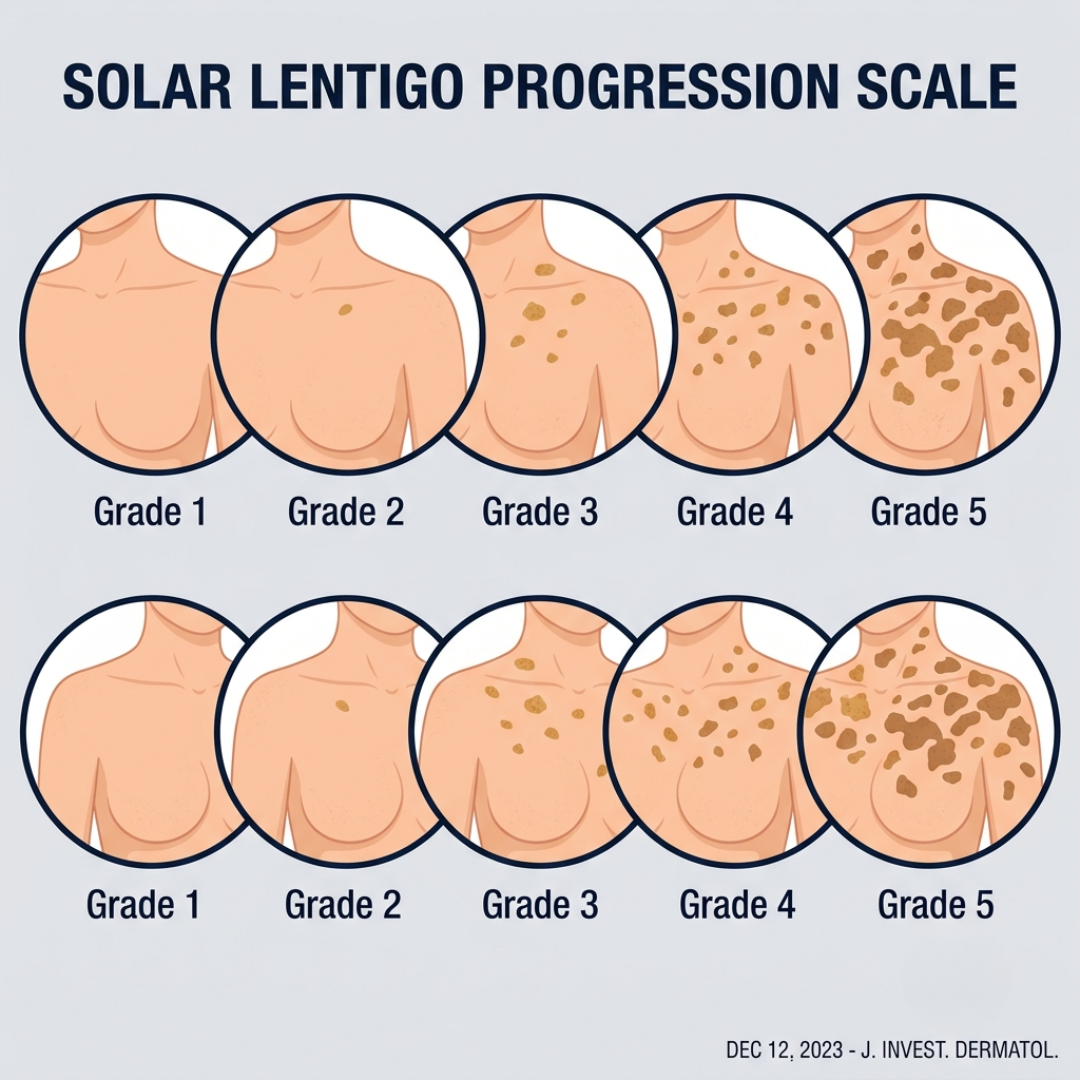
Ran for 2 days, from July 17 to July 19, 2026, the last day Crush saw it.
Run by Age Spot Reset on Facebook. Crush is not the advertiser and does not verify its claims. See this ad in Meta's Ad Library(opens in a new tab)
Want an ad like this for your product?
Crush makes new ad images for your product from this ad: your logo, your product photo, your offer.
Trials from $19.95 USD, then $79.95 USD a month. Cancel anytime.
About this ad
- Meta Ad Library ID
- 1561697485570349
- Platforms
- Facebook, Instagram, Audience Network, Messenger and Threads
- Relaunches
- 0
Ad text
My dermatologist said if I skipped another laser session, she'd document it in my chart as "patient non-compliant with recommended treatment." I had eleven minutes with her. She'd never met me before. Dr. Peterson's retirement letter came on a Tuesday. Standard form letter. "After 30 years of practice, I'm stepping away effective October 1st. Your care will be transferred to Dr. Sarah Mitchell." I sat at the kitchen table staring at it. Fifteen years. I'd been seeing Dr. Peterson for fifteen years. She knew my history. My mother's hands at 62 — covered in spots so dark she wore gloves to church. My fear of watching the same thing happen to me. She'd always worked with me. "Let's keep you on the treatment schedule, Margaret. Every four months. We'll stay ahead of it. You're doing the right things." Now she was gone. My first appointment with Dr. Mitchell was October 17th. Routine consultation. Transfer of records. Meet the new dermatologist. I sat in the exam room. Same room I'd been in for over a decade. Same posters about sun protection and skin health. Different doctor. Dr. Mitchell walked in. Young. Maybe 38. Laptop in hand. "Mrs. Holloway." Firm handshake. All business. "I've been going through your file." She sat down. Pulled up my records. Scrolled. Her expression changed. "Your spot progression history." She turned the screen toward me. "2021: 3 sites, light tan. 2022: 7 sites, medium brown. 2023: 14 sites, dark brown. 2024: spreading to forearms and décolleté. Today: significant darkening across the board." She looked at me. "Five years of progressively worsening sun damage. Significant pigmentation spread. Fourteen laser sessions in that time. And the spots got darker every single year." "Dr. Peterson and I had a plan. IPL laser every four months. Prescription brightening cream between visits. She was monitoring—" "Monitoring what? The spread?" Her voice was sharp. "Mrs. Holloway, you've had fourteen laser treatments and your pigmentation has progressed every year. Your previous dermatologist kept scheduling the same procedure that wasn't working. I need to get you on an aggressive protocol immediately." My stomach dropped. "What does that mean?" "Full-face IPL today. Then every three months instead of four. Prescription-strength hydroquinone twice daily between visits. And I want to add a series of chemical peels — professional-grade glycolic acid applied directly to the affected areas after each laser session. $150 per session." She was already typing. "If the pigmentation doesn't stabilize after two rounds, we discuss cryotherapy and microneedling options." "I've been doing laser treatments for five years and they haven't—" "More frequent treatments. Stronger prescription cream. Chemical peels. This isn't the same plan Dr. Peterson had you on. This is the protocol that should have been started years ago." "But the treatments never held. Every four months they'd do the laser and within weeks the spots would—" "That's exactly why we need to do them more often. Every three months. With the chemical peels. If you skip treatments or refuse the new protocol, I'm required to document it as non-compliance." The printer hummed. She handed me the treatment plan. Full-face IPL: $800. Chemical peel series, 6 sites: $900. Prescription hydroquinone: $65/month. Follow-up treatment in 12 weeks: $800. Repeat indefinitely. $1,700 today. Then $1,600 every three months. Forever. She stood. Left the room. The whole appointment took eleven minutes. I sat there holding the treatment plan. Hands shaking. Non-compliance. In the parking lot, I called my husband. "How was the new dermatologist?" "She says Dr. Peterson wasn't treating aggressively enough. Wants me on a new protocol. Laser every three months with chemical peels after each session. $1,700 today. Then $1,600 every three months. Indefinitely." Silence. "Every three months?" "She said if I refuse, it goes in my chart as non-compliant." "But... you've been getting laser treatments for five years. They cost us—" "$5,600. I know. And the spots spread every year." "So her solution is... more laser?" I didn't have an answer. That night I couldn't sleep. Lay in bed staring at the ceiling. My husband's breathing steady next to me. Dr. Peterson had done exactly what Dr. Mitchell wanted to do. Just less frequently. Laser treatments. Prescription creams. Monitoring. The standard protocol. Fourteen treatments. $5,600. My spots darkened and spread every single year. And Dr. Mitchell's plan was the same thing — just more of it. More often. More expensive. With chemical peels added. Was more of the same going to fix what the same hadn't fixed in five years? Or was I about to spend another $6,400 a year on a protocol that was never going to work? At 3 AM I went downstairs. Sat at the kitchen table with my laptop. why don't laser treatments fix age spots permanently do IPL treatments actually work for chronic sun damage why do age spots come back after laser treatment Every article from the dermatology industry said the same thing. Laser treatments are the gold standard. Essential for pigmentation management. Must be repeated regularly. But then I found the forums. The patient forums. Women like me. "I've been getting IPL every 4 months for 6 years. My spots are darker now than when I started. My dermatologist just says 'keep coming in.' At what point do we admit this isn't working?" "$800 every treatment. Four times a year. That's $3,200 a year. For seven years. $22,400. And my spots still come back every summer. But my dermatologist acts like I'd turn into a leather handbag without them." "My skin was so raw after the last laser session I couldn't go outside for a week. Redness. Peeling. Worse than before the treatment. Two months later? Right back where I started. Scheduled for another one." "Spent $9,000 on laser treatments over five years. Dermatologist finally said 'we need to discuss cryotherapy and microneedling.' If the laser was going to work, wouldn't it have worked by now?" My heart hammered. These women sounded exactly like me. Maybe Dr. Mitchell is right that the treatments weren't enough. But what if more treatments wasn't the answer either? Then I searched: why do age spots keep coming back after laser And my mother's face flashed in my mind. She'd been on the laser treadmill for eight years before they gave up and moved to aggressive cryotherapy. Every four months. Sometimes every three. Same chair. Same burning smell. Same "your spots lightened slightly" followed by "your spots are darker again." Eight years. Over $14,000. And her pigmentation never stabilized. The treatments became her whole life. She'd schedule vacations around them. Cancel plans if a laser session fell on the same week. Organized her entire calendar around sitting in a chair while someone burned her skin layer by layer. And the hydroquinone between treatments. The skin sensitivity. The way she couldn't go outside without SPF 100. The dry, papery texture that never fully went away. The burning when she'd forget and touch her face with warm water. Then the cryotherapy. Three rounds. $18,000. All failed. By 68 her hands looked decades older than the rest of her — raised, dark patches that no amount of treatment had ever touched. I remember her sitting at the kitchen table one evening. Staring at her hands under the light. "Eighteen years," she whispered. "Eight years of laser. Three rounds of cryotherapy. And they only got worse." She stopped wearing short sleeves. Stopped going to the beach. Stopped the birthday photos she used to love. Not because she was vain. Because the shame had swallowed her whole. I closed the laptop. Rubbed my face with both hands. $5,600 on laser treatments over five years. Spots darker every year. And Dr. Mitchell's answer was more treatments. More often. More expensive. With chemical peels that cost $150 per session. The same approach that failed my mother for eight years before they moved to cryotherapy that also failed. What do I do? The treatment plan sat on the counter. Five feet away. Mocking me. $1,700 today. $1,600 every three months. Forever. I didn't schedule it. One week passed. Then two. Dr. Mitchell's office called. "Mrs. Holloway, you haven't scheduled your treatment. Dr. Mitchell wants to confirm you're proceeding with the treatment plan." "I need more time to think about it." "Ma'am, sun damage progresses if left untreated. Delaying treatment allows the pigmentation to deepen and spread. Dr. Mitchell was very clear—" "I said I need more time." I hung up. My husband found me in the living room one evening. "Margaret. What are you doing?" "Thinking." "About?" "Why fourteen laser treatments didn't work." "The new dermatologist said you need more aggressive—" "More aggressive treatments. That's her answer. The same thing that hasn't worked in five years, but more of it. More often. More money." His chin trembled. "But what if she's right? What if they keep spreading? What if you can't wear short sleeves again? What if you end up like—" "What if I spend another $6,400 a year on treatments that wear off in six weeks? What if I do this for another five years and the spots are still spreading? What if I end up exactly where my mother was — $14,000 in laser treatments that failed, then cryotherapy that also failed, then they just kept getting worse anyway?" He had no answer. That weekend I searched everything. Research papers. Clinical journals. Published studies. And I found the answer to the question that had been gnawing at me since Dr. Mitchell's appointment. Why don't laser treatments work long-term? Journal of Investigative Dermatology. 2019. The cells causing chronic age spots aren't just randomly overproducing pigment. They've locked into a self-sustaining cascade deep inside the dermis. It's called pigment overactivation — a lipid-rich signal pathway embedded in the deep dermis, up to 7 skin layers below the surface. This pathway is hydrophobic. It exists within the skin's lipid matrix, surrounded by oils and fats. The laser during a treatment burns away surface pigment. Disrupts it mechanically. That's why your spots fade 30-40% right after a session. That's why Dr. Peterson kept saying "the treatments are working." But a laser beam can't reach a signal cascade locked inside the deep dermis. It destroys surface pigment. Within six to eight weeks, the overactivated pigment-producing cells — still firing, still locked in overdrive — push fresh pigment up through all 7 layers to the surface again. The spots bounce right back. That's why I needed a treatment every four months. Not because the laser was correcting the underlying problem. Because the laser was wearing off. Every single time. And every water-based cream prescribed between treatments — hydroquinone, kojic acid, vitamin C serum, niacinamide — hits the stratum corneum and stops. Can't penetrate past the skin's lipid barrier. Can't reach the deep dermis. Like trying to wash a greasy pan with cold water. The overactivated pigment signal in my deep dermis was untouched between every treatment for five straight years. And the chemical peels Dr. Mitchell wanted to add? Glycolic acid sessions. $150 per visit. Water-based exfoliating acids. They dissolve the surface and release brightening agents into the skin. Into skin protected by a lipid-rich barrier that water-based compounds can't cross. The acid hits the upper layers. Peels surface skin. Kills surface pigment. The overactivated signal in the deep dermis? Untouched. $150 per session. Six sites. $900. To send water-based acids against a lipid-protected signal cascade in the deep dermis. I sat back from the laptop. Stared at the screen. Fourteen laser sessions that burned away surface pigment but couldn't reach the signal causing it. Five years of water-based creams that stopped at the stratum corneum. And the new plan? More burning. More water-based acids. Plus stronger prescription creams that still couldn't cross the lipid barrier. The same approach. Repeated harder. Repeated more often. At three times the cost. Dr. Peterson wasn't negligent. Dr. Mitchell wasn't wrong about the urgency. They were both doing exactly what they were trained to do. But the training was wrong. You can't reach a lipid-embedded signal cascade by burning the surface more aggressively. You can't reach it with water-based creams, no matter how strong the prescription. You can't reach it with water-based acids at $150 per session. The signal needs to be reached from inside. Not treated from outside. Reached from inside. Then I found the second study. Journal of Cosmetic Dermatology, 2020. Meta-analysis reviewing 28 clinical trials. Oil-soluble compounds — specifically bakuchiol from plant sources and lipid-soluble vitamin C — penetrate the skin's hydrophobic lipid barrier at rates 400-600% higher than water-based serums and creams. The chemistry principle: "Like Dissolves Like." Oil penetrates oil. You can't cross a lipid barrier with a water-based serum. You need something that speaks the same chemical language as the skin's protective layer. And the delivery method matters completely. A lipid-soluble formula that penetrates all 7 skin layers — past the stratum corneum, past the epidermis, into the deep dermis where the pigment overactivation signal lives. Not topical water-based serum that stops at layer 1 or 2. Not a laser that destroys surface pigment without touching the cause. Continuous delivery from the inside, all day, directly where the problem signal is locked. So I started trying oil-based spot treatments. First: the highest-rated vitamin C serum on Amazon. Five stars. Thousands of reviews. Applied it for six weeks. Didn't miss a morning. Checked my arms every morning. Same bathroom. Same light. Same angle. Still dark. Still spreading. Next: the rosehip oil from the health food store. The one the esthetician recommended. Eight weeks straight. Still spreading. Maybe slightly lighter in one spot. Could be wishful thinking. I wasn't trusting it yet. My follow-up with Dr. Mitchell was four weeks away. I tried a "clinical strength" brightening serum from a specialty skincare site. Most expensive one they had. Nothing. Spots didn't fade. Skin still rough. Still discolored. Three weeks until my appointment. I was going to have to schedule the aggressive treatment protocol. $1,700. Then $1,600 every three months. With the chemical peels at $150 per session that would stop at the stratum corneum just like everything else. Two weeks before the appointment, I was at Whole Foods picking up groceries. Found myself standing in the skincare aisle. Staring at the brightening serums. Nice labels. Anti-aging claims. All useless. A woman was reading labels next to me. Late 60s. Sharp eyes. Reading glasses pushed up on her head. "Save your money," she said without looking up. I turned. "What?" "Water-based brightening serums." She gestured at the shelf. "None of these reach where age spots actually come from." "I've tried three products. None of them faded my spots." She looked at me. "Sun damage? Laser treatments?" "Spots spreading across my hands, forearms, and décolleté. Fourteen laser sessions in five years that never held. New dermatologist wants me on an even more aggressive treatment protocol. $6,400 a year." She nodded slowly. "My sister. Same exact story. Years of laser treatments that never lasted. Then spent over a year trying every brightening serum on the shelf. None of them touched her pigmentation." "Did she end up on the aggressive protocol?" "Almost. Then I started digging into why the serums weren't working." She picked up a bottle from the shelf. Flipped it around. "Read the ingredient list. Count how many oil-soluble actives are in there." I looked. Water was the first ingredient. Then glycerin. Then vitamin C — ascorbic acid. All water-soluble. "That's what you're actually paying for," she said. "Water-based vitamin C. Can't cross the skin's lipid barrier. Stops at the stratum corneum. The clinical studies that show deep dermis penetration use oil-soluble compounds — specifically bakuchiol and lipid-soluble vitamin C — that travel through all 7 skin layers. These serums are giving you surface hydration and calling it age spot treatment." "So all of these—" "Most of them. You need a truly oil-soluble formula — bakuchiol for cell turnover at the deep dermis level, oil-soluble vitamin C that reaches the dermis where water-based versions stop, sea buckthorn for skin barrier repair, camellia oil for deep absorption. All lipid-soluble. All proven to penetrate past the stratum corneum into the deep dermis where the pigment overactivation signal lives. Zero water. Zero filler." She pulled out her phone. "There's one formula my sister found that actually does it right. Dermiqua. The Sun Damage Repair Body Oil — 16 cold-pressed botanicals, zero water, zero filler. Bakuchiol for plant-based cell turnover, oil-soluble vitamin C that reaches the dermis, sea buckthorn for barrier repair, camellia oil for deep absorption without any greasy residue. Applied morning and evening. Penetrates all 7 skin layers to reach the deep dermis where the pigment signal is locked." She showed me the site. The ingredient list matched exactly what the Journal of Cosmetic Dermatology study used. And a 90-day money-back guarantee. "My sister's been using it four months. Three of her darkest spots on her hands are barely visible. The rest have faded by more than half. No aggressive laser protocol. After years of treatments that never held." "Her dermatologist accepted this?" "Her new dermatologist, yes. The first one wanted more frequent laser with chemical peels — just like yours. She got a second opinion from a dermatologist who actually reads current research. Said if the pigmentation keeps improving, just quarterly monitoring. No more laser every three months." "And it's held?" "Four months. Pigmentation stable and fading. No more laser wearing off in six weeks. Her dermatologist checks her every four months. Monitoring only. First time in years she's not dreading an appointment." I ordered it on my phone standing in that aisle. The bottle arrived five days later. I applied it morning and evening. Didn't expect much — I'd been burned three times already. And fourteen laser treatments before that. Checked my forearms the next morning. Same as always. Too early to tell. Week one — I checked every morning. Same dark spots. Maybe the texture felt different. Small change. Could be noise. I wasn't trusting it yet. Week two — Lighter patches around the edges of two spots on my left hand. I checked three mornings in a row to make sure. Lighter. Lighter. Lighter again. Consistent. Fainter than I'd seen in years. Fainter than after any of the fourteen laser sessions. Now I'm paying attention. My husband noticed the bottle on the bathroom counter. "Is this the new thing you're trying?" I nodded. "Your skin looks different," he said one evening. "Less rough. More even." Week three — Two spots on my hand were barely visible. I checked again. Faint. Again. Faint. Three mornings in a row. Dramatically lighter. Not gone — but fainter than they'd been in years. I pressed my finger against my forearm. The skin felt different. Not rough and leathery. Smooth. Supple. Like it used to feel before the damage set in. Fourteen laser sessions in five years never gave me that. Not once. The best I ever got was "slightly lighter for a few days" before the pigmentation came right back. I sat on the edge of the bathtub and put my head in my hands. Not from stress. From relief. Week four — the day before my appointment with Dr. Mitchell. Spots visibly lighter. Skin texture dramatically improved. My husband said it before I did — "Your hands look ten years younger." At the appointment, Dr. Mitchell examined my hands and forearms. Looked closely. Paused. Pulled out her magnifier. She typed her notes in. Routine for her. For me? Everything. Dr. Mitchell looked at my chart. Stopped. "Your pigmentation — there's measurable lightening. The darkest sites have faded significantly. No new spots since your last visit." "Yes." She looked at the previous visit. Spreading pigmentation. Fourteen laser treatments that never held. Then today. Measurable fading. No new growth. "You started the new treatment protocol?" "No." Her head came up. "No?" "I found something else. A body oil. Sixteen cold-pressed botanicals — zero water, zero filler. Bakuchiol for cell turnover, oil-soluble vitamin C that reaches the dermis, sea buckthorn for barrier repair. Lipid-soluble compounds that penetrate all 7 skin layers and reach the pigment overactivation signal locked in the deep dermis. The signal that fourteen laser sessions treated from the outside but never actually reached." Her jaw tightened. "Mrs. Holloway, cosmetic oils aren't the same as—" "My darkest spots have faded measurably in four weeks. No new pigmentation. Fourteen laser sessions in five years never achieved that. Not once. That's visible in your notes right now." She stared at me. Then at her notes. Then back at me. Long silence. "What's it called?" "Dermiqua. Sun Damage Repair Body Oil." She typed it in. Read the site. Looked at the ingredient list. Bakuchiol. Oil-soluble vitamin C. Sea buckthorn. Camellia oil. Zero water. Zero filler. Another silence. "Continue what you're doing. I want to see you back in eight weeks. If it holds, we'll maintain this approach with quarterly monitoring." If it holds, we'll maintain this approach. No aggressive laser protocol. No $1,700 today. No $1,600 every three months. No chemical peels at $150 per session stopping at the stratum corneum. I walked out of that office. Sat in my car. Called my husband. "Measurable fading. No new spots. She cancelled the aggressive protocol." I heard him exhale. Then a sob. "Thank God. Margaret, I was so scared you'd—" "I know. Me too." That was four months ago. My skin this morning at my quarterly check? Stable. Continued fading. The darkest spots on my hands — the ones I'd been watching darken every year for five years — are lighter than they've been since this started. Normal. Healthy. No aggressive laser protocol. No $6,400 a year. No burning my skin raw every three months while the signal in my deep dermis kept firing. I'm not following my mother's path. Yesterday I wore a short-sleeved blouse. A white one. To the farmers market. Didn't think twice. My granddaughter Sophie was walking next to me. She reached over and held my hand — my spotted, sun-damaged hand — and said, "Grandma, I love your hands." My eyes burned. Because the answer was yes. I could wear short sleeves again. I could let people see my hands. I could stop hiding. If you're reading this, you see yourself in my story. Your spots are darkening. Spreading. You've been getting laser treatments every three or four months for years — sitting through the burning, the raw skin, the peeling that's worse after the treatment than before — and your pigmentation keeps progressing anyway. Your dermatologist wants to schedule them more frequently. Add chemical peels. Increase the cost. Your mother or grandmother was on the same treadmill — years of treatments that never held, then more aggressive procedures, and still they kept spreading. You've done the math at 3 AM. $800 per laser session. Four times a year. Five years. Ten years. $16,000. $32,000. For spots that keep darkening. You've tried other products between treatments. Prescription creams. Brightening serums. Specialty SPF. Nothing's worked long-term. Because nothing was reaching the signal in the deep dermis. Here's what I want you to know: If I hadn't overheard that conversation at Whole Foods, I'd be on Dr. Mitchell's aggressive protocol right now. Laser every three months. Chemical peels at $150 per session. $6,400 a year. Watching my spots bounce back six weeks after every treatment. Dreading the next appointment. Following the same path my mother took for eight years before the laser failed completely and she moved to cryotherapy. Then more cryotherapy. Then they just kept spreading. All while the pigment overactivation signal in my deep dermis — the actual cause that every laser treatment burned around but never reached — kept firing every single time. But I had a choice I didn't know existed. I chose to try one more thing. To find a solution that actually reached the signal in the deep dermis — not just burned the surface pigment it produced every three months. That choice changed everything. If you're where I was four months ago — exhausted from years of laser treatments that never hold, watching your pigmentation get worse despite perfect compliance, terrified you're on the same path as your mother — try Dermiqua. Applied morning and evening. Watch your spots. Give it an honest trial. Your future self will thank you. I tried three generic brightening products before Dermiqua. And fourteen laser treatments before that. None of them worked because none of them reached the pigment signal in the deep dermis. Here's why Dermiqua is different. 1. Oil-Soluble Vitamin C (Not Water-Based That Stops at the Surface) Most brightening serums use ascorbic acid — water-based vitamin C. Can't cross the skin's lipid barrier. Stops at the stratum corneum. You're applying something that biologically cannot reach where age spots are actually caused. Dermiqua uses oil-soluble vitamin C that penetrates through the lipid barrier and reaches the dermis — where the pigment overactivation signal lives. That's the exact delivery mechanism used in the clinical studies showing deep dermis penetration. The $14 billion age spot treatment industry is built on water-based solutions that physically cannot cross your skin's lipid barrier. Laser burns the surface. This reaches the source. 2. Bakuchiol + Sea Buckthorn + Camellia Oil (What Laser Treatments and Generic Serums Can't Do) Dermiqua combines bakuchiol — plant-based cell turnover at the deep dermis level — with sea buckthorn omega-7 for skin barrier repair and camellia oil for deep absorption without any greasy residue. All lipid-soluble. All penetrating through all 7 skin layers. The "Like Dissolves Like" chemistry principle — oil travels through the skin's lipid matrix that water-based serums bead off of and that lasers burn past without ever touching. Laser disrupts surface pigment temporarily. This addresses the signal causing it. 3. Zero Water. Zero Filler. (Not Diluted Serum That Wears Off in Six Weeks) Here's why laser treatments don't last: the laser destroys surface pigment mechanically, but the overactivated pigment cells in your deep dermis — still locked into overdrive — push fresh pigment up to the surface within six to eight weeks. That's why you need a treatment every three to four months. That's why your spots always come back. That's why you've been on the treadmill for years. Dermiqua delivers 16 cold-pressed botanicals — zero water, zero filler — that penetrate all 7 skin layers and reach the deep dermis. Applied morning and evening. Not once every three months for thirty minutes in a chair while someone burns your surface skin. Continuous daily delivery to where the problem actually lives. Morning and evening. The lipid-soluble botanicals absorb completely — no greasy residue — and go to work on the pigment signal in the deep dermis where sun damage is most active. 4. 90-Day Money-Back Guarantee (You Risk Nothing) Try Dermiqua for up to 90 days. Watch your spots every morning. Track the fading. Feel your skin. If you don't see improvement — if your spots aren't lighter, your texture isn't smoother, your pigmentation hasn't faded — full refund. No questions asked. You risk nothing. You've already risked $5,600 on laser treatments that didn't hold. Over 25,000 people have tried it. 4.8 star rating. 90-day money-back guarantee. You're being pressured. Your dermatologist wants you on a more aggressive treatment protocol. More frequent visits. More burning. Chemical peels at $150 per session. Maybe $6,400 a year. Maybe more. Maybe with threats about documenting your refusal. Maybe making you feel like wanting alternatives is the same as wanting the spots to take over. You have two choices: One path: Start the aggressive protocol. $1,700 today. Then $1,600 every three months. Watch your spots bounce back in six weeks. Schedule another treatment. Repeat forever. Follow your mother's path. Another path: Do what I did. Try a formula that actually reaches the signal in the deep dermis that every laser session burned around but never reached. Watch your spots. Give it an honest 90-day trial with zero financial risk. I chose the second path. It saved me from the laser treadmill. From $6,400 a year. From following my mother's path. From years of burning my skin raw while the pigment signal kept firing every single time. It gave me my skin back. Four months ago, I was paralyzed. My spots were spreading across my hands, forearms, and décolleté. Fourteen laser treatments had failed. My dermatologist wanted more aggressive treatments at three times the cost. I was four years younger than my mother was when her treatment treadmill failed completely and she stopped trying. Then stopped going out. Then stopped smiling. I sat at my kitchen table at 3 AM reading forum posts from women who'd spent $10,000, $15,000, $20,000 on laser treatments over the years. Spots still darkening. Still spreading. Still being told "keep coming in." I felt trapped. Like there was no good choice. Just two different ways to watch the spots take over. But I was wrong. There was a third option I didn't know existed. If you're where I was — exhausted from years of laser treatments that wear off in weeks, watching your dermatologist schedule the next one before the last one has even healed — try Dermiqua. Watch your spots. Give it an honest 90-day trial. Your future self will thank you. 👉 https://dermiqua.com/pages/age-spots/ — Margaret Holloway, 63 P.S. — I saw visible lightening by week two. Measurable fading by week three. Brought my results to Dr. Mitchell at week four. She cancelled the aggressive protocol immediately. Fourteen laser treatments never gave me that kind of improvement. Not once. Your dermatologist might back off too — if you have results to show them. P.P.S. — Every laser session you schedule is another $800 to burn past a signal that resets in six weeks. The pigment cascade doesn't care how aggressively you burn. It lives in the deep dermis. Water-based serums can't reach it. Laser can't reset it. Only oil-soluble compounds that penetrate all 7 skin layers can. Don't spend another year on the treadmill. Order now. P.P.P.S. — I wore a short-sleeved white blouse to the farmers market yesterday. My granddaughter held my hand and said, "Grandma, I love your hands." Fourteen laser treatments and $5,600 never let me wear short sleeves without hiding. $44.95 did.
Where the ad sends people
dermiqua.com
If You Have Age Spots, You'll Want To Read This 👆
Dermiqua
Learn more: dermiqua.com(opens in a new tab)