
Inactive· since Jun 30, 2026
- 38
- days it ran
- 0
- relaunches
Ad copy
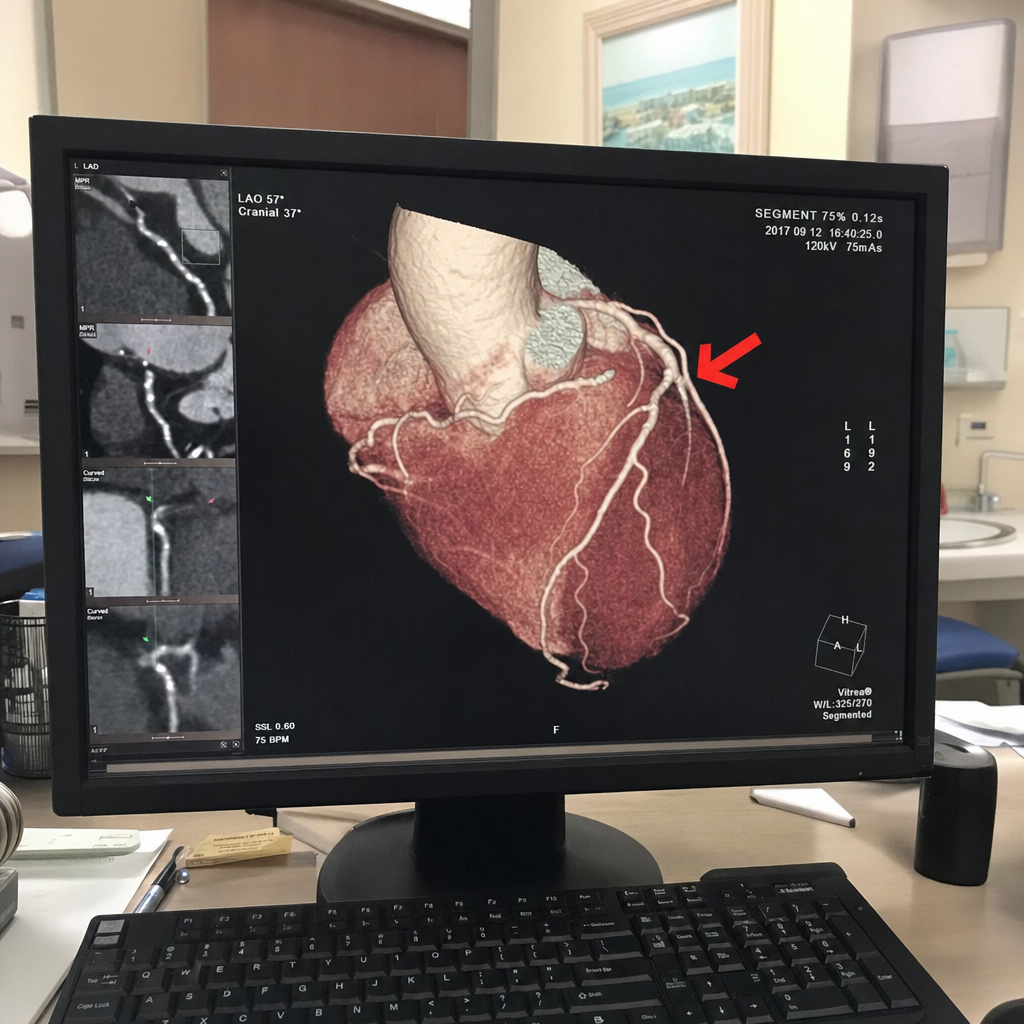
If you have arthritis and a doctor has told you your cold hands are just poor circulation, your weight is age, your X-rays look stable, your fatigue is stress — I'm writing this to apologize. I am that doctor. I said those exact things to my patients for twelve years before I finally learned what was actually going on with their bodies. I'm Dr. Renee Donnelly. I run an integrative medicine practice. About half my patients have arthritis. And for most of my career, when one of them came in with the cold, stiff hands, the rings that wouldn't fit, the knees that swelled by noon, the blood pressure climbing year over year — I told her the same thing every other doctor told her. "Your X-rays look stable. Your dose is fine. The stiffness is wear and tear. The weight is the bad knees keeping you off your feet. The fatigue is stress. The blood pressure — let's watch it." I said it for twelve years. I was wrong every time. And one of my patients nearly died on my watch because of it. Her name is Marlene. I am writing this because of her. But before I tell you about Marlene, I have to tell you a number that I knew for nine years and never once connected to what I was seeing in my exam room every Tuesday morning. Women who take a daily anti-inflammatory for their arthritis are up to 50% more likely to have a heart attack than a woman the same age who doesn't. Not five percent. Not ten. Fifty. That number is in the cardiology literature. It is not in the rheumatology literature. Your joint doctor doesn't read it. Your cardiologist sees it but never connects it back to the pills you take for your knees. The number sits in between two specialties — and nobody is paid to look there. That is exactly how Marlene almost died. Marlene became my patient at 56. She'd had arthritis in both knees for fourteen years. On a daily anti-inflammatory the whole time. Her X-rays were always "stable." Her previous doctor had told her she was "well managed." But every morning her hands were stiff, swollen, and cold to the touch. Her wedding ring sat in a small dish on her dresser — she hadn't worn it in five years. Her knees swelled so badly by 3 PM she had to ice them at her desk. She'd been told the stiffness was wear and tear, the weight gain was the bad knees keeping her off her feet, the fatigue was stress. I told her the same things for the first eight months I treated her. Then one Tuesday she came in for her routine follow-up and her resting heart rate was 102. She had walked from the parking lot to my exam room. Her blood pressure was 158 over 96 — it had been creeping up for years and we'd been "watching" it. Her knees weren't just stiff. They were swollen tight, hot to the touch, the inflammation markers in her blood through the roof. I sent her straight to the cardiology unit at our hospital. She had three quarters of a blockage in her left anterior descending coronary artery. The artery they call the widow-maker. They put two stents in her that evening. The cardiologist called me the next morning. He said one sentence I have not been able to forget. "How long has she been showing these symptoms?" I sat at my desk and went through her chart. Fourteen years of "I'm stiff every morning." Fourteen years of "my rings don't fit." Fourteen years of "is this normal?" Fourteen years of me — and the three doctors before me — writing degenerative changes. X-rays stable. Lifestyle counseling provided. Fourteen years of looking at the warning sign every single morning and calling it something it wasn't. That night I sat at my kitchen table and didn't go to bed. Then I started reading. Not the rheumatology literature. I'd read all of it. The rheumatology literature looks at the joint and stops. I went the other direction — into the cardiology literature, the inflammation research, the few cross-disciplinary papers that connect arthritis to anything outside the joint itself. What I found explained Marlene completely. It also explained the patients I'd been telling "you're fine" to for twelve years. The cold hands, the morning stiffness, the swelling arthritis women carry every day are not just wear and tear. They are the visible outside evidence of inflammation — a fire — burning inside. And it is not only burning where you feel it. It is burning in a place nobody on her care team has ever checked. That place is your arteries. Years of arthritis inflammation — even when your X-rays look "stable," even when your doctor says you're "well managed" — quietly works on the lining of your blood vessels. The fire is slow. It is silent. It does not show up on your X-ray. It does not show up on a routine visit until the damage is severe. The stiffness, the swelling, the hands that never quite warm up are what that fire looks like from the outside. The joint that won't loosen. The knuckles holding fluid they shouldn't be holding. The circulation already starting to struggle. That is the visible part. The invisible part is what that same fire is doing to your heart. There are two things happening, and they are not the same thing. First. The fire does not stay in your knee. The same inflammation eating the cartilage in your joint runs through your blood and inflames the lining of your arteries. Year after year they stiffen and narrow. Your blood pressure climbs. That is the number your doctor wants to write you a pill for. The pill doesn't put out the fire. It papers over the number. Second — and this is the one that almost killed Marlene — the daily pill you take for the pain is working on your heart at the same time it's quieting your knee. Taken every morning, year after year, the very anti-inflammatory that's masking your pain is adding its own strain to the heart the fire is already burning. That is where the 50% comes from. And because your X-ray looks "stable" and your pain feels managed, everyone on your care team assumes you're fine. The fire keeps burning exactly where no one is looking. And one Tuesday morning you walk from the parking lot and your resting heart rate is 102. This is not a reason to throw your pills in the trash. A bad day is a bad day, and that is between you and your doctor. But you have to understand what your medication is — and what it is not. It quiets the alarm. It was never built to put out the fire. And taken every morning for years, it adds its own strain to the very heart the fire is already working on. Which means no amount of more medication can fix this. A stronger pill. A different brand. A cortisone shot. None of them put out the fire. They will just keep your pain quiet — and your X-ray looking "stable" — while everything else, the blood pressure, the stiffening arteries, the resting heart rate, the swelling, keeps getting worse. I wish someone had taught me this in medical school. They didn't, because rheumatology and cardiology don't read each other's journals. They don't even talk to each other in the same hospital. I'm telling you now. The good news is that the fire has an opposite. Inflammation can be put out — and when it comes down, the body does the rest. The strain on your arteries comes down. Your blood pressure eases. The joint stops breaking down as fast. The swelling goes down, the stiffness lets up, and the warmth comes back to your hands. You start to feel like yourself again. What puts out the fire is not what is on your grocery-store shelf. I told patients to try tart cherry juice for years and watched it do almost nothing. Because what is on the grocery-store shelf is dust. Cherries boiled at high heat so the juice can survive shipping and six months on a shelf, then cut with filler and water. The active compound — the anthocyanins, the part that actually goes after the inflammation your painkiller never touches — is destroyed by the heat. By the time the bottle hits the shelf, what mattered is already gone. The version your body actually needs has to be cold-pressed, not boiled. And it has to be a real dose — 3,600 milligrams of anthocyanin-standardized extract — not the splash that's in a glass of juice. Most bottles won't even print the anthocyanin number on the label, because if they did, you'd see how little is really in there. I started Marlene on a real one. Two capsules every morning. She kept whatever her doctor wanted her to have on a bad day. About twenty minutes after her first dose Marlene texted me. "My hands are warm. They haven't been warm in six years." Week one. Down four pounds without changing a thing. The wedding ring that had been in the dish on her dresser for five years — she put it back on. Week two. The swelling in her hands was visibly less. She started taking a picture of her hands when she went to bed and another the next morning. By the end of week two the morning picture looked like the night picture for the first time in fourteen years. Week three. Her knees stopped swelling by 3 PM. She got down on the floor to play with her granddaughter at a birthday party for the first time in five years. Week six. I ran her cardiac panel. Blood pressure down from 158 over 96 to 124 over 78. Resting heart rate down from 102 to 74. Inflammation markers down. The morning pain that had been a 7 the second her feet hit the floor was a 2. Her cardiologist called me again. This time he asked: "What is she doing?" I told him. He didn't laugh. That was eighteen months ago. Marlene has not had a single cardiac event since the stents. Her numbers continue to improve. She walks two miles every morning. The stiffness she lived with for fourteen years is gone. I have put dozens of my arthritis patients on the same protocol since Marlene. Every one of them has reported the same recovery in the same order: warm hands within hours, stiffness and swelling easing within weeks, blood pressure and resting heart rate improving by month three. If you have arthritis, if you're on a daily anti-inflammatory, if you wake up every morning to cold, stiff hands that won't open and joints that feel eighty years old — read the next part of this carefully. I am not telling you to stop your pills. A bad day is a bad day, and what you do about it is between you and your doctor. But understand that your pill was only ever doing one half of the job — the front half, quieting the pain. The back half — putting out the fire that's eating your joint and stiffening your arteries — is the half that has been failing. It's the half nothing you've been given even touches. That is the half GoodGrove does. If you've been afraid that trying "another supplement" means giving up on the relief your pills give you on a hard day, that is not what this is. You keep what works for you. You add two capsules of GoodGrove every morning. That is it. GoodGrove is different. Cold-pressed tart cherry, not boiled. Anthocyanins at a clinical dose — 3,600 milligrams of anthocyanin-standardized extract — not the trace amount in a glass of grocery-store juice. Third-party tested. No fillers. Two capsules a day. One bottle. Try GoodGrove for 90 days. Score your morning pain the second your feet hit the floor. Check your blood pressure every Sunday. Ask your doctor for a basic cardiac panel at day 60. If the stiffness isn't moving, if your energy hasn't shifted, if your numbers haven't improved — full refund. No questions. Here's what makes me furious now that I know. If a 50% increase in heart attack risk were happening to men with a common disease, there would be national campaigns. There would be government funding. Cardiology guidelines would be updated annually. Insurance would cover a yearly heart screening for every patient on the pills. But it's happening to women with arthritis. So we get "your X-rays look stable." We get "try losing some weight." We get "have you tried a cortisone shot?" We get "this happens to a lot of women your age." There are six different pills your doctor can rotate to manage your pain and your blood pressure one number at a time. There is zero protocol in mainstream medicine for the fire all of those numbers are coming from. Zero. They don't even look. I'm done with that. And if you've been told for the last decade that your cold hands, your morning stiffness, your climbing blood pressure are "normal for someone your age" — you should be done with that too. You're at a crossroads. One path. Keep waking up to cold, stiff hands that won't open. Watch the knees swell harder by the month. Watch the rings sit in the dish on your dresser. Add the blood-pressure pill when your pressure goes up. Add the cortisone shot when the pain gets worse. Spend the next decade with a fire that nobody on your care team will ever measure. And one Tuesday morning find out — the way Marlene almost found out — what that fire has been doing to your heart for years. Another path. Keep what helps you on a bad day. Add two capsules of GoodGrove every morning. Go after the fire instead of just the pain. Let the inflammation come down. Let the strain on your arteries come down. Track your numbers. See what changes in 90 days. Marlene chose the second path. I chose it too. My own husband chose it. So would I if I were sitting where you are right now. The medical system isn't coming to save you. Your rheumatologist isn't looking at your heart. Your cardiologist isn't looking at your joints. Nobody is looking at the fire. I missed it on my patients for twelve years. I am not missing it anymore. And I am not letting you miss it on yourself. — Dr. Renee Donnelly, MD Integrative Medicine P.S. Marlene texted me twenty minutes after her first two capsules to tell me her hands were warm for the first time in six years. She lost 16 pounds by week four. Her blood pressure dropped from 158 over 96 to 124 over 78 by week six. Her resting heart rate went from 102 to 74. Her cardiologist asked her what she was doing. She told him. Your timeline may be different. But you won't know until you try. P.P.S. If you've already had a joint replaced, this still works. The fire that wore out that joint is the same fire still working on your other joints and your arteries — replacing the knee never touched it. Several of my post-surgery patients are on this protocol with the same results. P.P.P.S. If you have a husband, father, or brother with arthritis — or gout, or any chronic joint inflammation — this works for him too. My own husband takes two capsules every morning. The fire is the same regardless of which joint it started in. P.P.P.P.S. I am 62 years old. I have been practicing integrative medicine for twenty-eight years. I have written exactly one letter like this in my entire career, and you are reading it. I had to wait until I was certain. I am certain now.
Everyone with joint issues needs to see this ☝️
Clean, science-backed supplements crafted without anything artificial. Vegan, non-GMO, and third-party tested, with a 90-day money-back guarantee so you can shop with confidence.
LEARN MORELike this ad? Make it yours.
Crush rebuilds this exact creative around your product — your brand, your colors, your offer — in about a minute.