Mary Rooney
 Facebook ad: “Read This Before Your Next Vet Bill”
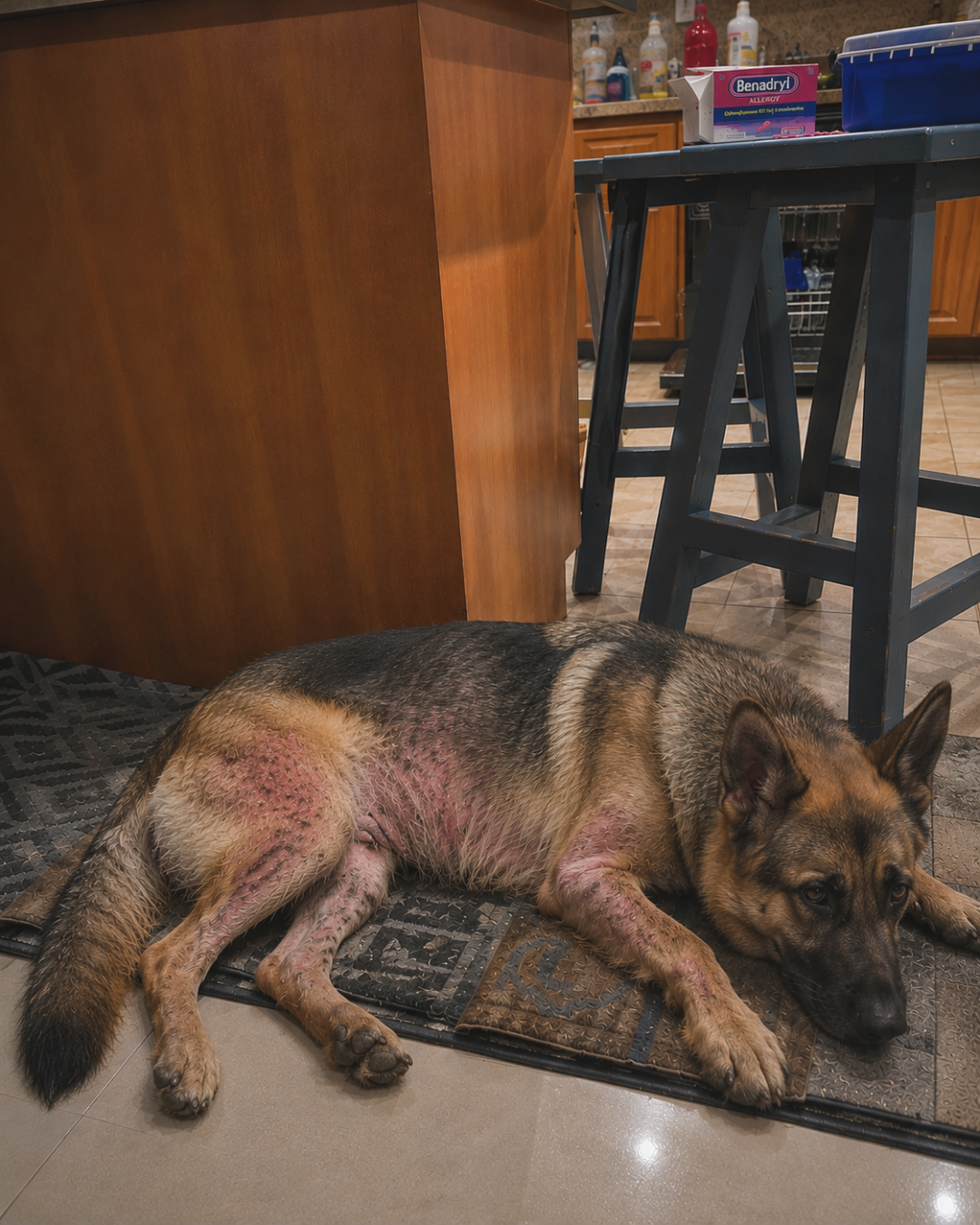
Ran for 64 days, from August 29 to November 1, 2026, the last day Crush saw it.
Run by Mary Rooney on Facebook. Crush is not the advertiser and does not verify its claims. See this ad in Meta's Ad Library(opens in a new tab)
Make your own version of this ad
Crush makes it, launches it in your own Meta ad account, scales the winners and pauses the losers.
About this ad
- Meta Ad Library ID
- 1567299798474084
- Platforms
- Facebook, Instagram and Threads
- Relaunches
- 0
Ad text
If you keep reaching for Benadryl every time your dog starts itching again, I wish someone had explained this distinction to me $4,830 ago. Benadryl helped Lucy. That was never the confusing part. The confusing part was why I kept needing to reach for it again. My name is Mary Rooney. I'm 46, and for 27 months I thought Lucy's recurring itching meant I simply hadn't found the right solution yet. The first time we used Benadryl under our vet's guidance, Lucy finally settled down. After days of licking between her toes and scratching around her neck, she slept through the night. I remember looking at my husband and saying, “I think we finally found something that works.” A few weeks later, the licking started again. So I did what probably every worried dog owner does. I started searching. Benadryl for dogs itching. Best antihistamine for dogs. Dog allergy supplements. Best food for itchy dogs. What to give a dog when Benadryl isn't enough. Every search produced another possible answer, and every possible answer restarted the same cycle. Something helped. Lucy got comfortable. I got hopeful. Then the scratching slowly returned and I went looking for the next thing. I call it the hope cycle now. At the time, I just thought I hadn't found the right product yet. Over the next 27 months, I tried three different foods, medicated shampoo, probiotics, fish oil, allergy chews, paw balm, wipes, an air purifier and more “skin support” products than I want to admit. One supplement looked promising for exactly 19 days. A shampoo seemed to make a difference for about 2.5 weeks. One food change gave us almost six weeks where I genuinely thought we'd cracked it. Then I'd hear Lucy licking her paws from the other side of the bedroom again, and my stomach would sink. By the time I finally went through my statements, I'd spent $4,830. Not because everything I'd tried was useless. That was what made the cycle so difficult to recognize. Things DID help. They just never became the permanent, everything-is-fixed answer I kept hoping they would. And I want to make something very clear because this isn't an anti-Benadryl post and it definitely isn't an anti-vet post. Lucy was evaluated by our veterinarian. Our vet knew what she was taking, and when Lucy needed medical treatment, she received medical treatment. Persistent itching can have a lot of causes, and deciding whether an antihistamine is appropriate for your dog is something to discuss with your veterinarian. Our vet wasn't the problem. Benadryl wasn't the problem. My expectation was the problem. I had started expecting anything that reduced Lucy's itching to also be responsible for supporting everything underneath the itching. I didn't understand those could be two completely different jobs. The night that finally clicked, Lucy was beside me on the couch licking the same front paw she'd been bothering for months. I opened Google and started typing: “best alternative to Benadryl for dogs” Then I stopped. I'd searched some version of that question dozens of times, and every version had led me back into the same hope cycle. So I deleted it and searched: “WHY does my dog's itching keep coming back after something helps?” That WHY changed the direction of everything I researched afterward. Instead of immediately finding another list of products, I started reading about what antihistamines actually do. Benadryl is an antihistamine. In appropriate situations, it works by interfering with histamine signaling. That's a specific job. Then I started reading about skin. I'd always thought of Lucy's skin as basically the place where her allergies showed up. Redness happens there. Itching happens there. Rashes happen there. So naturally, I focused almost entirely on stopping those things. What I'd never really considered was that skin is living tissue with structural proteins and other components that also need normal nutritional support. One of those structural proteins is collagen. And that gave me the distinction I wish someone had explained to me from the beginning: Managing an itch signal and nutritionally supporting skin structure are not the same job. That doesn't mean collagen treats allergies. It doesn't. It doesn't mean Benadryl is bad. It isn't. It meant I'd spent 27 months asking one category of solution to do every job at once. I opened the cupboard where I kept Lucy's stuff and counted eleven products. Almost every single one had been purchased because I wanted to STOP something. Stop the scratching. Stop the licking. Calm the redness. Soothe the paws. Control the reaction. I couldn't remember buying one because I'd specifically thought: “What am I doing to nutritionally support Lucy's skin itself?” So I started researching collagen. And immediately almost fell straight back into the same trap. There were hundreds of options. Chews. Powders. Bovine. Marine. Single collagen types. Multiple collagen types. “Skin & coat” formulas with ingredient lists longer than my grocery receipt. I bought one from Amazon because it had thousands of reviews. Lucy took it for exactly 19 days. I couldn't identify a meaningful difference. And there I was again, phone in hand, ready to buy the next thing. No more hope cycle. If I was going to add nutritional support, I wanted something simple enough that I'd actually use it consistently. I wanted multiple collagen types rather than another vague “skin blend.” I wanted third-party testing. And I wanted liquid because Lucy was already suspicious of every chew I tried hiding in her food. That's when I found Healthy Petz Liquid Collagen. Types I, II and III. Liquid. One drizzle added to the breakfast she was already eating. Before starting, I showed it to our vet. And this part matters: I didn't replace Benadryl or any veterinary treatment with collagen. I wasn't using collagen as an antihistamine. I wasn't trying to treat Lucy's allergies with it. I was adding nutritional support for normal skin and connective tissue while continuing to handle her actual medical needs with our vet. Different tools. Different jobs. Our vet was comfortable with us adding it, so I started Lucy on it and kept notes. The first two weeks were almost aggressively uneventful. Nothing dramatic. No “OMG DAY THREE!!!” Facebook update. Honestly, after 27 months of the hope cycle, I preferred that. I'd experienced enough exciting first weeks followed by disappointing sixth weeks. Around week four, I noticed Lucy's coat around her shoulders felt different when I brushed her. I didn't tell my husband because I didn't trust myself yet. At week six, he was sitting beside Lucy watching television and suddenly asked, “When was the last time she spent the whole evening licking?” I looked at him. Because I'd noticed it too. At week eight, Lucy had a regular appointment. Our vet checked her skin and coat and asked if we'd changed anything. “Nothing with her treatment,” I said. “Just the liquid collagen with breakfast.” She didn't tell me we'd cured anything. She didn't tell me to throw away Lucy's medications. She simply said that if Lucy was tolerating it and doing well, keep going and keep monitoring her. That's still what we're doing. Lucy still has allergies. She still has a veterinarian. If something changes medically, she gets evaluated. But I don't look at every solution the same way anymore. Benadryl has a job. Veterinary treatment has a job. Managing triggers has a job. Nutrition has a job. Supporting normal skin and connective tissue has a job. One bottle doesn't have to do all of them. I posted about this in a dog allergy group a while later because I wondered whether anyone else had gotten stuck thinking the same way. Apparently I wasn't alone. One woman said she'd spent $3,740 in sixteen months cycling through antihistamines, shampoos and supplements. Another said, “Every time something stops working, I assume I need something stronger.” Then a vet tech 👋 joined the comments and made a point I've remembered ever since: owners naturally focus on stopping the itch because that's the part they can see, but symptom management and supporting general skin health don't have to be competing ideas. A veterinarian later added the important caveat that nobody should assume persistent itching is “just allergies” without an appropriate veterinary workup. I appreciated that because that's exactly what I'm trying to say. I'm not telling you to stop Benadryl. I'm not telling you to give your dog Benadryl. And I'm definitely not telling you collagen is a replacement for medication. I'm saying that if you're searching “Benadryl for dogs” for the third, fifth or fifteenth time because the itching keeps returning, maybe the next question isn't: “What can I give that's stronger?” Maybe it's: “What job am I actually expecting this to do?” That question would have saved me an enormous amount of frustration. Maybe some money too. For Lucy, the nutritional support I eventually added was Healthy Petz Liquid Collagen, Types I, II and III. One drizzle with breakfast. I buy mine directly from Healthy Petz, not Amazon. After my 19-day Amazon experiment, I wanted the exact formulation and testing information I'd researched instead of selecting another marketplace product because it happened to have 4.7 stars. That's what I use. No medication bonfire. No miracle cure. No pretending every itchy dog needs the same thing. Just a distinction that took me 27 months and $4,830 to understand: Something that helps contrSol a symptom doesn't automatically have to provide every other kind of support your dog needs. I wish someone had told me sooner. — Mary Rooney, 46 EDIT. Since this got shared outside the original group: no, I'm not saying collagen treats allergies or replaces Benadryl. Lucy's itching was evaluated by our veterinarian and medication decisions stayed between us and her veterinary team. Healthy Petz was something I added for nutritional support after realizing I'd spent years thinking almost exclusively about controlling the symptom I could see. For everyone asking, I use their Liquid Collagen with Types I, II and III and buy it directly from their website. P.S. Around week four, Lucy's coat started feeling different when I brushed her. By week six, my husband was the one who realized we hadn't had one of our usual marathon licking evenings in a while. By week eight, our vet asked what we'd changed in her routine. Your dog's experience may be different, but Healthy Petz has a 60-day money-back guarantee, which gave me enough time to evaluate Lucy's response without repeating my old pattern of declaring something a miracle or a failure after ten days. shophealthypetz.com/products/liquidcollagen P.P.S. I spent $4,830 over 27 months searching for increasingly better answers to “what can I give Lucy for the itching?” The question that finally changed my approach wasn't another WHAT. It was WHY does this keep coming back, and what job is each thing I'm giving her actually supposed to do? Benadryl wasn't nutritional skin support. Collagen wasn't an antihistamine. Our vet wasn't supposed to replace either one. They were different tools with different jobs. Once I understood that, I finally stopped expecting the next bottle to do everything. I wish someone had told me sooner. shophealthypetz.com/products/liquidcollagen
Where the ad sends people
shophealthypetz.com
Read This Before Your Next Vet Bill
Learn more: shophealthypetz.com(opens in a new tab)