
Inactive· since Aug 14, 2026
- 14
- days it ran
- 0
- relaunches
Ad copy
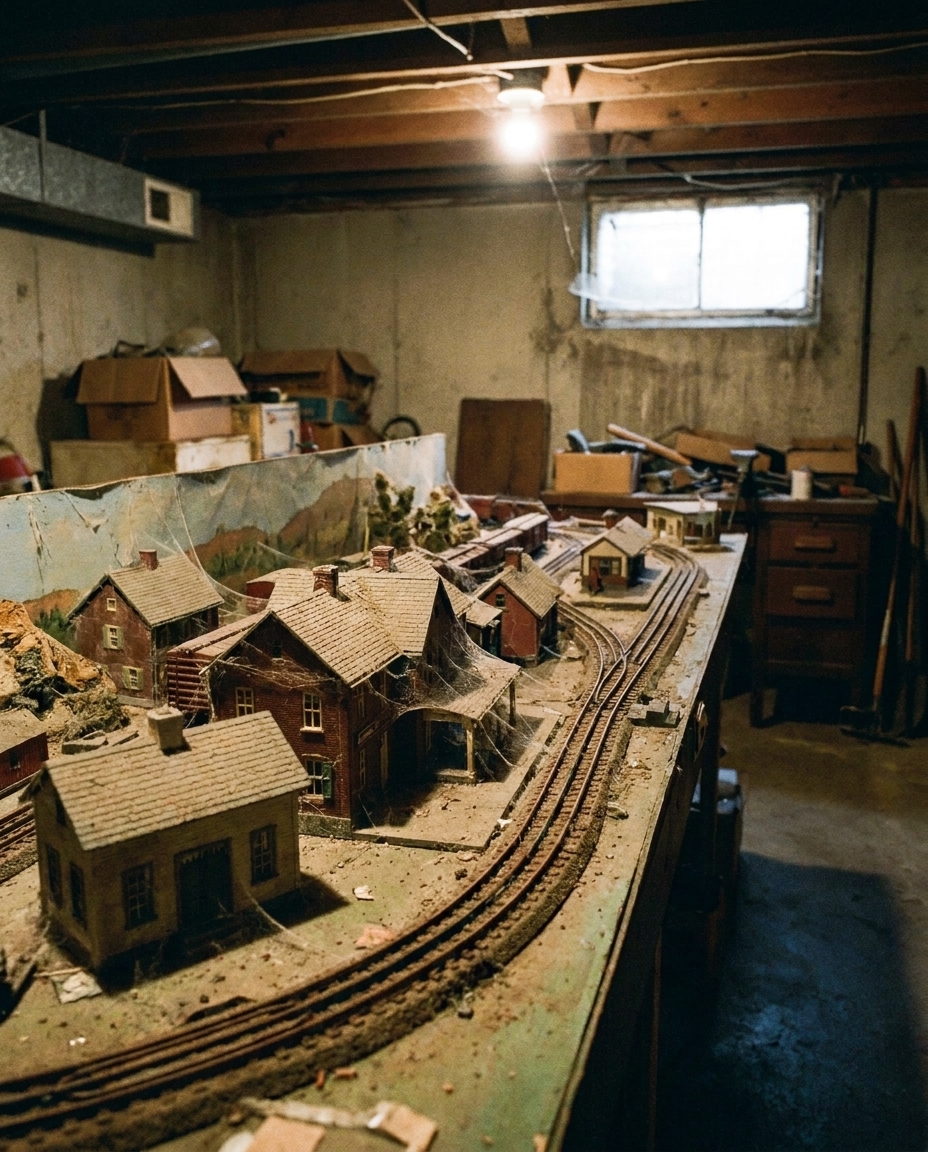
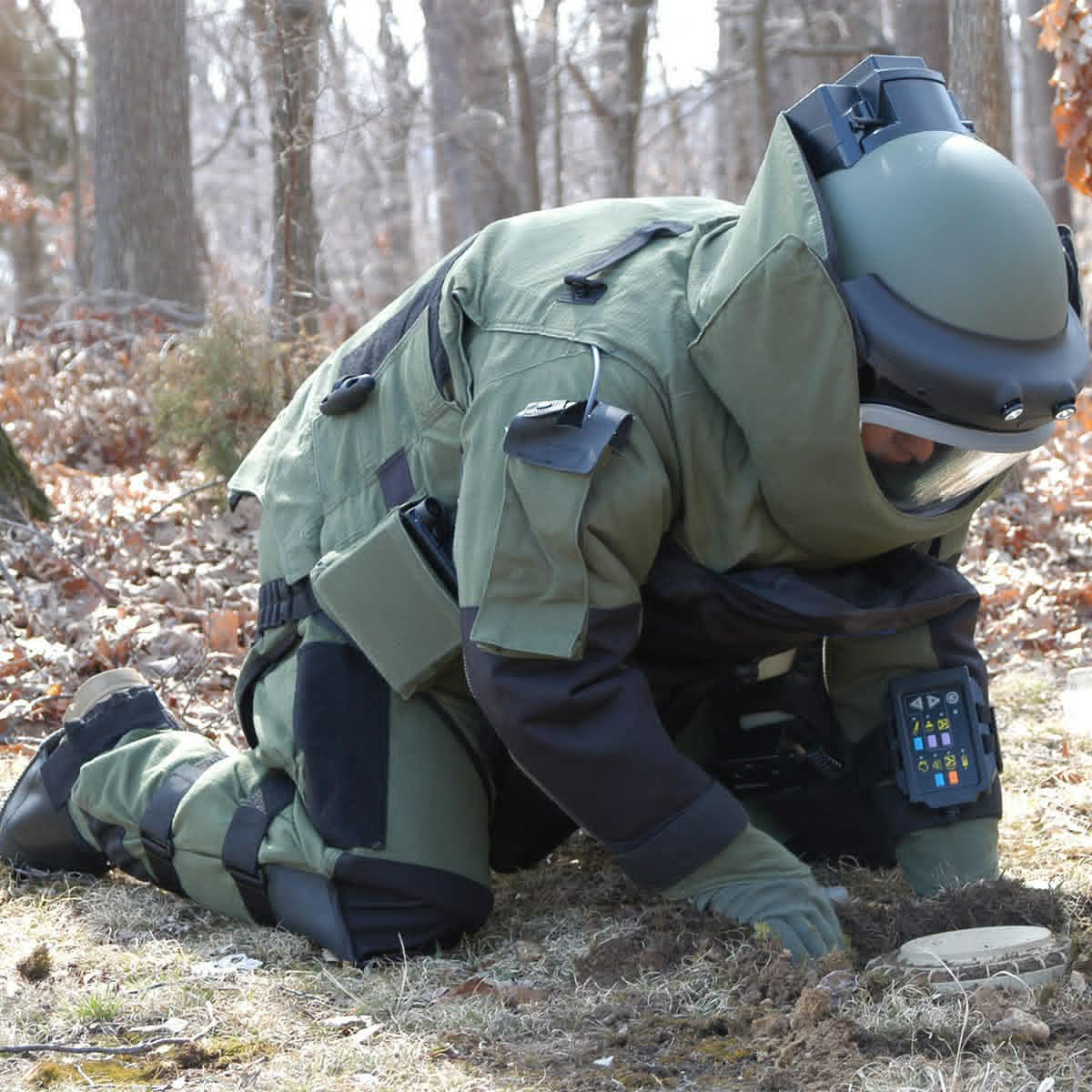
A grenade. Pin still in. Wrapped in oilcloth at the bottom of a footlocker I'd just opened in a storage unit in Garland, Texas. My hands went cold. My wife was eight feet away. I misdialed 911 twice. The bomb squad came and carried it out in a box. It's what was left underneath the grenade that I can't stop thinking about. My name's Rafe. I'm 52. I buy abandoned storage units at auction, fix and flip what's inside, and run a small vintage shop with my wife Renae in northeast Texas. I've been doing this for fourteen years. Before that I hung drywall. Before that I loaded trucks for a freight company in Mesquite. I've never had a desk job and I've never wanted one. If you've ever watched one of those storage auction shows — it's nothing like that. Most units are garbage. Literally. Broken furniture, mildewed clothes, bags of stuff people couldn't be bothered to throw away. Christmas decorations from 2003. A futon with a stain shaped like Florida. You bid blind based on what you can see from the door, and you're wrong more often than you're right. You learn to read a unit in about fifteen seconds. The way things are stacked tells you whether someone packed in a hurry or packed with care. Trash bags mean desperation. Labeled boxes mean organization. And every once in a while — maybe once a year — you see something from the door that makes the back of your neck go tight. Quality. History. A life that was lived on purpose. I've found maybe a dozen units like that in fourteen years. Unit 112 in Garland, Texas, last November was one of them. I could see it from the door before they even cut the lock. Military footlocker, olive drab, pushed against the right wall. A wooden dresser behind it — real walnut, not veneer. You can tell by the grain even from ten feet. A garment bag hanging from a hook on the back wall, still zipped. Furniture stacked neat. Not shoved. Placed. Whoever packed this unit loved what was in it. I got it for $1,400. Nobody else bid past eight hundred. I think the military footlocker scared them off — some guys don't want the complications of an estate unit. I've never been one of those guys. Renae drove down and we spent two days going through everything. The footlocker was the centerpiece. Korean War era. Steel with brass hardware, stenciled name and service number on the lid. Inside: a folded dress uniform wrapped in tissue paper so carefully the creases were still sharp after seventy years. Service medals in a velvet-lined box — a Korean Service Medal, a UN Service Medal, a National Defense ribbon. A Bronze Star. Below the medals — a stack of letters held together with a rubber band. I hooked a finger under it to lift them and it didn't stretch. It just came apart in my hand. Sixty years of sitting in the dark and it had nothing left in it. Handwritten on onionskin paper. Some in English. Some with Japanese characters I couldn't read. Postmarks from 1951 to 1953. I opened one. The paper was so thin I could feel my fingerprints through it. It was dated April 1952, written from a base in Sasebo, Japan, and it started like this: "Something is different about the old men here. I can't figure it out. I watched a man today — he had to be eighty — carry a crate up a gangway that Gaines and Vaught wouldn't touch. They're twenty-three. He didn't even breathe hard. I've been asking around. Nobody will give me a straight answer, but the pharmacist I wrote you about said something I can't stop thinking about. He said we're looking at the wrong thing. He said Americans measure everything and understand nothing. I'm going to keep asking." I read it twice. I didn't know what it meant yet. Behind the footlocker: a writing desk, solid cherry, hand-dovetailed drawers that still slid smooth. A rocking chair with not a single broken spindle. A wooden crate of framed photographs — a young man in uniform squinting into the sun on a dock somewhere. An older man at a picnic table surrounded by family. A woman in a garden, laughing at whoever held the camera. Every photo labeled on the back in blue ink. Names. Dates. Locations. And at the bottom of the crate, underneath the photographs — a birthday card. Construction paper. Crayon. The kind a child makes. On the front, in big uneven letters: HAPPY BIRTHDAY GRANDPA MERL. Inside, a drawing of two stick figures holding hands. One tall. One small. Hearts floating above them. Renae held it for a long time. Another crate held books. History, military history, a few on nutrition and human physiology that looked like they'd been read a hundred times — spines cracked, pages dog-eared, passages underlined in pencil. One of them had a handwritten note in the margin that said: "Showed this to Dr. Vollmer. He didn't believe me. He will." On a shelf against the back wall — a row of old cigar boxes. Seven of them. Full of paperwork. A discharge certificate. VA medical records going back to the 1960s. Social security documents. A lease agreement for this same storage unit, dated 1986. Tax returns filed neatly by year. A handwritten will. One box didn't have paper in it. It had seed packets. Dozens of them, the small brown kind you get in the mail, each one hand-labeled in pencil with a year. The oldest one said 1954. I didn't think anything of it at the time. I set it back on the shelf. This wasn't a forgotten locker. This was a man's filing system. He'd kept it for forty years, paid every month, organized it the way you organize something you plan to come back to. The last thing we found was at the bottom of the footlocker, underneath the letters, wrapped in an oilcloth. An M26 fragmentation grenade. Pin still in. I don't know how long I stood there looking at it. Three seconds. Five. Long enough for my hands to go cold and my mouth to go dry and for every auction horror story I'd ever heard to run through my head at once. "Renae. Don't move." She was at the writing desk, eight feet away. She looked up. Looked at my face. Looked at the oilcloth in front of me. "Is that real?" "I don't know. Don't move." I backed out of the unit without turning around. She was right behind me. I could hear her breathing. I could hear my breathing. We got to the truck and I pulled out my phone and my hands were shaking so badly I misdialed 911 twice before I got through. I told the dispatcher I found what I believed was a live grenade in a storage unit in Garland. She asked me if I was in a safe location. I was standing forty feet from it in an open parking lot. I didn't feel safe. I told her yes. The police got there in nine minutes. I know because I watched the clock on my phone the entire time, standing behind my truck with Renae gripping my arm hard enough to leave a mark. The bomb squad came from Arlington — that's a thirty-minute drive on a good day. It took them twenty-six minutes. Two cruisers from Garland PD. A fire engine. They evacuated our row and the row behind it. A woman from a unit down the hall came out carrying a cat in a laundry basket and gave me a look like I'd set the building on fire. Renae and I sat on the tailgate of my truck for three hours. We didn't talk. We watched a tech in blast padding and a face shield walk into unit 112 like he was picking up dry cleaning. I've never respected another person's calm the way I respected that man's calm. He came back eleven minutes later carrying the grenade in a containment box. "Training ordnance," he said. "Inert. Probably been dead since Truman was president." But it looked real. Weighed real. And until they x-rayed it nobody was sure. While we waited, one of the officers had pulled the discharge certificate from the footlocker. He needed to run the name for weapons registrations. Merl Boatright. United States Army. Enlisted August 1950. Stationed in Sasebo, Japan, 1951 to 1952. Honorable discharge, September 1953. The officer came back twenty minutes later. "Owner's deceased," he said. "Died back in July. He was a hundred years old." I looked at Renae. She was looking at the footlocker, still open on the concrete floor. The letters. The medals. The birthday card in crayon. "We need to find his family," she said. It took Renae three days. She found an obituary in the Denton Record-Chronicle — two paragraphs, the kind of notice a family places when they can't afford more. One surviving relative. A granddaughter named Dena, Wichita Falls. Renae called her. Dena cried on the phone for four minutes. Renae held the phone away from her ear and I could hear it from across the kitchen. She said her grandfather had rented that unit since 1986. Paid it the first of every month for forty years without missing once. After he went into hospice in April, nobody in the family knew the unit existed until the facility sent a certified letter. By then Merl had passed. They couldn't make the drive and couldn't keep paying the rent on a locker they'd never seen. It went to auction. She thought everything in it was gone forever. We told her we wanted to bring the personal things back. The letters. The medals. The photographs. The uniform. The Bronze Star. The birthday card. She went quiet. "You don't have to do that," she said. "Yeah we do," Renae said. That Saturday we loaded the truck before sunrise and made the three-hour drive north. Dena met us at her house. Small place on a county road. Pecan trees in the yard. A five-year-old girl in a swimsuit running through a sprinkler on the front lawn who stopped and stared at us like we were delivering something important. Dena was in her late forties. Short hair, work boots, a handshake that told you she'd been carrying things heavier than furniture for most of her life. I carried the footlocker up the porch steps and set it on the boards in front of her. She sat down on the top step with it across her knees. Ran her hand across the stenciled name on the lid. Didn't open it. Didn't say anything. Renae sat next to her. I stood at the bottom of the steps holding the box of photographs and the birthday card and waited. "He kept everything," Dena finally said. Her voice was steady but her hands weren't. "He was like that. You could call him at two in the morning and ask where the deed to the house was and he'd tell you which drawer. "Which side of the drawer. What was on top of it." She opened the footlocker. Lifted the tissue paper. Touched the uniform. When I handed her the birthday card, she turned it over and looked at the stick figures for a long time. "I made this," she said. "I was six." The five-year-old came up on the porch, dripping wet, and climbed into Dena's lap without asking. Dena held the card in one hand and the child with the other and looked out at the pecan trees like she was watching seventy years cross the yard. I asked her what Merl was like. She told us. Merl Boatright lived alone until he was 96. Not in assisted living. Not with family. Alone, in a house he'd owned since 1961, in a town outside Denton where he knew every clerk at the grocery store by name. He mowed his own lawn until he was 94. Pushed a mower, not a rider. He said the rider was giving up. He drove himself to church, to the VFW, to the grocery store, until he was 93. Dena finally took the keys — not because he couldn't drive, but because she couldn't sleep knowing he was on Highway 380 at night. He fought her on it for a month. She said that was their only real fight in twelve years. "He was sharp until the very end," Dena said. "Hospice nurses couldn't believe it. He'd correct them on his dosage. Told one of them she was off by five milligrams — she checked and he was right." I asked what finally got him. "Pneumonia. Not his heart. Not a stroke. Not any of the things you'd expect. His doctor used to say Merl was going to outlive the practice." She paused. "He almost did." Renae asked the question I'd been sitting with since the officer said a hundred years old. "What was his secret?" Dena laughed. Not a small laugh. The kind that has a funeral and fifty Thanksgivings behind it. "He'd tell anyone who'd listen," she said. "Every holiday. Every birthday. Every time someone in the family got sick or went to the doctor or complained about a prescription. Grandpa would start in on it. "We all thought he was just being Grandpa." She shifted the child on her lap. "But he outlived everybody. And none of us could explain why." She told us Merl came home from Korea in 1953 and never stopped talking about Japan. Not the war. Not the base. The people. He'd been stationed in Sasebo — a port city on the southern island of Kyushu. His unit processed supply shipments through the harbor. And what Merl couldn't stop noticing was the Japanese dockworkers. Men in their seventies. Some in their eighties. Loading and unloading cargo alongside American soldiers half their age. Merl said they weren't just keeping up — they were outlasting the younger men. Steadier hands. Fewer injuries. They didn't break down the way his own unit did — guys who were twenty-two and already had bad backs and bad knees and looked forty. He got friendly with a pharmacist in town. An older man who spoke some English. Merl asked him point blank one afternoon: why are your old men stronger than my young ones? The pharmacist didn't answer him. Not at first. He took Merl's forearm in both hands and pressed his thumbs into it, the way you'd test a piece of rope. Then he nodded at a man out on the gangway who was seventy-five if he was a day. His arms are softer than yours, he said. And then he said the thing Merl repeated at every dinner table for the next seventy years. The years take it out of every man. Here the same as in America. The difference is that here we put it back every day, and we don't know we're doing it. He meant the fields. He meant what those men had eaten every day of their lives without once thinking about it — the deep red root that grew in the ground outside town. The one Merl said stained everything it touched. Then the pharmacist said the line that ended up in the letter. You measure the pressure. Nobody measures the pipe. He said American medicine had it backwards. Chasing numbers. Reading the gauge on the outside of the tank and never once looking at the metal. Merl didn't understand all of it. He was a supply clerk. But he understood enough to carry it home. And he never let go. He came back in 1953, married, bought a house, and put in a garden. Dena said the first thing he ever planted was that root, from seed he had mailed to him from a farm in Pennsylvania — an old strain, an Amish community that had been saving the seed by hand for generations. He grew it in the same rows for over fifty years. He ate it almost every day of his life. He gave it away by the paper sack at church until people started ducking him in the parking lot. "That's what those seed packets are," Dena said, when I told her about the cigar box. "He ordered new seed every year even when he had plenty. He was scared of the year they'd stop selling it." Dena said Merl was obsessed with one subject above all others. Blood pressure. Not because his was high — because of what he believed about how everyone else was treating theirs. "He watched it happen at the VFW," she said. "Year after year. His buddies would go to the doctor, come back with a prescription. Lisinopril. Amlodipine. Whatever the doctor was handing out that year." She shook her head. "And Grandpa would watch them come apart. One by one. First it was the cough. You could hear it from the other end of the hall — this dry hack that never went anywhere. They all carried cough drops. "Then the doctor would switch them to the other pill and the cough would stop and their ankles would go. Men who'd worn boots their whole lives, sitting in the hall in bedroom slippers. One of them had to have his wedding ring cut off. "Then it was the dizziness. Then it was the falls — Ed Marsh got up at three in the morning and his wife found him on the bathroom floor. And then they just stopped coming. "He'd go visit them at home and they'd be sitting in a recliner in the middle of the afternoon, too tired to walk to the mailbox. Men who'd carried packs through Korea. "Men who'd worked ranches and roofing crews and oil rigs their whole lives. And now they couldn't climb their own porch steps." She did Merl's voice again — lower, slower. "'They're trading one problem for another. And nobody's asking if the trade is worth it.'" Dena said Merl refused blood pressure medication his entire life. His doctor offered. Every year, like clockwork, the doctor would bring it up, and Merl would say no. "His doctor stopped asking around the time Grandpa turned eighty-five," Dena said. "I think by then the doctor figured Merl knew something he didn't." Then she told us about her father. Merl's son. Dena's dad. The man in the middle of the chain. He'd gone on Lisinopril at fifty-two. His doctor put him on it and his reading came down to 126 over 78. Perfect, the doctor said. Textbook. Nothing to worry about. Merl begged him not to take it. "It was the one thing they fought about," Dena said. "Grandpa would say, 'The number doesn't matter. The number doesn't tell you anything. It's what the pipe is doing while that pill holds the number down. That's what kills you. "And that pill isn't doing a damn thing about that.'" Her father listened to his doctor instead of his father. 126 over 78 on Lisinopril. Textbook numbers. Fifteen years on the drug. He collapsed in the driveway at sixty-seven. Two bags of groceries. A gallon of milk hit the concrete and split open. Dena's mother found him from the kitchen window — saw the milk running down the driveway before she saw him on the ground. She thought he'd dropped a bag. She was smiling when she opened the front door. Dena said it quietly. Like she'd said it before, many times, and it never got easier. "Massive stroke. No warning. His doctor said his numbers had been excellent for over a decade." She paused. "Excellent." Merl never forgave that doctor. Not for the death. He understood death. For the confidence. For looking at a number on a chart and telling a man he was safe when the real danger was something the chart never measured. Merl used to explain it at the dinner table. Every Thanksgiving, every Christmas. Before anyone sat down he'd slide the rubber band off the rolled-up newspaper and stretch it around two fingers and leave it there. All through the meal. Nobody was allowed to ask about it until the plates were cleared. Then he'd take it off and hold it up. "'Watch,'" Dena said, doing his voice. She held her hand out flat and let something invisible drop into it. "'Nothing tore it. Nothing cut it. It just sat there being stretched, and now it can't come back. That's a vessel at sixty. "Nobody broke it. It quit letting go.'" Then he'd make a fist and hold it out over the table, knuckles up. "'Your vessels are supposed to open and close all day long. Thousands of times. Mine still open. His forgot how.'" And then the part she said he never once left out. "'And that pill doesn't teach the hand to open. It squeezes the wrist until the reading looks right.'" She said after her father died, Merl got quiet about it. He stopped preaching at dinner. He just did his thing every morning and let the years do the talking. "But once — maybe ten years ago — I asked him, 'Grandpa, do you really think that stuff kept you alive?'" She looked at the child in her lap. At the birthday card in her hand. "He said, 'I don't know. But your father's doctor was sure the pill would keep him alive. And it didn't.'" The little girl reached up and touched the card. "What's that, Mama?" "Something I made for Grandpa a long time ago," Dena said. The girl looked at the stick figures. "Is that Grandpa Merl? He used to push me on the swing real high." Dena's jaw tightened. She pulled the child closer. A man who poured concrete at forty, pushed a lawn mower at ninety-four, and was still pushing his great-granddaughter on a swing at ninety-seven. Those hands. Four generations on a porch in Wichita Falls. One of them was gone. One of them never knew him. And the one in the middle was holding a crayon birthday card and trying to figure out if her grandfather's seventy-year obsession was a quirk or the reason he'd been there to receive it. I asked Dena what Merl actually used. Not the garden — that was the fifties. He couldn't do the rows at ninety. What did he take at the end? She said he found a company about ten years ago that put the same root in a capsule. The same old strain. He took two of them every morning with a glass of water. Same glass every day — an old jelly jar with a faded label he'd never peeled off. He'd sit at the kitchen table at 5:30 AM and take them and read the paper. Same routine. Every morning. Rain or shine. Even in hospice. "The nurses told me he asked for his glass the morning he died," Dena said. "He couldn't sit up. But he asked for it." She said he was particular about what he used. "He said most of the stuff on the market was garbage. Wrong seed, cooked to death. He had a whole speech. 'If they can't tell you what seed it came from, it isn't the same plant. If they had to cook it to make the powder, it's dead. "If the label won't print the milligrams, they're hiding the milligrams. And if the only lab report is their own, there isn't one.'" She laughed a little. "And he had a test. He'd twist one open on a white saucer. He said if it doesn't stain, it's dust." She said Merl tried to get her father to take it. Her father wouldn't. He trusted his doctor. He trusted the pill. He trusted the number. "Grandpa tried," she said. "He tried for years." I haven't told you about myself yet. I've told you about Merl. About his letters and his medals and his rubber band and his son and his granddaughter on a porch. I've told you about the storage unit and the grenade and the bomb squad. But I haven't told you about the guy who was sitting at the bottom of those porch steps listening to all of it. The week before we drove to Wichita Falls, I was at a Tuesday auction in McKinney. I'd won a unit with a solid oak sideboard — maybe eighty pounds. I got it onto the dolly fine. But halfway up the ramp into the truck, my vision went gray at the edges. Not dark. Gray. Like someone slowly turning the contrast down on a television. I sat on a crate in the parking lot and put my head between my knees. My buddy Tully — he runs a booth at the same flea market where I sell on weekends — was parked next to me. He walked over. "You alright? You don't look right." "I'm fine. Got up too fast." "You were pushing a ramp. That's not getting up too fast." I told him to drop it. He dropped it. But he looked at me the way Renae looks at me when I say I'll go to the doctor next month. The way you look at somebody when you can see something they won't look at themselves. I'm fifty-two years old. My blood pressure was 158 over 96 the last time anyone put a cuff on me, which was over two years ago because I'd cancelled the follow-up and never rebooked it. My doctor had printed a prescription at that appointment. Lisinopril. Same drug Dena's father took for fifteen years. Same drug Merl watched empty out the VFW hall one recliner at a time. I took the paper, folded it in half, put it in my glovebox. It was still there. I could see the corner of it every time I reached for the registration. That was the man sitting on Dena's porch. The one listening to the story of a hundred-year-old man who refused the prescription I was too afraid to fill and too stubborn to throw away. I didn't say a word for the first forty minutes of the drive home. Renae let me be quiet. She knew what that meant. She turned the radio on low and drove while I leaned my forehead against the window and watched fence posts go by. She lasted about forty minutes. "You're thinking about what she said." I was. Not about the war. Not about the docks. Not about Merl. I was thinking about a rubber band that came apart in my hand in a storage unit in Garland. I'd held the whole lesson three weeks before I knew there was one. I was thinking about my own number — 158 over 96 — and the folded prescription in the glovebox six inches from my knee. I was thinking about Dena's father. Same age I am now when he went on that pill. 126 over 78 on the drug. Textbook. Dead at sixty-seven in his own driveway. And Merl. Who refused the prescription. Who understood something in 1952 that his own son didn't believe. Who lived to be a hundred. Renae was quiet for another minute. Then she said something I wasn't ready for. "I'm not ready to do this alone, Rafe." She wasn't talking about the drive. She wasn't talking about the shop. She was talking about the porch. About being the woman with the footlocker across her knees. I reached over and held her hand. I didn't say anything because there was nothing to say that she didn't already know. She'd been watching me ignore this for years. The cancelled appointments. The prescription I folded up and buried in the glovebox. The gray vision in the parking lot in McKinney. The stairs I couldn't climb without stopping halfway. When we got home I didn't unload the truck. I went to my desk in the shop, turned off the overhead light, turned on the desk lamp, and opened my laptop. I'm not a research guy. I don't read studies. I read auction listings and eBay comps and Kelley Blue Book values on panel trucks. But that night I sat in the dark and read everything I could find about blood pressure. It took me about twenty minutes to understand that Merl Boatright wasn't crazy. He wasn't even close. Your blood vessels are muscle. That's the part nobody tells you. They squeeze and they let go. All day. Thousands of times. The squeeze takes care of itself. The letting go doesn't. The letting go needs a signal. That signal is a molecule called nitric oxide. When you've got enough of it, the vessels stay loose and open, the blood moves easy, and the pressure sits where it belongs. After forty, your body makes about ten percent less of it every year. By fifty-five you're running on half of what you had at thirty. I read that line and did the arithmetic on the back of an auction receipt. I'm fifty-two. And when the signal runs low, the vessels do the only thing they can do. They clench. They narrow. They harden. Like a fist that forgot how to open. And your heart is on the other side of it, pushing the same blood through a pipe that gets a little tighter every year. Pushing harder. Building pressure against walls that are already too stiff to take it. Until one day something gives. Then I read what the pills actually do, and I sat back in that chair and didn't move for a while. Lisinopril blocks an enzyme so the vessels can't tighten as hard. Amlodipine forces the calcium channels in the vessel wall open. Both of them pry the pipe open from the outside. Neither one puts the signal back. Neither one can. That's not what they're built for. It's sandbagging a flood. You can stack sandbags all night and the line will hold and the gauge will read like the water went down. The water didn't go down. And that's when Dena's father came back to me and I had to get up and walk around the shop. 126 over 78. Fifteen years. The pill did exactly what it was built to do, every single day, and it did it well. And the whole time, underneath it, his production had been draining out of him a little more every year, right where nobody was looking. Nobody measured it. There's no line for it on the panel they hand you at a physical. His doctor wasn't lying to him. His doctor was reading the gauge. 126 over 78 wasn't the water going down. It was the sandbags holding. Merl's letter came back to me. The one from April 1952. "Americans measure everything and understand nothing." A pharmacist in Sasebo said that to a twenty-five-year-old supply clerk. Seventy-four years later, more research than I could read in a year said the same thing in longer words. So I typed in the only question I had left. What puts the signal back? The answer was food. Specifically a compound called dietary nitrate — the raw material your body converts into nitric oxide. And the single richest source of it in the human diet is a beet. The deep red root that grew in the ground outside Sasebo. The one Merl mailed away for in 1954 and planted in the same rows for fifty years. I found a bottle of beetroot capsules on Amazon. Sixteen ninety-nine. I ordered it before I closed the laptop. The capsules came in a clear shell and you could see what was in them. A brownish, beige-gray powder, like the dust at the bottom of a bag of feed. I remembered Dena saying Merl was particular. I didn't care yet. I was doing something. That felt like enough. I took two every morning for six weeks. Same glass, same time, 5 AM at my workbench before coffee. And I felt something. Not a miracle. A quiet settling. Like the background noise in my body turned down a notch. Sleeping a little deeper. Getting up without the usual three-minute negotiation with my knees. Renae noticed before I mentioned it. "You're not groaning when you stand up," she said. "What's different?" I told her about the beetroot. She gave me the look — the one where she's deciding whether I've joined a cult or finally started paying attention. After six weeks I drove to the drugstore on 69 and sat down in the plastic chair by the pharmacy counter and stuck my arm through the sleeve of the machine. First time I'd measured anything in over two years. 156 over 94. Down from 158 over 96. Two points. I sat in my truck in that parking lot holding a receipt-paper slip with two points on it. Two points in six weeks. That's nothing. That's noise. That's the margin you'd get from sitting still for five minutes before the cuff. I almost threw the rest of the bottle in the trash. But Merl's voice — through Dena, through the letter, through everything I'd read that night at my desk — kept circling. If they can't tell you what seed it came from, it isn't the same plant. I turned the Amazon bottle over. Read every word on the label. No seed line. No strain. Nothing about how it was dried. "Beetroot extract" and a stock photo of a beet on a cutting board. So I went back and read about the beet itself, and that's when I got angry. The beet in that bottle isn't the beet in the research. The grocery-store beet has been bred for a hundred years to be bigger, sweeter, easier to ship. And every time you breed a beet for sugar, you breed the nitrate down. The compound that does the actual work in your bloodstream has been bred nearly out of the plant. Then the supplement companies take that already-weak beet and spray-dry it at high heat to turn it into powder. Heat finishes off what's left. You can boil a beet at home until it goes pale and limp — same thing happens in a factory, just faster. By the time it's in a bottle on a shelf, there's almost nothing in it. Red dust. Dead before the cap was sealed. I hadn't taken the wrong dose. I'd taken the wrong plant, cooked. So I went back online. This time I wasn't searching for beetroot capsules. I was searching for Merl's four things. The seed line. Heirloom, never hybridized — the old strain, not the sugar beet. The drying. Shade-dried or cold-processed. Never heat. The dose. 1,300 milligrams, printed plain on the label where anybody could read it. And a lab report that wasn't the company's own. Most of what I found failed two of the four in the first thirty seconds. A lot of them failed all four. One brand had a paragraph about "premium sourcing" and wouldn't say from where. The one that matched — every spec, every criterion Merl described through Dena — was a small company I'd never heard of. Rosabella. Heirloom Blutwurzel seed, grown by an Amish community in Lancaster County, Pennsylvania, six generations on the same fields, from seed they've been saving by hand the whole time. Shade-dried, never heat-blasted. 1,300 milligrams. Third-party certificate of analysis, published, with the lot number on it. Pennsylvania. The same place a supply clerk in Denton County was mailing away to in 1954. Not on Amazon. Not in stores. The kind of thing you don't find unless you know exactly what you're looking for. I ordered three bottles. The difference was obvious before I ever swallowed one. I did Merl's test. Twisted a capsule open over one of Renae's white saucers, the good ones. What came out wasn't brown. It was crimson — so dark it looked wet. It stained the china and I had to take a scrub pad to it and Renae was not thrilled about that. That color is the whole thing. That's the compound. If the powder isn't that color, it didn't survive whatever was done to it, and you're swallowing a label. I felt something within seventeen minutes. I'm not a doctor. I'm not going to sit here and make a medical claim. But there was a shift. A lift in the head, and something quieter under the chest. Like the difference between a windshield with a film of road dust on it and one you just cleaned. Subtle. But I'd been in this body for fifty-two years. I knew what different felt like. I didn't tell Renae. I wanted the cuff to tell her for me. I took Rosabella every morning for nine weeks. Same routine Merl kept for seventy years — two capsules, glass of water, before anything else. I used the same glass every day. Not a jelly jar. A pint glass from a brewery in Fort Worth that Renae gave me years ago. But the ritual was the same. 5 AM. Workbench. Take them. Get to work. I changed nothing else. Same diet. Same gas station egg sandwiches at 5 AM before auctions. Same three cups of coffee. Same hours. The only difference was the bottle on the workbench. Around day five, the mornings changed. I can't explain it better than that. I stopped hating the first hour of the day. Week two, Renae said I was sleeping through the night. Week three, I carried an armoire up the ramp to the truck without stopping to breathe. Didn't think about it. Just picked it up and went. Halfway up the ramp I realized I was watching for it — the gray at the edges, the contrast draining out of my vision like it did in McKinney. It never came. I got to the top and my eyes were clear and my hands were steady and I stood there for a second just noticing that. Renae noticed I wasn't reaching for the hand truck anymore. Week five, I climbed the fourteen steps to the shop loft without holding the railing. I was at the top before I realized I'd done it. I stood there and looked down the stairs and couldn't remember the last time I'd made it up without stopping. Week seven, Renae watched me load an oak dresser — sixty pounds, maybe more — and she put down what she was holding and looked at me. "You look like you did when I met you." That night she handed me a slip of paper. An appointment confirmation. Thursday at 7:40 AM. My doctor's office. The follow-up I'd cancelled twenty-six months ago. "I booked it last week," she said. "I wasn't going to tell you until I was sure." She'd been watching longer than I knew. The same woman who found Dena's obituary in three days, who called a stranger and let her cry for four minutes, who said "I'm not ready to do this alone" on a highway outside Wichita Falls — she wasn't going to wait for me to book it myself. She knew I never would. The nurse wrapped the cuff and pumped it and watched the screen and frowned. She didn't say anything. She took it off, waited, and did it again. Then she did it a third time on the other arm. "128 over 82," she said. Down from 158 over 96. My doctor pulled up my chart. Scrolled back two years. Scrolled forward. Looked at me over his glasses. "What changed?" I told him. Two capsules every morning. I told him about nitric oxide and about vessels that lose the ability to let go, and that the reading is the gauge, not the pipe. I told him about a hundred-year-old veteran in Denton County who refused the prescription and outlived everyone at his VFW hall who took it. He was quiet for a while. Then he took off his glasses and set them on the desk. "I'll be honest with you," he said. "Nobody's ever explained it to me that way in this office. But these numbers —" he pointed at the screen — "this isn't diet. This isn't exercise. "That's thirty points off the top number in nine weeks with no medication. I've started people on lisinopril who didn't move that far in six months." He put his glasses back on. Looked at the chart again. "I'm going to look into this. I want to understand what you're describing. But whatever is happening here — don't stop." He didn't reach for the prescription pad. He reached for a notepad and wrote down what I'd told him. A doctor writing down something a storage unit buyer said to him. I never expected to see that. I drove home with the windows down. That weekend at the flea market, Tully was setting up his booth two spaces down from mine. He looked at me unloading my truck — I was carrying a cast iron farmhouse sink, had to be seventy pounds, straight off the tailgate and onto the table without stopping. He walked over. Stood there with his arms crossed. "Last time I watched you lift something heavy you almost hit the pavement." "I remember." "So what happened?" I told him. Not all of it — not Merl, not the porch, not the letters. Just the capsules. What the cuff said. He listened the way Tully listens — skeptical, arms still crossed, chewing on the inside of his cheek. "You look different," he finally said. "I'll give you that." I told him I'd send him the link. When I got to the truck, I opened the glovebox and took out the folded prescription. Looked at it. My doctor's handwriting. A date from two years ago. A drug name. A dosage. I thought about Merl's son. Same prescription. Same promise. 126 over 78 on the drug. Dead at sixty-seven. I didn't throw it away. I'm not going to tell you I did. I'm not a doctor. I don't know what's right for anyone else, and if you're already on something, that's a conversation for you and the person who prescribed it — not for a guy who buys storage units. But I moved it. For twenty-six months that prescription had been buried under the registration, shoved to the back of the glovebox where I didn't have to see it. I pulled it out and clipped it to the visor. Right there. Where I'd see it every morning when I started the truck. It doesn't scare me anymore. It's just a piece of paper with a doctor's handwriting on it. And on the workbench inside, there's a bottle that's already done more than that paper ever promised. I want to be careful here. I'm a guy who buys storage units. I'm not a doctor. I'm not a scientist. I don't work for Rosabella. Nobody asked me to write this and nobody's paying me for it. I still eat gas station breakfast and I haven't joined a gym and I'm not going to. But I think about Merl Boatright every morning at 5 AM when I take two capsules at the workbench. A man who learned something real, in a real place, from a real person — and carried it for seventy years while his own family nodded and smiled and let him talk. Who watched his friends at the VFW start the pills and come apart in their recliners. Who begged his own son not to trust a number on a chart. Who watched his son die anyway, in a driveway, with the milk running down the concrete. Who kept doing his thing every morning. Same glass. Same time. And lived to be a hundred years old, mowing his own lawn at ninety-four, driving himself to church at ninety-three, correcting his hospice nurse on her dosage the week he died. I found his life in a storage unit for $1,400. His uniform. His letters. His Bronze Star. A box of seed packets. A training grenade that shut down a parking lot. A crayon birthday card from a granddaughter who was six. And somewhere in all of it — in the story Dena told me on a porch in Wichita Falls with a child in her lap and a footlocker across her knees — was the thing I'd been avoiding about my own body for a decade. If you're someone like me — someone who works with their hands, who's always been too busy to stop, who's been dodging the appointment and putting off the conversation and telling your wife you'll deal with it next month — I'm not going to tell you what to do. I've never liked being told what to do. That's why I work for myself. But I'll tell you what Merl Boatright told his family every Thanksgiving while they rolled their eyes and passed the potatoes. "The number's not the problem. It's what quit letting go." He was right. And it took a $1,400 storage unit in Garland, Texas, for me to find that out. If you want to try what I tried, the link is below. There's a 90-day guarantee — if you don't see what I saw in nine weeks, send it back. I don't know how long they keep it in stock. It's a small company, the seed only grows on one set of fields, and the last time I ordered, two of the bundle sizes were already gone. P.S. — Dena told me something else that day on the porch. She said after her father died, Merl stopped trying to convince anyone. He just did his thing every morning and let the years argue for him. When people asked how he was still going at ninety, ninety-five, ninety-eight, he'd say: "I'm not doing anything special. I'm just putting back what the years take out." There's a 90-day guarantee. If you don't notice anything — send it back. P.P.S. — Here's what to expect from the first capsules. Take two with a glass of water in the morning, before coffee. Somewhere around seventeen minutes most people notice something — a lift in the head, something quieter under the chest. Not a rush. A settling. That's not the health result. That's circulation. The real changes — the mornings, the stairs, the number on the cuff — those take weeks. My mornings changed around day five. The armoire was week three. The cuff was week nine. Don't judge it on day one. Judge it at week six. And if you want to know whether what you bought is the real thing or dust, do what Merl did: twist one capsule open over a white saucer. Real heirloom beetroot comes out crimson, so dark it looks wet, and it stains. If what falls out is brown or beige, it was cooked before it was bottled. His granddaughter told me he used to say, "If it doesn't stain, it's dust." He was right about that too. P.P.P.S. — Tully ordered a bottle the week after I sent him the link. He's fifty-seven, been on amlodipine for three years, and his wife had been after him about it the same way Renae was after me. He took it for eight weeks. His top number didn't come down as far as mine did — he's still on his medication and his doctor hasn't changed a thing about it, and he's not going to change anything without her. But his ankles went down enough that he got his work boots back on for the first time in two years, and he told me he's sleeping through the night for the first time in three. He still eats worse than I do. He said something to me last month at the flea market that I can't stop thinking about: "I don't feel like I'm falling apart anymore." That's not a miracle. That's a guy who finally stopped ignoring what was breaking. P.P.P.P.S. — If you're reading this and it's not for you — if it's your husband, or your brother, or the stubborn one who won't make the appointment and won't have the conversation and keeps saying he's fine — send him this. Don't explain it. Don't argue with him. Just send it and say, "Read this. For me." That's what Renae would've done if she'd found it first. I'm glad I found it on my own. But I almost didn't. And the only reason I did is because a man in Denton County kept paying his storage bill for forty years, and his granddaughter sat on a porch with two strangers and told them everything he'd been trying to say. P.P.P.P.P.S. — Rosabella is a small company. Not on Amazon. Not in stores. The heirloom seed grows on one set of Amish fields in Lancaster County and when the harvest is gone it's gone until the next one. They run a buy three, get three free bundle, which is what I order now — two bottles live at my house and I keep one in the truck, because the week I ran out I could feel the difference by Thursday. The 90-day guarantee means there's nothing to lose. Merl's son took his pill on faith for fifteen years and nobody ever offered him his money back. https://track.tryrosabella.com/cdc16426-3e48-40a7-9fad-21098084f6cf
Support stamina and heart health everyday
LEARN MORELike this ad? Make it yours.
Crush rebuilds this exact creative around your product — your brand, your colors, your offer — in about a minute.