
Inactive· since Aug 26, 2026
- 10
- days it ran
- 4
- relaunches
Ad copy
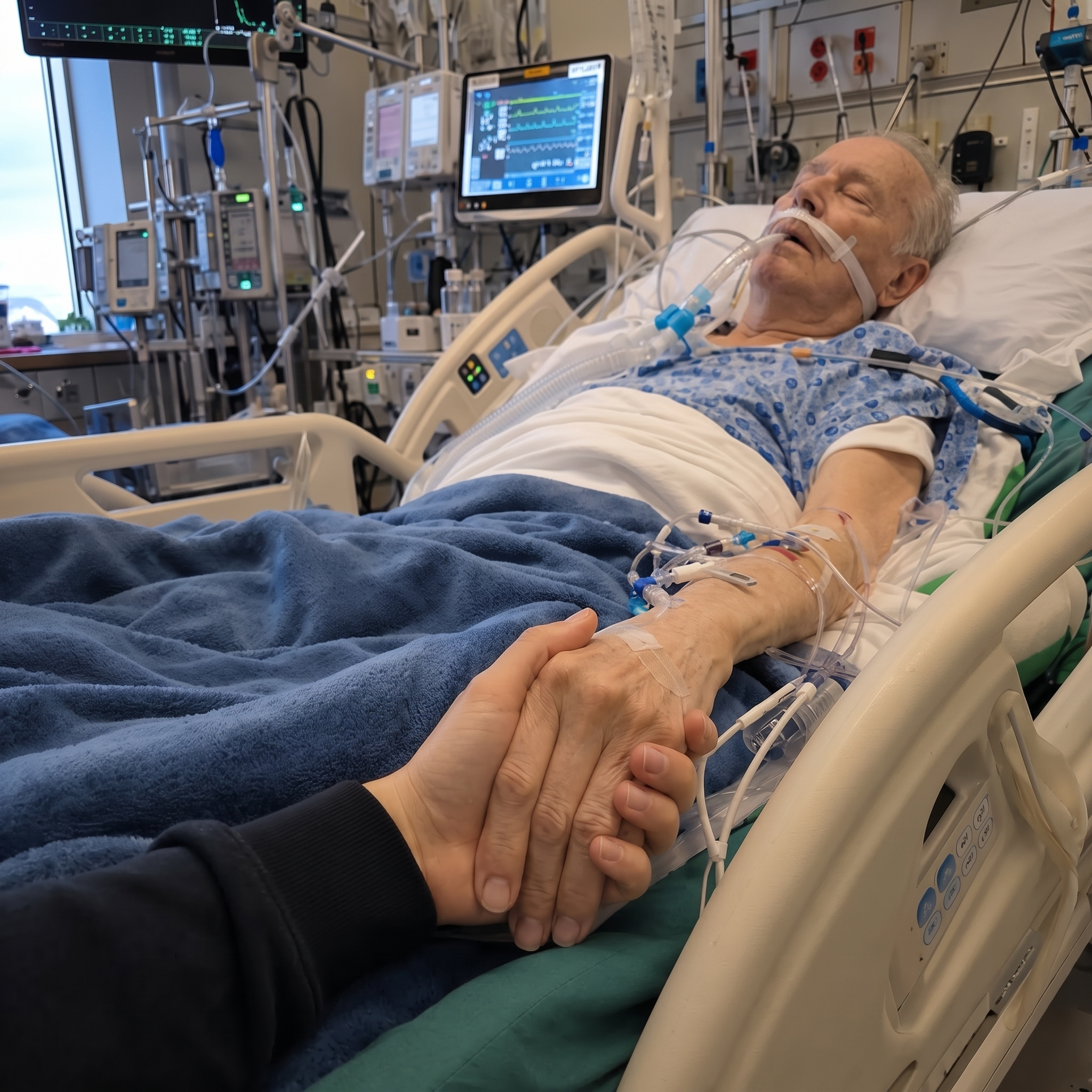
My husband was diagnosed with high blood pressure in June 2022. He'd never been a junk food person. After the diagnosis, he cut out every grain of salt he could find. Walked three miles a day. Took the Lisinopril. Lost 34 pounds. He died of a massive stroke on October 19th, 2024 at 4:17 AM. He was 58 years old. He started cutting sodium on June 8th. Low salt for two years and four months. Lost 34 pounds. Walked our golden retriever three miles every single morning before work, rain or shine. He did everything the cardiologist told him. The hospital bill was $71,000. The funeral was $11,400. His reading glasses are still on the nightstand. I can't move them. If I move them, he's really gone. I need to tell you what happened to David. Because every week I see posts on Facebook from women like me. "My husband's blood pressure keeps climbing, the doctor upped his dose again, any tips?" And it makes me physically sick. If you're the wife of a man over 45 whose blood pressure numbers won't come down, or you got the diagnosis yourself, please read this whole thing. I know it's long. I know you're scrolling. I know you have things to do. Sixteen months ago I would have given anything for someone to tell me what I'm about to tell you. David went in for his annual physical on June 9th, 2022. He felt fine. Better than fine. He'd just turned 56. He was still coaching his nephew's Little League team. He still mowed his own lawn. He thought he was healthy and honestly so did I. He'd never been a big salt person. He didn't eat fast food. His dad was 84 and still sharp. Three days later his doctor called. Blood pressure reading of 158 over 96. "David, your blood pressure is elevated. Stage 2 hypertension. We need to get ahead of this before it does real damage." David was quiet on the call. I was in the kitchen pretending not to listen. "What do I do?" "Cut the sodium. Drop 10% of your body weight. Walk every day. I'm going to start you on Lisinopril. We'll recheck in six months." David hung up the phone and sat at the kitchen table for forty minutes without saying anything. Then he stood up, opened the pantry, and started filling a trash bag. I watched him throw out the potato chips. The canned soups. The Ritz crackers. Three boxes of frozen dinners our grandkids ate when they came over. Two jars of pasta sauce. The entire bottom shelf of the pantry, the soy sauce, the bouillon cubes, the seasoned salt he put on everything. "That's it," he said. "I'm done." And he was. For 28 months, he didn't break the diet once. No processed food. No canned anything. No deli meat. No added salt. Not at his sister's wedding in Phoenix. Not on our 35th anniversary in Charleston where they brought out a complimentary appetizer platter and he asked them to take it back. Not at his own 58th birthday dinner where I made him grilled salmon and steamed vegetables with no seasoning and he smiled and said it was the best birthday meal he'd ever had. He stopped going to the Sunday cookouts at his brother's because everyone was eating burgers and bratwursts loaded with sodium and he couldn't sit there with a plate of plain chicken without feeling like an alien. He stopped going to the diner where he and his buddies had been meeting for Saturday breakfast since 1994 because the smell of bacon and hash browns made him want to cry. He lost his buddy Mike, who told him "you're no fun anymore" and stopped inviting him. He lost a piece of himself he'd been carrying for 35 years. And he did it anyway. Because the doctor said to. He lost 34 pounds. He walked Riley every morning before work, summer and winter, didn't matter. He took the Lisinopril every single day and dealt with the cough that never went away and the dizziness he never talked about but I knew about because I'd catch him grabbing the counter when he stood up too fast. He took the beet root powder his doctor "wasn't against." He cut caffeine down to one cup of decaf. He ate exactly what they told him to eat. He did everything right. The follow up reading came back on December 4th, 2022. Blood pressure: 152 over 94. Six months of doing everything right and the numbers had barely moved. The doctor said, "Blood pressure responds slowly. Give it more time. The Lisinopril needs time to work. We'll recheck in six months. Keep doing what you're doing." So he did. June 2023 reading. 156 over 96. Higher. December 2023 reading. 162 over 98. His doctor increased the Lisinopril. Added a calcium channel blocker on top of it. Said, "We need to be more aggressive. If this doesn't hold, we're going to need to add a third medication." David came home that night and sat at the kitchen table. The same table he'd sat at after the first phone call. He didn't say anything for a long time. Then he said, "Linda, I gave up everything. Everything I loved to eat. For 18 months. And it's getting worse." I told him to give it more time. I told him the doctor said the higher dose would help. I told him to trust the process. He nodded. He kept walking Riley. He kept eating the chicken and the steamed vegetables. He kept taking the pills twice a day now and dealing with the cough that got worse and the swollen ankles that came with the new medication. The fatigue was getting unbearable. He'd come home from work and be asleep on the couch by 6:30. The brain fog got so thick he started writing everything down at work because he couldn't trust his own memory. David ran a plumbing supply company. His mind was always sharp. Now he was forgetting conversations from an hour ago. His personality started to change. Not dramatic. Just quieter. Flatter. Like someone had turned a dimmer switch down on the man I married. He stopped laughing at the shows we used to watch together. He stopped reaching for my hand in the car. He mentioned it to his doctor. The doctor said it was "probably stress" and to "give the medications more time." June 2024 reading. 166 over 102. The third medication conversation happened. David went white. He said he didn't want to spend the rest of his life as a walking medicine cabinet. He didn't know what he was saying. October 2024 reading. 172 over 106. Five days later he woke up at 2 AM and I heard Riley barking. Not his normal bark. The panicked one. I found David on the bathroom floor. His left side wasn't responding. His speech was garbled. His eyes were open but only one of them was tracking. I called 911 at 2:14 AM. The paramedics used the word "stroke" before they put him in the ambulance. At the hospital they told me the stroke was ischemic. Caused by damage to the blood vessels in his brain. The doctor said years of elevated blood pressure had been silently destroying the inner lining of his vessels the entire time. Every spike. Every time his heart had to force blood through tight pipes. All of it scraping against the vessel walls from the inside. For years. David spent 6 days in the ICU. I learned things about blood pressure I never wanted to know. I learned that high blood pressure doesn't just give you headaches. It destroys the inner lining of your blood vessels from the inside. The vessels in your brain. Your heart. Your kidneys. Your eyes. I learned that when a stroke hits the right side of the brain, your left side goes. His left arm hung limp. His speech was slurred for the first three days. On day 4, David asked me three times in twenty minutes if I'd fed Riley. Riley was at our daughter's house. He couldn't remember that. Day 5, a second clot formed. The doctors said years of elevated pressure had weakened the vessel walls to the point where clots were forming faster than they could manage them. Day 6. October 19th. I was in the family waiting room down the hall. They'd asked me to step out. At 4:11 AM I heard the long beep down the corridor. At 4:17 AM, a young resident I'd never seen walked into the waiting room. I knew. "Mrs. Hayes. I'm so sorry. We did everything we could." I drove home at 6:30 AM. His walking shoes were by the back door. The beet root powder was on the windowsill above the sink, right next to the Lisinopril bottle. The decaf coffee was still in the pot from the morning before. His reading glasses were on the nightstand where he left them. Where they sit today. I sat in his recliner. I didn't move for seven hours. The house was so quiet I could hear Riley breathing on the rug. 36 years. And the loudest thing in my house was a sleeping dog. The funeral was October 26th. David's brother flew in from San Diego. Our daughter came up from Atlanta with the grandkids. Our son flew in from Denver. The grandkids wore suits that were too big for them. My five year old granddaughter asked me, "Grammy, when is Pop Pop coming home?" I told her Pop Pop was in heaven now. She said, "Can we call him there?" I had to walk out of the room. After the funeral, I tried to go back to normal. I couldn't. Because every time I opened Facebook I saw women my age, wives of men David's age, posting things like "my husband's blood pressure came back at 164 over 98, doctor upped the Lisinopril again, anyone tried hawthorn?" Or, "Low salt for a year, on two medications for six months, his numbers haven't moved, what else can we try?" And I knew some of them were doing exactly what David did. The diet. The walking. The medication. The beet root. And ending up where I am. I couldn't just sit there and watch it happen. So I started researching. Not because I wanted to. Because I had to. Because if David gave up two years and four months of everything he loved for nothing, if I can't save even one other family from what happened to mine, then I can't live with that. I read for weeks. Medical studies I had to read three times to understand. Cardiovascular research. Papers on vascular health and nitric oxide from Japan and Germany. And one thing kept coming up, over and over, that no cardiologist ever told us. The reason David's numbers didn't come down is that cutting sodium and taking medication only manages the pressure from the outside. It doesn't address the thing that's breaking down on the inside. Specifically, the inner wall of your blood vessels. Your blood vessels aren't just tubes. They're living tissue. And the inside of every blood vessel in your body is lined with a thin inner wall, a layer of living cells that controls everything about how your blood flows. When that inner wall is healthy, it does something your body depends on every second of every day. It produces a molecule called nitric oxide. Nitric oxide is your body's natural signal that tells your blood vessels to relax and open up. When the wall is healthy and producing nitric oxide, your vessels expand and contract smoothly with every heartbeat. Blood flows through without resistance. Pressure stays balanced. You don't think about it the same way you don't think about breathing. It just works. That's how it worked when you were younger. You didn't need a pill for it. You didn't need a supplement for it. The system worked perfectly. As long as that inner wall was intact. And here's what no one told us. That inner wall is directly exposed to everything in your blood. Every bit of processed food you've eaten. Every blood sugar spike. Every stress hormone. Every chemical, every toxin, every year of inflammation. It all flows right across that wall, scraping against it, hour after hour, day after day, year after year. And over time, it wears that wall down. Roughens it. Damages it. Think of the inside of an old pipe that's been corroding for decades. The surface that was once smooth is now raw, pitted, and breaking apart. That's what's happening inside your blood vessels right now. Once that inner wall is damaged, it stops producing nitric oxide. The molecule your body depends on to keep your vessels relaxed, the supply gets cut off at the source. Without nitric oxide, your vessels can't relax. They stay tight. Blood doesn't flow through the way it should. It has to force its way through. Your heart has to push harder with every single beat. That's high blood pressure. Read that again. Not bad genes. Not bad luck. Not a sodium problem. A damaged inner wall that stopped producing the one molecule your body needs to keep your vessels open. But here's the part that explains why it keeps getting worse and never gets better on its own. The harder blood pushes through a damaged vessel, the more it tears up that inner wall. Every beat of your heart is pushing blood across a surface that's already raw and breaking down, and the force shreds it further. More damage means less nitric oxide. Less nitric oxide means the vessels tighten more. Tighter vessels mean blood pushes harder. Harder pushing means more damage to the wall. Even less nitric oxide. Even tighter. Even more pressure. It's a cycle that feeds itself. And it's been running inside you for years. That's why your blood pressure was "a little high" five years ago, higher last year, and higher again at your last checkup. That's not aging. That's a cycle accelerating. Every year the wall gets worse, produces less nitric oxide, the vessels get tighter, and the pressure climbs another notch. David's blood pressure wasn't climbing because he ate too much salt. It was climbing because the inner wall of his blood vessels was being destroyed, and even the cleanest diet in the world couldn't stop that from happening. His medication forced his blood vessels open chemically. The number on the cuff went down a little. But that inner wall? Still damaged. Still corroding. Still not producing nitric oxide. Still getting shredded by every beat of his heart pushing blood across a raw, broken surface. The drug didn't address the wall. It didn't restore nitric oxide production. It just forced the pipe open while the inside kept falling apart. That's why the dose kept going up. That's why he needed more and more medication. And that's why he still got the stroke. He gave up everything he loved to eat to lower the pressure from the outside while the wall kept breaking down on the inside. I sat with that for three days. And then I started looking at what I'd been doing. I'd thrown out David's beet root powder the week after the funeral. But I bought a new canister for myself. Because I'm 57. Because my own blood pressure came back at 146 over 92 at my last physical. Because I was terrified. I took it for a month. My internist, a different doctor than David's, who I called because I trusted her, was direct with me when I told her. "Linda, beet root gives you more nitric oxide from the outside. But your body already makes its own nitric oxide. It always has. The problem was never a shortage you could top off by swallowing more from a bottle. The problem is the inner wall that produces it is damaged. Adding more nitric oxide to a system with a damaged wall is like pouring water into a bucket with a hole in the bottom. Doesn't matter how much you pour in. You'll never fill it. The wall is broken." Then she said something I'll never forget. "If David had been on something that actually addressed the inner wall, his story might have been very different." I stopped breathing for a second. "Why didn't his doctor prescribe that?" She was quiet for a long time. "Because we don't prescribe supplements. And the compound that addresses this isn't a prescription." I went to CVS the next day. I stood in that aisle for forty five minutes. Beet root capsules. Garlic tablets. Magnesium. CoQ10. Hawthorn berry. "Blood pressure support" blends with 22 ingredients on the label. A multivitamin that said "heart health." Generic fish oil, $14.99 a bottle. I bought the garlic tablets. Everyone online said garlic was "nature's blood pressure pill." Took them for three weeks. The taste coming back up was awful. My breath drove my daughter out of the room when she visited. My blood pressure didn't move. I started digging again and what I found made me throw the bottle in the trash. Garlic thins the blood so it flows with slightly less resistance. Helpful. But it doesn't touch the inner wall. Doesn't address it. Doesn't restore nitric oxide production. Magnesium relaxes the smooth muscle around your blood vessels. It can ease a little tension. But it doesn't reach the inner wall. The wall stays damaged. Nitric oxide stays depleted. Fish oil reduces inflammation floating in your blood. But it can't address the structural damage that's already been done to the wall itself. It's cleaning the water while the pipe keeps corroding from the inside. Every single thing I'd tried had either forced the vessel open, added more nitric oxide from the outside, or worked on the blood itself. Nothing had addressed the inner wall, the surface that produces nitric oxide, the surface that controls whether your vessels open or stay tight, the surface that decides everything. That's why nothing had worked. I'd been treating everything around the wall. Nobody addressed the wall. I had been doing the right thing in the wrong form. I was furious. About two weeks later I was up at 1 AM reading through a blood pressure group on Facebook, the same one I'd been reading since David died, and a woman in Ohio posted something that stopped me cold. She said her husband had been on blood pressure medication since 52. Readings consistently around 168 over 102. He did the diet. He took two medications. His numbers climbed anyway. Then she found a standardized extract from a fruit called Amla, something she'd only ever associated with Ayurvedic medicine, and everything changed. His reading went from 168 over 102 to 128 over 82 in twelve weeks. His morning readings dropped below 130 for the first time in three years. The cough from the Lisinopril stopped because his doctor took him off it. Without changing anything else. I read that post four times. I started looking into Amla. And what I learned is that there's a fruit that grows in the foothills of the Himalayas. Healers in India used it for over five thousand years. They called it "the nurse," the one remedy they reached for when someone's body was breaking down from the inside. When a person's circulation was failing. When their body was corroding from within. When nothing else was working. They didn't know what the inner wall of a blood vessel was made of. They didn't have the language for nitric oxide or oxidative stress. They just knew that when someone was deteriorating, this fruit brought them back. Modern science now knows exactly why it worked. Amla contains specific compounds called emblicanins. Powerful antioxidants found only in this fruit. When scientists tested the antioxidant strength of over three thousand foods, Amla ranked number one. Not blueberries. Not turmeric. Not green tea. Amla. And it wasn't close. Here's what emblicanins do. They address the damaged inner wall of your blood vessels. The free radicals that have been corroding your inner wall for years, the ones created by stress, processed food, sugar, and just getting older, emblicanins find them and neutralize them. Not in your gut like garlic. Not in the muscles around the vessel like magnesium. Not floating loosely in your blood like fish oil. Directly on the inner wall itself. Where the actual damage is happening. When the assault stops, the wall starts to heal. The raw, corroded surface that hadn't been able to do its job in years begins to rebuild. The same way a cut on your skin heals once you stop picking at it, the inner wall repairs itself once the thing destroying it is neutralized. And when the wall starts healing, something happens that no medication and no supplement has ever been able to do. It starts producing nitric oxide again. On its own. The way it did when you were younger. The way it did before the damage shut it down. Your body's own natural signal that tells your blood vessels to relax, the same molecule that beet root tried to replace from the outside, your wall starts making it again from the inside. You didn't need more nitric oxide from a bottle. You needed to address the wall that produces it. When nitric oxide production comes back, your vessels relax on their own. Not because a drug is forcing them open. Not because a supplement is flooding the system with a signal that has nowhere to land. Your vessels open because the wall is working again and telling them to open. The way the system was designed. This is what makes Amla fundamentally different. Drugs force your body. They override signals, block enzymes, push your vessels open with chemistry. That's where the side effects come from. The cough. The swollen ankles. The brain fog. The feeling that you've traded your personality for a better number. You're not being helped. You're being controlled. Amla doesn't force anything. It addresses the wall. It protects the signal your body has always been making. Your body isn't being overridden. It's being supported. When vessels relax, blood flows through without forcing. Your heart doesn't have to push as hard. The pressure on the walls drops. And when the pressure drops, the wall stops getting shredded. The cycle that's been running for years, damage, less nitric oxide, tighter vessels, more pressure, more damage, finally breaks. Pressure comes down. Not because something overrode your body. Because your body is doing what it already knows how to do. It always knew. You just had to address the wall first. In a clinical study, standardized Amla extract went head to head with Simvastatin, one of the most widely prescribed cardiovascular drugs in the world. The Amla matched it. Blood pressure dropped. LDL cholesterol came down. Inflammation markers declined. Without the dry cough. Without the brain fog. Without the swollen ankles. Without the exhaustion. Without your body paying the price for a chemical override it was never designed to sustain. But here's the part most people don't realize. You can't just buy any Amla product and expect results. Most Amla supplements on the shelf are cheap fruit powders, ground up scraps with no standardization, no consistency, and no guarantee that what's on the label is what's in the bottle. The compounds that actually do the work, the emblicanins, are heat sensitive. The industrial process that most companies use to dry the fruit destroys the emblicanins before the powder hits the capsule. You're paying for dust. The powders? Heat processed. The emblicanins are gone by the time it hits the shelf. You're paying for brown powder with a label. The generic supplements on Amazon? Cheap commercial fruit. No organic certification. No verification of emblicanin content. The label says Amla. What's inside isn't. I went through every product I'd looked at. Not one preserved the emblicanins at a concentration that matched the studies. That's when I found Alevia. Standardized Amla extract. Organic. Third party tested for purity and potency. Made in the USA. Small batch production with low temperature processing that preserves the full emblicanin content. No fillers. No heat damage. Two capsules every morning. 90 day money back guarantee. If your numbers don't improve, every penny back, no questions asked. I almost didn't order it. After the CVS aisle. After the garlic tablets. After David. After everything. But my brother was sitting on a reading of 172 over 104 and a doctor who wanted to add a third medication. My son in law in Atlanta had just been told his blood pressure was elevated at 39 with two little girls. I had my own reading creeping in the wrong direction. I ordered it. My brother first. Blood pressure averaging 172 over 104. On two medications for three years, watching the numbers climb anyway. I didn't ask. I sent him a bottle and a note that said, "If you don't take this every morning I will never speak to you again, Frank, I mean it." He took it. He didn't stop the medication. He's stubborn the way David was stubborn. But he took the two capsules every morning. He went back to his doctor last month for his follow up. Blood pressure: 126 over 78. Down from 172 over 104. In ten weeks. He hadn't changed anything else. Same diet, same walks, same life. The only thing he changed was the capsule he took with his morning coffee. He called me crying. My 61 year old brother. Crying on the phone like a kid. He said, "Linda, I think David died because nobody told him about this." I had to hang up. Then there's my son in law in Atlanta. 39, two little girls, blood pressure flagged at his last physical. Started taking it eight weeks ago. He says the afternoon fatigue is gone. The brain fog lifted by week three. He checked his cuff last week after a stressful day at work and the reading was 122 over 78. My neighbor across the street, Patricia. Her husband died of a heart attack three years ago. His doctor had been managing his blood pressure for a decade. Two widows on the same cul de sac. She started taking it three days after I told her, just for prevention. She says it's the first time since he died that she doesn't feel like she's waiting for her own diagnosis. I told my sister. I told David's brother in San Diego. I told the women in my Bible study. I told David's old fishing buddies when they came by to drop off a casserole. I'm not a doctor. I'm not a scientist. I'm not selling anything and I don't get one penny from any of this. I'm a 57 year old widow sitting in my dead husband's recliner at 2 in the morning because I can't sleep and I can't stop thinking about Frank in Cleveland and my son in law in Atlanta and the women on Facebook posting "my husband's blood pressure won't come down, what else can we try." Here's what I know because I lived it. Cutting sodium gives the system less to fight against. It doesn't address the wall. It doesn't restore the signal. Blood pressure medication forces your vessels open chemically. It doesn't reach the wall that's breaking down on the inside. Beet root and garlic add more signal or nudge the system from the edges. They don't address the wall that's failing to produce the signal in the first place. David gave up everything he loved to eat for 28 months and it didn't save him because nobody told him what was actually destroying his blood vessels from the inside. I wish someone had told us before June 9th, 2022. Before the diagnosis. Before the trash bag of food in the pantry. Before the 28 months of plain grilled chicken and unseasoned vegetables. Before October 19th at 4:17 AM. I can't go back. David can't come back. His reading glasses are still on the nightstand and they're going to stay there. But you can still go forward. Your husband can. Your brother can. You can. The page that explains all of this, the damaged inner wall, why cutting sodium alone wasn't enough, and what Alevia's Amla actually contains, it's the page I found at 3 AM. Not managing. Addressing. That's the line that finally made it click for me. I want you to read it. Not for me. For whoever you'd leave behind. David used to say, "You can't change what already happened. But you can change what happens next." You can change what happens next. This is my personal story. Not medical advice. Talk to your doctor before making any changes to your medication. ~ Linda Hayes, age 57, Naperville, IL 👉 https://alevia.com/amla/8 P.S. His reading glasses are still on the nightstand. I still can't move them. Every morning I walk past them and for one second I forget. For one second I think he's about to come down the stairs and ask me where Riley's leash is. He's not. $71,000 in hospital bills. $11,400 for the funeral. 28 months of him giving up every food he loved for nothing. And a capsule that costs less than the bag of organic spinach he was eating every day, something his own doctor told me could have changed everything if we'd known. Please. Don't end up here. Don't let someone you love end up here. P.P.S. I don't work for Alevia. I don't get a penny from this. I'm writing this at 2:38 AM because I can't sleep and David's side of the bed is cold and Frank in Cleveland is 61 and the women on Facebook are still posting at 2 AM and I'm terrified every time my phone rings. Share this with anyone you love whose blood pressure numbers keep climbing. Even "slightly elevated." Even "borderline." Even if they're doing the diet perfectly. Especially then. Please. 👉 https://alevia.com/amla/8
Like this ad? Make it yours.
Crush rebuilds this exact creative around your product — your brand, your colors, your offer — in about a minute.