1sthour
1sthour Facebook ad: “If you're parent or grandparent, please read this”
Ran for 22 days, from July 16 to August 7, 2026, the last day Crush saw it.
Run by 1sthour on Facebook. Crush is not the advertiser and does not verify its claims. See this ad in Meta's Ad Library(opens in a new tab)
Want an ad like this for your product?
Crush makes new ad images for your product from this ad: your logo, your product photo, your offer.
Trials from $19.95 USD, then $79.95 USD a month. Cancel anytime.
About this ad
- Meta Ad Library ID
- 1576065864182261
- Platforms
- Facebook, Instagram, Messenger and Threads
- Relaunches
- 2
Ad text
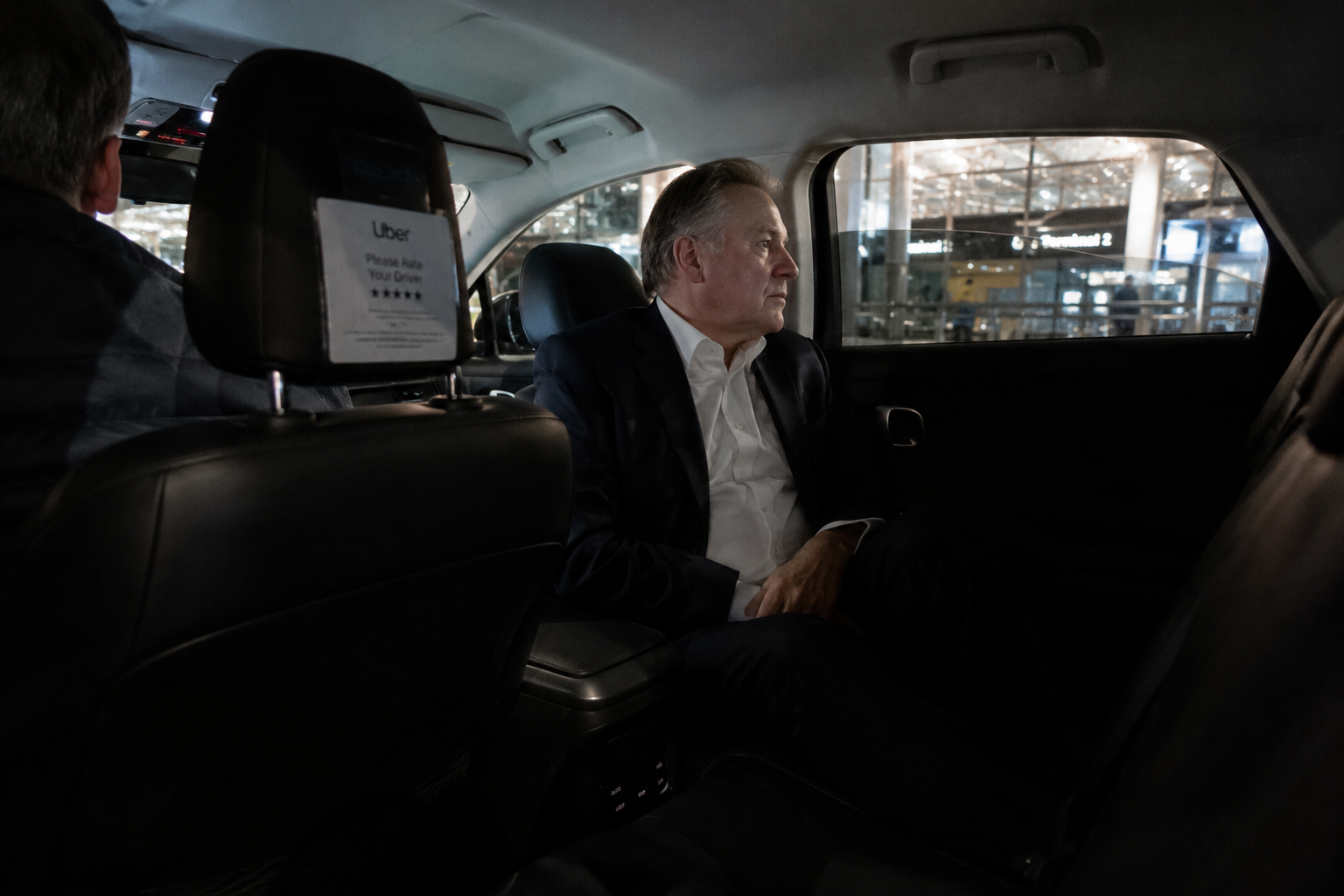
The man in the back seat of my Uber at Reagan two weeks ago paid for premium, told me to take the long way home, and turned his government ID inward when he sat down. He closed his eyes when the news anchor said the latest U.S.–Iran peace talks had ended without an agreement. Then he took a phone call. He listened for almost a minute before saying: “Tell him I’ll call from the house.” He hung up. A few seconds later, he leaned forward and turned off my radio himself. What he told me on the GW Parkway had almost nothing to do with oil prices, blockades, or what might happen overseas. It was about what happens here at home when one ordinary moment suddenly becomes an emergency. And it completely changed the way I look at protecting my family. I drive nights. My wife and two kids are home in Falls Church. I spent fourteen years in the Marines, mostly working logistics. I got out in 2019 and drove a sleeper truck for two years, until my oldest started kindergarten and my wife asked me to find something that kept me closer to home. So I started driving Uber. Premium airport runs three nights a week. You learn to read people quickly. Lobbyists. Hill staffers. Defense contractors. Men carrying two phones and briefcases that have probably crossed more borders than most people ever will. And then there are the quiet ones. No logos. No unnecessary conversation. They sit still, watch everything and never tell you more than you need to know. You learn not to ask those men what they do. That Tuesday night, he came out of international arrivals alone. Late fifties. Dark suit. Small carry-on. Leather briefcase. A government ID badge was clipped near his belt, but as soon as he sat down, he rotated it inward. He gave me an address in McLean. “Take the parkway,” he said. “I’m not in a hurry.” I pulled away from the terminal. For the first few miles, the radio played quietly. Blockades. Failed negotiations. Fuel prices. Warnings about disruptions overseas. The same stories everyone had been watching. He stared out the window. Then his phone rang. Not the smartphone sitting beside him. A small black phone he pulled from inside his jacket. He looked at the screen for several seconds before answering. “Yeah.” Silence. “How long?” Another pause. “That’s not what we agreed on.” Then: “Tell him I’ll call him in twenty. From the house.” He ended the call and held the phone in his lap. The radio rolled into another segment about unrest, shortages and whether Americans should be concerned. He leaned forward and turned it off. For another half mile, neither of us spoke. Then he asked: “What did you do before this?” “Marines.” “How long?” “Fourteen years.” “What field?” “Logistics.” He nodded. “Family?” “Wife. Two kids.” “How old?” “Seven and four.” He looked down for a moment. Then he asked me a question I wasn’t expecting. “What do you have in the car if something happens to one of them?” I thought he meant roadside equipment. “Jumper cables. Flashlight. Basic tools.” He shook his head. “No. If one of them is seriously hurt.” I didn’t answer right away. “I’ve got a first-aid kit.” “What’s inside?” “Bandages. Alcohol wipes. Gauze. Probably some ointment.” He nodded slowly. “That’s what almost everyone says.” The way he said it made me uncomfortable. I asked him what was wrong with that. “Nothing, if somebody has a paper cut.” He looked at me through the rearview mirror. “But a plastic box filled with Band-Aids isn’t a trauma plan.” I kept driving. He looked back out the window. “The news has everyone watching what’s happening thousands of miles away. Blockades. Wars. Power grids. Supply chains.” He paused. “But most families are unprepared for the emergency most likely to happen directly in front of them.” “What kind of emergency?” “Car wreck.” He pointed toward the traffic beside us. “Power-tool injury.” Then toward the dark neighborhoods beyond the trees. “Kitchen accident. Broken glass. A bad fall. Hunting accident. Storm debris. Bicycle crash. Somebody cutting themselves deeply in the garage.” He looked back at me. “Normal life.” I told him I’d call 911. “You should. Immediately.” Then he said: “But the ambulance still has to reach you.” That stayed with me. He continued. “People think calling 911 ends the emergency. It doesn’t. It starts the waiting.” “Sometimes help arrives quickly.” “Sometimes traffic is bad.” “Sometimes the nearest crew is already on another call.” “Sometimes you’re on the highway, at a campsite, on rural property or somewhere responders can’t reach immediately.” He leaned forward slightly. “And serious bleeding doesn’t pause while everybody waits.” I asked him what he did for a living. He didn’t answer directly. “I work around emergency planning.” That was all he gave me. Then he asked: “Do you know what happens to most people when they see someone they love badly hurt?” “They panic.” “They freeze,” he said. “Panic at least makes you move. Freezing means you stand there with a phone in one hand and a kitchen towel in the other, hoping somebody gets there before the situation becomes worse.” I felt my hands tighten around the steering wheel. He noticed. “I’m not trying to scare you.” He paused. “I’m telling you because you said you have two children.” For a while, the only sound was the tires against the road. Then I asked: “What should I have?” He reached down beside his seat and lifted his briefcase onto his lap. He opened one side pocket and pulled out a compact black medical bag. It wasn’t huge. It wasn’t the kind of giant case you would see inside an ambulance. It was small enough to keep under a seat, in a trunk or inside a kitchen cabinet. A red-and-white medical emblem was attached to the front. He passed it between the seats. “This is what I keep with me.” I placed it on the passenger seat and opened it at a red light. Inside were organized medical supplies. Tourniquets. Pressure dressings. Gauze. Trauma shears. Gloves. Emergency bandages. Chest seals. Tools and supplies that looked completely different from the little first-aid box under my bathroom sink. “This doesn’t replace an EMT,” he said. “It doesn’t replace training.” “And it doesn’t mean you delay calling 911.” He pointed toward the kit. “It means you’re not empty-handed during the minutes before trained help arrives.” The light changed. I closed the kit and kept driving. He told me he kept one in his vehicle and another at home. His wife had one in her car. He had also shown his older children where the kits were stored and told them never to play with them. “Hopefully,” he said, “they sit untouched for years.” “Then why own several?” “Because you don’t get to choose where the emergency happens.” He looked toward the road. “People keep one fire extinguisher in the kitchen and another in the garage because fire doesn’t care which room is convenient.” “A trauma kit is the same idea.” I asked where he bought it. He gave me the name. “1stHour.” I had never heard of it. “It was built around those first critical moments,” he said. “The time between something happening and professional help arriving.” He tapped the top of the bag. “Everything together. Everything organized. Something you can keep close instead of searching through drawers while somebody is hurt.” I asked him if owning one meant I would know how to use everything inside. “No.” His answer was immediate. “Buy the kit, then learn.” “Take a Stop the Bleed class.” “Read the included instructions.” “Watch proper training from qualified professionals.” “Preparedness is equipment plus knowledge. Not one or the other.” That made more sense to me than any survival advertisement I had ever seen. No fantasy about replacing doctors. No pretending I would suddenly become a paramedic. Just a way to be better prepared while real help was on the way. We made the turn into McLean. Large homes. Long driveways. Quiet streets. Before we reached his house, he said: “Most people spend years protecting themselves from problems that might happen.” “Insurance.” “Alarm systems.” “Smoke detectors.” “Backup cameras.” “But ask them what they would do if somebody they loved suffered a traumatic injury right in front of them, and they have no answer.” He looked at me through the mirror. “You don’t need to live afraid.” “You just need to stop assuming you’ll have time to prepare after the emergency begins.” I pulled into his driveway. He took the kit from the passenger seat, picked up his briefcase and reached for the door. Then he stopped. “You said your oldest is seven?” “Yes.” “My daughter is seven.” He looked toward the house. “That’s why I’m telling you.” He sent a link to my phone. Then he got out. I sat in the driveway for another minute after he walked inside. I drove home without turning the radio back on. When I entered the house, my wife was asleep on the couch. The television was still playing coverage of the failed negotiations overseas. My children were upstairs. Safe. I walked into the bathroom and found our first-aid kit. I opened it on the counter. Band-Aids. Tiny gauze pads. Alcohol wipes. Antibiotic cream. A pair of cheap plastic tweezers. It was fine for scraped knees. It was not what I wanted beside me during a real trauma emergency. I closed it. For two days, I did nothing. I told myself the man had probably just finished a difficult trip. Maybe he had seen something upsetting. Maybe he was being overly cautious. Then Friday afternoon, traffic stopped three cars ahead of me. A pickup had clipped a motorcycle. The rider was on the pavement. Several people stood nearby with their phones out. One man pulled a sweatshirt over his hand and ran toward him. I watched him kneel beside the rider while someone called 911. The ambulance arrived several minutes later. Maybe everything turned out fine. I hope it did. But all I could think about was what the passenger had said: You don’t get to choose where the emergency happens. That night, I told my wife the whole story. The airport. The phone call. The conversation on the parkway. The trauma kit. She listened without interrupting. When I finished, she went upstairs and checked on the kids. Then she came back down and asked: “Where’s the link?” We ordered one for the house. Then another for my vehicle. A few days later, the box arrived. I placed the kit on the kitchen table and opened every compartment. The supplies were organized. Easy to see. Easy to keep together. Nothing like the random pile of medical items we had accumulated over the years. My wife looked through it with me. Then she said: “We need one in my car too.” We ordered another. I hope we never use any of them. I hope the seals remain closed. I hope the gauze stays packed. I hope the tourniquets collect dust. But hope is not a plan. Now, if something happens, our first move is still the same: Call 911. Get trained help moving toward us. But while that help is coming, we won’t be searching the bathroom for expired gauze and trying to remember where we left the scissors. We’ll have organized trauma supplies within reach. That’s what changed for me after that ride. I still watch the news. I still see the headlines about failed peace talks, international instability and disruptions nobody seems able to resolve. But I also understand something I didn’t before. The emergency that affects my family may not start overseas. It may happen in my driveway. On the highway. In the kitchen. In the garage. At the park. On an ordinary Tuesday when nobody expects anything unusual to happen. Preparedness isn’t about living in fear. It’s about making one decision while everything is calm so you’re not completely helpless when everything suddenly isn’t. Here is the same kit the passenger showed me: 👉 https://www.shop.1sthour.com/13688167_tfakht_ord?_ef_transaction_id=&oid=662&affid=65&source_id=FB Keep one in your home. Keep one in your vehicle. Learn how to use the supplies properly. Hopefully you never need it. But if that moment ever comes, you’ll be glad you prepared before the sirens were still several minutes away. P.S. A regular first-aid kit is useful for small cuts, minor burns and scraped knees. A trauma response kit is built for more serious situations. It is not a substitute for professional medical care or proper training. Always call 911 in an emergency and follow instructions from trained responders. P.P.S. After ordering ours, I registered for a local bleeding-control course. Owning emergency equipment is only the first step. Knowing where it is, understanding what is inside and receiving proper instruction are what make it useful. P.P.P.S. The passenger never told me to panic. He told me to prepare quietly, learn what to do and hope I never needed any of it. That is exactly what we did. 👉 See the 1stHour Trauma Response Kit here: https://www.shop.1sthour.com/13688167_tfakht_ord?_ef_transaction_id=&oid=662&affid=65&source_id=F
Where the ad sends people
1sthour.com
If you're parent or grandparent , please read this ☝️
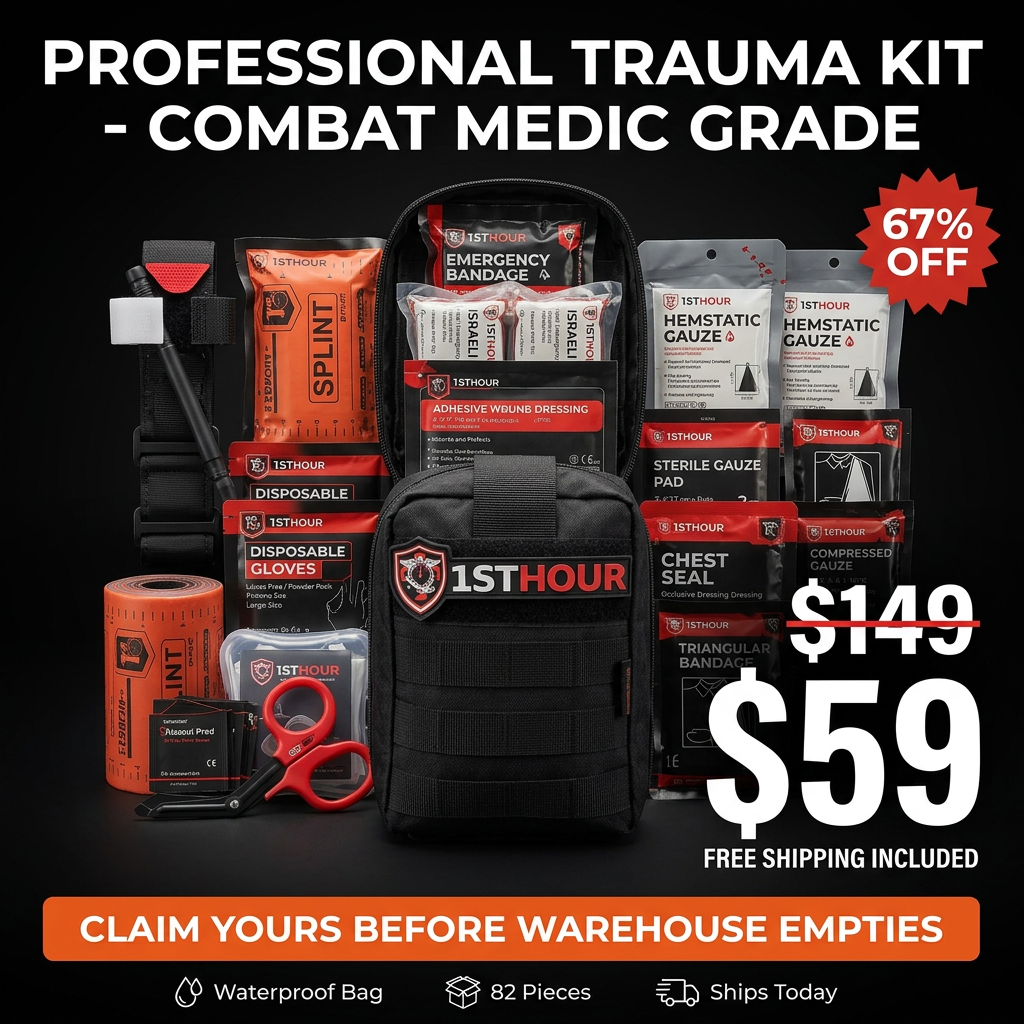
Be ready when every second counts. The 1STHOUR Trauma Kit is a professional-grade emergency medical kit built for the first critical minutes before emergency responders arrive. Unlike basic first aid kits, it includes trauma-focused supplies designed to help address severe bleeding, burns, wounds, ...
Shop now: shop.1sthour.com(opens in a new tab)