
Inactive· since Apr 3, 2026
- 77
- days it ran
- 0
- relaunches
Ad copy
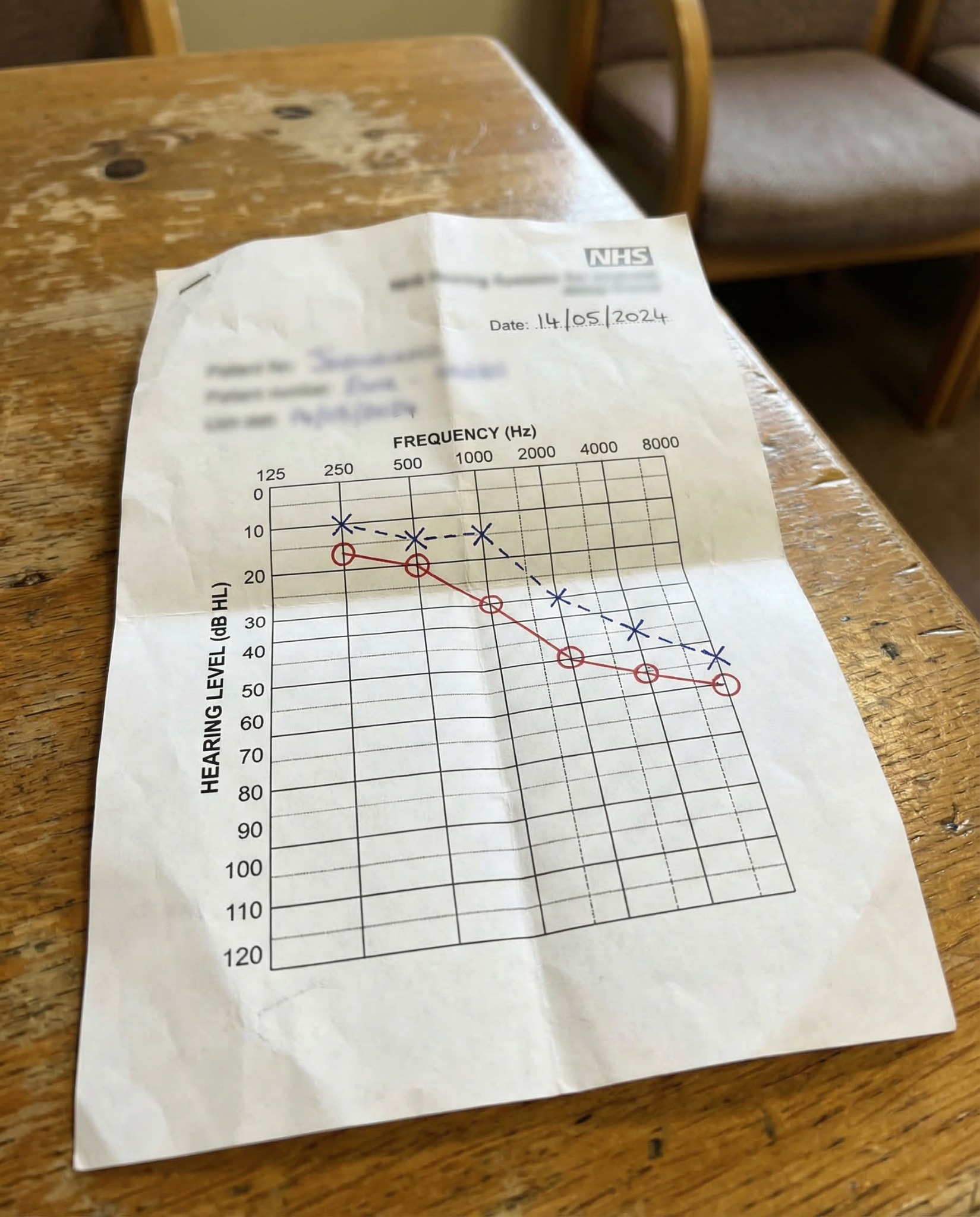
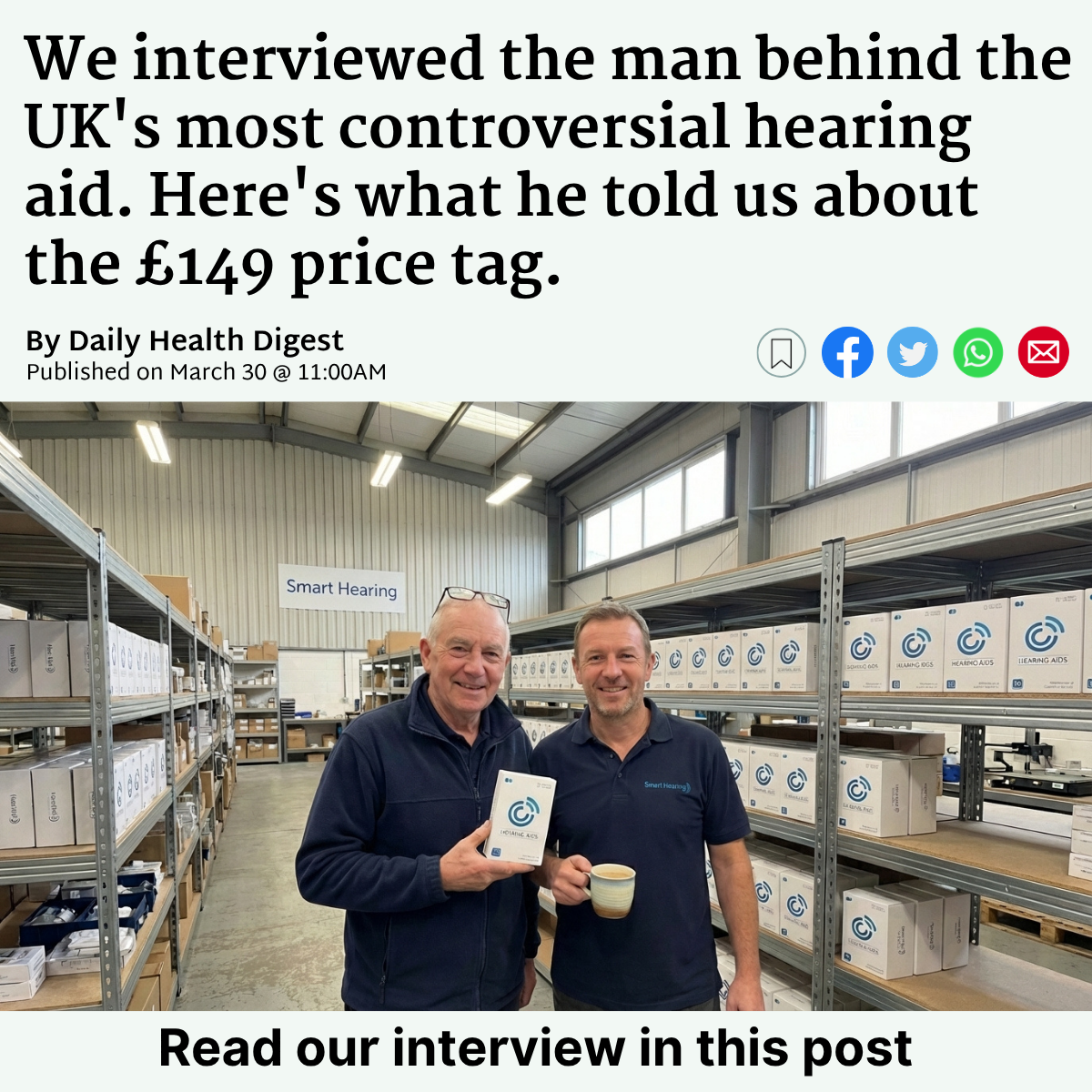
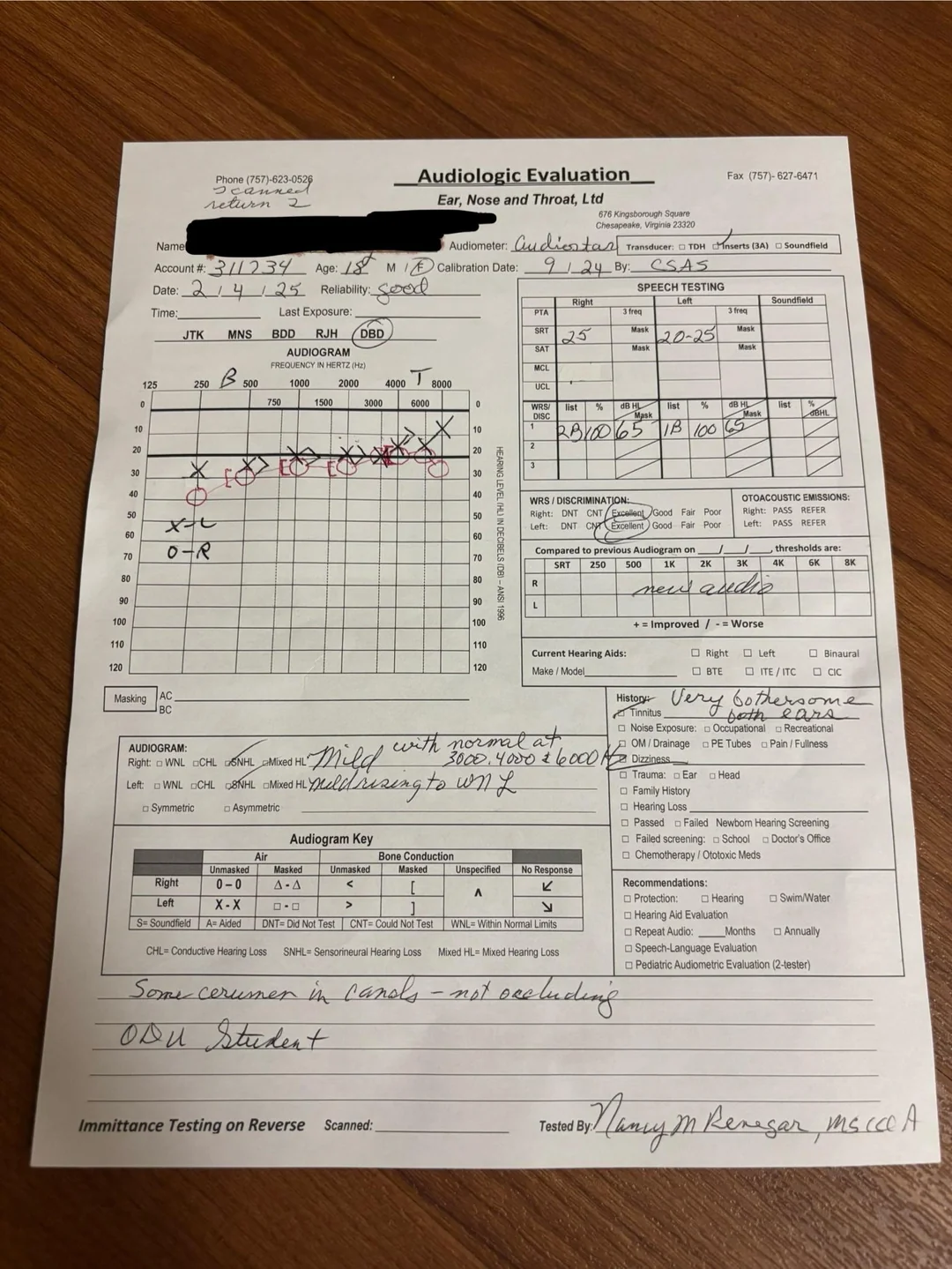
I got my hearing test results back in August. The audiologist said mild to moderate loss. Then she quoted me £2,800. I went home and did my homework instead. I'll be straight with you. I'd been putting off getting my hearing tested for about three years. I told myself everyone mumbles. That the telly was just mixed badly. That restaurants have always been this noisy. My wife stopped believing me around year two. She'd say something from the other room and I'd shout "what?" without even trying anymore. Not because I couldn't be bothered — because by the time I'd processed that she'd said something, the moment had already passed. At family tea I'd nod along and hope nobody asked me a direct question. I got quite good at that. Smiling at the right moment. Laughing when everyone else laughed. My daughter clocked it before I did. So I finally went. Sat in the little soundproof booth, pressed the button every time I heard a beep. Some of them I wasn't even sure I'd heard — I just pressed it anyway and hoped for the best. Came out with a piece of paper that looked a lot like the one in the photo above. The audiologist was perfectly nice. Mild to moderate loss, she said. More pronounced at the higher frequencies. Completely normal for my age. What that means in practice is that I'm missing a lot of consonants — the S, the F, the TH sounds that make speech clear rather than just loud. That's why everything sounds like mumbling. Nobody's mumbling. I'm just losing the edges of words. Then she walked me over to a glass cabinet and showed me a range of hearing aids. Starting at £1,800. Up to £2,800 for the pair she recommended. I nodded, took the leaflet, and went home. Now I want to be clear — she wasn't doing anything wrong. That's just what they cost on the high street. That's the industry. But I'm 58, I've worked for everything I've got, and I don't spend £2,800 on anything without sitting down and thinking about it first. So I did my homework. I spent two evenings reading everything I could find about how hearing aids actually work. The technology behind them, how they're manufactured, what the difference is between a £200 device and a £2,800 one. What I found genuinely surprised me. The components that matter — the chip that processes sound, the microphone, the receiver — are made by a small number of manufacturers and end up in devices across an enormous range of price points. The same core technology sits inside hearing aids at very different prices. What changes as the price goes up isn't always the fundamental processing capability. It's the brand. The clinic. The shop on the high street with the carpet and the certificates on the wall. What you're actually paying for at Specsavers or Boots isn't purely the hearing aid. It's the building. The receptionist. The audiologist on commission — and yes, commission is a real part of how high street hearing aid sales work. The area manager. The aftercare package. The television advert that made you trust the name in the first place. All of that gets added to the price of a device that costs a fraction of what you're quoted. I'm not saying high street audiologists aren't worth seeing. For complex or severe hearing loss, professional fitting matters enormously. But for mild to moderate loss — the kind my audiogram was showing, the kind that makes conversations exhausting rather than impossible — the technology gap between a £149 device and a £2,800 one is much smaller than the price gap suggests. I came across Smart Hearing through an article someone had shared in a forum I'd been reading. British company. No high street shops. Sells direct from a warehouse. The logic was simple: remove the shop, remove the commission, remove the middleman, pass the saving on. Same 16-channel AI sound processing you'd find in devices costing ten times the price — the kind that separates speech from background noise rather than just amplifying everything indiscriminately. That distinction matters. A cheap amplifier makes everything louder, which means the background noise gets louder too and speech doesn't get any clearer. Multi-channel processing is what actually makes voices easier to follow in difficult environments. It's the difference between turning the volume up on a bad signal and getting a better signal. Rechargeable — over thirty hours from a two-hour charge. No more fiddling about with those tiny button batteries every few days. UKCA-certified medical-grade technology. Sits completely inside the ear. Nobody can tell you're wearing it. £149 for the pair. I won't pretend I wasn't sceptical. I was. The price made me suspicious in both directions — suspicious of the high street quote, and suspicious of something that seemed too affordable. I read every review I could find. Looked for complaints. Looked for the catch. The main thing people said was that there's an adjustment period — your brain needs a couple of weeks to adapt to hearing sounds it hasn't properly processed in years. Some people found the first few days overwhelming. That's apparently completely normal and worth knowing beforehand. I ordered them on a Thursday evening. Arrived Monday. Put them in. Sat in the kitchen. First thing I noticed was the fridge. I could hear it humming — but quietly, in the background, where it belongs. With nothing in my ears, the fridge and my wife talking had become roughly the same volume in my brain. These separated them. She was clear. The fridge was background. That's what multi-channel processing actually does and I understood it immediately because I could hear the difference. That evening I followed the full conversation at the dinner table for the first time in longer than I care to admit. Didn't have to ask anyone to repeat themselves once. My wife said something from upstairs while I was in the kitchen with the door half closed. I heard her. Not "I think she said something" — I heard the actual words. I didn't make a big thing of it. I just answered. She came downstairs and looked at me like I'd done something remarkable. I hadn't. I'd just heard her. Seven weeks on and the Specsavers leaflet is still in the kitchen drawer. I haven't thrown it away. Not because I might still use it — I won't — but because it reminds me how close I came to either spending £2,800 I didn't need to spend, or doing nothing and letting another year go by. The telly is down from 34 to 19. My daughter stopped subtitling everything for me. I went to a work dinner last month — the noisy kind, long table, everyone talking at once — and I was part of it. Not performing being part of it. Actually in it. I wish I'd done it sooner. Not because the last three years were catastrophic. They weren't. But I didn't realise how much energy I was spending just keeping up. How tired I was after every social situation. How much of that was my ears working against me and how much I'd just accepted as normal. If your audiogram looks anything like mine — mild to moderate, sloping down toward the higher frequencies — and you came home with a quote that felt like it was written for someone else's bank account, I'd just say: do your homework before you decide. Here’s the article that I found: www.healthylivingdigest.news/pages/healthy-living-digest-we-tested-the-actual-cost-of-5-top-hearing-aids Smart Hearing is £149. Delivered to your door. No appointment, no waiting list, no high street markup. If you want to try Smart Hearing, you can find it here: https://trysmarthearing.com/products/smart-hearing-comfort There's a 45-day risk-free home trial. If it doesn't help you hear more clearly, send it back for a full refund. No quibble. That piece of paper doesn't have to sit on the kitchen table for another two years while you put it off. Mine did. I don't think it needed to. — David, 58, Leeds
what nobody tells you about hearing aids
Hear every conversation clearly without anyone knowing you're wearing them. Advanced AI technology automatically adjusts to any environment - restaurants, family dinners, phone calls
LEARN MORELike this ad? Make it yours.
Crush rebuilds this exact creative around your product — your brand, your colors, your offer — in about a minute.