Edward Sterling
Edward Sterling Facebook ad: “I refused flomax.”
Ran for 52 days, from July 5 to August 26, 2026, the last day Crush saw it.
Run by Edward Sterling on Facebook. Crush is not the advertiser and does not verify its claims. See this ad in Meta's Ad Library(opens in a new tab)
Want an ad like this for your product?
Crush makes new ad images for your product from this ad: your logo, your product photo, your offer.
Trials from $19.95 USD, then $79.95 USD a month. Cancel anytime.
About this ad
- Meta Ad Library ID
- 1582078320109625
- Platforms
- Facebook, Instagram, Audience Network, Messenger and Threads
- Relaunches
- 0
Ad text
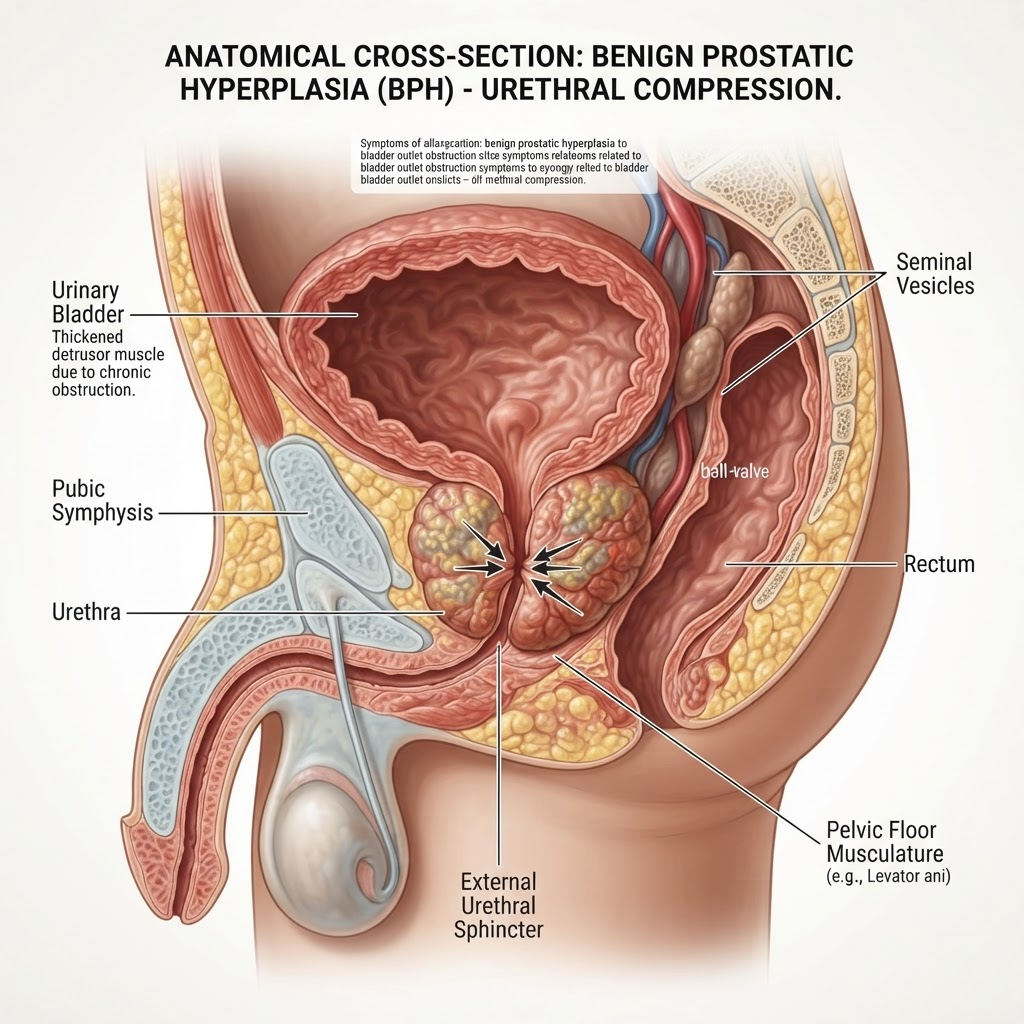
My doctor said if I refused Tamsulosin, she'd document it in my chart as non-compliance against medical advice. I had fourteen minutes with her. She'd never met me before. Dr. Hartman's retirement letter came on a Tuesday. Standard form letter. "After 31 years of practice, I'm stepping away effective March 1st. Your care will be transferred to Dr. Leena Sharma." I sat at the kitchen table staring at it. Twenty four years. I'd been seeing Dr. Hartman for twenty four years. He knew my history, knew my father's experience with prostate medication, knew my reluctance around treatment, and he'd always worked with me, always said the same thing, "let's keep watching it, Edward, the numbers aren't alarming yet, you're doing the right things." Now he was gone. My first appointment with Dr. Sharma was April 17th. Routine physical. Transfer of records. Meet the new doctor. I sat in the exam room, same room I'd been in for years, same posters about prostate health and urological care, different doctor. Dr. Sharma walked in. Young. Maybe 34. Tablet in hand. "Mr. Sterling." Firm handshake. All business. "I've been going through your file." She sat down, pulled up my records, scrolled, and her expression changed. "Your prostate history." She turned the screen toward me. "2021, PSA 2.1. 2022, PSA 2.7. 2023, PSA 3.3. 2024, PSA 3.9. Today, PSA 4.6. Prostate volume 48 cc on this morning's scan." She looked at me. "Four years of progressively rising PSA with documented enlargement. Symptomatic for at least three years. No medication prescribed." "Dr. Hartman and I had a plan, dietary changes, reduced alcohol, regular monitoring, he was watching it..." "For four years?" Her voice was sharp. "Mr. Sterling, your prostate has been enlarging and symptomatic for years without treatment, I don't know what your previous doctor was thinking, but this should have been addressed earlier." My stomach dropped. "Dr. Hartman knew my history, my father had serious problems with..." "Your father's history doesn't change your numbers. PSA 4.6, prostate volume 48 cc, you're at risk for urinary retention, bladder damage, kidney complications." She was already typing. "We're starting Tamsulosin. 0.4 milligrams daily." "I'd rather..." "This isn't a discussion. Your prostate is enlarged and symptomatic. If you refuse treatment, I'm required to document it in your chart as non-compliance against medical advice." The printer hummed. She handed me the prescription. "Follow up in twelve weeks. We'll do a full assessment and see how you're responding." She stood. Left the room. The whole appointment took fourteen minutes. I sat there holding the prescription, hands unsteady, the words "against medical advice" and "non-compliance" circling in my head like a verdict. In the parking lot, I called my wife Carol. "How was the new doctor?" "She says Dr. Hartman should have started me on medication years ago, and she wants me on Tamsulosin immediately." Silence. "What?" "She said years of watchful waiting was irresponsible." "But Dr. Hartman always said you were..." "I know what he said. She doesn't care. I either take the medication or it goes in my record that I refused." That night I couldn't sleep, just lay in bed staring at the ceiling, Carol's breathing steady next to me. Dr. Hartman had respected my concerns, we'd worked together for over two decades, dietary changes, reduced caffeine, fewer evening fluids, regular check-ups every six months. My PSA had climbed, yes, but gradually, no sudden jumps, manageable symptoms, nothing that felt like a crisis. Was he wrong to be patient? Was I walking around with a prostate squeezing shut and didn't even know how bad it was getting? At 3 AM I went downstairs, pulled my laptop open at the kitchen table, and started searching. is PSA 4.6 dangerous BPH risks without treatment prostate complications untreated men 50s Every article said the same thing. Increased risk. Urinary retention. Bladder damage. Kidney failure. Maybe Dr. Sharma is right, I thought, maybe I've been reckless. But then I searched, tamsulosin side effects long term. Retrograde ejaculation. Permanent dry orgasms. Dizziness. Low blood pressure. Fainting. Complete loss of ejaculate. And my father's face came to mind. He'd been on prostate medication for twelve years, started with Tamsulosin, the same medication sitting on my counter right now, and the retrograde ejaculation came within eight weeks, not something minor he could ignore, a complete absence of any emission during orgasm that he hadn't been warned about, didn't understand, and couldn't bring himself to explain to my mother. They adjusted his dose and added a second medication for the dizziness, but then the falls began. He started losing his balance, small moments at first, steadying himself against the counter, catching a doorframe, then one morning my mother found him on the hallway floor, confused about how he'd gotten there. And the withdrawal, that was the worst. This was a man who built his own contracting business from nothing, coached my little league team, spent every weekend under a car in the driveway. By 67, he was sitting in a recliner most of the day, afraid to stand up too fast, pulling away from my mother in a way that was impossible to explain but that she felt every single day. She told me once, quietly, it was like losing him while he was still sitting in the same room. He died at 73. A surgical complication from the procedure his prostate eventually required, the procedure that twelve years of medication had delayed but never prevented. Twelve years of side effects. Twelve years of becoming less and less of himself. And it didn't stop the outcome. I closed the laptop, rubbed my face, and just sat there in the kitchen with the prescription on the counter looking at me from across the room. I didn't fill it. One week passed. Then two. Dr. Sharma's office called. "Mr. Sterling, our records show you haven't filled your prescription, Dr. Sharma wants to confirm you're taking your medication as directed." "I need more time to think about it." "Sir, Dr. Sharma noted this as urgent, she strongly recommends..." "I said I need more time." I hung up. Carol found me in the study that evening. "Edward. Talk to me." "I'm looking for options." "Options? The doctor said your prostate is serious." "She said Dr. Hartman was wrong for not medicating me, but Dr. Hartman knew me for twenty four years, he knew my father's history, he saw what that medication did to him, he was being careful with me." "But what if she's right? What if you..." Her voice broke. "I can't lose you." "You won't. I just need to find another way." "What other way?" I didn't have an answer. That weekend I searched everything. Saw palmetto. Beta-sitosterol. Stinging nettle. Pygeum. Every natural prostate supplement with actual research behind it. I tried the top-rated saw palmetto on Amazon, six weeks, every morning without fail. IPSS still 18. Basically unchanged. Switched to high-dose beta-sitosterol, eight weeks, nothing. Tried a full prostate formula from a specialty supplement store, saw palmetto, stinging nettle, pygeum, zinc, pumpkin seed powder, the most comprehensive one they stocked. IPSS 16. Two points. Maybe three. Noise. I was running out of time and running out of ideas. Three weeks before my appointment I was back at my laptop at 2 AM going in circles, reading the same supplement forums, the same Reddit threads, the same dead ends. Then I changed the search. I stopped searching for supplements and started searching for the mechanism, why does the prostate actually enlarge, what's really happening inside the gland. And I found something that changed the way I understood everything I'd been doing wrong. It was in a urology physiology paper, the kind of thing that shows up when you stop searching "how to shrink an enlarged prostate" and start searching "what actually causes BPH." Basic science. Not hidden. Not controversial. Just not something anyone had ever explained to me in a fourteen-minute appointment. The symptom score isn't the problem. The enzyme is the problem. I read that line three times. Your body produces testosterone every single day, it's supposed to, your muscles need it, your energy depends on it, your drive is built on it, testosterone isn't the problem. But your prostate contains an enzyme called 5-alpha reductase, and its job is to convert some of that testosterone into DHT, a far more powerful androgen that travels directly to prostate cells and tells them to divide and grow. In small amounts, that's normal biology. But as men age, the enzyme gets overactive. It converts more testosterone than the body needs. DHT accumulates inside the prostate tissue. The cells keep getting the signal to multiply. The gland keeps expanding. And because the urethra passes through the center of the prostate, the more it grows, the more it squeezes. The stream weakens. The bladder never empties. You wake up at 3 AM. That alone would have been enough to keep me reading. But then I got to the part nobody had ever explained to me. The prostate sits immediately adjacent to the cavernous nerves, the nerve bundle that controls erections. When the gland swells, it presses on those nerves. Compresses them. And an enlarged prostate also sends signals that tighten the blood vessels in the pelvic region rather than relax them, and relaxed blood vessels are exactly what you need for an erection. I sat back in my chair. DHT doesn't just drive the urinary symptoms. It drives the sexual ones too. The same enzyme. The same hormone. The same expanding gland pressing on the same nerves. Your prostate keeps receiving the signal to grow, keeps expanding, keeps pressing on the nerves and vessels beneath it, a cycle that feeds itself, and the longer it runs, the worse both problems become. That was why my symptoms kept worsening. That was why the saw palmetto hadn't moved them. That was why the beta-sitosterol hadn't moved them. That was why the prostate stack hadn't moved them. Every single one of those supplements was aimed at downstream effects, blocking DHT at the receptor or reducing inflammation. None of them blocked the enzyme actually converting testosterone into DHT in the first place. I was mopping the floor while ignoring the burst pipe flooding it. That image hit me like something physical, because it was exactly what I'd been doing, real effort, genuine money, hundreds of dollars of supplements and months of consistent dosing, all of it aimed at managing symptoms while the actual mechanism that was producing those symptoms ran unchecked. And the Tamsulosin? The Tamsulosin would relax the smooth muscle around the bladder neck, the flow would improve, Dr. Sharma would be satisfied, but the 5-alpha reductase still inside my prostate would still be converting testosterone to DHT, the cells would still be getting the signal to divide, the gland would still be expanding. The drug would manage the flow. It wouldn't stop the growth. That's why men on Tamsulosin still eventually need surgery. That's why my father did. His symptoms were managed. His medication was working on paper. And he needed surgery anyway, because the enzyme was still running the whole time. We were watching the wrong measurement. So I started searching for something else, something that actually blocked the enzyme, not the symptoms, and I went down a hole I didn't come out of for two nights. What I was looking for was a compound capable of inhibiting 5-alpha reductase directly, at the enzyme's active site, before DHT could be produced in the first place. Most compounds don't reach it. They work at the receptor, or reduce downstream inflammation, or they're too weak in the concentrations available to actually inhibit the enzyme. I found studies on stinging nettle, which blocks DHT at the receptor and does nothing to slow the enzyme. Studies on green tea extract, which shows weak inhibition in lab conditions but nothing close to clinical significance. Studies on zinc and selenium that targeted secondary inflammatory pathways but left 5-alpha reductase running untouched. Then I found it. A clinical study published in the Journal of Medicinal Food, head-to-head comparison over 12 months. The compound they tested wasn't from a supplement company. It was a standardized extract of pumpkin seed oil, and the comparator was finasteride, one of the most widely prescribed 5-alpha reductase inhibitors in the world. Standardized pumpkin seed oil extract versus pharmaceutical finasteride. The pumpkin seed oil significantly reduced IPSS scores. Prostate volume decreased. Night-time waking dropped. Maximum urinary flow rate improved. Without the sexual side effects. Without the dizziness. Without the blood pressure drop. I read it three times, then pulled every paper that cited it. A second study with similar findings. A meta-analysis pooling multiple trials. Research going back decades on pumpkin seed oil's mechanism, eventually tracing it to specific compounds called delta-7-sterols, including delta-7-avenasterol and beta-sitosterol, which compete directly with testosterone at the active site on the 5-alpha reductase enzyme. But what stopped me wasn't the comparison study. It was the paper on saw palmetto's complementary mechanism. The liposterolic extract of saw palmetto, the fraction containing the active fatty acids and phytosterols, inhibits both Type I and Type II isoforms of 5-alpha reductase. That distinction matters because the enzyme has two forms, and most compounds only block one. Liposterolic saw palmetto hits both. Not downstream at the receptor like stinging nettle. Not weakly in isolated lab conditions like green tea. At the enzyme converting testosterone to DHT in the first place. Here's how they work together. Pumpkin seed oil's delta-7-sterols compete with testosterone at the enzyme's active site, reducing how much DHT gets made. Saw palmetto's phytosterols inhibit both enzyme isoforms and also block DHT at the receptor as a second line. Two separate points in the same pathway. When both are closed, DHT production slows, the signal telling prostate cells to divide weakens, the gland stops expanding. Not because something forced the muscles to relax the way Tamsulosin does, but because the hormone driving the growth stops arriving in the amounts that keep the cycle going. And when the prostate stops expanding, it stops pressing on the cavernous nerves. The blood vessels in the pelvic region start to relax again. The pipe, capped at the source. This wasn't fringe science, this was peer-reviewed research sitting in pharmacology and urology journals that nobody in a standard fourteen-minute appointment was looking at. I almost stopped there and ordered the first pumpkin seed oil I could find. Bought a bottle off Amazon that weekend. Cheap powder capsules. Eleven dollars. Carol saw the bottle on the counter. "Pumpkin seed oil? Since when do you take that?" "Since now. Maybe." I took it for a week, didn't feel different, didn't expect to, but I went back to the research and noticed something I'd skimmed past the first time. The studies that showed results weren't using grocery store powder. They specified standardized lipid extract, verified concentration of delta-7-sterols and fatty acids, cold-pressed processing below 30 degrees Celsius. One paper noted that heat processing, the standard commercial method for cheap pumpkin seed supplements, degraded the delta-7-sterol and fatty acid content significantly. The compounds that mattered were heat-sensitive. The industrial process that makes pumpkin seed oil cheap also makes it therapeutically useless. The Amazon bottle was ground-up seed residue. Whatever had been in those seeds was gone before it reached the capsule. That explained the failed week. It didn't explain the price I'd have to pay for the real thing. At 4 AM I searched, standardized pumpkin seed oil extract cold-pressed delta-7-sterols. One brand kept surfacing in the research-oriented forums, people who'd clearly done the same deep dive I was doing, not wellness blogs, people citing actual studies, posting IPSS scores, tracking prostate volume month by month. MeridEase. Standardized pumpkin seed oil and saw palmetto extract, combined. Cold-pressed below 30 degrees. Third-party tested for delta-7-sterol and phytosterol concentration. Made in small batches to protect potency and minimize oxidation. Softgel-encapsulated to protect the fat-soluble compounds from oxygen degradation, not loose powder. No fillers. No heat damage. 60-day money-back guarantee. I ordered immediately. The package arrived three days later. Two softgels with breakfast every morning. That's the whole protocol. I took the first dose after breakfast, didn't expect much, I'd been wrong three times already. I couldn't measure my prostate that day, you need weeks of tissue response for that, but I noticed something by the end of the first week. The 11 PM urgency, the one that had been reliably pulling me up, didn't come. I made it to 4 AM before the first trip. Could be coincidence. Could be noise. I wasn't counting it yet. Week two, I woke up on a Saturday and realized I'd been to the bathroom once in the night. Not twice. Once. And the stream in the morning was different. Less hesitation. More pressure. I stood up from the bed without that particular sense of dread about how the next few minutes would go. Carol said something first. "You were up less last night." She was right. I didn't have a full explanation for it yet. Week four, I drove to a walk-in clinic and asked for a prostate symptom assessment. Filled in the IPSS questionnaire. Sat in the waiting room like I was waiting for a verdict. The results came back that same day. IPSS 13. Down from 19. I stared at the number, read the sheet twice, checked the date, checked my name. Six points in four weeks. Without medication. Week seven, I went back, same clinic, same questionnaire. IPSS 7. Below the moderate-symptom threshold. Below the number that had put the prescription in my hand in the first place. I sat in my car in the parking lot and just breathed for a while. Something else had also changed by week seven. Quietly. Something I noticed and didn't say anything about to Carol, because I wanted to be certain it wasn't coincidence. The research had described the nerve compression mechanism clinically. The way an enlarged prostate sits against the cavernous nerves. The way reducing the swelling reduces the pressure on those nerves. The way restoring pelvic blood vessel relaxation changes what the body is capable of. By week seven I understood it personally. Two days before my appointment with Dr. Sharma, I had my pre-visit assessment done, the results would be in my chart before she walked in. At the appointment, I sat in the same exam room, same posters about prostate health, different feeling. Dr. Sharma walked in. Opened my chart. Stopped. "IPSS 6. PSA stable. Prostate symptom score down from 19." "Yes." She looked at 19. Then at 6. "You started the Tamsulosin?" "No." She looked up. "No?" "Pumpkin seed oil and saw palmetto extract. I know how that sounds. But there's a real mechanism. The enzyme 5-alpha reductase converts testosterone to DHT inside the prostate, and DHT tells the cells to keep growing. Pumpkin seed oil contains delta-7-sterols that compete with testosterone at the enzyme's active site, reducing DHT production at the source. Saw palmetto's liposterolic extract inhibits both Type I and Type II of the enzyme and blocks DHT at the receptor as a second line. There's a head-to-head study against finasteride published in the Journal of Medicinal Food. I'm not saying I understand all of it, but I tried it. And the numbers are in front of you." Long pause. "Where did you read this?" "The Journal of Medicinal Food mainly, there's also a meta-analysis pooling multiple trials, and research on delta-7-sterols going back over a decade. I can send you everything tonight. I saved all of it." She looked at my chart again. Then at me. "What specifically are you taking?" "MeridEase. Pumpkin seed oil and saw palmetto combined, standardized extract, cold-pressed, softgel form, third-party tested." She typed it in, read for a while, looked at the formulation documentation. "Continue what you're doing. Back in twelve weeks. If it holds at this level, quarterly monitoring. No Tamsulosin." I walked out of that office and sat in my car for ten minutes. Called Carol. "IPSS 6." She went quiet. Then, "no medication?" "No medication. Quarterly monitoring if it holds." She didn't say anything for a moment, and when she did her voice was tight. "I knew you'd find something." That was four months ago. Last week I got my quarterly assessment. IPSS 4. Prostate volume reduced on follow-up scan. Both in ranges that no longer require intervention. Stable. No medication. No compliance flag in my chart. Just results. If you're reading this, you're in the same position I was, cornered, pressured, feeling like Tamsulosin is the only option your doctor will accept. Here's what I learned after months of failed supplements and two nights of actual research. The reason most prostate supplements don't work is that they're aimed at the downstream effects, blocking DHT at the receptor or managing the inflammation, but they don't touch the enzyme that's driving DHT production in the first place. Your prostate keeps getting the signal to grow, keeps expanding, keeps pressing on the nerves and blood vessels beneath it. Until you address the enzyme, the cycle doesn't stop, the symptoms don't come down, and the gland keeps growing underneath whether your flow feels manageable or not. The Tamsulosin manages the flow, but it doesn't stop the growth either, which is why men on Tamsulosin still eventually need surgery, and why my father did, and why twelve years of managed symptoms didn't stop his prostate from requiring the operation he'd spent all that time trying to avoid. MeridEase was the only product I found that combined both compounds in the form the actual research used, cold-pressed pumpkin seed oil and liposterolic saw palmetto together in a softgel extract, verified delta-7-sterol and phytosterol concentration, made in small batches. Most brands use pumpkin seed oil alone, or put both compounds in a loose powder capsule that can't properly deliver fat-soluble compounds into the bloodstream. MeridEase uses softgel encapsulation specifically because these compounds are fat-soluble and break down on contact with oxygen. That's the difference between something that works and something that looks like it should work but doesn't. I don't know if it's the only one that exists. I know it's the one that worked for me. My IPSS dropped from 19 to 4. My doctor monitors me quarterly. No medication. No lectures. No compliance documentation. Just numbers she can't argue with. If you feel cornered, give it 60 days, get your own symptom assessment at a walk-in clinic at week four, then again at week eight, track it yourself, then walk into your next appointment with the data. 60-day money-back guarantee. If you don't see improvement in your symptoms, if you don't feel a difference, if you're not satisfied for any reason, contact customer service for a full refund. No questions asked. You risk nothing. MeridEase makes everything in small batches to preserve potency, which is why it works when most others don't, and which is also why they sell out regularly. Numbers are the only thing that changes a doctor's mind. 👉 https://merideaselabs.com/products/pumpkin-seed-oil-softgels Edward Sterling P.S. I noticed reduced night waking by week one, IPSS dropped 6 points by week four, below the moderate-symptom threshold by week seven. She dropped the Tamsulosin on the spot. Your timeline may vary, but 60 days is the window, and you risk nothing. P.P.S. The research exists. The mechanism is real. You just have to be willing to look for it. I did the looking. Now you have the answer. 👉 https://merideaselabs.com/products/pumpkin-seed-oil-softgels
Where the ad sends people
merideaselabs.com
I refused flomax.
Learn more: merideaselabs.com(opens in a new tab)