Ethan Cole Harrison
Ethan Cole Harrison Facebook ad: “Reclaim Your Emotional Stability”
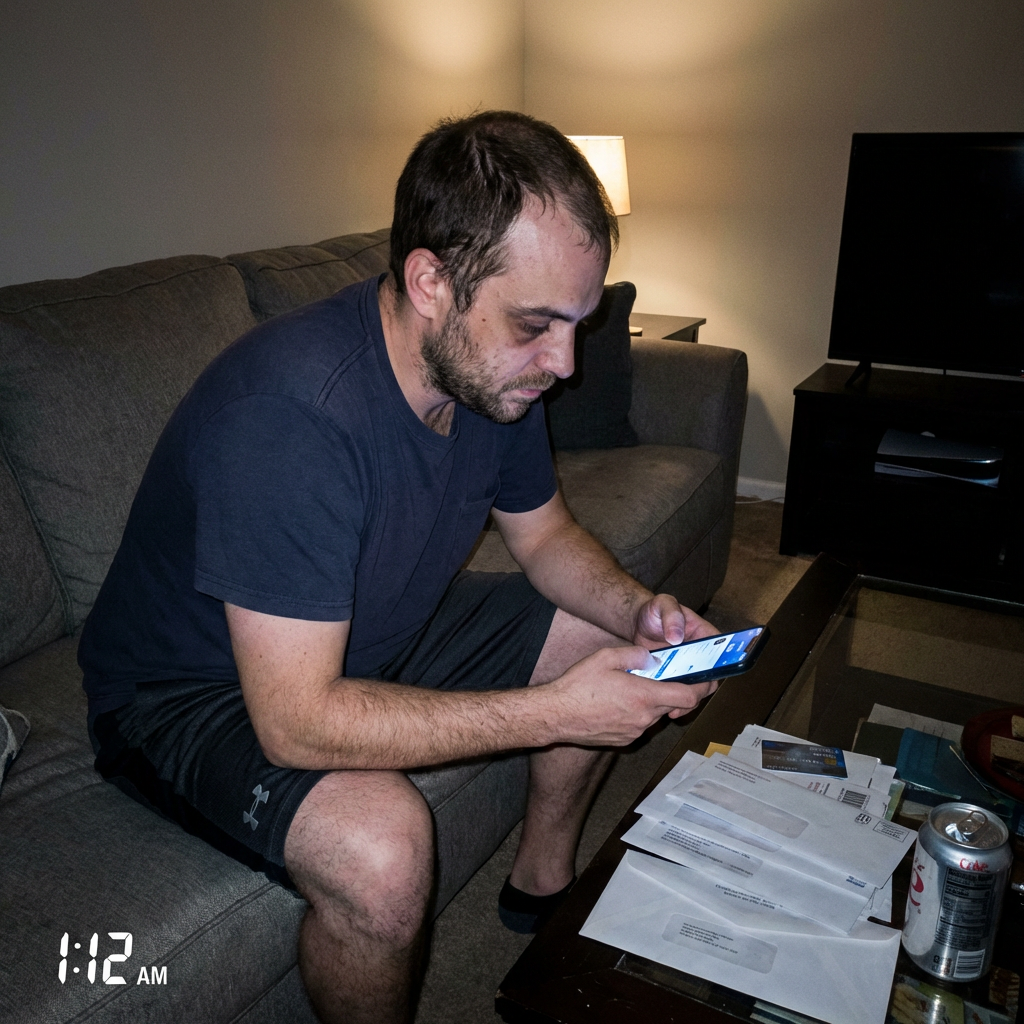
Ran for 1 day, from February 20 to February 21, 2026, the last day Crush saw it.
Run by Ethan Cole Harrison on Facebook. Crush is not the advertiser and does not verify its claims. See this ad in Meta's Ad Library(opens in a new tab)
Want an ad like this for your product?
Crush makes new ad images for your product from this ad: your logo, your product photo, your offer.
Trials from $19.95 USD, then $79.95 USD a month. Cancel anytime.
About this ad
- Meta Ad Library ID
- 1591217152143350
- Platforms
- Facebook, Instagram, Audience Network, Messenger and Threads
- Relaunches
- 0
Ad text
If you know gambling is destroying your life and you're still doing it anyway... you've told yourself "just one more bet to win it back" a thousand times and ended up losing everything in your account, you're hiding credit card statements because you're too ashamed to let your wife see the real number, you've tried to stop and the restlessness and anxiety hit so hard you were placing bets again within 48 hours, you're opening betting apps in the bathroom at work because you physically cannot get through a normal Tuesday, your wife is losing trust and your marriage is falling apart because you're never mentally present anywhere, and your doctor just keeps telling you "it's a behavioral problem, try therapy" or sending you to a counselor who gives you a hotline number that doesn't do anything... I'm about to tell you exactly what they're hiding from you and why they'll NEVER tell you the truth. I'm about to tell you exactly what they're hiding from you and why they'll NEVER tell you the truth. And by the end of this, you're gonna be pissed. Because there are three things happening right now: One - Your brain is screaming at you that something's wrong with your dopamine and reward system Two - The medical system is gaslighting you into thinking it's a character flaw, an impulse control problem, a lack of willpower And three - There's a billion-dollar industry that profits every single day your brain stays chemically hooked on the chase So let me tell you what happened with my buddy, because his story is going to open your eyes to how messed up this really is. For YEARS, and I mean like six straight years, my buddy was fighting gambling and losing. Not like "oh I lose a bit too much at the casino on guys' trips" kind of problem. I'm talking he was waking up at 6am already thinking about the day's lines, had maxed out two credit cards and a home equity loan that his wife still doesn't know about, would tell himself every single morning "today I stop" and by lunch he was already placing bets on his phone under his desk, type of losing. His marriage? So destroyed his wife had found one of the credit card statements and was sleeping in the spare room until he "figured himself out." He's 41 years old with two kids who used to look at him like he was a hero, and now they'd go quiet whenever his phone buzzed because they knew that look on his face. And the shame? He hated himself completely. The man he used to be? Reliable, smart, the guy who always had a plan and followed through? Gone. Some days he'd sit in the parking lot after work for thirty minutes because he couldn't face his own family knowing what he'd done that day. He'd stopped planning vacations because he'd spent that money. Stopped talking about the future because every plan he made privately got derailed by the losses. He would wake up every morning with that immediate, electric craving before he'd even fully opened his eyes. Not even for the money anymore. Just for the feeling. The action. The split second before the result where anything was still possible. Just the thought of getting through a whole day with no bets, no lines to check, no games to follow, felt physically impossible, not emotionally hard, physically impossible. The restlessness. The inability to concentrate on anything real. The irritability when his wife wanted to talk about normal life things. Complete psychological dependence. And that thought he kept having but was too ashamed to say out loud: "I am a weak man and I will lose everything I've built." So obviously, he tries to get help, right? Multiple approaches. His doctor. A gambling counselor. Gamblers Anonymous meetings. A cognitive behavioral therapist who specialized in addiction. We're talking months of sessions, self-exclusion forms signed at three different casinos, humiliating conversations, chip ceremonies... the whole thing. And you know what every single one of them told him? "It's a behavioral addiction." "You need to identify your triggers." "You need to build better coping mechanisms." "White-knuckle it through the urges." "Here's a hotline number to call when the cravings hit." A HOTLINE. This man is drowning in debt, lying to his wife every day, and they're giving him a phone number to call. But here's where it gets worse, and this is the part that made me start digging into what the hell is actually going on. They sent him to CBT therapy. Their logic was "identify the thought patterns, interrupt the behavior cycle, build new habits." That approach nearly destroyed what was left of him. I'm talking he understood his triggers perfectly after four months of therapy. Could describe them in clinical detail. And still placed bets on the way home from his therapy sessions. The cravings weren't in his thoughts. They were in his biology. No amount of journaling and trigger-mapping was touching the actual physical compulsion driving the behavior. He was doing everything the counselors told him, building coping skills, calling the hotline, attending meetings, and still losing money every single week. Still lying to his wife. Still drowning. So at this point, I'm furious. Because I'm watching my buddy do everything the system tells him to do, spending all this money on therapy, going to meetings, following the program, and getting WORSE. Not better. Worse. And that's when I started asking questions that nobody wants you to ask: Why does the medical system treat gambling addiction like a thinking problem instead of fixing the actual brain damage that compulsive gambling causes? Why do they act like the cravings, the inability to stop, the depression and anxiety between bets, the complete hijacking of your attention, are just... behavioral patterns a man can think his way out of with enough journaling and willpower? And why the hell does nobody ever talk about actually HEALING what years of compulsive gambling does to the brain? So I went down a rabbit hole. And I mean a DEEP rabbit hole. I started researching why someone would have all these symptoms: the uncontrollable urge to bet even when they desperately want to stop, the inability to feel interested in anything in normal life compared to the intensity of gambling, the depression and irritability between sessions that gets worse the longer they go without action, the complete hijacking of their mental bandwidth by gambling thoughts from the moment they wake up, and every mainstream addiction site was giving me the same useless answers. "It's behavioral. Identify your triggers. Build better habits. One day at a time." But then I found this article from a functional psychiatrist. Someone who actually studies ROOT CAUSES instead of just symptoms. And he mentioned something I had literally never heard of in my entire life. Dopamine receptor devastation in the gambling-dependent brain. Now pause for a second. You know what's insane? We learned about addiction in school. Bad choices. Impulse control. Weak character. But nobody and I mean NOBODY, ever taught us that compulsive gambling literally destroys your dopamine receptors and completely rewires your brain's reward circuitry in the exact same way hard drugs do, and that destruction is what makes it physically impossible to stop no matter how badly you want to. And that's not an accident. Because once you understand what dopamine receptor devastation does in the gambling-dependent brain, you realize that 90% of the "gambling addiction" that therapy and GA can't fix? It's ALL connected to dopamine receptor damage that makes your brain chemically incapable of feeling normal stimulation from ordinary life. Here's what dopamine receptor devastation actually does: It's your brain's reward and pleasure system getting completely destroyed. Your dopamine receptors - the ones that control pleasure, excitement, motivation, and the ability to feel engaged with normal life - get so damaged by years of compulsive gambling that your brain literally cannot generate adequate stimulation from anything that doesn't match the intensity of the chase. Think of it like this: if your brain's ability to feel alive is a volume dial, gambling spent years cranking that dial to maximum every single day. Now normal life plays at a volume your brain can barely register. A conversation with your wife, a meal with your kids, a good day at work - your damaged receptors can't even pick up the signal anymore. When your dopamine receptors are healthy? You can sit through a normal Saturday with your family and feel genuinely content. You can feel pleasure from small wins at work, a good meal, a movie, a quiet moment. You have a reason to be present in your own life. Everything works. But when your receptors are devastated from years of compulsive gambling? That's when it becomes impossible. Your brain can't generate adequate stimulation from normal life, which is why sitting still without action feels physically unbearable. Your reward threshold is so damaged that ordinary life feels flat, grey, and pointless compared to what gambling does to your neurochemistry. The cravings aren't about greed or excitement or even hope of winning. That's your brain screaming that it cannot feel alive without the chemical spike that only the chase provides. And the anxiety and irritability between bets? That's dopamine withdrawal. Your brain in panic mode because its primary source of neurological stimulation has been removed. And here's what nobody tells you: every year of compulsive daily gambling causes more dopamine receptor damage and deeper reward system dysregulation. And just white-knuckling abstinence doesn't repair them. Your brain needs active neurological restoration, not just behavioral management. So by the time you're my buddy's age - 41 - after years of compulsive gambling, your brain's dopamine and reward circuitry is severely, structurally damaged. And just going to GA meetings, doing CBT, or calling a hotline doesn't fix the actual damage. So you get: The urge to bet that hits like a physical emergency the moment your phone buzzes with a notification - not because you're impulsive, but because your dopamine system has been rewired to treat gambling as its primary source of neurological survival The complete inability to concentrate on anything in normal life - your damaged receptors can't generate enough stimulation from real life to compete with the neurochemical memory of gambling The depression so deep between sessions it makes you wonder if this is just who you are now - your brain has lost the ability to produce adequate dopamine naturally without the gambling trigger The irritability that makes your family walk on eggshells around you - your reward system is so starved between bets that ordinary frustrations feel catastrophic The inability to feel genuine excitement about anything that isn't gambling - promotions at work, family trips, your kids' achievements, they all feel muted and distant compared to what your brain remembers gambling feeling like The financial lies that compound on themselves because stopping the gambling also means stopping the one thing giving your brain any relief - and that feels neurologically impossible The hours disappearing on betting apps while your family is in the next room waiting for you to come back - your hijacked brain cannot voluntarily disengage from the only stimulus it registers as real The mounting debt you calculate and recalculate at 3am while your wife sleeps next to you not knowing the full number The rage that comes from nowhere when someone interrupts you mid-bet - your brain in neurological panic at having its primary dopamine source disrupted The complete exhaustion of maintaining the lies required to keep gambling accessible - because a brain in this state cannot prioritize honesty above its own survival need for the next bet Watching yourself become someone you don't recognize and having no explanation for why you can't just stop That persistent thought that you are fundamentally broken and no therapist or willpower program will ever fix it And here's the CASCADE EFFECT that makes it worse: Dopamine receptor damage means your brain's baseline pleasure threshold is completely destroyed. So nothing in sober, ordinary life generates enough neurological signal to feel worth choosing over gambling. Reward system dysregulation means your brain has lost its ability to delay gratification at a neurological level - not a psychological one. So the rational part of you that knows the financial consequences simply cannot compete with the primal reward circuitry driving the behavior. BDNF depletion from chronic compulsive behavior means your brain has lost its ability to repair and regenerate its own neural circuitry. So even when you desperately want to stop, your brain is physically incapable of healing itself fast enough to make a gamble-free life feel livable. Your brain is structurally damaged. And it cannot repair itself without dopamine receptor restoration and BDNF rebuilding. And here's the part that made my blood boil: The medical system KNOWS about this. They know compulsive gambling destroys dopamine receptors and depletes BDNF the same way hard drug addiction does. They know it creates a reward system dysregulation that makes ordinary life feel neurologically inadequate without the gambling stimulus. But they don't give a single damn about actually helping you REPAIR the damage. Why? Because there's no pharmaceutical drug they can patent that specifically restores dopamine receptor density in the gambling-dependent brain. You can't patent a natural mineral that rebuilds BDNF and restores reward system function. There's no money in telling you to repair your brain's actual reward circuitry. There IS money in keeping you cycling through therapy programs, inpatient behavioral treatment facilities, relapse, shame, more therapy, more relapse - for the REST OF YOUR LIFE - while your dopamine receptors stay destroyed and the cravings keep coming back the moment real life gets too flat and empty to sustain abstinence. See how that works? So I kept researching. Reading studies now. Medical journals. Talking to functional psychiatrists and addiction neurologists... And I found out there's actual RESEARCH on a specific mineral that directly restores dopamine receptor density, rebuilds BDNF, and repairs the reward system dysregulation that compulsive gambling causes. The mineral is called Lithium. Now, before you freak out, this is NOT the high-dose prescription lithium they give people with bipolar disorder. When you're choosing a lithium supplement for dopamine receptor restoration and BDNF rebuilding, you need to make sure it's in the right form to actually cross the blood-brain barrier and repair neural function at the cellular level. And here's what blew my mind when I learned how it actually works. It involves four specific mechanisms - and dopamine receptor restoration combined with BDNF rebuilding are the most important ones: Dopamine receptor upregulation - Lithium orotate directly restores dopamine receptor density, reversing the damage compulsive gambling caused and allowing your brain to generate genuine pleasure and stimulation from normal life again BDNF restoration - Lithium triggers Brain-Derived Neurotrophic Factor production that rebuilds the neural pathways gambling addiction destroyed, essentially regrowing your brain's ability to feel engaged with real life without needing the neurochemical spike of the chase GSK-3β inhibition - Lithium blocks the enzyme that causes neurons to keep deteriorating under the stress of addiction and compulsive behavior, putting a brake on the ongoing brain damage that makes sustained abstinence feel neurologically impossible Neuroplasticity enhancement - Allows your brain to build new neural pathways that make ordinary life feel worth experiencing again, instead of staying locked in the addiction circuitry that's been running the show for years Now here's what's crazy: I found studies - actual peer-reviewed studies from Harvard and published in Nature - showing that lithium orotate at micro-doses directly increases dopamine receptor density and BDNF levels - the exact mechanisms needed to reverse addiction-induced neurological damage - and this restoration is what finally allows men to stop gambling and stay stopped without white-knuckling through the unbearable flatness that drives relapse. But you'll never hear an addiction counselor mention it. So my buddy finally finds a functional medicine doctor who actually knows about this. And he literally gives him the same protocol I'd been researching. He says: "Your dopamine receptors are devastated from years of compulsive gambling. Your BDNF is depleted. Your reward system has been structurally rewired to treat gambling as its primary source of neurological function. Your brain cannot generate adequate stimulation from normal life because the circuits that used to do that job have been structurally damaged. We need to restore receptor density and rebuild the neural pathways gambling destroyed." He writes down lithium orotate and tells my buddy to start taking it daily. And for the first time in six years, someone actually explained what was wrong with his brain. Not his character. Not his impulse control. Not his relationship with money. His brain. But here's the problem... The functional doctor recommended lithium orotate, but didn't tell him which brand to trust. Because most lithium supplements are either too weak, wrong form, or don't actually cross the blood-brain barrier and restore dopamine receptors the way the clinically-studied versions do. My buddy had to research brands himself. Different companies. Different doses. Some online, some in stores where the quality was questionable. He's trying to figure out which one actually works because, surprise, there's no standardized information about this. And the good brands were expensive. Over $50 a month for something that might not even be the right formulation. But you know what? He did it. He bought a random bottle of lithium orotate 20mg on Amazon because he was desperate. And after about three weeks? The constant background noise of gambling thoughts quieted down for the first time. The dopamine receptors were starting to restore baseline function. After a month? He got through a full week without placing a single bet. Not white-knuckling it every hour. Not fighting every urge. Just... not needing it the way he used to. He called me and said "I don't know what's different but something is genuinely different." The neural pathways were rebuilding. After two months? He felt like a man again. The obsessive gambling thoughts were manageable. Normal life started registering again. He could sit through dinner with his family and actually be there. He told his wife the full truth about the debt. She cried. He cried. And then they started making a plan together for the first time instead of him hiding and her suspecting. His brain had started to heal. So we were thrilled, right? It worked. But here's what bothered me... When I dug deeper into the research, I found that most lithium orotate supplements have a major problem: they don't optimize for dopamine receptor restoration and BDNF rebuilding specifically. The Harvard research that showed the most dramatic dopamine receptor upregulation and BDNF activation used 10mg of a highly bioavailable form that gets into brain cells efficiently and triggers maximum neural repair. Plus, my buddy was taking 20mg, but the clinical studies showing the best results for addiction-related brain restoration used 10mg of a specific form that crosses the blood-brain barrier more effectively. He was getting results, but I kept thinking: what if there's a form specifically optimized for dopamine receptor restoration that works even better? What if he's not getting all the benefits because the supplement wasn't designed for maximum brain absorption? That's when I started researching companies that actually understood the neuroscience... I needed to find one that: Used lithium OROTATE 10mg specifically (the clinically studied dose for dopamine receptor restoration and BDNF rebuilding) Used pharmaceutical-grade ingredients that actually cross the blood-brain barrier and trigger dopamine receptor upregulation Had actual neuroscientists behind the formulation who understood addiction-related brain damage and neurological restoration Was third-party tested for purity Wasn't charging an insane markup And I'm scrolling through a men's recovery forum one day, literally just looking for answers, and I see someone mention this company called Oratonics. So I go to their website, ready to be disappointed like I had been with the 20 other companies I'd looked at. And I almost fell out of my chair. They had lithium orotate 10mg. The actual pharmaceutical-grade form that crosses the blood-brain barrier and restores dopamine receptor density at the cellular level. In the exact clinically-studied dose based on Harvard research on dopamine receptor repair and BDNF activation. But that's not even the crazy part. When I dug into WHO was behind the company? They had actual neuroscientists and clinical researchers on their team who specialized in neuroplasticity and dopamine receptor function. People who understood the science behind lithium's ability to restore dopamine receptors and reverse addiction-induced brain damage by literally regrowing the neural pathways that make real life feel worth choosing over the next bet. They weren't just throwing lithium in a bottle. They'd done the research on dopamine restoration. They understood the mechanism. They created the exact formulation designed to maximize dopamine receptor upregulation and BDNF production. And here's where my jaw hit the floor: When my buddy was trying other brands? $50-80 a month for questionable quality. This bottle from Oratonics? $29. Already a steal, right? But THEN, and I swear I'm not making this up, they have bundle deals that make it even cheaper. Go look at the price right now. I'm dead serious. It's insane. And my buddy's been taking it for eight months now. The gambling urges? He says they feel like a distant memory. The obsessive betting thoughts that used to hijack every waking hour? Gone for five months. The grey flatness of not gambling that used to make abstinence feel unbearable and pointless? He's a different man. His brain has literally restored the dopamine receptors and neural pathways that years of compulsive gambling destroyed. He sat down with his wife and laid out every debt, every lie, every hidden statement. They're on a repayment plan together. He's at his kid's games, actually watching them, not mentally somewhere else calculating odds. His wife told him last month that she feels like she has her husband back. He's sleeping properly. He can feel things again - real things, present things, the kind of ordinary moments he'd been mentally absent from for years because his broken brain couldn't register them as meaningful. This is the protocol they don't want you to know about. Because the second you restore your brain's dopamine receptor density and allow your neurological repair systems to recover, you don't need their revolving door of therapy programs and relapse cycles anymore. You don't need their behavioral management frameworks that ignore the actual brain damage underneath. Your brain starts FUNCTIONING THE WAY IT'S SUPPOSED TO. Now here's the thing I need you to understand: The longer you wait, the more dopamine receptor damage accumulates and the harder it becomes to restore. Neurological damage from years of compulsive gambling becomes HARDER TO REVERSE the longer it continues. Right now, if you're dealing with gambling urges you can't control, a sobriety from betting that feels so flat and empty you can't sustain it, a normal life that just doesn't register anymore compared to the memory of the chase, you can reverse this by restoring your brain's dopamine and reward circuitry. But if you wait six months? A year? Your receptor damage goes deeper. Your BDNF depletion gets worse. Your brain loses more of its ability to repair itself. And then it takes even longer to recover. Every month that goes by, your brain's neuroplasticity - its ability to heal itself - decreases. Men who've been through multiple therapy programs and GA sponsorships with zero lasting results suddenly try lithium orotate and their dopamine receptors actually start repairing. The gambling thoughts become manageable for the first time. Not because their willpower suddenly got stronger. Because their brain finally started healing. So if you're dealing with ANY of this - gambling urges that hit like a physical emergency no matter how much you want to stop, a bet-free life so flat and joyless you can't sustain it, the secret debt that keeps growing while the lies required to hide it compound on themselves, opening betting apps in bathrooms and parking lots and anywhere your wife can't see, missing your kids' moments because your brain is somewhere else entirely, the financial hole that keeps getting deeper every time you tell yourself you'll win it back, that look on your wife's face when your phone buzzes, the self-loathing of knowing you're going to place a bet today even as you're promising yourself you won't, the creeping certainty that you are fundamentally too broken to fix this - this is literally the time. Not next month when the damage has gone deeper and your dopamine receptors have deteriorated even further. Right now. I put the link below. And even if you're skeptical, grab one bottle. Try it for a month. See if your brain's dopamine system responds the way my buddy's did. Because the therapy industry isn't coming to save you. They profit too much from your next relapse. You have to save yourself. Go get it. And use the clarity you get back - the ability to sit in your own life and actually feel it, to be present with your kids, to look your wife in the eyes without a lie sitting behind them, to be the man you actually are underneath the addiction - to finally take your life back. 👉 https://oratonics.com/products/balance-capsules-lithium-orotate-coc
Where the ad sends people
oratonics.com
Reclaim Your Emotional Stability
High potency formula for mood, motivation and energy. Lifts mood and motivation within the first 7-10 days. Helps to manage anxiety. Brings the calming feeling. Protects brain cells from damage. Join over 86 Thousand who say - it WORKS!
Learn more: oratonics.com(opens in a new tab)