
Inactive· since May 26, 2026
- 65
- days it ran
- 2
- relaunches
- 17,248
- EU reach
Ad copy
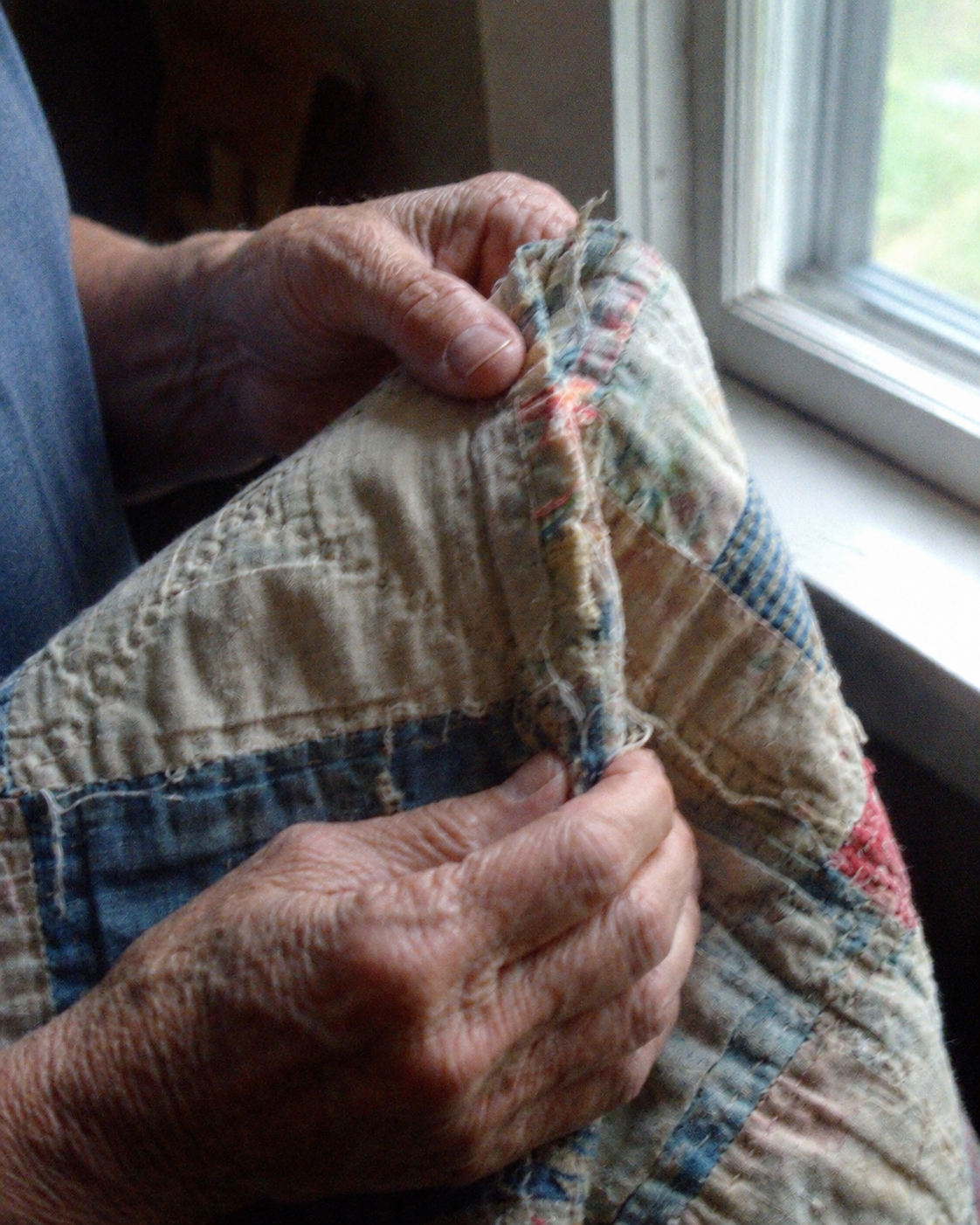
My Mother Hadn't Made a Quilt in Two Years. Here's What Got Her Back Into Her Sewing Room. I want to tell you about my mother. Her name is Cathy. She's 71. She lives in Ohio, in the house I grew up in. For the last 50 years she has been a quilter. Not the casual kind. Not the kind who does one little wall hanging and frames it for the guest bathroom. The serious kind. The kind whose hands knew the work without thinking. The kind who'd cut, piece, stitch, bind — and produce something at the end that would last three generations. Every grandchild in our family sleeps under a quilt my mother made. The one on my son's bed has airplanes on it. She made it from his father's old work shirts. The one on my daughter's bed has stars. Hand-stitched stars. Each one the size of my thumbnail. She'd been making quilts since she was 21 years old. Two years ago, she stopped. She didn't announce it. She just stopped. The first thing I noticed was that she stopped sending pictures. For years she'd send me a phone picture of whatever she was working on. Tuesday afternoon. A square of fabric pinned to her board. "Started this one for Mrs. Peterson's daughter. Wedding gift." The pictures dried up some time in the spring. I didn't think about it at first. She and my dad had been doing a lot of traveling — they have a little camper they take out — and I assumed the quilting had taken a back seat to the road trips. Then in the fall I went home for my dad's 75th birthday. I walked through the kitchen on the way to the back porch and I glanced into the sewing room as I passed. The sewing machine had a cover on it. She always took the cover off and left it folded on the shelf. The cover only went back on when she was finished with something or going out of town. I stopped in the doorway. There was a quilt on the table. It was about a quarter done. A piece of paper sat on top of it. I went over and looked. The paper had a list in her handwriting. Pattern numbers. Yardage. Date. The date was eight months ago. The quilt had been sitting there for eight months. I went out to the back porch where she was sitting with my dad and my brother and the kids. I didn't say anything that night. But I started watching. That weekend I saw a few things. She couldn't open the jar of pickles at lunch. She handed it to my brother without saying anything. My brother handed it to my husband. They were laughing about something else. I'm not sure anyone noticed but me. The next morning at breakfast, I watched her pick up her coffee cup with both hands. She used to lift it by the handle with two fingers. She used to do everything one-handed because the other hand was busy with something else. That was her way. Both hands on a coffee cup. I noticed. I didn't say anything. On Sunday afternoon, she went to put on her cardigan — the gray one she always wore in the cool evenings — and she struggled with the buttons. There are four buttons on that cardigan. She got two of them done. She left the other two. She caught me looking. She gave me a smile and shrugged a little. "Hands are slow this morning," she said. She said it the same way you'd say "I didn't sleep great last night." Like it wasn't worth talking about. But I looked at her hands when she said it. The knuckles on her right hand were swollen. Not dramatically. Just enough. The way a faucet drips before the washer goes bad. You can ignore it for a long time. But you know. After dinner that Sunday I asked her if we could go for a walk. We walked down to the end of the driveway and back, slowly. I asked her about her hands. She was quiet for a while. Then she told me she'd been seeing a doctor for it. She'd been on medication for about a year and a half. She said the medication helped. She said her doctor had been monitoring it. She said it was a manageable thing. She said she'd just slowed down on the quilting because the patterns she was working on were complicated. She said she'd pick it up again when she felt up to it. She said it the way you say something you've decided to believe. I knew she didn't really believe it. I didn't push. We walked back up to the house. That night I sat on the guest bed in my parents' house and I cried for about twenty minutes very quietly so my husband wouldn't hear. Not because anything terrible was happening. Just because my mother — my mother, who could thread a needle in low light, who could bind a quilt in an afternoon, who could mend my children's torn jeans in five minutes — had been buttoning her cardigan slowly and pretending it was nothing. I went home that Monday. I drove the six hours and I didn't really listen to the radio. I'd been thinking about my mother's hands the whole way. That night I put my kids to bed and I sat at the kitchen table with my laptop and I started reading. I'm not a researcher. I'm not in healthcare. I'm a mom with a part-time job and two kids and a husband and an internet connection. But I read for about three hours that first night. I read about joint comfort. I read about how the body changes after 50, after 60, after 70. I read about everything people add to their routines to support themselves through it. Omega-3s. Turmeric. Boswellia. Ginger. Tart cherry. Beetroot. The beetroot one was the surprise. I'd thought of beets as a side dish my dad never ate. Not as something worth taking seriously. I kept reading. What I came away understanding — and I'm not a doctor, take this for what it's worth — was that beetroot contains compounds called betalains. They support the body's natural antioxidant balance. They're the same compounds that give beets their deep red color. Beetroot has been studied for cardiovascular wellness, circulation, and recovery for a long time. I kept reading over the next few nights. After the kids went to bed I'd open the laptop and read. I read about how betalains are sensitive to processing. Heat-processing is faster and cheaper. Slower methods preserve more of the active compound. I read about a few different brands. One name kept coming up in the threads I was reading. Rosabella. Small company. 1,300 milligrams per serving. Cold-pressed at low temperatures. Grown in Lancaster County, in a small farming community there. The thing that made me consider it seriously for my mother was that it wasn't positioned as a replacement for anything. She was already on her medication. Her doctor was monitoring her. This wasn't about going off anything. It was about whether there was anything I could add to what she was already doing. It supports the body's natural antioxidant balance and overall joint comfort. Structure-function. Not a treatment for anything. You add it to what you're already doing. You don't replace your doctor's care. It just adds. I called my mother the next morning. I told her what I'd been reading. I told her I wasn't asking her to change anything she was doing. I wasn't asking her to think differently about her medication. I wasn't asking her to do anything her doctor wouldn't be okay with. I told her there was a beetroot supplement I'd come across that supports the body's natural antioxidant balance and overall joint comfort, that I'd read a lot about it, and that I wanted her to ask her doctor whether it would be a sensible thing to add to her routine. She was quiet for a moment. Then she said: "You've been worrying about me." I said: "Yes, Mom." She said: "I didn't want you to." I said: "I know." She said: "I'll call the office tomorrow." She called me back two days later. The doctor said it was a sensible thing to add. He told her there were no interactions with anything she was on. He said to let him know how she felt over the next few months. I ordered the bottle from my kitchen table that night and had it shipped to her. I called her the day it arrived. She'd opened it. She said she'd noticed the color — deep, dark red, almost purple. I told her I'd read about that. That the color was the visible marker of the active compound being intact. She said: "Well. We'll see, won't we." That was the whole conversation. I called her every Sunday after that. We always talked on Sundays. Nothing new there. The first two weeks she didn't mention it. The third week she said something offhand. She said she'd taken the cap off the laundry detergent without thinking about it that morning. She said: "I noticed because I didn't notice. If that makes sense." I said it made sense. The fourth week she said she'd been sleeping a little better. She said she hadn't realized how much the hands had been waking her up at night until they stopped doing it as much. She said the mornings were still slow. The first half hour after she got out of bed was still slow. But the rest of the day felt different. She said she'd been doing the dishes by hand again instead of paper plates. She said she hadn't decided to start doing that. She'd just started doing it and noticed three weeks in. I sat in my kitchen and I listened to her say these things and I tried not to read too much into them. I'm not a doctor. I don't know what was the supplement and what was just a good few weeks. What I knew was that she was telling me things she wasn't telling anyone else. She wasn't a complainer. She wasn't a celebrator either. She was a noticer. And what she was noticing was that small things were getting easier. About two months in, she called me on a Tuesday afternoon. She never called me on Tuesday afternoons. I'd just picked the kids up from school. I answered the phone with one of them yelling about something in the back seat. She said: "I went into the sewing room this morning." I pulled the car over. I made my daughter stop yelling. I said: "Tell me." She said: "I didn't do anything. I just sat in there. I had my coffee. I looked at the quilt that's been on the table. I thought about the pattern." She said: "I'm not promising you anything. I just wanted to tell you I sat in there." I told her I was glad. I didn't say anything else. When I hung up I sat in the car for a few minutes with the kids in the back seat and I looked at the dashboard and didn't see it. I drove home in a way I don't really remember. Three weeks after that, she called again. She said: "I threaded a needle yesterday." She said: "It took me four tries. But I did it." She said: "I worked on the quilt for about an hour. Then my hands got tired. So I stopped." She said: "I'm going to do an hour again today." I asked her if she was being careful. She said: "I'm being careful. I'm not going to overdo it. I just wanted you to know." I told her to keep me posted. She said she would. Over the next four months, she finished the quilt. She didn't finish it the way she used to finish a quilt — which is to say, in about three weeks of focused work. She finished it slowly. An hour at a time. Some days she didn't do any. Some days she did two. The thing she wrote me when she sent me a picture of the finished top was: "This one is going on your daughter's bed when she's old enough for a bigger bed. Tell her Grandma was a long time making it but she didn't give up." I cried at my desk. A few other things changed over those months. She wore her wedding ring again. She'd stopped wearing it because she couldn't get it on and off easily. She started doing the cooking for Sunday dinners again. My dad had been doing all of it for the last year. She picked up my son when we visited in July. He's almost 5 and getting heavy. She said: "Come sit on Grandma's lap, sweetheart." She held him for about ten minutes. She didn't make a face. She didn't shift him around to relieve her hands. She just held him. She kissed the top of his head. My son said: "Grandma, you smell like Grandma." My mother said: "Good. That's how I'm supposed to smell." I had to leave the room and stand in the bathroom for a minute. She went to her doctor about three months after starting the supplement. She told me about the appointment afterward. The doctor asked her how things were going. She told him roughly what she'd been telling me — that her mornings were still slow but the rest of the day felt different, that she'd been doing more around the house, that she was quilting again a little. He listened. He looked at her hands. He said it sounded like she was in a better place than she'd been at her last visit. He told her to keep doing what she'd been doing. They didn't change her medication. He told her to come back in six months. She told me later, on the phone, that she felt heard at that appointment for the first time in a while. She said: "I think he was glad I was doing better." I said: "I'm glad too, Mom." I'm in my mid-40s now. I've started noticing my own mornings being a little slower than they used to be. Not bad. Just slower. I'm not my mother. My situation isn't her situation. But I started taking the supplement too. I called my own doctor's office first. He said it was a sensible thing to add. He said to let him know how I felt. I've been on it for about two months now. I'm not going to tell you anything dramatic. But the mornings feel a little easier. I changed a few other things at the same time — I started walking more, I started drinking more water, I started going to bed earlier. I can't separate one variable from another. What I can tell you is that something feels different and the difference is holding. Here's what I'd say to anyone watching a parent go through what I watched my mother go through. If your mom — or your dad, or anyone you love — has been quietly slowing down, and you're noticing things they're not telling you about, you're not imagining it. The things you're noticing are real. The fact that they're hiding it from you is also real. Have a conversation. Be gentle. Don't push. Ask them what their doctor has been saying. Don't ask them to change anything their doctor has them on. If you want to talk to them about adding a beetroot supplement to their routine, ask them to call their doctor's office first. That phone call is the most important step in the whole thing. It's not optional. Especially if they're already on medication for cardiovascular concerns, joint concerns, or any chronic condition — talk to the doctor before adding anything. I cannot stress that enough. The brand I used for my mother and for myself is Rosabella. 1,300 milligrams per serving. Cold-pressed at low temperatures. Grown in Lancaster County. Two capsules with water in the morning. That's the whole protocol. I'm not a doctor. I'm not in healthcare. I'm one daughter who watched her mother lose something she loved and then watched her get a piece of it back. Take it for what it's worth. P.S. A few practical notes for anyone thinking about this. Rosabella has a 90-day money-back guarantee. If you're not satisfied for any reason, every penny back. No questions asked. That's a sensible policy for a supplement. It gives you time to actually see whether it does anything for the person you're giving it to. I'd give it a few weeks at minimum before deciding anything. Bodies are different. Some people notice something within the first week or two. Others take longer. Be patient. P.P.S. My mother keeps an extra bottle in the cabinet now. So do I. They're a small operation and the harvest is seasonal. I learned to stock up after I almost ran out one month and got nervous about the timing. P.P.P.S. She started a new quilt last week. This one's for my son. He wants dinosaurs. She's working on the pattern. She says she's going to take her time with it. She says: "I'm not in a rush. I just want to be making things again." She sent me a picture of her cutting table yesterday. Fabric laid out. Rotary cutter in her hand. Coffee on the windowsill. I keep looking at the picture. P.P.P.P.S. One last thing. If you're a daughter or a son watching this kind of slow loss with your own mother — and you're wondering whether it's worth bringing this up with her, or whether you should leave her alone and let her tell you when she's ready — Bring it up. She isn't going to tell you on her own. She's going to keep buttoning her cardigan slowly and pretending it's nothing because that's what mothers do. They don't make their children worry about them. But she'll listen to you. If you bring it up gently. She raised you. You can raise her on this one thing. That's the whole thing. That's all I have. https://track.tryrosabella.com/4a8944d3-6841-4daa-bcd5-c063901eeae6 Individual experiences vary. These statements have not been evaluated by the FDA. This product is not intended to diagnose, treat, cure, or prevent any disease.
Support stamina and heart health every day
LEARN MORELike this ad? Make it yours.
Crush rebuilds this exact creative around your product — your brand, your colors, your offer — in about a minute.