
Inactive· since Aug 8, 2026
- 26
- days it ran
- 0
- relaunches
Ad copy
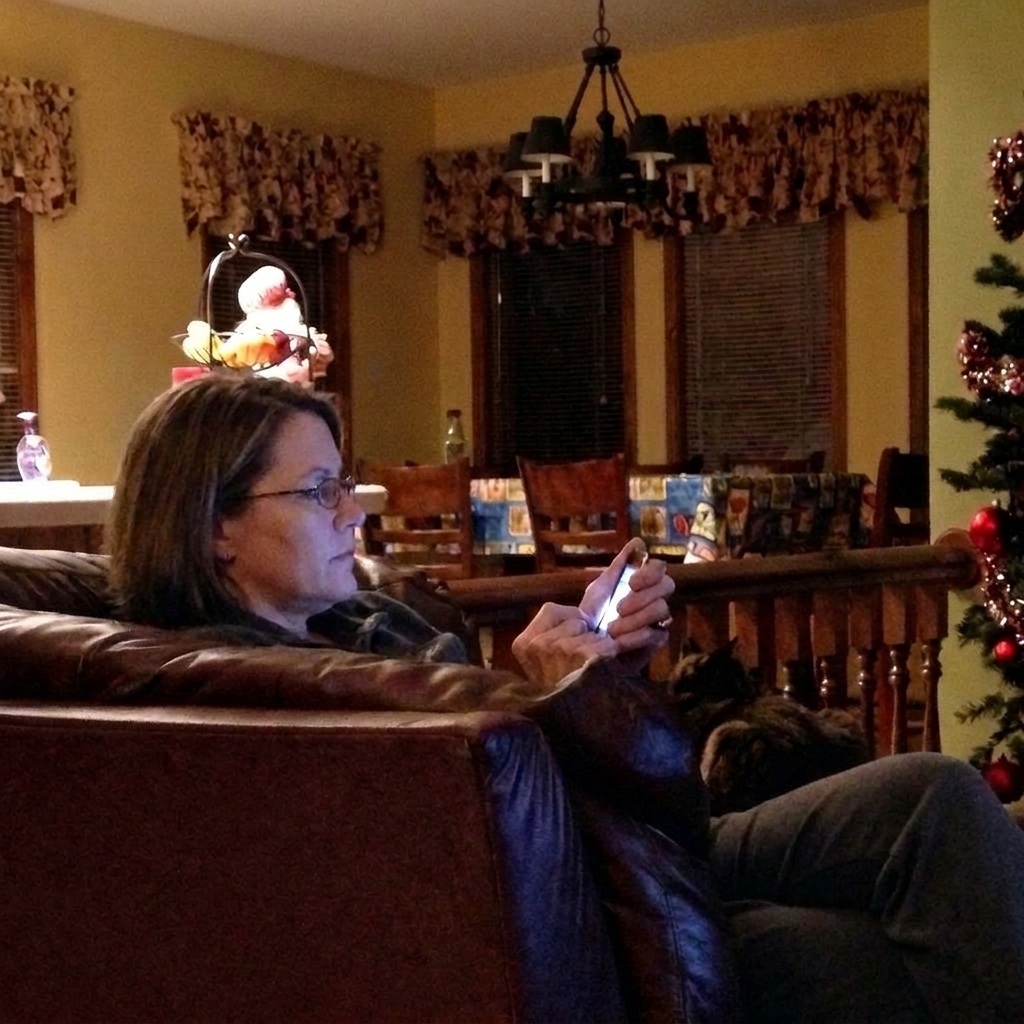
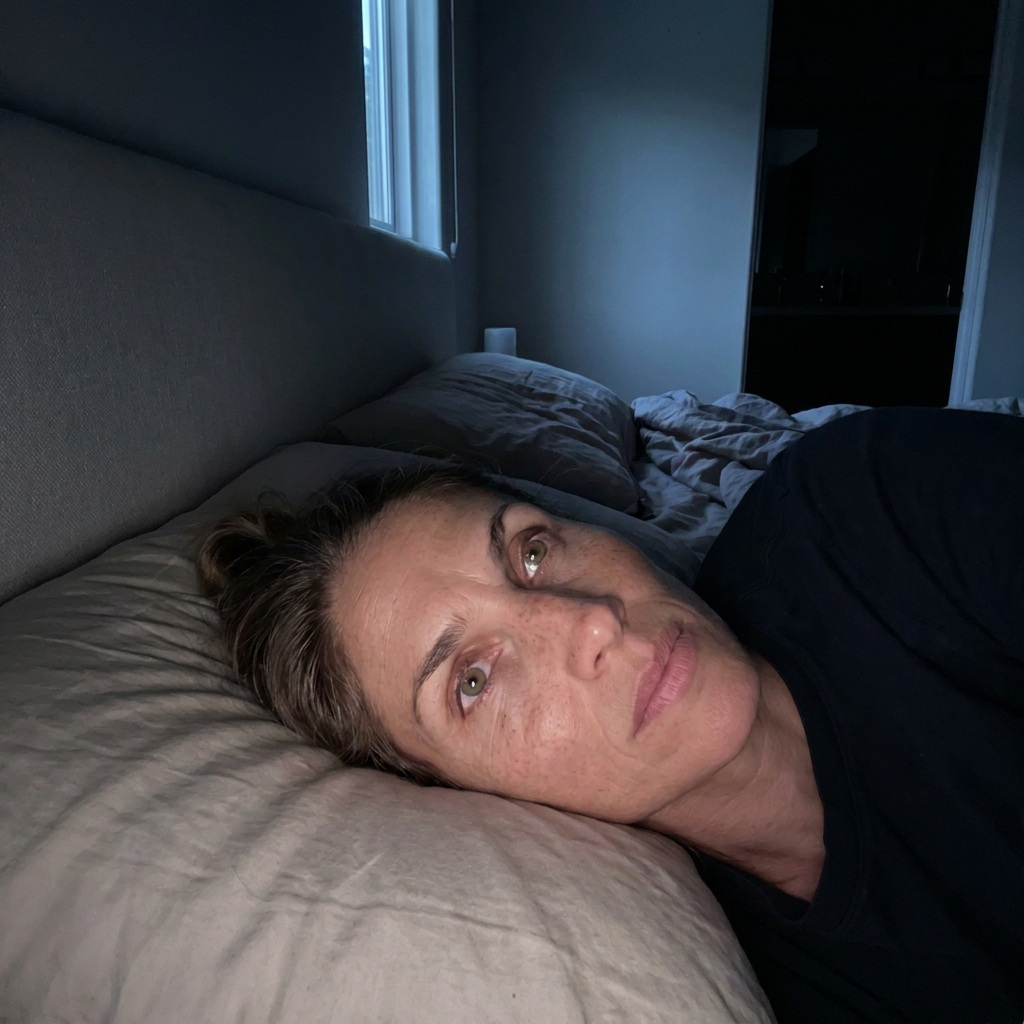
I was diagnosed with anxiety disorder at 43. I'm 51 now. Turns out I never had anxiety disorder at all. For eight years, I "managed" a condition I didn't actually have. Eight years of SSRIs that flattened my emotions but never fixed my sleep. Eight years of therapy that helped me understand my thoughts but never helped me turn them off at 3am. Eight years of being handed a new prescription and told to "just give it a few more weeks." I did everything they asked. I tried the SSRIs. Then a different SSRI. Then a low-dose antidepressant "just for sleep." Then Ambien, which knocked me out but left me hollowed out the next morning — groggy, foggy, not quite myself. I stopped the Ambien. Tried melatonin. Then 10mg melatonin. Then melatonin plus magnesium. Then sleep supplements — four different formulas over three years, none of them doing anything except giving me a stomach ache and false hope. I downloaded the sleep apps. Did the breathing exercises. Left my phone in another room. Wore blue-light glasses from 7pm. Turned the thermostat down to 66 degrees. Got blackout curtains. I did a fourteen-week CBT-I program — cognitive behavioral therapy specifically designed for insomnia — because my doctor said it was the most evidence-based treatment available. It helped. For a while. Then it didn't. I saw a sleep specialist. She ordered a sleep study. I spent two nights wired up in a clinic with electrodes taped to my scalp, trying to sleep in a strange room while a camera watched me. The results came back. No sleep apnea. Normal brain activity. Normal sleep architecture. "Everything looks completely fine," she said. "It's anxiety. It's disrupting your sleep onset and your sleep maintenance. The CBT-I should help — you just need to stick with it." She handed me a sheet of sleep hygiene tips I'd already been following for three years. I felt like I was losing my mind. The tests were fine. The doctors weren't worried. But every single night, my brain refused to shut off. I'd get into bed at 10pm, exhausted. My body would be heavy. My eyes would be burning. And then my brain would switch on. It would start with something small — did I send that email? — and then spiral out into everything. The conversation I had two weeks ago that I handled badly. The bill I forgot to deal with. My daughter's college applications. My husband's health. My own health. The fact that I was lying there, again, unable to sleep, again, which meant tomorrow was going to be hard, again. By midnight I'd be staring at the ceiling calculating how many hours I had left if I fell asleep right now. By 2am the calculations would be getting grim. By 3am I'd give up. Pick up my phone. Lie there in the dark scrolling through nothing, too tired to move, too wired to sleep. My alarm went off at 6:15. I'd already been awake for an hour. I'd get up. Make coffee. Try to be present for my family before they left for school and work. By 9am I was already dragging. Second coffee. Still foggy. Short with people I didn't mean to be short with. By 2pm the wall would hit. I could feel it — like the lights dimming inside. I'd sit at my desk reading the same paragraph over and over, taking nothing in. By 4pm I was counting down to bedtime. And bedtime was the thing I had learned to dread. I stopped saying yes to evening plans. Dinners, birthday parties, anything that would push me past 9pm — I started turning them all down. Not because I didn't want to go. Because I couldn't afford the next day. My husband thought I was depressed. My doctor thought I was depressed. Maybe they were right. How do you separate the anxiety from the exhaustion from the despair of being exhausted every single day for eight years? I had tried everything they suggested. I had tried everything I could find on my own. At some point, I started to believe this was just who I was now. Then a woman in my book club said something that stopped me cold. She's a functional medicine practitioner. We'd been talking after the meeting — I'd mentioned, almost offhand, that I was exhausted and apologized for being quiet. She asked what was going on. I told her. Eight years. Everything I'd tried. The sleep study that showed nothing. She nodded slowly. "Has anyone ever actually looked at your glycine levels? Not just a standard blood panel — but whether your body is actually producing enough of it to do what your nervous system needs at night?" I almost laughed. "I've tried sleep supplements. Multiple formulas. Nothing happened." She shook her head. "Most sleep supplements don't even include glycine at all — even though it's the most important ingredient for sleep. And the ones that do contain a fraction of what your body actually needs. Just enough to put it on the label." "Why does that matter for sleep?" "Because glycine is your nervous system's off switch." She leaned forward. "Here's what most people don't know — your body has to actively cool itself down at night to get into deep sleep. Not the room. Your body, from the inside. It does that by opening blood vessels in your hands and feet and releasing heat through your skin. That drop in core temperature is what signals your brain it's safe to stop. To stop processing. To stop running through your to-do list. To actually shut down for the night." "Glycine is what triggers that process. Without enough of it, those blood vessels don't open. The heat stays trapped. Your cortisol has no ceiling. Your nervous system stays locked in go-mode. Even when your body is completely exhausted, your brain never gets the signal to stop." "So all that lying there, wired, running through everything — that's not anxiety?" "It might not be anxiety at all," she said. "It might be a body that never gets the signal to cool down. Because the one thing it needs to flip that switch never actually reaches it." I stared at her. Eight years. A sleep study. CBT-I. Four different sleep formulas. And nobody had ever mentioned glycine. I went home and looked it up. The research was right there. Peer-reviewed studies. Glycine at a full 3,000mg dose triggers the thermoregulation process — opening blood vessels, releasing core heat, dropping body temperature into deep sleep range. Most sleep supplements contain a fraction of that. Some contain none at all. And glycine isn't just a delivery mechanism. It's deeply calming on its own. It works to slow neural activity, lower core body temperature, and deepen sleep architecture. Study after study showed the same thing: the right dose, reaching the bloodstream, triggering the cool-down, quieting the nervous system. Not sedating it. Quieting it. There's a difference. I texted her that night. She called me the next morning. "You want a full 3,000mg of glycine. That's the dose the research actually points to. And here's the other thing: it needs to be a powder, not a capsule or tablet." "Why a powder?" "As we get older, stomach acid weakens. A hard capsule or tablet needs strong acid to break down properly. A lot of it passes through without dissolving. A powder starts absorbing the moment it hits your stomach — no coating to break down, no delay. The glycine enters your bloodstream immediately." "Where do I get it?" "Don't just grab whatever's on Amazon," she said. "Most of them use cheap fillers, token amounts of glycine, proprietary blends that hide a weak formula. The one I've seen work consistently is SF Zero. A complete sleep formula — full 3,000mg of glycine plus the four other ingredients your nervous system actually needs to stay under. Third-party tested. Zero fillers. And it tastes like hot chocolate. You mix it into warm milk before bed. It becomes the thing you actually look forward to at the end of the day." I looked it up that same day. 30-day money-back guarantee. After eight years of things that didn't work — what was one more try? I started that same week. Night one, I noticed something small. The spinning — that low-level hum of thoughts that usually started the moment my head hit the pillow — was quieter. Not gone. Just... turned down slightly. Like someone had adjusted the volume. That hadn't happened in eight years. Night three, I fell asleep before 11pm. I don't know the exact time because I wasn't watching the clock. I just realized at some point that I must have drifted off, because it was 2am and I was waking up — which was normal — but falling back asleep was different. It was faster. The thoughts came, and then they just... let go. I didn't fight them. They released on their own. By the end of week one, something I hadn't expected happened. I made it to 3pm without the crash. I looked up from my desk and realized I hadn't thought about being tired. I'd just been — working. Present. Following a thought all the way through to the end. I sat there for a moment not quite trusting it. Week two, my sleep tracker showed something I hadn't seen in years. Deep sleep — more than double what I'd been averaging. I sat on the edge of my bed and cried. Then came week three. I woke up before my alarm. Lay in the quiet and waited for it — the familiar heaviness, the gritty eyes, the dread of the day ahead. It wasn't there. I lay there for a moment, not moving, trying to figure out what was different. I just felt rested. Not "I can get through today if I drink enough coffee." Actually rested. I went downstairs. Made breakfast. Had a real conversation with my daughter before she left for school. Went to work. Made it through the entire day without watching the clock. My husband looked at me across the dinner table that night and said, "You seem like yourself again." I didn't say anything for a moment. I didn't have anxiety disorder. I had eight years of a nervous system that never got the signal to cool down — because the one amino acid it needed to flip that switch was never in my system in the right dose. And not one person in a white coat thought to look for it. I still have the same thoughts. The same life. The same things to worry about. But now, when I lie down at night, my body gets the message. One scoop in warm milk. Thirty seconds. That's it. My blood vessels open up. My core temperature drops. My cortisol finally has an off switch. My brain stops running. And I sleep. I'm sharing this because I know what it's like to sit in a doctor's office with test results that say you're fine, while every single night your body refuses to cooperate. If your mind races at night even when you're exhausted... If you wake up at 3am like clockwork and lie there for hours... If you've tried melatonin, Ambien, sleep supplements — and nothing has worked... If your sleep study came back normal but you've never once felt rested... I'm not telling you that you definitely have the same problem I had. But I spent eight years treating anxiety I didn't have, while the real issue was a body that never got the signal to cool down. The complete sleep formula I use is called SF Zero. A powder with a full 3,000mg of glycine — not the cheap underdosed version most brands use, not a blended formula where the dose gets diluted. The full amount your body actually needs, in a format that absorbs immediately. Plus magnesium bisglycinate, ashwagandha KSM-66, L-theanine, and apigenin. Everything your nervous system needs to finally get a full night of deep, restorative sleep. They offer a 30-day money-back guarantee. A full month to see if it works for you. If nothing changes, you get your money back. But if it works? If the first night you feel the thoughts get quieter, even just slightly? If by the end of week one you make it past 3pm without the crash? If a month from now your husband looks at you across the dinner table and says "you seem like yourself again" — You'll wish you hadn't waited eight years. I know I do. Click below to learn more. You don't have to keep managing a condition you might not even have.
Like this ad? Make it yours.
Crush rebuilds this exact creative around your product — your brand, your colors, your offer — in about a minute.