
Inactive· since Apr 1, 2026
- 14
- days it ran
- 2
- relaunches
Ad copy
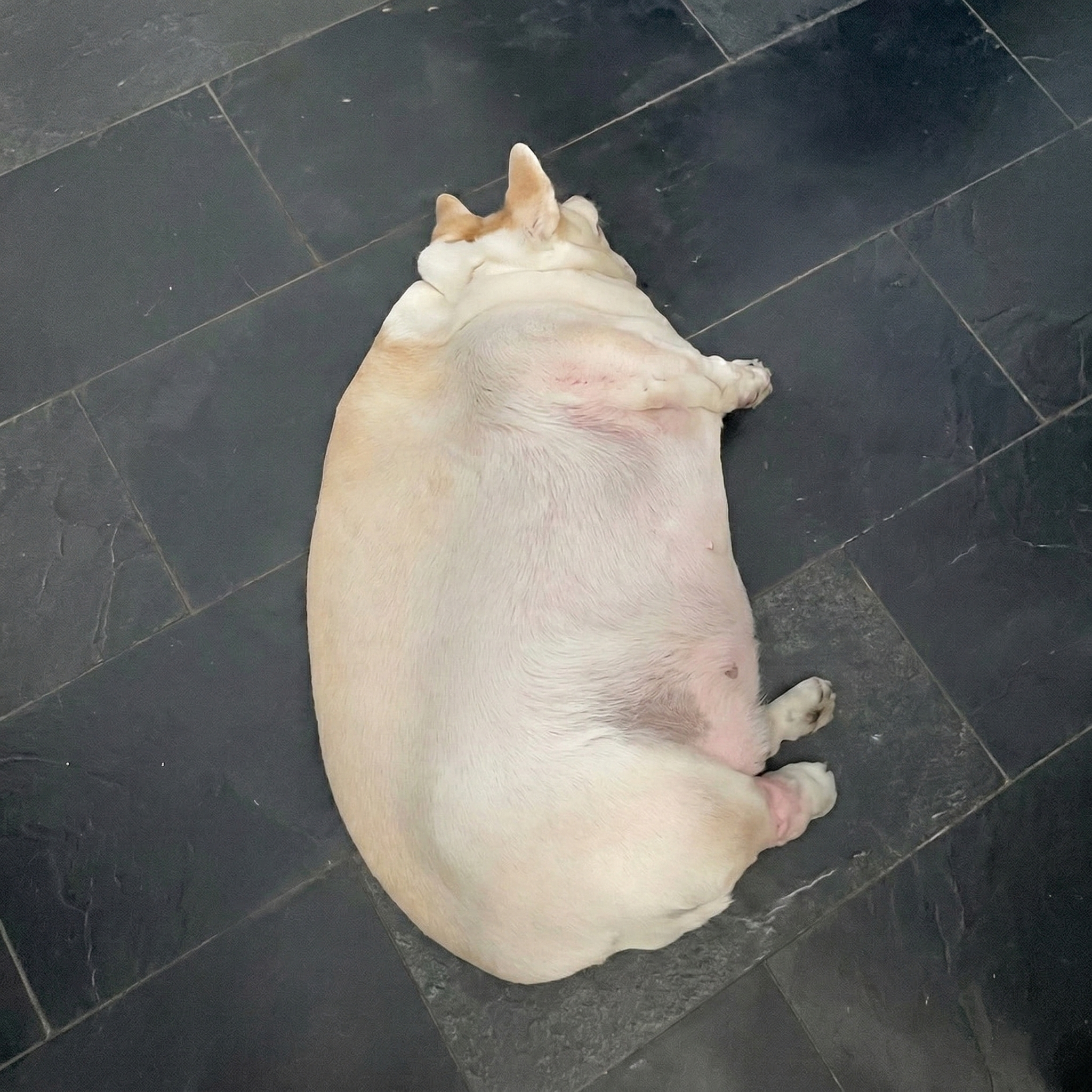
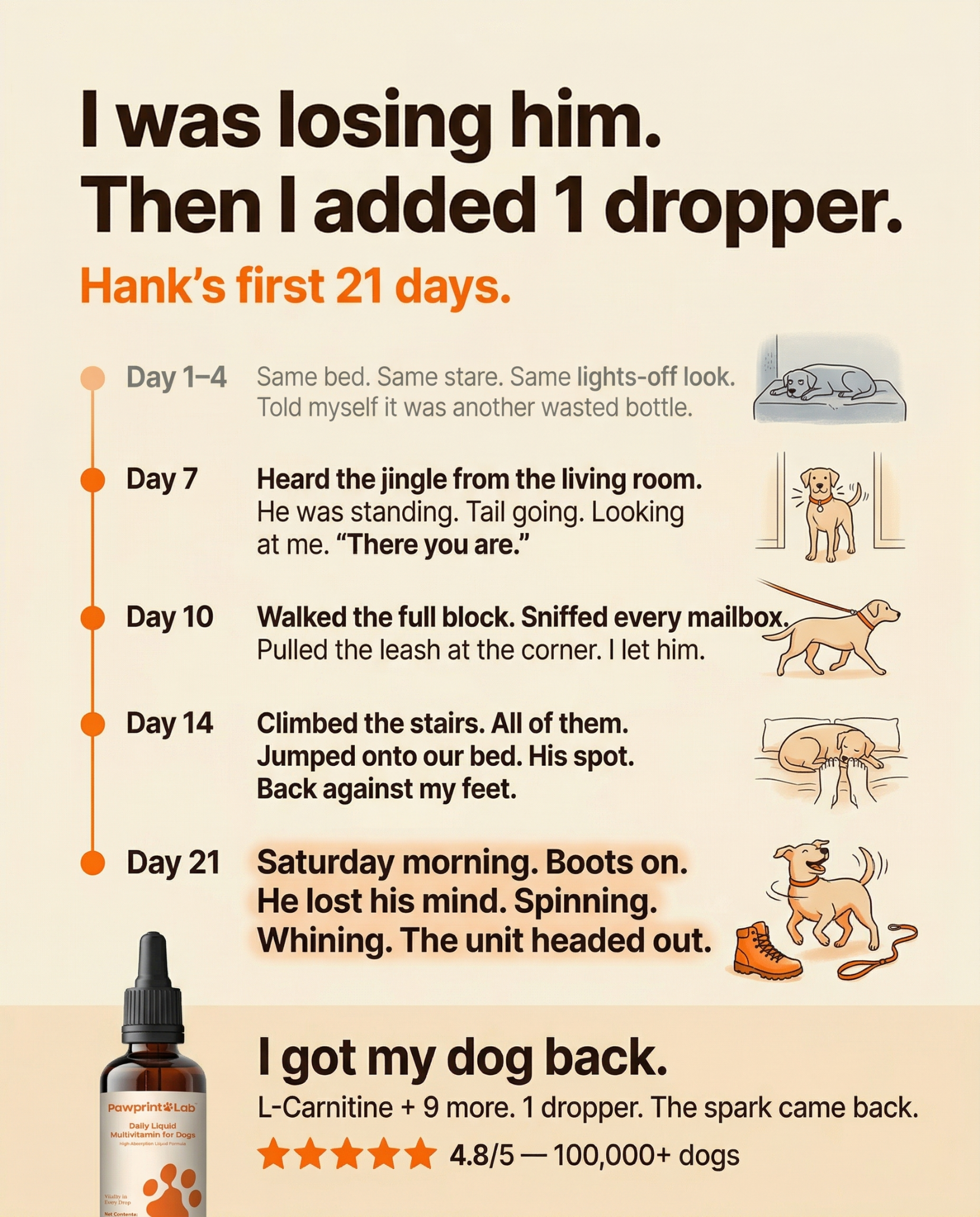
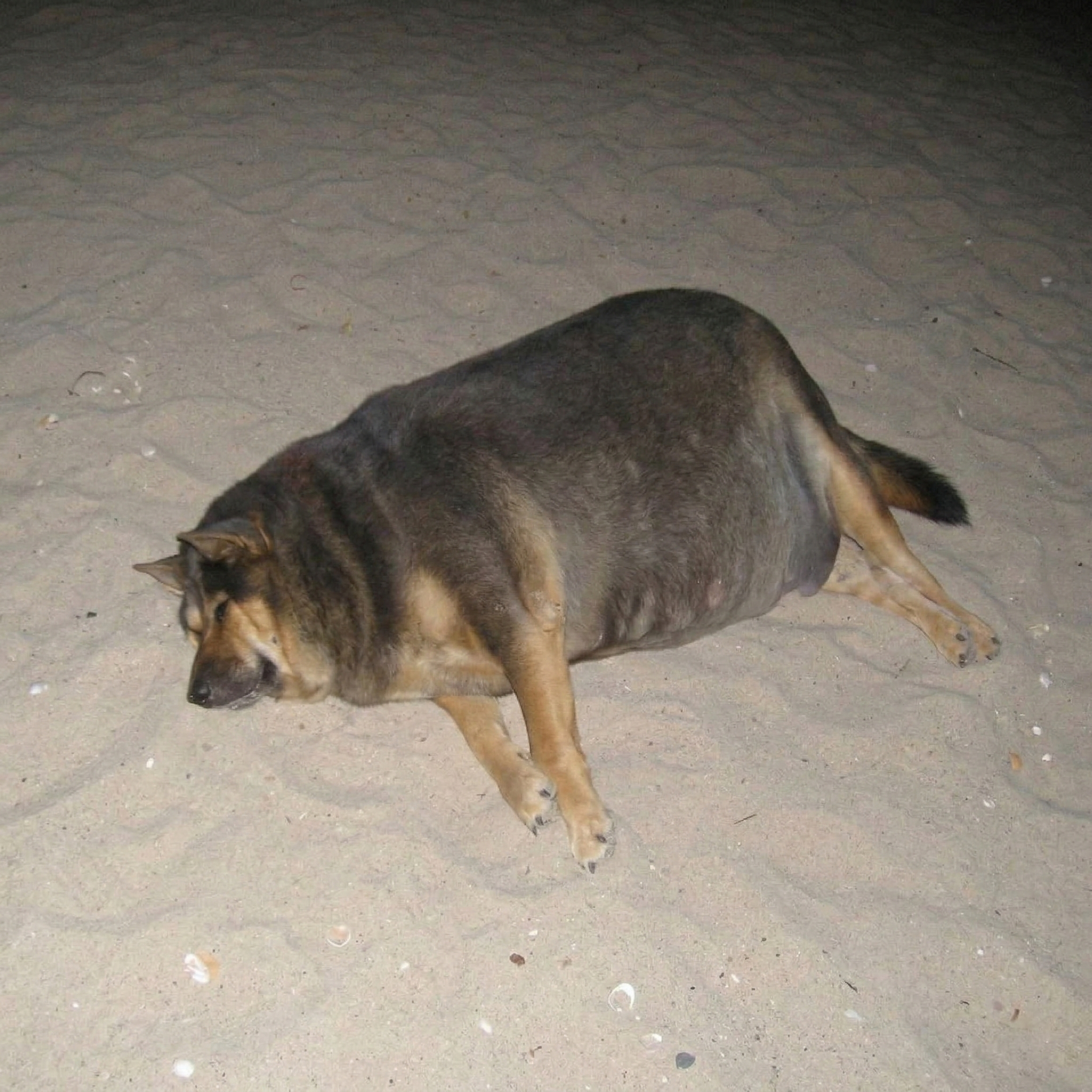
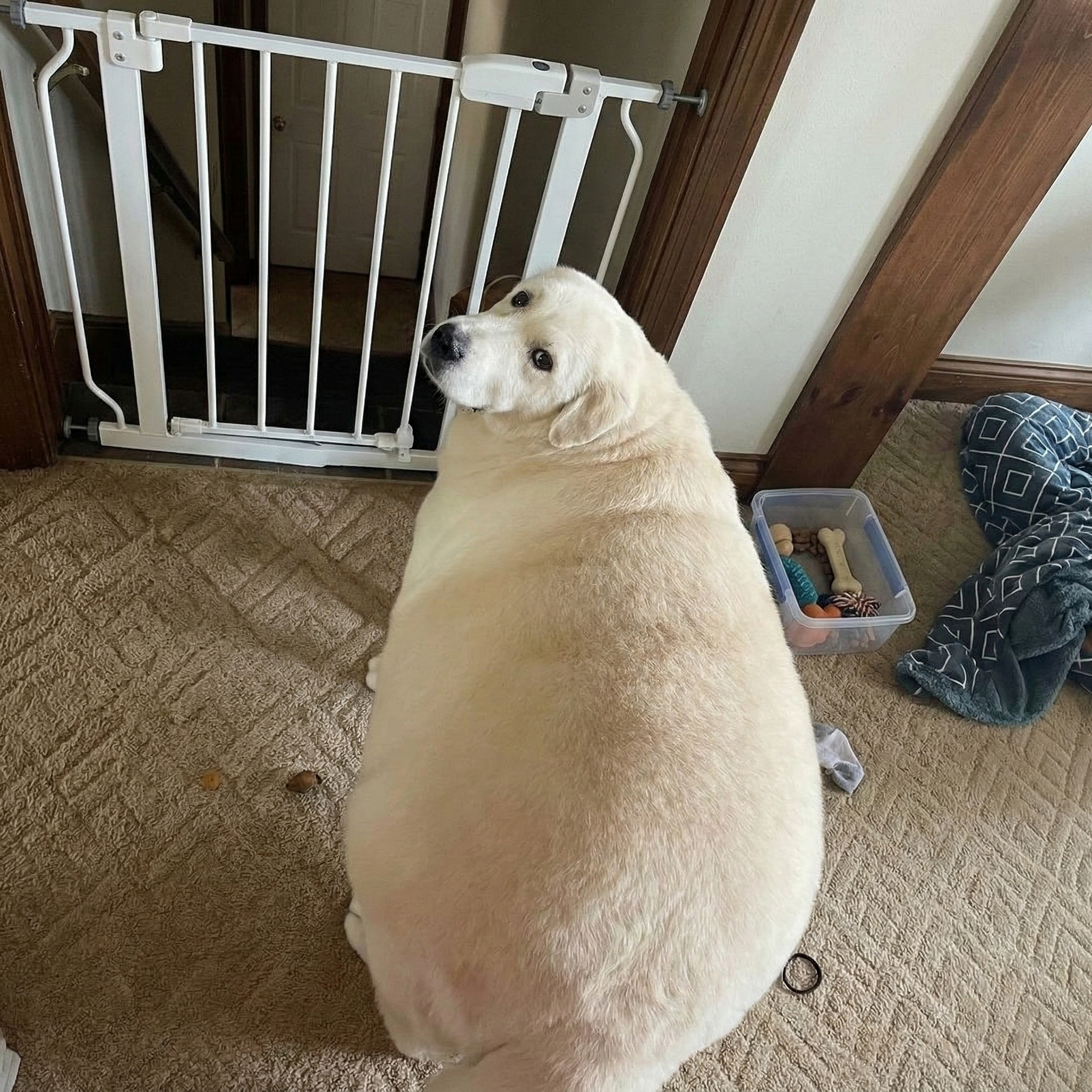
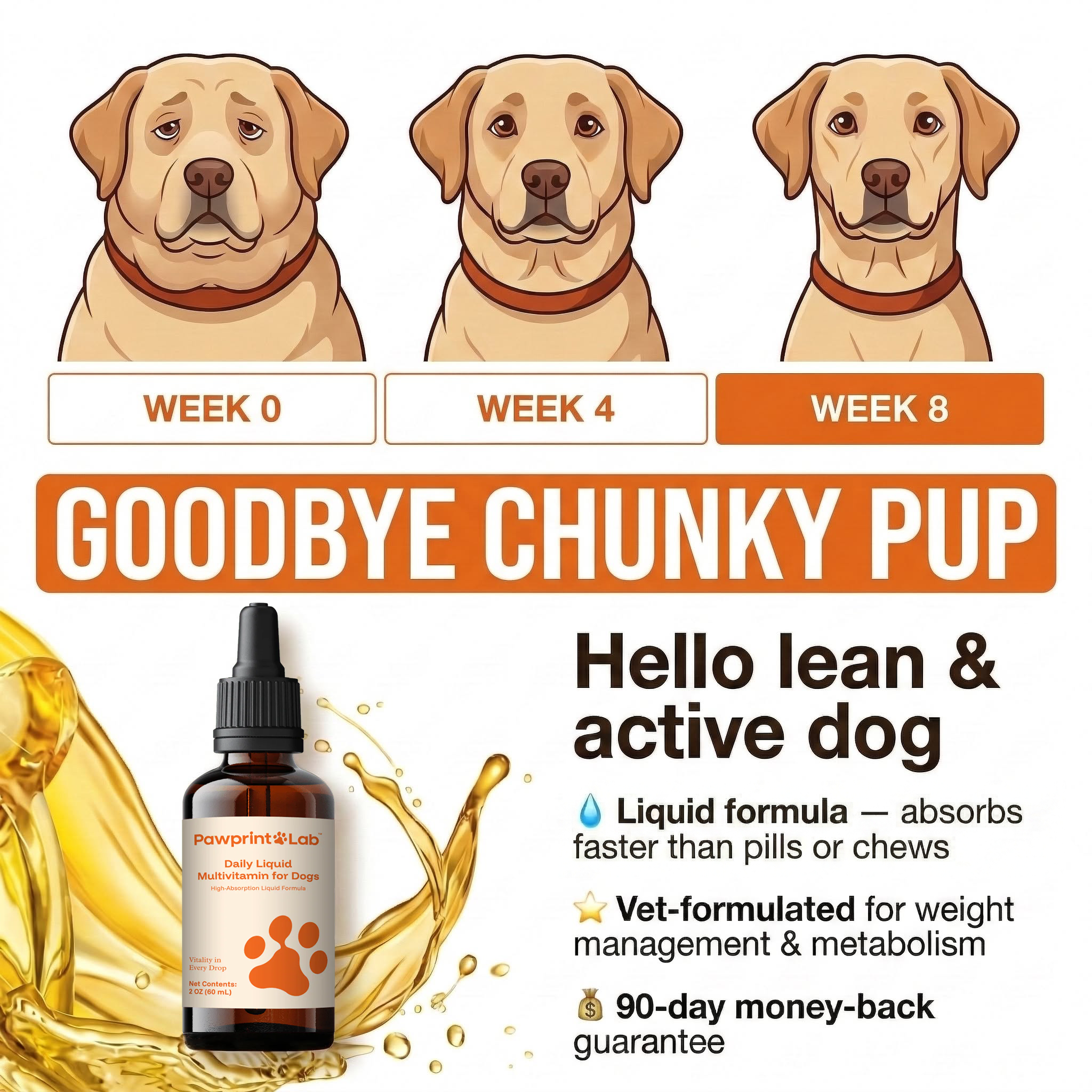
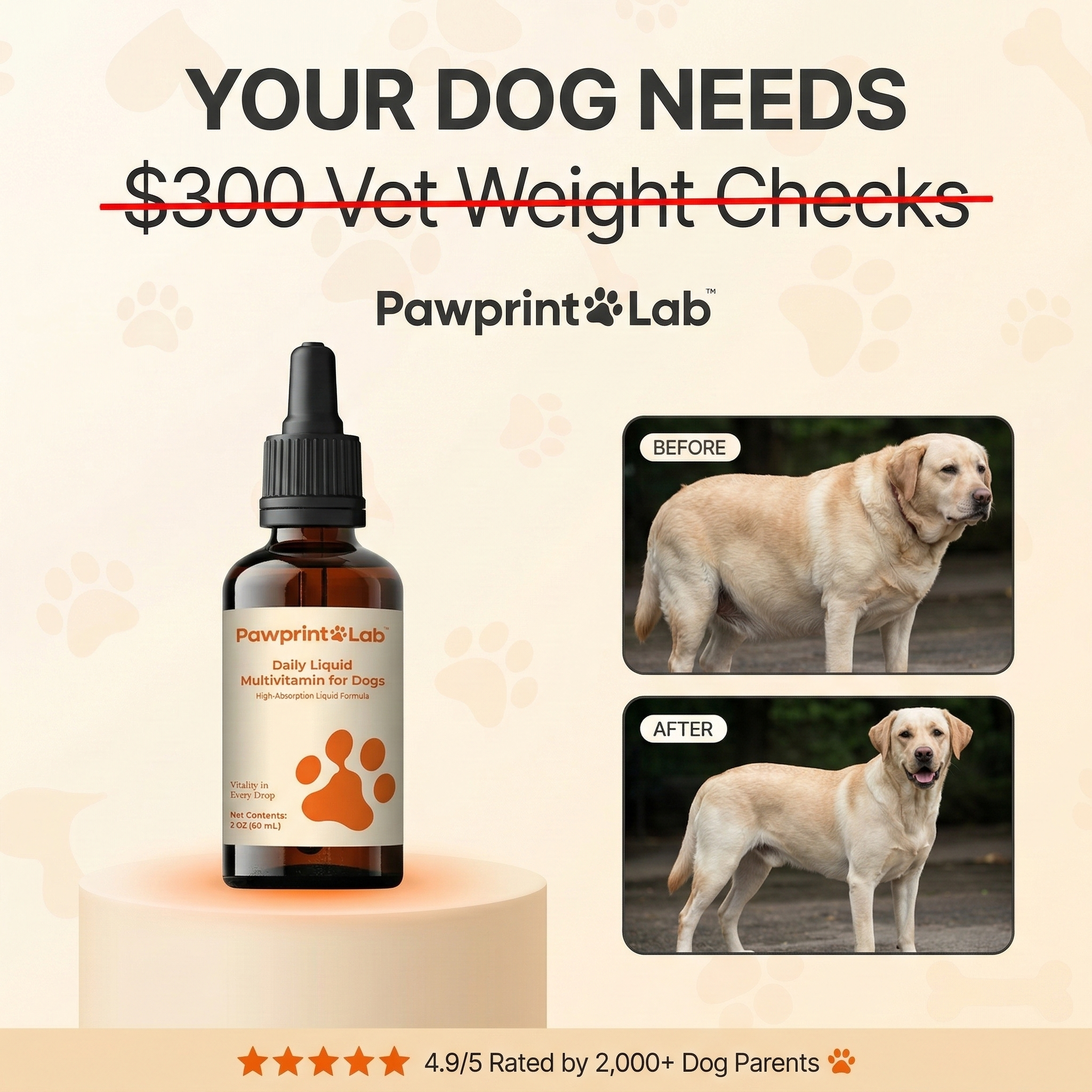
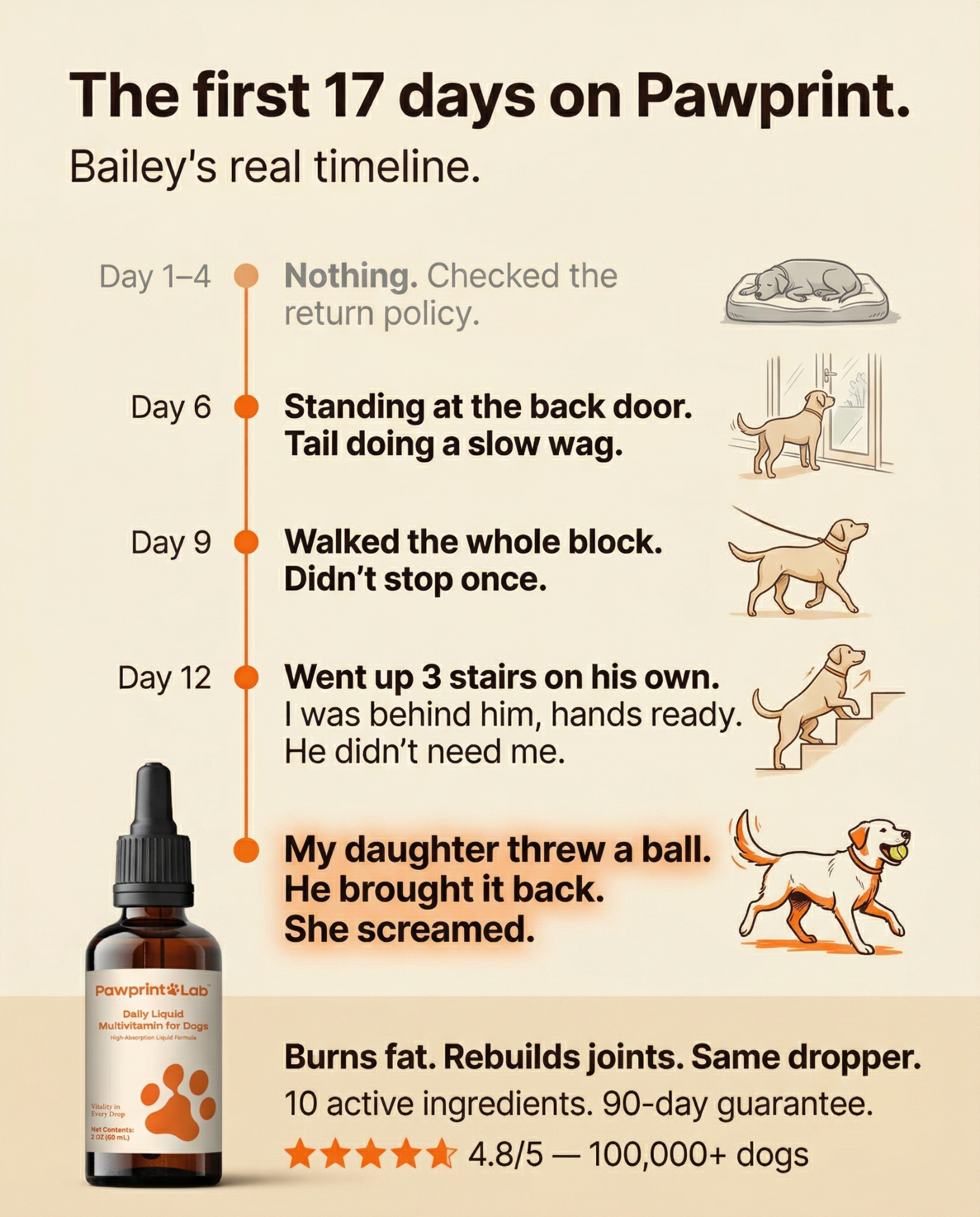
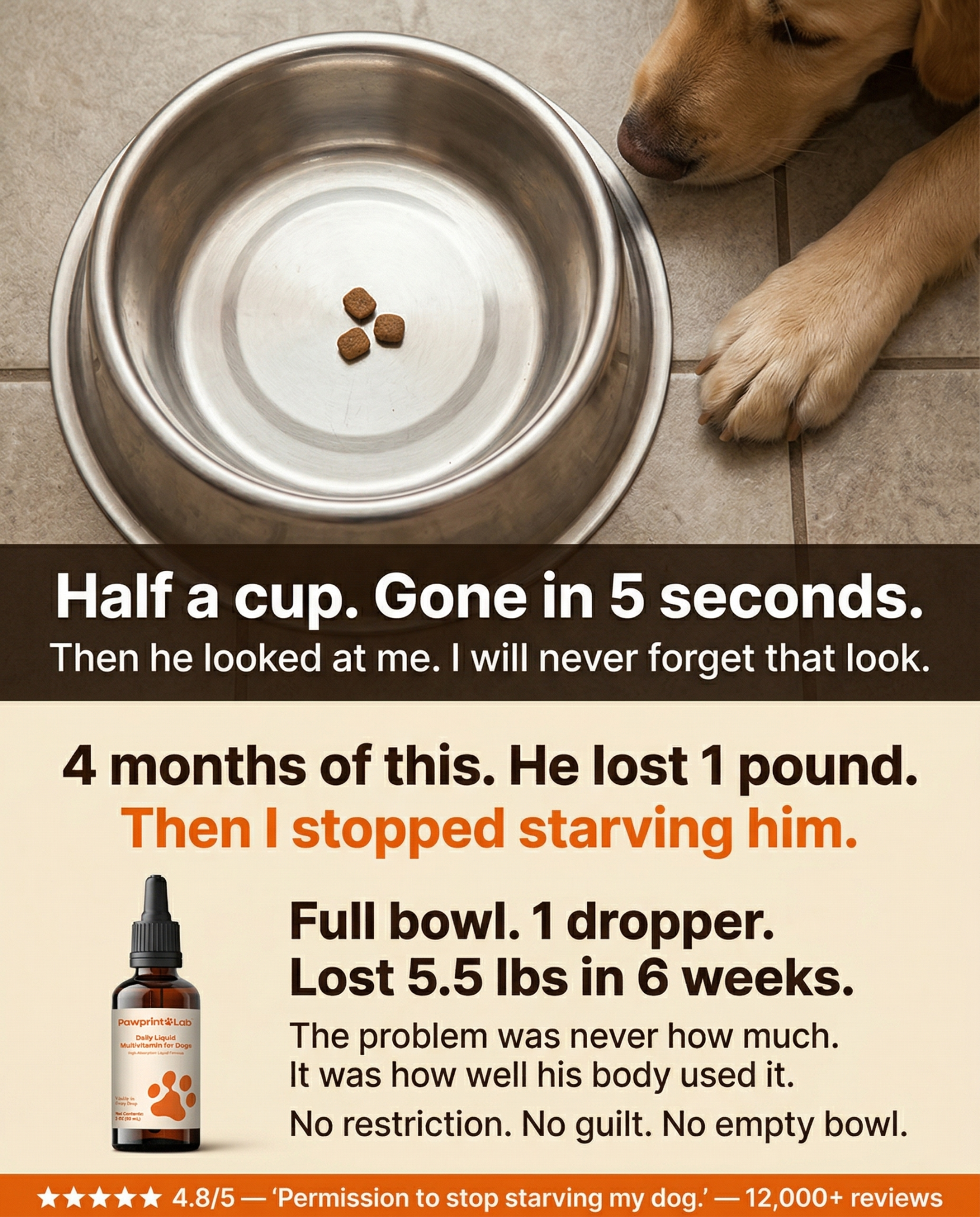
I cut my dog's food in half and he looked at me like I was punishing him, but last week he lost three pounds without me reducing a single thing. It was a Tuesday evening around 6 PM. The kitchen was quiet except for the sound of kibble hitting the bottom of a stainless steel bowl. Half a cup. That's what the feeding chart on the diet food bag said. Half a cup, twice a day, for a dog his size. I set the bowl on the floor. Murphy walked over. Sniffed. Looked at the food. Looked at me. Looked at the food again. Then he ate it. In four bites. Maybe five seconds. And then he just stood there, staring into the empty bowl like he was waiting for the rest. He looked up at me. I will never forget that look as long as I live. It wasn't anger. Dogs don't do anger. It was confusion. Betrayal. A slow, quiet question written across his entire face: "That's it? That's all I get?" I turned around and busied myself at the counter because I couldn't look at him anymore. I heard his nails click on the tile. He walked to where I was standing and sat next to me. He put his chin on my thigh. He looked up. He was begging. Not for a treat. For food. For dinner. Because dinner was already gone and it hadn't been enough. I put my hand on his head and whispered, "I'm sorry, buddy. The vet said this is what we have to do." And I hated every word that came out of my mouth. This was the dog who used to get a full cup and a half at every meal. The dog who ate with a joy that made breakfast and dinner the best five seconds of his day. The dog who would hear the food bin open from any room in the house and come barreling in like a golden freight train, tail taking out everything at knee level. Now he was sitting next to me at the counter, chin on my leg, asking for more food that I wasn't allowed to give him. And he was still overweight. That was the evening I stopped believing that starving my dog was the answer. For four months, I had played the "tough love" game. The vet said reduce portions. So I reduced portions. She said switch to weight management food. So I switched. She said no table scraps, no extras, no treats except the low-calorie training bits that taste like compressed sawdust. So I did all of it. I followed the rules. Every rule. I measured his food with a cup that came inside the bag. I posted the feeding schedule on the refrigerator. I told my husband to stop sneaking him cheese. I told my daughter to stop dropping her dinner on the floor "by accident." "We're helping him," I told them. "He needs to lose weight. This is what's best." But saying "this is what's best" while your dog stares at you with hungry, confused eyes three times a day starts to feel like a lie pretty quickly. Because here's what "helping" him actually looked like: He was hungry. All the time. Not just "could eat" hungry. Actually hungry. Stomach-growling, bowl-licking, following-me-to-the-kitchen-and-watching-every-move-I-make hungry. He started counter surfing. Something he hadn't done since he was a puppy. He jumped up and grabbed a loaf of bread off the counter and ate half of it, plastic bag and all, before I caught him. Not because he was badly behaved. Because he was starving. He ate dirt in the backyard. Dirt. He was so hungry he started eating the yard. I Googled it and the first result was "dogs eat non-food items when they feel chronically underfed." I closed the laptop and stared at the ceiling. He stopped greeting me at the door. Not because his energy was low — although it was — but because he had learned that me coming home didn't mean food was coming. The excitement had been trained out of him by four months of deprivation. The spark in his eyes dimmed. Not dramatically. Not like a lightbulb going out. More like a slow fade. The brightness that used to be there when he looked at me — the joy, the trust, the "you're my person" look — it was being replaced by something flatter. Something watchful. Something that said, "Are you going to feed me enough today, or is this going to be another hungry day?" Every hungry day was another day I felt like the worst dog owner alive. "Feel bad cutting his food," I typed into Reddit at 11 PM one night. The replies destroyed me. "Same. Looks at me like I'm punishing him." "My dog is always begging on diet food. It's heartbreaking." "Hungry all the time. Vet says keep going. There has to be a better way." There has to be a better way. That sentence bounced around my head for a week. But I kept going. Because what else was I supposed to do? The vet said restrict. Everyone said restrict. The bag said restrict. So I restricted. And after four months of restriction — four months of half-cups and hungry eyes and bread loaves eaten off the counter and dirt consumed in the backyard and a dog who stopped looking at me the way he used to — I took Murphy to the vet for his weigh-in. He had lost one pound. One. Pound. Four months. One pound. I stared at the number on the scale and felt something crack inside my chest. One pound. For four months of watching my dog suffer. Four months of feeling like a monster every time I set down a bowl that wasn't enough. Four months of my daughter crying because she couldn't share her goldfish crackers with him. Four months of Murphy eating dirt because I was starving him on a schedule printed on a refrigerator. One pound. "Keep going," the vet said. "Sometimes it takes time." I nodded. I drove home. I sat in the driveway for ten minutes before going inside because I didn't want Murphy to see me crying. But the weight wasn't even the part that scared me most. It was what the restriction was doing to the rest of him. His coat. Four months ago, he had a thick, glossy coat that felt like silk when you ran your hand down his back. Now it was dry. Brittle. Shedding in clumps on the furniture, in the car, on my black pants. My sister said, "Is Murphy okay? His fur looks rough." His energy. He used to play tug for fifteen minutes and come back for more. Now he'd pick up a toy, hold it for a few seconds, and drop it. Like he didn't have the fuel to commit. His mood. This is the part that kills me to say. He was sad. Not sick-sad. Not pain-sad. The hollow kind of sad that comes from being hungry every day with no understanding of why. He'd lie on his bed with his head on his paws and just... exist. Not sleeping. Not playing. Just waiting. For what, I don't know. Maybe for a full bowl. Maybe for me to stop whatever I was doing to him. My husband said it one night. We were in bed, Murphy was downstairs. He used to sleep with us. "He looks at me like I'm punishing him," my husband said. "And I can't explain to him that I'm not." I rolled over and buried my face in the pillow because he was right and I couldn't fix it. So I tried supplements. On top of the diet food. On top of the restriction. Trying to make up for what I was taking away. Our kitchen counter became a graveyard of half-used bags and bottles — right next to the measuring cup I used to ration his meals. Metabolism booster chews. Twenty-eight dollars. He ate one, gagged, and spit a brown lump onto the rug. Then he sniffed it, considered eating it out of hunger, and walked away. Even desperation has limits. Fish oil capsules hidden in a piece of deli ham. He ate the ham in a nanosecond — he was starving, after all — and left the capsule gleaming on the kitchen floor like a tiny, rejected gift. A "weight support" powder I mixed into his food. He ate around it with the precision of a surgeon, leaving a ring of gray dust around an empty center. Even starving, he wouldn't touch it. A forty-two-dollar bag of "lean formula" soft chews that were, ingredient by ingredient, mostly corn syrup, glycerin, and maltodextrin with a trace amount of green tea extract. Essentially candy for dogs with a health claim on the label. They all failed the same way. He refused them, or they were so packed with fillers that the active ingredients were cosmetic, or the delivery system was so inefficient that whatever survived the chewing and the stomach acid arrived in his bloodstream in quantities too small to measure. It was like trying to water a dying plant by spitting on it. The gesture was there. The effect was zero. That Tuesday evening — standing at the counter, Murphy's chin on my thigh, his empty bowl on the floor behind him, his eyes looking up at me with something I couldn't bear to name — I realized we were losing. Not just losing weight. Losing him. His spirit. His trust. His joy. The thing that made Murphy Murphy. I was starving my dog into misery and it wasn't even working. If I kept going — more restriction, more hunger, more sad eyes, more dirt eating, more guilt that woke me up at 3 AM — I was going to destroy the bond between us trying to save his body. I set a full bowl of food down in front of him. A real portion. Not the diet portion. He looked at me. Then at the bowl. Then back at me. Like he was asking permission. "Eat," I said. He ate. Not in five seconds like he inhaled the half-portion. Slowly. Savoring it. He finished and licked the bowl and came over and pressed his head against my leg and stayed there for a full minute. I cried standing up in my kitchen with my hand on my dog's head. Then I sat down at the table and opened my laptop. I didn't go to the forums. I was done reading the same loop — "my dog is always hungry on diet food" → "keep restricting" → "he's still not losing" → "same, this is so hard" → dead thread. No answers. Just shared suffering. I started reading veterinary nutrition research. Metabolic studies. Nutrient absorption papers. I didn't want to know how to feed him less. I wanted to know how to help his body do more with what he was already eating. I read all night. Past midnight. Past 1 AM. And then I found a paper from a veterinary nutritional researcher that made me put down my coffee and read the same paragraph three times. He wasn't talking about "how much" to feed. He was talking about "what happens after." He explained it like this: Imagine two identical furnaces in two identical houses. Same size. Same design. Same fuel. In House A, the furnace burns clean. Every unit of fuel becomes heat. The house stays warm. Efficient. Nothing wasted. In House B, the furnace is clogged. The fuel goes in, but it doesn't burn properly. Most of it turns to soot and deposits. The house stays cold. You keep shoveling in more fuel, but the furnace can't process it. So the soot piles up. The house gets heavier. And colder. What would you do for House B? The diet food approach: put less fuel in. The house gets even colder. The soot stays. Nothing changes except the furnace has even less to work with. The correct approach: clean the furnace. Fix the burn mechanism. Then the same amount of fuel produces heat instead of soot. The deposits clear. The house warms up. Without reducing a single unit of fuel. Your dog is House B. The food goes in. But the body can't convert it efficiently. There's a specific nutrient — L-Carnitine — that acts like a shuttle bus inside every cell. Its job is to pick up fatty acids and carry them into the mitochondria, the tiny furnaces where fat gets burned as energy. Without enough L-Carnitine, the fat never reaches the furnace. It just gets converted to storage. Packed onto the belly, the ribs, the hips. The body is surrounded by fuel it can't burn. So the dog gains weight. The owner restricts food. Now the furnace has even less fuel AND it still can't burn what it gets. The dog gets hungry. The dog gets tired. The coat suffers because nutrients are being diverted. The joints strain because the weight isn't coming off. The immune system weakens because there aren't enough resources to go around. You're not helping the dog. You're starving the dog while the actual problem — the broken furnace — goes untreated. Clinical research confirmed it: dogs supplemented with L-Carnitine lost significantly more body weight than dogs on calorie restriction alone, even when food intake was similar. The nutrient made the difference. Not the diet. The dogs with L-Carnitine were burning fuel. The dogs without it were just hungrier. And here was the part that changed everything for me: The researcher wasn't saying "feed your dog more." He was saying "help your dog's body use what it already gets." Not more food. Not less food. Better utilization of the same food. Eat smarter. Not smaller. The answer was never to take food away. It was to fix the system that processes food so the body converts it into energy and movement instead of storing it as fat. I looked over at Murphy. Lying on his bed. Full for the first time in four months. Looking at me with eyes that still hadn't fully forgiven the last hundred and twenty days. For four months, I had been shoveling less fuel into a clogged furnace and wondering why the house was cold. We had been punishing him with hunger for a problem that had nothing to do with how much he was eating. We had been counting calories for a body that couldn't burn them. We had been starving his coat, his energy, his mood, and his trust, all in the name of "health," while the actual metabolic dysfunction sat untouched. I felt two things at once. Guilt — deep, sick guilt — for four months of unnecessary hunger. Four months of empty bowls and sad eyes and a dog who learned to stop trusting me. And relief. Breathtaking, flooding relief. Because the answer wasn't "keep starving him." The answer was "stop starving him and fix what's actually broken." I didn't have to choose between my dog's weight and my dog's happiness. I just needed to help his body do its job. I started searching for something that worked on utilization, not restriction. I didn't want another bag of diet food that cut calories while breaking the furnace. I didn't want treat chews packed with filler. I wanted something that could get into his system and help his body convert existing food into fuel — burn it instead of store it, use it instead of waste it. I learned that most chewable supplements have a delivery problem so fundamental it explains why nothing I'd tried had worked. The active ingredient gets chewed apart, dissolved by stomach acid, degraded through the intestinal wall. By the time it reaches the bloodstream, you're left with trace amounts that couldn't fix a hamster's metabolism, let alone a sixty-pound dog's. I needed something that actually arrived intact. I found a small company called Pawprint Lab. I almost scrolled right past. An amber bottle with a dropper. No splashy ads. No diet language on the label. No "low calorie" anywhere. No "weight management." That's what stopped me. It didn't position itself as a diet product. It positioned itself as a metabolic support. It wasn't about eating less. It was about using better. Then I read the reviews. They weren't just saying "good product." They were saying what I'd been feeling for four months. "Feel bad cutting his food. This let me stop." "He looks at me like I'm punishing him on diet food. This was the permission I needed to feed him properly again." "Hungry all the time on diet food. Started this. Kept his normal portions. He's actually losing now." "There has to be a better way. This is the better way." I read that last one three times. I could feel the person who wrote it — sitting in their kitchen, dog at their feet, looking at an empty bowl, drowning in guilt, typing into the void, hoping someone had an answer that didn't involve more hunger. I had the same hollow feeling in my chest. It wasn't a treat chew. It wasn't a powder. It wasn't another bag of food engineered to make him full on less while stripping the nutrients his body needed. It was a liquid formula. Ten active ingredients in one dropper. You squeeze it onto their food or directly into their mouth. It absorbs straight into the system — no pill casing, no stomach acid destroying it, no filler taking up room where medicine should be. L-Carnitine to restart the fat-burning shuttle — to grab the fatty acids his body was storing and carry them into the furnace where they could finally be burned as energy. Fish Oil and Turmeric to calm the inflammation that excess weight had been building silently — the fire inside that restriction alone could never reach. Glucosamine HCl, Chondroitin Sulfate, MSM, and Hyaluronic Acid to support the joints that had been grinding under weight the body couldn't shed. Beta-Glucans and Zinc to rebuild the immune function that four months of nutrient deprivation had been quietly undermining. Vitamin E for the coat that restriction had been starving. It wasn't about eating less. It was about helping his body do more with what he was eating. Fix the furnace. Same fuel. Better burn. I ordered a bottle. I didn't tell my husband. Not because he wouldn't support it — but because I needed to do this quietly. I needed to stop the guilt spiral privately before I could explain the science. When it arrived three days later, I did something I had been too scared to do for four months. I gave Murphy a normal portion of food. A real portion. Not the diet portion. Not the guilt portion. A full bowl. And I squeezed one dropper over it and stirred it in. He came to the bowl. He sniffed. His ears went forward. His tail started — cautiously, like he was afraid it was a trap. He ate. Slowly. Thoroughly. Every piece. He licked the bowl clean. He didn't shove it across the floor looking for more. He just... finished. And walked away satisfied. Satisfied. I hadn't seen him satisfied after a meal in four months. Every meal for the last hundred and twenty days had ended with him staring into an empty bowl, wanting more. This one ended with him full. Content. Walking to his bed and lying down with a sigh that sounded like relief. My eyes stung. I turned and stared out the kitchen window until the feeling passed. "Okay," I whispered. "Let's see if the science works." Day one. Same dog. Same weight. Same shape. But he ate a full meal and didn't beg after. Day two. Full meal. No begging. No counter surfing. No desperation. He ate, he was satisfied, he rested. Like a dog is supposed to. Day three. He stopped eating dirt in the backyard. Just stopped. Went outside, sniffed around, came back in. No mouthful of soil. No chewing on bark. The pica just... ended. Because he wasn't starving anymore. Day five. I was in the living room reading and I heard something I hadn't heard in weeks. A toy squeak. Murphy was lying on the floor with his stuffed duck in his mouth, squeaking it. Not playing with it exactly. Just holding it. Squeezing it. Like a reflex coming back online. Like his body suddenly had enough energy to remember that toys existed. Day eight. He greeted me at the door. I walked in from the grocery store and he was standing in the hallway, tail going, whole body doing that low wiggle he used to do before the diet food took it away. I dropped the grocery bags on the floor and knelt down and he pressed his forehead into my chest and just stayed there. "Hey, buddy," I said. "There you are." Day twelve. My husband noticed. "His coat," he said, running his hand along Murphy's back. "Feel this." I reached over. The dry, brittle straw texture was softening. There was a sheen returning. Not all the way back. But present. Like the nutrients his body had been starving for were finally arriving where they needed to go. Day fourteen. I weighed him. I was terrified. Four months of restriction: one pound. Two weeks of full meals with the dropper: what if it was also nothing? What if I'd just given him two weeks of happiness before going back to the guilt? I put him on the scale. He'd lost two and a half pounds. In two weeks. Eating full portions. Not starving. Not begging. Not eating dirt. Not looking at me like I was punishing him. Two and a half pounds. More than double what four months of starvation had achieved. I sat on the bathroom floor and Murphy came over and put his head in my lap and I held him and cried into his fur — the fur that was already getting softer — and whispered, "I'm sorry. I'm sorry I did it that way. I'm so sorry." Day twenty-one was when my daughter noticed. She was lying on the floor with Murphy, her face buried in his neck like she used to do before the diet food made his coat too rough to be pleasant. "Mom," she said. "He's soft again." "I know, baby." "And he's not sad anymore." I looked at Murphy. She was right. The flat, watchful, waiting expression was gone. The brightness was back. The look in his eyes that used to say "you're my person" — it was there again. Not the guarded look of a dog who'd learned to expect less. The full, warm, trusting look of a dog who was being treated right. "He's not sad anymore," I agreed. And I felt something I hadn't felt in four months: pride. Not the guilty kind where you tell yourself you're doing the right thing while it feels wrong. The real kind. The kind that comes from actually doing right by someone who trusts you completely. That was six weeks ago. He's lost five and a half pounds total. Eating full meals. Every day. Same food, normal portions, one dropper of liquid stirred in. No calorie restriction. No measuring cup. No feeding chart taped to the refrigerator. His coat is back. Thick, glossy, soft. My sister visited last weekend and said, "He looks like a completely different dog." He's not a different dog. He's the same dog who finally has a body that works. He stopped counter surfing. He stopped eating dirt. He stopped begging. Not because I trained it out of him — because he's not hungry anymore. A satisfied dog doesn't eat the backyard. He plays tug again. Brings me the duck. Squeaks it until I engage. Has the energy to go fifteen minutes and come back for more. He greets me at the door. Every day. Full body wiggle. Tail going. Sometimes with a sock in his mouth. Sometimes just standing there, looking at me with that look — the one I thought I'd lost. He sleeps on our bed again. Pressed against my husband's feet. Snoring loud enough to hear through the wall. My husband looked at me last week and said, "I don't feel like I'm punishing him anymore." "You never were," I said. "We just didn't know there was another way." I'm sharing this because I know there are thousands of dog owners right now standing at the kitchen counter, measuring out a portion they know isn't enough, watching their dog eat it in five seconds and stare up at them with eyes that ask, "That's it?" I know you feel guilty. I know you lie in bed at night replaying the look on their face when the bowl was empty too fast. I know you've told yourself "this is what's best" so many times that the words have lost their meaning. I know you've Googled "feel bad restricting my dog's food" at midnight because you needed someone to tell you it was okay. But I need to tell you something: You don't have to starve your dog to save your dog. The problem was never how much your dog eats. It's how well their body uses what they eat. The furnace is clogged. Restriction makes the house colder. It doesn't clean the furnace. Stop measuring portions with guilt in your hands. Stop buying diet food that trades your dog's happiness for a pound they might lose in four months. Stop accepting "keep restricting" as the only answer when your dog is looking at you with hungry, confused eyes every single night. Your dog's body needs to burn smarter, not eat smaller. The furnace needs restarting. The fat-burning shuttle needs rebuilding. The inflammation needs calming. The joints, the coat, the immune system — they all need feeding, not starving. This little amber bottle isn't magic. It's just... kinder. It's the answer that doesn't require taking food away from someone who trusts you completely. If your dog looks at you like you're punishing them every time you set the bowl down... If they're hungry all the time on diet food and you're starting to wonder if this is really the only way... If you feel bad cutting their food and you just need someone to tell you there's a better option... You need to try Pawprint Wellness Protocol. Murphy gets one dropper a day on a full bowl of food. My vet calls it "metabolic support." My daughter calls it "the thing that made Murphy happy again." I call it permission to stop starving my dog. Don't spend another night watching your dog eat a half-empty bowl and pretend it's enough. Click below to see if your dog can eat better instead of less.
Like this ad? Make it yours.
Crush rebuilds this exact creative around your product — your brand, your colors, your offer — in about a minute.