Active· since Sep 9, 2026
- 9
- days running
- 0
- relaunches
Ad copy
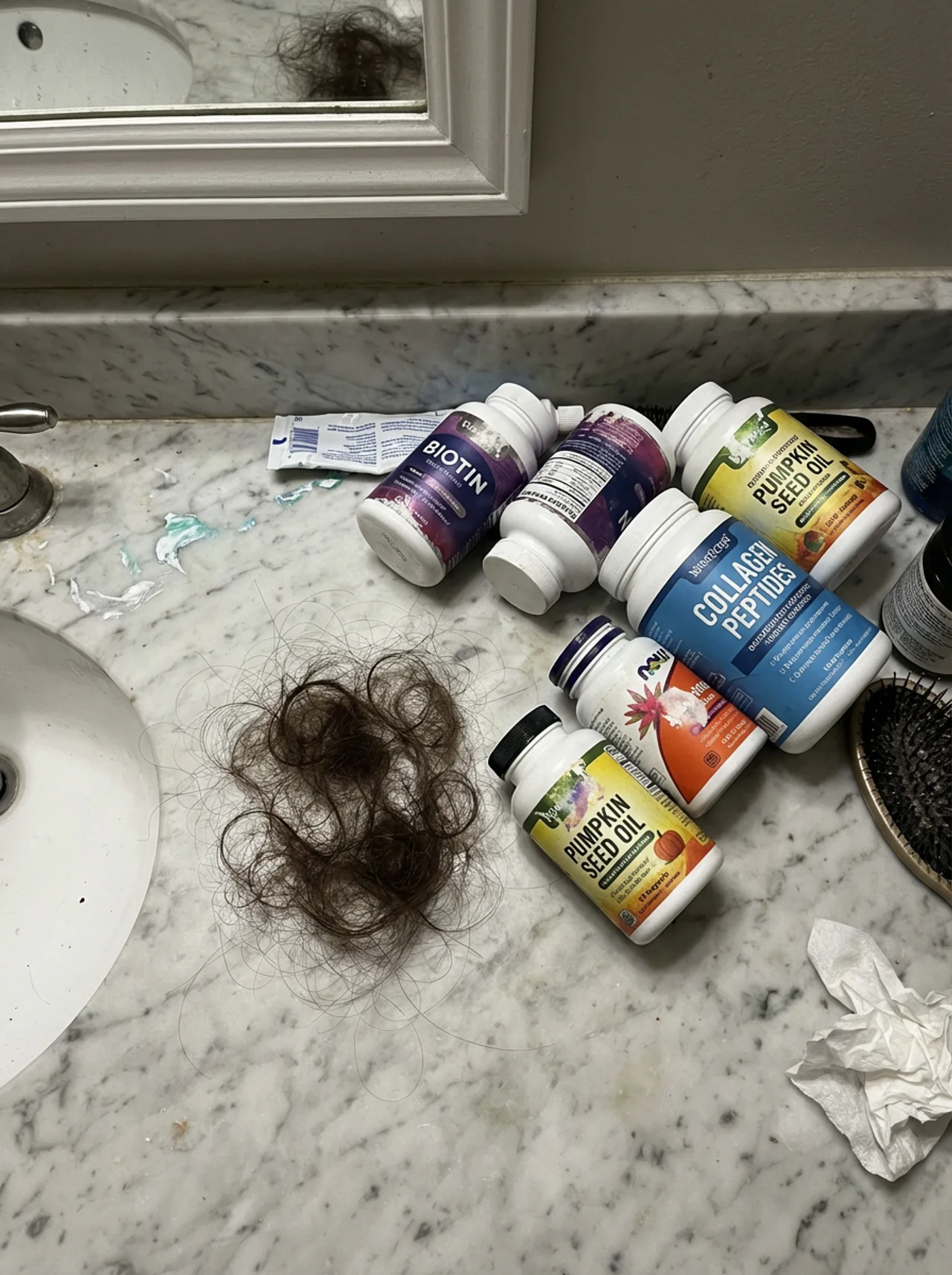
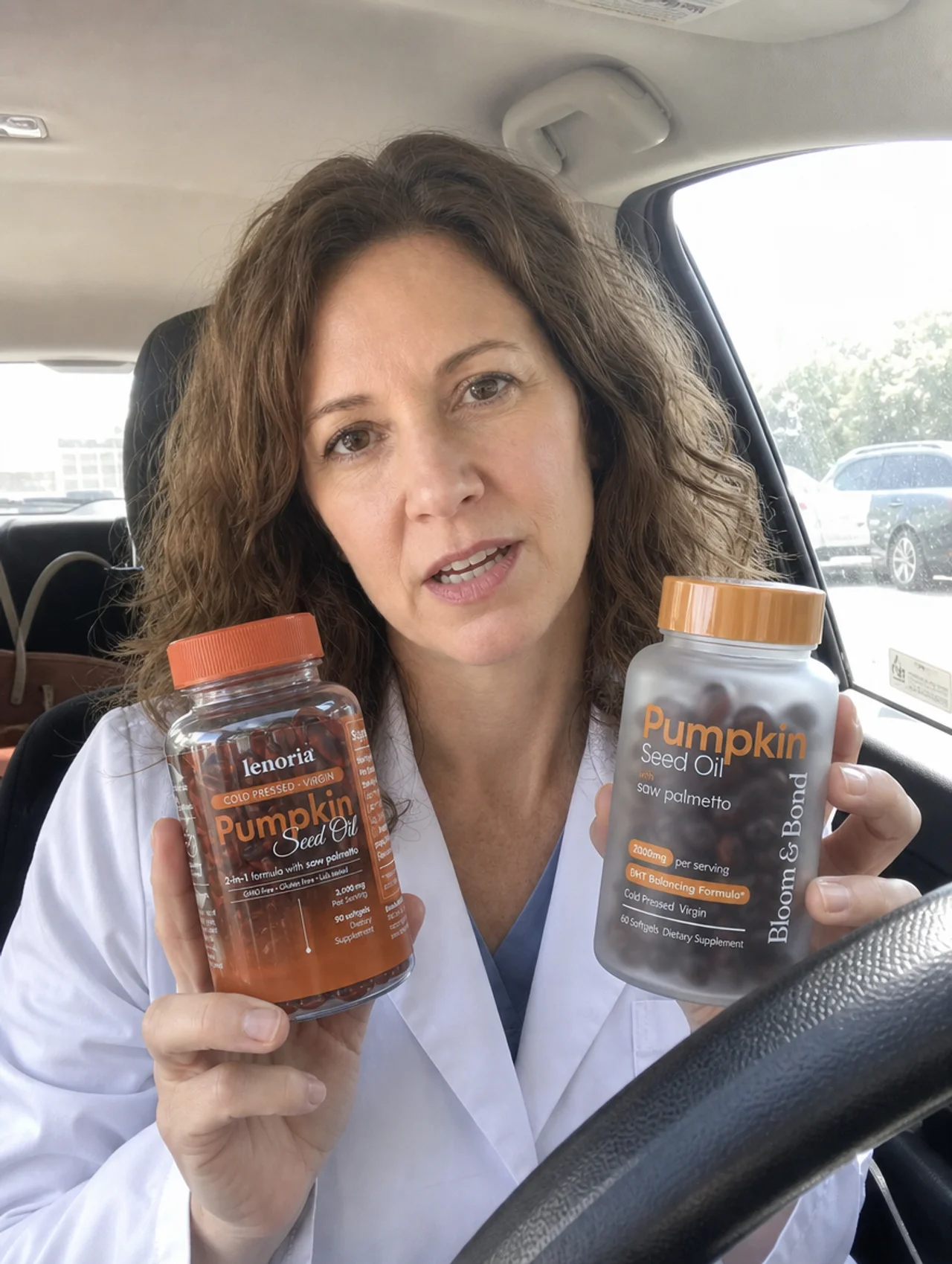
Perimenopause makes you scratch your vjay like a dude at a bus stop. And three negative swabs later, nobody can tell you why. Not the dryness they warned you about. The other one. The one you have been clawing at in your sleep and telling absolutely nobody about. I need to tell you something about the advice you have almost certainly already been given. The "it is probably yeast, let's try a cream" advice. Because I have watched that advice waste years of women's lives. My name is Dr. Patricia Sullivan. I have been a dermatologist for 17 years. I specialise in what hormones do to women's skin. And over the last few years something has changed in my practice. I used to see women who came in with an infection. They had an infection. We treated the infection. They got better. That appointment is easy. But lately? The appointments that stay with me are different. These are women who have been tested for everything. Swabbed. Cultured. Screened for every STD there is. Sent for bloodwork. All of it clean. All of it negative. And they are still sitting in front of me, quietly falling apart, because they are scratching themselves raw in a place they cannot mention at dinner. One of them said it perfectly. "You'd think a doctor would take me seriously when I present with scabs and scars from severe itching. You'd be wrong." Before I go any further I need to be direct with you about two things, because this does not describe everyone. If down there is the only place on your body that itches, this is not what I am describing. Go and get looked at properly. And if that skin has changed how it looks, gone pale or white or papery, or changed shape at all, stop reading and book an appointment. That needs a real examination, not an article. But if you are also scratching your shins. Your scalp. The inside of your ears. Your feet at night. If you have thought some version of "nothing looks more genteel and sophisticated than scratching both bo*bs at once, or constantly fingering my ears." Then keep reading, because you have something completely different, and almost nobody is treating it. A patient came to me. I will call her Elaine. She was 49. It had been going on for two years. She had been to four different appointments and been told four different things. As she put it to me: "each one says it's different, like it's jock itch, it's yeast, it's nothing, it's the lack of estrogen." She had used the antifungal. Twice. She had used a steroid cream. She had changed her laundry detergent. Then changed it again. Then changed her toilet paper, her soap, her body wash. Bought all new underwear, all cotton. Nothing made any difference. She had also, quietly, been tested for every sexually transmitted infection on the list, because at some point when nobody can tell you what is wrong, your brain starts filling in the blanks by itself. All negative. And here is the part she did not tell anybody for two years. She was waking up at three in the morning having already been scratching in her sleep. Sometimes bleeding. She kept nail scissors on the bedside table so she could keep her nails short enough to do less damage. She had started preferring to work from home and had told her husband it was the commute. She sat down in my chair and said what almost all of them say. "Did I do something wrong?" She had not. The advice she was given was not wrong. It was incomplete. And that incomplete advice cost her two years. Here is what nobody explained to Elaine. There are two completely separate things that happen down there in perimenopause. And almost everyone only treats one of them. Your vulva is not one thing. It is two different tissues. Go a little way in and it stops being skin. It becomes something closer to the inside of your mouth. Wet, no hair, thin. That part has a name for what happens to it. Atrophy. Doctors know about it. Vaginal estrogen treats it, and treats it genuinely well. If you can get it, take it. That is Problem One. It is real, it is acknowledged, and it is being handled. But the outer part. The part with hair on it. The part you can actually see and actually scratch. That is skin. Ordinary skin. The same kind of skin as your shins. And it has the exact same problem your shins have. That is Problem Two. And nothing you have been given has touched it. Which is why the women who describe it accurately always describe it the same way. "Mine is all the outer vagina, not the inside." "I feel like a tickling sensation where I have to itch my exterior vjay, not inside." "Mine is all external itching, so outside my vagina and groin. I bleed because I itch it like a maniac. I have been tested and I am negative for everything. Is it the lack of hormones?" Yes. It is. Let me explain it as simply as I can, because it is not complicated once somebody actually tells you. Your skin has a very thin layer on the outside. Its whole job is to hold water in and keep everything else out. That layer is held together by a fat. Your body makes that fat itself. And estrogen is what tells your body to make it. When estrogen drops, your body makes less of it. So that thin outer layer gets thinner and starts leaking. Underneath it are nerve endings that used to sit under something thick. Now they are sitting under something thin. And they can feel everything. Your underwear. A seam. Sweat. Sitting down. The waistband of your jeans. Your brain gets all of that and reads it as one thing. Itch. Now here is why it hits down there first and hardest. Skin has little docking points that estrogen plugs into. Some parts of your body have a few of them. The skin on your lady parts has more of them than almost anywhere else on your body. More docking points meant a stronger signal. So when the signal drops, that skin is the first to notice, and it notices the most. That is not a theory. Thousands of women have accidentally proved it on themselves without meaning to. Ask any woman on an estrogen patch what happens in the day before she changes it. "When it's almost time to change my patch, roughly 18 to 5 hours before I change it, the itching comes back." "I only itch if mine is low." One thing goes down. One thing comes back. Every single cycle, on schedule. ❌ A clean swab does not change what is happening to that skin. ❌ A new detergent does not change it. ❌ Finishing the antifungal does not change it. There was no fungus. ❌ A steroid cream does not change it. Steroids thin skin, and that skin is already thinning. ❌ Even vaginal estrogen does not change it, because it is working on tissue two inches away from where you are actually scratching. The only thing that changes it is that skin getting back what it can no longer make enough of. And here is the thing that should make everything click. It was never only down there. Was it. "The itch is so intense and wakes me several times in the night, plus pesters me throughout the day." "I would scratch till my legs bled in my sleep." The ears. The shins. The scalp. The feet the second the lights go off. You have been treating those as separate problems, because everyone treated them as separate problems. They are not separate. It is the same skin, the same shortage, on the same body, at the same time. One woman on a forum put it better than any textbook I own. "Learning you're in perimenopause is finding out your 15 tiny weird ailments are really just one big weird ailment." That is exactly it. Now let me talk about what you have already spent money on. The lotions. The balms. The barrier creams. The tubs of thick unscented cream by the bed. I am not going to tell you those are useless. But I will tell you why they keep letting you down. "My doctor simply recommends frequent showers and moisturiser. It only helps for about an hour or so." "I basically bathe in lotion. But I just itch." A cream sits on top. The shortage started underneath. You are not putting the fat back where your body actually needs it. You are laying something over the top of skin that stopped making its own supply. One woman said the truest thing in the whole conversation. "It's so weird to have to moisturize after 5 decades of self-moisturizing skin." That is the entire problem in one sentence. Your skin used to do this by itself. Now it cannot. And if you are already taking fish oil, I want to save you some disappointment. Omega-3 is a good fat. It is not this fat. The fat that thin outer layer is actually built from is called linoleic acid. It is a different fat doing a different job. Taking more omega-3 does not give your skin more linoleic acid, any more than drinking more milk gives you more iron. Now, one thing I want to be extremely clear about before I tell you what I recommend. This is not hormone therapy. It is not a substitute for it, and it does not replace it. What I am about to describe does a different job. It gives that outer skin the raw material it has stopped getting enough of. That is all it does, and that is all I am claiming for it. The one I recommend to my patients is Bloom & Bond. It is pumpkin seed oil, and I am specific about the brand for one reason. Pumpkin seed oil is roughly half linoleic acid. That is the exact fat your skin uses for that outer layer. There is almost nothing else you can take that is this concentrated in it. But most pumpkin seed oil on Amazon is heat processed, and heat is what damages the fat you are buying it for. Bloom & Bond is cold pressed. 2,000mg. Which is the whole point of taking it. There is also saw palmetto in it, which supports skin comfort during hormonal change. Useful. But the linoleic acid is what you are here for. No collagen filler. No biotin. No "beauty from within" nonsense. Here is what I tell patients to expect, and I want to be honest about the pace, because skin is slow. ✅ Weeks 2 to 4. Nothing dramatic. This is the part where most women quit. Do not. ✅ Weeks 4 to 8. The first thing most of them notice is not the itch. It is that their skin stops feeling tight after a shower. ✅ Weeks 8 to 12. Skin that holds moisture for longer. Less of the papery, thin, sanded feeling. Less reaching for the tub of cream four times a day. ✅ Month 3 and beyond. Skin that is more comfortable being skin. Not everybody is the same. Some women notice sooner. Some take longer. Anybody who promises you a date is guessing. I saw Elaine again a few months later. She did not make a speech about it. She mentioned, almost in passing, that she had taken the nail scissors off her bedside table. And that she had gone back into the office three days a week. I want you to imagine something for a second. Getting into bed and just going to sleep. Not doing the calculation about how bad it will be tonight. Not lying there waiting for it to start. Not waking at three in the morning already scratching. Getting dressed without your clothes announcing themselves. Sitting through a meeting without that specific quiet panic of needing to move and knowing you absolutely cannot. That is not a fantasy. That is just what skin does when it is not starving. If you have been through the swabs and the creams and the antifungals and the detergents and come out the other side with nothing but negative results and raw skin, I need you to hear this clearly. There was nothing to find. Nobody missed an infection. You do not have one. Your skin lost its supply, and it lost it first in the place that was getting the most. Every week that goes by, that outer layer gets a little thinner and a little more reactive, and you scratch a little harder, and the skin gets a little more damaged. You are not crazy. You are not dirty. You never had anything. 👉 https://trybloomandbond.com/products/pumpkin-seed-oil-softgels-skin
Like this ad? Make it yours.
Crush rebuilds this exact creative around your product — your brand, your colors, your offer — in about a minute.