Dr. Michael Reed
Dr. Michael Reed Facebook ad: “What a 2003 study revealed about male decline”
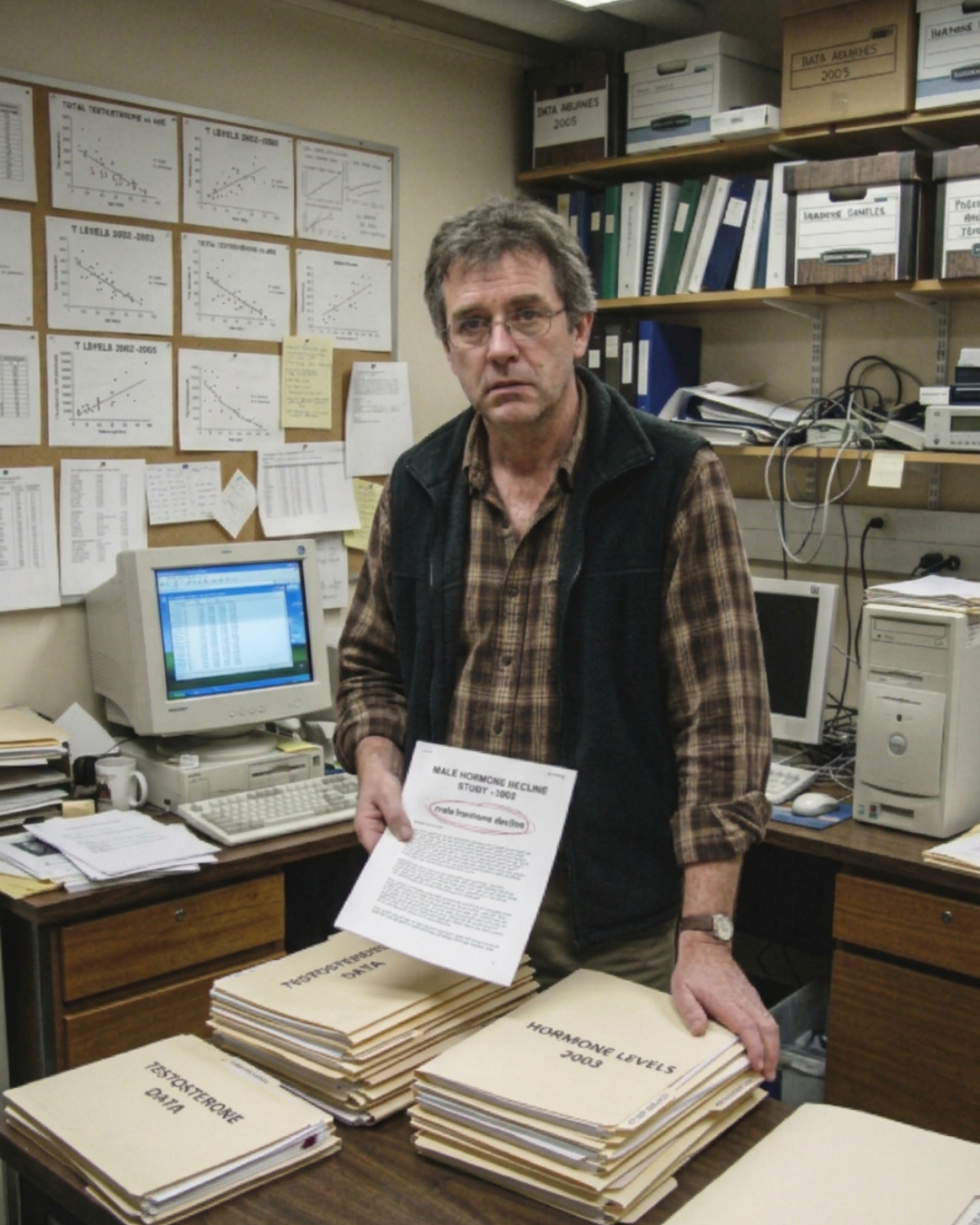
Ran for 5 days, from May 28 to June 2, 2026, the last day Crush saw it.
Run by Dr. Michael Reed on Facebook. Crush is not the advertiser and does not verify its claims. See this ad in Meta's Ad Library(opens in a new tab)
Want an ad like this for your product?
Crush makes new ad images for your product from this ad: your logo, your product photo, your offer.
Trials from $19.95 USD, then $79.95 USD a month. Cancel anytime.
About this ad
- Meta Ad Library ID
- 1617833935964509
- Platforms
- Relaunches
- 0
Ad text
In 2003, researchers at the University of Washington made a discovery they didn't fully understand for another fifteen years. They were studying why men's testosterone was dropping across the population - not by a little, but by an average of 1% per year, starting in the late 30s. Every generation of American men was measurably less testosterone-loaded than the one before. The 50-year-old man of 2005 had the hormone profile of a 65-year-old man from 1985. The assumption was that it was lifestyle. Obesity. Sleep. Stress. Microplastics. All true. All partial. The deeper finding - the one that didn't make headlines because nobody knew how to monetize it - was that the testosterone factories themselves were dying. Specifically: a cluster of cells called Leydig cells. The microscopic factories inside a man's body that produce testosterone. Researchers found that men lose roughly 1% of these cells every year after age 35. By the time the average American man hits his late 40s, he's running on a third less production capacity than he had at 30. Here's why this matters - and why your doctor probably hasn't told you. When you get a testosterone blood test, the number you see measures output. It does not measure factory health. A man with half his Leydig cells dead can still test "low-normal" - and his doctor will tell him he's fine. Meanwhile, the factory keeps dying, the number keeps drifting south, and the symptoms keep getting worse. The standard medical response, when it's offered at all, is testosterone replacement therapy. Inject testosterone from outside the body. Here's what the TRT clinics don't put on the brochure: When you inject exogenous testosterone, your body's own testosterone production shuts down. The brain sees high T in the bloodstream and tells the factory to stop manufacturing. The Leydig cells - already weakened - go dormant. In many men, they atrophy permanently. You become biologically dependent on the needle. Studies have shown testicular volume can shrink by 20-30% within months of starting TRT. This is why men who try to come off TRT after a year or two often crash harder than they ever felt before they started. Their factory didn't just stop. It rusted shut. One endocrinologist who's spent over twenty years treating men with declining testosterone calls this "the great medical bait-and-switch of the 21st century." "We are masking a factory problem with a delivery solution," he told a recent conference of his peers. "We are bypassing the organ instead of feeding it." So what feeds it? The answer turns out to be embarrassingly old. For most of human history, men ate a specific cut from the animals they hunted. Not as a delicacy - as nourishment. Bull. Ram. Deer. Every traditional culture from the Mongolian steppe to the Scottish Highlands to the American frontier did this. Our great-grandfathers ate it at slaughter time. Our grandfathers, less so. Our fathers, almost never. Us, basically never. Inside that cut - which sounds disgusting until you understand the biochemistry - is the exact peptide and growth-factor signature that the human Leydig cell uses to manufacture testosterone. Plus zinc in its bioavailable form. Plus the cofactors that drive testosterone synthesis at the cellular level. You're not eating testosterone when you consume it. You're eating the raw material your body uses to make its own. It doesn't shut down your factory. It doesn't override your hormones. It doesn't put you on a needle for life. It feeds the cells that are still working - and the data suggests, gives the dormant ones a chance to wake up. Your grandfather ate this. Your great-grandfather hunted for it. The medical establishment forgot about it for fifty years. It's time to remember. [See what the research uncovered →]
Where the ad sends people
secure.try-forge.com
What a 2003 study revealed about male decline
Why "low-normal" is the warning your doctor isn't reading.
Shop now: secure.try-forge.com(opens in a new tab)