Jessica Palmer
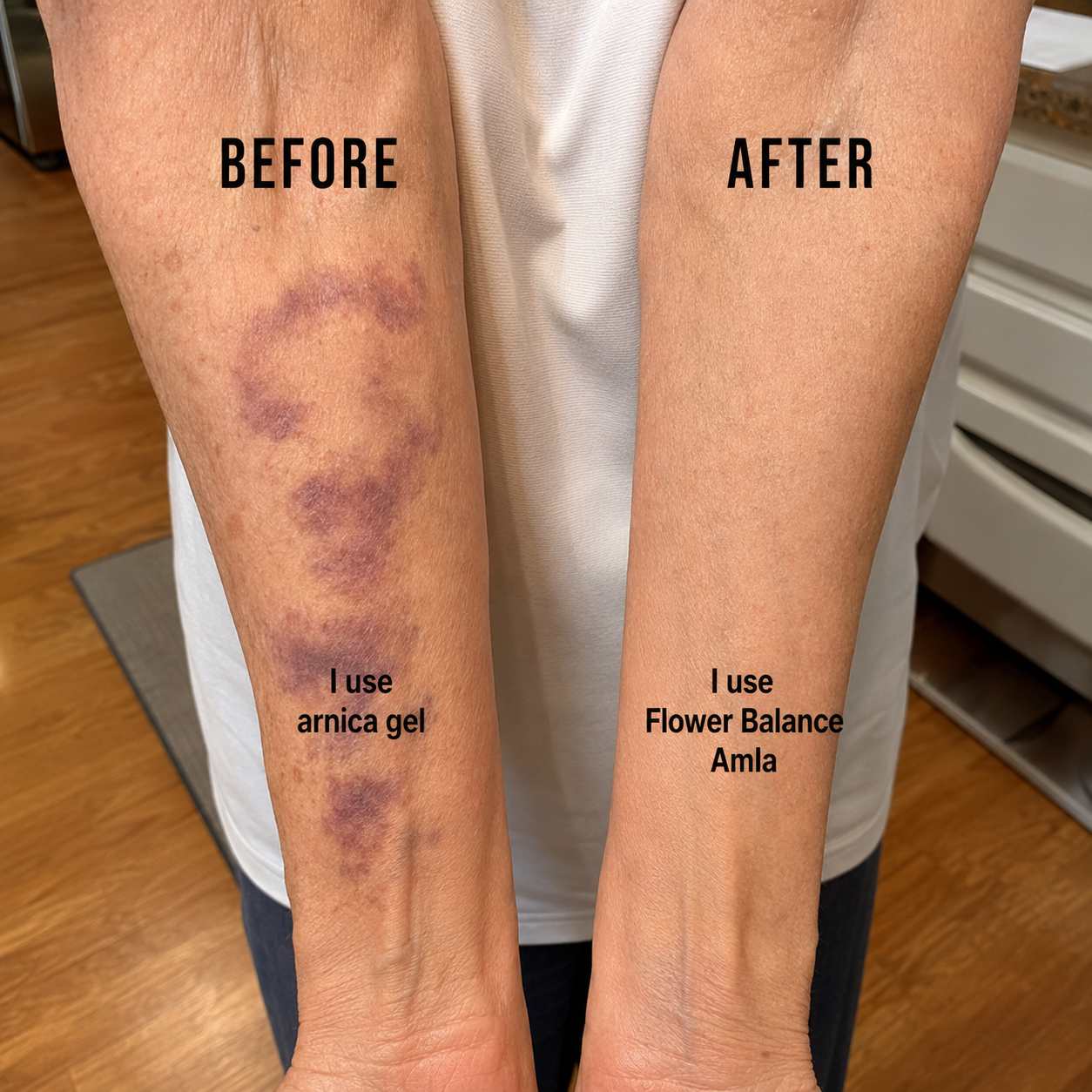
Jessica Palmer Facebook ad: “My Sister Used Retinol Every Night for 2.5 Years. Her Arms…”
Ran for 47 days, from July 3 to August 19, 2026, the last day Crush saw it.
Run by Jessica Palmer on Facebook. Crush is not the advertiser and does not verify its claims. See this ad in Meta's Ad Library(opens in a new tab)
Want an ad like this for your product?
Crush makes new ad images for your product from this ad: your logo, your product photo, your offer.
Trials from $19.95 USD, then $79.95 USD a month. Cancel anytime.
About this ad
- Meta Ad Library ID
- 1621991966191978
- Platforms
- Facebook, Instagram, Audience Network, Messenger and Threads
- Relaunches
- 0
Ad text
My older sister was diagnosed with senile purpura in April 2021. She never bumped into anything in her life. After the diagnosis, she switched to retinol cream. Started wearing SPF 50 every single day. Cut out everything the dermatologist said might thin her skin further. Bought every "fragile skin" lotion on the shelf. She wore long sleeves to her granddaughter's wedding on June 14th, 2024. She was 64 years old. It was 91 degrees outside. She wore long sleeves because she couldn't face the questions. --- I need to tell you what happened to my sister Linda. Because every week I see posts on Facebook from women like her. "Purple marks appearing on my arms from nothing, dermatologist said it's just aging, any tips?" "Been using retinol for six months, new bruises keep coming anyway, what else can I try?" I can't keep scrolling past them. If you or someone you love has been told the purple marks on their arms are "just senile purpura, very common after 60, nothing much to be done" — please read this whole thing. I know it's long. Fifteen months ago I would have given anything for someone to tell me what I'm about to tell you. --- Linda went in for a routine skin check in March 2021. She felt fine. She'd just turned 62. Still volunteering at the library on Thursdays. Still tending the vegetable garden behind her house. Our mother was 84 and sharp as ever, so Linda figured she had her genes on her side. Three days later her dermatologist called. Purple marks on both forearms. Appearing from almost nothing. Skin paper-thin. "It's senile purpura. Very common in women your age. There's no real treatment. We recommend retinol cream every night, SPF 50 every morning, and try to avoid bumping your arms. We'll keep an eye on it." Linda hung up the phone and sat at her kitchen table for a long time. Then she stood up, went to the bathroom cabinet, and started reading labels. I was there. I'd driven over the second she called. I watched her organize everything. Retinol. SPF 50. Vitamin K cream she'd read about online. Arnica gel for when new marks appeared. A "thickening" body lotion marketed specifically for "mature, fragile skin." "That's it," she said. "I'm doing everything right." And she did. For 26 months, she didn't miss a single night of retinol. She applied SPF 50 every morning before she left the house, even in January. She wore lightweight long-sleeved tops all summer to avoid sun exposure on her forearms. She stopped wearing the sleeveless dresses she'd worn every summer for thirty years. She bought a special arnica gel she kept in her purse for when a new mark appeared in public, so she could apply it immediately. She stopped going to her Tuesday garden club because the other women kept asking about her arms and she didn't have an answer that didn't make her feel like her body was failing her. She stopped coming to my Saturday morning coffee — the one we'd been having on my back porch since 1996 — because by 9 AM her arms were already something she was managing, covering, explaining, apologizing for. She lost something she'd been carrying for thirty years. And she did it anyway. Because the dermatologist said to. The follow-up check came back in October 2021. New marks still appearing. Frequency unchanged. Six months of doing everything right and nothing had moved. The dermatologist said, "These things take time. Keep using the retinol. We'll keep monitoring." So she did. April 2022: marks appearing from lighter contact than before. October 2022: marks on her hands as well as her forearms. Skin visibly thinner. By spring 2023, she had stopped being in photographs entirely. Not stepping to the edge. Not angling away from the camera. Just not being in them. She came to my daughter's birthday party in May 2023 and spent the whole afternoon making sure she was never in frame when someone raised a phone. I watched her do it. I didn't say anything because I didn't know what to say. I wish I had said something. Linda came to me that September and sat at my kitchen table. "Barbara," she said. "I have used that cream every single night for two and a half years. I have not missed once. And every month there are more marks, not fewer. My arms look worse than they did the day she diagnosed me." I told her to give it more time. I told her dermatology takes patience. I told her to trust the process. She nodded. She kept applying the retinol. Three months later she wore long sleeves to her granddaughter's Christmas recital. Inside. In December. Because a well-meaning woman in the row behind her had leaned forward and whispered "oh honey, what happened to your arms?" and Linda had smiled and said "oh nothing, just clumsy" and then sat very still for the rest of the performance with her hands folded in her lap and her eyes bright. She told me about it on the phone that night. I could hear in her voice what it had cost her. --- After the wedding in June — the one where she wore long sleeves in 91-degree heat — I went home and I could not stop thinking. Linda had done everything right. Every. Single. Thing. And she was getting worse. So I started researching. Not because I wanted to. Because I couldn't live with not knowing. I read for weeks. Studies on capillary fragility. Research on collagen and aging skin. Papers on senile purpura that her dermatologist had never once mentioned. And one thing kept coming up. Over and over. In every serious piece of research I found. The reason Linda's bruising didn't respond to retinol is that retinol works on the outer skin layer. It stimulates cell turnover at the surface. It cannot reach the capillary wall several layers beneath. And the capillary wall is where the actual problem lives. --- Here's what nobody told us. Your capillaries — the tiny blood vessels just under your skin — are surrounded by a mesh of collagen fibers. That mesh is what cushions them. What protects them from everyday contact. When you're younger, that mesh is dense and constantly renewed. A light bump does nothing. After 60, two things happen simultaneously. Oxidative stress accelerates — the same cellular wear-and-tear that ages every tissue in your body — and the thin skin of the forearms is particularly vulnerable. At the same time, collagen production slows. And it depends on one specific raw material to happen at all. Vitamin C. Not a trace amount. A constant, abundant supply from the inside. Without it, your body cannot form new collagen fibers. The mesh weakens. The capillaries lose their cushioning. And contact that should do nothing ruptures a vessel instead. Read that again. Linda's arms weren't bruising because she was clumsy or careless or aging badly. They were bruising because the structural support around her capillaries had been thinning for years — and a cream applied to the surface was never going to reach what was breaking down underneath. Retinol works at the surface. The problem was several layers deeper. She had been doing the right thing in the wrong place. I sat with that for three days. --- I started looking into what actually reached the capillary wall from the inside. And what I learned is that there are three things that have to happen simultaneously, or nothing changes. The body needs the raw material to rebuild collagen — vitamin C, not a trace amount but a constant abundant supply. Without it, the mesh cannot be renewed regardless of what you apply on top. The capillary walls need direct structural support — bioflavonoids, plant compounds that have been clinically studied specifically for their role in strengthening capillary resistance. In a study on women with the exact same condition Linda had, a bioflavonoid combination produced a 50 percent reduction in bruising lesions after six weeks. Not from a cream. From compounds reaching the capillary from the inside. And the oxidative stress driving the collagen breakdown needs to be neutralized — the cellular rust that accelerates after menopause and wears down the protective mesh faster than the body can rebuild it. Three things. All three. From the inside. Not one of them is in a tube of retinol cream. Not one of them is in an arnica gel. Not one of them is applied to the skin surface. I was furious. I'm still furious. Linda had given up her sleeveless dresses. Her garden club. Her Saturday mornings on my porch. Two and a half years of doing exactly what she was told. And nobody had ever told her where the problem actually was. --- I found a functional medicine physician named Dr. Sarah Novak who had written about this at length. She'd had the same condition herself. She'd done the retinol. She'd done the SPF. She'd done everything the dermatologist recommended. And then she spent months in the research finding what her own dermatology training had never covered. What she found was exactly what I'd been reading. The collagen mesh. The capillary wall. The vitamin C and bioflavonoid deficiency that no topical product was ever going to address. She wrote about it plainly. "The cream addresses the surface. The cause is several layers deeper. Until you feed the collagen structure from the inside, you are managing the symptom while the problem continues underneath, untouched." I printed that sentence out and I still have it. I found the product she recommended. I almost didn't order it. After the retinol. After the arnica. After everything Linda had tried. But Linda was my sister. And she was getting worse. I ordered it. I sent it to her with a note that said, "I need you to try this for 8 weeks. I will explain everything when you call me. Please just try." She called me three days later. She'd read Dr. Novak's page. All of it. "Barbara," she said. "Why didn't anyone tell us this." It wasn't a question. --- Week 3: She bumped her arm on the car door getting groceries out. Checked the next morning. Nothing there. She texted me at 7 AM. "Nothing. There's nothing there." Week 6: She counted the active marks on her forearms. Down from eleven to four. Week 9: She came to my Saturday morning coffee. She wore a short-sleeved top. She sat on my back porch in the September sun with her arms resting on the armrests of the porch chair and she didn't once look down at them or cover them or shift them away from view. We talked for two hours. About our mother. About her granddaughter. About the vegetable garden. At the end she stood up to leave and she hugged me at the door and she said, "I forgot what it felt like to just sit somewhere." I had to hold it together until she got to her car. --- She was in my daughter's birthday photos in November. Front row. Short sleeves. Smiling. Not at the edge of the frame. Not angled away. Right there. I'm not a doctor. I'm not a scientist. I don't get one penny from any of this. I'm a 59-year-old woman sitting at my kitchen table because every time I see a woman post on Facebook "purple marks on my arms, dermatologist said nothing to be done, been using retinol for months and it's getting worse" I think about Linda on my porch in September. And I think about the two and a half years before that. Here's what I know because I lived it: Retinol works on the surface. It does not reach the capillary wall. Arnica fades a mark that already exists. It does not prevent the next one. SPF prevents additional UV damage. It does not rebuild collagen. The bruising is not a surface problem. It is a structural problem. And it lives several layers deeper than any cream has ever reached. Linda gave up her sleeveless dresses and her Saturday mornings and her place in photographs for two and a half years because nobody told her where the problem actually was. I can't give her those two and a half years back. But you still have yours. --- The page that explains everything — the collagen mesh, the capillary wall, the vitamin C and bioflavonoid research, why the retinol was never going to be enough — is the page I found at midnight when I couldn't stop reading. Dr. Sarah Novak wrote it. Read it. Not for me. For whoever you'd give anything to still have sitting across from you on a Saturday morning. 👉 https://tryflowerbalance.com/pages/purpura --- Linda still comes to Saturday morning coffee. Short sleeves, every time. Even in October now. She says she's making up for lost summers. I let her have the chair by the window. Barbara M., age 59, Columbus, OH P.S. Two and a half years of retinol, every single night without missing once. Arnica in her purse. SPF before she left the house every morning. Long sleeves in 91-degree heat because she couldn't face the questions. And a capsule once a day that cost less than a month of that retinol cream changed what two and a half years of doing everything right couldn't. Please don't wait two and a half years. Please read the page. 👉 https://tryflowerbalance.com/pages/purpura P.P.S. I don't work for Flower Balance. I don't get anything from this. I'm writing this because Linda is back in photographs and I want that for every woman whose dermatologist handed her a tube of cream and sent her home with no real explanation. Share this with anyone you love who is hiding her arms. Even "mild." Even "just a few marks." Even if she's doing the retinol perfectly. Especially then. DISCLAIMER: Individual experiences vary. These statements have not been evaluated by the FDA. This product is not intended to diagnose, treat, cure, or prevent any disease.
Where the ad sends people
tryflowerbalance.com
My Sister Used Retinol Every Night for 2.5 Years. Her Arms Kept Getting Worse.
She did everything her dermatologist told her. Nobody ever explained where the problem actually was.
Learn more: tryflowerbalance.com(opens in a new tab)