David Mitchell
David Mitchell Facebook ad: “Reactivate your body”
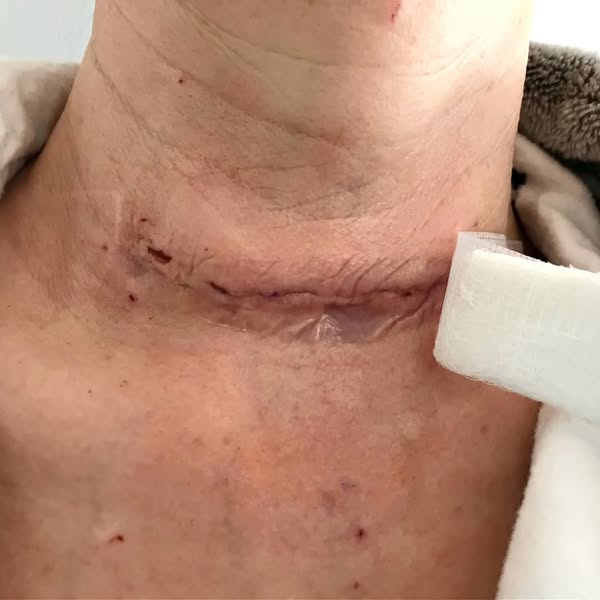
Ran for 10 days, from May 7 to May 17, 2026, the last day Crush saw it.
Run by David Mitchell on Facebook. Crush is not the advertiser and does not verify its claims. See this ad in Meta's Ad Library(opens in a new tab)
Want an ad like this for your product?
Crush makes new ad images for your product from this ad: your logo, your product photo, your offer.
Trials from $19.95 USD, then $79.95 USD a month. Cancel anytime.
About this ad
- Meta Ad Library ID
- 1628662052430414
- Platforms
- Facebook, Instagram, Audience Network, Messenger and Threads
- Relaunches
- 1
- EU reach
- 751
Ad text
My Doctor Told Me to Increase My Levothyroxine 3 Months Ago. I Asked Her to Test Something Else Instead. She Said It Wasn't Necessary. Here's What Actually Happened. My mother had Hashimoto's for 22 years. I'm 43. Three months ago, my endocrinologist pulled up my labs. Didn't look up from the screen. "Sarah. Your TPO antibodies are at 934. They've been climbing for three years. Your Free T3 is 2.1 — bottom of the range. I'm increasing your levothyroxine to 137 micrograms." "Wait. What about my Free T3? It's barely converting. Can we test Reverse T3? Can we look at WHY the conversion isn't happening?" "Your TSH is 2.4. That's normal. The Free T3 is within range. We don't need additional testing. The dose increase should help." My throat tightened. My eyes burned. The dose increase should help. The same words my mother heard. For 22 years. --- My mother was diagnosed with Hashimoto's at 39. Put on levothyroxine immediately. Took it every morning on an empty stomach like a good patient. Her TSH was "managed" the entire time. Every six months — "looks good." "Numbers are fine." "Stay the course." But she was exhausted. Every single day. For 22 years. She'd sleep ten, twelve hours and wake up like she hadn't slept at all. By 2pm every afternoon, she was done. On the couch. Eyes glazed. Just... gone. The weight came on slowly at first. Then relentlessly. She ate less and less — 1,200 calories, then 1,000 — and still gained. Her doctor told her to "try exercising more." She was walking four miles a day. She stopped looking at the scale because it made her cry. The brain fog terrified her more than anything. She was a bookkeeper. Numbers were her thing. She started transposing digits. Missing decimals. Forgetting client names she'd known for fifteen years. One afternoon she sat at her desk for twenty minutes staring at a spreadsheet she'd built herself — couldn't remember how any of it worked. Her boss noticed. Then her clients noticed. Then she lost the job. The hair. God, the hair. She used to have thick, beautiful hair that people complimented everywhere she went. By year five on levothyroxine, her ponytail was half the size. By year ten, she wore scarves. By year fifteen, she'd stopped going out without a hat. Her face changed. Puffy. Swollen. She'd look in the mirror and not recognize herself. "Who is that?" she said to me once, quietly, touching the glass. "Where did I go?" The levothyroxine kept her TSH in range. Numbers looked perfect every six months. And she disappeared inside a body that didn't work while her labs said everything was fine. Year 12: She asked her endocrinologist about her symptoms. "Your TSH is 2.1. Your medication is working. Have you considered that this might be depression?" He prescribed antidepressants. She wasn't depressed. She was exhausted, gaining weight, losing her hair, and couldn't think straight. But her TSH was 2.1. So it must be depression. The medication made her feel flat. Not better. Not worse. Just... less. Less sad. But also less everything. Year 15: She tried supplements. Selenium. Ashwagandha. Vitamin D. Zinc. B12. Magnesium. The full stack. Her antibodies dipped for six weeks. Then climbed right back. The fatigue never changed. The weight never changed. The hair never came back. $120 a month. Seven bottles on her bathroom counter. Nothing. Year 18: She stopped coming to family dinners. "I'm too tired," she'd say. Then: "I don't feel well." Then she just stopped answering the phone. My father found her sitting alone in the dark one evening. Not sleeping. Not reading. Just sitting. Staring at the wall. "What are you doing?" "Waiting." "For what?" She didn't answer. Year 22: She was 61. TSH still "normal." Still on levothyroxine. Still exhausted. Still puffy. Still couldn't think straight. Her hair was gone. Her job was gone. Her social life was gone. She didn't die dramatically. She just... stopped living. The death certificate said heart failure. But I know what killed her. Twenty-two years of a body that couldn't function while every doctor she saw told her she was fine. Twenty-two years of levothyroxine that kept a number in range while the woman behind the number vanished. --- I sat in my car after that appointment three months ago. The new prescription in my lap. 137 micrograms. Up from 125. And I saw my mother. The same medication. The same climbing antibodies. The same "your TSH is normal." The same trajectory. I'm 43. She was 39 when it started. I'm already four years in. My hands shook. I didn't fill the new dose. I kept taking my 125mcg. But I refused to increase it without understanding WHY my body wasn't converting the hormone it already had. Two days later my endocrinologist's office called. "Ms. Patterson, the pharmacy noted you haven't picked up your updated prescription." "I'm not increasing the dose until we figure out why the current dose isn't working." "Your doctor was very clear — your TSH needs tighter management." "My TSH is 2.4. My Free T3 is 2.1 out of a possible 4.4. I'm barely converting. Increasing the input doesn't fix the conversion. Something is blocking it." Silence. "I'll make a note. But Dr. Chen will want to discuss this at your next visit." I hung up. --- That night I sat at the kitchen table. Laptop open. 1 AM. I typed: why is my Free T3 low when my TSH is normal. The results loaded. Functional medicine forums. Hashimoto's support groups. Research papers. And one phrase kept appearing that I'd never seen before. Lymphatic congestion. I searched: thyroid lymphatic drainage. And I found something that made everything stop. In 1912, a Japanese physician named Hakaru Hashimoto first described the disease my mother and I both have. But he didn't call it thyroiditis. He called it "struma lymphomatosa." A lymphatic disease. Because what he saw under the microscope wasn't just a damaged thyroid. It was a thyroid drowning in immune cells that had flooded in through the lymphatic system and couldn't drain out. For decades, the condition was known by its lymphatic names — "lymphocytic thyroiditis," "lymphadenoid goiter." Every name pointed to the drainage system. Then the medical community renamed it. Buried the lymphatic connection. And built a treatment system around replacing the hormone — while ignoring the drainage system that determines whether the hormone can actually reach your cells. I sat back in my chair. Twenty-two years my mother took levothyroxine. Her TSH was "perfect." But her lymphatic system — the drainage network wrapped around her thyroid — was so congested that the medication couldn't get through. The T4 was in her blood. Her labs proved it. But the tissue surrounding her thyroid was clogged with inflammatory waste, immune debris, and sticky mucopolysaccharides that had been building for decades. Her medication was working. On paper. Her body was suffocating. In reality. Nobody checked the drainage. Not once. In 22 years. --- I kept researching. Night after night. I learned that the thyroid sits inside one of the densest lymphatic networks of any organ. That in Hashimoto's, the autoimmune attack generates massive inflammatory debris that congests those drainage vessels. That mucopolysaccharides swell to 1,000 times their size and physically compress the lymph vessels. That conversion enzymes can't function in waste-laden tissue. That medication can't reach cells through swollen interstitial fluid. That your labs measure the river. But the dam is upstream. And nobody looks at the dam. Everything clicked. My mother's selenium didn't work because it couldn't reach the enzymes through congested tissue. Her ashwagandha faded after two weeks because the underlying drainage failure was still there. Her dose increases put more T4 into a bloodstream that already had enough — while the T4 she already had sat trapped behind a wall of congestion. Every solution she tried was fueling the engine. The fuel line was clogged the entire time. --- I started looking for compounds that could restore thyroid lymphatic drainage. Not gland supplements. Drainage compounds. I found four botanicals that kept appearing again and again across traditional medicine pharmacopeias and modern herbal research — specifically documented for their role in moving stagnant lymph, clearing congested cervical lymphatic channels, and restoring the drainage function that Hashimoto's progressively destroys. The first thing I ordered was a cleavers capsule from Amazon. Standard capsule. Three weeks. Minimal change. Then I added dandelion root capsules and tried them alongside the cleavers. Six weeks. The puffiness in my face decreased slightly. But the fatigue, the fog, the weight — all the same. I was spending $150 a month on multiple bottles and getting marginal results. And then I figured out why. Here's something I hadn't understood until I researched it properly: Hashimoto's patients are among the worst absorbers of any oral supplement. Compromised thyroid function reduces gastric acid production and slows gut motility — which means a capsule sitting in your small intestine isn't breaking down and absorbing the way it would in a healthy body. The very condition that needs these compounds is the condition that prevents capsules from delivering them properly. Liquid drops held under the tongue for 60 seconds bypass the entire digestive system. They absorb directly through the sublingual mucosa — the densest capillary bed in your mouth — and enter circulation within minutes. I hadn't been taking the wrong herbs. I'd been taking them in the wrong format. For a hypothyroid gut, capsules are the worst possible delivery mechanism for the compounds that matter most. I needed a liquid formula. With all four botanicals together. At proper concentrations. Not four separate bottles from four different Amazon sellers with no quality control. --- One night in a Hashimoto's support group on Facebook, a woman posted her experience. Her puffiness was gone. Her energy was back. Her hair had started growing again. Her endocrinologist had told her to keep doing whatever she was doing. Forty-three comments. Women asking what she'd changed. Her answer: "I stopped trying to piece together a drainage protocol from individual capsules. I found a liquid formula — sublingual drops — that combines all four botanicals in one bottle. Under the tongue every morning. Everything targeting cervical lymphatic drainage around the thyroid. The format is what made the difference." The formula was called Lymphaire. I went to their site. Ready to be disappointed. And I almost dropped my phone. All four drainage botanicals. In a liquid tincture. Sublingual drops. Alcohol-free, vegan, non-GMO, gluten-free. Third-party tested. GMP-certified. Not capsules. Not powder. Not another bottle designed for a healthy digestive system. Drops. Directly into the bloodstream. Bypassing the gut that Hashimoto's had been sabotaging for years. And here's what each botanical does in the drainage protocol: **Cleavers (Galium aparine)** — The British Herbal Pharmacopoeia designates Cleavers as a lymphatic tonic. It has been used in traditional botanical medicine for centuries specifically to move stagnant lymph, reduce swollen and congested lymph glands, and clear the backed-up tissue states that cause visible puffiness and systemic sluggishness. In the cervical lymphatic context — the drainage network directly surrounding the thyroid — Cleavers is the cornerstone. It directly supports the activation of sluggish lymph flow through the exact tissue network that Hashimoto's progressively damages. This is not a generic wellness herb. This is the herb the traditional pharmacopeias documented for exactly what is happening inside a thyroid bathed in uncleared lymphatic congestion. **Red Clover (Trifolium pratense)** — Used in classical botanical medicine as a "blood purifier" — the traditional term for botanicals that support the clearance of metabolic waste and inflammatory proteins from the lymphatic and circulatory system. Its isoflavone content gives it a documented role in the hormonal tissue environment — directly relevant because lymphatic vessel tone in the cervical region is modulated by estrogen and progesterone. The women whose Hashimoto's symptoms are worst in the week before their period, or who are in perimenopause, or who find their fatigue and puffiness cycle with their hormones — Red Clover addresses that layer of lymphatic congestion. Clinical research on Red Clover extracts has documented apparent safety in extended human use. It reaches the dimension of thyroid lymphatic congestion that Cleavers alone cannot address. **Prickly Ash Bark (Zanthoxylum americanum)** — Used in traditional North American botanical medicine specifically as a circulatory and lymphatic stimulant. A peer-reviewed review of the Zanthoxylum genus documents phytochemical activities supporting circulation and microvascular function. This matters in the thyroid context because the lymphatic system has no heart to pump it. It depends entirely on microvascular pressure and movement to drive flow. When the cervical tissue is chronically inflamed — which Hashimoto's guarantees — the microcirculation in that region is compromised and the lymphatic vessels lose their driving pressure. Prickly Ash restores the circulatory foundation that Cleavers and Red Clover require to function. Without it, the lymphatic capillaries in that tissue cannot generate the pressure differential needed to move. **Stillingia (Stillingia sylvatica)** — Used by 19th century American eclectic physicians specifically for deep, chronic lymphatic stagnation involving the glands. Not surface congestion. The kind of deep, multi-year, structurally entrenched lymphatic backing-up that occurs when Hashimoto's has been progressing unaddressed — when mucopolysaccharides have accumulated, when fibrous deposits have built up in the cervical channels, when the drainage has stopped responding to lighter interventions. My mother had 22 years of this. I had four. Stillingia addresses the deep drainage layer that Cleavers, Red Clover, and Prickly Ash alone cannot fully reach. In combination, it completes the cervical lymphatic drainage protocol. All four. In liquid form. Under the tongue. Reaching the tissue that needed them — directly, within minutes, without asking a compromised gut to do the work. I ordered it that night. --- The bottle arrived two days later. I took the first dose that morning with my levothyroxine. Same dose — 125mcg. The dose my doctor wanted to increase. The dose I refused to change. The first two weeks — honestly, not much. I almost convinced myself it was another waste of money. But by week three — The brain fog started lifting. I was in the middle of a conversation with my daughter and realized I hadn't lost a single word. Hadn't searched for something simple. Hadn't drifted off mid-sentence. I sat there for a moment. Because I couldn't remember the last time that had happened. Week four: The 2pm crash faded. I had energy after work. I cooked dinner. I cleaned the kitchen. I wasn't collapsed on the couch by 6pm. My husband looked at me from the doorway and didn't say anything. Just watched. Like he was afraid to jinx it. Week six: The puffiness started going down. I looked in the mirror and saw cheekbones. MY cheekbones. Under the swelling that had been there for years. My rings were loose. I put on shoes that hadn't fit in months. I called my sister crying. "Something is actually happening. I look like me." Week eight: The shower drain was clear. I ran my hand through my hair and it didn't come away with a clump. For the first time in three years. I stood in the shower and sobbed. Week ten: The scale moved. Not from a diet — I hadn't changed what I was eating. My body was releasing fluid it had been holding for years because the lymphatic system around my thyroid was finally draining. --- Three months: I went back to Dr. Chen. Same office. Same chair. Same screen. She pulled up my labs. Frowned. Looked at me. "Sarah. Your TPO antibodies have dropped significantly. Your Free T3 has risen into the upper third of the range for the first time in years. Your TSH is tighter than I've ever seen it — on the SAME dose of levothyroxine. The dose you refused to increase." She pulled up my history. Scrolled back. Looked at me again. "What happened?" I told her everything. Cervical lymphatic drainage. The four botanical compounds in liquid form. Lymphaire. The research. Hashimoto's original name — struma lymphomatosa. A lymphatic disease that we've been treating as a gland disease for over a hundred years. She typed notes. Slowly. "Well." She closed the laptop. "Whatever you're doing — your body is responding to the levothyroxine better than it ever has. I see no reason to adjust your dose. Continue." No dose increase necessary. I walked to my car. Got in. Sat there. Then I called my sister. "The antibodies are dropping. My Free T3 is in the upper third. Same dose of levo. Same 125 micrograms. The medication is finally reaching my cells because the drainage around my thyroid is clearing." I heard her breath catch. "Mom's antibodies were over 1,000 for the last ten years of her life. Nobody ever checked her drainage. Nobody ever—" Her voice broke. "I know," I said. "I know." --- That was three months ago. My energy is back. My hair stopped falling out at month two — and at month four, new growth started. Short pieces around my hairline. I showed my husband and he cried. My brain is clear. My face is my face again. I sleep through the night and wake up rested. I'm not following my mother's path. Yesterday I went for a hike with my daughter. Three hours. Uphill. Laughing the entire time. Not exhausted afterward. She grabbed me in a hug at the top. "Mom, you have so much energy now. Can we do this every weekend?" My throat tightened. My eyes burned. Because the answer was yes. --- If you're reading this, you see yourself in my story. You're exhausted despite "normal" labs. Gaining weight on 1,200 calories. Losing hair in clumps. Brain fog that makes you feel decades older. Puffy face and hands that you've started accepting as "just how you look now." Your doctor keeps adjusting your dose or telling you everything is fine. You've tried selenium, ashwagandha, gluten-free, AIP, vitamin D, zinc, the full stack. Some of it helped for a few weeks. None of it held. Because nobody told you the drainage system around your thyroid was clogged — and no capsule-based supplement could fully absorb through the gut that Hashimoto's had already compromised. Your endocrinologist wants to increase your dose again. Anything except look at WHY the medication you're already on can't reach your cells. Here's what I want you to know: If I hadn't found that Facebook post at 1 AM, I'd be on 137 micrograms right now. Then 150. Then 175. Climbing the dose ladder while my body can't use what it already has. Watching my antibodies climb. Watching my hair fall out. Watching myself become my mother. For years. While my labs say "normal." But I had a choice I didn't know existed. I chose to try one more thing. Not another gland supplement in another capsule. A drainage protocol in a format that could actually reach the tissue. That choice changed everything. --- The company is called Lymphaire. Four botanical compounds. Liquid tincture. Sublingual drops — not capsules. The format that bypasses the compromised hypothyroid gut entirely and delivers these compounds directly where they need to go. Cleavers as the primary lymphatic tonic — the British Herbal Pharmacopoeia's documented herb for moving stagnant lymph from congested cervical channels. Red Clover for the hormonal layer of lymphatic vessel tone that determines why your congestion worsens before your period and through perimenopause. Prickly Ash for the microcirculatory foundation that your cervical lymphatic vessels depend on to generate drainage pressure. Stillingia for the deep, entrenched lymphatic stagnation that has been building for years and no longer responds to lighter approaches. All four together. In liquid form. Under your tongue. Reaching the tissue that your capsules never could. Alcohol-free. Vegan. Non-GMO. Gluten-free. Third-party tested. GMP-certified. Trusted by over 150,000 women. Rated 4.9 out of 5 across 736 reviews. Not a trendy thyroid launch. Not selenium in a prettier bottle. A formula with genuine botanical lineage — matching an established lymphatic drainage formula in documented use for decades, now in the delivery format that makes the difference for hypothyroid absorption. Your doctor is addressing the supply. This restores the delivery. --- It takes 8 to 12 weeks to see real changes. Give it that window. I spent years watching my mother disappear while her labs looked perfect. I refused to do the same. The drainage system that your thyroid — and your levothyroxine — depends on is not something any dose adjustment can fix. The hormone reaches your blood. This helps it reach your cells. 👉 https://trylymphaire.com/pages/hashimotos 90-day money-back guarantee — if you don't feel the difference, full refund. No questions asked. They have nothing to hide. — Sarah M. P.S. — Brain fog started lifting at week 3. Puffiness going down by week 6. Hair stopped falling out by week 8. Labs confirmed improvement at month 3 — same levothyroxine dose, no increase needed. Your timeline might be different. But you won't know unless you try. P.P.S. — Every month you wait is another month of inflammatory debris accumulating around your thyroid, damaging the drainage vessels, making the congestion harder to clear. Don't wait years the way my mother did. The drainage support she never had access to exists now. Order today.
Where the ad sends people
trylymphaire.com
Reactivate your body
Hashimoto's Is Not a Thyroid Disease — It Never Was | Thyroid Health Report Thyroid Health Report ▲ Special Report: Trending in Women's Health Special Investigative Report "Hashimoto's Is Not a Thyroid Disease — It Never Was." A board-certified endocrinologist exposes the $15 billion levothyro...
Learn more: trylymphaire.com(opens in a new tab)