David Mitchell
David Mitchell Facebook ad: “Reactivate your body”
Ran for 13 days, from April 4 to April 17, 2026, the last day Crush saw it.
Run by David Mitchell on Facebook. Crush is not the advertiser and does not verify its claims. See this ad in Meta's Ad Library(opens in a new tab)
Want an ad like this for your product?
Crush makes new ad images for your product from this ad: your logo, your product photo, your offer.
Trials from $19.95 USD, then $79.95 USD a month. Cancel anytime.
About this ad
- Meta Ad Library ID
- 1638467227187050
- Platforms
- Facebook, Instagram, Audience Network, Messenger and Threads
- Relaunches
- 1
- EU reach
- 76
- Niche
- Clinics & Medical
Ad text
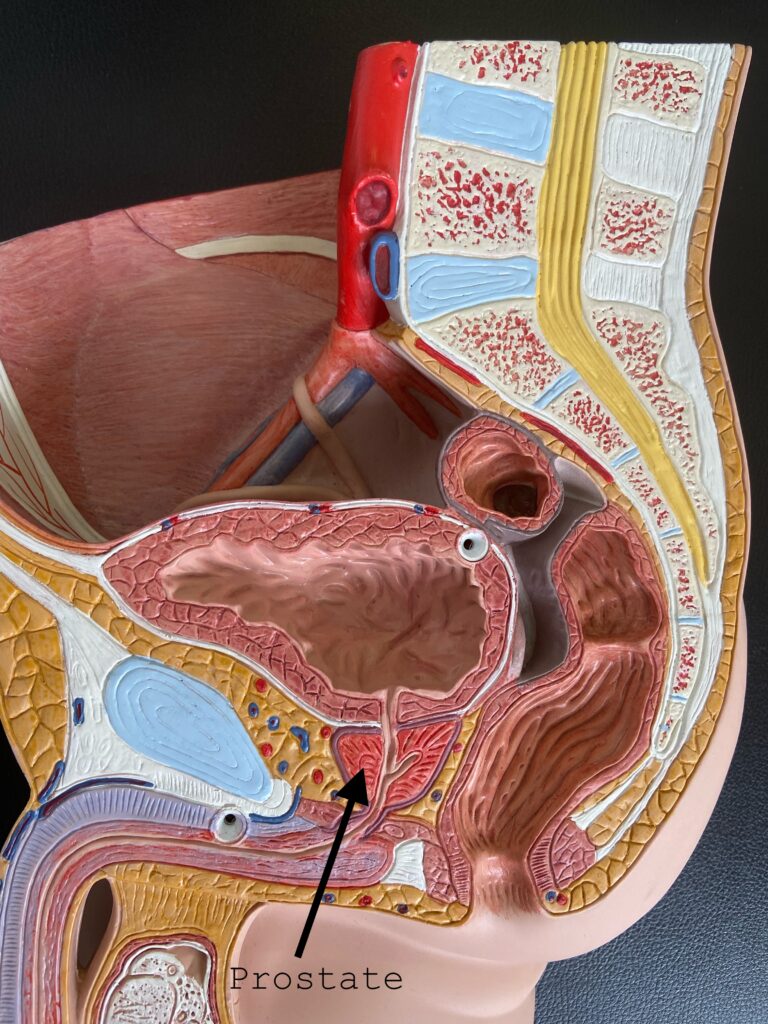
I'm a urologist. I've been treating prostate disease for 22 years. And there's something I've never said out loud to a patient that I need to say now. Every day, men sit across from me. Their PSA is climbing. Their stream is weak. They're getting up four, five times a night. They're exhausted. They're embarrassed. They're scared. And I hand them a prescription. Flomax. Finasteride. Sometimes both. And here's what I tell them: "This should help manage your symptoms. Let's monitor and follow up in six months." Here's what I've never told them: I know — and every urologist knows — that those medications don't fix the problem. They manage the output. They ease the pressure at the end of the chain. But they don't touch what's actually driving the swelling upstream. I've always known this. I just never had a better answer. So I prescribed what I had and moved on to the next patient. Until five months ago, when a man's lab results forced me to stop moving on. I'll get to his results in a minute. But first, you need to understand something about how your prostate actually works. Because once you see this, you can't unsee it. And everything your doctor has told you — and everything he hasn't — will suddenly make sense. --- Your prostate is a gland. About the size of a walnut. It sits right below your bladder, wrapped around the urethra — the tube that carries urine out of your body. Every man knows that part. That's the diagram every urologist shows you when they explain BPH. But there's a second system surrounding your prostate that almost no diagram includes. And it changes everything. Your prostate is wrapped in a dense network of lymphatic vessels. Medical anatomy calls it the periprostatic subcapsular lymphatic network. These vessels connect to the internal iliac lymph nodes, the presacral nodes, and branches running along the pudendal vessels deep in your pelvis. This network exists for one reason: drainage. Every cell in your prostate produces waste. Metabolic byproducts. Dead cells. Inflammatory debris from normal hormonal activity. The waste products of DHT conversion. Cellular exhaust that accumulates continuously, every hour of every day. In a healthy system, that waste gets picked up by the lymphatic vessels, carried through the pelvic lymph nodes, filtered, and eliminated. The prostate stays clean. The tissue stays compact. Inflammation stays low. That's how it works at 30. Now here's where it stops working. The lymphatic system has no pump. Your heart pushes blood. But nothing pushes lymph. Lymphatic fluid only moves when muscles contract around the vessels and physically squeeze it forward. In your pelvis, the muscles responsible for this are your pelvic floor muscles. When you walk, stand, move, shift positions — those muscles contract and relax. Each contraction pushes a small amount of lymphatic fluid through the network. That's the pump. Now think about your life after 45. After 50. After 55. How many hours a day are you sitting? Desk. Car. Couch. Dinner table. Eight hours. Ten hours. Twelve hours. Fourteen hours with your pelvis stationary and your pelvic floor muscles barely contracting. If the pump barely runs, the fluid barely moves. If the fluid barely moves, waste accumulates. This doesn't happen overnight. It happens over years. Silently. Invisibly. There is no symptom for "your prostate's drainage system is slowing down." No blood test catches it. No scan reveals it. No doctor checks for it. The waste just... builds. Layer by layer. Month by month. Year by year. --- Now here's the part where the chain of consequences becomes unavoidable. If waste is accumulating in your prostate tissue because the lymphatic system can't flush it out — then that waste has to trigger an inflammatory response. That's not a theory. That's basic immunology. Trapped cellular debris activates your immune system. Cytokines are released. Inflammation begins. If chronic inflammation is present in the prostate tissue — then the tissue has to swell. Inflammation causes edema. That's what inflammation does. Anywhere in the body. Always. If the prostate tissue swells — then it compresses the lymphatic vessels running through it. Swollen tissue physically squeezes the tiny drainage channels that are already struggling to move fluid. If the lymphatic vessels are compressed — then even less waste can drain out. If less waste drains out — then more waste accumulates. If more waste accumulates — then inflammation increases. If inflammation increases — then the prostate swells further. You see what's happening. It's a loop. Each step creates the next. And there's no natural braking mechanism. Once it starts, it accelerates. This is why BPH is progressive. This is why your symptoms get worse year after year. Not because your prostate has a mysterious tendency to grow. But because a drainage failure is creating a self-reinforcing cycle of congestion, inflammation, and swelling that compounds over time. --- Now — look at what your medications are actually doing inside this loop. Flomax relaxes the smooth muscle around your urethra. That's the very last link in the chain. The urethra is being squeezed by the swollen prostate. Flomax loosens the squeeze slightly so urine can pass through. But the congestion upstream? Still there. The inflammation? Still building. The lymphatic failure? Completely untouched. Flomax isn't even in the same zip code as the actual problem. That's why it "works" — your stream improves for a few hours — but you're still getting up four times a night. Because the swelling that's pressing on your bladder hasn't changed. The drug relaxed the exit. It didn't address why the gland is enlarged. Finasteride blocks 5-alpha reductase, reducing new DHT production. DHT contributes to prostate growth. So blocking it should slow the enlargement. But think about what finasteride doesn't do. It doesn't clear the years of inflammatory waste already sitting in the tissue. It doesn't open the lymphatic channels that are backed up. It doesn't resolve the inflammation that's already present. It reduces one input into the growth cycle. While the congestion-inflammation loop continues running on the waste that's already there. That's why men take finasteride for years and their prostate stabilizes but doesn't meaningfully shrink. The new fuel is reduced, but the fire that's already burning was never put out. And the side effects — the sexual dysfunction, the lost libido, the brain fog — those are the price you pay for suppressing a hormone system-wide to address something happening locally in congested tissue. Saw palmetto? Similar mechanism to finasteride, weaker effect, mixed evidence. Targets the same hormonal pathway. Doesn't touch the drainage problem. Surgery — TURP, UroLift, Rezum — physically removes or reshapes the swollen tissue. The most aggressive intervention. And a meaningful percentage of men need it repeated within 5-10 years. Why? Because the lymphatic congestion that caused the swelling in the first place was never addressed. The tissue grows back because the environment that created the growth is unchanged. Every treatment in mainstream urology targets a point downstream of the actual problem. Not one of them addresses why the prostate is inflamed. Not one asks where the inflammatory waste is coming from and why it's not being cleared. That's the gap I've been staring at for 22 years. --- Now let me tell you what happened five months ago. A 71-year-old man. PSA had been climbing for four years. Prostate volume elevated on ultrasound. On Flomax and finasteride. IPSS score of 24. Severe symptoms. Standard trajectory. I'd seen it a thousand times. I knew exactly where this was heading — more medication adjustments, eventually a surgery discussion. He came in for his six-month follow-up. I pulled up his new labs and flow study. And I stopped. His PSA had dropped significantly. His peak flow rate had nearly doubled. His post-void residual was dramatically reduced. His IPSS had dropped from 24 to 9. Severe to mild. In five months. I looked at him. "What changed?" "I stopped the finasteride two months ago. Side effects were destroying me. And I started taking something my son found." "What is it?" "Liquid drops. For lymphatic drainage. Under my tongue every morning." I sat with that for a moment. Then I asked him to walk me through what happened, week by week. He said the first two weeks, nothing obvious. He almost stopped. Week three, the nighttime trips dropped from five to three. Not dramatic. But measurable. Week four, the urgency softened. Not the desperate, can't-wait-another-30-seconds urgency. More like a normal signal. Week six, his stream changed. Stronger. More consistent. He said his wife heard it from the hallway one morning and said, "That sounds different." He laughed when he told me. But it mattered to him. Week eight, sleeping through to 4 or 5 AM most nights. One wake-up instead of five. The exhaustion that had become his baseline started lifting. And then he stopped the finasteride. Because he didn't feel like he needed it anymore. His sex drive came back within two weeks. His wife cried. Not about the sex drive. About having her husband back. Month five — the numbers I was staring at. --- I went home that night and spent four hours reading. Not about Flomax. Not about finasteride. About the lymphatic drainage of the prostate. And here's what I found in the literature I'd been trained on but never applied clinically: The prostate's lymphatic network is extensively documented in anatomical research. The drainage flows through three distinct pathways to the internal iliac, presacral, and pudendal lymph nodes. Clinical research confirms that poor pelvic lymphatic drainage increases cytokine activity and promotes chronic prostatic inflammation. Studies on chronic nonbacterial prostatitis — the category that accounts for 90% of prostatitis cases — show that these men often have lymphatic or muscular dysfunction as the underlying cause, not infection. Published research on prostatic congestion documents the pathway from inflammation to ductal clogging to gland dilation to hypertrophy — congestion directly causing enlargement. The anatomy was always in the textbooks. The mechanism was always in the journals. The connection between lymphatic failure and prostatic swelling was always there. But there's no pharmaceutical that targets pelvic lymphatic drainage. No drug in that category exists. So urologists — including me — never incorporated it into treatment. We prescribe what we have. And what we have targets symptoms downstream. --- I found out what my patient had been taking. The formula is called Lymphaire. Four botanical compounds in liquid tincture form. Sublingual drops — not capsules. Under the tongue every morning. And here's the thing I couldn't ignore as someone who understands pelvic anatomy. Capsules have to survive stomach acid, break down in the small intestine, and absorb through the gut wall before a single compound reaches the pelvic lymphatic network. Under ideal conditions that takes 45 minutes to two hours. For a man with BPH — often accompanied by some degree of metabolic compromise, reduced bile production, and gut motility changes from years of sedentary sitting — capsule absorption is a fraction of what the label assumes. The botanical compounds most needed to reach the periprostatic lymphatic network — the deepest pelvic drainage system in the body — were being degraded before they could arrive. Liquid drops held under the tongue for 60 seconds absorb directly through the sublingual mucosa and enter systemic circulation within minutes. No stomach acid. No gut wall. No dependence on digestive function that years of metabolic decline may have already reduced. For compounds designed to reach the periprostatic lymphatic network, the delivery format isn't secondary. It is the difference between these botanicals reaching the pelvic lymphatic tissue — and degrading in a gut that decades of sedentary lifestyle and metabolic stress have already compromised. I read every ingredient against the mechanism I'd just spent four hours reviewing. --- **Cleavers (Galium aparine)** — The British Herbal Pharmacopoeia classifies Cleavers specifically as a lymphatic tonic — listed in traditional pharmacology specifically for pelvic lymphatic drainage, prostatitis, BPH, and urinary tract inflammation. Not a general wellness herb. Not a prostate herb. A pelvic lymphatic activator — documented for the exact drainage channels surrounding the prostate. Used for centuries in traditional botanical medicine specifically to move stagnant lymph through congested pelvic tissue. In the BPH context, Cleavers directly supports the activation of the sluggish periprostatic lymphatic network — the vessels responsible for clearing the inflammatory waste accumulation that's driving the congestion-swelling loop. When those channels begin moving again, the waste that's been accumulating for years has an exit route. In sublingual liquid form, Cleavers reaches systemic circulation within minutes — bypassing the gut that capsule-based lymphatic supplements have always depended on, and often failed to absorb through properly. **Red Clover (Trifolium pratense)** — Used in classical botanical medicine as a blood purifier — the traditional term for botanicals that support the clearance of metabolic waste and inflammatory proteins from the lymphatic and circulatory system. In the prostate context, years of inflammatory debris have accumulated in the periprostatic tissue — the exact environment where the lymphatic network is supposed to be clearing waste but can't because the congestion has become self-reinforcing. Red Clover supports the tissue-level clearance of this inflammatory burden — the layer between the lymphatic vessels and the prostatic tissue they're supposed to keep clean. Its isoflavone content has documented relevance in the hormonal tissue environment of the prostate — Red Clover isoflavones have been studied in the context of DHT and androgen metabolism in prostatic tissue. It addresses the inflammatory tissue layer that Cleavers alone cannot fully penetrate — completing the clearing of the tissue environment that the drainage channels run through. **Prickly Ash Bark (Zanthoxylum americanum)** — Used in traditional North American botanical medicine specifically as a circulatory and lymphatic stimulant. A peer-reviewed review of the Zanthoxylum genus documents phytochemical activities supporting circulation and microvascular function. In the prostate context, this matters specifically because the pelvic lymphatic system depends on microvascular pressure to drive flow. In a man who has been sitting for twelve or fourteen hours a day for decades — with reduced pelvic floor muscle activity, declining peripheral circulation, cold feet, and the vascular sluggishness that accompanies sedentary aging — the microvascular pressure that was supposed to drive lymphatic pumping in the pelvis has been declining alongside everything else. Prickly Ash restores the circulatory foundation that pelvic lymphatic drainage depends on. Without it, even if the lymphatic vessels are activated by Cleavers, they lack the driving pressure to move fluid effectively. The cold feet and poor circulation that middle-aged men normalize as "just getting older" are expressions of the same microvascular decline that's allowing pelvic lymphatic stagnation to persist and compound. **Stillingia (Stillingia sylvatica)** — Used by 19th century American eclectic physicians specifically for deep, chronic lymphatic stagnation — not surface congestion, but the kind of multi-year, structurally entrenched lymphatic backing-up that develops when prostate inflammation has been progressing without lymphatic support for years or decades. A man in his 60s with BPH that has been progressing for five or ten years doesn't have recent lymphatic congestion. The periprostatic lymphatic network has been increasingly compressed and degraded throughout that entire progression. Fibrous deposits have formed in the drainage channels. The vessels themselves have been structurally compromised by years of surrounding inflammation. Stillingia addresses the deep tissue layer — the layer where the congestion has hardened into something that lighter botanical approaches cannot penetrate alone. It completes the protocol. The other three botanicals open and activate the drainage system. Stillingia reaches the entrenched stagnation that has been accumulating since before the first symptom appeared. --- All four together. Liquid tincture. Sublingual drops. Reaching the periprostatic lymphatic network directly — within minutes of each morning dose — without asking a gut that decades of sedentary living and metabolic stress have already compromised to absorb them first. Open the drainage channels. Restore the microvascular pressure that drives pelvic lymphatic flow. Clear the tissue-level inflammatory debris surrounding the prostatic lymphatics. Reach the deep, entrenched stagnation that has been building for years. Every compound targeting a specific stage of the congestion loop — not the symptom at the end, but the mechanism creating it. --- I ordered a bottle that night. Not for a patient. For myself. I'm 58. Early BPH for three years. Getting up twice a night. Stream declining. PSA trending upward. I know what this trajectory looks like. I watch it unfold in other men's bodies every day. I was doing what I tell my patients to do. Monitoring. Waiting for it to get bad enough to justify intervention. I switched to the drops. Week one — subtle. Maybe slightly less evening urgency. Week three — I slept through to 5 AM three nights in a row. That hadn't happened in over a year. Week five — my stream felt different. The hesitancy at the start shortened. The flow was more consistent. Week eight — I ran my own PSA. It had dropped for the first time in three years. Week ten — a colleague at the hospital told me I looked more rested. I was. Because I was sleeping. Because my prostate wasn't waking me up anymore. I didn't change my medication. I didn't add a new drug. I didn't do anything to the prostate itself. I restored the drainage system wrapped around it. In a format that could actually reach the pelvic lymphatic tissue — directly, within minutes, without depending on digestive absorption that years of sedentary metabolic decline had already reduced. And once the drainage started moving, my prostate did what prostates are supposed to do when they're not suffocating in their own waste: it started functioning normally again. --- Here's what I want you to understand. If you've been sitting for most of the day for the last 10, 15, 20 years — your pelvic lymphatic system has been slowing down for that entire time. If your pelvic lymphatic system has been slowing down — waste has been accumulating in your prostate tissue. If waste has been accumulating — inflammation is present. If inflammation is present — your prostate is swelling. If your prostate is swelling — it's compressing both your urethra and the lymphatic vessels themselves. If the lymphatic vessels are compressed — less waste drains. More accumulates. The cycle accelerates. That's not a claim. That's a chain of physiological events that each have to produce the next. And you can't break that cycle by relaxing the urethra at the end of the chain. You have to address the congestion at the beginning. In a format that reaches the pelvic lymphatic tissue. Not capsules dissolving in a gut that decades of metabolic decline have compromised. Liquid drops absorbed under the tongue within minutes of each dose — reaching the periprostatic network directly. --- The formula is Lymphaire. Four botanical compounds targeting the pelvic lymphatic drainage system the prostate depends on to stay healthy. In liquid sublingual form that bypasses the digestive system entirely. **Cleavers** — the British Herbal Pharmacopoeia's documented pelvic lymphatic tonic, activating the periprostatic drainage channels that inflammatory waste depends on to exit. **Red Clover** — clearing the tissue-level inflammatory debris from the environment surrounding the prostatic lymphatic network. **Prickly Ash** — restoring the microvascular foundation that pelvic lymphatic drainage pressure depends on — because without restored peripheral circulation, the lymphatic capillaries cannot generate the flow needed to move stagnant fluid. **Stillingia** — reaching the deep, entrenched periprostatic lymphatic stagnation that has been building for years — the layer that lighter approaches cannot penetrate, where the congestion has hardened and become structurally resistant to surface-acting interventions. All four together. Liquid tincture. Sublingual drops. Ten seconds under your tongue every morning. Alcohol-free. Vegan. Non-GMO. Gluten-free. Third-party tested. GMP-certified. Trusted by over 150,000 customers. Rated 4.9 out of 5 across 736 reviews. Not capsules sitting in a gut that years of sedentary metabolic decline have compromised. Not a hormonal modifier that suppresses system-wide to address something local. Not a flow enhancer relaxing the exit while the congestion upstream continues compounding. The drainage system the prostate depends on. In the format that arrives. Your doctor addressed the symptoms. This addresses why the symptoms exist. --- Consult your physician before making any changes to your medication — Flomax, finasteride, or any other prescription you're currently taking. Lymphaire is not a replacement for prescribed treatment. It is a lymphatic drainage support protocol that addresses the upstream mechanism your medications do not reach. It takes 8 to 12 weeks for the drainage to clear sufficiently for swelling to respond. The first changes you'll likely notice — before any lab result shifts — are in your sleep, your urgency, and your stream. Track your own data. Count your nighttime wake-ups. Pay attention to your stream. Note the urgency. See if the pattern changes. There's a 90-day money-back guarantee. If nothing shifts, full refund. No questions asked. If it does shift — you'll know what I know now. That the answer was never downstream at the urethra. It was upstream, in the drainage system nobody was looking at. And in the delivery format nobody thought to question. 👉 https://lymphaire.com/products/lymphatic-drainage-drops
Where the ad sends people
lymphaire.com
Reactivate your body
Lymphaire
Learn more: lymphaire.com(opens in a new tab)