
Inactive· since May 3, 2026
- 101
- days it ran
- 0
- relaunches
Ad copy
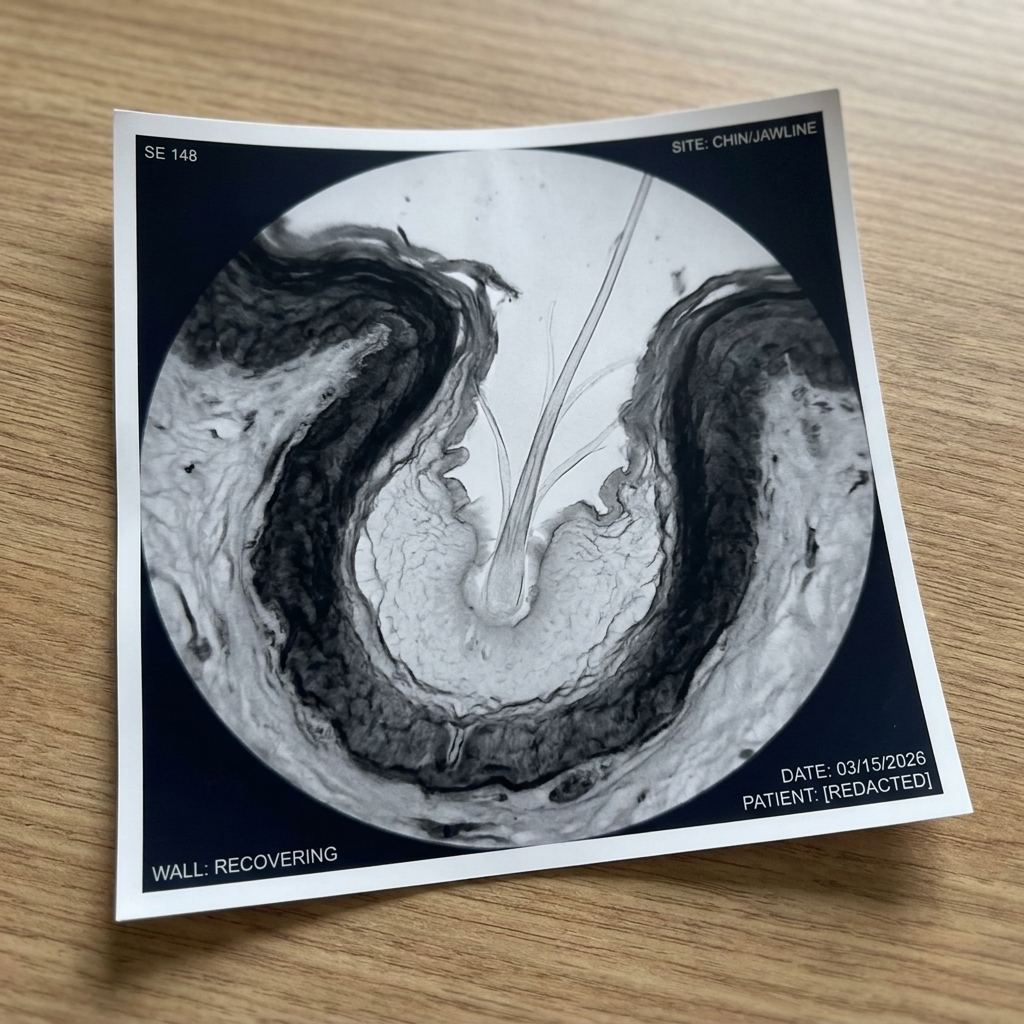
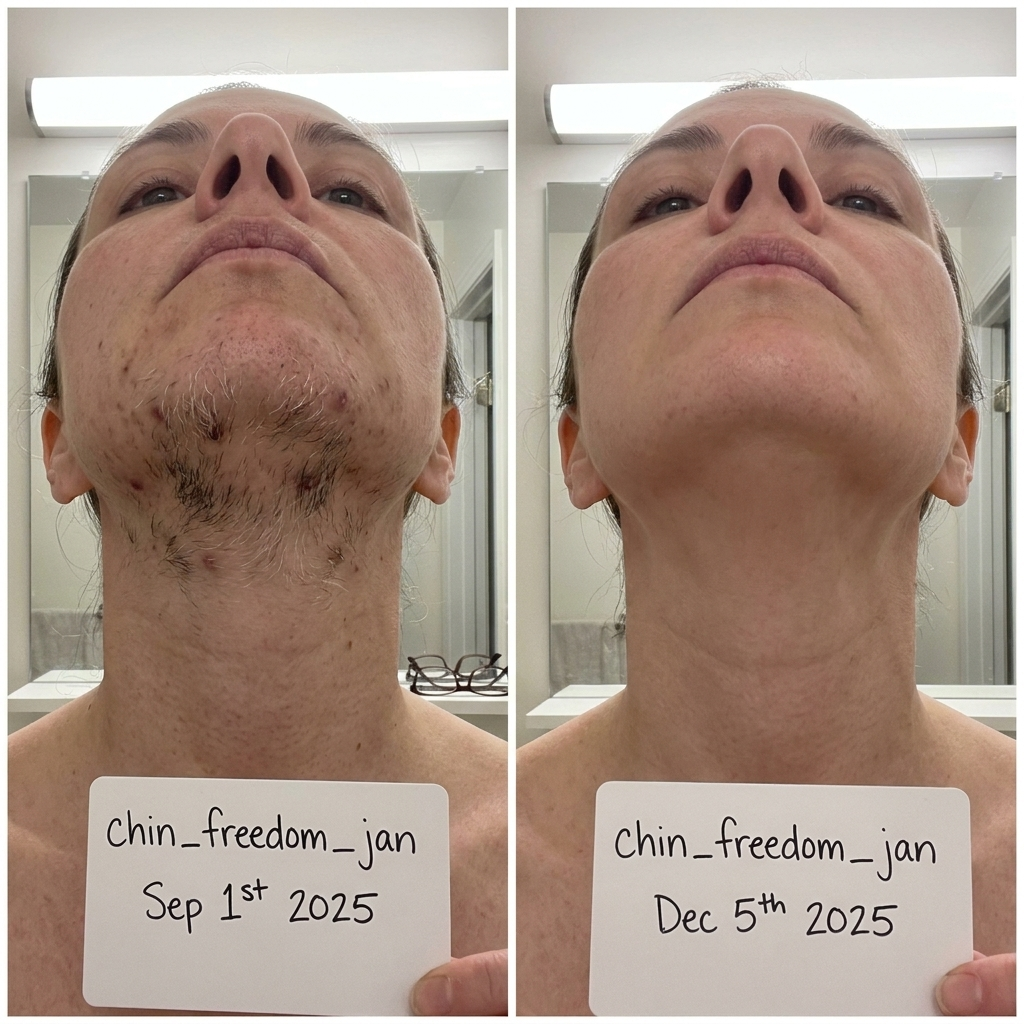
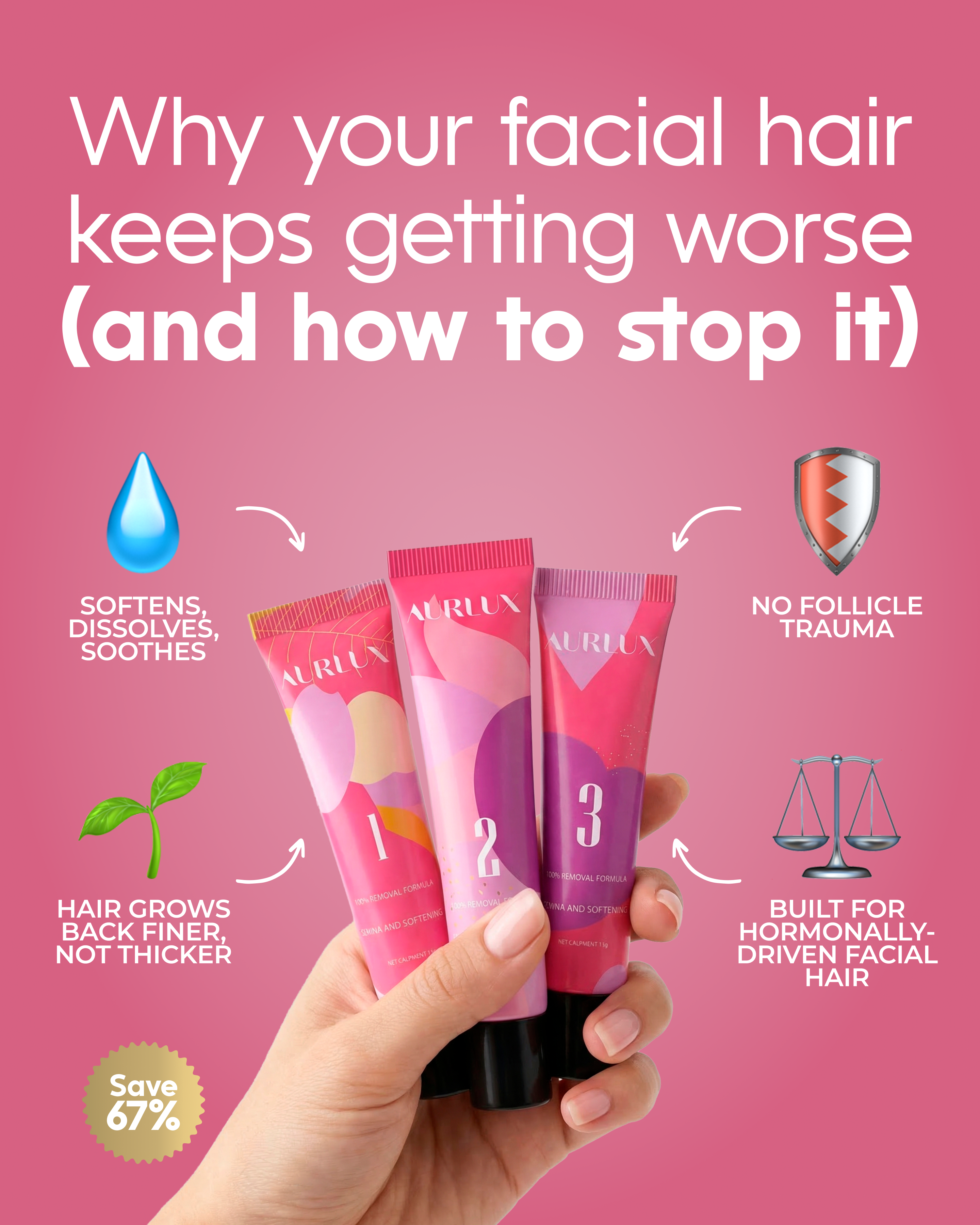
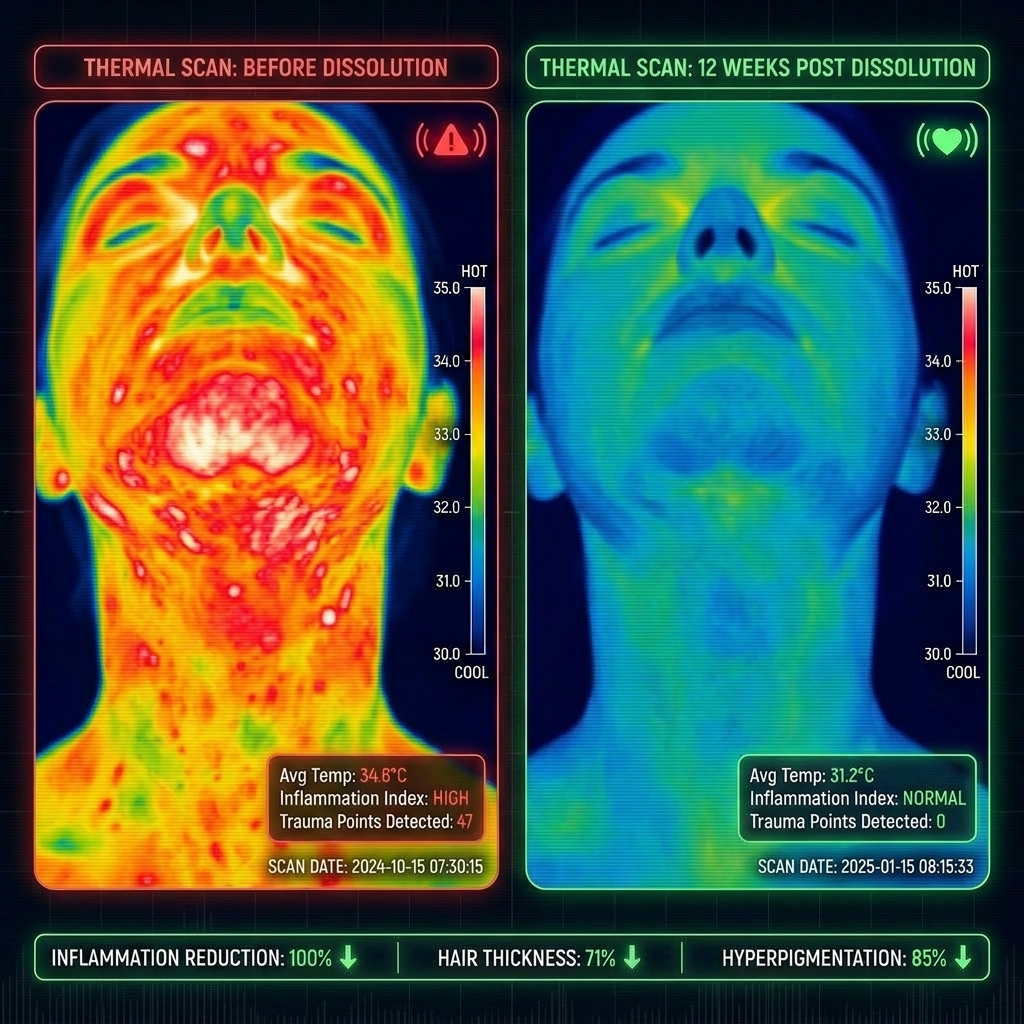
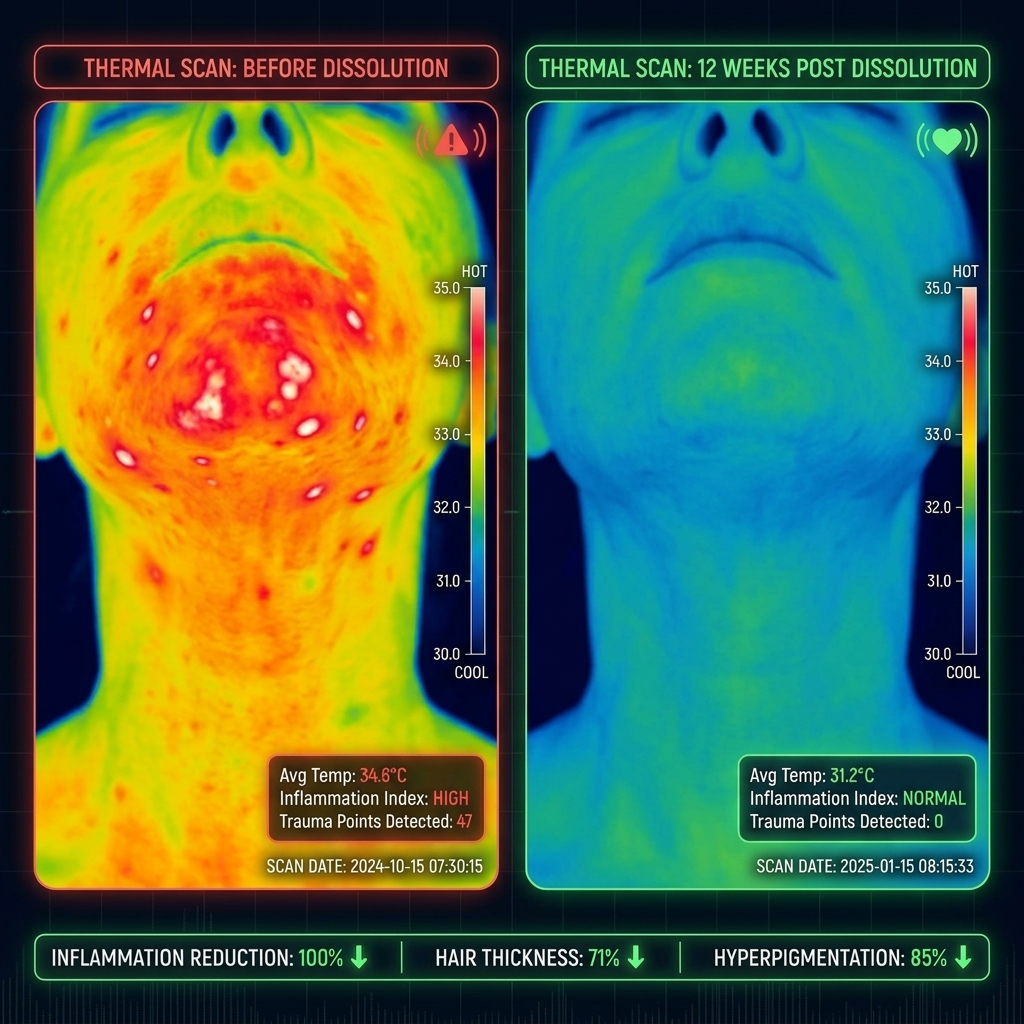
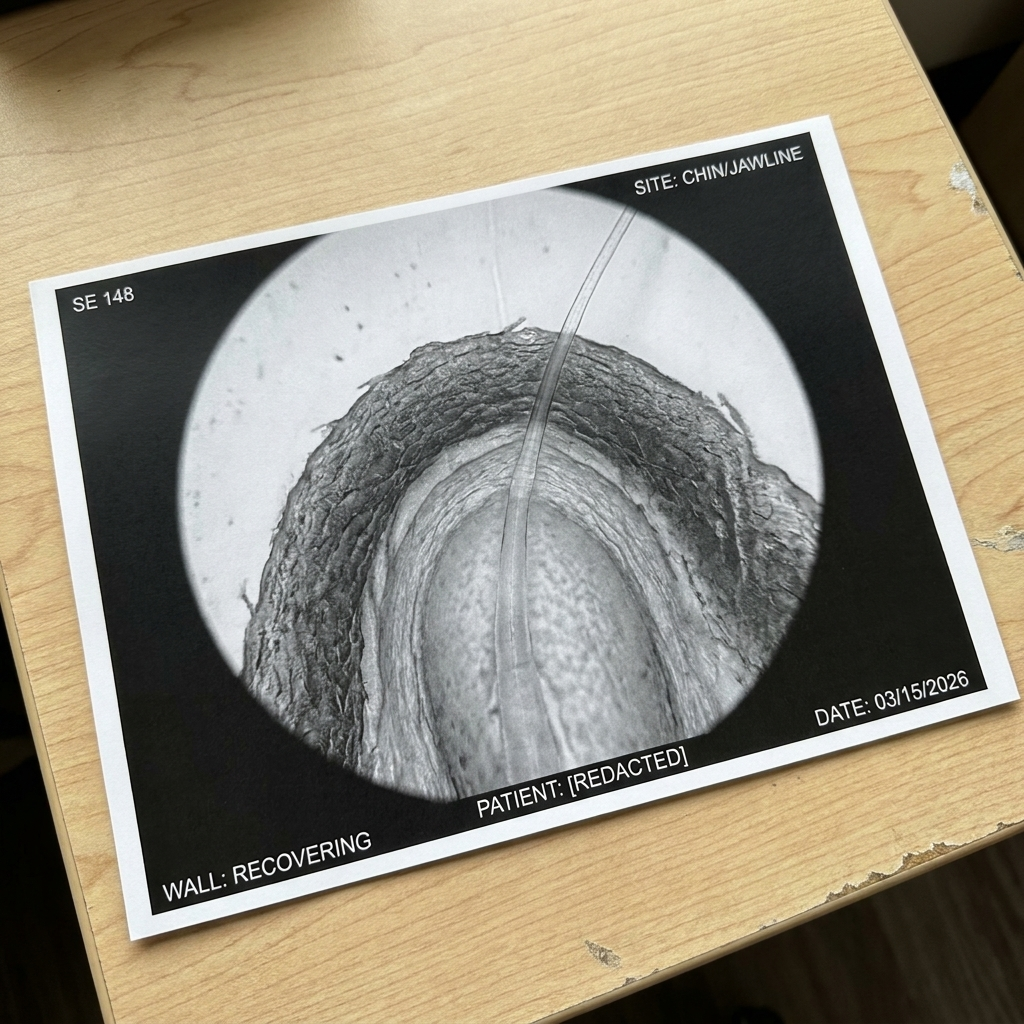
I saw a photo of my mother that made me sick. Not because she looked ill. Because she was hiding. My cousin's wedding. She's standing in the back row. Hand under her chin. Scarf pulled up even though it was 85 degrees outside. She wasn't cold. She was covering her chin. I zoomed in. You could see it in her eyes. That look. Not sadness exactly. Shame. The kind that sits in your chest so long you forget what it feels like to not carry it. I'd watched that shame for 27 years and not one doctor had ever told her why it was getting worse. But here's the truth. Your dermatologist treats your hormones. Your esthetician removes your hair. The problem sits between them... and nobody is paid to look there. That's why most of us never heard this. That's why my mother never heard it either. My mother was part of that photo for 27 years. Twenty-seven years of plucking every morning at 5 AM. Twenty-seven years of hiding her chin. I'm 28. Three months ago my doctor told me to "just start plucking" and "consider laser when I could afford it." I refused. And what I found instead... in a retired dermatologist's home office in a small town outside Richmond... took me from plucking 30 hairs every morning with coarse regrowth getting worse every month... to touching my chin and feeling nothing but soft skin. No plucking. No laser. No Spiro. But to understand why I was desperate enough to drive four hours to a retired doctor's living room, you have to know what I watched plucking do to my mother. And what I didn't know it was quietly doing to me too. For 27 YEARS... over two and a half decades... my mother was trapped in the plucking cycle. Started with a few fine chin hairs at 25. Her doctor called plucking "the standard approach." Said she'd manage it daily, but that was fine because PCOS women "just have to deal with it." She plucked every morning. 15 minutes at first. Everything else fell apart. Within the first year the hair grew back thicker. Not gradually. Noticeably. Doctor said it was her hormones fluctuating. By year three she was plucking 30 hairs every morning. Some were so coarse her tweezers could barely grip them. Her confidence? Gone. This was a woman who wore her hair up every summer, who hosted every family barbecue, who never thought twice about sitting by a window. By year five she was checking her chin in every mirror she passed. Her chin got darker. Dark spots spreading across the jawline. Concealer couldn't cover the shadow. And every time she mentioned it, her doctor said the same thing. "Your PCOS is managed, Margaret. The dark spots are just pigmentation. The thickness is hormonal. You need to keep plucking and maybe try threading." She WAS plucking. Every single morning. 27 years without missing a day. My dad said it was like watching her disappear behind scarves one year at a time. They had her plucking for TWENTY-SEVEN YEARS. Twenty-seven years of the hair getting thicker. Twenty-seven years of feeling like a stranger when she looked in the mirror. Twenty-seven years of appointments where they'd suggest laser or threading or Spiro... but never once... not ONE TIME... did anyone say, "Maybe something about HOW you're removing the hair is making it worse." And her confidence never came back. She's 54 now. Still locks the bathroom door at 5 AM. Still flinches when Dad reaches for her face. Still stands in the back row of every photo. At my cousin's wedding last summer, my dad leaned over and whispered something I'll never forget. "For 27 years they told her to just keep plucking, Sarah. And look at her. They were wrong the whole time." So fast forward to three months ago. I'm 28. Diagnosed with PCOS at 26. My first chin hairs appeared within months. I'd been a good patient. Took my Metformin. Cut sugar. Exercised four times a week. Did everything I was told. But there it was. Five dark hairs on my chin. Then eight. Then twelve. I go to my doctor. She examines my face. Looks at my chart. "Sarah, your PCOS is managed. But the facial hair is common. Start plucking. If it gets worse, we can discuss laser or Spironolactone." My chest tightened. Plucking. Twenty-seven years of watching my mother's chin hair go from fine to wire. Twenty-seven years of dark spots spreading. Twenty-seven years of the 5 AM alarm and the locked bathroom door. "No," I said. She blinked. "Excuse me?" "I'm not plucking. My mother has been plucking for 27 years. I watched what it did to her face. I watched what it did to her life." She gave me that look. "Sarah, plucking is standard management for PCOS facial hair..." "What's the point of managing it if it gets worse every year?" She didn't have an answer. I told her to give me three months to find another way. She wasn't happy. Wrote something in my chart. I didn't care. For three months I tried everything else. Threading. Sugaring. Nair. Veet. A $350 at-home IPL device. Three months later my hair was thicker. The IPL didn't work on hormonal hair. The creams left half the hair behind. Doctor pulled out her referral pad. "Sarah, it's time for laser." "Give me three more months." "Sarah..." "Three more months." She sighed. I didn't care what she wrote. That night I couldn't sleep. I kept thinking about my mother. Same PCOS. Same hair. Same progression. The same path stretching out in front of me for the next 27 years. At 1 AM I gave up. Went to the couch. Opened my phone. I started searching. Why does plucking make facial hair thicker. Why nothing works on PCOS chin hair. Why the hair gets coarser every year no matter what you do. Every site said the same thing. Pluck. Thread. Try laser. Manage it. I'd tried it all. So I kept digging. Looking for women who'd actually stopped the thickening. Not managed it. Stopped it. That's when I found the thread. A Reddit post in the PCOS forum with over 2,000 comments. "Why does every removal method make my hair WORSE?" I almost scrolled past. But something made me click. Comment after comment. Women describing the same progression. Fine hair becoming coarse. 10 hairs becoming 40. Dark spots appearing. And then. Buried about 300 comments down. A woman named Claire. "I drove to see a retired dermatologist who spent 30 years studying follicle damage. She explained something no other doctor had ever told me. And it changed everything." She posted a link. A small website for a retired dermatology professor who now ran a private consultation practice out of her home. Dr. Margaret Holloway. Richmond, Virginia area. Spent 30 years in academic dermatology studying follicle wall pathology. I looked at the clock. 2:14 AM. By 6 AM I was in my car. By 10 AM I was in Virginia. Her house was small. White clapboard. Garden out front. A brass plaque by the door: "Dr. M. Holloway, Dermatology, Consultations by Appointment." I didn't have an appointment. I knocked anyway. The woman who answered had to be late 70s. Small. Sharp eyes behind reading glasses. Gray hair pulled back. She was holding a cup of tea. "I don't take walk-ins," she said. Not unkindly. "I know. I'm sorry. I drove four hours. My mother has been plucking her chin hair for 27 years. It's destroyed her. I was just diagnosed with PCOS. My doctor told me to start plucking. And I need someone to tell me why it makes it worse before I follow the same path." She looked at me for a long moment. "Come in. I'll put the kettle on." Her office was a converted living room. Bookshelves floor to ceiling. A dermoscope on the desk. She handed me tea. Sat across from me. "Your doctor," she said. "What did she tell you about plucking?" "Standard management. Everyone does it." She nodded slowly. "That's what they teach in medical school. Remove the hair. Manage the symptoms. They never look at what happens underneath." She pulled a folder from her desk. Inside, dermoscopy images. Dozens of them. Follicles at 50x magnification. "See this?" She pointed to a thin-walled follicle. Fine hair growing from it. "This is a healthy follicle. PCOS or not. The wall is thin. The hair is fine. This is what your follicles look like right now." She pointed to another image. The follicle wall was three times thicker. The hair emerging was dark, coarse, wire-like. "This is the same follicle after five years of plucking." I stared at it. "Every time you pluck a hair, you rip it from the root. The follicle tears. Your body treats it as an attack. So it does what any tissue under attack does. It rebuilds stronger." She tapped the thickened wall. "The wall gets thicker. Thicker wall produces a thicker hair. You pluck the thicker hair. The wall rebuilds even thicker. Next hair is even coarser." She sat back. "That cycle runs every single day you pluck. For your mother, it ran for 27 years. And not once did anyone look at this." She held up the dermoscopy image. "Not once did anyone ask what was happening to the follicle WALL." My eyes started burning. "And here's the part that will make you angry," she said. "The dark spots. Your mother's shadow. Every pluck causes micro-inflammation. The inflammation activates melanocytes. Melanin deposits form. Dark spots appear. And they don't fade on their own because she's re-traumatizing the same follicles every morning before they can heal." She shook her head. "Plucking causes the thickening. Plucking causes the dark spots. And your mother's doctor told her to keep plucking for 27 years. That is the standard of care. And it is wrong." I asked her what the alternative was. She stood up. Walked to her desk. Picked up a tube. "Chemical dissolution. Clinical-grade. You dissolve the hair at the surface. The follicle is never touched. No ripping. No tearing. No defense response. The wall doesn't thicken. It actually begins to thin back toward baseline." "I've seen it in drugstores," I said. "Nair. Veet. They didn't work." She must have read my face. "That's not what I'm talking about," she said. "What's in your drugstore is diluted to the point of uselessness." She held up the tube. "Drugstore creams use thioglycolate at concentrations formulated for fine leg hair. Maybe 2 to 4 percent. Your PCOS chin hair is terminal. Coarse. Thick. It needs clinical-grade concentration. Professional strength. And it needs a pre-treatment to open the hair cuticle first so the active can actually penetrate." She set the tube down. "And the second part. Once you stop the trauma, you need aftercare. The years of plucking left chronic inflammation and melanin deposits. You need something that calms the follicles and fades the hyperpigmentation while the walls heal." She looked at me. "Stop the trauma. Let the walls thin. Fade the damage. In that order. That's it. That's all of it." I asked her if anyone made a system that did all three. She nodded. "I consulted for one company. Only one got it right. Clinical-grade thioglycolate. Pre-treatment gel for thick hormonal hair. Aftercare serum for inflammation and dark spots. Three steps. In the right order." She wrote the name on a piece of paper and handed it to me. Aurlux. I ordered it from her kitchen table on my phone. Kit arrived two days later. I did the first treatment that evening. Pre-treatment gel. Five minutes. Dissolver. Ten minutes. Wiped away. Aftercare serum. When I ran my hand across my chin, I felt it. Smooth. Not stubbly. Not prickly. Actually smooth. My chin had never felt like that. Not after plucking. Not after threading. Not after anything. I went to the mirror. No shadow. No stubble. Just skin. Too early to celebrate. But something was different. Week one. No regrowth yet. Chin still smooth. I kept touching it. Couldn't believe the texture. Week two. Regrowth starting. But finer. Lighter. Not the thick wire I'd been pulling out with tweezers. Noticeably thinner hair. I took a photo and compared it to my photos from two weeks before. Week three. Second application. The hairs that dissolved were less dense than the first time. Fewer of them. Thinner shafts. My dark spots were lighter. The shadow I'd started developing was lifting. Week four. My sister came to visit. Hadn't seen me in six weeks. She looked at my face. Stopped. "Wait. What happened to your chin?" "What do you mean?" "I can't see anything. It's just... smooth." I grabbed her hand and ran her fingers across my jawline. She looked at me with wide eyes. "How?" Week six. Wore a ponytail to work. First time since diagnosis. Sat by the window at lunch. Didn't think about my chin once. That evening I looked at my chin under the bathroom light. The harsh overhead light that shows everything. It showed smooth, clear, even-toned skin. Week eight. Follow-up with my doctor. Nurse examined my skin. Doctor pulled up my chart. Looked at my face. Scrolled. Looked again. "Sarah. Your chin looks completely different. The hair is... finer? And the hyperpigmentation is visibly lighter. What changed?" I told her. The retired dermatologist. The follicle wall thickening. The clinical-grade dissolution. The three steps. She typed. Nodded slowly. "If this continues, I want to document it. This is well above what I'd expect from any topical approach." That was three months ago. My chin this morning? Smooth. Finer regrowth than I've ever had. Dark spots fading every week. No 5 AM alarm. No tweezers. No mirror checking. I went to my mother's house last Sunday. Brought her the Aurlux kit. She looked at it. Looked at me. "Another product?" "Mom. I need you to try this. For four weeks. No plucking. Just this." She was skeptical. Twenty-seven years of skeptical. But she saw my chin. She couldn't argue with what she was looking at. She called me three weeks later. Crying. "My chin is soft. Actually soft. It hasn't been soft since I was in my twenties. The dark spots... Sarah, I think they're getting lighter." Long silence. "Why didn't anyone tell me? Twenty-seven years. Why didn't anyone tell me plucking was doing this?" I didn't have an answer. Neither did any of her doctors. Last weekend she wore her hair up at a family dinner. First time in 12 years. My dad texted me a photo. Mom. Hair up. Smiling. No hand under her chin. He wrote: "Thank you for not giving up on her." I cried for twenty minutes. If you're reading this, you probably see yourself in my story. Your hair is getting thicker every year and your doctor says it's "just PCOS." You're plucking every morning and the count keeps going up. Your dark spots are spreading. You've tried threading. You've tried laser. You've tried Spiro. Maybe two of them. Maybe all of them. They didn't work. But now you know why. You weren't dissolving the hair. You were ripping it out. Your follicle walls rebuilt thicker every time. Your dermatologist never looked at the walls. And the dark spots kept spreading because the trauma never stopped. And your chin has been getting worse this whole time... just like my mother's was... for 27 years while every doctor told her to keep plucking. Aurlux is different. Clinical-grade thioglycolate, not drugstore dilution. Pre-treatment gel that opens the cuticle on thick hormonal hair. Aftercare serum that calms inflammation and fades dark spots. Three steps. In the right order. The way your follicles need it. 60-day money-back guarantee. Use every drop. Try Aurlux for 60 days. Take a chin photo every Sunday morning. Watch the regrowth. Is it finer? Are the dark spots lighter? Is the shadow lifting? If nothing changes, full refund. No questions. You're at a crossroads. One path. Keep plucking. Watch the hair get thicker. Watch the dark spots spread. Spend the next 20 years in front of a magnifying mirror at 5 AM. End up where my mother was. Another path. Try what I tried. Stop the trauma. Let your follicle walls heal. Watch the hair grow back finer. See what changes in 60 days. I chose the second path. It gave me my face back. And it gave my mother hers. The hair removal industry isn't coming to save you. Your dermatologist isn't looking at your follicle walls. Your esthetician isn't connecting your thicker regrowth to her wax strips. Nobody is looking at the trauma. Every month you keep plucking is another month your follicle walls rebuild thicker. Another month your dark spots deepen. Another month closer to becoming the woman in the back row of every photo with her hand under her chin. My mother didn't have this information for 27 years. You do. — Sarah W. 👉 https://aurlux.co/pages/10-reasons-why-aurlux P.S. I felt the smoothness within minutes of my first application. Regrowth came back finer by week two. Dark spots started fading by week three. My doctor documented the results at week eight. Your timeline might be different. But you won't know until you try. P.P.S. My mother started Aurlux three weeks after I did. She's 54. Dark spots fading. Hair growing back finer than it has in decades. Last Sunday she wore her hair up at dinner. First time in 12 years. She called me crying. "I'm not going to end up hiding forever." Neither am I. Neither should you.
Read this if you're shaving your face daily ☝️
This clinical-grade dissolution kit does what tweezers, threading, and laser can't: removes hair without traumatizing the follicle, so regrowth comes back finer instead of thicker.
LEARN MORELike this ad? Make it yours.
Crush rebuilds this exact creative around your product — your brand, your colors, your offer — in about a minute.