
Inactive· since Apr 30, 2026
- 44
- days it ran
- 0
- relaunches
Ad copy
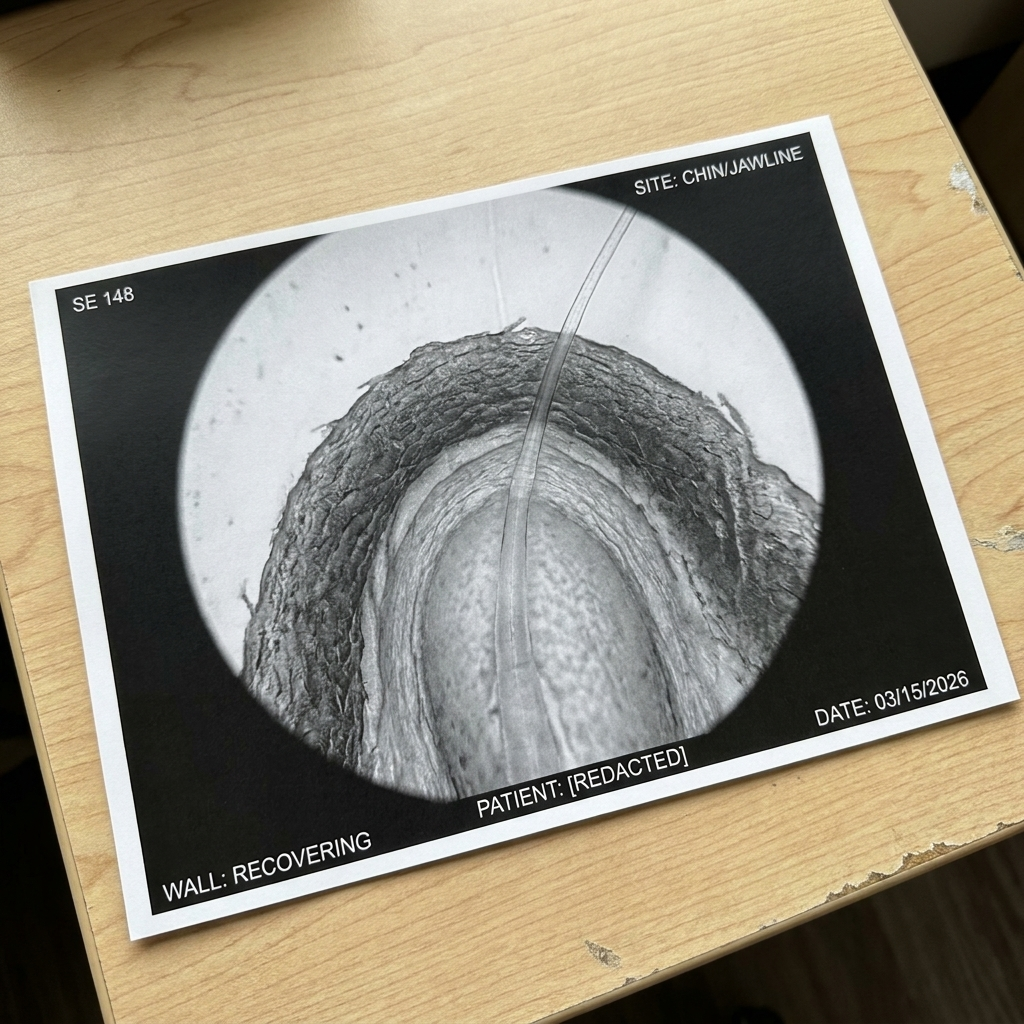
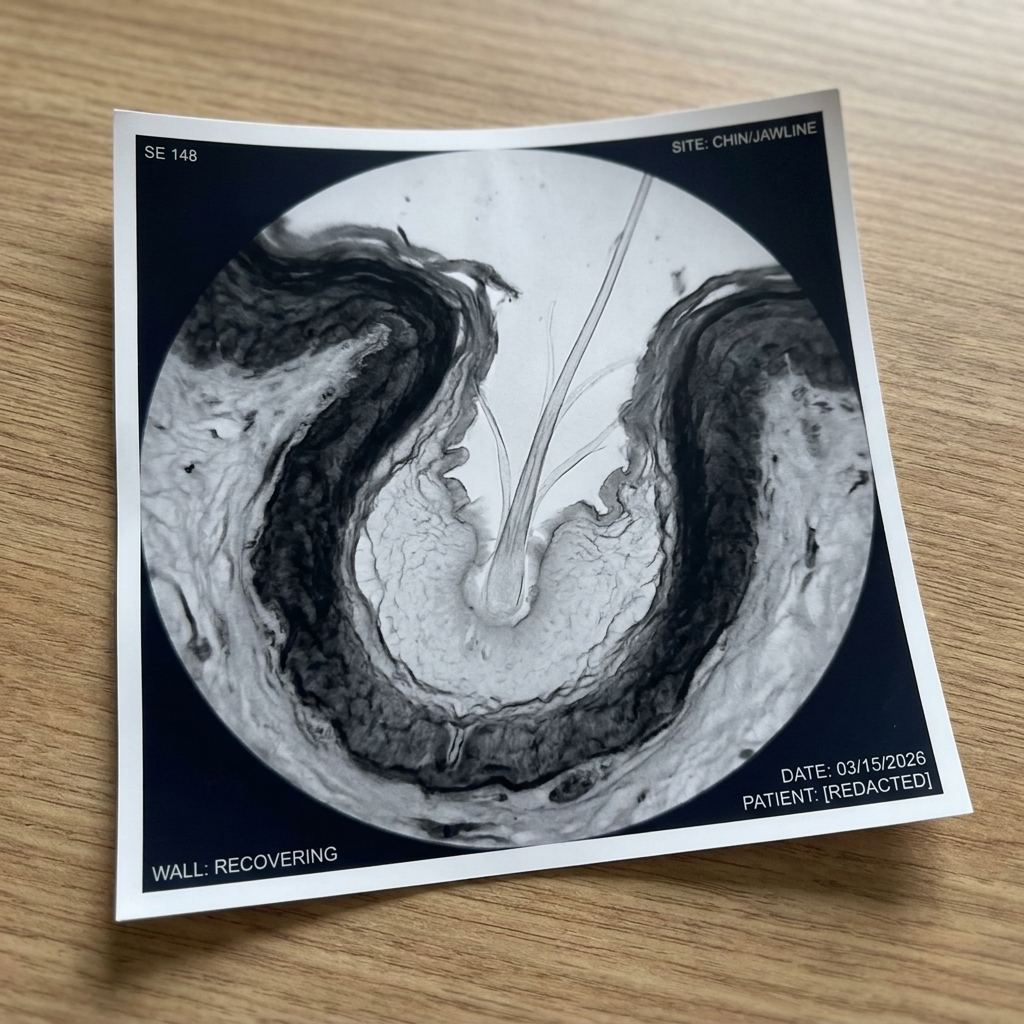
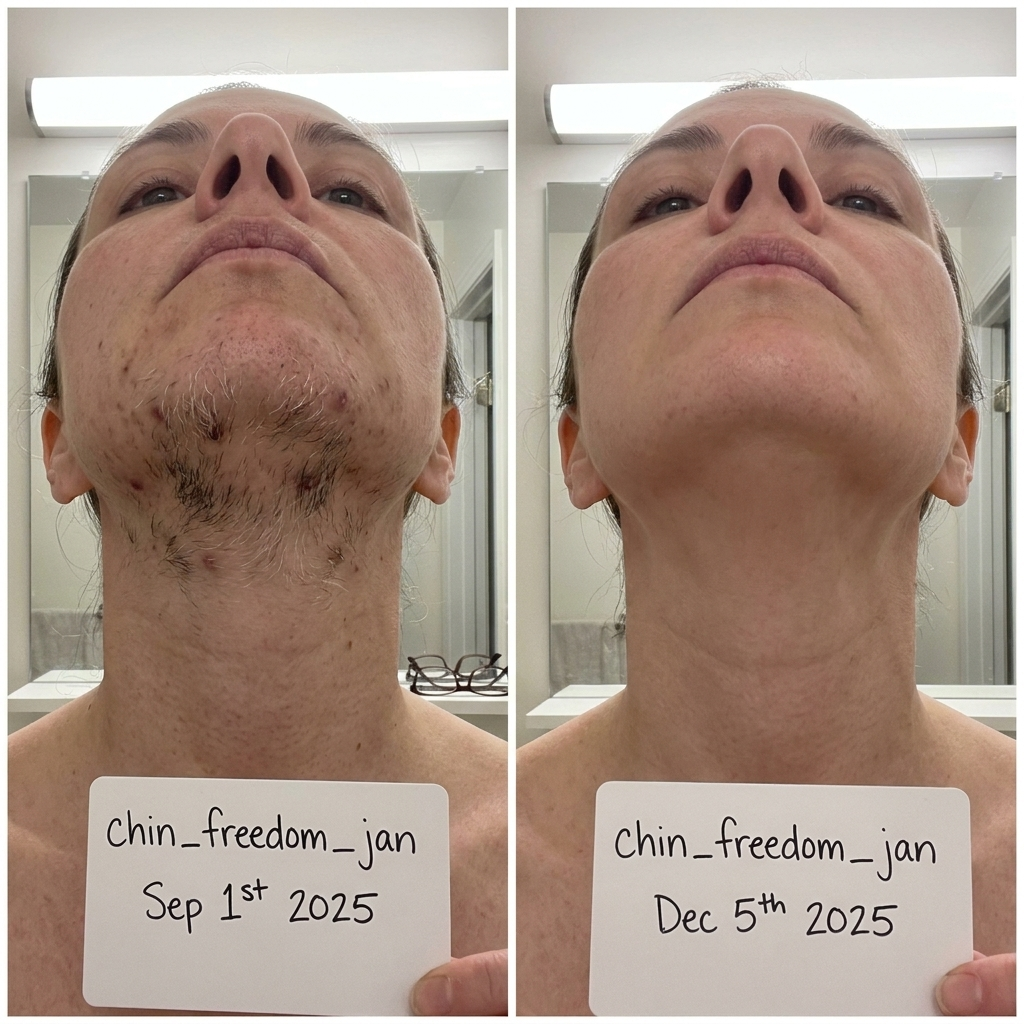
My mother lost her confidence at 42. Not to illness. Not to tragedy. To something every doctor she saw dismissed as "just cosmetic" and "part of being a woman." They were wrong. My mom was a vice principal at one of the best schools in our district. The kind of woman who could calm a room of angry parents in thirty seconds, who remembered every child's name and every safety concern, who ran assemblies and inspections and staff meetings without ever looking flustered. She worked sixty-hour weeks for twenty years straight. Her colleagues called her "the anchor" because nothing rattled her. Nothing made her lose her composure. Except the mirror at 5:30 AM. She started hiding it when I was about eight. I didn't understand at the time. I just knew Mom woke up before everyone else. That the bathroom door was always locked until 6:15. That she never let me sit on her lap facing her. It wasn't until I was fourteen that I walked in on her. Hunched over a magnifying mirror. Tweezers shaking. Tears running silently. Her chin covered in red marks. A pile of dark hairs on the tissue next to her. She saw me and covered her face. "It's nothing, love. Just go back to bed." But it wasn't nothing. She had PCOS. Diagnosed at 25. And she'd been plucking her chin every single morning since before I was born. When she finally mentioned it to her doctor at 32, he said: "It's just hormonal hair. Normal with PCOS. Try threading." She tried threading. Every two weeks. $40 a session. She kept plucking between appointments. The hair grew back thicker. When she went back at 35, they said: "We can try laser. It's expensive but effective." She saved for six months. $3,800 for a package of eight sessions. She was disciplined about every appointment. By session five, the technician said: "Some areas are responding, but the hormonal hair on your chin is coming back thicker in places." Paradoxical hypertrichosis. She didn't know the term then. She just knew she'd spent $3,800 and her chin was worse. So she went back to plucking. Every morning. The routine she'd never actually stopped. By 38, what had started as a few fine hairs at 25 was now 40+ thick, coarse, wire-like hairs every morning. She was setting her alarm for 5:15 to have enough time. Then 5:00. The dark spots came next. Hyperpigmentation spreading across her chin from thousands of days of follicle trauma. Even after she plucked every hair, her chin looked shadowed. Dirty. Darkened. She started wearing scarves indoors. Turtlenecks in summer. Holding her hand under her chin in every conversation. Standing in the back of every photo with her chin angled down. She developed rituals I didn't understand until I was older. She'd check every mirror she passed. Touch her chin constantly — in meetings, at dinner, in the car. She carried tweezers in her handbag, her desk drawer, the glove compartment. Emergency plucking in restaurant bathrooms. Quick checks in shop windows. She stopped wearing her hair up. Stopped going to my school events in summer because the outdoor lighting was too revealing. Stopped sitting by windows at restaurants. Stopped letting Dad touch her face. He'd reach for her cheek and she'd turn away. Every time. He stopped trying eventually. The dark spots got worse year by year. Post-inflammatory hyperpigmentation from thousands of days of micro-trauma. Even after she plucked every hair, her chin looked permanently shadowed. Foundation couldn't cover it. Concealer just sat on top of the texture. At 42, she cancelled a holiday she'd been looking forward to for months. A beach trip with her closest friends. She told them she was too busy with work. She wasn't too busy. She couldn't face being seen in sunlight. That's when I watched my mother start to disappear. Not suddenly. Slowly. The excuses that got more frequent. The photos she deleted. The mirrors she avoided and then obsessed over. The locked bathroom door at 5 AM. She thought she was doing everything right. Every dermatologist visit where she asked for help and got told to "just keep plucking" or "try another laser package," she blamed herself. "Maybe my hormones are just too bad." "Maybe I should pluck more carefully." "Maybe this is just who I am now." But it wasn't her. It was the trauma cycle. Running at full speed underneath every plucking session. Every follicle she ripped, her body rebuilt thicker. Every morning she plucked, the hair grew back coarser. Every cycle of inflammation left another dark spot. She was making it worse. Every single day. For seventeen years. While doing exactly what every doctor told her to do. She plucked until she was 52. Twenty-seven years total. By then her chin was permanently darkened. The hair was so coarse it felt like wire. She needed 45 minutes every morning just to feel presentable. She never stopped hiding. Never wore her hair up again. Never went on that beach holiday. I watched my mother lose herself to a problem that every doctor called "just cosmetic." And not one of them ever asked the question that would have changed everything. Now here's where this story becomes about me. When I turned 26, I found my first chin hair. Not because I was looking. I was putting on foundation and felt something rough. Looked in the magnifying mirror. One dark, coarse hair on my chin. My stomach dropped. Not because of one hair. Because I knew what one hair meant. I'd watched this happen. I knew the progression. I knew where it led. I was diagnosed with PCOS three months later. My doctor said: "You might develop some facial hair. It's common. Just pluck it." The exact same words my mother heard at 25. But I'd watched what "just pluck it" did to my mother for twenty-seven years. I wasn't going down that road. So I started researching. Not removal methods. Not lasers. Not creams. The actual mechanism. WHY does plucking make it worse? And what I found explained everything I'd watched happen to my mother. Every time you pluck, thread, wax, or laser a hair, you traumatize the follicle. The body registers the removal as an injury. The defense response triggers. The follicle wall rebuilds thicker. The hair shaft grows back coarser and darker. And here's the part that makes this a trap: the inflammation from each pluck triggers melanocyte overproduction in the surrounding skin. Melanin deposits form. Dark spots appear. The more you pluck, the darker they get. And the dark spots don't fade on their own because you're re-traumatizing the same follicles every 24-48 hours before they can heal. Plucking creates trauma. Trauma thickens the follicle. Thicker follicles produce coarser hair. Coarser hair makes you pluck more aggressively. More aggressive plucking creates more trauma. Your hair gets thicker and your skin gets darker simultaneously, regardless of how carefully you pluck or how expensive your tweezers are. Tweezers remove hair. But they don't repair the follicle damage that's already making your hair thicker every cycle. That's why my mother kept plucking and her hair kept getting worse. That's why her dark spots spread despite twenty-seven years of careful removal. That's why "just pluck it" was never going to save her. Year 1: A few fine hairs. Year 5: Thicker, darker, noticeable. Year 10: Coarse, wire-like, daily plucking required. Year 20: Dense growth, severe dark spots, 45-minute sessions, life planned around hiding. That was my mother's exact timeline. Year by year. Exactly as the research predicted. And every doctor she saw focused on removing the hair — never on stopping the trauma that was making it worse. But here's the part that made me furious. The research on follicle trauma response isn't new. Chemical dissolution — removing hair without any follicle contact — has been used in clinical settings for years. The mechanism is well-documented. But GPs still tell women to pluck. Salons still sell threading. Clinics still push laser packages that don't work on hormonal hair. Because those methods require repeat appointments. Recurring revenue. A patient who comes back every two weeks is more profitable than one who fixes the problem at home. So I refused to pluck. From day one. I tried dissolution instead. First product — a drugstore cream. Highest rated on Amazon. Pink tube. "Sensitive skin formula." Six minutes on my chin. Half the hair remained. The parts it did dissolve grew back at the same thickness. My chin burned for two days. The concentration was too weak. Formulated for leg peach fuzz. Not hormonal chin hair. Second product — a "clinical" cream from a beauty brand. Double the price. Eight weeks of consistent use. Same result. Stubble within 24 hours. No change in regrowth thickness. And it left my skin red and irritated. I was frustrated. But I wasn't going back to tweezers. I'd watched what tweezers did to my mother for twenty-seven years. Then I found out why most creams don't work on PCOS hair: the thioglycolate concentration is too low to dissolve coarse hormonal hair. They're formulated for fine body hair at drugstore dilutions. And they're missing the pre-treatment step that opens the cuticle so the active can actually penetrate thick hair. And they have no aftercare for the inflammation and dark spots. One step. Weak strength. Wrong hair type. I needed clinical-grade thioglycolate. A pre-treatment to open the cuticle on thick hormonal hair. And aftercare for inflammation and hyperpigmentation. Three steps. Together. At clinical strength. One system kept appearing. In PCOS forums. In dermatology threads. In recommendations from women who'd actually seen their regrowth change. Aurlux. Clinical-grade concentration. Not drugstore dilution. A 3-step system. Not one weak cream. I ordered it that week. Not out of desperation — out of determination. I wasn't going to become my mother's story. The kit arrived. Pre-treatment gel. Clinical-grade dissolver. Aftercare serum. Fifteen minutes total. When I wiped the cream away and ran my hand across my chin, it was smooth. Not stubbly. Not rough. Smooth. No ripping. No tearing. No trauma signal sent to the follicle. "No trauma," I whispered. Because I knew what that meant. Week 2: The regrowth came back finer. Not thicker. Measurably finer. I took photos. Week 4: Second application. The few hairs I had were barely visible. Fine, light, soft. Nothing like the thick wire my mother fought every morning. Week 8: I took my photos to a dermatologist for a professional opinion. She examined my chin under magnification. "Your follicles are healthy. No inflammation. No thickening. No hyperpigmentation. Whatever you're doing, keep doing it." I showed her photos of my mother's chin at the same age. The thick hair. The dark spots. The damage from twenty-seven years of plucking. She looked at my photos. Then at my mother's. Then back at mine. "Same genetics. Same PCOS. Completely different outcome." She paused. "The only difference is the method." Same genetics. Same hormones. Same PCOS. Different method. Different outcome. My mother plucked for twenty-seven years and her hair got thicker every year until she disappeared behind scarves and locked bathroom doors. I've been dissolving for two years and my chin hair is finer now than when I started. That's the only difference. I think about what my mother lost. Not just the beach holidays. Not just the ponytails. Not just the photos she deleted or the face she hid from my father. She lost twenty-seven years of feeling comfortable in her own skin. Twenty-seven years of mornings spent fighting a problem that her method was creating. Twenty-seven years of doctors telling her to keep doing the thing that was making it worse. She's 54 now. I bought her Aurlux last Christmas. She called me crying three weeks later. "My chin is soft. Actually soft. It hasn't been soft since I was in my twenties." She wore her hair up at my cousin's wedding last month. First time in twelve years. I cried harder than she did. You don't have to lose those years. You don't have to watch your hair get thicker every year while you do everything you're told. You don't have to become the woman hiding behind scarves and locked bathroom doors at 5 AM. If you're plucking right now, please hear me: your follicles aren't broken. Your hormones aren't unbeatable. Your method is the problem. And every month you continue plucking is another month of follicle wall thickening, coarser regrowth, and darker spots that you can't get back. Aurlux offers a 60-day money-back guarantee. If your regrowth doesn't come back finer, if your dark spots don't start fading, full refund. No questions asked. The only thing I'll say is: if your hair is already getting thicker and you're watching the progression happen in real time, start now rather than waiting. Every month the trauma cycle runs is another month of compounding damage. 👉 https://aurlux.co/pages/instantly-remove-hair — Sophie W. P.S. You'll notice the difference after your first application. That smoothness. That absence of stubble the next morning. That's the clinical-grade concentration doing what drugstore creams can't. The full regrowth change takes 4-8 weeks to become obvious, but the way your chin FEELS changes immediately. If you've used other creams and still had stubble within 24 hours, the concentration was too weak. This is different. P.P.S. My mother plucked for 27 years and her hair went from fine to wire. I've been dissolving for 2 years and mine went from coarse to barely visible. Same PCOS. Same genetics. Same chin. Different method. That's the only difference. 👉 https://aurlux.co/pages/instantly-remove-hair
Your Thick Hair Isn't A Hormone Problem
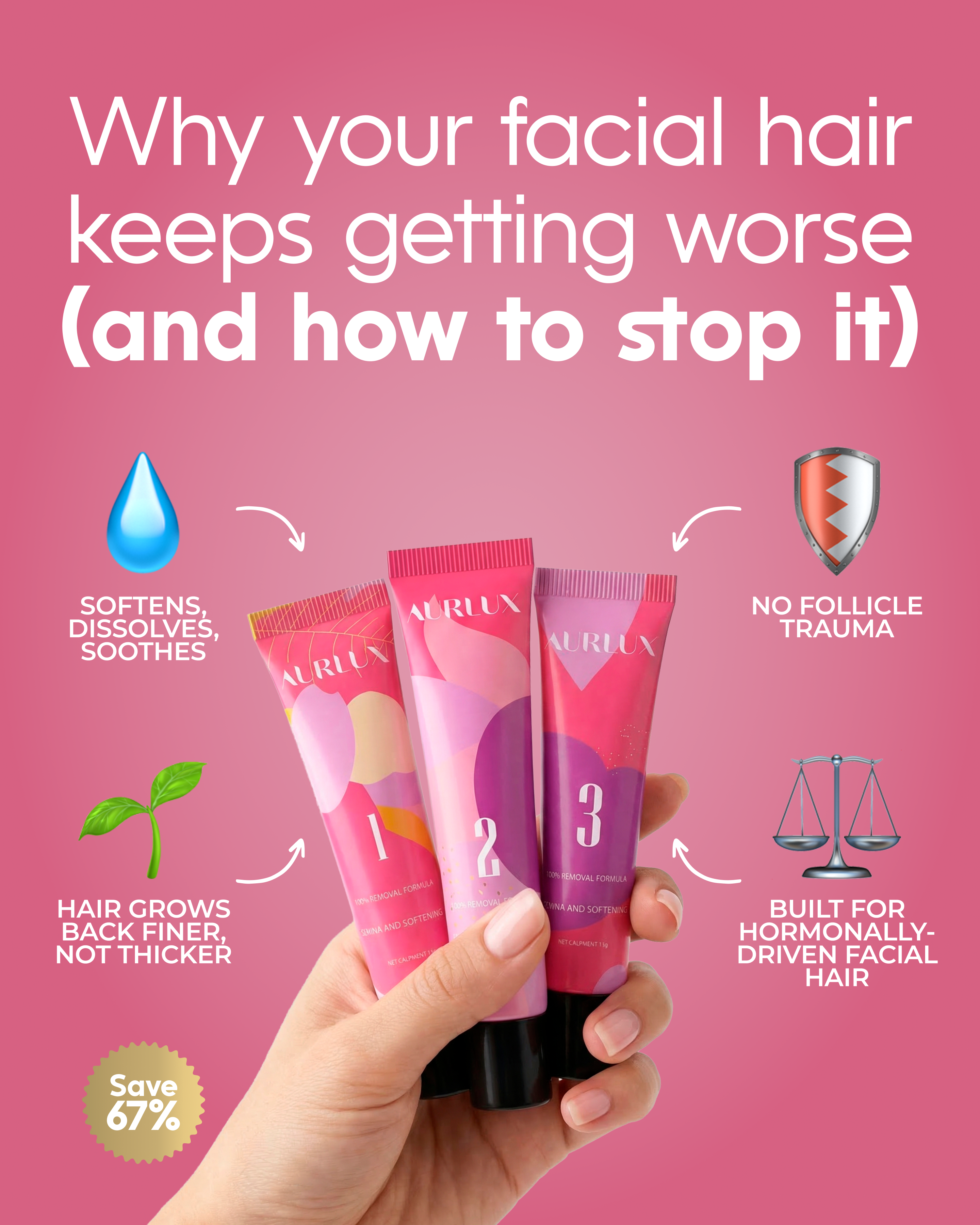
No wait required. Aurlux works straight out of the box. Apply the 3 step system to clean skin, wait 10 minutes and wipe away. It's that easy.
SHOP NOWLike this ad? Make it yours.
Crush rebuilds this exact creative around your product — your brand, your colors, your offer — in about a minute.