The Healthy Pet Parent
The Healthy Pet Parent Facebook ad: “Read this if your dog have itchy paws”
Ran for 1 day, from April 4 to April 5, 2026, the last day Crush saw it.
Run by The Healthy Pet Parent on Facebook. Crush is not the advertiser and does not verify its claims. See this ad in Meta's Ad Library(opens in a new tab)
Want an ad like this for your product?
Crush makes new ad images for your product from this ad: your logo, your product photo, your offer.
Trials from $19.95 USD, then $79.95 USD a month. Cancel anytime.
About this ad
- Meta Ad Library ID
- 1647783419698712
- Platforms
- Facebook, Instagram, Audience Network, Messenger and Threads
- Relaunches
- 3
Ad text
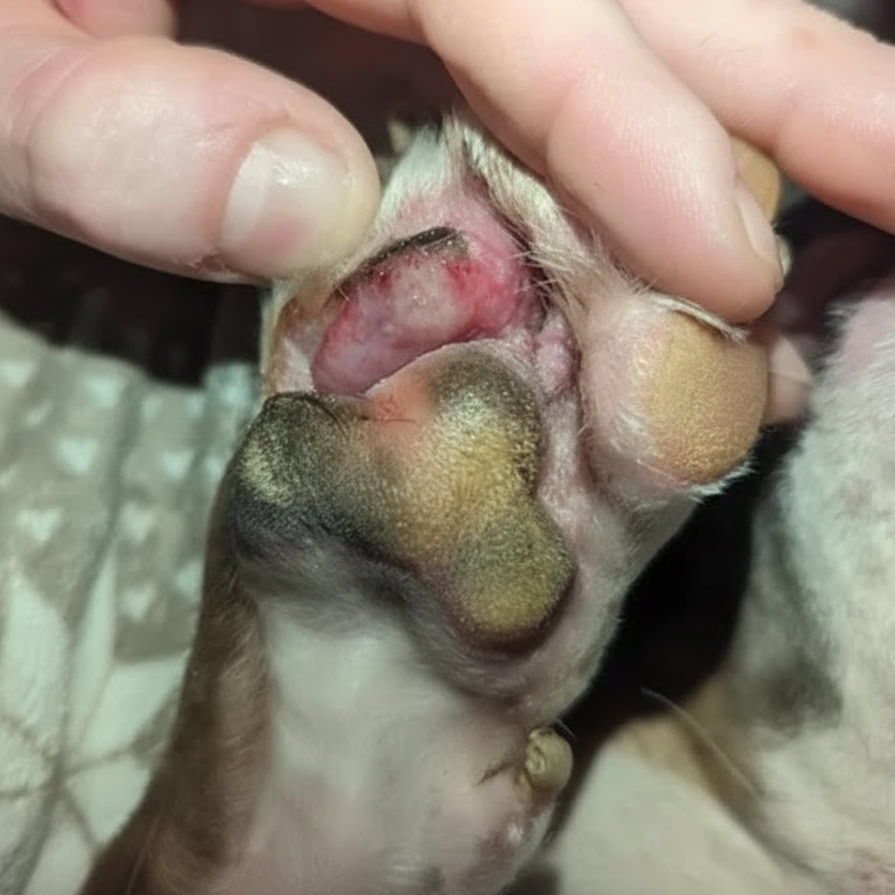
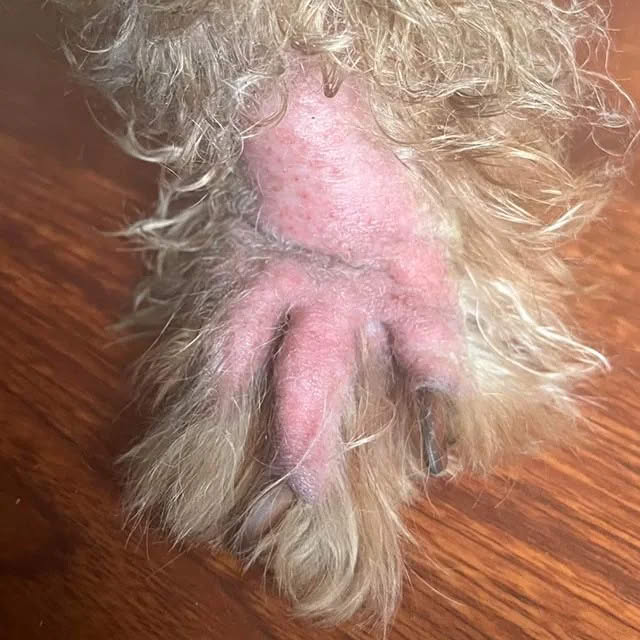
I watched my dog chew her paws until they were BLEEDING for 8 months before a veterinary dermatologist told me the one thing my regular vet never mentioned. I'm sharing this because I spent over £4,000 and countless sleepless nights before I understood what was really happening inside my dog's body. And I don't want you to go through what I went through. Her name is Rosie. A 6-year-old Labrador Retriever who used to barrel into me at the door like I'd been gone for a year. But for almost a year, the only thing I'd see when I got home was her hunched over, frantically licking between her toes. Sometimes she wouldn't even look up. If you've got a Lab, you already know — they're not supposed to be still. They're supposed to be knocking things off the coffee table with their tail and shoving their nose in your shopping bags. Seeing her like that broke something in me. The scratching started small. A bit of paw licking here and there. I figured it was just the season — Labs can be sensitive, everyone said so. Then came the hot spots. The yeasty smell in her ears that no amount of cleaning would fix. The rust-coloured stains spreading across her paws from the constant licking. The patches of thinning fur along her belly. I remember the exact night I broke down. 2:47 AM. I woke up to this wet, rhythmic sound. Lick. Lick. Lick. Lick. I found Rosie in the hallway, lit up by the landing light, chewing her front paw so intensely she'd removed the fur completely. The skin underneath was raw. Cracked. Bleeding. I sat down next to her on the cold floorboards and just... cried. Because I had already tried EVERYTHING my vet suggested. The prescription shampoos that dried out her already sensitive skin. The antihistamines that made her drowsy but didn't stop the itching. The expensive hydrolysed protein food that cost £90 a bag and did absolutely nothing. I'd even tried those popular allergy chews I found online. The ones with thousands of five-star reviews. I gave them to her religiously for three months. Nothing. I started wondering if I was failing her. If maybe I had caused this somehow through the food I'd chosen or the vaccinations I'd agreed to. That guilt? It was eating me alive. My partner would find me at midnight, laptop glowing, scrolling through forum after forum looking for answers. I had seventeen tabs open with titles like "Labrador won't stop licking paws" and "natural remedies for Lab allergies." Everyone had an opinion. Coconut oil. Apple cider vinegar. Grain-free food. Oatmeal baths. And every Labrador owner I spoke to said the same thing — *"yeah, Labs are just prone to allergies, it's the breed."* I refused to accept that my dog just had to suffer because of her genetics. I tried everything anyway. And every morning, I'd check Rosie's paws hoping to see improvement. Every morning, disappointment. Then my regular vet suggested Apoquel. I was desperate enough to consider it. But something made me hesitate. I started reading about how it works — how it basically suppresses part of the immune system to stop the itching. One phrase kept coming up: *"tumour immune surveillance."* Labs are already one of the breeds with higher rates of certain cancers. I wasn't going to add to that risk. I couldn't do it. That's when I pushed hard for a referral to a veterinary dermatologist. The appointment cost over £400 and was six weeks away. I counted every single day. Dr. Reeves was different from the start. She didn't just look at Rosie's skin. She asked about her diet. What supplements I'd tried. Whether the itching was worse after walks or certain times of year. Then she said something that completely changed how I understood what was going on. *"You've been trying to stop the itching. But you haven't addressed WHY her body is creating it in the first place."* She explained that Rosie's immune system wasn't broken. It was OVERREACTING. And this is especially common in Labradors. They are genetically predisposed to a weaker skin barrier — which means allergens like grass pollen, dust mites, and mould get through to the skin more easily, triggering an inflammatory cascade that spirals out of control. The constant itching, the hot spots, the red and irritated paws — these weren't the problem. They were the RESULT. Her immune system was treating normal things like garden grass and household dust as dangerous invaders. Her skin barrier was failing, letting irritants flood in constantly. Her gut and immune system — which are deeply connected — were completely out of balance. That's why the antihistamines barely touched her symptoms. They were blocking ONE pathway while inflammation raged through others. That's why those allergy chews didn't work either. Dr. Reeves explained that most supplements only address part of the picture. A bit of generic fish oil here. A single ingredient at a token dose there. *"It's like trying to put out a house fire with a garden hose,"* she said. She told me what to actually look for. Alpha-Linolenic Acid — a plant-based Omega-3 that helps regulate the immune system's overreaction to everyday allergens. EPA from marine sources to directly calm the inflammatory pathways driving the itching. DHA to support skin cell regeneration and rebuild the skin barrier from within. And Linoleic Acid — an Omega-6 that works alongside the Omega-3s to lock moisture in and keep irritants out. *"This is especially critical for Labradors,"* she said. *"Their skin barrier is genetically thinner. You need to rebuild it from the inside — and you need the right fatty acid complex to do it."* She warned me it wouldn't be instant like a medication. Rebuilding the skin barrier and rebalancing the gut-immune connection takes time. Usually 3–4 weeks to see a real shift. But for the first time in eight months, I understood WHY I had been failing. And that understanding felt like oxygen. I spent the next three days comparing every supplement I could find against her criteria. Most fell short straight away — generic krill oil with no EPA or DHA amounts listed, or proprietary blends that told me nothing. Then I found **Nutripet Allergy & Itch Relief.** Everything Dr. Reeves mentioned was there — clearly listed, no guesswork. Alpha-Linolenic Acid at 150mg — a plant-based Omega-3 that helps the immune system stop overreacting to grass, pollen, and dust. This is the foundation that addresses the root cause rather than just masking symptoms. EPA at 120mg — sourced from marine ingredients including salmon oil, this directly targets the inflammatory pathways causing the redness, hot spots, and angry skin. No steroids. No harsh chemicals. Just what your Lab's body actually needs. DHA at 70mg — supports skin cell regeneration at a cellular level. This is what rebuilds the damaged skin barrier that Labs are genetically prone to losing. It's why you start to see the coat change — that thick, glossy Lab shine coming back. Linoleic Acid at 50mg — an essential Omega-6 that works with the Omega-3s to strengthen your dog's natural skin barrier, sealing in moisture and keeping allergens out. All wrapped in a chicken-flavoured soft chew — and if you've got a Lab, you already know there will be zero argument about eating it. Zero. No fillers. No artificial preservatives. No synthetic anything. I was sceptical. Eight months of failure does that to you. But the transparency — every milligram listed, no hiding behind "proprietary blends" — made me willing to give it one more shot. The first two weeks, honestly? Not much changed. I nearly gave up. But around day 17, I noticed something. Rosie slept through the entire night. No licking. No scratching. Just that big, heavy Lab snore I'd been missing. By week three, the rust-coloured stains on her paws started growing out. Fresh pale fur underneath. By week five, her ears no longer smelled. The angry redness between her toes had faded to a healthy pink. Her coat had that thick, glossy shine I hadn't seen in over a year. And she was herself again. Nudging my hand for pats. Tail clearing the kitchen worktop. Bringing me her lead and staring at me until I took her out. Last Tuesday, I got home from work and Rosie met me at the door. Full body wiggle. Tail going absolutely berserk. No pausing to lick or scratch. Just my dog — being my dog again. I stood there in the doorway and cried happy tears for the first time in almost a year. I'm not saying this will work for every dog. I'm not a vet. I'm just a Lab mum who was desperate and finally found someone who explained what was really going on. But if you're where I was — watching your Lab suffer, feeling helpless, being told *"it's just the breed"* and accepting that as an answer — please know this: *It's not just the breed.* Yes, Labradors are more prone to skin barrier issues. But that doesn't mean they have to suffer. It means they need the right support — from the inside out. The problem isn't the itching. It's the weakened skin barrier and the overactive inflammatory response CAUSING the itching. And the solution isn't about suppressing your dog's immune system. It's about giving your Lab's body the right fatty acids — in the right amounts, working together — to fix the problem at the source. It takes patience. It takes the right formula. It takes understanding that quick fixes don't fix anything. But watching Rosie sprint laps around the garden yesterday, ears flopping, tongue out, without a care in the world? Worth every moment of the wait. And at £34 for a 30-day supply with a 30-day money-back guarantee, I only wish I'd found it eight months sooner.
Where the ad sends people
nutripetlabs.com
Read this if your dog have itchy paws 🐾
Help your pet find relief from allergies, itching, and skin irritation with NutriPet Allergy + Itch Relief. Vet-friendly formula for dogs and cats. $39.95.
See details: nutripetlabs.com(opens in a new tab)