
Inactive· since Feb 4, 2026
- 60
- days it ran
- 0
- relaunches
Ad copy
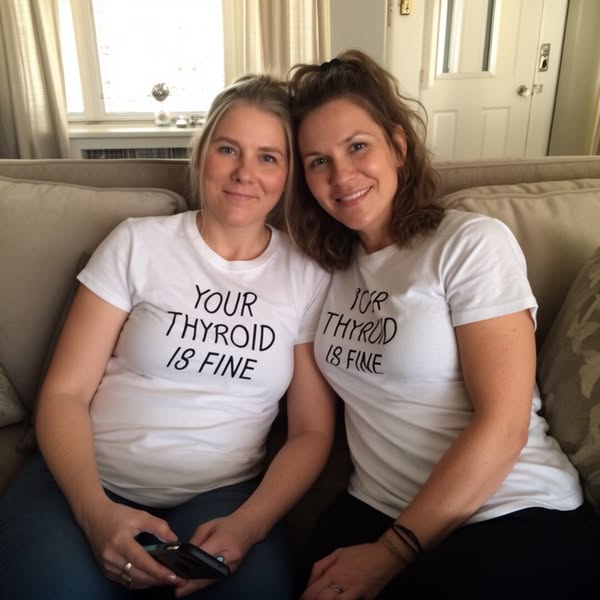
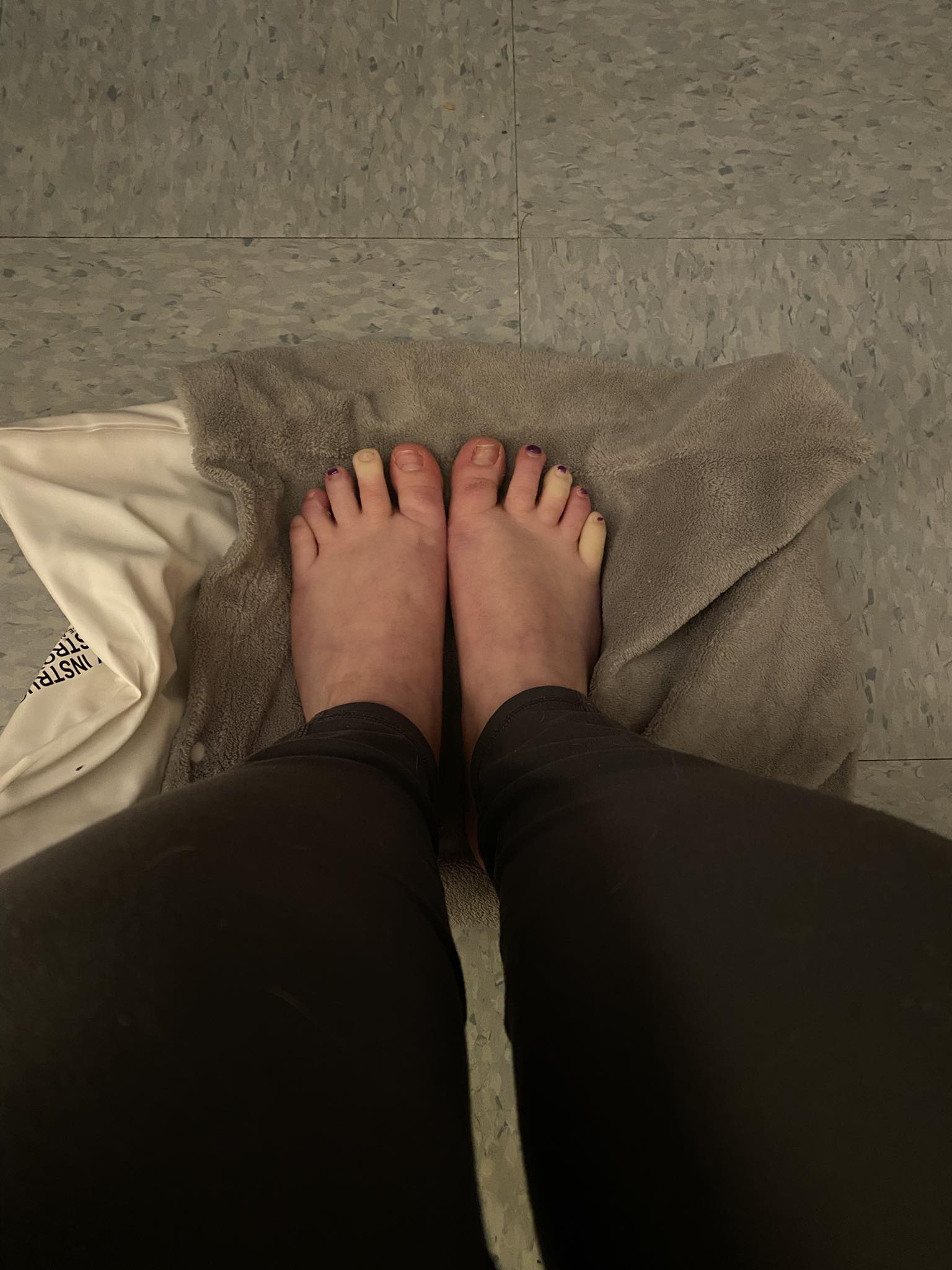
I wasn't crazy. I wasn't lazy. I was sick. And my doctor missed it for 1,127 days. I knew something was wrong. I could feel it in my bones — a heaviness that had nothing to do with the number on the scale. In the exhaustion that ten hours of sleep never touched. In the hunger that clawed at my stomach thirty minutes after a full meal. In the weight that kept climbing no matter how little I ate. I wasn't imagining it. I wasn't making it up. I wasn't being dramatic. But every doctor I saw told me I was fine. "Your labs look normal." "Maybe try eating a little less." "Have you considered that it might be stress? You're a mom. It's a lot." I left every appointment feeling worse than when I walked in. Not because they couldn't help me — but because they didn't believe me. The third doctor spent four minutes with me. I know because I watched the clock. Four minutes to dismiss three years of suffering. Four minutes to hand me a pamphlet on "stress management for busy moms" and send me home to keep falling apart. I sat in my car afterward and screamed into my steering wheel until my throat hurt. I started to wonder if they were right. If I was the problem. If I was just lazy. Just weak. Just lying to myself about how much I was really eating. I started keeping obsessive records. Food journals with timestamps. Photos of every meal. Screenshots of my MyFitnessPal logs. I was building a case — evidence that I wasn't crazy, that I wasn't sneaking food, that something was actually wrong. But I knew what I was eating. I knew how hard I was trying. And I knew — I KNEW — something was wrong. ======== I saw four doctors in three years. Doctor One: Dr. Sarah Chen. Internal medicine. March 2021. She tested my TSH. Looked at the number. Looked at me. "Within normal range. 3.8. Perfectly fine." She told me to cut carbs and exercise more. I was already exercising five days a week. I was already eating 1,200 calories a day. I was already doing everything she was about to tell me to do. I tried to explain. She cut me off. "Weight loss is simple math. Calories in, calories out. You just need to be more consistent." I left with a referral to a nutritionist I couldn't afford and a shame spiral that lasted two weeks. Doctor Two: Dr. Michael Torres. Family practice. September 2021. He barely looked at me. Typed on his computer the entire appointment. Asked me three questions. "It's probably stress. You're a mom. How old are your kids?" "Six and nine." "That's a hard age. My wife was exhausted too when ours were that age. It gets better." He handed me a pamphlet on mindfulness. Suggested I try yoga. Told me to come back in six months if things didn't improve. I didn't go back. Doctor Three: Dr. Patricia Hoffman. OB-GYN. February 2022. She listened longer than the others. Nodded sympathetically. Wrote things down. Then she suggested an antidepressant. "A lot of women your age experience mood changes. Perimenopause can cause fatigue, weight fluctuations, brain fog. Lexapro might help take the edge off." I wasn't depressed. I was exhausted. I was starving. I was watching my body fall apart while everyone told me nothing was wrong. "I don't think I'm depressed," I said. "I think something is actually wrong with my thyroid." She smiled. The kind of smile that says: "Poor thing, she's convinced herself she has a disease." "Your TSH is normal. 3.8 is perfectly healthy. If it were your thyroid, that number would be elevated." I almost took the Lexapro. I filled the prescription. The bottle sat on my bathroom counter for three weeks. Every morning I looked at it and wondered: What if they're right? What if I'm just depressed and can't see it? I never took a single pill. Doctor Four: Dr. James Wright. Endocrinologist. November 2022. I had to wait four months for this appointment. I had to fight my insurance to cover the referral. I had to beg my husband to take the day off work so I could go without the kids. Dr. Wright was different. He asked questions the others hadn't. "When did the fatigue start?" "How would you describe the hunger — is it all day, or does it come in waves?" "Tell me about your brain fog. Is it worse at certain times?" "Has anyone ever tested your T3 and T4? Not just TSH?" No. No one had. He ran a full thyroid panel. T3, T4, free T3, free T4, thyroid antibodies. Not just TSH. Three days later, he called me personally. "Your TSH is 3.8 — that's within range, but on the higher end. Most people feel optimal between 1 and 2. But here's the problem: your free T3 is 1.9." I didn't know what that meant. "The reference range is 2.3 to 4.2," he explained. "You're below range. Your body is producing T4, but it's not converting it to T3 — the active hormone. Your cells are starving." I was silent. "Mrs. Patterson, you're not crazy. You're not lazy. You're hypothyroid. You've been hypothyroid for at least three years. Every doctor who looked at your TSH and sent you home missed it." I started crying. Right there on the phone. Couldn't stop. 1,127 days. Four doctors. One antidepressant prescription I almost took. Thousands of dollars in co-pays. Hundreds of hours of self-doubt. And I was right. The whole time, I was right. ======== I finally had a name for what was wrong. But I still didn't have a solution. Dr. Wright prescribed liothyronine — synthetic T3. Twenty-five micrograms, twice daily. It helped. A little. The worst of the exhaustion lifted. I could get through a day without collapsing at 3 PM. But the weight didn't move. The hunger was still there. The brain fog would lift for a few hours, then settle back in like a wet blanket over my thoughts. At my three-month follow-up, Dr. Wright looked at my labs and said, "You're optimized. T3 is at 2.8 now. That's mid-range. You should be feeling much better." I was feeling somewhat better. But I wasn't feeling good. "Is this it?" I asked. "Is this as good as it gets?" He shrugged. "Give it time. Your body needs to adjust." I left that appointment feeling something I hadn't felt before: abandoned. Not dismissed — he believed me. But he'd given me the standard treatment and considered his job done. I was validated. But I wasn't healed. I felt like I was surviving instead of living. ======== That was three weeks before I met Jennifer in Dr. Wright's waiting room. She was there for her six-month follow-up. I was there for my four-month. We were the only ones in the waiting area at 7:45 AM. I noticed her because she looked... alive. Bright eyes. Clear skin. She was reading a book, not slumped against the wall staring at her phone like me. She had an energy I hadn't felt in years. "First time?" she asked, glancing up. "Fourth month," I said. "You?" "Six months post-diagnosis. But I've been dealing with this for almost four years." Something in my chest tightened. "How are you... like that?" She laughed. Not unkindly. "Like what?" "Awake. You look awake. I still feel like I'm at 60% even with the medication." She set her book down. Looked at me the way Dr. Wright had — not dismissing, actually seeing. "Let me guess," she said. "The liothyronine helped but didn't fix it. You're 'optimized' on paper but you still feel broken. The fog comes back. The hunger won't stop. The scale won't move." I stared at her. "How do you know that?" "Because I was exactly where you are five months ago. And Dr. Wright couldn't help me either — not because he's bad, but because medication is only half the equation." She leaned forward. "Did he test your selenium? Your zinc? Your iodine levels?" No. No one had. "Those are conversion cofactors," she said. "Your thyroid makes T4, but you need specific nutrients to convert it to T3 — the active hormone. If you're deficient, the medication can only do so much. It's like putting gas in a car with no spark plugs." I felt something crack open in my chest. Hope. Terror. Both. "But I've tried supplements," I said. "Nothing worked." She nodded. "Pills don't work for us. Hypothyroidism damages the gut lining. Slows motility. Those capsules pass through without absorbing. Expensive urine." "Then what—" "Sublingual," she said. "Under the tongue. Bypasses the gut entirely. Goes straight into the bloodstream." She pulled out her phone. Showed me a website. Cure Thyroid Support. "I started this four months ago. The medication gave me a foundation. This gave me my life back." I looked at the screen. Then at her. Awake. Alert. Alive. "I can't prescribe anything," she said. "I'm just a woman who spent four years being dismissed. But I can tell you what worked. And I can tell you that you're not crazy for still feeling broken when your labs say you're fine." They called her name. She stood. "The fog lifts first," she said. "Around day five. That's when you'll know it's working." Then she was gone. ======== That night, I researched everything Jennifer had told me. And I found something that made me furious. The TSH-only testing that every doctor relies on? It's based on a standard of care from the 1970s. A reference range established using population samples that included undiagnosed thyroid patients — people who were already sick but didn't know it. That's why the "normal" range is so wide. That's why a TSH of 3.8 is considered "fine" even though most people feel optimal between 1 and 2. The range was calibrated using broken data. Endocrinologists know this. The research has been clear for decades. A 2014 study in the Journal of Clinical Endocrinology found that the upper limit of TSH should be 2.5, not 4.5. Another study found that patients with TSH above 2.0 had significantly higher rates of conversion dysfunction. But updating the standard of care would mean millions more patients requiring treatment. It would mean more testing, more prescriptions, more liability. So the range stays wide. And women like me stay sick. And doctors keep looking at our labs, seeing numbers in a broken range, and telling us we're "fine." For 1,127 days, I was blamed for a problem the medical system was designed to miss. ======== I spent the next few days researching everything Jennifer had shared. Here's what I learned: T3 is the active thyroid hormone. It's the signal that tells your cells to burn fuel, produce energy, recover from exertion, think clearly, regulate hunger. Without enough T3, your metabolism doesn't slow down — it shuts off. The liothyronine I was taking gave me synthetic T3. But my body still needed the raw materials to transport it, bind it to cell receptors, and actually use it. Selenium. Zinc. Iodine. Tyrosine. Cofactors that support cellular uptake. I was deficient in almost all of them. And no one had tested. That's why the medication helped but didn't heal. I was getting the hormone, but my cells couldn't fully utilize it. Like having fuel delivered to a car with no spark plugs. And here's what made me furious — angrier than I'd been at any doctor: I had tried supplements before. On my own, without telling anyone, because I'd given up on the medical system. Selenium tablets from Whole Foods. $32. A "thyroid support complex" from Amazon with good reviews. $47. B-vitamin complex my sister recommended. $29. Iodine drops that tasted like the ocean. $24. Another thyroid supplement from a health food store. $38. Ashwagandha capsules because someone in a Facebook group swore by them. $31. $201 in supplements over eight months. Nothing worked. Because my gut couldn't absorb them. Hypothyroidism slows gut motility. It damages the intestinal lining. It compromises absorption. Those pills were passing through my system like I'd never taken them. Dr. Wright never mentioned this. He prescribed medication and considered the job done. That's why the medication alone wasn't enough. That's why the supplements failed. That's why I still felt broken even after I finally had a diagnosis. The medical system gave me a name for my problem. It didn't give me a solution. I had to find that myself. ======== When I looked at what was in Cure Thyroid Support, everything clicked. It had the full conversion cofactor stack — everything the research said I needed: Iodine from kelp. The raw material for building thyroid hormones. Selenium. Activates the enzyme that converts T4 to T3. Without it, conversion stalls. Zinc. Required for T3 to bind to cell receptors and actually work. L-Tyrosine. The amino acid your thyroid uses to build hormones in the first place. KSM-66 Ashwagandha. Clinically studied to lower cortisol. Because elevated cortisol blocks conversion — and chronic illness, chronic stress, and chronic dismissal all spike cortisol. Holy Basil. Schisandra. Guggul. Adaptogens that support the whole thyroid system, not just one piece. Vitamins D3, B12, B6. Methylated folate. The cofactors your cells need to actually use what you're giving them. But the real difference was the delivery. Cure Thyroid Support is a liquid. Micro-emulsion drops that absorb under your tongue — sublingually — directly into your bloodstream. No gut required. No pills passing through a damaged system. No absorption gamble. Unlike the selenium tablets I'd wasted money on, this could actually reach my cells. Unlike the Amazon thyroid complex that did nothing, this didn't depend on a gut that couldn't do its job. Unlike the medication alone, this gave my body everything it needed to actually use the hormone I was taking. I didn't need another prescription. I didn't need another doctor's appointment. I didn't need to wait four months for a specialist who would tell me I was "optimized" when I wasn't. I needed the missing pieces — delivered in a form my body could actually absorb. ======== I started taking it the morning it arrived. Two droppers under my tongue. Held for thirty seconds. Done. Day 3: I woke up without the alarm. Lay there for a minute waiting for the exhaustion to hit. It didn't. I just... got up. That hadn't happened since 2019. Day 5: The brain fog started to lift. It's hard to describe unless you've lived in it. It's like someone cleaned a window you didn't realize was dirty. I could finish a sentence without losing my train of thought. I could remember why I walked into a room. I could follow a conversation without nodding along while secretly lost. The hunger quieted. Not gone — but manageable. I ate dinner and felt done. No 9 PM desperation. No standing in front of the pantry at 10:30, eating crackers I didn't want just to fill the void. Week 2: I stepped on the scale. Down five pounds. I stepped off. Stepped back on. Same number. Five pounds. I'd been stuck at the same weight for nine months. Through medication. Through calorie counting. Through everything. Five pounds in two weeks without changing anything except this. Week 3: My face looked different. The puffiness under my jaw was receding. My cheekbones were emerging. My wedding ring spun loose on my finger — I'd gotten so used to it being tight I forgot what it felt like to fit. Week 4: Eleven pounds down. Energy I hadn't felt since before my first pregnancy. I went to the gym on a Saturday morning because I wanted to. Not because I was forcing myself. And I recovered. Overnight. The way I used to before all this started. Week 6: Fourteen pounds down. The exhaustion lifted. The fog cleared. The rage — that constant, simmering fury at my body, at the doctors who dismissed me, at the system that failed me, at myself for ever doubting what I knew was true — finally went quiet. I wasn't fighting anymore. For the first time in 1,127 days, I felt like myself. Not surviving. Living. ======== My husband noticed first. "You seem... lighter," he said one morning. We were in the kitchen. Kids at school. Coffee in hand. I knew he didn't mean the weight. He meant the heaviness I'd been carrying. The gray cloud I'd been living under. The version of me that showed up exhausted, irritable, foggy, defeated. "I feel lighter," I said. And for the first time in years, it was true. The shame I'd internalized — that maybe I was lazy, maybe I was lying, maybe the doctors were right and it was all in my head — it was gone. I wasn't crazy. I wasn't lazy. I was sick. And now I was healing. ======== Two weeks later, I went back to Dr. Wright for a follow-up. My labs had shifted. Free T3 was up to 3.4 — the highest it had ever been. TSH had dropped to 1.8. He looked at the numbers. Looked at me. Looked at the numbers again. "What changed?" he asked. I told him. About the sublingual drops. About the cofactors. About what I'd learned on my own because no one had taught me. He was quiet for a moment. Then he said: "I wish more of my patients did this kind of research. Most of them just take what I give them and assume that's all there is." I almost laughed. Most of his patients probably spent 1,127 days being told nothing was wrong before they ever reached his office. Of course we do our own research. We have to. ======== If any of this sounds familiar... The doctors who didn't believe you. The "normal" labs that didn't explain why you felt like death. The exhaustion that medication doesn't fully fix. The hunger that won't stop. The weight that won't move. The brain fog that makes you feel stupid when you know you're not. This isn't in your head. It never was. It's a conversion problem. An absorption problem. A medical system that tests one number, declares you "fine," and sends you home to suffer. And here's what no one tells you: The longer you go without the nutrients your thyroid needs, the worse the conversion gets. The exhaustion deepens. The weight accumulates. The fog thickens. The damage compounds. But it doesn't have to. ======== Cure Thyroid Support gives your body what it's been missing. Iodine. Selenium. Zinc. L-Tyrosine. KSM-66 Ashwagandha. The full conversion cofactor stack — in sublingual drops that bypass your gut and go straight into your bloodstream. No prescription required. No doctor's permission needed. No more waiting for a system that was never designed to help you. You have two paths from here. Path one: Keep taking medication that only partially works. Keep feeling "optimized" on paper while stuck at 60% in real life. Keep waiting for a doctor who already told you there's nothing more he can do. Keep surviving instead of living. Path two: Give your cells what they've been starving for. Bypass the gut that can't absorb pills. See if the fog lifts by day five. See if the weight finally moves by week two. See if your doctor looks at your labs and asks "what changed?" One path is another 1,127 days of being right but feeling broken. The other is finally healing. ======== Right now, there are 850 bottles available for new customers. Once those are gone, the next batch won't be ready for 6 weeks. That's 42 more days of exhaustion. 42 more days of brain fog. 42 more days of feeling broken while your labs say you're "optimized." 42 more days of waiting for a medical system that already told you there's nothing wrong. I can't let you do that to yourself. Not after I spent 1,127 days being dismissed. Not after I know what's on the other side. Try it for 90 days. Track it yourself — your energy in the morning, your hunger after meals, the fog in your brain, the number on the scale. If nothing changes — full refund. No questions asked. But if it works? If by day five the brain fog starts to lift? If by week two you're waking up without dragging yourself out of bed? If by week four you've lost weight for the first time in months — without starving yourself? If your doctor looks at your labs and asks "what changed?" If you finally feel like yourself again? You'll wish you started six weeks ago instead of waiting. Every day you wait is another day your cells stay starved. Another day your metabolism stays stuck. Another day you feel crazy when you're not. Click below to get Cure Thyroid Support before the 850 bottles are gone. https://trycure.shop/products/cure-thyroid-support ======== You've been dismissed for years. Doubted by doctors. Told it's stress, or motherhood, or perimenopause, or your imagination. It wasn't. You knew something was wrong. You were right. You deserve to finally feel it. https://trycure.shop/products/cure-thyroid-support ======== P.S. — I ran into Jennifer at Dr. Wright's office last month. She was there for her annual. I was there for my six-month. She recognized me immediately. Smiled. "The fog lifted around day five, didn't it?" I laughed. "Day four, actually." She looked at me — really looked — and said something I'll never forget: "Welcome back to yourself." I spent 1,127 days waiting for a doctor to say that. It took a stranger in a waiting room to finally make it happen. https://trycure.shop/products/cure-thyroid-support ======== P.P.S. — The brain fog was the first thing to lift. That constant haze — the forgetting, the confusion, the feeling like I was thinking through wet concrete. By day five, I could think again. Clearly. Like myself. That's when I knew my cells were finally getting what they needed. Your body has been screaming for help for years. The doctors couldn't hear it. But you can. Feed it the right nutrients — in a form it can actually use — and it will finally start to heal. https://trycure.shop/products/cure-thyroid-support
Read This If Your Doctor Said Your Thyroid Is "Normal" But You Know Something's Wrong👆
Try Cure
ORDER NOWLike this ad? Make it yours.
Crush rebuilds this exact creative around your product — your brand, your colors, your offer — in about a minute.