
Inactive· since Jun 10, 2026
- 80
- days it ran
- 0
- relaunches
Ad copy
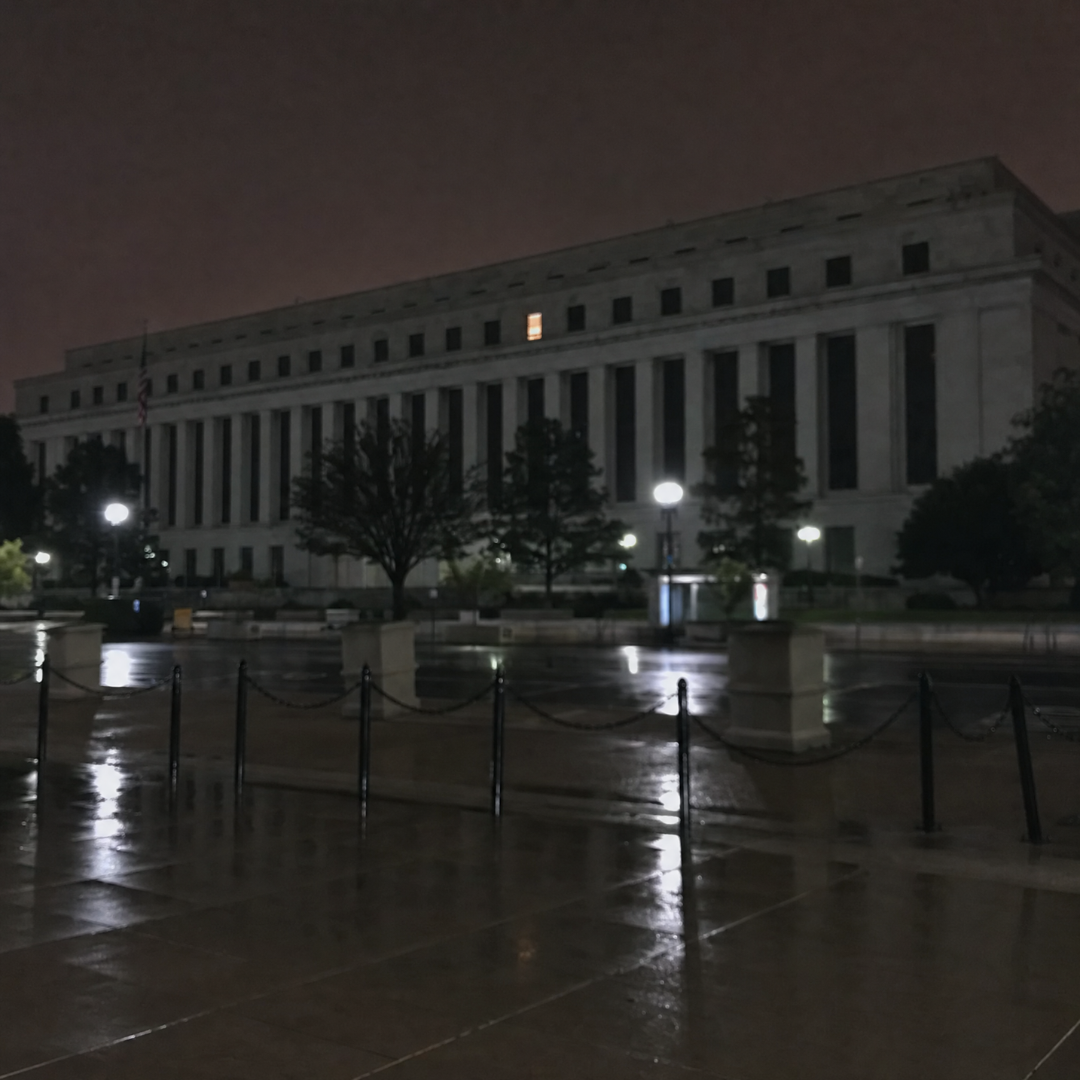
I found a man standing alone in the dark at the Smithsonian at 9 PM last Tuesday. The building had been closed for three hours. He wasn't lost. He wasn't hiding. He was standing in front of a wall like he was standing in front of a grave. I've been the night guard here for sixteen years. And what he showed me on that wall is something I need to say out loud before what he told me actually starts happening. I've been the night guard at the National Museum of American History for sixteen years. Simple job. Building closes at 5:30. Last visitors out by 6. After that it's me, the cameras, and a few hundred thousand pieces of history that aren't going anywhere. You stop seeing it after a while. The exhibits, the cases, the stuff behind glass that people fly across the country to look at. After a few years it's wallpaper. You walk past. You check the locks. You do your rounds. The war exhibit hall is on my Tuesday and Thursday route. There's a wall in there that runs about forty feet. Lists every major American war. Start date, end date, duration. Big letters. Lit from below. Vietnam. Korea. Iraq. Afghanistan. Both World Wars. I've walked past that wall ten thousand times. Never once stopped to read it. Not until last Tuesday. It was a little after nine. Building had been closed for three hours. I turned the corner into the war wing and there was a man standing in the middle of the hall. Facing the wall. Overhead lights were off. Just the exhibit spots. They run all night. The timeline was glowing. Dates and durations lit up across a dark room. He was standing about four feet from the glass. Hands at his sides. Not moving. I've found people after hours before. Happens a couple times a year. Someone falls asleep in the restroom. A kid hides behind a display case. You tell them the building's closed and they apologize and leave. This wasn't that. This man wasn't lost. He was standing the way a person stands in front of a grave. I could see him in the exhibit light. Mid-sixties. Tall. Silver hair, cut short. Dark jacket. Straight posture. The kind you don't unlearn. I've seen enough veterans come through this building to know that bearing. I walked up behind him. "Sir, the museum's closed." He didn't turn around. "You work here every night?" "Sixteen years. And I need you to head toward the exit." He kept looking at the wall. "You ever actually stop and read this?" "Sir, I can't have you in the building after hours." "Just answer me. Have you ever read this wall?" Something about the way he said it made me stop pushing. "I walk past it," I said. "But you've never read it." "No. I haven't." He stepped closer and pointed at the first line. "World War I. They told the boys it'd be over by Christmas." He tapped the glass. "Four years." He moved his finger down. "World War II. After Pearl Harbor they said it'd be quick. Four years." Korea. "Police action. That's what they called it. Three years of fighting and we never left. Still stationed there right now." Vietnam. His hand stopped. "This one. Eighteen months. That was the plan. Advisory role. Train the South Vietnamese. Home in a year and a half." He looked at me. "Nineteen years. Fifty-eight thousand dead." He moved down. Iraq. "The Secretary of Defense said 'weeks, not months.' On camera. Smiled when he said it." He paused. "Eight years." Afghanistan. "Swift and decisive. That was the phrase. Twenty years." He dropped his hand and stepped back. "Every single one. They said months. It lasted years. Every single time." I looked at the wall. Then back at him. "OK. So wars last a long time. That's history. I learned that in high school. Why are you standing in a closed museum at nine o'clock at night telling me this?" He didn't answer right away. He just looked at me. Then he said: "Because there's a second pattern on this wall that nobody talks about." "What pattern?" He pointed back at Vietnam. "What did that one leave behind when it was over? The draft. Surveillance programs that are still running sixty years later. Government agencies that didn't exist before 1965 and now have permanent budgets and permanent buildings." He moved to Iraq. Afghanistan. "What did these leave behind? The Patriot Act. The TSA. Warrantless phone tapping. Full-body scanners at every airport in the country. They told you it was temporary. Emergency measures. Just until things calmed down." "Has any of it gone away?" I opened my mouth and then closed it. "That's what I thought," he said. "Every war on this wall lasted longer than they promised. And every war on this wall left them with more control than they had before. More surveillance. More authority. More reach into your daily life. And none of it ever got rolled back. Not once." "OK," I said. "So the government gets bigger during wars. That's not exactly breaking news either." "You're right. It's not." He looked at the wall. "But what if someone told you they're doing it again. Right now. And most people haven't even noticed." "The President went on television yesterday," he said. "Did you see it?" "Which part?" "He compared this war to Vietnam. Said Vietnam lasted nineteen years. Said he's three months in and people should be more patient." "Yeah. He was defending himself. People are criticizing the timeline." He shook his head. "He wasn't defending himself. He was telling you how long this is going to take. Out loud. On camera. And nobody heard it because they were too busy arguing about politics." "Come on," I said. "He was making a comparison. He's not saying this is going to last nineteen years." "He's three months into a war he said would take four weeks. And his defense is 'Vietnam took nineteen years.' You don't think that's a man adjusting expectations?" I didn't have an answer for that. "Who are you?" I said. "Why do you care what I think about this?" He looked at me like he was deciding something. Then he looked away. "Forget it. I shouldn't be in here." He started toward the exit. "No. Hold on." He stopped. "You hid in a museum for three hours after closing. You're standing in the dark reading a wall you've clearly read a hundred times before. And now you're telling me the President accidentally revealed how long the war's going to last. So either you're crazy or you know something. Which one is it?" He stood there for a long time. I could see him working through it. His jaw was tight. "Thirty-one years in defense logistics," he said finally. "Retired five years ago. But the people I worked with are still inside. And I still talk to them." "So you're military." "Was." "And your people on the inside. What are they saying?" He turned back to the wall. "The public version is a deal in a few weeks. Maybe a month. That's what they tell the cameras." "And the real version?" He pointed at Vietnam. "Closer to that." I looked at the wall. Then around the hall. The lights humming. The air moving through the vents. "OK. So it goes longer than they're saying. Maybe a lot longer. But I gotta be honest with you, man. I drive to work and I drive home. Yeah, gas is more expensive. Yeah, the news is ugly. But the grocery store is still open. My lights are on. My water works." I looked around. "We're standing in a building right now with the power running fine. It's been three months and life is basically the same. So what am I supposed to be worried about?" He nodded. Slowly. Like he'd heard this before. Like he'd been expecting it. "That's the most dangerous thing you could think right now." "Why?" "Because you're right. Three months in and your life looks basically the same. Gas costs more. The news is louder. But your faucet works. Your lights work. The store has food on the shelves." He paused. "That's three months." He looked at the wall. "You know what twelve months of this looks like?" "No." "Nobody does. Because everybody assumes it'll be over by then." He tapped the wall. "The wall says it won't." He started talking slowly. "Right now gas is up forty percent. $4.31 this morning. It was $2.98 before this started. The Strait of Hormuz has been shut down for three months. Twenty percent of the world's oil moves through that strait. None of it is moving." "Even if they sign a deal tomorrow. Tomorrow. Analysts say prices don't come back to normal until late 2027. That's not my number. That's their number." "But they're not signing a deal tomorrow. The President just told you that. And the Iranians launched drones at the Strait today. Today. While he was sitting for the interview." I didn't know that. "So here's what nobody is walking you through. Three months in, you're paying more at the pump and complaining about it over dinner. That's where you are now. That's why you think it's fine." "Six months in, the supply chain starts to squeeze. Goods get more expensive across the board. Shipping slows down. Companies start cutting hours and cutting people because their operating costs are up thirty, forty percent." "A year in, the strain hits the systems that were already running on fumes before this started. The power grid. Transportation. Municipal services. Things that were held together with tape and overtime and no one was paying attention to." "And then there's a tipping point." He said it quietly. "It doesn't come gradually. It doesn't give you a warning. One bad heat wave. One overloaded grid operator who can't keep the margins. And something that's been bending for twelve months snaps." He looked at me. "That's what three months of normal feels like right before it stops being normal. You don't feel it, and you don't feel it, and you don't feel it. And then you feel all of it at once." He let that sit in the dark. "And while you're not feeling it, they're building. Fuel cards. Per-household energy limits. Digital tracking of who's buying what and how much. The crisis is the excuse. The infrastructure is the point." "You think any of that goes away when gas comes back down?" He didn't wait for an answer. "Check the wall." I looked at the Patriot Act. The TSA. Still there. Twenty-five years later. "OK," I said. "So what am I supposed to do about it? I'm a night guard. I'm not in the military. I'm not moving to the mountains. What does any of this mean for me?" "You want to know what the people I still talk to are doing? Not what they're saying. What they're doing." "Sure." "A guy I served with. Thirty years in logistics, consults at the Pentagon now. In January, before any of this was on the news, he bought a piece of land in the Shenandoah Valley. Small property. Nothing fancy. Right on the river." "OK." "A woman I worked with at an agency in Virginia. I won't say which one. She pulled her kids out of school in Arlington in March. Moved the whole family to a house near a lake in West Virginia. Didn't tell anyone. Didn't post about it. Just left." "Maybe she just wanted out of the city." "In the middle of a school year? With no warning?" I didn't push that. "Another guy. Retired colonel. He didn't move. But he started buying equipment I'd never seen him buy before. Filtration systems. Storage containers. Not the kind you pick up at a camping store. The kind you buy when you're planning to live without a tap." He stopped. "You notice what those three have in common?" I thought about it. The river. The lake. The filtration. "Water," I said. "Water." He said it like a door closing. "Every one of them. The land on the river. The house on the lake. The filtration equipment. They're not stockpiling gas. They're not buying generators. They're getting close to clean water. Or they're getting the tools to make dirty water clean." "Why water specifically?" He looked up at the exhibit lights above us. "What keeps those lights on?" "The grid." "And what keeps your faucet running?" I didn't answer. Because I already knew where he was going. "The power grid. Every water treatment plant in this country runs on it. Every pump station. Every pipe that pushes clean water to your faucet. All of it." "The grid was already in trouble before any of this started. In May the biggest grid operator in the country declared an emergency over a heat wave. In May. Not July. Told power plants they couldn't shut down for maintenance because the margins were that thin. Summer hadn't even started." "I didn't hear about that." "No. You wouldn't have. It wasn't on the news for more than a day." "That's what I mean about the tipping point. The grid has been bending. For months. And it was bending before the war even started. Now put eighteen months of an energy crisis on top of it. Gas at five, six dollars. Every system running harder. No slack. No relief. Month after month." "When the grid goes down, most people think about the lights. The AC. Maybe the fridge." He shook his head. "My guys aren't worried about the lights. They're worried about the pumps." "The pumps," I repeated. "When the grid fails, the water doesn't get expensive. It stops. Completely. Pumps shut off. Treatment plants go dark. Nothing comes out of your faucet." "That can't really happen," I said. "Not here. Not in America." "Texas. February 2021." He said it and waited. "Grid went down for three days. Three. Fourteen million Americans lost safe drinking water. Fourteen million people. And that was a winter storm. An accident. Three days." He pointed behind him at the wall. At Vietnam. At Iraq. At the years. "What's happening now is not three days. And it is not an accident." I didn't say anything. The hall was completely quiet. "You can live a month without food. A week without heat. You cannot live three days without clean water." "The bottled water aisle at your grocery store empties in forty-eight hours. Costco pallets in seventy-two. After that there is no clean water for sale at any price." He paused. "That's what my guys figured out before everyone else. That's why they're near rivers. That's why they're near lakes. That's why they're buying filtration that doesn't need electricity to work." "And they know that whatever system gets built to ration the water after that isn't going away either." He looked at me. "Your kid walks into the kitchen and asks for a glass of water. And you're standing there with nothing to hand them." The museum was dead quiet. Just the two of us in the dark with the wars lit up behind him. "That's what nobody's talking about," he said. "Not on the news. Not in the deal negotiations. The people who know are already moving. Everyone else is watching television and waiting for it to blow over." He turned like he was done. I should have let him walk. He'd already told me more than he probably wanted to. But I couldn't. "So what do you do about it?" He stopped. "You just told me the water is going to stop. The grid's going to fail. The whole thing is going to come apart and last for years. So what are regular people supposed to do? Move to a river?" He didn't turn around right away. "Not everyone can move." "Then what?" He was quiet for a few seconds. Then he turned. "Most people have never heard of what I'm about to show you. And it's not because it's new." He reached into his jacket slowly and pulled out something small. Blue. About the size of a thick marker. Couldn't have been more than a couple ounces. He held it up in the exhibit light. "You ever seen one of these?" I hadn't. "What is it?" He looked at it for a second like he was deciding whether to keep going. "Portable water filter. And I don't mean the kind you buy at REI or Dick's Sporting Goods for a camping trip. This is a different thing entirely." He turned it in his hand. "Four stages of filtration. Hollow fiber membrane. 0.1 microns. That's small enough to stop bacteria, parasites, everything that makes natural water dangerous to drink. Creeks. Ponds. Rain barrels. Ditches. Water you'd never put near your mouth. You pour it in one end and what comes out the other side is clean." "Clean enough to drink?" "Clean enough to give to your kids." He handed it to me. I almost dropped it. It weighed nothing. "Screws onto any standard water bottle." "That's it? Just screw it on?" "That's it." I turned it over. It didn't look like much. A blue plastic tube with a cap on each end. "How long does it last?" "Four hundred gallons. One filter. One person. A full year of clean drinking water." "A year? From this little thing?" "A year." "No batteries," he said. "No power. Nothing to charge. Nothing to refill. Nothing to break. It just works." I held it up to the exhibit light. Two ounces. Maybe less. "So why haven't I heard of it? If it does what you're saying, why isn't this everywhere?" He almost smiled. "Because you're not supposed to." He let that sit. "There's a small company called Primitive Labs that makes them. Small batches. On purpose. They don't sell in stores. They're not on Amazon. They don't run ads on television. They sell direct and that's it." "Why?" "Because the people who buy these aren't the kind of people who find things on a shelf. They're the kind of people who find things the way you're finding it right now. From someone who already has one." He looked at me. "The Pentagon guy. The woman in Virginia. The retired colonel. Where do you think they heard about these? Not from a billboard. Not from a commercial. They heard about it the same way you're hearing about it right now." He reached into his jacket again and pulled out two more. Three total. "I keep one on me. One in the car. One at the house." He put the extras back. "My guy at the Pentagon bought a case in January. A case. Before any of this was in the news. The woman in Virginia ordered six for her kids the week she moved." He looked at the wall one more time. At the wars. At the years. "These don't show up on a shelf at Walmart. They don't get mentioned on the morning news. The people who have them find out about them the way you just did. Quietly. From someone who knows." He held his hand out for the filter. I started to give it back. "Keep it," he said. "I've got more at home." He said it the way you'd hand someone a flashlight before a blackout they can't see coming yet. He walked toward the exit. At the door he stopped without turning around. Then he was gone. His shoes echoed down the empty hall and then there was nothing. Just me and the wars on the wall and a two-ounce filter in my hand that I'd never heard of twenty minutes ago. I stood there for a long time after he left. The wars still glowing on the wall. The filter in my hand. I locked up the building and drove home in the dark. Didn't turn the radio on. Didn't want to hear anything. Just wanted to sit with it. I got home a little after midnight. My wife was asleep. The house was quiet. I went into the kitchen and stood at the sink for a while. Turned the faucet on. Watched the water come out. Clean. Cold. Like it always does. I thought about fourteen million people in Texas who turned that handle and nothing happened. Three days. Then I looked at the rain barrel sitting outside the back door. The one we use for the garden. Brownish water. Bits of leaf floating in it. Bugs. The kind of water you wouldn't let a dog near. I poured the rain barrel water into a water bottle. Screwed the filter on. Took a drink. Clear. Tasted like nothing. Like water from the fridge on a quiet Sunday morning. No grit. No taste. Nothing. I stood in my kitchen at midnight holding a two-ounce plastic tube and thinking about every number on that wall. The next morning my wife came downstairs and found me at the kitchen table with my laptop open. "What are you doing?" "Ordering more of these." I showed her the filter. Showed her the jar of rain barrel water. Showed her what came out the other side. She watched without saying anything. Then she looked at the jar. Then at the clean water. Then at me. "How many did you order?" "Four." "Order two more." That was three days ago. Since then the President gave the interview comparing this war to Vietnam. Said he's "moving very fast." Said Vietnam lasted nineteen years like that's supposed to make three months sound good. Since then Iran launched drones at the Strait of Hormuz and the U.S. military struck Iranian coastal radar sites in response. Since then gas went up another eleven cents. Every single thing the man in the museum told me to watch for has happened. In three days. I keep thinking about that wall. The years. The patterns. How every war was supposed to be short and none of them were. How every war left them with more control than they had before. And how the people who understood those patterns were already moving months ago. If you've been watching the news and feeling like the story they're telling you doesn't match what your gut is saying, trust your gut. The wars on that wall prove it. The President's own words prove it. The gas prices prove it. The drones flying over the Strait today prove it. The people who understand what those numbers mean are already moving. Quietly. Without waiting for permission. The filter is made by a small company called Primitive Labs. You won't find it in stores. You won't find it on Amazon. They make them in small batches and sell direct. That's it. Last I checked they still had units in stock. Here: https://primitivelabsresearch.com/products/hydra-x1-portable-filtration-unit One per person in your household. At minimum. P.S. Since I wrote this, the situation has gotten worse, not better. Iran fired drones toward the Strait of Hormuz. The U.S. hit back with strikes on Iranian radar sites. The President sat for an interview and compared this war to a nineteen-year conflict. Three months in and nobody is talking about a deal anymore. The man at the museum told me to watch for the moment the public story stopped matching what was actually happening. I think that moment was this week. Check if they still have them: https://primitivelabsresearch.com/products/hydra-x1-portable-filtration-unit P.P.S. I told my brother about this last weekend. He's a contractor in Maryland. Thought I was losing it. I took a bottle of ditch water from behind his garage and ran it through the filter in front of him. He watched the water come out clear. Tasted it. Didn't say anything for about thirty seconds. He ordered three that night. His wife ordered four more the next morning. Nobody's laughing anymore. P.P.P.S. For the people who want the numbers. 0.1 micron hollow fiber membrane. Four-stage filtration. Removes 99.99% of bacteria and parasites from natural freshwater. Creeks, ponds, rain barrels, rivers, runoff. 400 gallons per filter. One person, one full year of clean drinking water. Weighs two ounces. Screws onto any standard water bottle. No batteries, no power, nothing to charge, nothing to replace. Lifetime warranty. 60-day money-back guarantee. Free shipping. These are the same units the people I described above are buying in bulk. The ones who aren't waiting. P.P.P.P.S. Someone is going to say "I'll just buy cases of bottled water." Fine. A case lasts a family of four about three days. Then you need another case. And another. You're buying a countdown clock. Every bottle you open is one fewer you have. The filter doesn't count down. As long as there's a creek, a pond, a rain barrel, a puddle, anything with freshwater you can walk to, you have clean water. Indefinitely. That's not storage. That's access. And when every shelf in every store is empty, access is the only thing that matters. https://primitivelabsresearch.com/products/hydra-x1-portable-filtration-unit
If you're a parent or grandparent, please read this👆
Lightweight portable emergency water filter removes 99.99% of contaminants. Perfect for evacuations, disasters, and family emergency preparedness. Free shipping.
SHOP NOWLike this ad? Make it yours.
Crush rebuilds this exact creative around your product — your brand, your colors, your offer — in about a minute.