WilderGlow Wild Yam Cream
 Facebook ad: “Cooler Nights, Clearer Days Without Forcing In More Hormones”

Running for 12 days since November 10, 2026. Crush last saw it on November 22, 2026.
Run by WilderGlow Wild Yam Cream on Facebook. Crush is not the advertiser and does not verify its claims. See this ad in Meta's Ad Library(opens in a new tab)
Make your own version of this ad
Crush makes it, launches it in your own Meta ad account, scales the winners and pauses the losers.
About this ad
- Meta Ad Library ID
- 1670861648040430
- Platforms
- Facebook, Instagram, Audience Network, WhatsApp and Threads
- Relaunches
- 0
Ad text
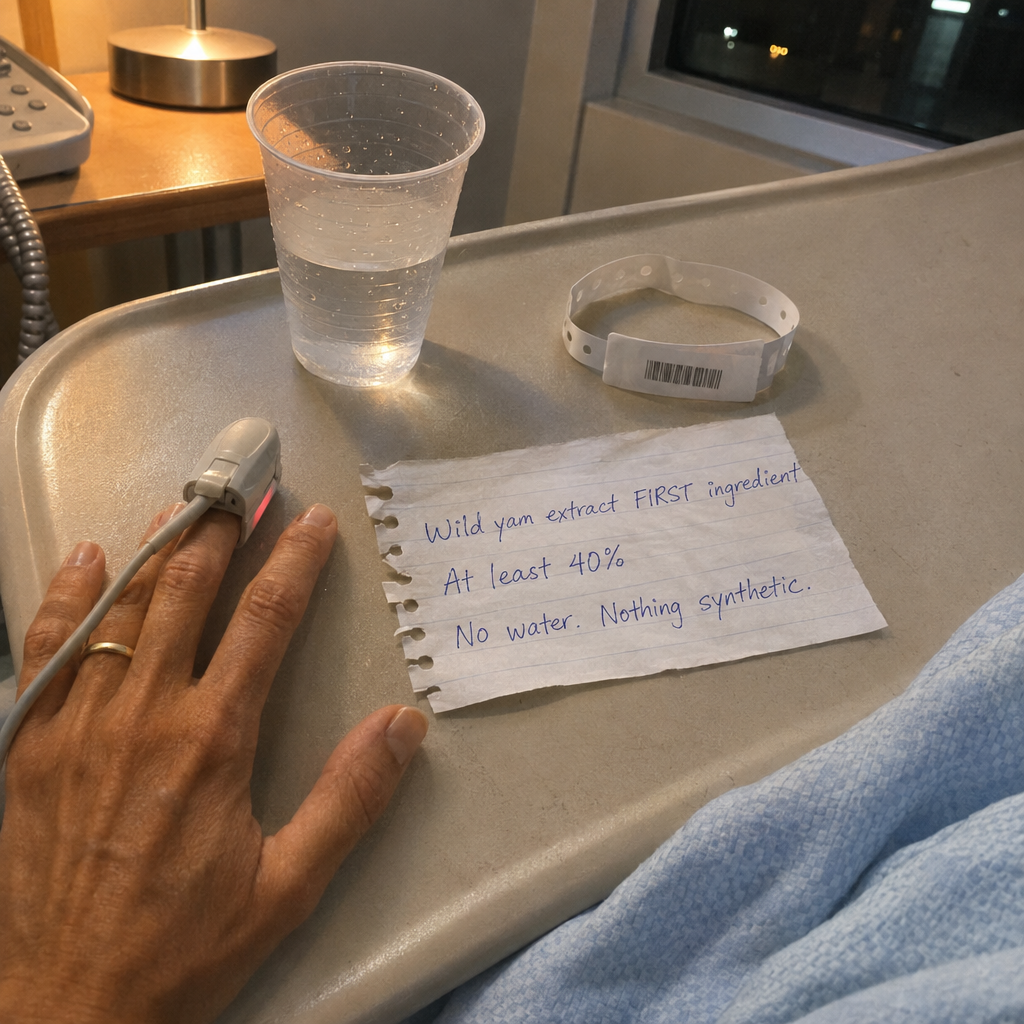
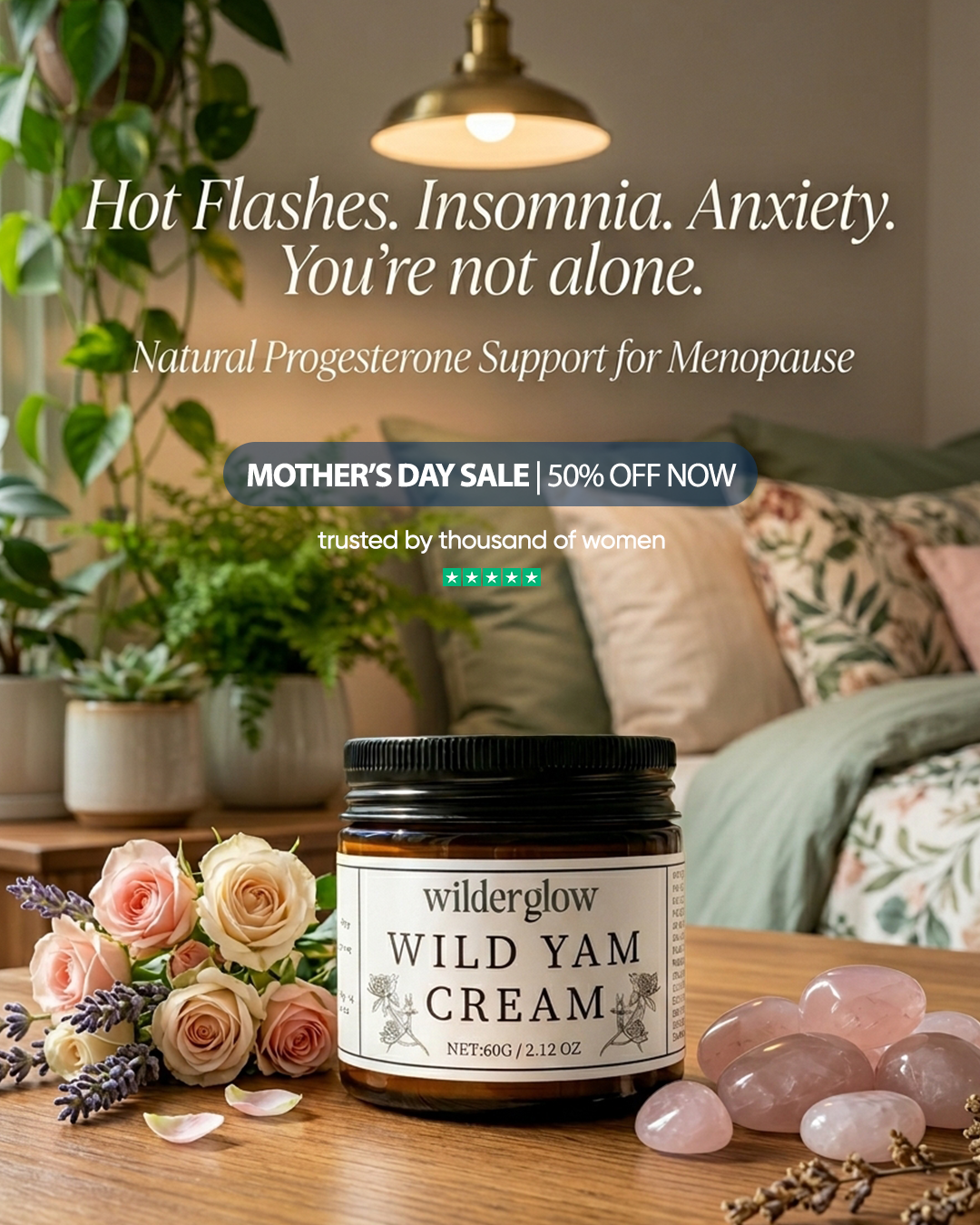
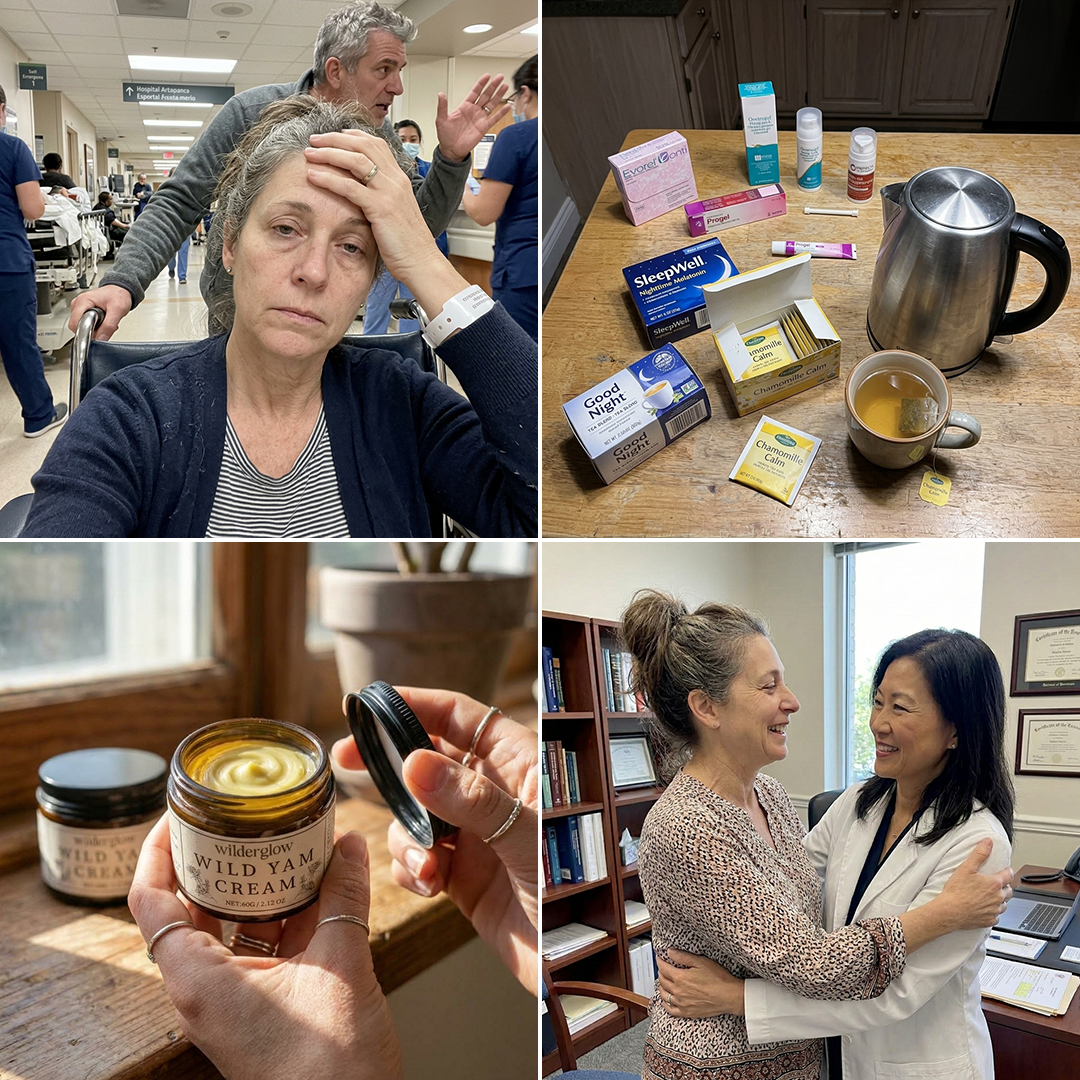
A Swiss endocrinologist told me something about my progesterone that no American doctor ever had. She said if she tested yours tonight, she'd probably find you aren't short on progesterone at all. Your body has just stopped listening to it. I learned that the hard way. In a Geneva emergency room, on the night of our 30th anniversary. We'd been saving for that trip since our youngest left for college. Lake Geneva. The fountain. The little hotel on the water. The trip we kept putting off for "next year." On night two, we were on a terrace right on the lake. Glass of local white wine in my hand. The sun dropping behind the mountains, turning everything pink. My husband was telling the waiter the story of how we met, badly, in French. I remember thinking this was the first night in two years I felt like myself. About forty minutes later, it hit. Heat. Not warm. Boiling. It started in my chest and climbed up my neck until my whole face was burning. Sweat ran down my back and soaked my linen shirt in seconds. I told myself it was the wine. The sun. Jet lag. I stood up to get some air. Then my heart started pounding so hard I could see my shirt move. My hands went numb. I tried to tell my husband the name of our hotel and I couldn't find it. It was right there and my brain was just blank. By the time he looked at my face, I was gripping the back of my chair, convinced I was having a heart attack. He was dialing before I could get a word out. Twenty minutes later I was in the back of a Swiss ambulance with a blood pressure cuff on my arm and a paramedic speaking French over my head. My husband was following in a taxi. At the hospital they did the heart tests first. Clean. Then they did something no one back home had ever done in four years of appointments. They ran a full hormone panel. And they asked what I was putting on my skin. I told them. Progesterone cream every night. An estradiol patch twice a week. My doctor back home had raised the dose twice in fourteen months. The endocrinologist on call came in a little after midnight. Maybe 55. Silver bob, reading glasses on a chain, not in a hurry at all. She'd been through menopause herself, she told me later. Badly. She looked at my numbers. Then at me. "Your heart is fine," she said. "This was a hot flash and a panic response together. But your hormones are telling me a much bigger story." Then she explained something nobody ever had. When you put a finished hormone on your skin, your body can't adjust it. It doesn't matter if today you need more or less. The same dose floods in, every single day. So your receptors protect themselves. They turn down. They stop answering. "We call it receptor fatigue," she said. "Your blood says the progesterone is there. Your brain is not hearing it." And the part of your brain that runs your body temperature, your focus and your calm sits right in the middle of those receptors. "That," she said, "is why the cream worked for three weeks and then stopped. That is why the flashes came back worse. And that is why you could not remember your hotel." Then she told me the part that scared me. During menopause, your adrenal glands are supposed to take over making these hormones. But every day you pour finished hormone in from outside, you tell them to stand down. Month after month, they forget how. "You will feel nothing while it happens," she said. "Only that the dose stops working. So the doctor raises the dose. And the receptors go quieter. And the dose goes up again. Stopping suddenly will not fix it either. You will crash." I asked her what on earth I was supposed to do. "Here, we give the body the building block instead of the finished product. Diosgenin. From wild yam root. It is not a hormone. It is raw material. Your body takes what it needs and makes its own progesterone, in the amount it wants, when it wants. Nothing floods the receptors. So they wake up again." She said it the way you'd recommend drinking more water. In our clinic, she told me, women using it see their hot flashes drop by more than 70% inside six weeks. The fog lifts first. Then the 3 AM panic. I almost laughed. I told her I'd already tried wild yam cream. Bought a tube at Walgreens, rubbed it in every night for two months. Nothing. Except softer elbows. She held up one finger. "Read the label when you get home. Water first. Then glycerin. Then fragrance. The wild yam is ninth, maybe tenth. Two or three percent, if you are lucky. That is not a treatment. That is lotion." She tore a page off her notepad and wrote three lines. Wild yam extract as the FIRST ingredient. At least 40%. No water. Nothing synthetic. "Without those three," she said, "nothing will change." They kept me overnight to watch my heart rate. We flew home four days later. The first thing I did was go looking for what she wrote down. Walgreens didn't have it. Whole Foods didn't have it. Amazon had forty wild yam creams, and every single one listed water or aloe first. The same thing that already did nothing for me. So I called my sister. She's been a naturopathic doctor for fourteen years. I read her the note. She was quiet for a second. "She's right. Almost everything out there is moisturizer with a wild yam picture on it. The only one I send my patients to is Wilderglow." Wild yam extract is the first ingredient. 40% concentration. Just seven ingredients total. No water, no fillers, no fragrance, no synthetic hormones. Organic wild yam root from a single farm in the South American highlands, made in small batches so it doesn't lose potency. "It wasn't wild yam that failed you," she said. "It was the jar." I ordered that night. And with my doctor's blessing, I started stepping down the patch. Week one, nothing dramatic. By week two, I stopped waking up at 3 AM with my heart racing and my sheets soaked. By week four, I'd gone from a dozen hot flashes a day to two. Small ones. I finished a whole presentation at work without once losing my word. At week six I went back to my gynecologist for bloodwork. She looked at the screen. Then at me. "Your progesterone is right where it should be. Whatever you're doing, don't stop." That was the part that got me. I wasn't putting progesterone on anymore. Not a drop. My body made that number on its own. It had just been waiting for the materials. Most women never end up in a Swiss emergency room. They just stand in the kitchen at 3 PM soaked in sweat and blame their age. The fog. The racing heart at night. The way the cream that worked in spring stopped working by summer. That's not just getting older. That's receptor fatigue. And the answer isn't on the shelf at Walgreens. Wilderglow is a small company, and they refuse to water down the formula to make more of it. Batches are 1,500 jars. They sell out, and the next batch is usually spoken for. Don't grab the cheap wild yam creams on Amazon. Water first. Wild yam buried at the bottom. The same thing that didn't work the first time. If Wilderglow is in stock, get it. Right now it's 50% off, $29.95 instead of $59.95. And you get a 90-day money-back guarantee. Feel the difference or every cent back. No hoops. Your body has been trying to make what you need this whole time. Time to hand it the materials. 👉 Tap "Learn More" to read what the Geneva endocrinologist explained, in her own words.
Where the ad sends people
wilderglow.com
Cooler Nights, Clearer Days Without Forcing In More Hormones
Rated 4.8 by 1,136 women
Learn more: wilderglow.com(opens in a new tab)