Rachel Morrison
 Facebook ad: “Read This If Therapy Made You Smarter, Not Better”

Running for 134 days since July 10, 2026. Crush last saw it on November 21, 2026.
Run by Rachel Morrison on Facebook. Crush is not the advertiser and does not verify its claims. See this ad in Meta's Ad Library(opens in a new tab)
Make your own version of this ad
Crush makes it, launches it in your own Meta ad account, scales the winners and pauses the losers.
About this ad
- Meta Ad Library ID
- 1675149096875459
- Platforms
- Facebook, Instagram, Audience Network, Messenger and Threads
- Relaunches
- 0
Ad text
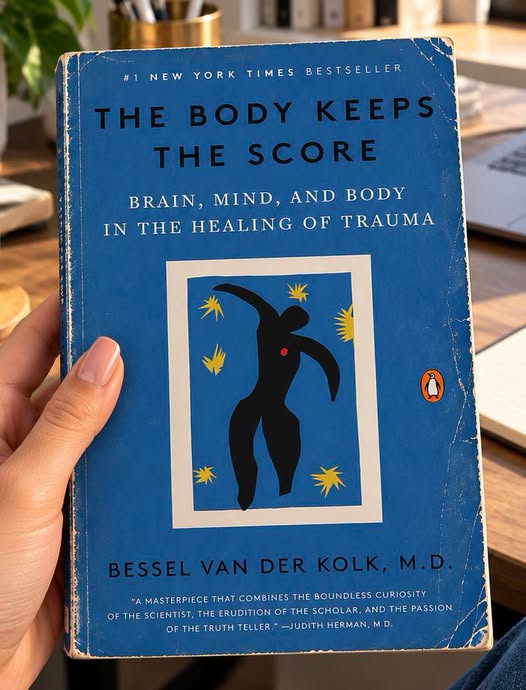
Most therapists have read Bessel van der Kolk's book. Almost none of them have told their clients what he actually found. He spent thirty years scanning the brains of trauma survivors. Published the most-read book on trauma in modern history. Four million copies. Translated into 38 languages. The waiting list to train under him ran years. And at the end of all of it — thirty years, thousands of patients, the most cited trauma researcher alive — his conclusion wasn't a better therapy. It was a warning. Because what he found in those brain scans — watching trauma survivors talk about what happened to them, watching Broca's area light up while the survival system sat unchanged — was something the entire field had been quietly avoiding for a hundred years. Understanding your trauma and releasing your trauma are two completely different events. They happen in two completely different parts of the brain. And for the last century, we built an entire industry around one of them and called it healing. I am a licensed therapist. I have been practicing for eleven years. And three years ago, sitting with a client named Sarah in my Thursday afternoon slot, I realized I had been failing every person who had ever sat in that chair. Sarah had been working with me for four years. She could trace every pattern back to its origin. She knew her attachment style, her nervous system responses, her core wounds. She used words like "parentification" and "hypervigilance" and "disorganized attachment" with the ease of someone who had studied the material thoroughly — because she had. She was one of the most self-aware clients I had ever worked with. That afternoon she looked at me and said something I have not stopped thinking about since. "I feel like I've read the entire map. I just can't figure out why I'm still in the same place." I nodded. I said something clinical and supportive. She went home. And I sat in my office after she left and looked at the chair she had been sitting in for four years. Four years of insight. Four years of understanding. Four years of finally having language for what happened to her. And she was still stuck. Not because she hadn't done the work. She had done more work than most people I'd seen in eleven years of practice. Because I had given her the wrong tool. And I had called it healing. I went home that night and told my husband what happened. "She's been with you four years," he said. "That's not nothing." "She understands everything," I said. "She can explain her entire childhood in clinical terms. She knows exactly why she is the way she is." "And?" "And she still flinches at the same things. Still braces. Still can't sleep. Still feels like she's waiting for something she can't name." He was quiet for a moment. "So what are you going to do?" I didn't answer. But I knew. I had known since the brain scan research. Since Bessel. Since Peter Levine's work on the freeze response, since Porges and the polyvagal theory, since every piece of research I had read and then set aside because it didn't fit the model I had been trained in. The body doesn't update on information. It updates on experience. Incremental. Graduated. Repeated exposure to something the nervous system learns is survivable. Insight is the diagnosis. Integration is the treatment. And I had been giving my clients the diagnosis and sending them home. The next week I brought something new into session. Not another framework. Not another worksheet. Not another way to think about what happened. 365 prompts, organized not by topic but by what the nervous system can tolerate — in the order it can tolerate it. Starting where the body is actually safe. Moving only when it signals readiness. Never asking it to process what it isn't yet equipped to hold. I didn't tell Sarah what it was. I just said: "I want to try something different today. I'm going to ask you to write something, and I just want you to notice what happens in your body when you do." The first prompt was simple. Almost too simple. Something she had never been asked in four years of therapy. What do you need today that you're afraid to admit? She picked up the pen. She wrote for three minutes without stopping. Then she put the pen down. She didn't say anything for a long moment. "That's the first time I've ever written something without performing it," she said. "I didn't know I was performing. But I was. Every time I talk about this stuff in here, I'm — I'm auditioning. Even to myself." She looked up. "There's nobody to perform for in there." The following week she came back and I gave her the next one. What threat is your body still protecting you from? She sat with it longer than the first. When she finally wrote, her hand was shaking slightly — not from distress, but from something that looked like recognition. Like a part of her that had been waiting to be asked the right question had finally heard it. The week after that: When no one's watching and you don't have to perform, who are you? She looked up at me after that one and said: "I don't think I've ever answered that honestly. Not even to myself." That is what the prompts are doing. Not asking her to understand more. Asking her body, in small survivable steps, to make contact with what it has been holding at a distance. Each prompt is a degree of exposure the nervous system can tolerate. Each one builds on the last. Each one teaches the body — not the mind, the body — that going there is safe. That it can feel it and come back. That standing down is possible. That is called Graduated Nervous System Calibration. It is the only process built for the gap between knowing and feeling — because it doesn't try to change what you think. It changes what your body believes is safe. No therapy modality, no insight framework, no gratitude practice reaches that. They all work above it. This works beneath it. That was nineteen months ago. Since then I have given this to over two hundred clients, handed it to colleagues, watched it passed between friends, between sisters, between a woman and her daughter. The thing I hear most often: "I've been in therapy for years and this is the first time something has actually moved." Not because it's smarter than therapy. Not because it replaces it. Because it does the thing insight alone was never designed to do. It teaches the nervous system — slowly, in sequence, in the graduated increments that are the only thing that actually work — that it is safe to let go of what it has been holding. Understanding why you're wounded isn't the same as letting the wound close. She had been revisiting it. Analyzing it. Explaining it. For years. She had never been given a tool designed to release it. Bessel van der Kolk spent thirty years with trauma survivors. His final conclusion wasn't about what to say to them. It was about what to help them feel — in their bodies, not their minds, not their words — for the first time. The body keeps the score. But the body can also learn that the game is over. That's what the Back to You Journal was built to do. This is not for the woman who is new to her pain. This is for the woman who knows her pain better than almost anyone — who has done the therapy, read the books, built the language, and is still waking up at 3am bracing for something she can't name. The woman who has maximum insight and minimum relief. The woman who stopped believing she would feel different, not out loud, but somewhere quiet inside where she doesn't say it. You didn't fail the healing. The tool was incomplete. Insight was always the first step. Nobody built the second one. 365 prompts. One year. The step that comes after understanding. If it doesn't feel different within 30 days, you don't pay. Not as a gesture. As a guarantee — because a tool built for the nervous system either works in the body or it doesn't work at all. This is what the difference between knowing and healing actually looks like.
Where the ad sends people
heldhonest.com
Read This If Therapy Made You Smarter, Not Better
Held & Honest
Learn more: heldhonest.com(opens in a new tab)