Senior Health Guide
 Facebook ad: “Her Burning Feet Got Worse. Mine Didn't”
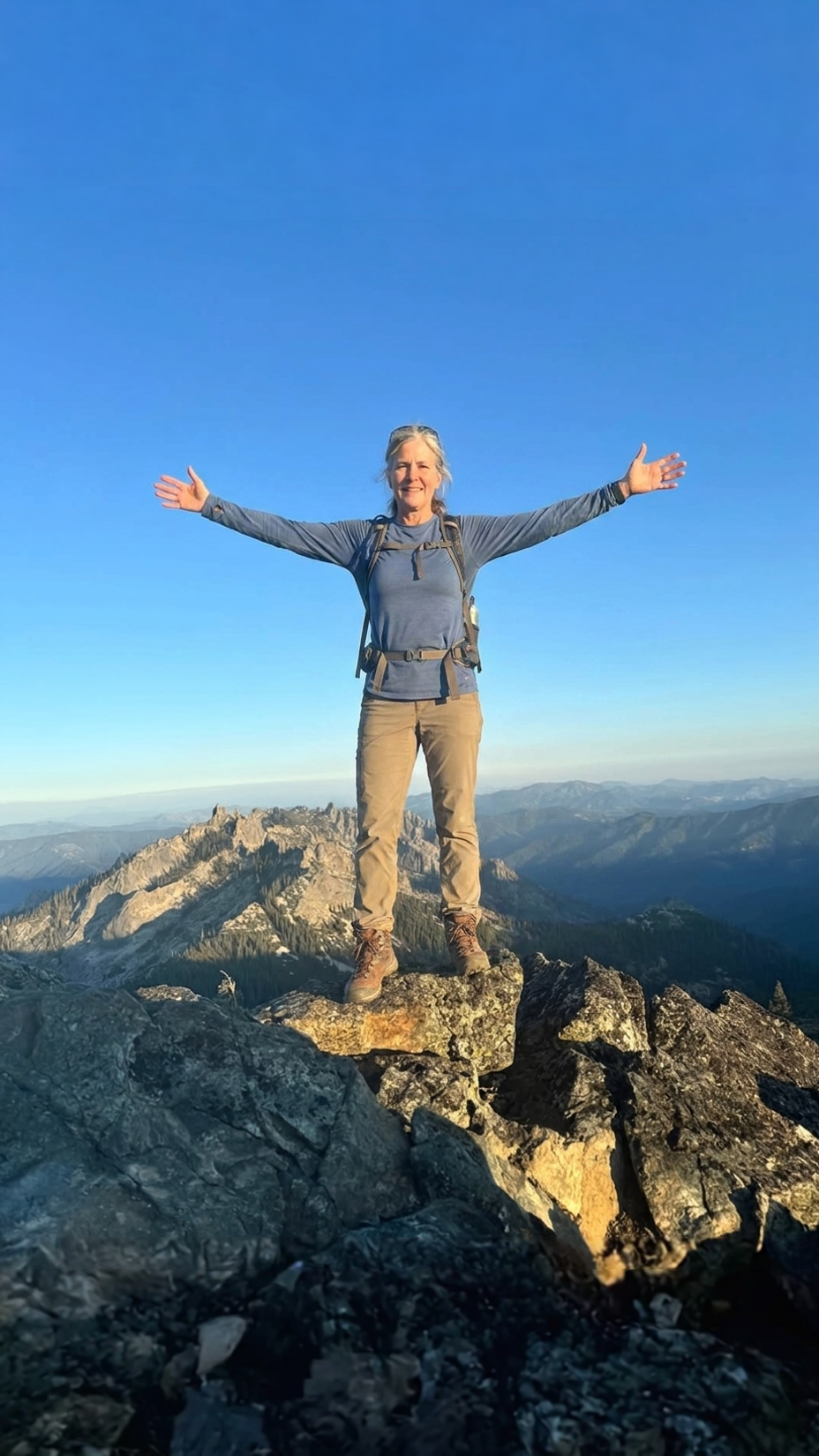
Ran for 38 days, from September 13 to October 21, 2026, the last day Crush saw it.
Run by Senior Health Guide on Facebook. Crush is not the advertiser and does not verify its claims. See this ad in Meta's Ad Library(opens in a new tab)
Make your own version of this ad
Crush makes it, launches it in your own Meta ad account, scales the winners and pauses the losers.
About this ad
- Meta Ad Library ID
- 1701831147584341
- Platforms
- Facebook, Instagram, Audience Network, WhatsApp and Threads
- Relaunches
- 0
- EU reach
- 285
- Niche
- Clinics & Medical
Ad text
We both have nerve damage in our feet. She's in a wheelchair. I'm not. ⠀ Last Thanksgiving, her grandchildren carried her wheelchair up our porch steps, one step at a time, before dinner even started. I stood in the kitchen doorway watching them, and I couldn't look away. ⠀ I'm Angela. I've been a pain management nurse practitioner for 19 years. My sister Michelle and I both have peripheral neuropathy. She was diagnosed first, then me, and for the first two years, we did almost everything the same way. ⠀ We saw the same type of neurologist. We were on the same category of medication. And after every appointment, we'd call each other and compare notes. ⠀ I want to make one thing clear before I go any further, because I know how this story could sound. ⠀ Michelle stayed on her treatment the entire time. So did I. Neither of us stopped anything our doctors prescribed. ⠀ This isn't a story about choosing medicine over something else. ⠀ It's about what happened when I realized there was another piece of the puzzle. ⠀ For the first two years, Michelle was actually doing about the same as I was, maybe even slightly better. ⠀ Her numbness stayed mostly in her toes while mine had already started spreading. If you'd asked either of our neurologists back then who had the easier road ahead, I don't think either of us would have guessed it would eventually be me. ⠀ We talked almost every week, comparing symptoms the way sisters with the same diagnosis tend to do. Whose feet were burning worse that week. Who had tripped again. Who had slept badly because of the tingling. ⠀ Then, in year three, Michelle's balance started getting worse. ⠀ She stopped walking to the mailbox alone. Her neurologist adjusted her medication, and it helped some. ⠀ In year four, she started using a cane for longer distances—the grocery store, the mall with her daughter, anywhere she knew she'd be walking for a while. ⠀ She hated it. She told me once that a cane is the one thing that announces what's wrong with you before you've even said a word. ⠀ By the end of that year, the cane had become a rollator. ⠀ She fell twice that spring. ⠀ The first time was in her own kitchen. She couldn't feel the floor well enough to realize her foot had caught the edge of a rug. ⠀ The second fall was bad enough that she spent two days in the hospital. ⠀ I remember sitting beside her bed thinking, this is happening faster than either of us expected, and neither of us really knew what to do with that thought. ⠀ By the end of year four, Michelle needed a wheelchair for anything beyond her own living room. ⠀ I was 56 that year, and I want to tell you what my own four years looked like during that same stretch, because I think the difference between us is the most important part of this story. ⠀ I'd had the same burning and numbness Michelle described. I knew what it was like to lie awake at two in the morning because even the sheets touching my feet felt uncomfortable. ⠀ On paper, if anything, mine had started a little worse than hers. ⠀ But around year two, after one night when I couldn't trust myself on the stairs without holding the rail with both hands, I started asking a question that I couldn't get out of my head. ⠀ Why does the burning keep coming back between doses? ⠀ So I started digging into the research myself. ⠀ And before I found anything that changed my routine, I went through many of the same things you probably recognize. ⠀ A menthol rub that numbed things for twenty minutes and wore off before I even fell asleep. ⠀ A capsaicin cream that seemed to burn worse going on than the neuropathy did coming off. ⠀ Compression socks. ⠀ A different mattress. ⠀ None of them seemed to address what I was becoming more interested in: what was happening around the nerve itself. ⠀ Here's what I found. ⠀ A lot of neuropathy treatment is focused on calming the nerve signals that create the burning and pain. And that's important. Those treatments can help people manage their symptoms. ⠀ But I started wondering if there was another piece worth supporting. ⠀ The tissue surrounding the nerve. ⠀ Every nerve in your feet has a protective fatty covering called the myelin sheath. Think of it like the insulation around an electrical wire. It helps signals travel properly. ⠀ When the tissue around a nerve stays irritated or inflamed, and circulation to that area isn't ideal, the nerve can have a harder time sending normal signals. ⠀ That can contribute to the sensations people with neuropathy know so well—burning, tingling, numbness, and that strange feeling that your feet aren't telling your brain exactly what's happening underneath them. ⠀ And that's when I came to the question that changed what I was looking for: ⠀ How do you support that tissue from the outside? ⠀ That's what led me to look at topical formulas differently. ⠀ Because I realized there was a problem with many of the creams people were using. ⠀ Most topical creams are water-based and mainly sit on the surface of the skin. They aren't necessarily designed to carry oil-soluble ingredients into the deeper, fat-rich tissue underneath the skin. ⠀ And that mattered to me. ⠀ Because if the tissue you're trying to support is deeper than the surface, I didn't just want to know what ingredients were in the cream. ⠀ I wanted to know how those ingredients were being delivered. ⠀ That's what led me to look into oil-based delivery. ⠀ An oil-based carrier can carry oil-soluble botanical ingredients through the skin differently from a water-based cream. ⠀ And I found a formula built around sesame oil as its carrier, rather than water. ⠀ It also uses beeswax to help keep the balm in place, so it doesn't immediately disappear or rub off after you apply it. ⠀ That formula is called Senzio Miracle Balm. ⠀ But the delivery system was only part of what caught my attention. ⠀ I wanted to know what was actually being carried in that oil. ⠀ The first ingredient that stood out to me was frankincense. Its boswellic acids have been studied for their ability to support the body's inflammatory response, which made sense to me given what I'd been learning about irritated tissue around the nerve. ⠀ Then there was comfrey, which contains allantoin, a compound known for its skin-soothing and conditioning properties. ⠀ Myrrh added another botanical traditionally used for inflammatory and tissue support. ⠀ Then I looked at Angelica Sinensis, because circulation was another part of the picture I didn't want to ignore. It's been studied for its potential role in supporting peripheral microcirculation, which matters when you're thinking about the tiny blood vessels supplying tissue around the nerves. ⠀ Peppermint oil served a different purpose. It provides that familiar cooling sensation and can also help a topical formula spread across and penetrate the skin. ⠀ And then there's the sesame oil, which acts as the carrier for the oil-soluble botanical ingredients, with beeswax helping keep the balm where you put it. ⠀ So for me, the interesting part wasn't simply that Senzio contained several botanicals. ⠀ It was the combination of what was in the formula and how the formula was designed to deliver it. ⠀ I started using it consistently a little over two years ago. ⠀ And I want to be clear about something else. ⠀ I didn't stop my medication. I still take my gabapentin. I still keep a lidocaine patch in the cabinet for flare days. I've never stopped anything my doctor prescribed. ⠀ Senzio was something I added alongside my existing routine. ⠀ I applied a small amount in circular motions, morning and night, right where the burning was worst. ⠀ Within the first few months, I noticed the burning that used to wake me around two in the morning was happening less often. ⠀ By month six, I realized I wasn't going to bed every night expecting my feet to start burning. ⠀ And two years later, I still haven't needed a cane. ⠀ I haven't had a fall. ⠀ I still work full time, and I still walk my dog every morning before my shift. ⠀ That's something I genuinely wasn't sure I'd still be doing when I was diagnosed. ⠀ Now, I want to be careful about what I'm claiming here. ⠀ I can't tell you that Senzio is the reason Michelle and I ended up on such different paths. ⠀ We're two sisters, not a clinical trial. There are too many differences between two people to make that kind of claim. ⠀ What I can tell you is that I added something to my routine that Michelle never did. ⠀ And four years later, our outcomes look very different. ⠀ I also don't want anyone reading this to think I'm telling you to replace your medication or stop your doctor's treatment. ⠀ I'm not. ⠀ If your medication is helping you, keep taking it as prescribed. ⠀ This was simply the additional piece I decided to add to my own routine. ⠀ Today, I use Senzio Miracle Balm morning and night. ⠀ And right now, it's 50% off with a 60-day money-back guarantee, so you can try it alongside the routine you're already following. ⠀ You simply massage a small amount into the areas that bother you most, using small circular motions. ⠀ That's it. ⠀ I'm not going to tell you my experience guarantees the same result for you. ⠀ Neuropathy doesn't follow exactly the same path in everyone. ⠀ But if you're following your treatment plan and still quietly wondering whether there's another piece you're missing, I understand that feeling better than most people. ⠀ I've watched my own sister go from walking independently to needing a wheelchair. ⠀ And I've watched my own path take a very different direction. ⠀ Michelle and I still talk every week. ⠀ We don't compare symptoms the way we used to. These days, we're mostly just sisters. ⠀ But I still hope she'll try it someday. ⠀ I'm not going to stop offering. ⠀ — Angela Ferreira, PMNP Pain Management Nurse Practitioner 19 Years in Practice
Where the ad sends people
senzio.store
Her Burning Feet Got Worse. Mine Didn't
Learn more: senzio.store(opens in a new tab)