Senior Health Guide
 Facebook ad: “I Couldn't Believe What American Neurologists Were Telling…”
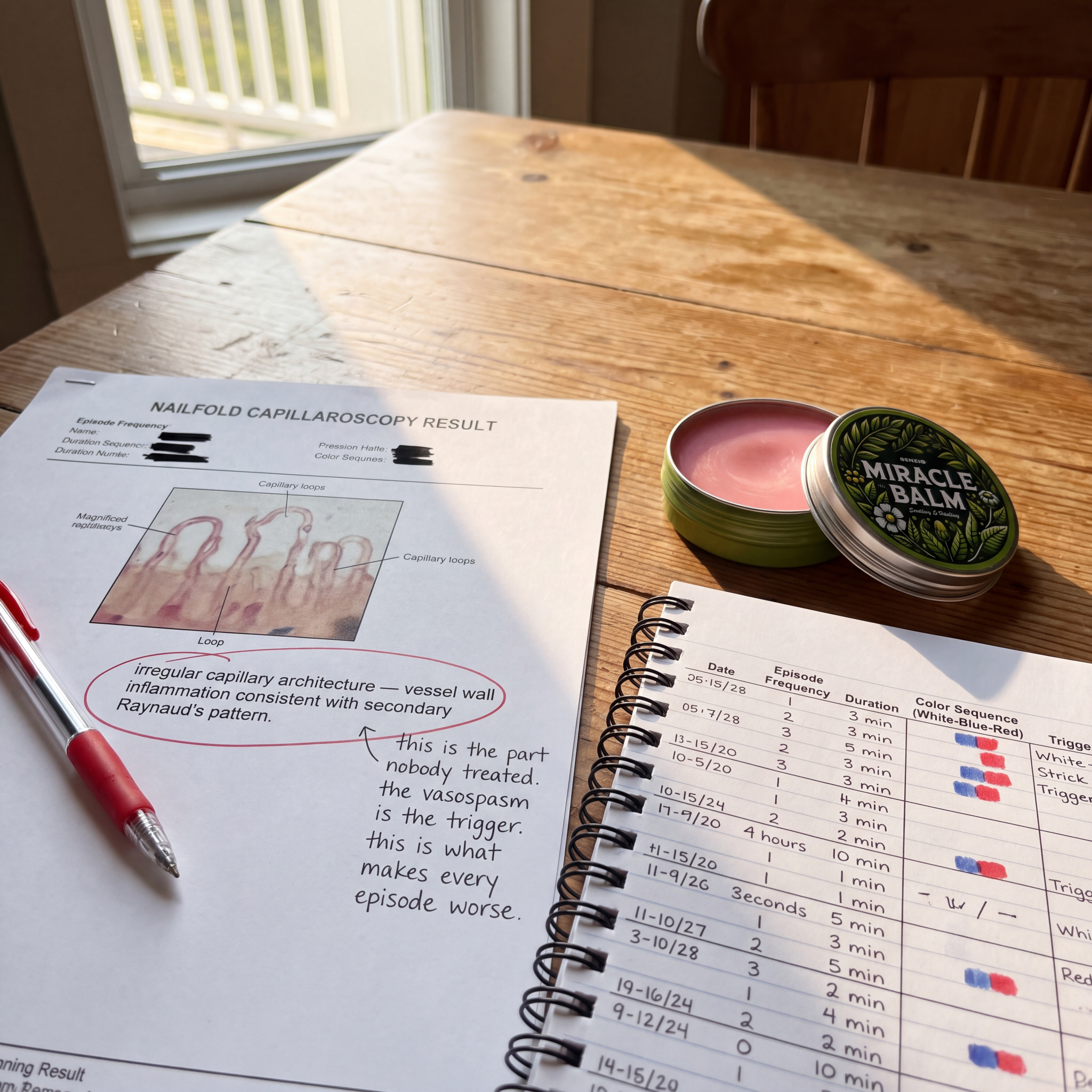
Ran for 45 days, from September 14 to October 29, 2026, the last day Crush saw it.
Run by Senior Health Guide on Facebook. Crush is not the advertiser and does not verify its claims. See this ad in Meta's Ad Library(opens in a new tab)
Make your own version of this ad
Crush makes it, launches it in your own Meta ad account, scales the winners and pauses the losers.
About this ad
- Meta Ad Library ID
- 1706764980412948
- Platforms
- Facebook, Instagram, Audience Network, WhatsApp and Threads
- Relaunches
- 0
- EU reach
- 153
- Niche
- Clinics & Medical
Ad text
There's a natural approach that actually helped with my patient's burning and tingling feet. It's not carnivore, keto, or another elimination diet. It took Colleen eight years of trying almost everything she could think of before she found it. ⠀ I've treated peripheral neuropathy for 24 years. Colleen spent eight of hers trying to out-diet it. ⠀ She was 39 when she was diagnosed, and by the time she became my patient, she'd already spent years treating her own body like a science experiment. She was convinced that if she could just find the right combination of foods to remove, inflammation to reduce, and discipline to maintain, she could accomplish what medication alone hadn't. ⠀ She tried carnivore for six months. Meat, salt, water, nothing else. She even posted in a neuropathy Facebook group asking if anyone had actually calmed their symptoms through diet alone. Dozens of people commented, but nobody really answered the question she was asking. ⠀ She told me she felt lighter during those six months. Her feet still woke her up burning around 2 a.m. most nights. ⠀ Before carnivore, she'd spent more than a year on keto. Before that, a strict elimination protocol with no nightshades, gluten, or dairy. Before that, two years gluten-free because a naturopath had suggested it. She tried fasting, a juice cleanse she now says she'd never recommend to anyone, infrared saunas, and an elimination diet so restrictive that she lost weight she didn't have to lose. ⠀ Every one of them seemed to help a little at first. ⠀ Then the same symptoms came back. ⠀ The burning down both feet, usually worse after 9 p.m. The numbness in both hands that would show up some nights. A patch on her left calf that had stayed numb for more than a year, regardless of what she was eating. And a strange tightness that would wrap around her ankle in the evenings. ⠀ Then there was what Colleen called the “2 a.m. wall.” ⠀ No matter what she ate that day, no matter how carefully she'd followed whatever protocol she was trying, she'd wake up around the same time with her feet burning. ⠀ By the time she sat in my exam room and walked me through all of it, I understood why she was frustrated. ⠀ She had spent eight years changing what went into her body, hoping it would somehow reach the place where the problem was happening. ⠀ And that made me ask a different question. ⠀ What if the problem wasn't something she needed to keep taking out of her diet? What if there was something happening locally around the nerve that a diet simply wasn't designed to address directly? ⠀ That distinction changed the way I looked at Colleen's case. ⠀ Diet can absolutely affect overall health and inflammation, and I would never tell a patient that eating well doesn't matter. But broad changes from the inside aren't necessarily the same thing as supporting a specific area of tissue from the outside. ⠀ And Colleen's symptoms were remarkably specific. ⠀ The burning was in her feet. The numbness was in specific areas. The tightness followed the same pattern. Her worst symptoms happened at night, in the exact places she'd been struggling with for years. ⠀ She eventually found something that approached the problem differently. ⠀ It happened almost by accident. ⠀ About a year before she told me about it, she'd been reading comments underneath a completely unrelated post when someone mentioned a topical botanical balm designed around an oil-based carrier rather than a typical water-based cream. ⠀ The idea was simple: instead of trying to influence the problem entirely from the inside through diet, the formula was designed to be applied directly to the areas where the discomfort was occurring. ⠀ When Colleen explained it to me, I was skeptical. ⠀ Twenty-four years in this field teaches you to be cautious when someone tells you a topical product might make a difference for something as complicated as peripheral neuropathy. ⠀ So I didn't take her word for it. ⠀ I went back and looked at the mechanism myself. ⠀ The nerves in your feet are surrounded by protective tissue, including a fatty layer called the myelin sheath. It's often compared to the insulation around an electrical wire because it helps nerve signals travel properly. ⠀ When tissue around a nerve remains irritated or inflamed, and circulation to that area isn't ideal, the nerve can become more vulnerable to abnormal signaling. That's one reason people can experience sensations like burning, tingling, numbness, and other changes in how their feet feel. ⠀ And that's when another question became important to me. ⠀ If you're applying something directly to the skin, how are the ingredients actually being delivered? ⠀ Most topical creams are water-based. They can feel soothing on the surface, but water and oil behave very differently on the skin. ⠀ That's where sesame oil became interesting to me. ⠀ Sesame oil is a lipid-rich oil, so it can act as the carrier for oil-soluble botanical ingredients such as frankincense and myrrh. ⠀ And I found a formula built around sesame oil as its carrier rather than water, with beeswax helping keep the balm where it's applied. ⠀ That formula is called **Senzio Miracle Balm.** ⠀ But the carrier was only part of what caught my attention. ⠀ Because once I understood how the formula was designed to carry the ingredients, I wanted to know what was actually being carried in that oil. ⠀ Frankincense was one of the first ingredients that caught my attention. Its boswellic acids have been studied for their role in inflammatory pathways, which made it particularly interesting given what I was learning about the tissue surrounding the nerve. ⠀ Then there was comfrey, which contains allantoin, a compound known for helping soothe irritated tissue and support the skin's natural healing process. ⠀ Angelica Sinensis was another ingredient I paid attention to because of research into its potential role in peripheral circulation. ⠀ And peppermint oil provides the cooling sensation Colleen noticed immediately when she applied the balm. ⠀ What interested me wasn't simply the number of ingredients. ⠀ It was the combination of five botanicals with an oil-based carrier and the fact that the balm could be applied directly to the areas where she was experiencing the discomfort. ⠀ Coleen started using it the week after we talked about it, applying a small amount in circular motions morning and night. ⠀ During the first week, the only thing she noticed was the cooling sensation from the peppermint. She almost stopped because, after eight years of trying one thing after another, she was understandably skeptical. ⠀ Then, around week two, she called me and said something had changed. ⠀ The burning wasn't gone. ⠀ It was just quieter. ⠀ Instead of keeping her awake at night, the burning would come and go. ⠀ By week three, she'd slept through the night twice without waking up at 2 a.m. because of her feet. She told me that might sound insignificant to someone else, but after years of waking at the same time almost every night, two uninterrupted nights felt enormous to her. ⠀ A couple of weeks later, she noticed the tingling wasn't as constant either. She still had it, but there were stretches when she realized she'd gone several hours without thinking about her feet. ⠀ Two months in, she told me about something that had nothing to do with a pain score. ⠀ Her daughter had a recital, and Colleen sat through the entire thing without having to shift around or leave early because the burning was pulling her attention away. ⠀ She hadn't changed her diet. ⠀ She hadn't started another elimination protocol. ⠀ She hadn't given up another food. ⠀ And she hadn't stopped her medication. ⠀ She still kept her gabapentin on hand and used it when the severe burning and tingling flared, just as I'd instructed her. ⠀ After eight years of watching Colleen try to solve her neuropathy by taking things away, the thing that finally made a difference wasn't another restriction. ⠀ It was Senzio Miracle Balm. ⠀ Right now, Senzio is **50% off with a 60-day money-back guarantee**, so you can try it alongside your current routine. ⠀ I'm not going to tell you that Colleen's experience guarantees the same result for you. Peripheral neuropathy doesn't follow exactly the same path in everyone, and I'm certainly not suggesting anyone stop a treatment their doctor has prescribed. ⠀ What I do think is worth remembering is what Colleen learned after eight years of trying to solve the problem through restriction. ⠀ Sometimes the question isn't just what else should I stop eating? ⠀ Sometimes it's worth asking what am I actually trying to support, and am I approaching it in the right way? ⠀ “Eight years,” Colleen told me. ⠀ And the thing that finally helped was the one thing on her list that never asked her to give anything up — a topical botanical balm. . ⠀ — Dr. Emily Hartman, MD Board-Certified Neurologist Peripheral Neuropathy Subspecialty
Where the ad sends people
senzio.store
I Couldn't Believe What American Neurologists Were Telling Patients
Unlock the power of nature with Senzio Miracle Balm. This herbal powerhouse soothes, heals, and rejuvenates your skin—experience the magic!
Learn more: senzio.store(opens in a new tab)