
Inactive· since Mar 3, 2026
- 148
- days it ran
- 2
- relaunches
- 29
- EU reach
Ad copy
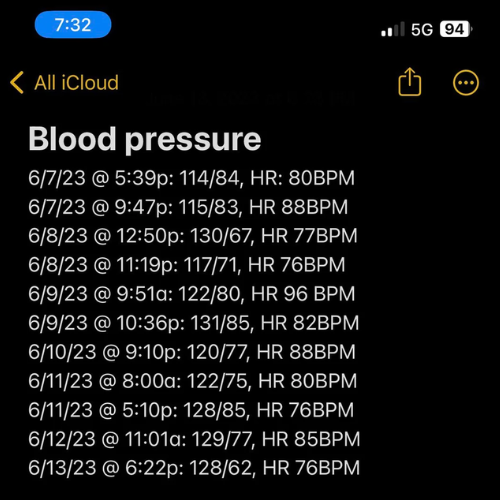
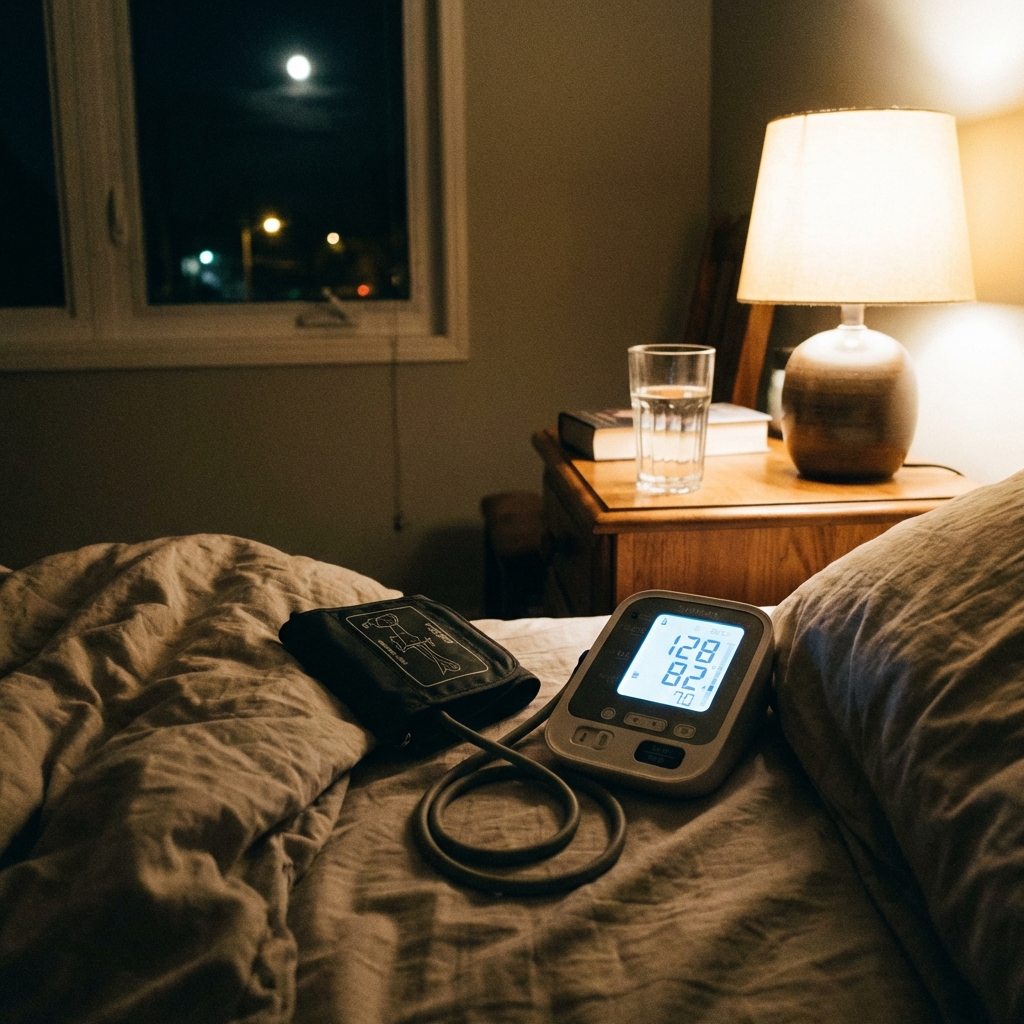
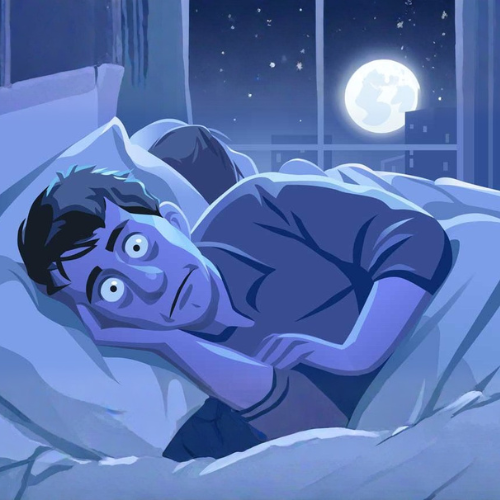
I jolt awake 5 times a night in a panic and nobody can tell me why It's 2:47am. The house is dark. Everyone else is asleep. But you're not. You're lying in bed with your eyes wide open, staring at the ceiling, and you can feel your heartbeat in the pillow. Not fast. But hard. Like your heart is squeezing with everything it has. This thick, rhythmic thud pressing against the side of your head with every single beat. Your chest feels tight. There's a pressure in the back of your neck that won't let up. And your mind is doing the thing again. Scanning. Checking. Cataloging every sensation. Is that normal? Is it too fast? Is this the one that doesn't stop? You want to sleep. God, you want to sleep. But your body won't let you. Because somewhere in the back of your brain, a voice is whispering: "If something happens tonight, nobody will be awake to help you." My name is Dr. Chuck Bass. I'm a board-certified physician, and I've seen hundreds of patients sitting across from me describing this exact same night. The pounding. The scanning. The fear of closing their eyes. Some nights my heart beats so powerfully when I lay in bed. Not fast, but like it's squeezing super hard. I have trouble sleeping most nights. And on the worst nights, the instant before I'm about to fall asleep, I jolt awake in what Google tells me is a panic attack. I calm down, try to sleep, and get jolted awake again. This repeats 5 to 10 times until I finally drift off. If that sounds like your night, every night, then what I'm about to share might finally explain what's happening inside your body when the lights go off. This isn't another article telling you to "try melatonin" or "cut out caffeine." This is about a mechanism in your nervous system that nobody has explained to you. One that turns bedtime into a battle and keeps your blood pressure trapped in a loop that gets worse the longer it goes on. A few months ago, a woman posted something in an online forum that stopped me cold. "I don't even know where to start, and I don't even know if this is even anxiety as I've never had anxiety before? So 2 weeks ago I randomly woke up with a rapid heart in the middle of the night. Never ever had this happen before. I was fast asleep… Paramedic came out and my BP was high (155 over 110 or something). He said it's probably because of what happened. I was calm at this point though.. This kept happening over the next 2 weeks where I'd be asleep and I'd get woken with rapid heart rate. I went to A&E on one of the occasions. High blood pressure and high pulse. They… don't seem to care as I'm 31. Well last night I got NO sleep because laying down my heart was just not chilling. I couldn't sleep. I checked the time and it was 7am and I hadn't been to sleep yet… I'm struggling to function now due to lack of sleep. What do I do?" She was 41. Healthy. No history of anxiety. And suddenly her nights had become a warzone. It wasn't just her. Hundreds of people described the exact same thing. "So I've been having a lot of sleeping problems. 2-3 hours per night, sometimes going one or two nights completely without any sleep. Heartbeat races, I mean RACES, before I fall asleep throwing me into some sort of paranoid lucid dream where I can't move. I cannot tell what's real and what isn't. Mostly when I'm trying to sleep, my mind doesn't stop thinking, my blood pressure doesn't slow down as if I'm going to sleep. I try endlessly to clear my mind, do breathing exercises, do physical exercise, and nothing works." "I get this too. I was so tired and exhausted, but even my sleep meds would not help me sleep. I was anxious and I had a million thoughts running through my head. If I fell asleep I would soon wake up worried about something trivial and anxiety would take over again." In my practice, I see this pattern more than almost anything else. Person after person. Lying in bed. Heart pounding. Can't sleep. Afraid to close their eyes. They've tried sleep medication, breathing exercises, melatonin, magnesium, beta blockers. Nothing sticks. Because the problem isn't their sleep habits. The problem is deeper. Here's what's actually happening when the lights go out and your heart starts pounding. It's not "just anxiety." And nothing is wrong with your heart. Your nervous system got stuck. Ever burnt your tongue on hot coffee? For the next week, every time you pick up a coffee cup, you hesitate. You blow on it. Even if the coffee is lukewarm. Your brain is screaming: "CAREFUL! This burned you before!" That's exactly what's happening at night. At some point, something "burned" you. A racing heart at 2am. A paramedic saying your BP was 155 over 110. An ER visit where you thought you were dying. Your brain filed that moment under: nighttime equals danger. Now every time you lay down, your brain sees the same conditions. Dark room. Silence. Alone. And it hits the panic button. Blood vessels squeeze. Heart pounds. Blood pressure rises. Every time this happens, it teaches your nervous system to do it again tomorrow. The loop gets stronger each time. And the medications you've tried target the racing heart and the high number. But they don't touch the pattern underneath. So how do you actually break this? Not with another sleeping pill. By the time you're lying in bed with your heart slamming, the cascade has already started. Think of it like muscle memory. Right now, when your body detects bedtime, it automatically reaches for "PANIC." You're not deciding to panic. Your body just does it. This mechanism works by training a different automatic response. So when you lay down, your body reaches for "CALM" instead, the same way a pianist's fingers find the right keys without thinking. Not because you're forcing it. But because you've given your nervous system the raw materials it needs to switch into calm mode. Here's the piece nobody explains: after age 40, your body's natural production of nitric oxide drops by up to 50%. Nitric oxide is the molecule your body uses to relax blood vessels and signal your nervous system to stand down. Without enough of it, your body literally cannot shift into rest mode. You don't have a sleep problem. You have a nitric oxide problem. When I understood this, I started looking for something that actually supported the body's ability to produce nitric oxide. The obvious first step was raw beetroot. But the nitrate content in raw beets is wildly inconsistent. Depending on the soil, the farming practices, and how it was stored, a single beet can contain anywhere from 50mg to 600mg of nitrates. You never know what you're actually getting. And to hit the clinical dose consistently, you'd need 5 to 7 large beets every day. So I turned to supplements. Worse. Most beetroot capsules use heat-processing that destroys the nitrates. Research from Purdue University found most capsules contain only 5 to 10mg. The clinical dose? 300 to 500mg. I nearly gave up. Then a friend, someone who'd been through her own nightmare with blood pressure anxiety, called me and said I had to try what her cardiologist had put her on. She told me it was called BeetWise by Zenther. "It's completely different from anything else I've tried," she said. "It's cold-extracted, so the nitrates actually survive the manufacturing process. They don't cook them out like every other brand. And they tell you exactly what's in it. 400mg of dietary nitrates per serving. Verified. They even publish the lab results for every batch." I asked her how it worked for her specifically. "Within the first couple weeks, the nighttime pounding started easing. Not all at once. But I'd lay down and realize my chest wasn't tight. My heart was just... beating. Normally. I wasn't scanning for danger anymore. And then one morning I woke up and realized I'd slept through the entire night. I actually cried." She explained it was just two capsules a day. No complicated timing. No taste. No preparation. And because of how it works, you feel a subtle warmth and circulation boost within the first 15 to 20 minutes, while the deeper blood pressure support builds over 2 to 4 weeks. What convinced me was the transparency. No proprietary blends. No hidden doses. Third-party tested. Certificate of Analysis for every batch. And 400mg per serving, the exact clinical dose backed by over 300 published studies. As a physician, I could verify the mechanism. Your body converts those dietary nitrates into nitric oxide. Nitric oxide relaxes blood vessels. When your blood vessels relax, your heart doesn't have to pound as hard. When your heart is steady, your nervous system gets the signal that it's safe. And when it feels safe, it lets you sleep. One of my patients, a 34-year-old woman, had been waking up 4 to 5 times a night with her heart racing for over three months. Her blood pressure at my office read 152 over 98. At home, when she was calm, it was closer to 125 over 82. Classic anxiety-driven pattern. She'd tried melatonin, magnesium, a meditation app, and was about to start on beta blockers when I suggested she try BeetWise first. By week two, she told me the nighttime pounding had started to ease. She was waking up once instead of five times. By week four, she slept through the night three times that week. Her at-home readings were consistently around 118 over 76. At her six-week follow-up, she sat down in my office and her blood pressure read 124 over 80. She looked at the number and said, "That's the first time I haven't been terrified of this cuff." That's what breaking the loop looks like. Not a miracle. Just a nervous system that finally got the signal to stand down. Every night the loop runs, your nervous system learns the stress pattern deeper. The fear response gets more automatic. The blood pressure baseline creeps higher. And the window to retrain that response gets narrower. This doesn't resolve on its own. The loop reinforces itself. That's what loops do. You've already spent more than this on ER visits where they told you "it's just anxiety." More on supplements collecting dust in your cabinet. BeetWise breaks down to less than $1.50 a day. Less than a cup of coffee. And it comes with a 90-day money-back guarantee. Three full months. If your nights don't change, if the pounding doesn't ease, if the loop doesn't start to break, you send back even the empty bottles and get every penny refunded. There is zero risk. I want to be upfront about something. I am affiliated with BeetWise. But not because they asked me to promote a product. I reached out to them after I watched it work for my patients. After I saw the lab results, verified the nitrate content myself, and watched reading after reading come down in my office. I put my name behind this because I trust what's in the bottle. That's it. But BeetWise is not mass-produced. The cold-extraction process takes longer and costs more. Every batch goes through third-party testing before it ships. Production runs are limited, and when a batch sells out, it can take weeks before the next one is ready. Right now, BeetWise is in stock. I can't tell you it will be tomorrow. Over 14,000 people have already made the switch. Demand increases every month. The last two restocks sold out faster than the one before. If you're reading this and it's still available, don't bookmark this page and come back later. That's just another night of lying in the dark counting heartbeats. https://zenther.co/products/beetroot/ Your body already knows how to sleep. It just needs the one thing it's been running low on to finally let it happen. You're not broken. You're stuck. And now there's a way to get unstuck. https://zenther.co/products/beetroot/
Wake Up Feeling Like You
Zenther Beetwise, 400mg verified nitrates per serving—not 5mg like most brands. Cold-extracted beetroot supplement with published lab results. 90-day guarantee. Try BeetWise today.
SHOP NOWLike this ad? Make it yours.
Crush rebuilds this exact creative around your product — your brand, your colors, your offer — in about a minute.